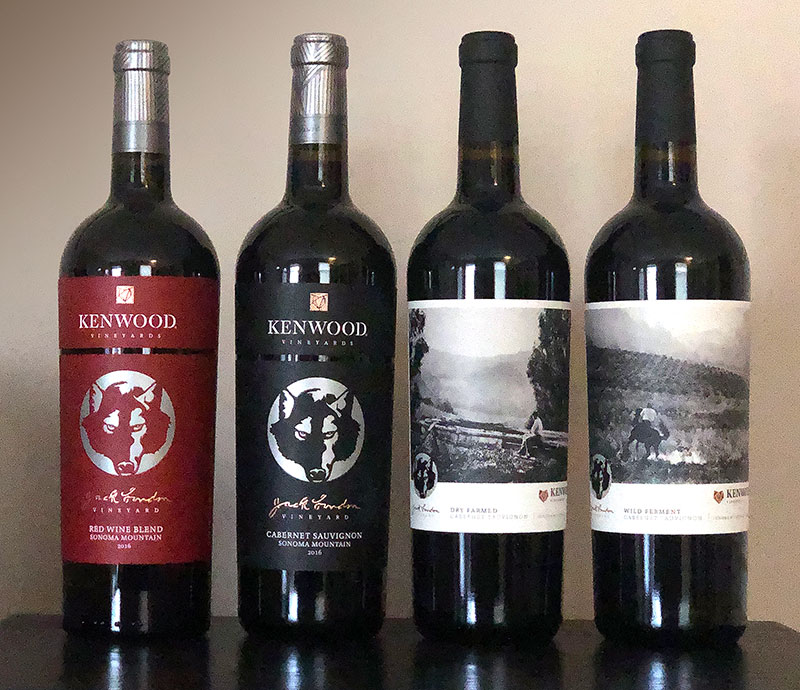
Kenwood Vineyards

Kenwood
Click here for tasting notes.

x
Kenwood Vineyards

Author Jack London (1876 – 1916) was an American novelist, journalist, and social activist. A pioneer of unabashedly commercial fiction in both novels and  magazines, he was one of the first American authors to become an international celebrity and earn a large fortune from writing. His most famous works include The Call of the Wild and White Fang, both set during the Klondike Gold Rush.

In 1905, London purchased a 1,000 acre property in Glen Ellen, California, on the western slope of Sonoma Valley which he named Beauty Ranch. He wrote, “Next to my wife, the ranch is the dearest thing in the world to me. I write for no other purpose than to add to the beauty that now belongs to me. I write a book for no other reason than to add three or four hundred acres to my magnificent estate.” Continue reading “Kenwood Vineyards”
Black Willow Winery

Click here for tasting notes.

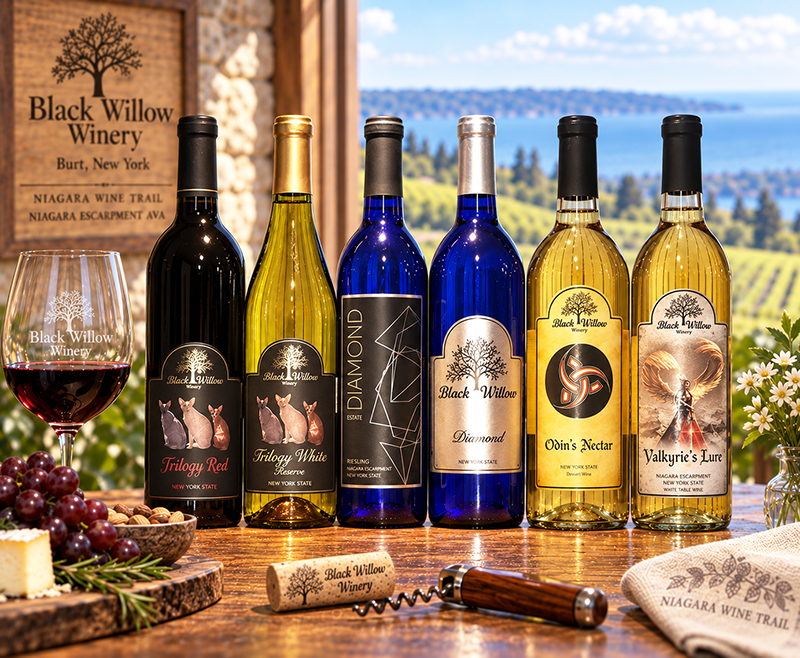
Black Willow Winery

Just about everyone knows about the world-famous Niagara Falls, of course, but the area is home to some increasingly serious winemakers as well, on both the Canadian and U.S. sides of the border.
New York State’s commercial wine industry began when its first bonded winery, Pleasant Valley Wine Company, was founded in Hammondsport in 1860, and the state now ranks third in grape production by volume after California and Washington. But 83% of New York’s grape output is Vitis labrusca varieties, mostly Concord, that find their way into grape juice, jams, jellies, and wines such as, ahem, Manischewitz. The rest is split almost equally between Vitis vinifera (the broad vine species that produces 99% of the world’s wines) and select French hybrids. Continue reading “Black Willow Winery”

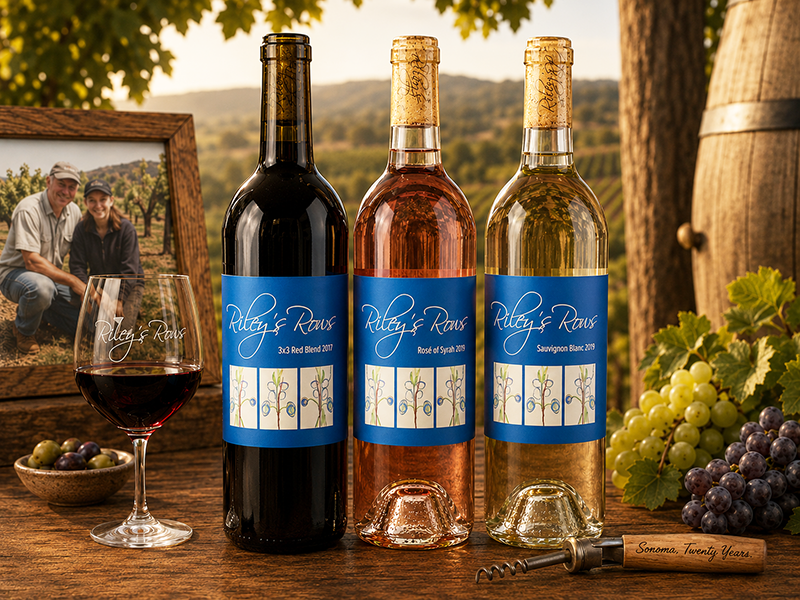
Riley’s Rows

Riley's Rows.
Riley’s Rows. Click here for tasting notes.

Riley’s Rows

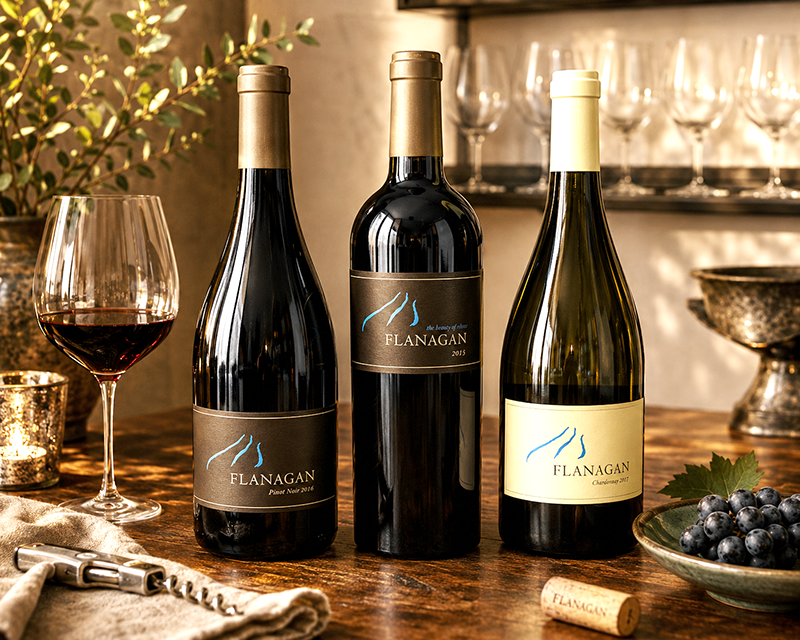
There’s an old witticism in the wine business that goes, “If you want to make a million dollars by producing wine, the first thing you need to do is spend a million dollars.” For a young and ambitious vintner to be able to skip that first step would be quite a blessing. Such is the case with Riley Flanagan. She is the eldest daughter of Eric Flanagan, a boutique winemaker and grape supplier in Sonoma, California. Through his Flanagan Wines operation, her father shares the tasting room, winemaking facility, and some of the fruit for his daughter’s own wine label. Continue reading “Riley’s Rows”
Flanagan Wines

Flanagan Wines
Flanagan Wines. Click here for tasting notes.

Flanagan Wines

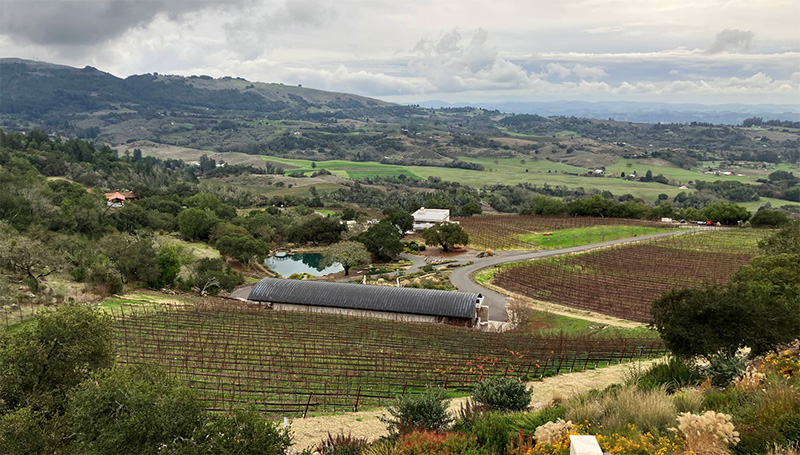
Eric Flanagan did not come of age with a background in the wine business, or even farming. After graduating from college in 1985, he embarked on a banking career, which he pursued until 2013. His job during those years took him on journeys around the world. He had always had an interest in wine, and over the course of these trips Flanagan became fascinated by how grapes of the same variety expressed themselves in different places.
Continue reading “Flanagan Wines”

Coursey Graves Winery

Cabell Coursey

Coursey Graves Winery

Cabell Coursey is a busy guy these days. In addition to being the winemaker at Lombardi Winery, he is also winemaker and co-owner at Coursey Graves Winery in Santa Rosa, California. He began his career in wine in Burgundy, where he worked his first harvest during an undergraduate semester abroad. After graduation, he returned to the States and pursued the menial but necessary chores of picking grapes, scrubbing tanks and barrels, and learning traditional winegrowing methods. He went on to toil in Oregon’s Willamette Valley, and later traveled to Christchurch, New Zealand, where he earned graduate degrees in Enology and Viticulture from Lincoln University. It was there he developed the passion for cool climate wines that guides his style today. Before starting Coursey Graves in 2015 with partner John Graves, Coursey made wine for Alder Springs Vineyard, DuMol, Flanagan, and Kosta Browne.

He is committed to constantly improving the wines he makes from vintage to vintage by understanding his vineyards and maximizing their quality.  He also feels obligated to mentor young winegrowers by teaching parameters they can use to customize and improve grape farming for better produce.

Coursey stated,  “I am interested in making wines that show the place where they are grown, taste great young, but also age [well]. With most wines, aging means maintaining. I strive to make wines that evolve, not just maintain.
Except for a little bit of Chardonnay, I grow all the grapes I make to wine. It’s important, because my team learns about the vineyard and can change how we grow the grapes to make better wines.”

John Graves

John Graves began his career in computer technology, and after a decade spent working for others, he left to strike out on his own. Thirty years later he sold a successful B-to-B software business. He and his wife Denise used a portion of the proceeds to establish the Graves Foundation, whose mission is to provide disadvantaged youth in greater Minneapolis with access to the resources, opportunities, and caring relationships that will propel them to a successful life. Specifically, the foundation focuses on K-12 education reform and providing foster kids with support during the transition to adulthood.

Grave’s interest in wine began as a hobby, influenced by a good friend and by Robert Parker’s reviews in the Wine Advocate. At length his interest expanded until the desire to learn became a desire to own a winery. Serendipitously, about the same time his winemaker friend Cabell Coursey began talking about starting a new venture of wines in a style they both loved to drink and share. Graves acquired the existing Bennett Valley Winery, and the first vintage of Coursey Graves was bottled in 2017.

Bennett Valley AVA

In 1862, Santa Rosa winemaker Isaac DeTurk planted a vineyard on land he purchased from valley namesake James Bennett. DeTurk called his winery, the valley’s first, Belle Mount. However, the combination of phylloxera and Prohibition cleared the valley of vineyards. It wasn’t until the late 1970s that vineyards returned to Bennett Valley in a meaningful way at the pioneering Matanzas Creek Winery.

The Bennett Valley AVA is located south of Santa Rosa, on high ground between the Sonoma Valley and Cotati Valley. The AVA begins where the city’s suburban neighborhood known as Bennett Valley abruptly gives way to rolling oak woodland and horse pastures bordered by ancient stone walls.

This tiny appellation is one of the coolest AVAs in Sonoma County. This is because of  the Petaluma Gap, where a break in the higher coastal hills lets in cool winds and fog from the Pacific Ocean. Bennett Valley sits directly in the path of the initial incursion.   The fact that there is fog in all of the photos in this post is testament to that!

Although there are plenty of renowned wineries and vineyards throughout Sonoma, of course, the lesser-known vineyards of Bennett Valley quietly yield some of the area’s most highly concentrated fruit. This is because the well-drained volcanic soils of the area ensure that the vines grow deep root systems in search of hydration. Ultimately this leads to concentrated, complex wines, as the water-stressed vines will focus their attention on grapes, rather than luxurious foliage. The rocky soils coupled with the cool weather mimic the austere conditions of Bordeaux.

There are now 650 vineyard acres and four wineries in Bennett Valley, which was awarded AVA status in 2003.

The Coursey Graves Vineyards

Coursey Graves is located on vineyard sites 800 to 1500 feet above sea level on Bennett Mountain overlooking Sonoma, on the western edge of the ancient, volcanic Mayacamas Range that separates Napa and Sonoma. The winery, estate vineyards, and caves are built into the slope overlooking the Bennett Valley below. Eighteen acres are planted to Cabernet Sauvignon, Malbec, Merlot, Petit Verdot, and Syrah.

In addition to the estate vineyard, Coursey Graves relies on two others as well. Nestled on the sloped edge of an ancient volcano, Coombsville Vineyard is home to sixteen acres of Bordeaux varieties growing between the red and black igneous basalt and the white, ashy volcanic tuff. At two thousand feet above sea level, Cabernet from Howell Mountain Vineyard benefits from much cooler daytime temperatures and slower ripening.

The wines

I have now had the opportunity to try eight of Cabell Coursey’s wines.  They all have a smooth and silky mouthfeel.  Thinking this had to reflect the intervention of the winemaker, I asked him about how he achieves that, and he had this to say,  “First is vineyard work.  I get up-front and mid-palate concentration through diligent effort in the vineyard, by managing fruit load to the amount of vine canopy, and careful applications of irrigation. I have some control over berry size, and therefore juice to skin ratio, by controlling how much water-stress the vines have at various times during the growing season. Extra stress at flowering and fruit set limits berry size, while more water increases berry size. I don’t have a standard plan each vintage, but rather change according to conditions.

“Second is tannin management during the winemaking process. Certain tannins (phenols) extract from grapes at different ranges in temperature. Also, they bind at different temperatures. I manage the temperatures during fermentation very closely and change to either extract, not extract, or bind, depending on taste and mouthfeel. I do use lab numbers to double check what I taste. However, it’s mostly by taste. After working with these vineyards and my cellar for a few years, I’ve started to learn where the wines’ tannins need to be at the end of fermentation to age properly upon the wines’ release and subsequent aging.”

Coursey Graves Chardonnay 2018

The fruit for this wine was sourced from the Durell and Heintz vineyards on the Sonoma coast. It was fermented in oak and stainless-steel barrels. It is light bright lemon yellow in the glass, which is appropriate as it opens with the smell of lemons, paired with a hint of melon and crushed stone. Those flavors continue on the palate, abetted by a zippy acidity and a suggestion of oak.  It wraps up in a brisk finish.  Only 91 cases were made.

Coursey Graves West Slope Syrah 2016

This 100% Syrah  hails from Coursey Graves’ estate vineyard in Bennett Valley. It is an opaque but brilliant purple color. It features aromas of dark red fruits. The rather lean palate offers flavors of blackberry and olive, with a bit of pepper at the end.  It’s all complemented by good  tannins and a moderately long finish. Production was limited to 268 cases.

Coursey Graves Cabernet Sauvignon 2016

This wine is 100% Cabernet Sauvignon (although in some years Coursey adds and just a bit of Merlot). The grapes were  mostly harvested from vineyards in Howell Mountain and Coombsville in Napa, as well as some from Bennett Valley in Sonoma.  The aromatics are of rich, complex dark fruit. On the palate the wine offers tart cherry, black cherry, red licorice, and cocoa. The  oak tannins are well-integrated and bracing.  According to the winery, it will be at its peak performance around 2023 to 2024, by which time those tannins will inevitably round out, if you prefer them softer. .192 cases were produced. 

Coursey Graves Bennett Mountain Estate Red Blend 2016

This elegant wine was my favorite of the quartet. The blend is 60% Cabernet Sauvignon and 40% Merlot, all from the estate vineyard in Bennett Valley.  This deep-red selection displays aromas of crushed rock and currant, with a hint of strawberry.  These are followed by flavors of dark plum, blueberries, crème de cassis, and a touch of vanilla, supported by fine tannins.  It offers an excellent example of Coursey’s super smooth, lush mouthfeel.  There is just a bit of dried herbs on the long finish.  234 cases were made.
Coursey Graves’ tasting room is located in downtown Healdsburg, just off the historic Healdsburg Plaza.

www.courseygraves.com/

Back to blog posts: winervana.com/blog/

Hall Craig’s Red Wine

Hall Craig's Red Wine 2014.
Hall Craig’s Red Wine 2014. Click here for tasting notes.

Hall Craig’s Red Wine 2014

Kathryn Walt Hall has a most impressive curriculum vitae. To touch on just a few of the high points, she is the proprietor of HALL Wines and WALT Wines [family businesses she has been involved with for over thirty years], was assistant city attorney in Berkeley, California, worked as an attorney and businesswoman in Dallas, Texas, and has served on numerous non-profit and institutional boards, with an emphasis on issues related to social care and mental health. From 1997 to July 2001, Ms. Hall served as the United States Ambassador to Austria. In the midst of this, together with her husband Craig she has raised four children.

Continue reading “Hall Craig’s Red Wine”

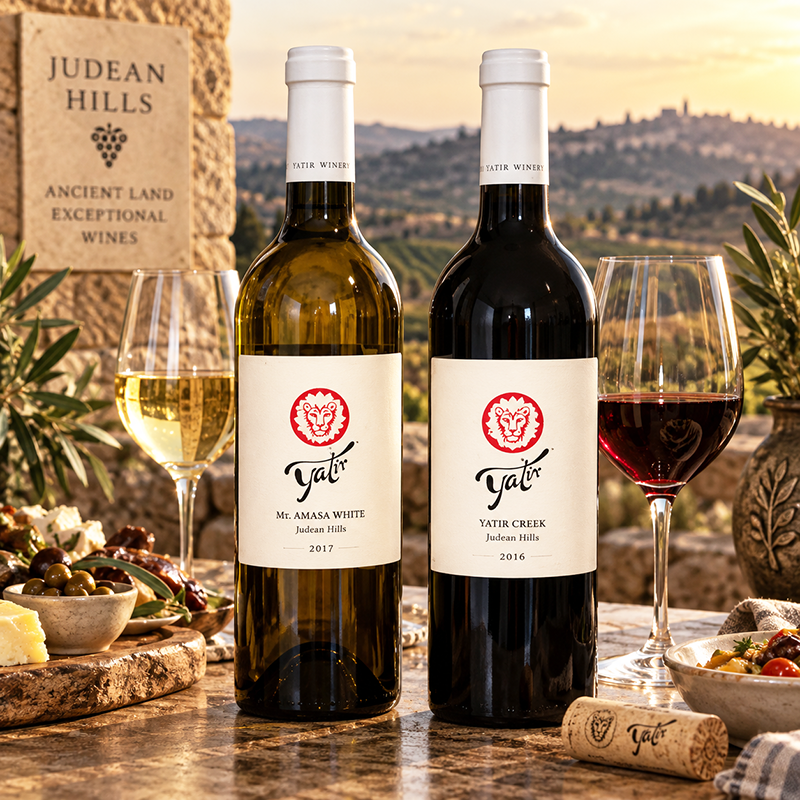
Yatir Winery

Yatir Creek 2016 and Yatir Mt. Amasa White 2017
Yatir Creek Red 2016 and Yatir Mt. Amasa White 2017. Click here for tasting notes.

Yatir Creek 2016 Red Blend and Yatir Mt. Amasa White Blend 2017

The Yatir region in the Judean Hills has produced grapes for winemaking since the ancient days of the Judean kingdom.  A large Jewish settlement existed in this region between the periods of the destruction of the Second Temple to the inception of the Islamic period.
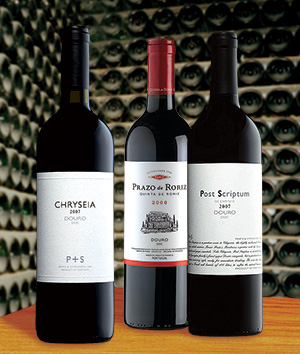
Although the Israeli wine industry is 2,500-years-old, winemakers from this area of the Negev have only relatively recently been drawing critical and commercial acclaim.

David Ben-Gurion was the primary national founder and the first Prime Minister of Israel, which he led from 1948 until 1963 (with a short break in 1954-55).  He had a quixotic dream of making the Negev region in the south bloom and blossom.  When he decided to plant a forest in the area, he consulted with experts to guide him through the process. After numerous discussions and assessments, the agronomists determined that the region, which was predictably dry and warm, was unsuitable for planting trees. Ben-Gurion had other plans in mind however.  “Replace the experts!” he demanded.  A forest was in fact established, and it has gone on to become one of Israel’s largest . It was named after the Levite biblical city of Yatir, whose ruins remain within. The site serves as a “green lung” and a hiking site, as well as an experimental model for innovative methods for combating desertification. The Yatir Winery vineyards were planted as part of that effort.

Yatir Winery was established in 2000 as a joint venture between local growers and the Carmel Winery, who recognized the potential of the Yatir region. The Yatir Winery was built at the foot of the Israelite Tel Arad Fort (an archeological site), 10 minutes away from the vineyards.

Yatir Winery’s first wine was released in 2004, and today the winery produces 150,000 bottles. Over the years, this desert winery has become a symbol of the region.

Yatir’s  growers and winemakers are committed to excellence every step of the way – from growth and cultivation to harvest, fermentation, aging, and bottling – employing the most cutting-edge technology and equipment available to the industry today.

The vineyards of Yatir Winery are planted at an altitude of up to 900 meters [3000 feet] above sea level, and are scattered across various locations in the forest. The plots in these vineyards have varying soil compositions, with different slants and angles. The climate is characterized by cool, breezy mornings, dry days, cold nights (even at the peak of summer) and snowy winters. The soil is well-drained limestone, chalk, and clay that ensures low yields.

“We are proud to be planting in vineyards from an ancient region, where wine presses existed more than 3,000 years ago,” said Yaakov Ben Dor, Yatir Winery’s general manager.

“Although Israel’s winemaking tradition is ancient, the current industry is still young.  Israel has been widely recognized as capable of producing world-class wines, and growth is happening fast. We are pleased by the exciting potential of the region,” reported Etti Edri, Yatir’s export manager.

According to Eran Goldwasser, who oversees Yatir’s vineyards and production, “At Yatir Winery we are integrating state-of-the-art winemaking and technology within a man-made forest in the heart of the desert, to produce award-winning wines.  Though it seems unlikely, this area in Israel provides an excellent environment for wine making.  Due to Israel’s warm Mediterranean climate, the grapes have no trouble ripening.  As the vines age, yields will decrease, and our wines will become more nuanced.”

Yatir Creek Red Blend 2016

This blend of 76% Syrah, 12% Tannat, and 12% Malbec is plum red in the glass.  The nose offers aromas of rhubarb, cherries, cassis, and a hint of green olives. The palate presents flavors of recessive fruit, coca, and cigar box.  The  tannins feature a slightly salty and pleasantly bitter finish.  The wine was aged  for 12 months in large oak barrels,  and aged in the bottle for two years.

I suggest serving this wine with Moroccan chicken with preserved lemons and olives; souvlakia (skewered lamb) with grilled vegetables; or sghenna (a one pot meal for the Sabbath).

Yatir Mt. Amasa White 2017

With an unusual blend of 52% Chenin Blanc, 39% Viognier, and 9% Roussanne, this  white displays a pale golden-greenish hue.   The aromas hint at grapefruit and actetone (which disappears after chilling).  That grapefruit is joined by peach, and pear on the palate.  There is a soft mouthfeel and balanced acidity.  The wine was fermented and aged for five months in a combination of concrete amphorae (a growing trend internationally), oak barrels, and stainless steel vats.

Yatir Mt. Amasa White would go well with Libyan fish tangine; sea bass with olives and roast tomatoes; or saffron chicken and mussels.

Or, if you’re not an observant Jew, you could do as I did and make a lobster and champagne risotto.

winervana.com/lobster-and-champagne-risotto/

These wines join other Yatir products, including Yatir Mount Masa Red (which is a best seller), Yatir Rose, Yatir Peti Verdo, and the flagship wine, Yatir Forest.

yatirwinery.com/en/

Etti Edri [left], Yatir Winery’s export manager and Israel’s Ambassador Dani Dayan [right] with bottles of Yatir wines.
These wines are “kosher for Passover.”  This certification requires handling and processes unique to these types of wine.Kosher wine is grape wine produced according to Jewish dietary law (kashrut). To be considered kosher, Sabbath-observant Jews must supervise and sometimes handle the entire winemaking process, from the time the grapes are crushed until the wine is bottled. Any ingredients used, including finings, must be kosher as well. Wine that is described as “kosher for Passover” must have been kept free from contact with chametz, such as grain, bread, and dough.

To ensure the kosher status of the wine it must be overseen by a Jewish authority who supervises the kashrut status of the producer. Generally, this supervisor will physically tip the fruit into the crush and operate the equipment. Once the wine emerges from the process, it can be handled in the normal fashion.

Here’s some more information on kosher wines:

winefolly.com/review/myths-facts-kosher-wine/

Back to blog posts: winervana.com/blog/

Portugese Red Table Wine

Portugese Red Table WinePortugese Red Table Wine

In the 1970s, Portugese rosés such as Lancers and Mateus were the height of sophistication to many young wine drinkers: “It’s imported, and comes in a fun bottle!” With age comes wisdom, and these wines were eventually abandoned for the justifiably famous fortified wines of Portugal, Port and Madeira, produced by many ancient and famous houses.

Much less well-known is Portugal’s status as a producer of both red and white table wine, ranking in the world’s top ten in production.  With a population of just 10 million, but top five in per capita consumption, much of that wine is sipped by the thirsty Portuguese.

Continue reading “Portugese Red Table Wine”

Carmel Winery

Carmel Winery Private Collection
Carmel Winery Private Collection. Click here for tasting notes.

Carmel Winery Private Collection

The first mention of wine in the Bible appears in Genesis, chapter 9, verse 20, “And Noah began to be an husbandman, and he planted a vineyard.” The story goes on to recount some unpleasantness after Noah over imbibes, but there is no reason to go into that here. The point is, wine is as old as history itself, with some of its earliest beginnings in the Middle East. Indeed, references to wine appear hundreds of times in Scripture, through both the Old and New Testaments.
Continue reading “Carmel Winery”
Hook and Ladder Winery

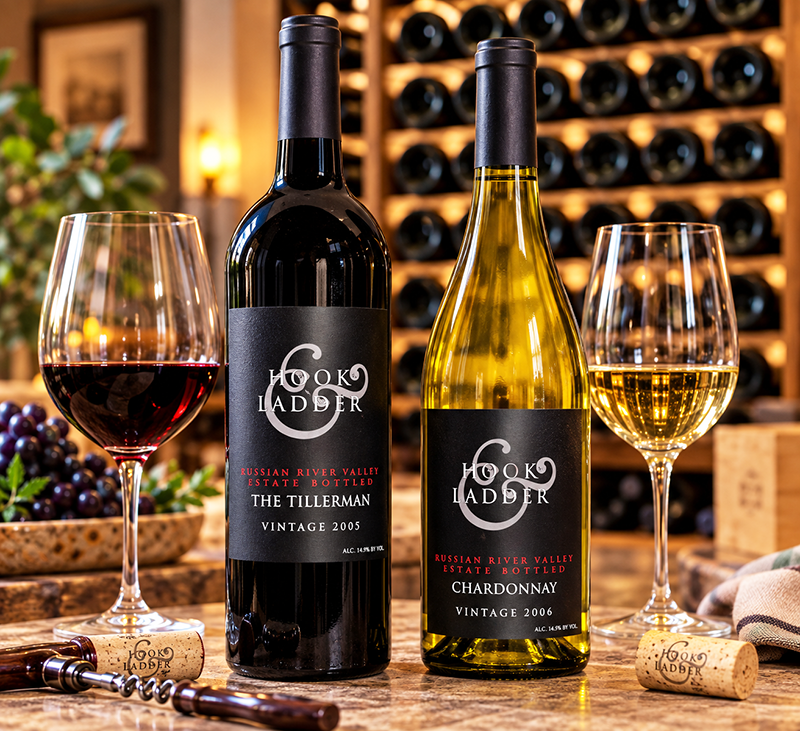
Hook & Ladder The Tillerman 2005 and Hook & Ladder Chardonnay 2006

Hook and Ladder Winery

Looking toward his eventual retirement, in 1970 San Francisco firefighter Cecil De Loach bought 24 acres of old-vine Zinfandel in the Russian River Valley of Sonoma County. For six years De Loach worked the acreage part time, selling grapes to other producers, as neophyte winemakers often do. In 1976 De Loach released his first wine, 1,000 cases of a vintage 1975 Zinfandel, and in so doing became one of the first Russian River wineries.
After a 16-year career, De Loach retired from the San Francisco Fire Department in 1982. But this allowed him to work the winery full time, and over the next two decades he grew production to 250,000 cases annually. Not only was he one of Sonoma county’s wine pioneers, during this time he was also extremely active as a promoter and advocate of Sonoma wines.

Unhappily, De Loach ran into financial difficulties in the late 1990s, and filed for bankruptcy in 2003. (The De Loach label continues, however, having been purchased by the Boisset family of Burgundy, France.)

Hook and Ladder winery

He could have called it quits at that point, but De Loach postponed his retirement yet again. In 2004 he founded Hook & Ladder Winery, the name an obvious nod to his first career as a firefighter, having been a tillerman steering the rear wheels of a hook and ladder fire truck. (He was forced to leave his eponymous label behind because a non-compete agreement prevents his own name from ever again appearing on a wine bottle, a testament to his stature in the Sonoma wine industry.)

Still in the Russian River Valley today, De Loach now works 375 acres in the cool climate there, with his wife, son, grandson, and granddaughter all employed at Hook & Ladder.

Hook & Ladder The Tillerman 2005

A single-vineyard blend of 46% Cabernet Sauvignon, 19% Cabernet Franc, 18% Merlot, and 17% Sangiovese. Plenty of ripe fruits, with a supporting cast of cassis, spice, cedar, and leather. A somewhat short finish. After decanting for an hour, serve with pork satay and peanut dipping sauce, or prime rib paired with madeira sauce.

Hook & Ladder Chardonnay 2006

This wine is a very light yellow-green, pale almost to the point of being colorless. Fermented in a combination of stainless steel and seasoned French oak barrels to retain its crisp acidity. The tart citrus flavors are balanced with just a hint of oak from the not-new barrels. (Oaky, buttery chardonnays are on the wane, I for one am sorry to report.) This chard features bright but delicate aromas of just-ripe apple, pear, and mango. Good now, but should be more appealing in warmer weather. Would contrast nicely with richer seafood such as truffled lobster risotto or rosemary-roasted salmon.

hookandladderwinery.com/

Back to blog posts: winervana.com/blog/

Craggy Range Winery

Craggy Range Winery

Craggy Range Winery

Although wine production started in New Zealand as early as 1819, that nation of beer drinkers didn’t really start to get serious about it until the mid 1960s, time-wise much like California. Real success didn’t come until the early ‘80s, however, with the varietal New Zealand has become famous for, sauvignon blanc. The first release to get wide attention was the 1979 from Montana Wines (New Zealand’s biggest wine maker) and an even more compelling product followed from Cloudy Bay Vineyards in 1985, finally putting “the land of the long white cloud” on the world’s wine-making map.
In 1876 the Ngaruroro River in the Hawkes Bay region severely flooded and changed course, leaving behind a large new tract of gravelly soil. At first, the plan was to turn this infertile ‘wasteland’ into a quarry. Before that project got underway, however, local winemakers claimed the land as their own and began planting vines.

Terry Peabody and Steve Smith established Craggy Range in Hawkes Bay in 1997, recognizing the area’s potential to deliver first-rate wines. Their goal was to make single-vineyard wines – wines that are true expressions of the vineyard’s terroir.

Peabody handles the ‘front office’ at Craggy Range, while Smith is the senior winemaker and certified Master of Wine. Decanter magazine and Wine and Spirits magazine have named him as one of the fifty most influential people in the world of wine.

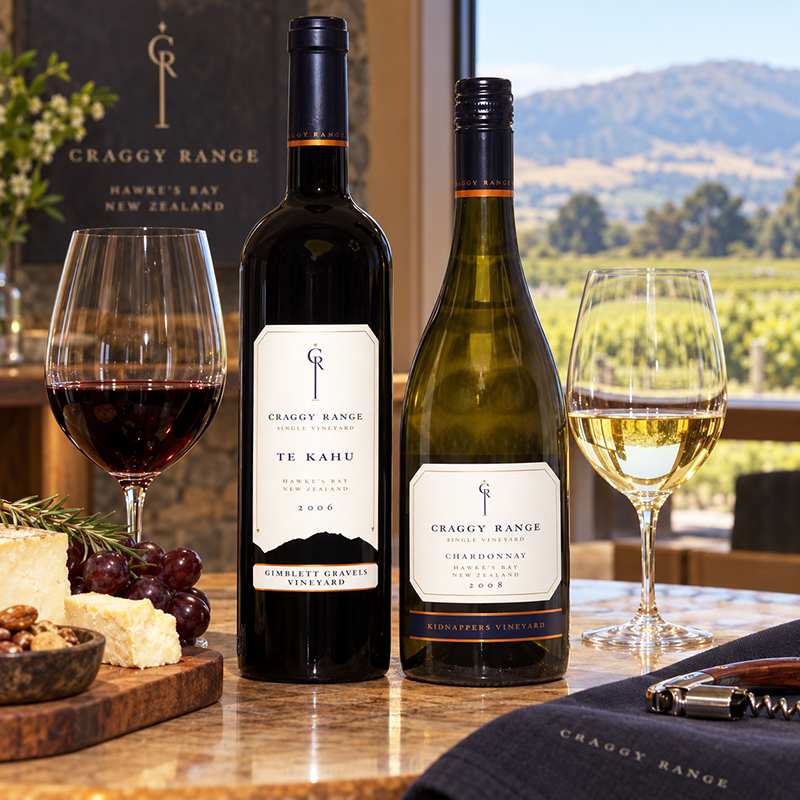
Craggy Range Winery Chardonnay 2008

Kidnappers Vineyard is located on the Hawkes Bay coastline at Te Awanga where the climate is warm and sunny and the soil is predominantly clay loam.
This wine introduces itself with a very pale straw color and lemony nose. The citrus notes continue on the palate, abetted by tastes of mineral and oyster shell. The finish suggests clove and grapefruit.

This wine would pair well with Grilled Scallops with Raspberry-Thyme Beurre Blanc, Lemon-Basil Basated Shrimp, and Mixed Grill of Summer Vegetables.

Craggy Range Winery Te Kahu Proprietary Red 2006

Te Kahu means The Cloak in the native Maori language. Legend has it that the mists rolling down the valley are the cloak of a beautiful maiden laying at the feet of her lover, the fallen giant Te Mafa.

This lean, restrained wine is a classic Bordeaux blend of 58% Merlot, 22% Cabernet Sauvignon, 15% Cabernet Franc, and 5% Malbec, and is very much in the European style. The bouquet offers notes of dark plum, blueberry, cedar, and a hint of oak. The palate adds elements of earth and dusty cocoa powder supported by moderate tannins. The finish is relatively short.

Let this wine breathe for at least two hours, then serve with Paprika Chicken or Braised Lamb Shanks with White Beans.

www.craggyrange.com/

Back to blog posts: winervana.com/blog/

Rietvallei Cabernet Sauvignon

Rietvallei Wine Estate

Rietvallei Cabernet Sauvignon

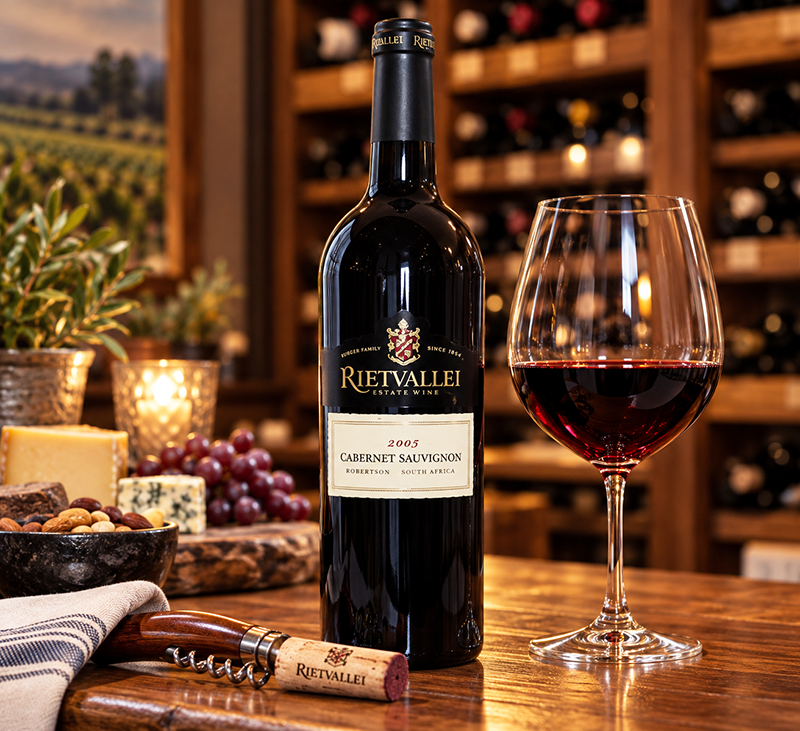
These two cabs come from the Rietvallei Wine Estate, located in the Robertson region of South Africa, outside of Johannesburg. This warm, low-rainfall area has excellent lime-rich soils, and is usually known for white wine, sherry, and brandy.

The Rietvallei Estate was founded in 1864 by the Burger family, and for many decades only produced red muscadel (also known as muscat), a sweet dessert wine. The estate’s house style was based on a recipe still to be found nailed behind the cellar door.

Today overseen by sixth generation winemaker Kobus Burger, Rietvallei began to expand its offerings a few years ago. A Chardonnay was first released in 1987, followed by a Sauvignon Blanc in 2001. The selections now include a number of other whites and reds as well.

Rietvallei Cabernet Sauvignon 2005

This easy-drinking cabernet will appeal most to those who like a lighter style of wine. Although the wine is very dark, the flavor is soft, more like a merlot than a cab. There is also a hint of sweetness as well as tartness. The aroma in the glass, or “nose,” is quite delicate. The finish is short, reflecting the low level of tannins. Enjoy this with a wide range of not too assertive foods, including fish and ‘burgers.

www.rietvallei.co.za/

Back to blog posts: winervana.com/blog/

Ernie Els Big Easy Wines

Ernie Els Big Easy Wines

Ernie Els Big Easy Wines

Welcome to another installment in my series on golfers’ wine projects.  This time the focus is on Theodore Ernest “Ernie” Els, known as “The Big Easy” due to his imposing physical stature along with his fluid, seemingly effortless golf swing.

Els launched his winery in 1999 in Stellenbosch, South Africa [predictably, since he’s a native]. With award-winning winemaker Louis Strydom at the helm, they produced the maiden 2000 vintage of Ernie Els, a ‘classic’ Bordeaux blend. This impressive facility is now home to eight different Els selections.

Wines of varying quality have been made in South Africa for over 350 years. Stellenbosch, in the country’s southwestern Coastal Region, is one of the oldest and most highly regarded growing districts. It is similar to a Mediterranean climate, with an average rainfall of around 25 inches per year. The soils largely consist of clay, with the deeper soils having a considerable amount of granite, just the sort of difficult land that quality grape vines prefer. The majority of the vineyards at Ernie Els Wines are north-facing, with the rows running in an east-west direction, resulting in the optimal utilization of sunlight. In summer, the vineyards’ close proximity to the Atlantic Ocean provides cool sea breezes that moderate temperatures, extending the ripening period.

Ernie Els Big Easy White 2011

Yes, Els rather cheekily labeled these wines after his nickname. This wine is 100% Chenin Blanc, with no oak aging whatsoever. The wine is pale gold, and the nose is delicately perfumed. The prominent flavor is grapefruit, with a hint of almond and spice. There is plenty of acid, complementing the grapefruit flavor profile, with the finish featuring some of grapefruit’s bitterness, as well.

Match this wine with New Orleans-style Barbecued Shrimp, Chicken Clemençeau, or Cheese Soufflé.

ernieels.com/wines/wine-portfolio/big-easy-by-ernie-els-chenin-blanc/

Ernie Els Big Easy Red 2010

This red blend is 60% Shiraz and 20% Cabernet Sauvignon, with the balance Mouvedre, Grenache, Cinsaut, and Viognier (with the exception of the Cab, this is a typical Bordeaux blend). It is dark purple in the glass, with a rather boozy nose. It was barrel aged for 12 months in 80% French and 20% American oak.
The palate is dense and full bodied, with plenty of tannins. Earthy flavors of black cherries, coffee, and chocolate predominate, and are smoothly integrated. A hint of cocoa on the finish delivers a slight bitterness that is less welcome than it is in the Big Easy White.

Serve this red with Steak and Truffled Mashed Potatoes, Grilled Chicken wth Watermelon Relish, or Garlic Pork Roast.

ernieels.com/wines/wine-portfolio/big-easy-by-ernie-els-red-blend/

Back to blog posts: winervana.com/blog/