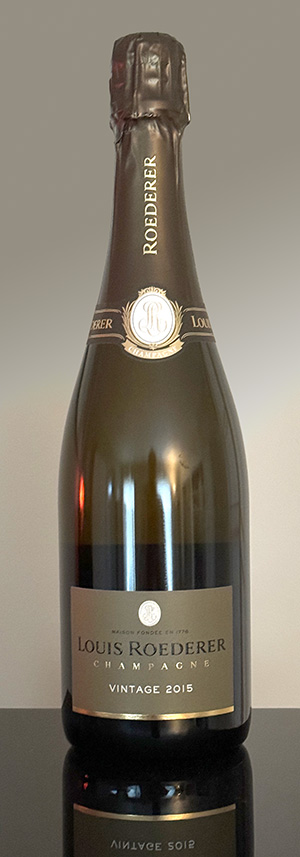
Louis Roederer Champagne

Click here for tasting notes.

Louis Roederer Champagne 2015

Louis Roederer [Road-ur-ur], a distinguished champagne producer situated in Reims, France, traces its origins back to 1776, when it began as Dubois Père & Fils. While its early days were marked by still wine production, the focus soon evolved to embrace the art of crafting fine champagnes. The business underwent a transformation under the stewardship of Louis Roederer in 1833 when he not only inherited but also renamed the company for himself.  He boldly ventured into international markets, focusing particularly on Russia. This endeavor gained him immense recognition, including from Tsar Nicolas II, who appointed Louis Roederer as the official wine provider to the Imperial Court of Russia.

Created in 1876, the wine made for Nicolas’ grandfather, Alexander II, was the first Cuvée de Prestige (Prestige Cuvée) of Champagne and is called Cristal, referring to the unusual clear glass of the bottle. The Tsar had pointed out to his sommelier that the design of a standard champagne bottle made the beautiful color and effervescence of champagne invisible to the eye. He therefore instructed Roederer that his personal cuvée be served in bottles made of transparent crystal glass with a flat bottom (allegedly to foil the insertion of explosives in the indentation by would-be assassins) to remedy this defect. Thus was Cristal born, and the first notion of a premium cuvée. For more than a century, the appearance of the patented Cristal bottle has remained unchanged. After the fall of the Russian monarchy in 1917, Roederer decided to continue producing Cristal and to market it internationally, and it remains one of the world’s most sought-after champagnes in the world.

Continue reading “Louis Roederer Champagne”

Le Vigne Blanc de Blancs

Le Vigne Cuvee Speciale Blanc de Blancs.
Le Vigne Cuvee Speciale Blanc de Blancs. Click here for tasting notes.

Le Vigne Cuvee Speciale Blanc de Blancs

Le Vigne Winery, translating to “The Vineyard” in Italian, stands as a testament to the Filippini family’s rich heritage and commitment to traditional winemaking. For close to a century, Le Vigne has dedicated itself to crafting exceptional wines that reflect the distinct characteristics of both the vineyard and the vintage.

Continue reading “Le Vigne Blanc de Blancs”

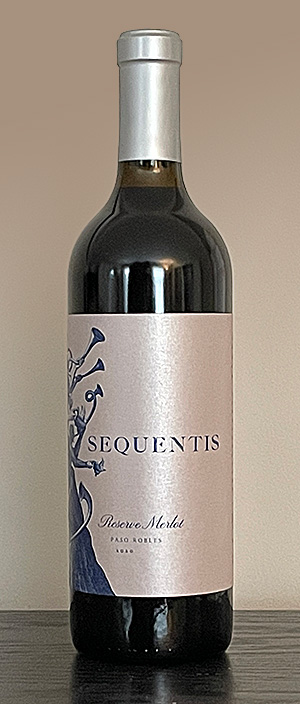
Sequentis Reserve Merlot

Daou Sequentis Reserve Merlot
Daou Sequentis Reserve Merlot 2020 Click here for tasting notes.

Daou Sequentis Reserve Merlot 2020

In the vast tapestry of California’s wine country, the story of Daou Family Estates stands out as a unique and compelling chapter. Born from the dreams of brothers Daniel and Georges Daou, this family-owned winery in Paso Robles has become a force to be reckoned with in the world of Cabernet Sauvignon and Bordeaux-style wines.

The Daou journey begins with a twist of fate—Daniel and Georges, originally from war-torn Lebanon, found themselves in France before making their way to the United States to pursue education. After a successful stint in the tech industry, the brothers decided to embark on a new adventure, channeling their passion for wine into creating a winery that would redefine the possibilities of Paso Robles.

What sets Daou apart is not just their winemaking expertise but their audacious decision to focus on Cabernet Sauvignon in an area known for Rhône-style blends and zinfandel. Choosing the West Paso Robles region over Napa, the brothers identified French soils and a Napa-like climate as the perfect combination to cultivate what they believed could be some of the world’s best wine. Continue reading “Sequentis Reserve Merlot”

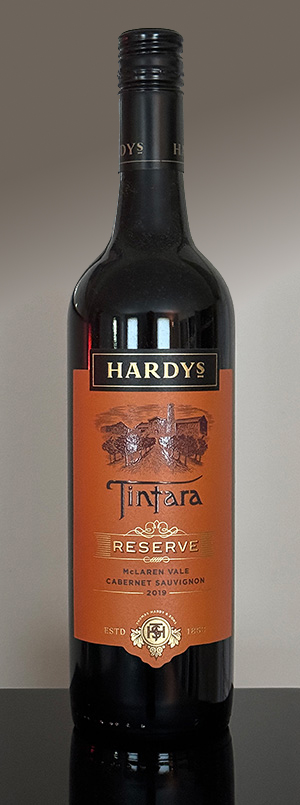
Hardys Tintara Cabernet Sauvignon

Hardys Tintara Reserve Cabernet Sauvignon 2019
Hardys Tintara Reserve Cabernet Sauvignon 2019. Click here for tasting notes.

Hardys Tintara Reserve Cabernet Sauvignon 2019

Nestled within the picturesque McLaren Vale wine region in South Australia, Hardys Tintara winery stands as a testament to the rich history and enduring legacy of Australian winemaking. Established in 1861 by the visionary Dr. Alexander Charles Kelly, Tintara has weathered the test of time, producing wines that have not only earned global acclaim but have also become an integral part of Australia’s winemaking narrative.

Dr. Alexander Kelly, a physician and winemaker, laid the foundation for Tintara in 1861, incorporating it the following year as the Tintara Vineyard Company. A man of diverse talents, Kelly authored seminal texts on Australian winemaking and viticulture, solidifying his place in the annals of wine history. Notable figures in the early history of South Australia, such as Walter Watson Hughes, Samuel Davenport, and Thomas Elder, invested in Tintara, recognizing its potential to become a cornerstone of the burgeoning Australian wine industry.

Continue reading “Hardys Tintara Cabernet Sauvignon”

Hardys Tintara Shiraz

Hardys Tintara Reserve Shiraz 2019.
Hardys Tintara Reserve Shiraz 2019. Click here for tasting notes

Hardys Tintara Reserve Shiraz 2019

Nestled within the picturesque McLaren Vale wine region in South Australia, Hardys Tintara winery stands as a testament to the rich history and enduring legacy of Australian winemaking. Established in 1861 by the visionary Dr. Alexander Charles Kelly, Tintara has weathered the test of time, producing wines that have not only earned global acclaim but have also become an integral part of Australia’s winemaking narrative.

Continue reading “Hardys Tintara Shiraz”

Roederer Collection 242 Champagne

Louis Roederer Collection 242 Champagne.
Louis Roederer Collection 242 Champagne. Click here for tasting notes.

Louis Roederer Collection 242 Champagne

Louis Roederer [Road-ur-ur], a distinguished champagne producer situated in Reims, France, traces its origins back to 1776, when it began as Dubois Père & Fils. While its early days were marked by still wine production, the focus soon evolved to embrace the art of crafting fine champagnes. The business underwent a transformation under the stewardship of Louis Roederer in 1833 when he not only inherited but also renamed the company for himself.  He boldly ventured into international markets, focusing particularly on Russia. This endeavor gained him immense recognition, including from Tsar Nicolas II, who appointed Louis Roederer as the official wine provider to the Imperial Court of Russia.

Continue reading “Roederer Collection 242 Champagne”

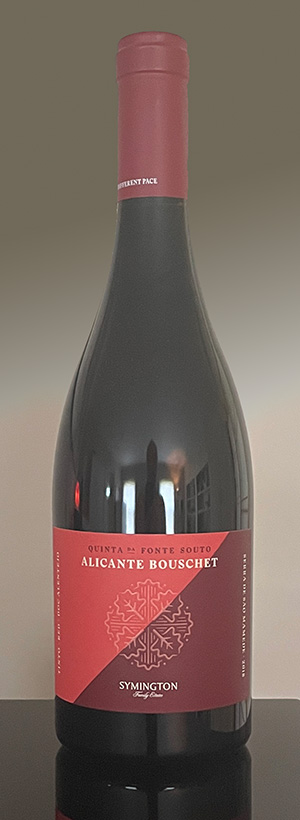
Quinta da Fonte Souto Alicante Bouschet 2018

Quinta da Fonte Souto Alicante Bouschet
Click here for tasting notes.
Souto Alicante Bouschet

In the 1970s, Portugese rosés such as Lancers and Mateus were the height of sophistication to many young wine drinkers: “It’s imported, and comes in a fun bottle!” With age comes wisdom, and these wines were eventually abandoned for the justifiably famous fortified wines of Portugal, Port and Madeira, produced by many ancient and famous houses.

Much less well-known is Portugal’s status as a producer of both red and white table wine, ranking in the world’s top ten in production.  With a population of just 10 million, but top five in per capita consumption, much of that wine is sipped by the thirsty Portuguese.

Quinta da Fonte Souto is a producer in Portalegre, a sub-region of the Alto Alentejo in southern Portugal.  It is owned by the Symington family, well-known for their premium Port wines, who acquired the winery in 2017.

Quinta is Portuguese for estate. Fonte translates as “source,” denoting the springs that provide an abundance of fresh water to the vineyard. Souto, or “chestnut grove,” recalls the considerable area of chestnut trees and cork oaks that cover the estate.  There are 511 acres on the property, of which 106 are planted with vines.  Fonte Souto is the Symington’s first property outside the Douro region, and includes a tasting room and a traditional manor house.

Continue reading “Quinta da Fonte Souto Alicante Bouschet 2018”

Smith & Hook Cabernet Sauvignon

Smith & Hook Reserve Cabernet Sauvignon 2019.
Smith & Hook Reserve Cabernet Sauvignon 2019. Click here for tasting notes.

Smith & Hook Reserve Cabernet Sauvignon 2019

Located in California’s Central Coast, the Smith Ranch was a horse ranch for generations, while to the south, the Hooks raised cattle. Swiss-born Nicolaus “Nicky” and Gaby Hahn discovered these  ranches near Paso Robles in 1974 as they searched for the ideal place to grow Cabernet Sauvignon. They decided that the climate along the western slopes of the Santa Lucias was just what they were looking for, so in 1974 they purchased the two ranches and established the Smith & Hook Winery on the old Smith Ranch. The first Cabernet Sauvignon was made in 1979, released in 1980, and quickly developed a reputation for excellence.

Continue reading “Smith & Hook Cabernet Sauvignon”

Pietra Fine Prosecco

Case Paolin Pietra Fine Asolo Prosecco DOCG.
Case Paolin Pietra Fine Asolo Prosecco DOCG. Click here for tasting notes.

Case Paolin Pietra Fine Asolo Prosecco DOCG

The ancient town of Asolo sits about 40 miles northwest of Venice in Italy’s province of Trevino.  The Museo Canoviano is situated here, home to some of the works by  Antonio Canova (1757-1822).  Canova was the son of a stonecutter and grandson of a stone mason, and was an Italian Neoclassical sculptor famous for his marble sculptures. Indeed, he is often regarded as the greatest of the Neoclassical artists.  Pietra Fine is Italian for Fine Stone, an homage to the work of Canova housed in Asolo, as well as the grey stones of one of Paolin’s vineyards that was once a riverbed.

Continue reading “Pietra Fine Prosecco”

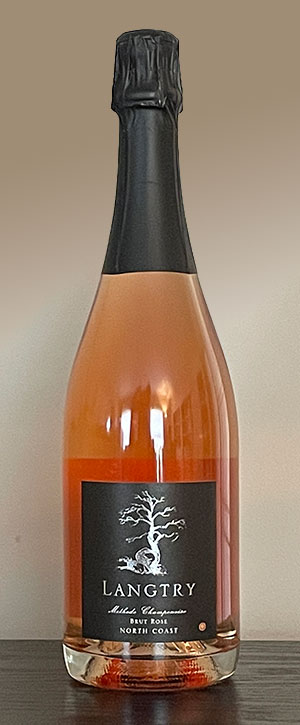
Langtry Brut Rosé

Langtry Brut Rosé
Langtry Brut Rosé Click here for tasting notes.

Langtry Brut Rosé

The Guenoc Valley in California is east of San Francisco, and just south of the far eastern edge of the East Bay.  Situated in Lake County, grapes were planted there in 1854, and as soon as 1884 it hosted 600 acres under vine.  Its fertile fields attracted a number of individuals who dabbled in wine to a greater or lesser extent, including the legendary actress Lillie Langtry.

The 23,000 acre (9,300 ha) Guenoc Valley is a small inland alluvial fan of Arroyo Seco and Conejo loam soils which are isolated from surrounding areas by rocky ridges. Hot days are common in the region and over-ripening is a constant concern. The area also has very cool nights, making it a Climate Region III.  The Guenoc Valley AVA was approved in 1981.

Lillie Langtry was born Emilie Charlotte Le Breton in 1853 to William Le Breton, a Church of England minister and his wife, Emilie Davis Martin Le Breton.  Lillie was the only daughter in the family of six sons. Her father was a very handsome and cultured man; her mother as beautiful as her daughter would become. They lived on the on the Isle of Jersey, one of the islands that lie in the English Channel . Continue reading “Langtry Brut Rosé”

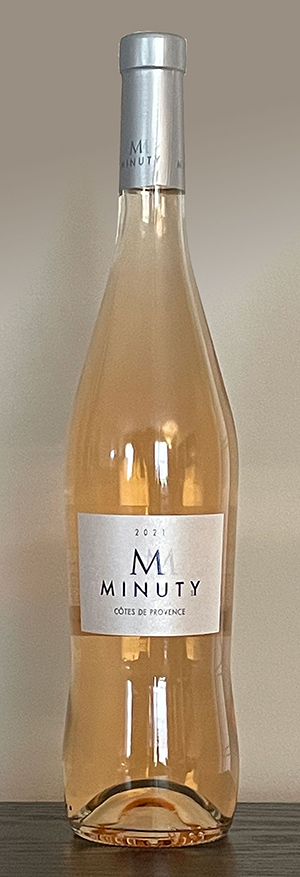
Minuty M Rosé

Chateau Minuty M Rosé
Chateau Minuty M Rosé Click here for tasting notes.

Minuty M Rosé

Provence in the south of France is the nation’s oldest wine-producing region, dating back more than 2,600 years.  It is synonymous with rosé (90% of the region’s production), and one of the leading producers is Chateau Minuty. 

Minuty began in the mid-1800s. The estate was originally built during the reign of Napoleon III, as was the small chapel that gave its name to the Cuvée de l’Oratoire, which was the house’s emblematic bottling for a long time.

Things really got going in 1936 when the 170 hectares [420 acres] property was acquired by Gabriel Farnet, whose family has owned and operated it ever since.

Farnet already owned Domaine de Châteauneuf in Vidauban, so he came with winemaking experience. (That physical château still exists, but the vines are long gone.) He began renovations by replanting the entire estate.  The effort paid off; in 1955, Minuty was one of the 23 properties to be distinguished as a classified growth (Cru Classé) of the Côtes de Provence (or 14, or 18, or 19; accounts vary, oddly).

By 1960, the winery was being run by Monique Farnet, Gabriel’s daughter, and her husband Etienne Matton.  They reintroduced the traditional Provençal grape varieties of Tibouren, Rolle, and Grenache, and began limiting yields while seeking a high quality of wine making.

Continue reading “Minuty M Rosé”

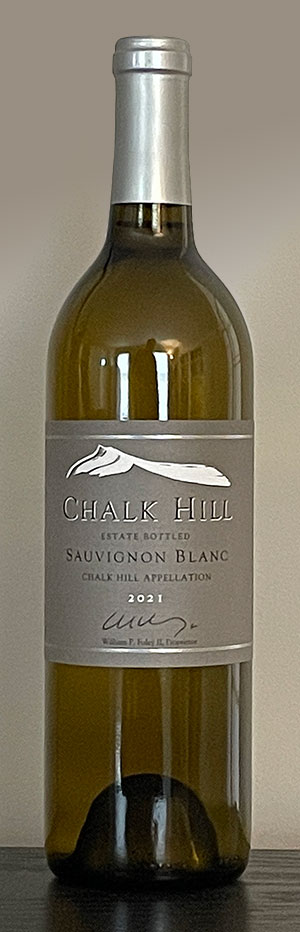
Chalk Hill Sauvignon Blanc

Chalk Hill Sauvignon Blanc Chalk Hill Appellation
Click here for tasting notes.

Chalk Hill Sauvignon Blanc 2021

One fine spring day in 1972, attorney, private pilot, and wine aficionado Fred Fruth was piloting his plane over the Russian River Valley area.  Down below, he hoped he saw what he had been searching for: a property that had the climate and soils to grow first-class wine grapes.  Furth and his second wife, Peggy, purchased the land, named the estate Chalk Hill, and started producing wine about a decade later.  They gradually planted more than 270 acres of vines.  Years later, Furth said, “I have always been interested in wine because my grandfather had vineyards. I’m actually more interested in the working-the-soil aspect, but I have many very talented people in the winery who know how to produce a world-class wine. When I bought this property, I was told it was too hilly to be a vineyard, but I simply planted the grapes in rows going uphill. People said you can’t do that, but I’d seen it done in Germany so I knew it would work.”  After a rich and varied life, Furth died in 2018 at the age of 84.

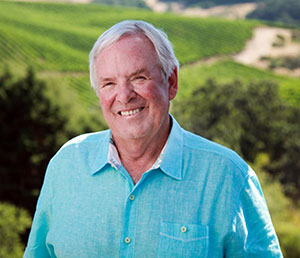
Bill Foley

 Lawyer Bill Foley acquired Chalk Hill in 2010.  Although Foley is titled as “vintner,” I doubt he sees the interior of the winery very often.  He is a vintner in the broader sense of “someone who sells wine.”  He also owns the National Hockey League’s Vegas Golden Knights,  is the Executive Chairman of the Board of Directors for Fidelity National Financial Inc., is Vice Chairman of the Board of Directors for Fidelity National Information Services, Inc., and owns fifteen other wineries.
Continue reading “Chalk Hill Sauvignon Blanc”

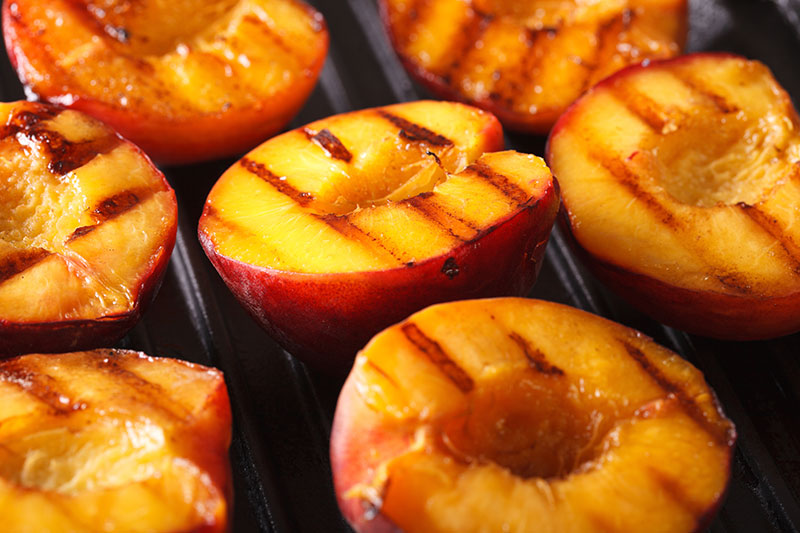
Grilled Nectarines

Grilled nectarines

Grilled Nectarines

Celebrate spring with this recipe from Alec Graham, Chalk Hill Estate Vineyards’ onsite chef who oversees the culinary program there.

Grilled Nectarines with Chive Oil, Thyme, and Chèvre

Serves 8

INGREDIENTS

8 nectarines, slightly under ripe
1 bunch of chives
1 tsp chopped fresh thyme
1 tbs red wine vinegar*
1/2 cup neutral oil, such as vegetable
6 oz. chèvre
Olive oil
Salt and pepper to taste

DIRECTIONS
  1. Preheat a grill or oven broiler to high heat
  2. Whiz chives and neutral oil in blender on high for about 45 seconds. Pour chive oil through a coffee filter and let drip through.
  3. Pit nectarines and slice into halves. Toss with olive oil, red wine vinegar, salt, pepper, and thyme.
  4. Grill nectarine halves until lightly charred and caramelized.
  5. To serve, top nectarines with strained chive oil, fresh thyme sprigs, and crumbles of chèvre.

*If you have a bottle of leftover red wine that is no longer worth drinking, you can easily make your own red wine vinegar. There are plenty of easy recipes online, like this one: homemade red wine vinegar