
Nestled in the heart of the Southern Rhône Valley, Château La Nerthe is more than just a winery—it is a living chronicle of French viticultural history. With origins dating back to the Renaissance and a reputation built over centuries, La Nerthe is one of the oldest estates in Châteauneuf-du-Pape. Its story is marked by innovation, resilience, and a deep connection to the terroir that defines this iconic appellation.
Origins in the Renaissance: The Birth of a Legacy
The roots of Château La Nerthe trace back to the 16th century. Vines were already cultivated on the estate’s land as early as 1560, when it was known as the Grange de Beauvenir. The estate came under the ownership of the noble Tulle de Villefranche family, who laid the foundations for what would become one of the region’s most respected properties.
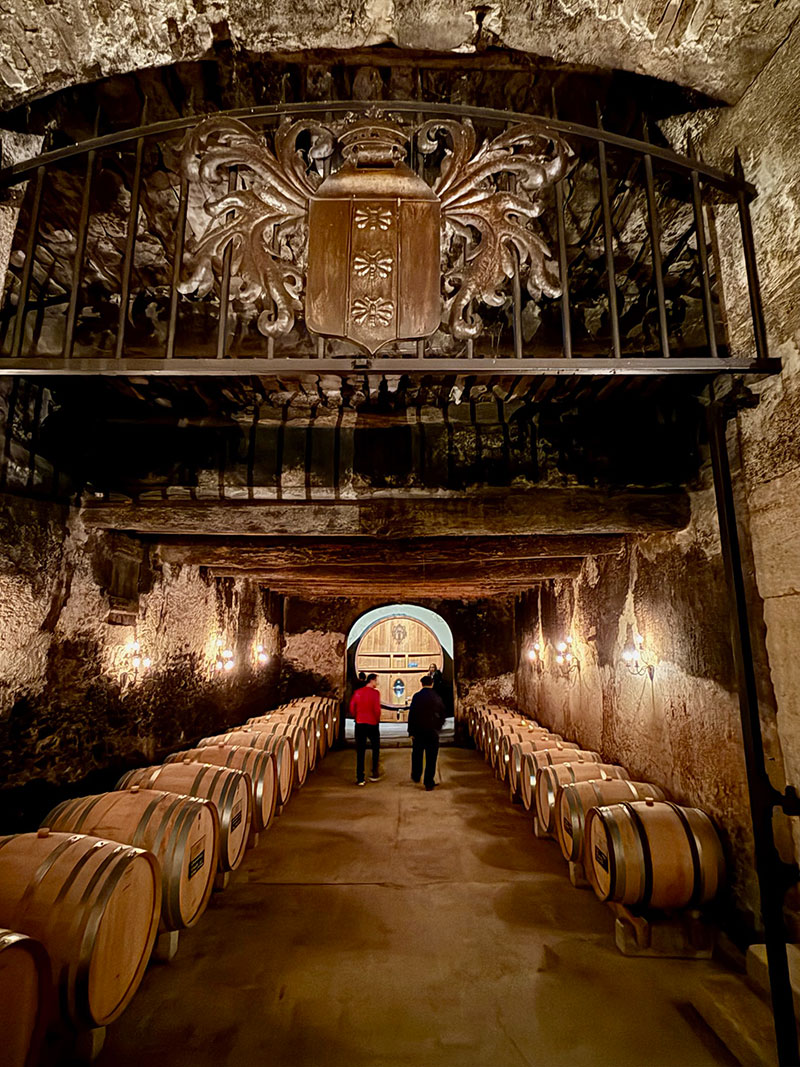
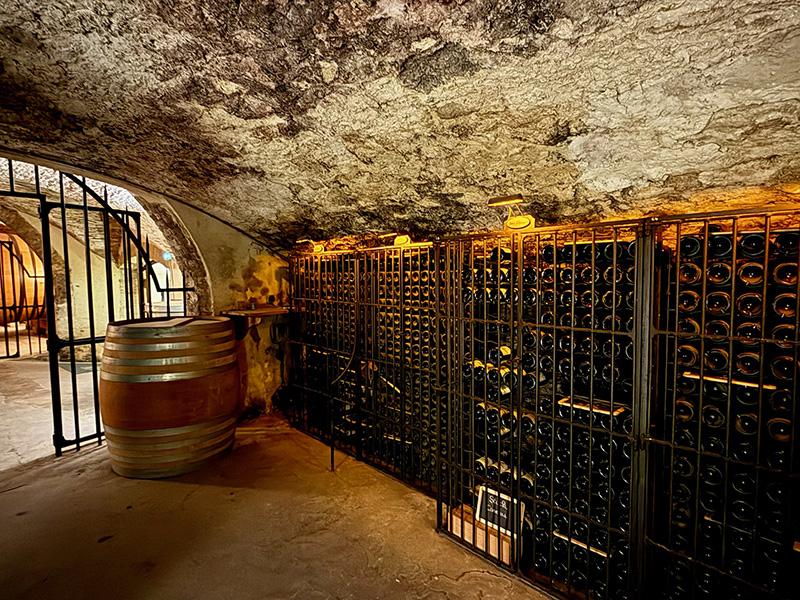
In 1736, Jean-Dominique Tulle de Villefranche constructed the château that still stands today—a symbol of elegance and permanence. Beneath the building lies a network of vaulted stone cellars dating from the 16th century, still in use today for aging wines.
La Nerthe quickly gained a reputation beyond local borders. By the late 18th century, it was among the first Châteauneuf-du-Pape estates to bottle its own wine at the château and export to international markets including England, Russia, and the Americas. This early foray into the global wine trade helped solidify its reputation as a pioneer.
Trials and Transformation: The Phylloxera Era
Like many European vineyards, La Nerthe faced devastation in the late 19th century with the arrival of phylloxera, the vine-destroying aphid. The estate was sold in May, 1877, due to the damage, but it found a visionary savior in Joseph Ducos. His efforts to combat the phylloxera crisis became legendary.
As early as 1878, Ducos undertook with tireless ardor the resurrection of his Clos de La Nerthe. He was so successful that after a few years, the winegrowers of Châteauneuf, at first incredulous and skeptical but then convinced and conquered, followed his example and imitated him. Châteauneuf owes its wine restoration to Joseph Ducos.
Ducos replanted the vineyards using American rootstocks, grafted with native grape varieties. Notably, he preserved and promoted the diversity of Châteauneuf-du-Pape grapes by cultivating ten of the thirteen varieties now permitted under AOC regulations. He was instrumental in shaping the modern identity of the region and was influential in renaming the village to “Châteauneuf-du-Pape,” a nod to its papal heritage.
War and Decline: 20th Century Turmoil
The 20th century brought both war and change. During World War II, Château La Nerthe was requisitioned by the German Luftwaffe and used as a regional headquarters. Though bombed in 1943, much of the structure remained intact. However, the estate’s fortunes waned in the post-war years, passing through several owners, including the Leclerc and Dereumaux families. Quality declined and the estate lost some of its former prestige.
A Renaissance in the Rhône: The Richard Family Era
In 1985, a new chapter began when the Richard family, well-known Paris wine merchants, acquired Château La Nerthe. With them came a renewed sense of purpose and significant investment in both the vineyards and the cellar.
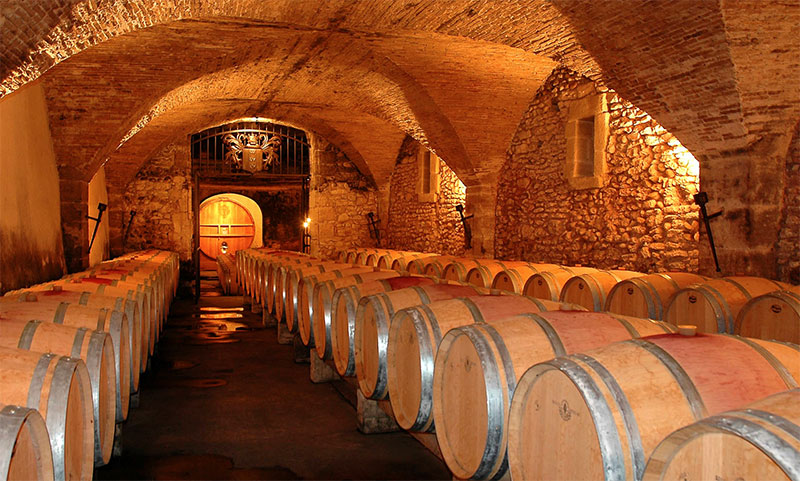
The estate underwent extensive replanting and modernization, led by cellar master Alain Dugas, who helped revive La Nerthe’s winemaking traditions. Historic cellars were restored, and modern equipment was introduced to enhance quality while honoring classic techniques.
During the 1990s, the estate expanded its vineyard holdings significantly, acquiring additional plots in La Crau, one of the most prestigious terroirs in Châteauneuf-du-Pape. The estate grew to encompass 92 hectares (230 acres) spread across 57 parcels, showcasing all of the region’s soil types—from galets roulés (rounded stones) to sandy and clay-limestone soils.
In 1998, Château La Nerthe became certified organic by Ecocert, becoming a pioneer of sustainable viticulture in the region. The estate embraced hand-harvesting, composting, biodiversity enhancement (including sheep grazing and bird boxes), and minimal chemical intervention.
The estate has two other valuable allies. First, natural springs flow from each side of the castle. Then, there are the numerous plots of wood and undergrowth, which stretch over nearly 10 hectares. Together, they guarantee the biodiversity of both flora and fauna.
Tradition Meets Innovation: The Modern Era
Today, Château La Nerthe continues to evolve while remaining true to its historic identity. The winemaking team, including director Rémi Jean, has ushered in a new era of finesse and precision. The use of stainless steel tanks, cold maceration, and carefully balanced oak aging ensures wines of elegance, depth, and terroir expression.
Each vintage reflects the estate’s commitment to expressing the unique personality of Châteauneuf-du-Pape. The red wines are known for their balance of ripe fruit, spice, and silky tannins, while the whites—still somewhat rare in the region—are celebrated for their freshness, floral complexity, and aging potential.
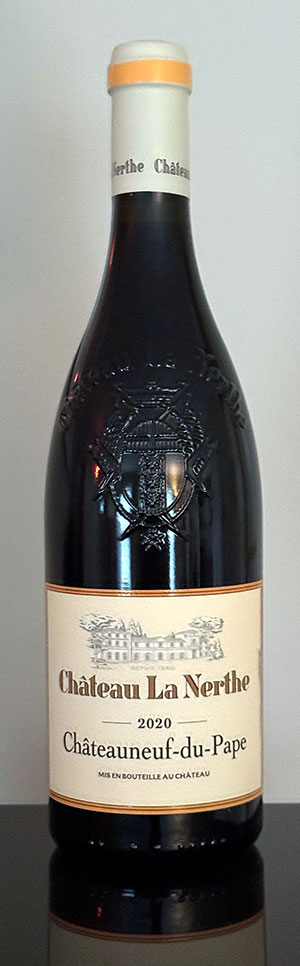
Chateau La Nerthe Chateauneuf-du-Pape 2020
This wine pours a transparent medium garnet. It is a blend of 38% Syrah, 35% Grenache, 25% Mourvèdre, and 1% Cinsault. There is more on the nose than the relatively light color predicted, dominated by dark fruit. The palate features strawberry, black currant, black pepper, and a bit of oak. Black cherry emerges once the second glass is poured. There is some earth and cocoa in the background, all supported by rich tannins. ABV is 15%.
Back to blog posts: winervana.com/blog/