
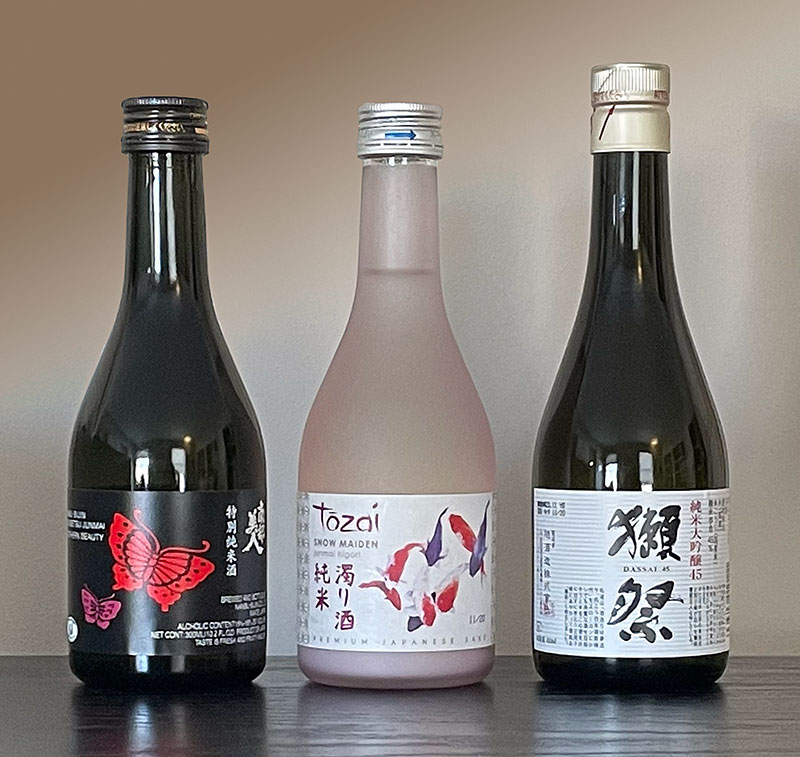
Dassai 45 Saké
Saké, the national alcoholic beverage of Japan, is often called rice wine, but this is a misnomer. While it is a beverage made by fermentation, the production process more closely resembles that of beer, and it is made from grain (rice, of course), not fruit. To make saké, the starch of freshly steamed glutinous rice is converted to sugar and then fermented to alcohol. Once fermented, the liquid is filtered and usually pasteurized. Sakés can range from dry to sweet, but even the driest retain a hint of sweetness.
Dassai 45 Junmai Daiginjo
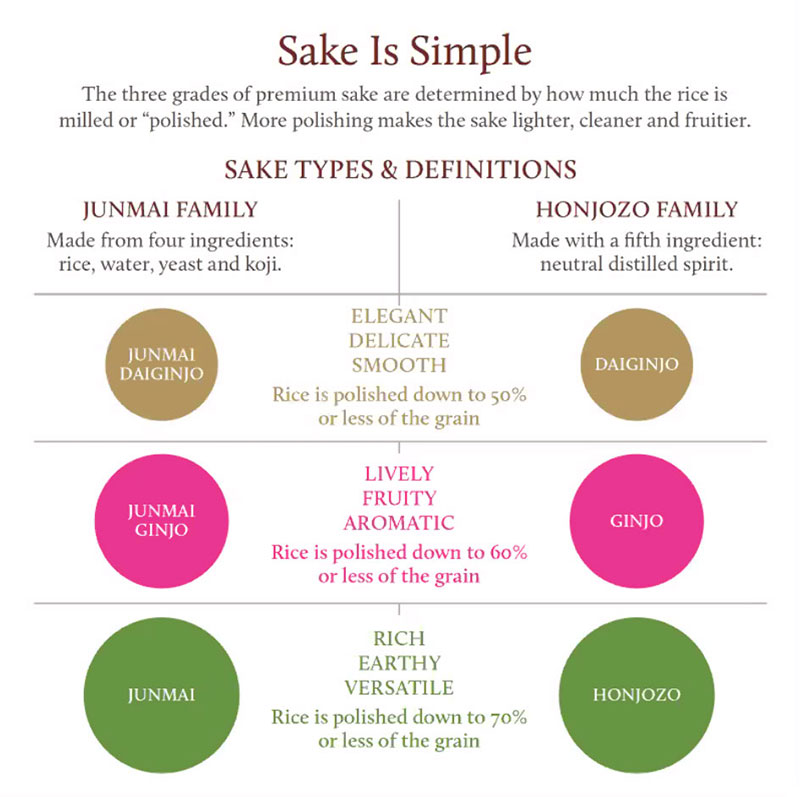
Daiginjo is the highest grade of saké. Junmai Daiginjo has the highest milling rates in saké production, with a minimum of 50% rice polished away and 50% remaining. But that standard is often surpassed by brewers looking to push the rice milling envelope, resulting in sakés that can be milled down to 35%, down to 23%, and even 7% remaining! These sakés are always served chilled.
Dassai translates to ‘Otter Festival.’ The name comes from a local Yamaguchi legend that involves a bunch of happy-go-lucky otters showing off their fishing skills and showing us humans how it’s done properly. Back in 1981, the Toshiko Akiyoshi-Lew Tabackin Big Band released an album called Tanuki’s Night Out, which tells the story, in music, of Tanuki, another hard-partying otter.
Like Southern Beauty, Dassai 45 has been polished to 45% rice remaining, hence the name. The nose features a banana aroma, with lychee, green apple, and “acidic bubble gum” on the palate. AVB is 16%.
Served chilled, or at room temperature. Although the cheap sake you may encounter in sushi restaurants will usually be heated, often too much so, such treatment will destroy the subtleties of this selection.
 Back to blog posts: winervana.com/blog/