Momokawa Heart & Soul Saké

Momokawa Heart and Soul Saké
Momokawa Heart and Soul Saké. Click here for tasting notes.

Momokawa Heart and Soul Saké

Saké is often called rice wine, but this is a misnomer.  While it is an alcoholic beverage made by fermentation, the production process more closely resembles that of beer, and it is made from grain (rice, of course), not fruit.  To make saké, the starch of freshly steamed glutinous rice is converted to sugar and then fermented to alcohol.  Once fermented, the liquid is filtered, heated, and placed in casks for maturing.  Sakés can range from dry to sweet, but even the driest retain a hint of sweetness.

Continue reading “Momokawa Heart & Soul Saké”

Momokawa Pearl Saké

Momokawa Pearl Saké.
Momokawa Pearl Saké. Click here for tasting notes.

Momokawa Pearl Saké

Saké, the national alcoholic beverage of Japan, is often called rice wine, but this is a misnomer.  While it is a beverage made by fermentation, the production process more closely resembles that of beer, and it is made from grain (rice, of course), not fruit.  To make saké, the starch of freshly steamed glutinous rice is converted to sugar and then fermented to alcohol.  Once fermented, the liquid is filtered and usually pasteurized.  Sakés can range from dry to sweet, but even the driest retain a hint of sweetness.
Continue reading “Momokawa Pearl Saké”

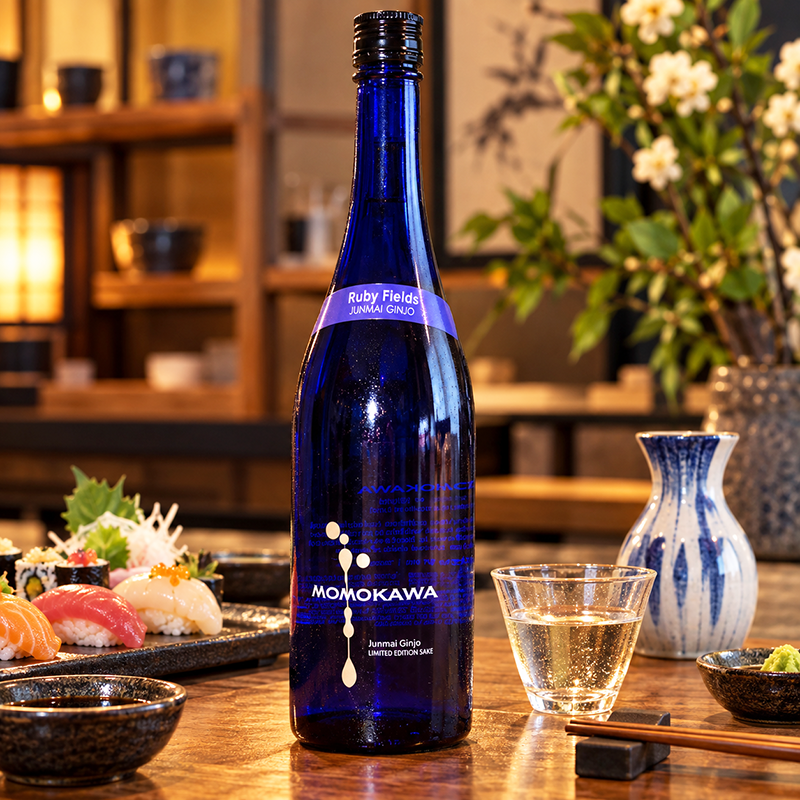
Momokawa Ruby Fields Saké

Momokawa Ruby Fields Saké
Momokawa Ruby Fields Saké, Click here for tasting notes.

Momokawa Ruby Fields Saké

Saké, the national alcoholic beverage of Japan, is often called rice wine, but this is a misnomer.  While it is a beverage made by fermentation, the production process more closely resembles that of beer, and it is made from grain (rice, of course), not fruit.  To make saké, the starch of freshly steamed glutinous rice is converted to sugar and then fermented to alcohol.  Once fermented, the liquid is filtered and usually pasteurized.  Sakés can range from dry to sweet, but even the driest retain a hint of sweetness.

Continue reading “Momokawa Ruby Fields Saké”