
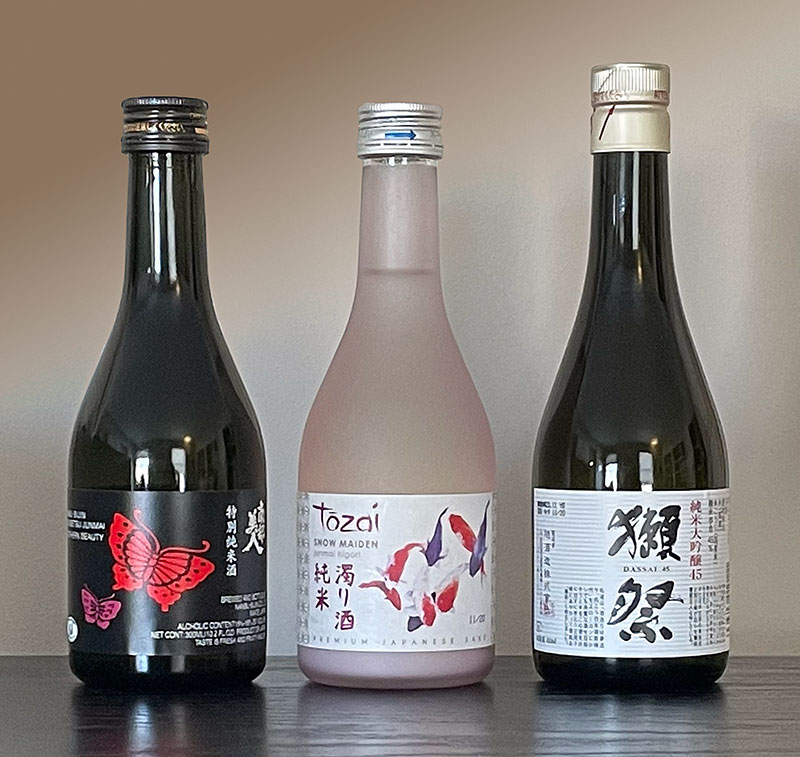
Nanbu Bijin “Southern Beauty” Saké
Saké, the national alcoholic beverage of Japan, is often called rice wine, but this is a misnomer. While it is a beverage made by fermentation, the production process more closely resembles that of beer, and it is made from grain (rice, of course), not fruit. To make saké, the starch of freshly steamed glutinous rice is converted to sugar and then fermented to alcohol. Once fermented, the liquid is filtered and usually pasteurized. Sakés can range from dry to sweet, but even the driest retain a hint of sweetness.
Nanbu Bijin “Southern Beauty” Tokubetsu Junmai Saké
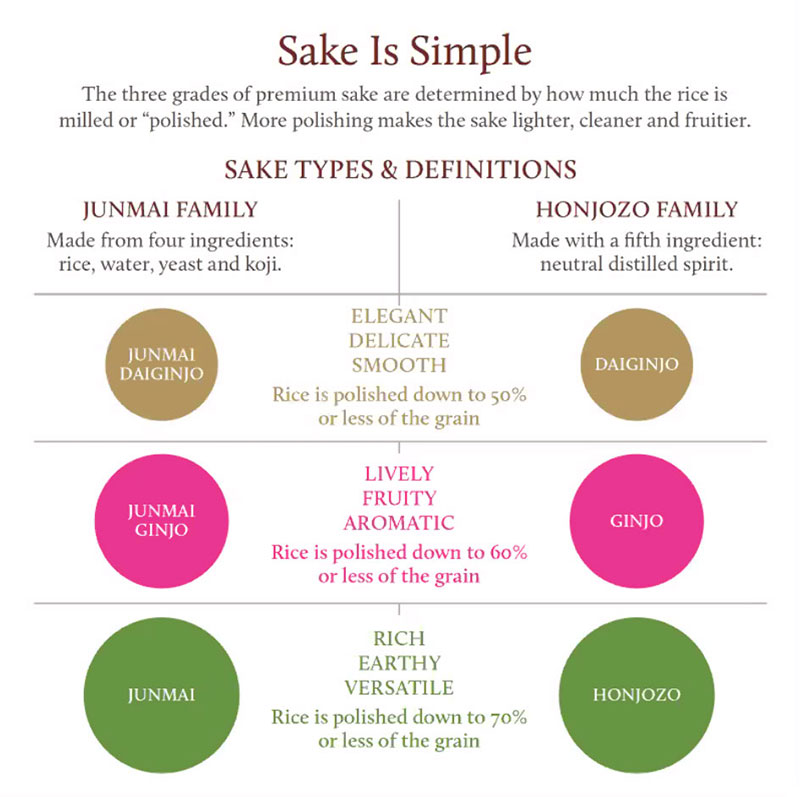
Tokubetsu translates to “special,” indicating that a special element was incorporated into the brewing process at the discretion of the brew master. In the case of this sake, that element is the use of the local Ginginga rice which took over eight years to develop and perfect, according to the brewery. The water, yeast, and brewing team are also all from Iwate prefecture. Junmai is pure rice wine, with no added alcohol. Until recently, at least 30% of the rice used for junmai sake had to be milled away, but Junmai no longer requires a specified milling rate.
Junmai is historically considered the “way saké was” and means “rice and water only,” These brews can have their rice milled to many different levels, from 80% with 20% removal to 55% with 45% removal, as long as the milling percentages are on the label. The result is that some Junmai can drink very rich and full-bodied, and some drink lighter and more elegant. They can be served chilled, at room temperature, or warmed (but I suggest avoiding warming this one).
Southern Beauty has been milled to 55%, with 45% removal of rice, about as high as it gets. It is Kosher certified, unusual among sakés. It has a soft, round character, with a flavor reminiscent of mandarin oranges. ABV is 15.3%.
Served chilled, or at room temperature. Although the cheap sake you may encounter in sushi restaurants will usually be heated, often too much so, such treatment will destroy the subtleties of this selection.
 Back to blog posts: winervana.com/blog/