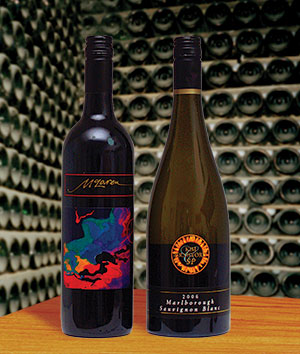
Linchpin McLaren Vale Shiraz and Kim Crawford Sauvignon Blanc

Linchpin McLaren Vale ShirazLinchpin McLaren Vale Shiraz 2004

This award-winning Shiraz hails from McLaren Vale on Australia’s southern coast. The complex soil types here combine with the St. Vincent’s Gulf breezes to make for ideal vineyard conditions.

Winemaker Matt Rechner believes the best way to make excellent wine is through simple processes and minimal handling for maximum flavor extraction. Here the grapes were harvested from low-yield vineyards, then spent 20 months in French and American oak. The concentrated fruit, supported by notes of chocolate and blackberry, certainly comes through in this relatively high-alcohol (15.2%) Shiraz. It has a lush, velvet-like mouth feel and well-balanced oak tannins.

Serve with lamb stew accented by eggplant, saffron, and raisins, or shepherd’s pie.

ekhidnawines.com.au/product/linchpin-shiraz-2016/

Kim Crawford Sauvignon Blanc 2006

Kim Crawford is perhaps New Zealand’s most famous wine maker. After 20 years as an independent, three years ago he sold out to an American holding company. However, he was allowed to pursue boutique bottlings, and we have one of those here.

This Sauvignon Blanc dodges the grassiness which so often mars this varietal when it originates in New Zealand. Instead there is a tart, refreshing, distinct grapefruit nose and taste. Completely dry, with a bit of flint on the finish. Delicious.

Pair this wine with lobster tacos, seafood paella, or parmesan-dijon chicken drumsticks.

kimcrawfordwines.com/us/products/sauvignon-blanc/

Back to blog posts: winervana.com/blog/

Sonoma Vineyards

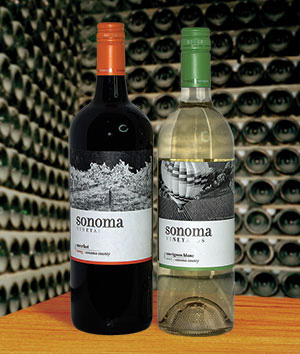
Sonoma Vineyards Sauvignon Blanc and Merlot

Sonoma Vineyards

Tom Klein graduated from Stanford Graduate School of Business in 1979, and established a career as a management consultant. In 1985, Klein received an assignment to evaluate the business of Rodney Strong Vineyards. He liked what he saw, and in 1989 he and his family purchased the winery.

Under the guidance of the Klein family, the winery has prospered and grown to become one of the more respected operations in Sonoma County. Rodney Strong remains the flagship brand of the business, and Sonoma Vineyards is the more casual, relaxed, and affordable “little brother.”

Sonoma Vineyards Sauvignon Blanc 2007

The winemaker at Sonoma Vineyards decided to dabble in sauvignon blanc for the 2007 harvest. The result? A quite tart style of sauvignon blanc, full of really ripe grapefruit flavors (grapefruit being very often characteristic of this grape), along with some tropical fruit that hints of of guava and passionfruit, but with none of the grassy or herbaceous flavors that I think sometimes mar the similar wines from New Zealand. No oak whatsoever was used.

Match this up with spring green salad with chèvre; fresh snapper ceviche (only for the adventurous) with tequila, lime, and roasted sweet peppers; grilled marinated prawns with fresh melon salsa; risotto of lobster and sea vegetables with peas and asparagus; or spicy shrimp ravioli in a citrus achiote vinaigrette.

Sonoma Vineyards Merlot 2003

The label on the back of this bottle states, “…loaded with in-your-face fruit that will have you dreaming of wild berries staining your fingers and juicy plums dribbling down your chin.” Well, not for me. I found this wine to be very much in the European style (not that there’s anything wrong with that.) There is some fruit, but this is counterbalanced by a slightly bitter, slightly smoky finish. The tannins are moderate and unassuming.

Pair this merlot with rosemary portobello burgers, pot roast, or porterhouse steaks with arugula and Parmesan cheese.

www.rodneystrong.com/

Back to blog posts: winervana.com/blog/

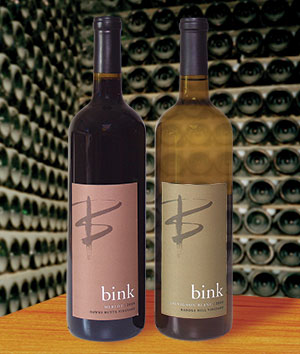
Bink Wines

Bink Wines

The unusually-named Bink Wines is owned and operated by two women, which is also rather unusual (but becoming less so).

Fourth-generation-Californian Cindy Paulson grows the grapes, while also maintaining her day job as an environmental engineer (she earned a doctorate in environmental engineering at Colorado University at Boulder). Her farming philosophy is deeply rooted in sustainable practices, coming from her environmental background and love of the outdoors.

Deb Schatzlein makes the wines. This Connecticut native is known as a fun-loving free spirit; her grandparents set the mold early, making gin in their bathtub during Prohibition. She has degrees in chemistry (with an early career as a chemical engineer) and biology, and has taken extensive coursework in viticulture and enology.

And that name? It’s a contraction of ‘black ink,’ the color characteristic of their red wines.

Bink Randle Hill Vineyard Sauvingon Blanc 2008

This all-stainless-steel 100% Sauvignon Blanc is unfiltered. Consequently, this pale-yellow wine can pour out cloudy, without the crystal-clear appearance most consumers expect. To avoid this, let the bottle rest upright for an hour or so, and decant carefully. Or, if you insist on transparency, you could pour it through a paper coffee filter; unorthodox, and it may strip out some of the flavor nuance, but it works.

This wine’s birthplace, the 13-acre Randle Hill Vineyard, is certified organic, and yielded a small production of 350 cases.

The wine opens with delicately sweet honeysuckle and mango flavors, which then lead to a body featuring grapefruit notes and a supportive minerality.

Serve with Red Chile-Honey Glazed Salmon, BBQ Marlin with Avocado Vinaigrette, or Rum-Brown Sugar-Glazed Shrimp with Lime and Cilantro.

Bink Hawks Butte Merlot 2006

The Hawks Butte vineyard is part of the Yorkville Highlands Appellation, and is located mid-way between the small California towns of Yorkville and Boonville. It is 1200 feet above sea level and 35 miles inland from the Pacific coast. The rocky soils and southern exposure of the vineyard make for high-quality but low-yield vines, providing only enough juice to make 150 cases of this wine.

It was aged for 22 months in 30%-new and 70%-old oak barrels.
As is to be expected of Bink, the color is deep garnet in the glass. The nicely full palate features black currant and stone fruits, supported by somewhat forward tannins and some spice. This Merlot is an excellent value.

Enjoy this substantial wine with Balsamic-Marinated Flank Steak, Asian-Spice Rubbed Pork Chops, or Burgers with Cheddar Cheese and Horseradish Mustard.

Unfortunately, Bink Wine closed permanently in 2017. There is now a totally unrelated Bink Winery in Australia. 

Back to blog posts: winervana.com/blog/


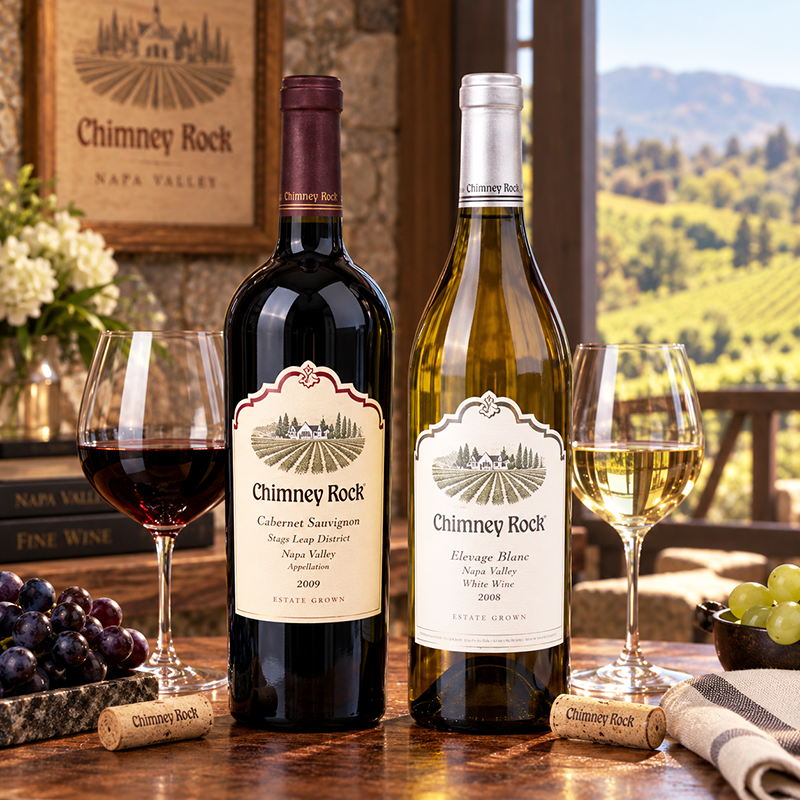
Chimney Rock Winery

Chimney Rock Winery
Chimney Rock Winery. Click here for tasting notes.

Chimney Rock Winery

The Stags Leap District AVA is in the very heart of Napa Valley. It runs from north to south for about three miles along the Silverado Trail, and its 1,350 [very prized] acres were first planted with Cabernet Sauvignon in 1961, for which it would soon become renowned. The name comes from an outcropping of red rocks at the area’s eastern boundary, where a stag supposedly escaped his pursuers by leaping across the treacherous gap.

Continue reading “Chimney Rock Winery”