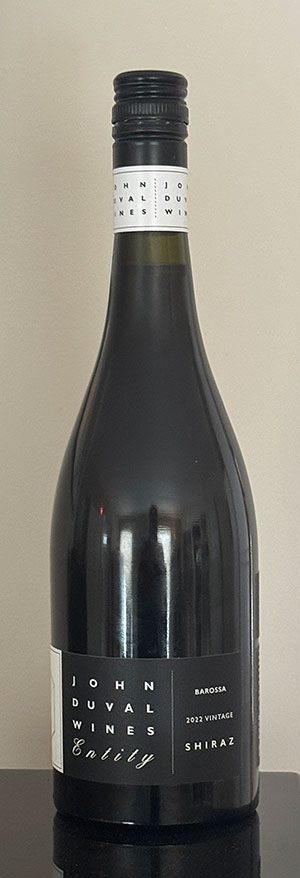
John Duval Wines is a prestigious family-run winery based in the Barossa Valley, South Australia, founded by renowned winemaker John Duval in 2003.
Duval comes from a long lineage of grape growers. The Duval family supplied grapes to top South Australian producers for over 100 years.
After studying winemaking at the University of Adelaide’s Roseworthy College, Duval began his career at Penfolds in 1974, eventually serving as Chief Winemaker from 1986 to 2002.
Through the 1990s he played a leading role in experimenting with the maturation of old vine Barossa Shiraz in new French oak, contrary to the established winery convention of blending Shiraz from multiple regions and maturation in American oak.
At Penfolds he was instrumental in crafting the legendary Penfolds Grange and other major wines before leaving to create his own label rooted in the Barossa and Eden Valley’s old-vined vineyards.
The style tends toward elegance, structure, and layered complexity, showcasing varietal character rather than heavy oak or hyper-extraction.
Nestled within the picturesque McLaren Vale wine region in South Australia, Hardys Tintara winery stands as a testament to the rich history and enduring legacy of Australian winemaking. Established in 1861 by the visionary Dr. Alexander Charles Kelly, Tintara has weathered the test of time, producing wines that have not only earned global acclaim but have also become an integral part of Australia’s winemaking narrative.
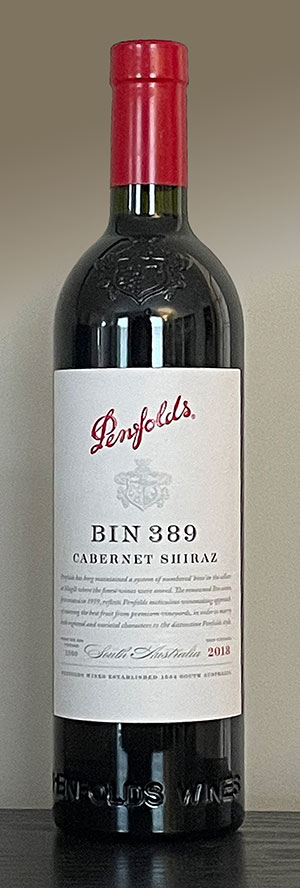
Penfolds Bin 389 Cabernet Shiraz 2018. Click here for tasting notes.
Penfolds Bin 389 Cabernet Shiraz 2018
Until Yellow Tail precipitated the boom in “critter wines” in 2000, it can be argued that Penfolds was just about synonymous with Australian wine in the U.S. The label is ubiquitous here, in both grocery stores and fine wine shops. Prices range from about $12 per bottle for the Koonunga Hill Shiraz-Cabernet, to $700 for the legendary Grange, and everything in between. (That $700 is doubly amazing, because just five or six years ago Grange was “only” about $200.) The selections are mostly reds plus a few whites and even a tawny Port.
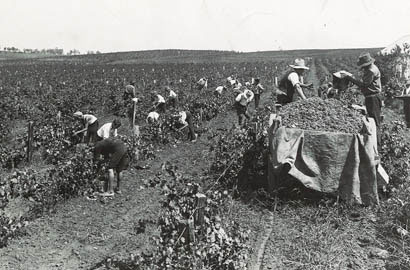
Founders Dr. Christopher and Mary Penfold immigrated to Australia from England in 1844, bringing their own French vine cuttings. Not long after, their fledgling vineyard was officially established as the Penfolds wine company at the 500-acre Magill Estate in Adelaide.
McLaren Vale is a wine region in south Australia about 20 miles from “Australia’s Wine City,” Adelaide. Vines were first planted here in 1838, but things didn’t really get going until about 40 years later. By the turn of the twentieth century, McLaren Vale was established as one of Australia’s premier wine regions, a position it holds until this day, with over 80 wineries and 13,000 acres under vine. This coastal zone sits between the Mount Lofty Ranges and the tempering sea. The growing season is long and warm, and features good air drainage to prevent frosts.
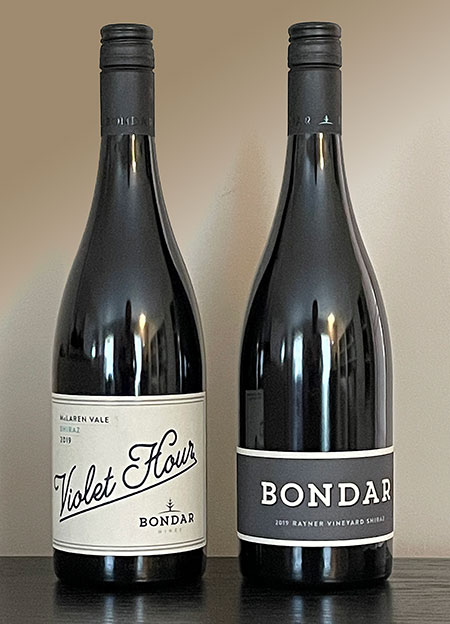
It was here that Andre Bondar decided to set up shop. He originally got the wine bug in 2001 after working a vintage in Oregon. Following that, he worked at Tyrrell’s, in the Hunter, and historic Hardys Tintara, in McLaren Vale, as well as at Padthaway. He credits a vintage with Northern Rhône legend Alain Graillot with being hugely influential, particularly in respect to the impact of whole bunch fermentation. “It changed the way I made wine,” Bondar says. Finally came formal training, and Bondar took a postgraduate winemaking degree at Adelaide University in 2005. He then worked at Nepenthe, in the Adelaide Hills, from 2006. He started as a cellar hand and left seven years later as the senior winemaker. Continue reading “Bondar Shiraz”
Until Yellow Tail precipitated the boom in “critter wines” in 2000, it can be argued that Penfolds was just about synonymous with Australian wine in the U.S. The label is ubiquitous here, in both grocery stores and fine wine shops. Prices range from about $12 per bottle for the Koonunga Hill Shiraz-Cabernet, to $850 for the legendary Grange, and everything in between. (That $850 is doubly amazing, because just five or six years ago Grange was “only” about $200.) The selections are mostly reds plus a few whites and even a tawny Port.
Founders Dr Christopher and Mary Penfold immigrated to Australia from England in 1844, bringing their own French vine cuttings. Not long after, their fledgling vineyard was officially established as the Penfolds wine company at the 500-acre Magill Estate in Adelaide.
The Penfolds were believers in the medicinal benefits of wine, and they planned to concoct a wine tonic for the treatment of anemia. Initially, they produced fortified wines in the style of sherry and port for Dr Penfold’s patients. The operation enjoyed early growth, and since Dr Penfold was focused on his medical practice, much of the running of the winery was delegated to Mary Penfold, including the cultivation of the vines and wine blending. On Christopher’s death in 1870, Mary assumed total responsibility for the winery. According to one historical account, by that time the business had “grown to over 60 acres with several different grape varieties including Grenache, Vverdelho, Mataro (aka Mourvedre), Frontignac and Pedro Ximenez,” and the estate was “producing both sweet and dry red and white table wines with a growing market in the eastern Australian colonies of Victoria and New South Wales.” Clarets and Rieslings were especially popular.
During her tenure, Mary engaged in experimentation, explored new methods of wine production, looked into ways of combating diseases like phylloxera, and engaged a cellar master by the name of Joseph Gillard.
Penfolds was producing a third of all South Australia’s wine by the time Mary Penfold retired in 1884. The company passed to her daughter Georgina and son-in-law Thomas Hyland. By 1907, Penfolds had become South Australia’s largest winery (It is still big, but it no longer holds that position.) Eventually, the business was passed onto their two sons and two daughters. The company became public in 1962, and the Penfold family retained a controlling interest until 1976.
In 1948, Max Schubert
became the company’s first Chief Winemaker. A loyal company man and true innovator, Schubert would propel Penfolds onto the global stage with his creation of Penfolds Grange. (That’s a story for another time, if I can ever get my hands on a bottle. Hey, Penfolds! A little help here?)
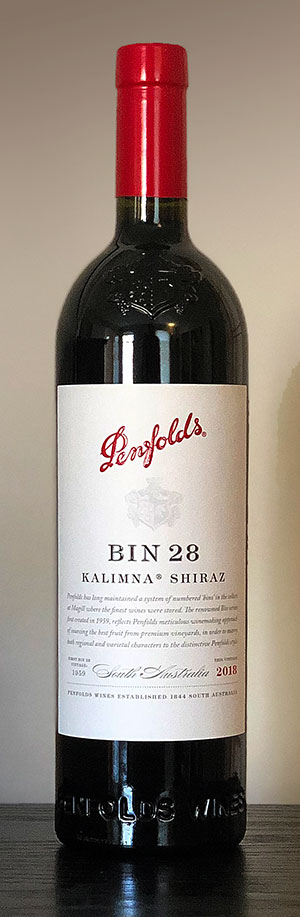
In 1959, while Schubert was perfecting his Grange experiment in secret, Penfolds’ tradition of ‘bin wines’ began. The first, a Shiraz with grapes from the company’s own Barossa Valley vineyards, was simply named after the storage area of the cellars where it was aged. And so Kalimna Bin 28 became the first official Penfolds Bin number wine.
In 1988, after four decades of Grange’s success and growth into a wine world icon, Schubert was named Decanter magazine’s Man of the Year, and on the 50th anniversary of its creation, Penfolds Grange was given a heritage listing in South Australia.
In 1976, control of Penfolds was acquired by Tooth and Co., a brewer based in New South Wales, which in 1982 became part of the Adelaide Steamship Company Group. In 1990, SA Brewing purchased Adelaide Steamship’s wineries. Later, SA Brewing was divided into three separate entities: the wine assets were named Southcorp Wine.
Southcorp Wines became a part of the Foster’s Group in 2005. In 2011, Fosters was split into two separate companies; the wine side became Treasury Wine Estates, headquartered in Melbourne and Penfolds current owner. The chief winemaker since 2002 has been Peter Gago.
Vineyards
Adelaide Magill Estate 5.34 hectares / 13.2 acres
Shiraz (known as Syrah in other parts of the world
Eden Valley High Eden
66.42 hectares / 164.1 acres
Riesling, Pinot Noir, Chardonnay and Sauvignon Blanc Woodbury 69.56 hectares / 171.9 acres McLaren Vale 141 hectares / 350 acres
Shiraz, Grenache, and Cabernet Sauvignon Coonawarra 50 hectares / 120 acres
Cabernet Sauvignon and Shiraz
Penfolds Bin 28 Kalimna Shiraz 2018
Although somewhat deceptively named for a specific Barossa vineyard, this wine is sourced from various South Australian sites. After fermentation, it was aged for 12 months in American oak. An impenetrable dark purple in the glass, it has a nose of dark stone fruits, especially plums, and eucalyptus. The palate is the same, plus cocoa and some bracing tannins. The finish is long and very dry. ABV is 14.5%.
They say imitation is the sincerest form of flattery, and it’s a maxim Sosie Wines lives by. “Sosie” [so-zee] is French for twin or doppelganger, and as it says right on the bottle, “We are inspired by the wines of France. So we employ an Old World approach to wine growing that favors restraint over ripeness, finesse over flamboyance. Our aim is to craft wines that show a kinship with France’s benchmark regions. Wines that are their sosie.”
Sosie Wines also pays homage to the French tradition of location, or terroir, believing that the vineyard site is perhaps the most important component of a bottle of wine.
Sosie Wines co-owner Regina (no last name, apparently) was introduced to wine at an early age, one of the first being Chateauneuf du Pape. “I remember the shape of those bottles and the crossed-keys of the papal crest. It was a symbol you could trust, my mom used to say. I never forgot that, and as a young adult one of the first places I had to visit in France was Chateauneuf. To this day I still love those wines.”
On a quest to cement that fascination, in 2006 she and partner Scott took a trip to the Loire in western France, and then in 2008 they spent 10 days traveling the Côte de Nuits, walking the vineyards and tasting the wines. In 2016 they visited both northern and southern Rhone, working their way down from Côte-Rôtie to St. Joseph
Following their travels, Regina and Scott founded their winery on the belief that their wines should stand for something. That they would not just have a style, but a purpose. They wanted their products to be food-friendly, with lower alcohol levels, higher acidity, and made in small batches with minimal intervention and just a bit of oak.
The couple are hands-on vintners. They prowl the vineyards throughout the growing season and are at the sorting table when the fruit comes in. They taste the berries, check the sugars and acids, and call the pick. They supervise every aspect of their barrels – the cooper, the forest, and the toast level. But they can’t do it all, of course. They get plenty of help from winemaker Kieran Robinson. Kieran had worked previously at Domaine Pierre Gaillard in France (of course), and had the deep appreciation for French viticulture and winemaking they were looking for.
VIVIO VINEYARD
At just above 800 ft, this is one of the highest vineyards in Sonoma’s Bennett Valley. Sosie grows Syrah as well as Roussanne on the mineral-rich, volcanic soil here. The area, near Petaluma Gap, has a strong marine influence, as cool air pours in from three separate directions and settles into the valley’s bowl, which in the summer months turns to heavy fog. Even so, the days can get quite hot, with temperature swings of 40° to 50° F from daytime highs to nighttime lows. This can mean the fruit is very late ripening due to the extended “hang time” on the vines.. The property is sustainably farmed.
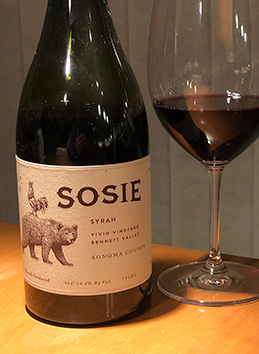
Sosie Wines Syrah 2016
In addition to the Syrah, there is 7% Rousanne in the bottle. It was aged for 20 months in 50% new oak. The nose features aromas of berries, tart cherries, with a hint of plum and menthol. The restrained plum continues on the palate, with some cocoa and, frankly, booming tannins. No worries, though. Decant Sosie Wines Syrah for an hour or two before drinking, and those tannins settle down nicely.
Give this Syrah a try with roast duck with cherries, beef braised in red wine, or pork chops with mustard, cream, and tomato sauce.
Only five barrels (that’s 1500 bottles) of this wine were produced, so get a bottle while you can.
The first mention of wine in the Bible appears in Genesis, chapter 9, verse 20, “And Noah began to be an husbandman, and he planted a vineyard.” The story goes on to recount some unpleasantness after Noah over imbibes, but there is no reason to go into that here. The point is, wine is as old as history itself, with some of its earliest beginnings in the Middle East. Indeed, references to wine appear hundreds of times in Scripture, through both the Old and New Testaments. Continue reading “Carmel Winery”
This award-winning Shiraz hails from McLaren Vale on Australia’s southern coast. The complex soil types here combine with the St. Vincent’s Gulf breezes to make for ideal vineyard conditions.
Winemaker Matt Rechner believes the best way to make excellent wine is through simple processes and minimal handling for maximum flavor extraction. Here the grapes were harvested from low-yield vineyards, then spent 20 months in French and American oak. The concentrated fruit, supported by notes of chocolate and blackberry, certainly comes through in this relatively high-alcohol (15.2%) Shiraz. It has a lush, velvet-like mouth feel and well-balanced oak tannins.
Serve with lamb stew accented by eggplant, saffron, and raisins, or shepherd’s pie.
Kim Crawford is perhaps New Zealand’s most famous wine maker. After 20 years as an independent, three years ago he sold out to an American holding company. However, he was allowed to pursue boutique bottlings, and we have one of those here.
This Sauvignon Blanc dodges the grassiness which so often mars this varietal when it originates in New Zealand. Instead there is a tart, refreshing, distinct grapefruit nose and taste. Completely dry, with a bit of flint on the finish. Delicious.
Pair this wine with lobster tacos, seafood paella, or parmesan-dijon chicken drumsticks.
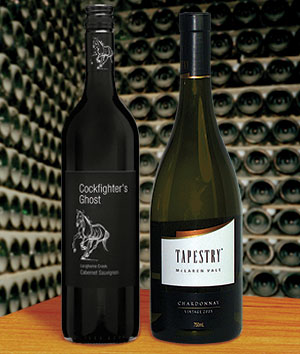
Cockfighter’s Ghost Shiraz and Tapestry Chardonnay
In this post I sample two uncommon wines that only have one thing in common: they both come from Australia’s McLaren Vale.
Cockfighter’s Ghost Shiraz 2002
Some say that if the light of the moon is just right, the ghost of Cockfighter the horse can be seen galloping through the vineyards of Pooles Rock.
Perhaps. The wine named in his memory is anything but ephemeral, however. Cockfighter’s Ghost Shiraz first greets you with a powerful nose of earth and dark berry fruit. The berry and black plum flavors continue on the palate, supported by some spice, black pepper, and oak. The color is a dense, dark crimson.
After letting this shiraz ‘breathe’ for at least an hour to soften its edges, serve with rare roast beef and field mushrooms, spicy sausages with tomatoes and Italian beans, or oven-roasted rack of lamb.
This chardonnay is an excellent value, with more character than its relatively low price would predict.
The wine spent nine months on-lees in new French oak, and features a very appealing balance of juicy stone fruit and a citrus acidity, supported by the spicy, toasty oak, with a moderately long finish. There was no malo-lactic fermentation. The color is pale straw with green tints.
Serve lightly chilled with coquille St. Jacques, fried calamari, or grilled whole red snapper.
[Unfortunately, Tapestry Wines is now reported closed.}





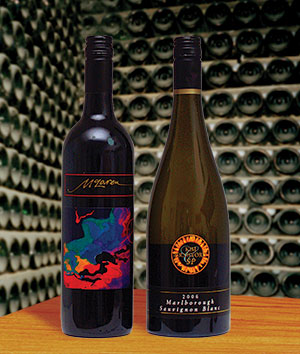 Linchpin McLaren Vale Shiraz 2004