
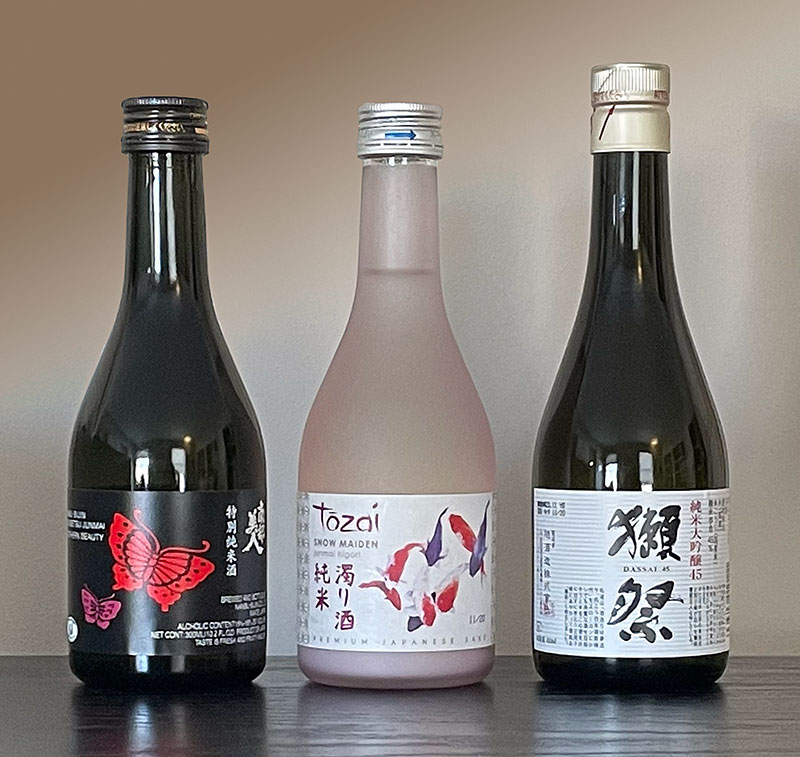
Tozai “Snow Maiden” Saké
Saké, the national alcoholic beverage of Japan, is often called rice wine, but this is a misnomer. While it is a beverage made by fermentation, the production process more closely resembles that of beer, and it is made from grain (rice, of course), not fruit. To make saké, the starch of freshly steamed glutinous rice is converted to sugar and then fermented to alcohol. Once fermented, the liquid is filtered and usually pasteurized. Sakés can range from dry to sweet, but even the driest retain a hint of sweetness.
Tozai “Snow Maiden” Nigori Junmai
Snow Maiden, also known as Hanako, was a koi fish that lived to the age of 226 years in pure mountain water at the base of Japan’s Mt. Ontake. Nigori, or nigorizake, translates roughly to “cloudy” because of its appearance, and is the oldest style of saké. The cloudiness is produced when a brewer leaves in some of the rice lees, or sediment. Nigori is not an unfiltered saké however, as the sake is filtered to some degree. I’m not a big fan of nigori saké because of the rice grit that it always contains. It is quite delicate here, however, and I found it acceptable.
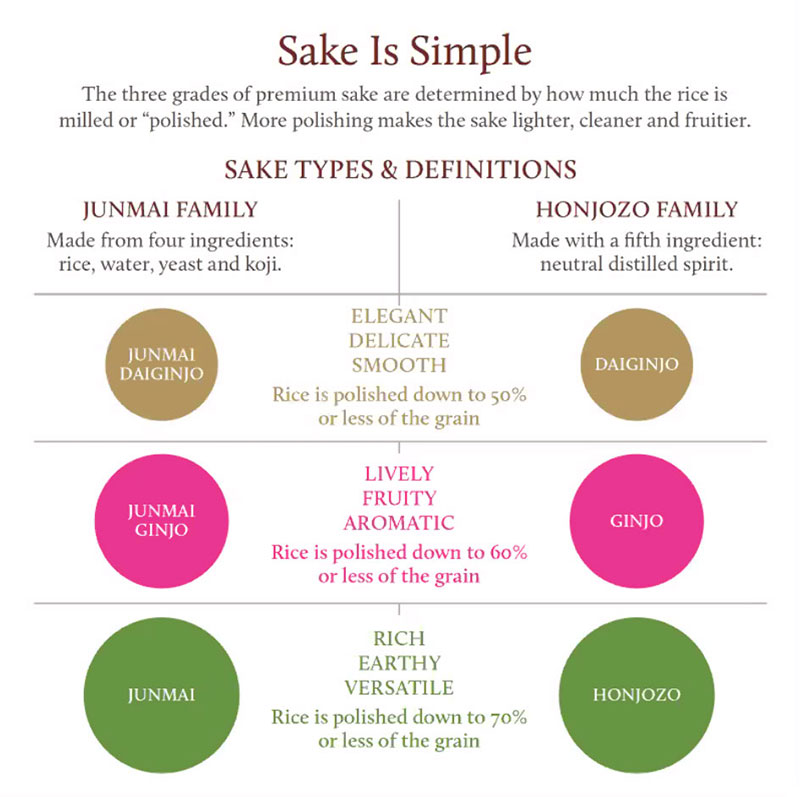
This expression is relatively dry for a nigori saké, as they always tend toward sweetness. It has been milled to 70%, and has a soft, floral palate, with flavors of cantaloupe and a suggestion of daikon. ABV is 14.9%.
Served chilled, or at room temperature. Although the cheap sake you may encounter in sushi restaurants will usually be heated, often too much so, such treatment will destroy the subtleties of this selection.
 Back to blog posts: winervana.com/blog/