
Click here for tasting notes.
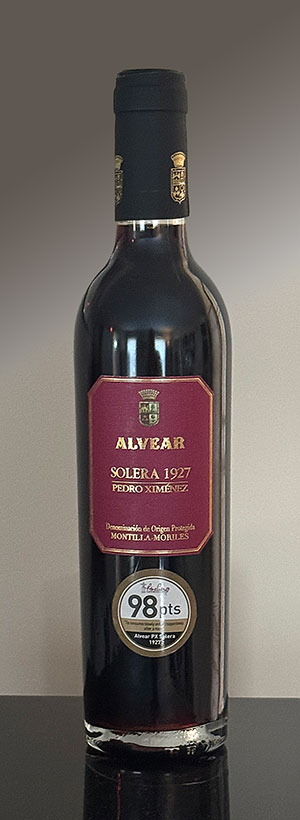
Alvear Solera 1927 Pedro Ximénez
Alvear is the oldest bodega in Montilla-Moriles (Córdoba, Andalucía) and among Spain’s oldest wineries.
Juan Bautista García de Alvear y Garnica was born in Nájera in 1657. He grew up to become mayor of the ‘Noble Kingdom of Nájera’ and the Royal Tax Collector. His son Diego de Alvear y Escalera founded the family wine business.
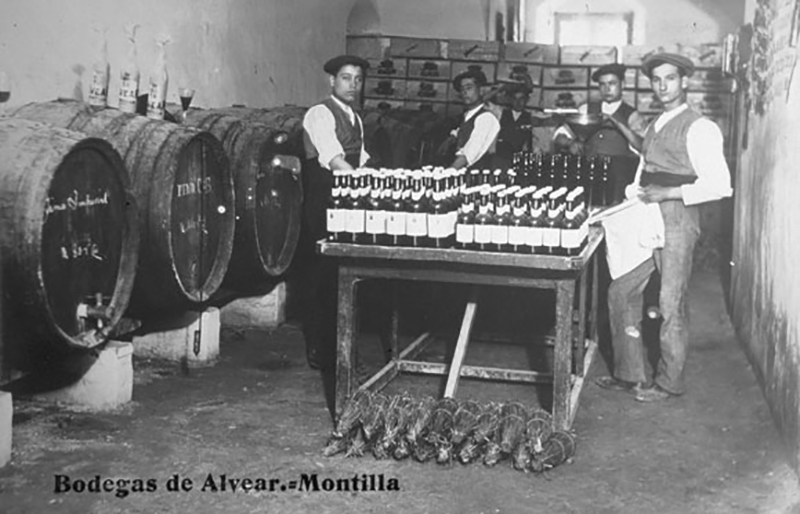
In 1729, Diego constructed the Alvear bodega in Montilla. The bodega was regarded as somewhat small and obscure at the time. Yet this reduced space, given over to wine butts and amphorae, was to become Diego’s most intimate universe.
Over time, Diego became one of the most important land-owners in the city. Together with his son, Santiago, he took the bodega to unprecedented heights when he won a contract to ship wine to England in the late 18th century.
Santiago’s son, Diego de Alvear y Ponce de León [1749 – 1830], was a military man and politician as well as being involved in the winery. He procured an assistant from Argentina, Capataz Billanueva, who would eventually become his right-hand-man.
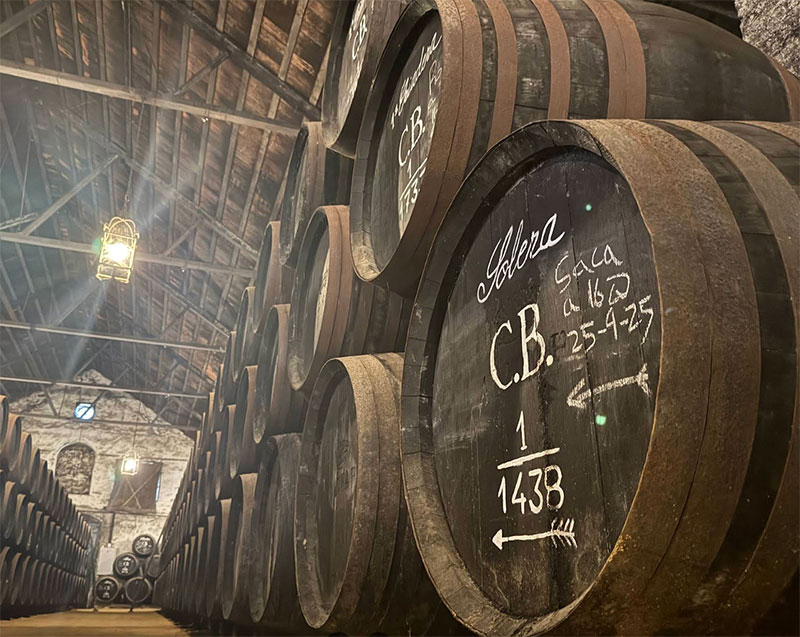
Capataz Billanueva (C.B.) used to mark the barrels containing the best wines from the sierra with his initials, giving rise to the ‘Alvear style’ that brought together the characteristic modernity and homogeneity that distinguished the bodega’s wines These characteristics are still present today in ‘Fino C.B.’, a centuries-old wine and the company’s most well-known brand.
The business is currently in the hands of the eighth generation. Over the decades, each one of the family’s successive generations has contributed to the business, both in the bodega’s strive towards state-of-the-art technology, as well as in its determination to preserve its heritage.
The unique Pedro Ximénez
The Pedro Ximénez grape variety is the star of DO Montilla-Moriles. Legend has it that it was brought from the Rhine by a solider serving in the Spanish army in Flanders, who consequently gave it his name.
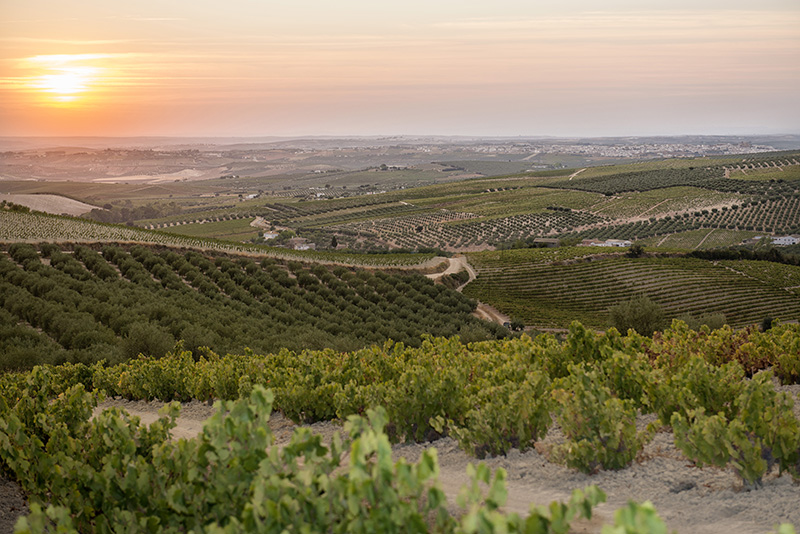
In general, the bodega’s vineyards are cultivated on exceptionally chalky soils. The region boasts two very distinct soil types. White ‘albariza or albero’ soils are very chalky, porous, poor in organic material and produce low yields, where the grapes are subject to a longer and more balanced ripening process. ‘Ruedo’ soils are red in color due to the presence of iron oxides, and which, in contrast, accelerate the ripening process.
To make Pedro Ximénez, the grapes are exposed to the sun after harvest. Grape clusters are spread over plaited esparto grass mats, and the grapes are slowly sun-dried until becoming raisins.
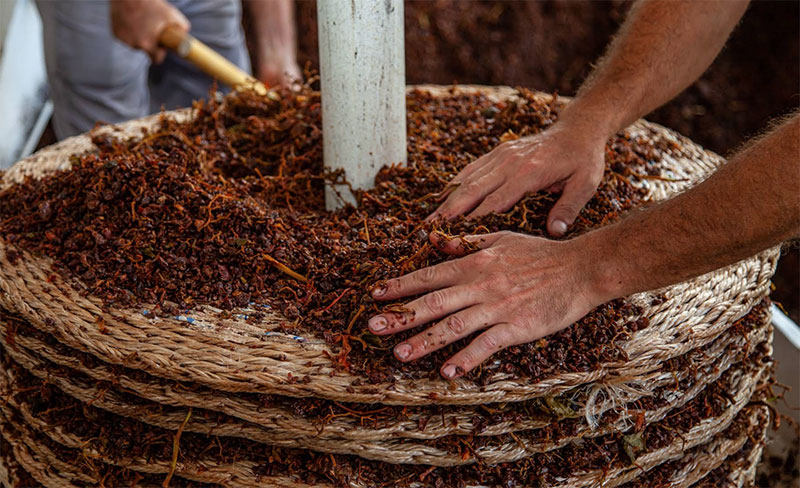
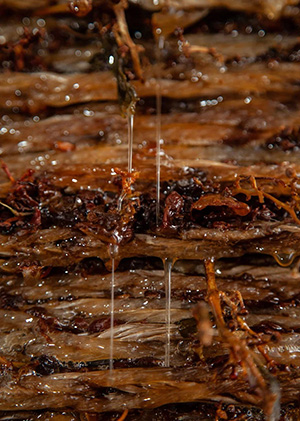
A dense, sweet must is then obtained from the crushed raisins to produce an authentic ‘raisin juice.’
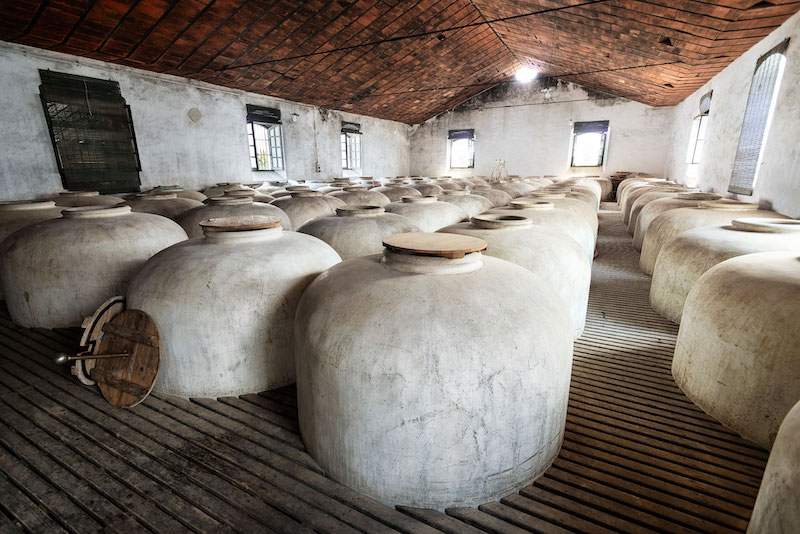
The ultra-sweet must settles in tinajas (traditional clay/concrete jars) and is fortified to about 16% ABV to stop fermentation.
Criaderas y soleras
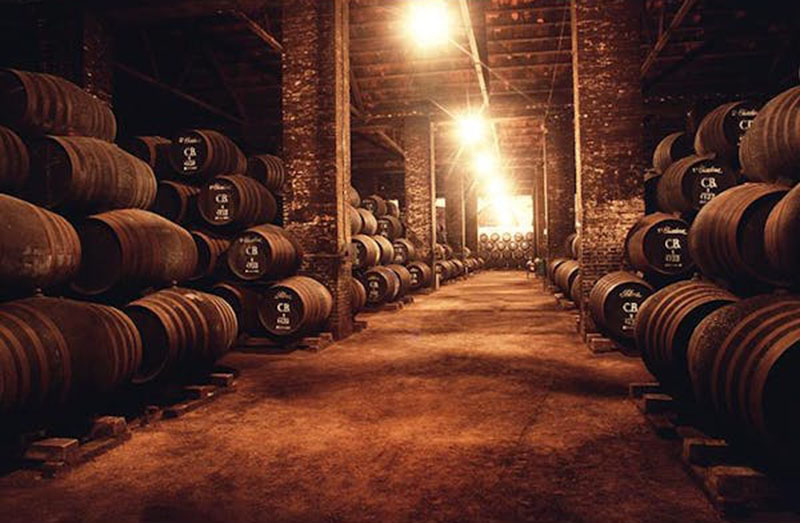
The barrels used to age sherry are called ‘botas’ in Spanish (wine butts) and usually have a capacity of around 500 liters. The preferred wood used to make wine butts is American oak due to its porosity. However, new wood should never be used. In the bodega, wine butts are stacked row upon row to varying heights. The stacks are called ‘cachone.’ The walkway between two cachones is called an ‘andana’ and each row of butts is called a ‘criadera,’ The criadera closest to the floor is called the ‘solera;’ the row above is called the ‘first criadera’’ the next the ‘second criadera’ and so on and so forth.
Each criadera or row contains wine which has been aged for the same amount of time. The solera contains the oldest wine, the first criadera the next oldest wine etc. until reaching the top where the youngest wine is stored. When the wine in the solera is deemed ready for bottling, most of it is drawn off, wine is added from the criadera above it, going up each level in turn. Finally, new wine is added to the very top and the process repeats.
Alvear Solera 1927 Pedro Ximénez Montilla-Moriles
This wine is made from 100% Pedro Ximénez grapes from estate vineyards in the Sierra de Montilla de Calidad Superior (the DO’s “grand cru” zone). The solera that feeds this bottling was started in 1927. The wine in bottle averages about 30 years of age.
This wine pours a dark chocolate brown, with no legs, due to its high viscosity. The rich nose features honey and figs. The mouthfeel is ultra-rich and velvety. The taste is dominated by more honey, with raisins, dates, fig, and caramel. It is extremely sweet, for sure, but very well balanced with just the right amount of natural acidity, and ends with a very long finish. Delicious. (That 98 point rating sticker isn’t from me, of course, since I don’t do numbers. It’s from Robert Parker’s Wine Advocate, but I don’t disagree.) ABV is 16%.
Enjoy this luxurious wine on its own, or pair it with blue cheese, nut-based desserts, chocolate, sweet desserts, even vanilla ice cream.
You can compare this wine to a different, vintage-dated Pedro Ximénez from Alvear here.
Note: Sherry and Montilla-Moriles wines are similar fortified wines from Andalusia, Spain, but differ mainly in the grapes and fortification process. Sherry is primarily made from the Palomino grape, fortified with brandy after fermentation, and aged under a yeast layer called flor for its distinctive flavor. Montilla-Moriles is distinct for being made from the Pedro Ximénez (PX) grape and is often naturally fermented to a higher alcohol level, resulting in a less fortified and slightly softer wine.