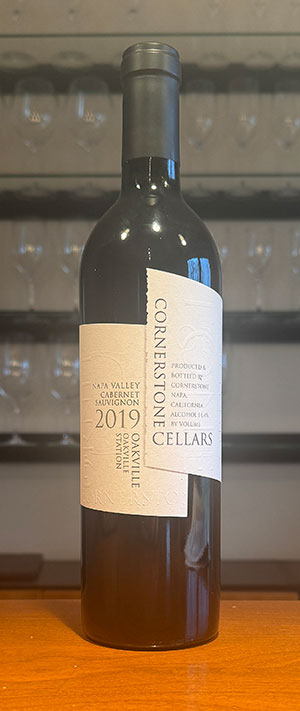
In Napa Valley, some of the most compelling wines come not from sprawling estates but from small, vineyard-focused producers who carefully source fruit from exceptional sites. One such winery is Cornerstone Cellars, a small Napa Valley label known for crafting limited-production wines from prestigious vineyard locations.
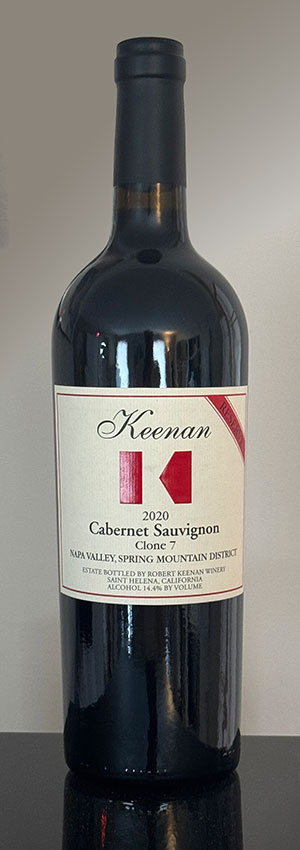
As a reviewer and source of reliable information, I am supposed to be as objective and unbiased as possible. But not today. Keenan wines have long been some of my favorites.
After serving in World War II, Robert Keenan worked as an insurance broker and also invested in commercial real estate. He had been a wine enthusiast for years, including owning a significant collection of Bordeaux wines, and finally decided to have a go at winemaking. Certain that mountain-side vineyards in Napa Valley could produce world class wines, in 1974 Keenan purchased 180 acres (of which 48 are under vine) in the Spring Mountain District at an elevation of 1700 feet. Located on the eastern slope of the Mayacamas mountain range, (Spring Mountain District was declared an American Vineyard Appellation (AVA) in 1993.) The low-vigor soils unique to the region were known to create a stressful environment for vine growth, setting up perfect conditions to encourage vineyards planted on the steep rocky mountainsides to produce wines of great concentration, structure, and pure varietal flavors.
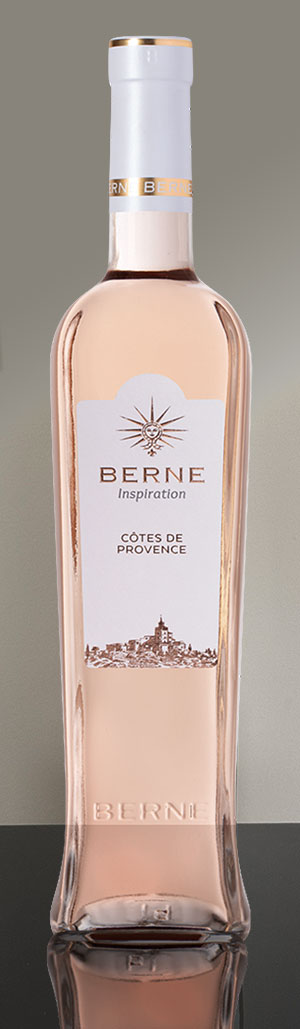
Château de Berne, nestled in the heart of Provence near Flayosc, boasts a rich history that spans over two millennia, evolving from a Roman-era vineyard into a modern luxury estate renowned for its wines and hospitality.
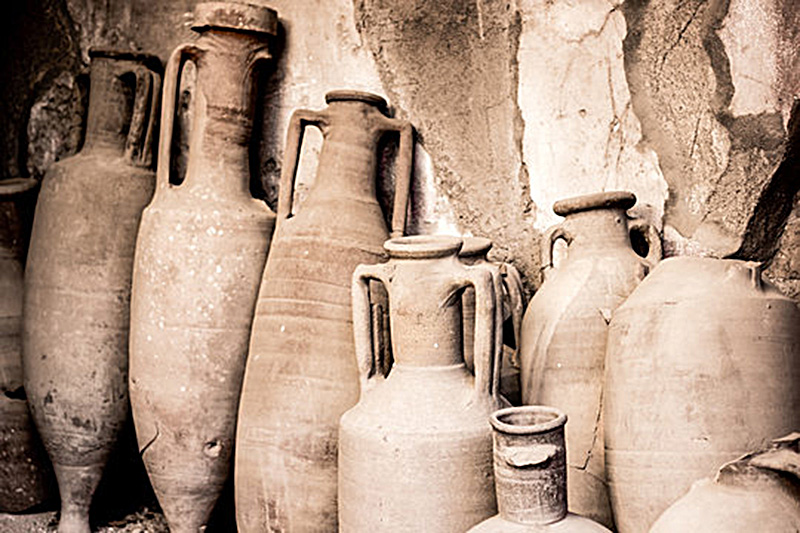
The estate’s viticultural roots trace back to Roman times. Situated along the Via Aurelia—a Roman road connecting Italy to Spain—Château de Berne was strategically positioned for wine trade. Archaeological discoveries, including an ancient oven used for crafting amphorae, tall earthenware jars with two handles and a narrow neck for storing wine, attest to the estate’s early involvement in winemaking and commerce.
Amphorae. Photo: Anthromedia.com
In the 12th century, Count Raymond V of Toulouse gave the estate to Bernard of Clairvaux, the founder of the Cistercian Order. The Cistercians, known for their agricultural prowess, managed the estate until 1307, when it was confiscated by King Philip IV of France. Subsequently, the property came under the ownership of the noble Marquis de Villeneuve family, who maintained it for nearly five centuries.
The 19th century marked a renaissance for Château de Berne under Marius Estellon, a former frigate captain in the imperial army. Estellon expanded the estate, introduced new vineyards, and modernized viticultural practices. A patron of the arts, he also hosted grand events and produced on-site earthenware enhancing the estate’s cultural prominence. Continue reading “Berne Inspiration”
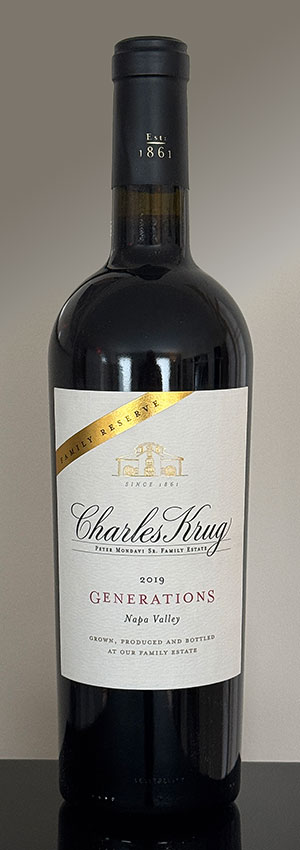
Starting in 1861 in St. Helena, Prussian-born immigrant Charles Krug began transforming 540 acres of prime Napa Valley land that had come to him through his marriage to Carolina Balein. His efforts culminated in what is widely recognized as Napa Valley’s first commercial winery. In 1882, he opened his tasting room, another Napa first.
Krug arrived in California during the Gold Rush era, and soon shifted his attention from prospecting to viticulture, building the stone winery that would become a cornerstone of Napa’s agricultural identity. From the beginning, Krug’s operation was notable for its ambition and for bringing structure and scale to what had been a largely experimental local industry.
The winery’s early success was influenced by both Krug’s business instincts and the valley’s growing reputation as a place where European grape varieties could thrive. But like many historic California wineries, Charles Krug faced major challenges in the late 19th and early 20th centuries, including vineyard diseases (especially phylloxera) and shifting market conditions. The greatest blow to the American wine trade came with Prohibition (1920–1933), when most wineries were forced to shut down or survive by producing sacramental wine or grape products. Charles Krug endured through these years, but the broader Napa Valley wine economy stalled for decades. Continue reading “Charles Krug Generations 2019”
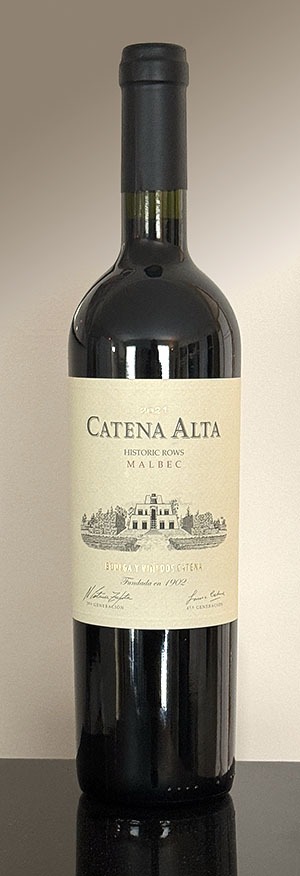
When collectors speak of Argentine Malbec at its most refined, and age-worthy, one name inevitably rises to the surface: Catena Alta. The brand represents a philosophy—one rooted in history, sharpened by science, and expressed through some of the highest and most carefully studied vineyard rows in Mendoza.
Catena Alta is not a separate winery, but rather the top-tier label within Bodega Catena Zapata, the estate that redefined Argentina’s place in the fine-wine world.
The Catena story began in 1902, when Italian immigrant Nicola Catena planted Malbec vines in Mendoza. At the time, Argentina’s wine culture was local and utilitarian—focused on volume rather than terroir or longevity. Malbec thrived in Mendoza’s sun-drenched climate, but its deeper potential remained unrealized.
For much of the 20th century, Catena vineyards followed the prevailing Argentine model: generous yields, warm low-altitude sites, and wines meant for immediate consumption. Quality was respectable, but ambition was limited.
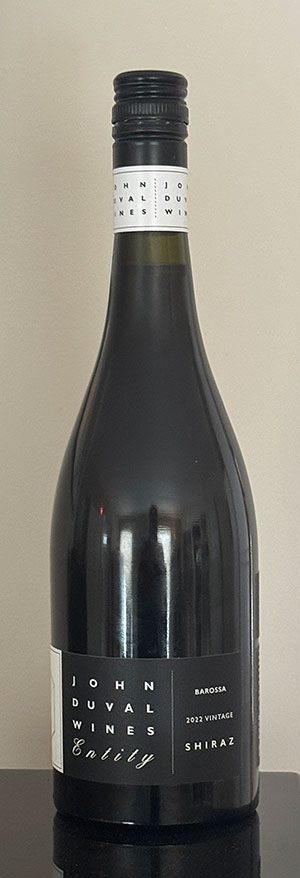
John Duval Wines is a prestigious family-run winery based in the Barossa Valley, South Australia, founded by renowned winemaker John Duval in 2003.
Duval comes from a long lineage of grape growers. The Duval family supplied grapes to top South Australian producers for over 100 years.
After studying winemaking at the University of Adelaide’s Roseworthy College, Duval began his career at Penfolds in 1974, eventually serving as Chief Winemaker from 1986 to 2002.
Through the 1990s he played a leading role in experimenting with the maturation of old vine Barossa Shiraz in new French oak, contrary to the established winery convention of blending Shiraz from multiple regions and maturation in American oak.
At Penfolds he was instrumental in crafting the legendary Penfolds Grange and other major wines before leaving to create his own label rooted in the Barossa and Eden Valley’s old-vined vineyards.
The style tends toward elegance, structure, and layered complexity, showcasing varietal character rather than heavy oak or hyper-extraction.
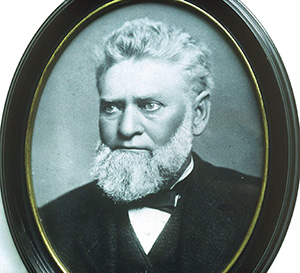
Jacob Schram, a German immigrant, bought 200 acres on Mt. Diamond in Napa valley in 1862 and planted 30,000 vines. He had Chinese laborers dig Napa’s first hillside caves for wine aging and storage. His winery, Schramsberg, gained fame after the author Robert Louis Stevenson wrote about it in his 1883 book, The Silverado Squatters. The wine became so popular that the 23rd President of the United States, Benjamin Harrison, served it in the White House at official functions.
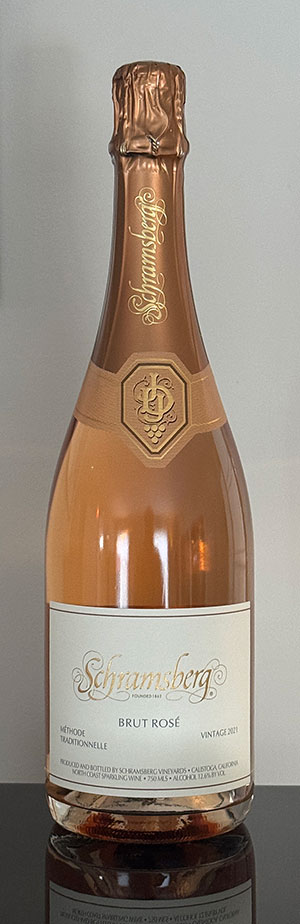
After Schram died in 1905 the property languished until Jack and Jamie Davies purchased it in 1965. They decided to focus on making sparkling wine in the Champagne style using the traditional “méthode champenoise,” (aka “méthode traditionnelle”) to great success.
Their 1965 Blanc de Blancs would be the first commercial use of Chardonnay in American sparkling wine.
Reviving the Harrison tradition, every President since Richard Nixon has featured the company’s sparkling wine at the White House or some official celebration.
For example, in 1972 their sparkling “Blanc de Blancs” wine was served as part of the “Toast to Peace” during the visit by then-President Richard Nixon to China — a symbolic and historic diplomatic moment.
The winery preserves a large portion of forested land on the estate, and from the beginning of the Davies’ ownership they adopted sustainable and preservation-oriented practices — both for the land and the winemaking legacy. Continue reading “Schramsberg Brut Rosé 2021”
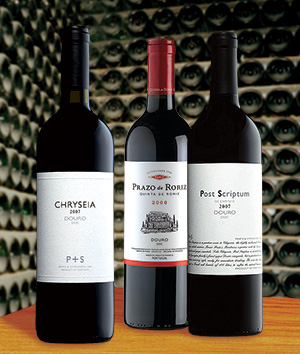
In the 1970s, Portugese rosés such as Lancers and Mateus were the height of sophistication to many young wine drinkers: “It’s imported, and comes in a fun bottle!” With age comes wisdom, and these wines were eventually abandoned for the justifiably famous fortified wines of Portugal, Port and Madeira, produced by many ancient and famous houses.
Much less well-known is Portugal’s status as a producer of both red and white table wine, ranking in the world’s top ten in production. With a population of just 10 million, but top five in per capita consumption, much of that wine is sipped by the thirsty Portuguese.
In the 1970s, Portugese rosés such as Lancers and Mateus were the height of sophistication to many young wine drinkers: “It’s imported, and comes in a fun bottle!” With age comes wisdom, and these wines were eventually abandoned for the justifiably famous fortified wines of Portugal, Port and Madeira, produced by many ancient and famous houses.
Much less well-known is Portugal’s status as a producer of both red and white table wine, ranking in the world’s top ten in production. With a population of just 10 million, but top five in per capita consumption, much of that wine is sipped by the thirsty Portuguese.
In the 1970s, Portugese rosés such as Lancers and Mateus were the height of sophistication to many young wine drinkers: “It’s imported, and comes in a fun bottle!” With age comes wisdom, and these wines were eventually abandoned for the justifiably famous fortified wines of Portugal, Port and Madeira, produced by many ancient and famous houses.
Much less well-known is Portugal’s status as a producer of both red and white table wine, ranking in the world’s top ten in production. With a population of just 10 million, but top five in per capita consumption, much of that wine is sipped by the thirsty Portuguese.
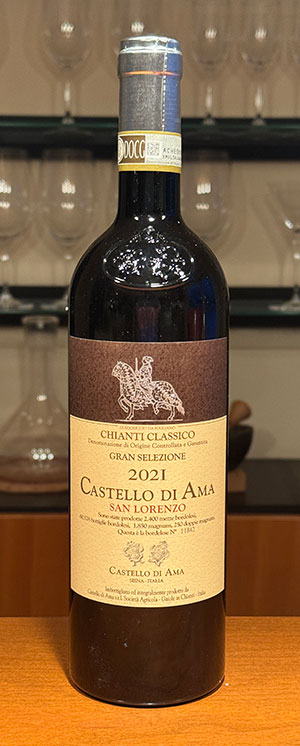
Castello di Ama is located in the small historic village of Ama, in the municipality of Gaiole in Chianti, between Florence and Siena in Tuscany.
The settlement of Ama dates back to Etruscan times, and is first mentioned in medieval documents. Over the centuries it evolved from a fortified “casale” to a proper castle.
By the 1970s the estate had fallen into disuse. In 1976 four Roman families (Sebasti, Tradico, Carini and Cavanna) bought the property to revive and restore the vineyards and winery.
In 1982, a young agronomist named Marco Pallanti became the enologist/winemaker, marking a turning point. His vision, plus that of current CEO Lorenza Sebasti (daughter of one of the founding families) shaped Castello di Ama’s modern identity
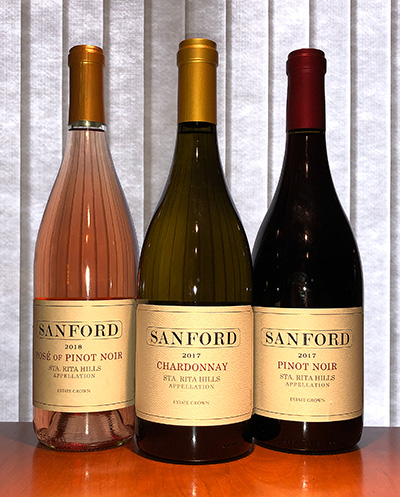
Sanford Winery, the first such operation in Santa Barbara wine country, was established when the Sanford & Benedict vineyard was planted in 1971. Botanist Michael Benedict and his friend Richard Sanford were committed to finding a cool-climate location with just enough heat accumulation to ripen, but not over ripen, wine grapes. A place where they could plant and grow grapes and craft wines, where they hoped the quality might equal the best of Europe.
Benedict began researching and touring the cool coastal regions of California in search of a site that would suit this mission. His pursuit took him to a unique part of the Santa Ynez Valley, to the property that would ultimately become the Sanford & Benedict vineyard. The area owes its magic to an unusual east-west mountain valley that runs from the vineyards to the Pacific Ocean. This passage allows a meteorological ebb-and-flow of air temperature between the mountains and the sea that is ideal for cool-climate varietals.( It was also this vineyard that supplied the cuttings for many of the surrounding vineyards that sprang up in the wake of its success.)
Sanford Winery, the first such operation in Santa Barbara wine country, was established when the Sanford & Benedict vineyard was planted in 1971. Botanist Michael Benedict and his friend Richard Sanford were committed to finding a cool-climate location with just enough heat accumulation to ripen, but not over ripen, wine grapes. A place where they could plant and grow grapes and craft wines, where they hoped the quality might equal the best of Europe.
Benedict began researching and touring the cool coastal regions of California in search of a site that would suit this mission. His pursuit took him to a unique part of the Santa Ynez Valley, to the property that would ultimately become the Sanford & Benedict vineyard. The area owes its magic to an unusual east-west mountain valley that runs from the vineyards to the Pacific Ocean. This passage allows a meteorological ebb-and-flow of air temperature between the mountains and the sea that is ideal for cool-climate varietals.( It was also this vineyard that supplied the cuttings for many of the surrounding vineyards that sprang up in the wake of its success.)
Sanford Winery, the first such operation in Santa Barbara wine country, was established when the Sanford & Benedict vineyard was planted in 1971. Botanist Michael Benedict and his friend Richard Sanford were committed to finding a cool-climate location with just enough heat accumulation to ripen, but not over ripen, wine grapes. A place where they could plant and grow grapes and craft wines, where they hoped the quality might equal the best of Europe.
Benedict began researching and touring the cool coastal regions of California in search of a site that would suit this mission. His pursuit took him to a unique part of the Santa Ynez Valley, to the property that would ultimately become the Sanford & Benedict vineyard. The area owes its magic to an unusual east-west mountain valley that runs from the vineyards to the Pacific Ocean. This passage allows a meteorological ebb-and-flow of air temperature between the mountains and the sea that is ideal for cool-climate varietals.( It was also this vineyard that supplied the cuttings for many of the surrounding vineyards that sprang up in the wake of its success.)
“I came into the field of wine [at a young age], not because my parents were wine drinkers, but because I was given a microscope when I was 12 years old. I heard about these things called yeast, and I wanted to see what they looked like under a microscope. I was told if you want to look at yeast you have to start a fermentation. So I picked some blackberries, fermented the wine, took a sample, and brought out my microscope — and there they were — the little yeast. I’ve been having those yeast work for me ever since.” — Brian Carter
A charming tale of a precocious young scientist, no? There was just one small problem: before he got to actually inspect the yeast, during a robust fermentation that first blackberry wine exploded in his mother’s kitchen. “There was a big stain on the ceiling for a couple of years, until it finally got painted,” Carter admitted. History hasn’t recorded whether that chore fell to Carter or someone else. Continue reading “Brian Carter Cellars Opulento 2014”