
Helioterra Wines
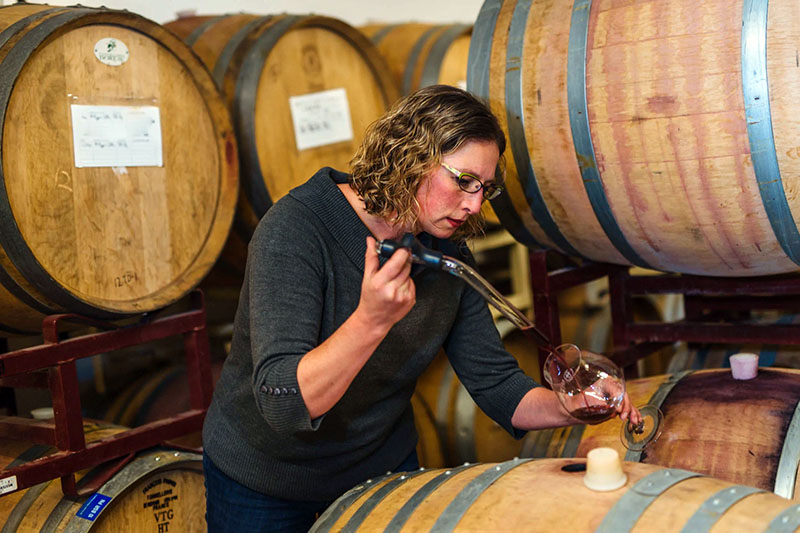
Helioterra Wines Door County is the project of Anne Ebenreiter Hubatch, a Wisconsin native who grew up in Sheboygan, studied geology and environmental studies at UW–Madison, and then moved west. She spent roughly a decade learning winemaking with some significant Oregon names, including Eric Hamacher, David Adelsheim, Dave Paige, Joe Dobbes and Alfredo Apolloni, before releasing the first Helioterra vintage in 2009.
The name is quite deliberate. Helio and terra refer to sun and earth, while heliolite—better known as Oregon sunstone—is Oregon’s state gemstone. That’s a nice connection to Hubatch’s geology background.
Helioterra isn’t an estate winery. Hubatch doesn’t own vineyards; instead she works with growers throughout the Pacific Northwest and buys fruit from specific sites that interest her. Indeed, she specifically told me that she is a winemaker, not a farmer, and never will be a farmer. She describes her objective as making wines that are “pretty, elegant, and graceful” rather than pursuing sheer power.
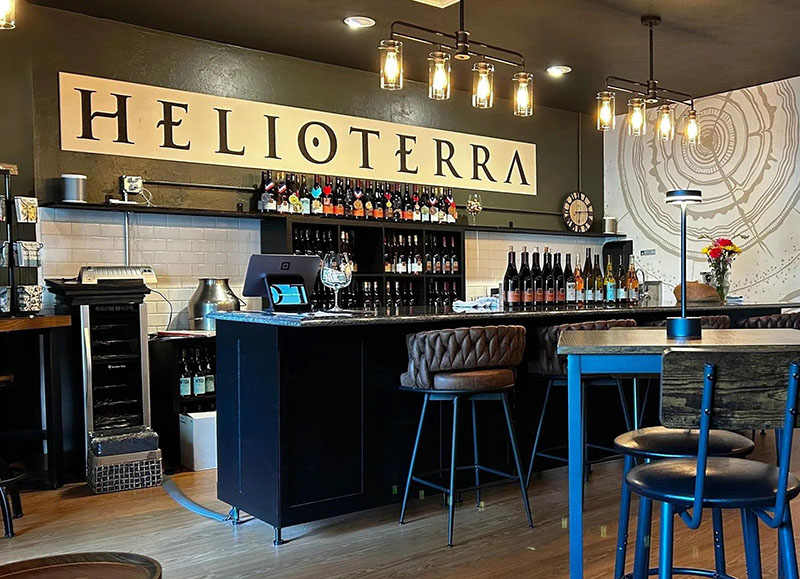
The Fish Creek tasting room is described as “Wisconsin girl comes home”—bringing the wines Hubatch makes in the Pacific Northwest back to Wisconsin. She says it is the only Door County winery/tasting room specifically featuring wines from Oregon’s Willamette Valley.
Helioterra’s lineup is quite eclectic. In addition to Pinot Noir and Syrah, Hubatch has worked with Pinot Blanc, Riesling, Arneis, Melon de Bourgogne and Huxelrebe, as well as Mourvèdre. That’s very much a winemaker’s portfolio rather than one constructed around a few commercially obvious varieties.
Helioterra occupies a completely different category from Anchored Roots, Mixed Meadia, Simon Creek, or Door 44. You’re visiting a Wisconsin tasting room, but you’re essentially tasting a small-production Pacific Northwest winery run by a Wisconsin-born winemaker.
The tasting room pours Helioterra wines by the glass, flight, and bottle. It also sells Whoa Nelly wines, another Hubatch label started in 2010 so that she could offer less expensive wines. Be aware that if you want to consume a bottle you’ve just purchased in the tasting room, even though it is one of Helioterra’s own selections, there is a $10 corkage fee, a very unusual tariff.
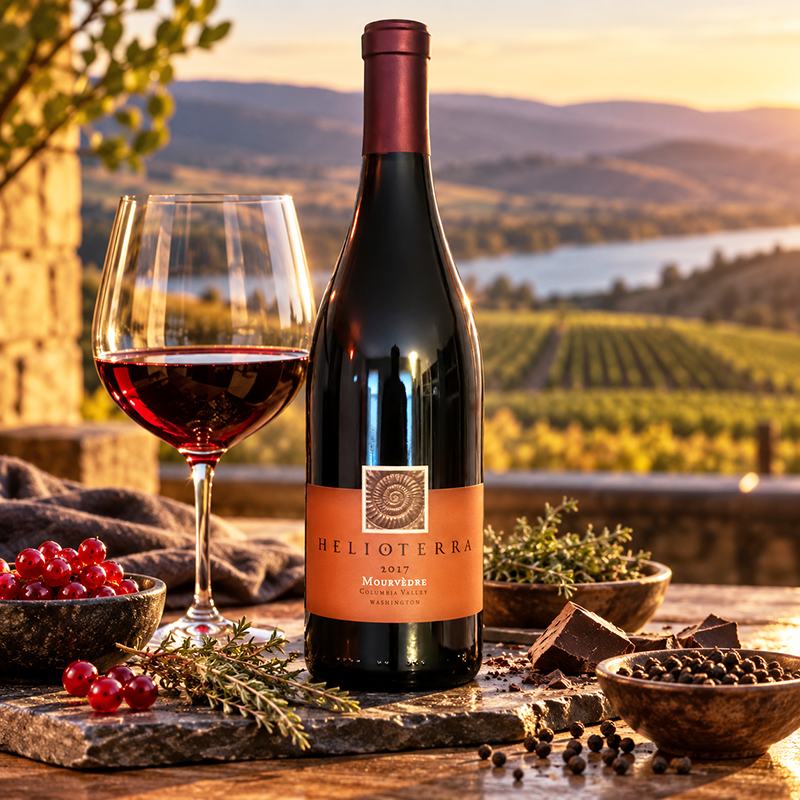
Helioterra Mourvèdre 2017
Mourvèdre—also called Monastrell in Spain and Mataro in some other places—is one of the traditional southern Rhône grapes and the M in GSM (Grenache-Syrah-Mourvèdre). It’s often used as a blending component because it contributes structure, dark fruit, earth, herbs, spice, and a distinctly savory quality.
The fruit for this 100% Mourvèdre bottling comes from the Heart of the Hill Vineyard in the Red Mountain AVA in Washington state. Helioterra identifies grower Scott Williams and notes that the Williams family were early proponents and developers of the Red Mountain AVA. Heart of the Hill sits about halfway up the Red Mountain slope, with exposure and soils that Hubatch considers particularly well suited to this varietal.
The wine was fermented naturally with native yeast and bacteria, without powdered tannins or enzymes. It pours a medium transparent red, much like a Pinot Noir. The nose offers aromas of dark stone fruits and blueberries. These are joined on the medium-bodied palate by plum, sweet cherry, and some dried herbs. It wraps up in a short finish. ABV is 13.1%.
Hubatch is deliberately preserving freshness and savory character here, rather than maximizing ripeness and impact. That’s consistent with her stated preference for elegance in all of her wines. But honestly, it was too elegant for me, even approaching thinness.
That being said, Mourvèdre tends to be excellent with food. Look toward lamb, duck, grilled pork, sausages, beef stew, mushrooms, lentils, Provençal dishes, rosemary or thyme-seasoned meat, and moderately gamey dishes.
Back to blog posts: winervana.com/blog/