

Sanford Winery
Sanford, the first winery in Santa Barbara wine country, was established when the Sanford & Benedict vineyard was planted in 1971. Botanist Michael Benedict and his friend Richard Sanford were committed to finding a cool-climate location with just enough heat accumulation to ripen, but not over ripen, wine grapes. A place where they could plant and grow grapes and craft wines, where they hoped the quality might equal the best of Europe.

Benedict began researching and touring the cool coastal regions of California in search of a site that would suit this mission. His pursuit took him to a unique part of the Santa Ynez Valley, to the property that would ultimately become the Sanford & Benedict vineyard. The area owes its magic to an unusual east-west mountain valley that runs from the vineyards to the Pacific Ocean. This passage allows a meteorological ebb-and-flow of air temperature between the mountains and the sea that is ideal for cool-climate varietals.
The vineyards
The Sanford & Benedict Vineyard was named one of the five most important and iconic vineyards in California by Wine Enthusiast. It is known for both its historical significance and the continued quality of the fruit it produces. Sanford farms 51 acres of vines from the original planting, the oldest in the region. These vines were planted on their own root stock (vitis vinifera), and these “own rooted” vines have flourished for more than 45 years.
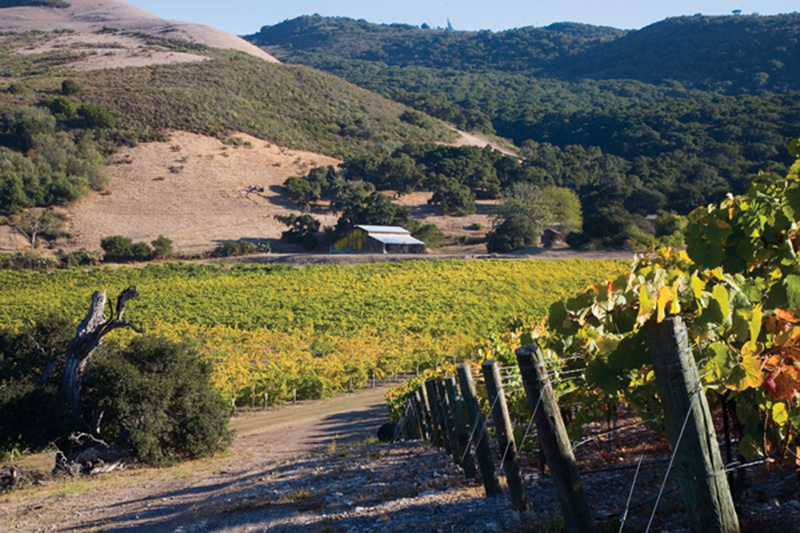
The La Rinconada Vineyard was planted in 1997, and is adjacent to Sanford & Benedict. It is home to 20 vineyard blocks and 12 clones. The same soil and climate conditions make both areas ideal sources for Pinot Noir and Chardonnay.
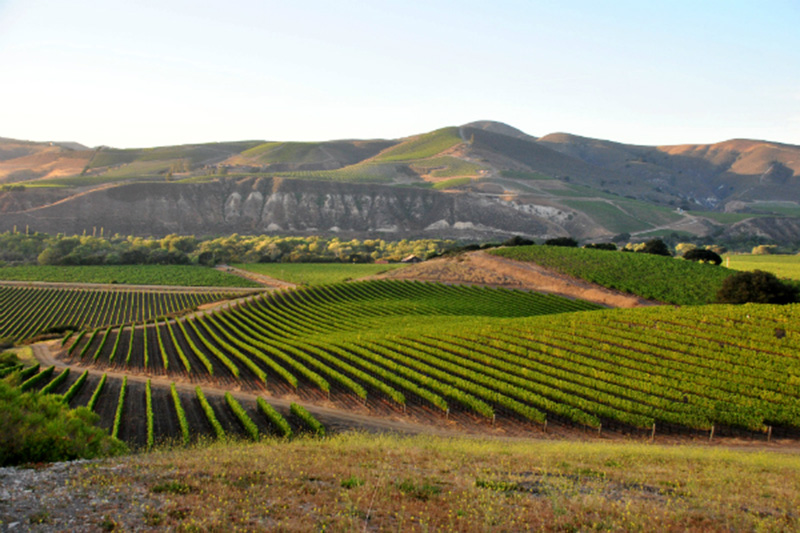
The property in total is comprised of nearly 1,200 acres, with approximately 262 acres planted to vine. Much of the property remains undeveloped natural land, including a 127-acre conservation easement pledged to the Santa Barbara Land Trust.
These two estate vineyards are now part of the Santa Rita Hills AVA, which was designated in 2001.
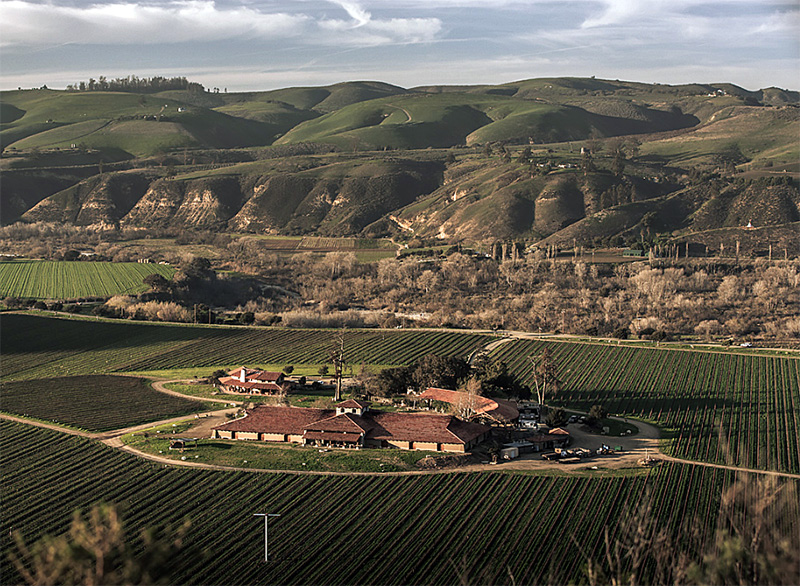
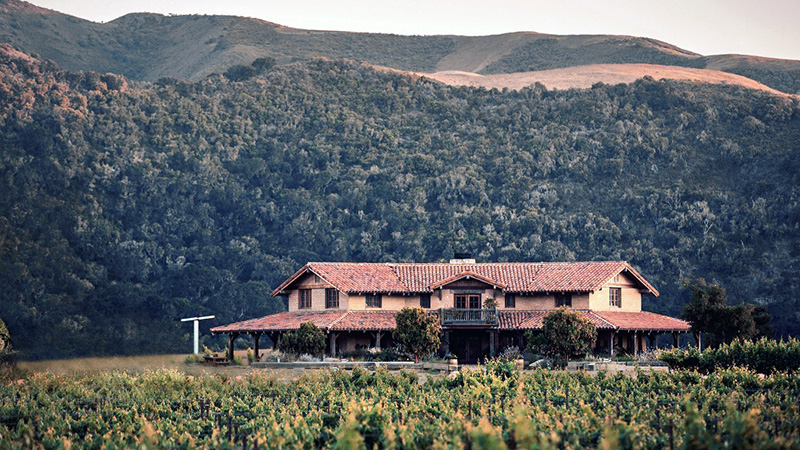
The winery itself is located at Rancho La Rinconada. It was completed in 2001 and was inspired by traditional California mission architecture. The walls are constructed of adobe blocks handmade on site. The insulating quality of this material makes it ideal for a winery. With adobe walls thirty inches thick, there is no need for either heating or air conditioning. The cellar interior is 55º to 65º year-round, with no energy use.
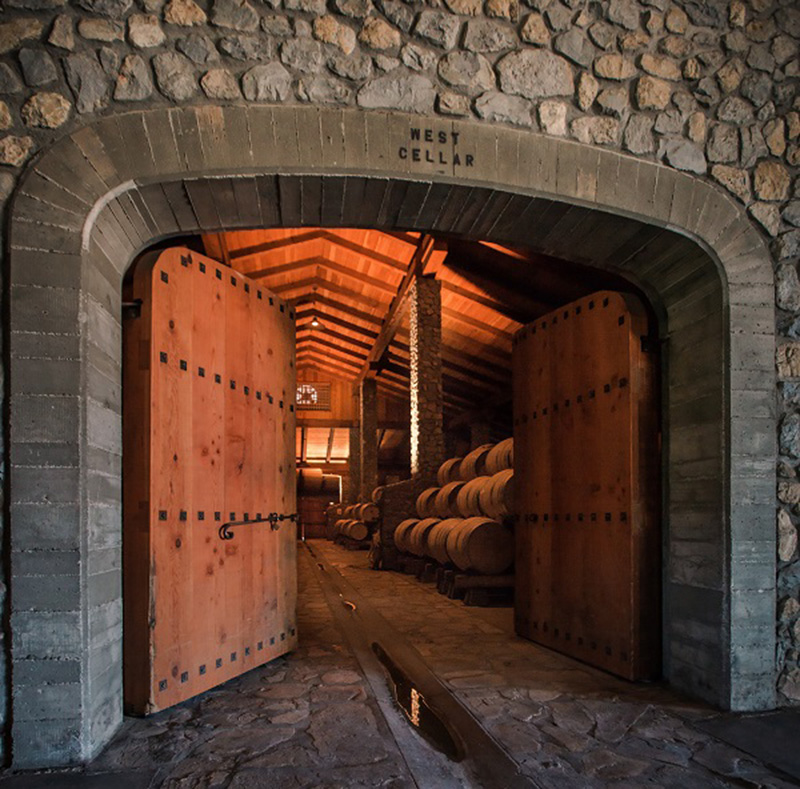
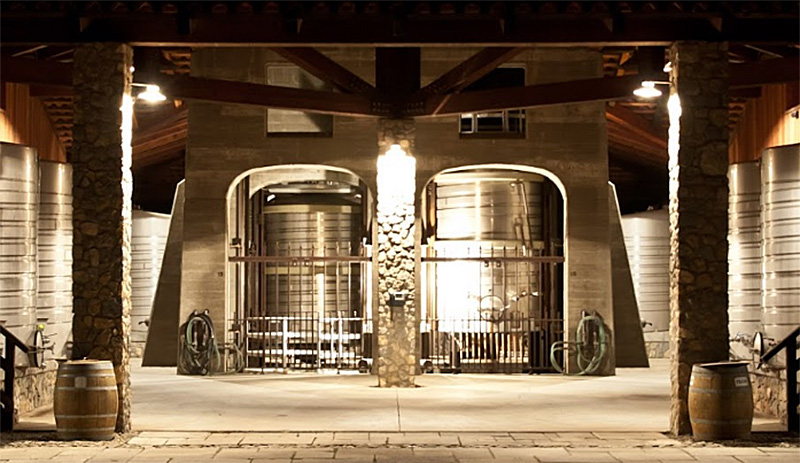
The winery uses a unique and gentle system to move wine through the facility: a gravity racking system. Four 3600-gallon wine tanks are positioned on hydraulic lifts. The winery crew can move a 14-ton tank of wine below ground or 20 feet in the air. The crew then uses gravity to move wine from tank to barrel (or bottling) without disruptive pumping and agitation of the wine.
Winemaker and General Manager Trey Fletcher leads a veteran winemaking team at Sanford. He spent eight years at Bien Nacido Vineyards in Santa Maria, as Winemaker and General Manager, and has also held winemaking roles with Littorai Wines in Sebastopol.

Today, the estate is owned, farmed, and overseen by the Terlato family wine empire. The Terlato family has been involved in the US wine industry for over 70 years with, the motto “Quality Endures.”
Sanford Winery Sta. Rita Hills Pinot Noir 2010
Like the Chardonnay, this wine was exclusively sourced from Sanford’s two estate vineyards. It was then fermented in open-top stainless steel tanks, and finished in French oak barrels for 10 months.
The wine is ruby in the glass, with a nose of tart cherry and orange rind. The dominant cherry notes continue on to the palate; they are complemented by bright acidity and delicate tannins. In keeping with this wine’s subtlety, the body is light and the finish is rather short.
Serve this wine with Sauteed Duck Breast with Pinot Noir Sauce (just don’t squander this Pinot Noir on the sauce), or Salmon en Papillote.
Sanford Winery Sta. Rita Hills Chardonnay 2010
This wine was exclusively sourced from Sanford’s two estate vineyards and was fermented in both 60-gallon French oak barrels and stainless steel tanks.
The color is pale gold, with a delicate, ambiguous nose. This makes the intensity of this racy wine on the palate all the more surprising; plenty of bright citrus and pineapple notes supported by “just enough” oak, a bit of floral character, and a dollop of acidity.
I suggest you pair this Chard with Chicken Breast with Artichokes and Mustard Sauce, Smoked Turkey and Roasted Red Pepper Sandwiches, or Seared Scallops with Fiery Fruit Salsa.
Back to blog posts: winervana.com/blog/