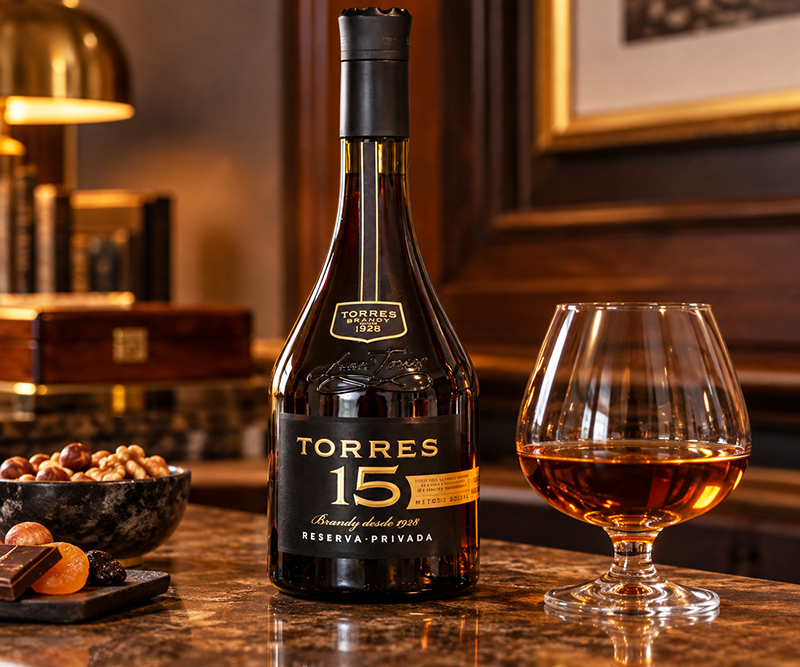
Torres 15 Brandy is made by the spirits arm of Familia Torres, the large, still-family-controlled Catalan wine company founded in 1870. Brandy production dates to 1928. The spirits division is formally known as Juan Torres Master Distillers.

Reviews of wines and spirits for the curious drinker.
Torres 15 Brandy is made by the spirits arm of Familia Torres, the large, still-family-controlled Catalan wine company founded in 1870. Brandy production dates to 1928. The spirits division is formally known as Juan Torres Master Distillers.
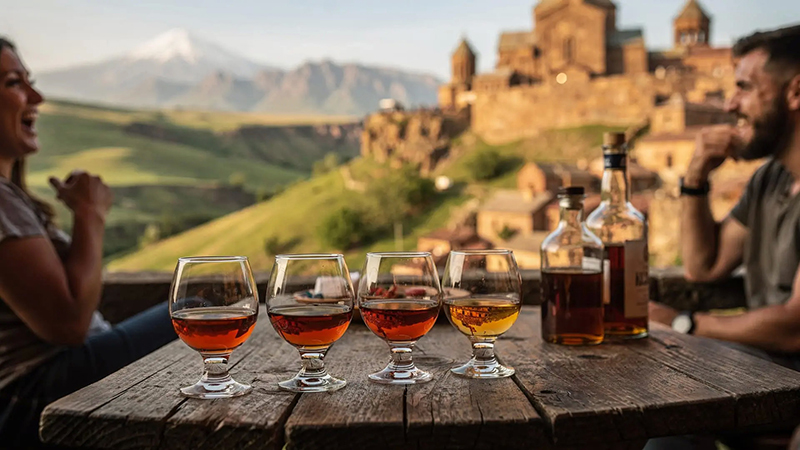
What is Armenian brandy? Armenia has one of the most interesting brandy traditions outside of France. What makes it unusual is that Armenian brandy was deliberately modeled on Cognac from the beginning—Charentais pot stills, double distillation, long oak aging and blending—but developed a distinctly Armenian character through indigenous grapes, climate, and Caucasian oak.
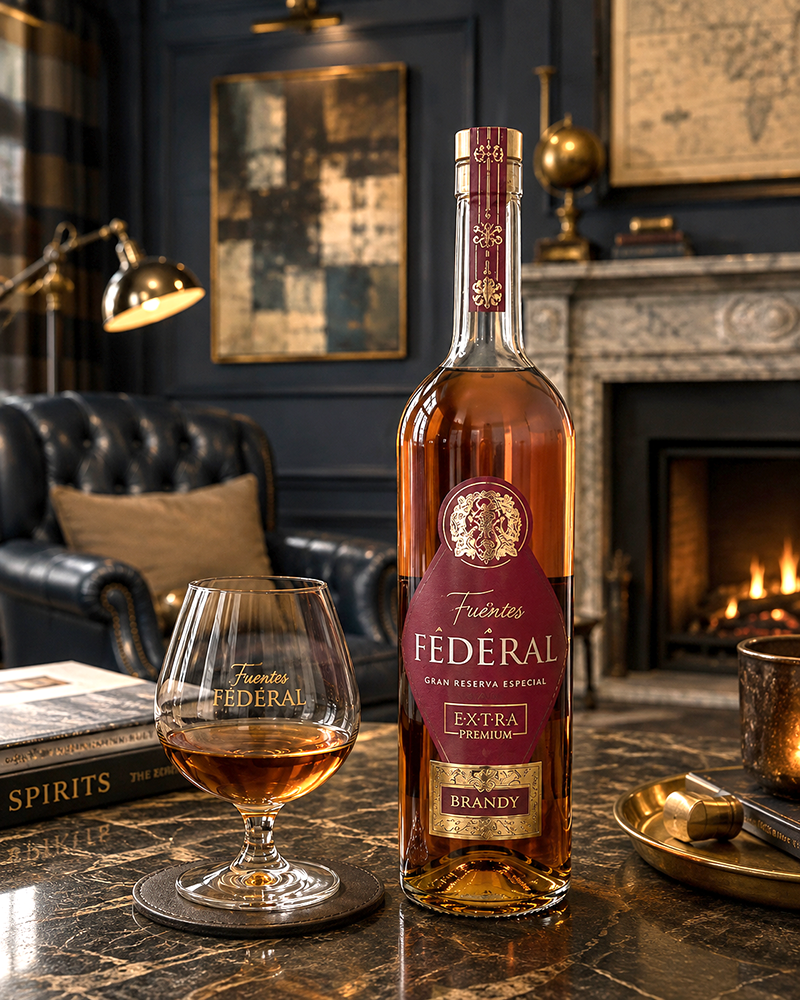
Trésor Fédéral VSOP Brandy is an entry-level Moldovan grape brandy that has only recently appeared in the U.S. market. It isn’t widely known among brandy enthusiasts, and there is relatively little publicly available information compared with established brandy names like St-Rémy, Torres, or a slew of Cognac producers. Here’s what I pieced together from importer information, retailers, and Moldovan brandy traditions.
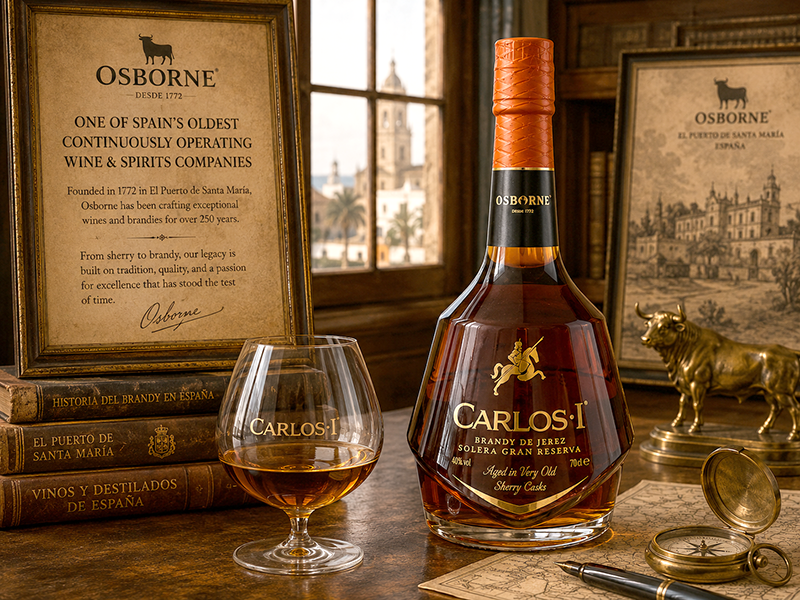
If Cognac represents the pinnacle of French grape brandy, Carlos I Brandy de Jerez is one of Spain’s great answers to it. Produced by Bodegas Osborne, it is arguably the flagship premium Brandy de Jerez, and has done more than almost any other brand to elevate Spanish brandy from an everyday digestif to a world-class sipping spirit.
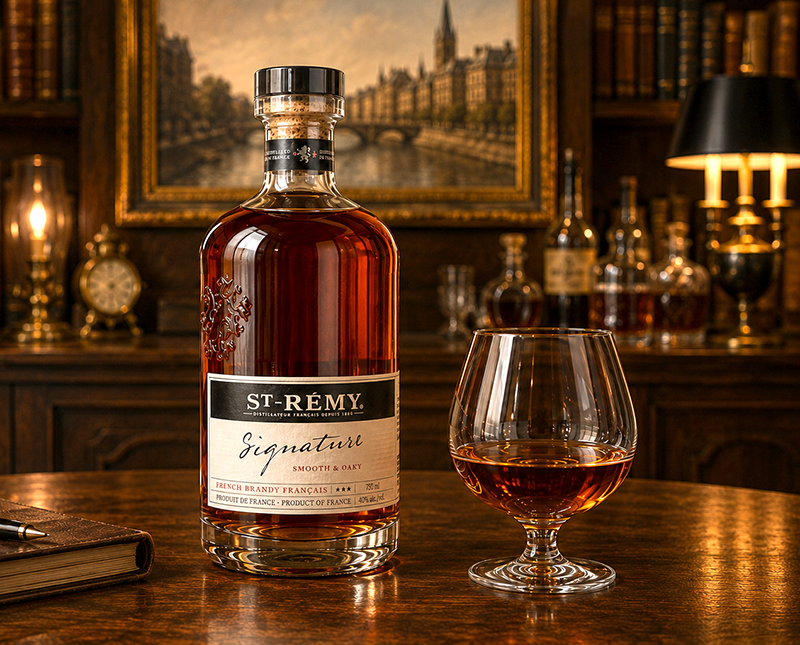
Rémy Martin is one of the world’s oldest and best known Cognac brands, with selections that range, at my local liquor store at least, from the $13 St. Remy French brandy to the $9000 Rémy Martin Louis XIII Time Collection: City of Lights – 1900. (I have tried one of these, but not both.)
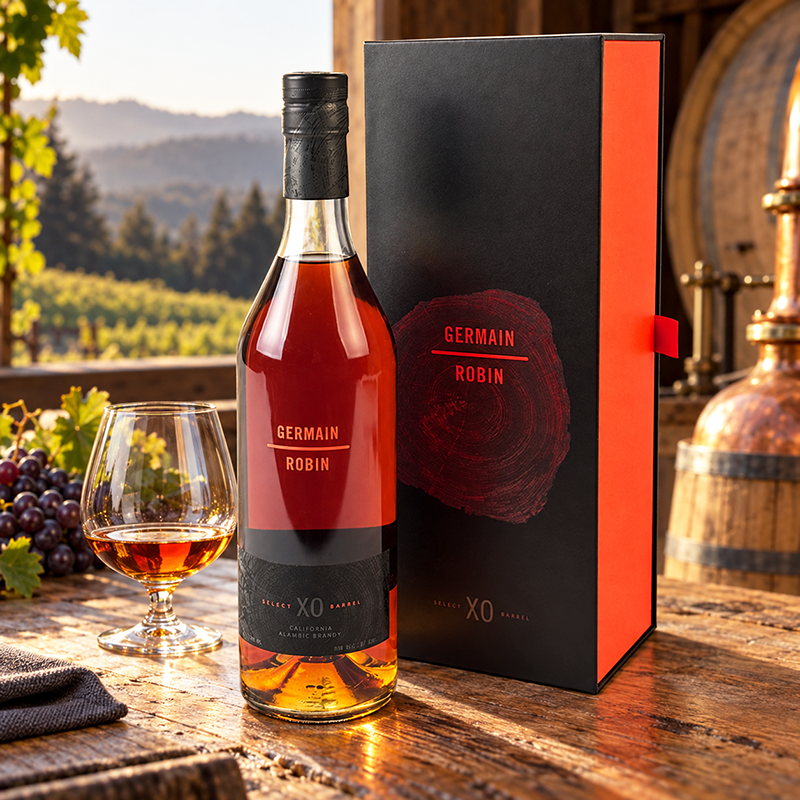
Germain-Robin XO Brandy
In the world of fine spirits, few American producers have challenged Old World orthodoxy as boldly—or as successfully—as Germain-Robin. Long before “craft distilling” became a marketing buzzword, Germain-Robin was quietly rewriting the rules of brandy in Northern California, proving that greatness didn’t have to come from Cognac to rival it.

Wollersheim Winery is located on a scenic hillside overlooking the Wisconsin River, across from Prairie du Sac, Wisconsin, about 30 miles northwest of Madison. In addition to the winery, the property now includes a distillery and a bistro.

Until the early 1900s Cognac was shipped in barrels. The long sea voyages had a profound effect on the quality of the Cognac. When Cognac started to be shipped in bottles, many felt something had been lost. Hoping to recapture that quality, Estonian-born Swedish entrepreneur Olev Keltes established the Kelt Cognac company in 1988. He began his career with the study of the distillation of Cognacs as well as madeira, rum, and aquavit. It was this study that led him to rediscover the lost secret that quality improved in spirits that were aged in barrels on a long trip at sea . It is this maturation at sea that sets Kelt apart from other Cognac houses.

My favorite brandy of all time is Kelt VSOP Tour du Monde. Just a few years ago, it was selling for $40 a bottle; now it’s $60. Brands like Martell, Hennessy, Courvoisier, and Hardy have suffered similar inflation. Capitalism at its finest. Regardless, all of them are too expensive for me to drink on a regular basis. For that, I need a good cheap brandy under $30. American producers include Paul Masson, Christian Brothers, Korbel, and E&J Gallo. And there are readily-available European offerings such as St. Rémy from France, Hartley from Italy, Pedro Domecq from Mexico, and Veterano from Spain.

Is it possible to get a quality XO brandy for $20? If this Dunill XO brandy is any indication, the answer is no. (For just one comparison, Courvoisier XO costs $170. Most XOs cost at least $100, and go up from there.)
Riedel of Austria, famous for its varietal-specific stemware, makes both of these glasses, and both are intended for use with brandy and its variants Cognac, and Armagnac. How is this possible? They could hardly be more different.
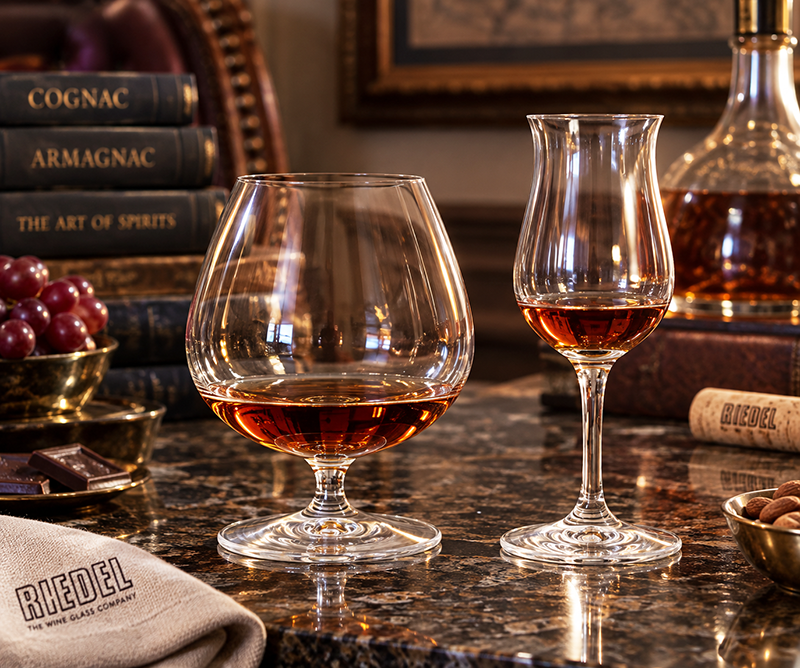
The glass on the left is the iconic brandy snifter, as instantly recognizable as a martini glass. Its large balloon bowl is intended to display as much of a brandy’s aroma as possible. And the wide bottom is intended for cradling in the palm of your hand, warming the brandy to further enhance the nose.
The glass on the right, although named by Riedel specifically for Hennessey Cognac, is suited for any brandy, Cognac, or Armagnac, and is the one preferred by connoisseurs and professionals. The bowl still allows for appreciating the aroma, without accelerating the evaporation like a snifter can, and the tulip shape concentrates it. A similarly-sized and -shaped wine glass can work nearly as well.
While I enjoy stemware like this, as always my advice is to use whatever you like. As far as I’m concerned, if you don’t have to slurp your beverage directly off the counter you’re good to go.
Find out more about brandy by listening to the Winervana Podcast Episode 10 – Brandy, Cognac, and Armagnac.
A note about brandy vs. Cognac: brandy is a liquor distilled from wine and aged in wood. (Brandy can be made from fruits other than grapes as well, but that’s a story for another time.) Cognac is brandy that specifically comes from the town of Cognac and the delimited surrounding areas in western France. (The one which has the most favorable soil and geographical conditions is Grande Champagne.) So, all Cognacs are brandy, but not all brandies are Cognac. For more detail on brandy and Cognac, click here.
Back to blog posts: winervana.com/blog/

At Milwaukee’s Miller Park, home of the Brewers, the official brandy served at the ballpark is Central Standard distillery’s North Wisconsin Brandy. Your day of baseball can include an iconic Wisconsin-style brandy Old Fashioned made with a spirit produced right there in town.

Until the early 1900s Cognac was shipped in barrels. The long sea voyages had a profound effect on the quality of the Cognac. When Cognac started to be shipped in bottles, many felt something had been was lost. Hoping to recapture that quality, Estonian-born Swedish entrepreneur Olev Keltes established the Kelt Cognac company in 1987. He began his career with the study of the distillation of Cognacs as well as madeira, rum, and aquavit. It was this study that led him to rediscover the lost secret that quality improved in spirits that were aged in barrels on a long trip at sea . It is this maturation at sea that sets Kelt apart from other Cognac houses.