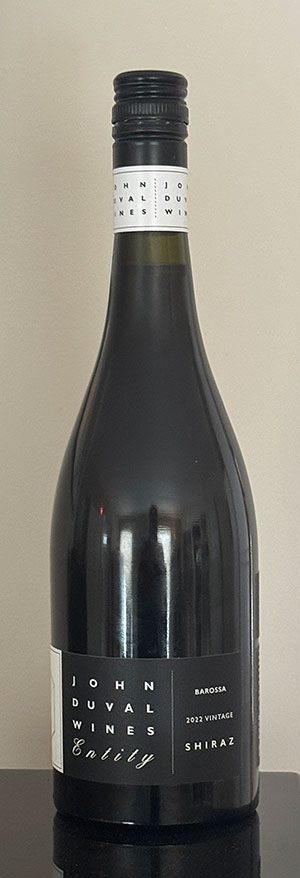
John Duval Wines Entity Shiraz 2022
John Duval Wines is a prestigious family-run winery based in the Barossa Valley, South Australia, founded by renowned winemaker John Duval in 2003.

Reviews of wines and spirits for the curious drinker.
John Duval Wines Entity Shiraz 2022
John Duval Wines is a prestigious family-run winery based in the Barossa Valley, South Australia, founded by renowned winemaker John Duval in 2003.

Hardys Tintara Reserve Shiraz 2019
Nestled within the picturesque McLaren Vale wine region in South Australia, Hardys Tintara winery stands as a testament to the rich history and enduring legacy of Australian winemaking. Established in 1861 by the visionary Dr. Alexander Charles Kelly, Tintara has weathered the test of time, producing wines that have not only earned global acclaim but have also become an integral part of Australia’s winemaking narrative.
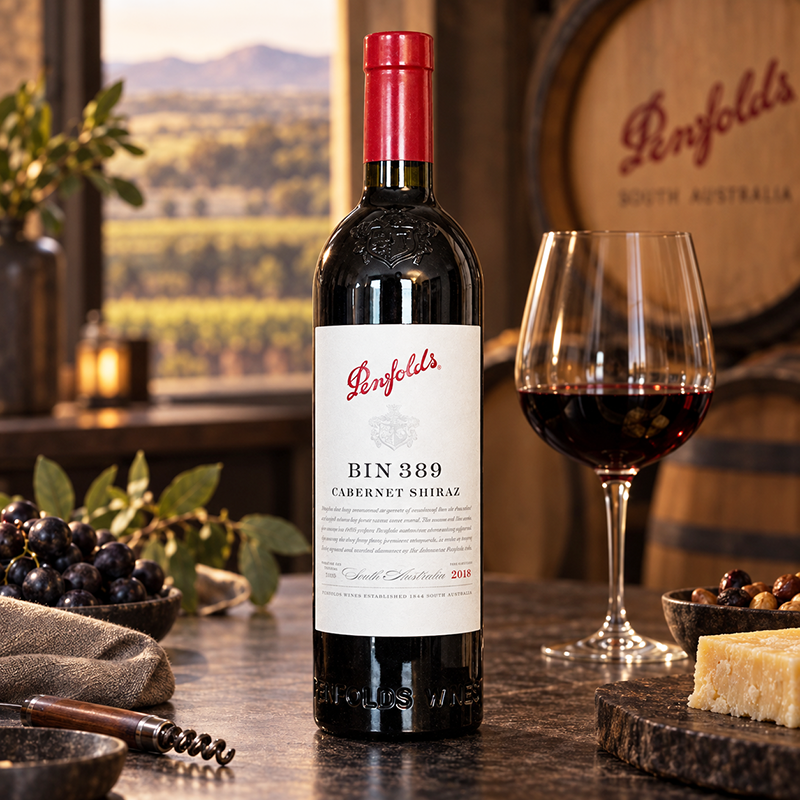
Penfolds Bin 389 Cabernet Shiraz 2018
Until Yellow Tail precipitated the boom in “critter wines” in 2000, it can be argued that Penfolds was just about synonymous with Australian wine in the U.S. The label is ubiquitous here, in both grocery stores and fine wine shops. Prices range from about $12 per bottle for the Koonunga Hill Shiraz-Cabernet, to $700 for the legendary Grange, and everything in between. (That $700 is doubly amazing, because just five or six years ago Grange was “only” about $200.) The selections are mostly reds plus a few whites and even a tawny Port.
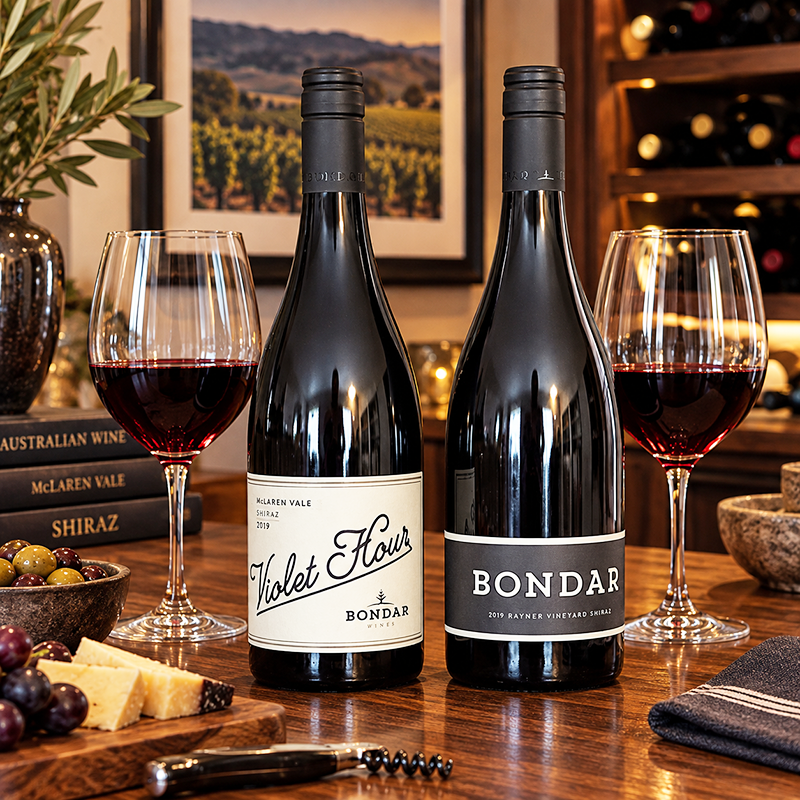
Bondar Winery
McLaren Vale is a wine region in south Australia about 20 miles from “Australia’s Wine City,” Adelaide. Vines were first planted here in 1838, but things didn’t really get going until about 40 years later. By the turn of the twentieth century, McLaren Vale was established as one of Australia’s premier wine regions, a position it holds until this day, with over 80 wineries and 13,000 acres under vine. This coastal zone sits between the Mount Lofty Ranges and the tempering sea. The growing season is long and warm, and features good air drainage to prevent frosts.
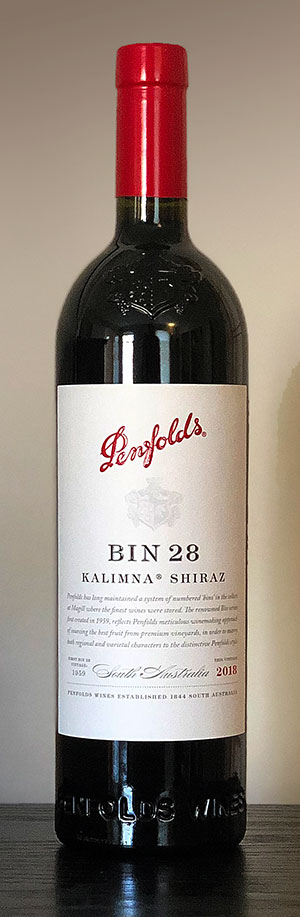
Penfolds Bin 28 Kalimna Shiraz 2018
Until Yellow Tail precipitated the boom in “critter wines” in 2000, it can be argued that Penfolds was just about synonymous with Australian wine in the U.S. The label is ubiquitous here, in both grocery stores and fine wine shops. Prices range from about $12 per bottle for the Koonunga Hill Shiraz-Cabernet, to $850 for the legendary Grange, and everything in between. (That $850 is doubly amazing, because just five or six years ago Grange was “only” about $200.) The selections are mostly reds plus a few whites and even a tawny Port.
Founders Dr Christopher and Mary Penfold immigrated to Australia from England in 1844, bringing their own French vine cuttings. Not long after, their fledgling vineyard was officially established as the Penfolds wine company at the 500-acre Magill Estate in Adelaide.
The Penfolds were believers in the medicinal benefits of wine, and they planned to concoct a wine tonic for the treatment of anemia. Initially, they produced fortified wines in the style of sherry and port for Dr Penfold’s patients. The operation enjoyed early growth, and since Dr Penfold was focused on his medical practice, much of the running of the winery was delegated to Mary Penfold, including the cultivation of the vines and wine blending. On Christopher’s death in 1870, Mary assumed total responsibility for the winery. According to one historical account, by that time the business had “grown to over 60 acres with several different grape varieties including Grenache, Vverdelho, Mataro (aka Mourvedre), Frontignac and Pedro Ximenez,” and the estate was “producing both sweet and dry red and white table wines with a growing market in the eastern Australian colonies of Victoria and New South Wales.” Clarets and Rieslings were especially popular.
During her tenure, Mary engaged in experimentation, explored new methods of wine production, looked into ways of combating diseases like phylloxera, and engaged a cellar master by the name of Joseph Gillard.

Penfolds was producing a third of all South Australia’s wine by the time Mary Penfold retired in 1884. The company passed to her daughter Georgina and son-in-law Thomas Hyland. By 1907, Penfolds had become South Australia’s largest winery (It is still big, but it no longer holds that position.) Eventually, the business was passed onto their two sons and two daughters. The company became public in 1962, and the Penfold family retained a controlling interest until 1976.
In 1948, Max Schubert
became the company’s first Chief Winemaker. A loyal company man and true innovator, Schubert would propel Penfolds onto the global stage with his creation of Penfolds Grange. (That’s a story for another time, if I can ever get my hands on a bottle. Hey, Penfolds! A little help here?)

In 1959, while Schubert was perfecting his Grange experiment in secret, Penfolds’ tradition of ‘bin wines’ began. The first, a Shiraz with grapes from the company’s own Barossa Valley vineyards, was simply named after the storage area of the cellars where it was aged. And so Kalimna Bin 28 became the first official Penfolds Bin number wine.
In 1988, after four decades of Grange’s success and growth into a wine world icon, Schubert was named Decanter magazine’s Man of the Year, and on the 50th anniversary of its creation, Penfolds Grange was given a heritage listing in South Australia.
In 1976, control of Penfolds was acquired by Tooth and Co., a brewer based in New South Wales, which in 1982 became part of the Adelaide Steamship Company Group. In 1990, SA Brewing purchased Adelaide Steamship’s wineries. Later, SA Brewing was divided into three separate entities: the wine assets were named Southcorp Wine.
Southcorp Wines became a part of the Foster’s Group in 2005. In 2011, Fosters was split into two separate companies; the wine side became Treasury Wine Estates, headquartered in Melbourne and Penfolds current owner. The chief winemaker since 2002 has been Peter Gago.
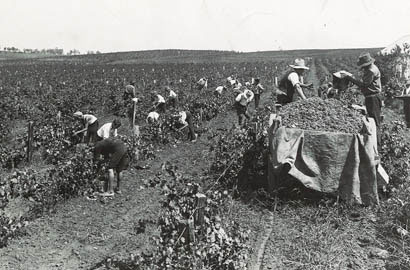
Adelaide
Magill Estate
5.34 hectares / 13.2 acres
Shiraz (known as Syrah in other parts of the world
Barossa Valley
Kalimna
153 hectares / 380 acres planted
Shiraz, Cabernet Sauvignon, Mataro (aka Mourvèdre), and Sangiovese
Koonunga Hill
93 hectares / 230 acres
Shiraz ,Cabernet Sauvignon
Waltons
130 hectares / 320 acres planted
Shiraz, Cabernet Sauvignon, Mataro
Stonewell
33 hectares / 82 acres
Shiraz, Cabernet Sauvignon
Eden Valley
High Eden
66.42 hectares / 164.1 acres
Riesling, Pinot Noir, Chardonnay and Sauvignon Blanc
Woodbury
69.56 hectares / 171.9 acres
McLaren Vale
141 hectares / 350 acres
Shiraz, Grenache, and Cabernet Sauvignon
Coonawarra
50 hectares / 120 acres
Cabernet Sauvignon and Shiraz
Although somewhat deceptively named for a specific Barossa vineyard, this wine is sourced from various South Australian sites. After fermentation, it was aged for 12 months in American oak. An impenetrable dark purple in the glass, it has a nose of dark stone fruits, especially plums, and eucalyptus. The palate is the same, plus cocoa and some bracing tannins. The finish is long and very dry. ABV is 14.5%.
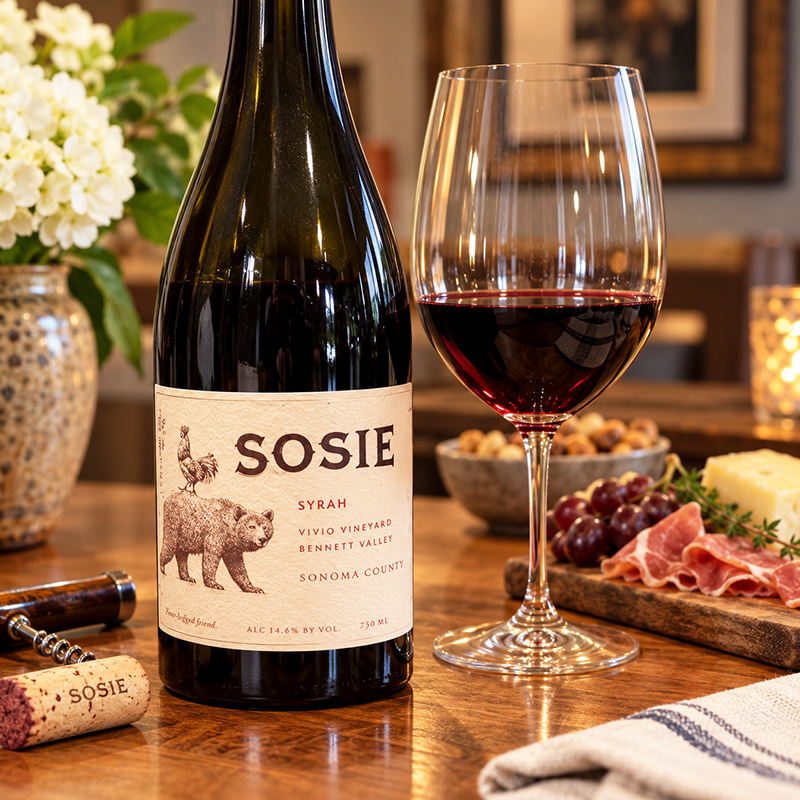
They say imitation is the sincerest form of flattery, and it’s a maxim Sosie Wines lives by. “Sosie” [so-zee] is French for twin or doppelganger, and as it says right on the bottle, “We are inspired by the wines of France. So we employ an Old World approach to wine growing that favors restraint over ripeness, finesse over flamboyance. Our aim is to craft wines that show a kinship with France’s benchmark regions. Wines that are their sosie.”

Carmel Winery Private Collection
The first mention of wine in the Bible appears in Genesis, chapter 9, verse 20, “And Noah began to be an husbandman, and he planted a vineyard.” The story goes on to recount some unpleasantness after Noah over imbibes, but there is no reason to go into that here. The point is, wine is as old as history itself, with some of its earliest beginnings in the Middle East. Indeed, references to wine appear hundreds of times in Scripture, through both the Old and New Testaments.
Continue reading “Carmel Winery”
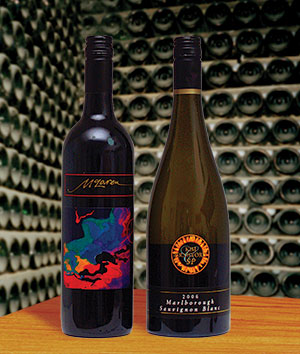
This award-winning Shiraz hails from McLaren Vale on Australia’s southern coast. The complex soil types here combine with the St. Vincent’s Gulf breezes to make for ideal vineyard conditions.
Continue reading “Linchpin Shiraz and Kim Crawford Sauvignon Blanc”
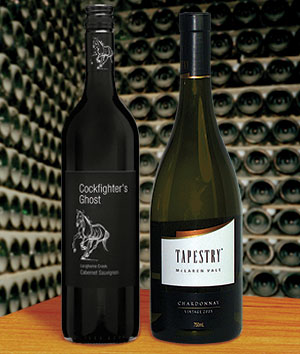
In this post I sample two uncommon wines that only have one thing in common: they both come from Australia’s McLaren Vale.
Continue reading “Cockfighter’s Ghost Shiraz and Tapestry Chardonnay”