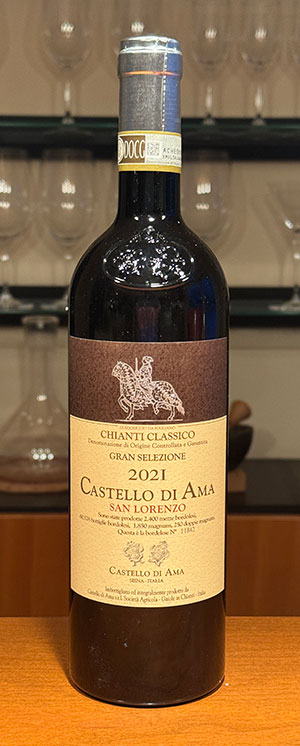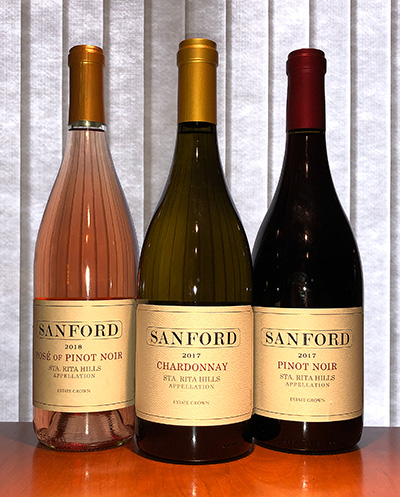
Sanford Winery Sta. Rita Hills Pinot Noir 2017

Sanford Winery Sta. Rita Hills Pinot Noir 2017
Sanford Winery Sta. Rita Hills Pinot Noir 2017. Click here for tasting notes.

Sanford Pinot Noir 

Sanford Winery, the first such operation in Santa Barbara wine country, was established when the Sanford & Benedict vineyard was planted in 1971. Botanist Michael Benedict and his friend Richard Sanford were committed to finding a cool-climate location with just enough heat accumulation to ripen, but not over ripen, wine grapes. A place where they could plant and grow grapes and craft wines, where they hoped the quality might equal the best of Europe.

Benedict began researching and touring the cool coastal regions of California in search of a site that would suit this mission. His pursuit took him to a unique part of the Santa Ynez Valley, to the property that would ultimately become the Sanford & Benedict vineyard. The area owes its magic to an unusual east-west mountain valley that runs from the vineyards to the Pacific Ocean. This passage allows a meteorological ebb-and-flow of air temperature between the mountains and the sea that is ideal for cool-climate varietals.( It was also this vineyard that supplied the cuttings for many of the surrounding vineyards that sprang up in the wake of its success.)

Continue reading “Sanford Winery Sta. Rita Hills Pinot Noir 2017”

Brian Carter Cellars Opulento 2014

Brian Carter Cellars Opulento 2014
Brian Carter Cellars Opulento 2014 Click here for tasting notes.

Brian Carter Opulento

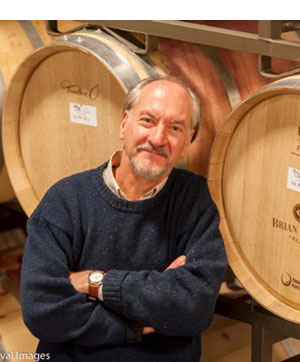
“I came into the field Brian Carterof wine [at a young age], not because my parents were wine drinkers, but because I was given a microscope when I was 12 years old. I heard about these things called yeast, and I wanted to see what they looked like under a microscope. I was told if you want to look at yeast you have to start a fermentation. So I picked some blackberries, fermented the wine, took a sample, and brought out my microscope — and there they were — the little yeast. I’ve been having those yeast work for me ever since.”  — Brian Carter

A charming tale of a precocious young scientist, no?  There was just one small problem: before he got to actually inspect the yeast, during a robust fermentation that first blackberry wine exploded in his mother’s kitchen.  “There was a big stain on the ceiling for a couple of years, until it finally got painted,” Carter admitted.  History hasn’t recorded whether that chore fell to Carter or someone else. Continue reading “Brian Carter Cellars Opulento 2014”

Brian Carter Cellars Tuttorosso 2016

Brian Carter Cellars Tuttorosso 2016
Brian Carter Cellars Tuttorosso 2016 Click here for tasting notes.

Brian Carter Tuttorosso 

“I came into the field Brian Carterof wine [at a young age], not because my parents were wine drinkers, but because I was given a microscope when I was 12 years old. I heard about these things called yeast, and I wanted to see what they looked like under a microscope. I was told if you want to look at yeast you have to start a fermentation. So I picked some blackberries, fermented the wine, took a sample, and brought out my microscope — and there they were — the little yeast. I’ve been having those yeast work for me ever since.”  — Brian Carter

A charming tale of a precocious young scientist, no?  There was just one small problem: before he got to actually inspect the yeast, during a robust fermentation that first blackberry wine exploded in his mother’s kitchen.  “There was a big stain on the ceiling for a couple of years, until it finally got painted,” Carter admitted.  History hasn’t recorded whether that chore fell to Carter or someone else. Continue reading “Brian Carter Cellars Tuttorosso 2016”

Brian Carter Cellars Le Coursier 2014

Brian Carter Cellars Le Coursier 2014
Brian Carter Cellars Le Coursier 2014 Click here for tasting notes.

Brian Carter Le Coursier 

“I came into the field Brian Carterof wine [at a young age], not because my parents were wine drinkers, but because I was given a microscope when I was 12 years old. I heard about these things called yeast, and I wanted to see what they looked like under a microscope. I was told if you want to look at yeast you have to start a fermentation. So I picked some blackberries, fermented the wine, took a sample, and brought out my microscope — and there they were — the little yeast. I’ve been having those yeast work for me ever since.”  — Brian Carter

A charming tale of a precocious young scientist, no?  There was just one small problem: before he got to actually inspect the yeast, during a robust fermentation that first blackberry wine exploded in his mother’s kitchen.  “There was a big stain on the ceiling for a couple of years, until it finally got painted,” Carter admitted.  History hasn’t recorded whether that chore fell to Carter or someone else. Continue reading “Brian Carter Cellars Le Coursier 2014”

Brian Carter Corrida

Brian Carter Cellars Corrida 2016
Brian Carter Cellars Corrida 2016 Click here for tasting notes.

Brian Carter Corrida 

“I came into the field Brian Carterof wine [at a young age], not because my parents were wine drinkers, but because I was given a microscope when I was 12 years old. I heard about these things called yeast, and I wanted to see what they looked like under a microscope. I was told if you want to look at yeast you have to start a fermentation. So I picked some blackberries, fermented the wine, took a sample, and brought out my microscope — and there they were — the little yeast. I’ve been having those yeast work for me ever since.”  — Brian Carter

A charming tale of a precocious young scientist, no?  There was just one small problem: before he got to actually inspect the yeast, during a robust fermentation that first blackberry wine exploded in his mother’s kitchen.  “There was a big stain on the ceiling for a couple of years, until it finally got painted,” Carter admitted.  History hasn’t recorded whether that chore fell to Carter or someone else. Continue reading “Brian Carter Corrida”

Brian Carter Cellars Byzance 2014

Brian Carter Cellars Byzance 2014
Brian Carter Cellars Byzance 2014 Click here for tasting notes.

Brian Carter Byzance 

“I came into the field Brian Carterof wine [at a young age], not because my parents were wine drinkers, but because I was given a microscope when I was 12 years old. I heard about these things called yeast, and I wanted to see what they looked like under a microscope. I was told if you want to look at yeast you have to start a fermentation. So I picked some blackberries, fermented the wine, took a sample, and brought out my microscope — and there they were — the little yeast. I’ve been having those yeast work for me ever since.”  — Brian Carter

A charming tale of a precocious young scientist, no?  There was just one small problem: before he got to actually inspect the yeast, during a robust fermentation that first blackberry wine exploded in his mother’s kitchen.  “There was a big stain on the ceiling for a couple of years, until it finally got painted,” Carter admitted.  History hasn’t recorded whether that chore fell to Carter or someone else. Continue reading “Brian Carter Cellars Byzance 2014”

Brian Carter Cellars Oriana 2018

Brian Carter Cellars Oriana 2018
Brian Carter Cellars Oriana 2018 Click here for tasting notes.

Brian Carter Oriana 

“I came into the field Brian Carterof wine [at a young age], not because my parents were wine drinkers, but because I was given a microscope when I was 12 years old. I heard about these things called yeast, and I wanted to see what they looked like under a microscope. I was told if you want to look at yeast you have to start a fermentation. So I picked some blackberries, fermented the wine, took a sample, and brought out my microscope — and there they were — the little yeast. I’ve been having those yeast work for me ever since.”  — Brian Carter

A charming tale of a precocious young scientist, no?  There was just one small problem: before he got to actually inspect the yeast, during a robust fermentation that first blackberry wine exploded in his mother’s kitchen.  “There was a big stain on the ceiling for a couple of years, until it finally got painted,” Carter admitted.  History hasn’t recorded whether that chore fell to Carter or someone else. Continue reading “Brian Carter Cellars Oriana 2018”

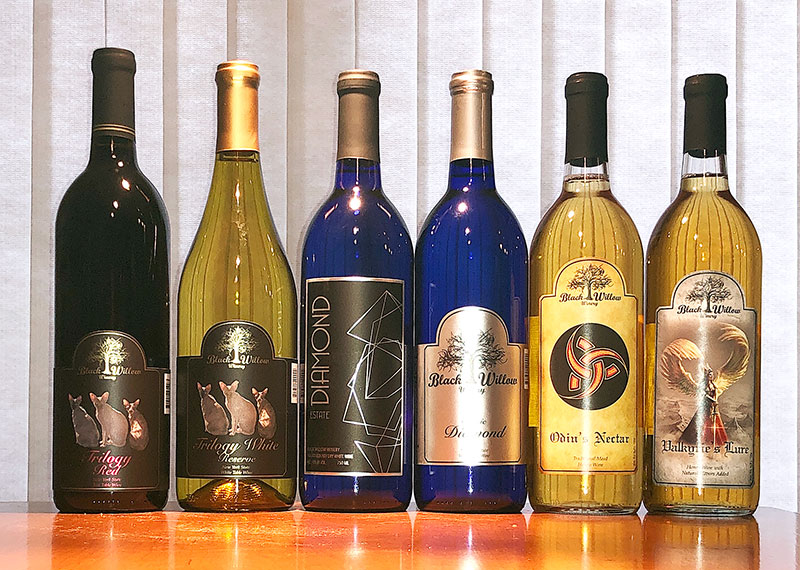
Black Willow Valkyrie’s Lure Mead NV

Click here for tasting notes.

Black Willow Valkyrie’s Lure

Just about everyone knows about the world-famous Niagara Falls, of course, but the area is home to some increasingly serious winemakers as well, on both the Canadian and U.S. sides of the border.

New York State’s commercial wine industry began when its first bonded winery, Pleasant Valley Wine Company, was founded in Hammondsport in 1860, and the state now ranks third in grape production by volume after California and Washington. But 83% of New York’s grape output is Vitis labrusca varieties, mostly Concord, that find their way into grape juice, jams, jellies, and wines such as, ahem, Manischewitz. The rest is split almost equally between Vitis vinifera (the broad vine species that produces 99% of the world’s wines) and select French hybrids. Continue reading “Black Willow Valkyrie’s Lure Mead NV”

Black Willow Odin’s Nectar Mead NV

Click here for tasting notes.

Black Willow Odin’s Nectar

Just about everyone knows about the world-famous Niagara Falls, of course, but the area is home to some increasingly serious winemakers as well, on both the Canadian and U.S. sides of the border.

New York State’s commercial wine industry began when its first bonded winery, Pleasant Valley Wine Company, was founded in Hammondsport in 1860, and the state now ranks third in grape production by volume after California and Washington. But 83% of New York’s grape output is Vitis labrusca varieties, mostly Concord, that find their way into grape juice, jams, jellies, and wines such as, ahem, Manischewitz. The rest is split almost equally between Vitis vinifera (the broad vine species that produces 99% of the world’s wines) and select French hybrids. Continue reading “Black Willow Odin’s Nectar Mead NV”

Black Willow Classic Diamond NV

Click here for tasting notes.

Black Willow Classic Diamond 

Just about everyone knows about the world-famous Niagara Falls, of course, but the area is home to some increasingly serious winemakers as well, on both the Canadian and U.S. sides of the border.

New York State’s commercial wine industry began when its first bonded winery, Pleasant Valley Wine Company, was founded in Hammondsport in 1860, and the state now ranks third in grape production by volume after California and Washington. But 83% of New York’s grape output is Vitis labrusca varieties, mostly Concord, that find their way into grape juice, jams, jellies, and wines such as, ahem, Manischewitz. The rest is split almost equally between Vitis vinifera (the broad vine species that produces 99% of the world’s wines) and select French hybrids. Continue reading “Black Willow Classic Diamond NV”

Black Willow Estate Diamond NV

Click here for tasting notes.

Black Willow Estate Diamond 

Just about everyone knows about the world-famous Niagara Falls, of course, but the area is home to some increasingly serious winemakers as well, on both the Canadian and U.S. sides of the border.

New York State’s commercial wine industry began when its first bonded winery, Pleasant Valley Wine Company, was founded in Hammondsport in 1860, and the state now ranks third in grape production by volume after California and Washington. But 83% of New York’s grape output is Vitis labrusca varieties, mostly Concord, that find their way into grape juice, jams, jellies, and wines such as, ahem, Manischewitz. The rest is split almost equally between Vitis vinifera (the broad vine species that produces 99% of the world’s wines) and select French hybrids. Continue reading “Black Willow Estate Diamond NV”

Black Willow Trilogy White Reserve NV

Black Willow Trilogy White Reserve NV
Click here for tasting notes.

Black Willow Trilogy 

Just about everyone knows about the world-famous Niagara Falls, of course, but the area is home to some increasingly serious winemakers as well, on both the Canadian and U.S. sides of the border.

New York State’s commercial wine industry began when its first bonded winery, Pleasant Valley Wine Company, was founded in Hammondsport in 1860, and the state now ranks third in grape production by volume after California and Washington. But 83% of New York’s grape output is Vitis labrusca varieties, mostly Concord, that find their way into grape juice, jams, jellies, and wines such as, ahem, Manischewitz. The rest is split almost equally between Vitis vinifera (the broad vine species that produces 99% of the world’s wines) and select French hybrids. Continue reading “Black Willow Trilogy White Reserve NV”

Black Willow Trilogy Red

Black Willow Trilogy Red NV
Click here for tasting notes.

Black Willow Trilogy

Just about everyone knows about the world-famous Niagara Falls, of course, but the area is home to some increasingly serious winemakers as well, on both the Canadian and U.S. sides of the border.

New York State’s commercial wine industry began when its first bonded winery, Pleasant Valley Wine Company, was founded in Hammondsport in 1860, and the state now ranks third in grape production by volume after California and Washington. But 83% of New York’s grape output is Vitis labrusca varieties, mostly Concord, that find their way into grape juice, jams, jellies, and wines such as, ahem, Manischewitz. The rest is split almost equally between Vitis vinifera (the broad vine species that produces 99% of the world’s wines) and select French hybrids. Continue reading “Black Willow Trilogy Red”

Dassai 45 Junmai Daiginjo Saké

Three Interesting Sakés
L. to R.: Nanbu Bijin Southern Beauty, Tozai Snow Maiden, Dassai 45

Dassai 45 Saké 

Saké, the national alcoholic beverage of Japan, is often called rice wine, but this is a misnomer.  While it is a beverage made by fermentation, the production process more closely resembles that of beer, and it is made from grain (rice, of course), not fruit.  To make saké, the starch of freshly steamed glutinous rice is converted to sugar and then fermented to alcohol.  Once fermented, the liquid is filtered and usually pasteurized.  Sakés can range from dry to sweet, but even the driest retain a hint of sweetness.

Dassai 45 Junmai Daiginjo

Daiginjo is the highest grade of saké.  Junmai Daiginjo has the highest milling rates in saké production, with a minimum of 50% rice polished away and 50% remaining.  But that standard is often surpassed by brewers looking to push the rice milling envelope, resulting in sakés that can be milled down to 35%, down to 23%, and even 7% remaining!  These sakés are always served chilled.

Dassai translates to ‘Otter Festival.’ The name comes from a local Yamaguchi legend that involves a bunch of happy-go-lucky otters showing off their fishing skills and showing us humans how it’s done properly.  Back in 1981, the Toshiko Akiyoshi-Lew Tabackin Big Band released an album called Tanuki’s Night Out, which tells the story, in music, of Tanuki, another hard-partying otter.

Like Southern Beauty, Dassai 45 has been polished to 45% rice remaining, hence the name.   The nose features a banana aroma, with lychee, green apple, and “acidic bubble gum” on the palate.  AVB is 16%.

Served chilled, or at room temperature.  Although the cheap sake you may encounter in sushi restaurants will usually be heated, often too much so, such treatment will destroy the subtleties of this selection.

Back to blog posts:  winervana.com/blog/

Tozai “Snow Maiden” Nigori Junmai Saké

Three Interesting Sakés
L. to R.: Nanbu Bijin Southern Beauty, Tozai Snow Maiden, Dassai 45

Tozai “Snow Maiden” Saké

Saké, the national alcoholic beverage of Japan, is often called rice wine, but this is a misnomer.  While it is a beverage made by fermentation, the production process more closely resembles that of beer, and it is made from grain (rice, of course), not fruit.  To make saké, the starch of freshly steamed glutinous rice is converted to sugar and then fermented to alcohol.  Once fermented, the liquid is filtered and usually pasteurized.  Sakés can range from dry to sweet, but even the driest retain a hint of sweetness.

Tozai “Snow Maiden” Nigori Junmai

Snow Maiden, also known as Hanako, was a koi fish that lived to the age of 226 years in pure mountain water at the base of Japan’s Mt. Ontake.   Nigori, or nigorizake, translates roughly to “cloudy” because of its appearance, and is the oldest style of saké.  The cloudiness is produced when a brewer leaves in some of the rice lees, or sediment. Nigori is not an unfiltered saké however, as the sake is filtered to some degree.  I’m not a big fan of nigori saké because of the rice grit that it always contains.  It is quite delicate here, however, and I found it acceptable.

This expression is relatively dry for a nigori saké, as they always tend toward sweetness.  It has been milled to 70%, and has a soft, floral palate, with flavors of cantaloupe and a suggestion of daikon.  ABV is 14.9%.

Served chilled, or at room temperature.  Although the cheap sake you may encounter in sushi restaurants will usually be heated, often too much so, such treatment will destroy the subtleties of this selection.

Back to blog posts:  winervana.com/blog/