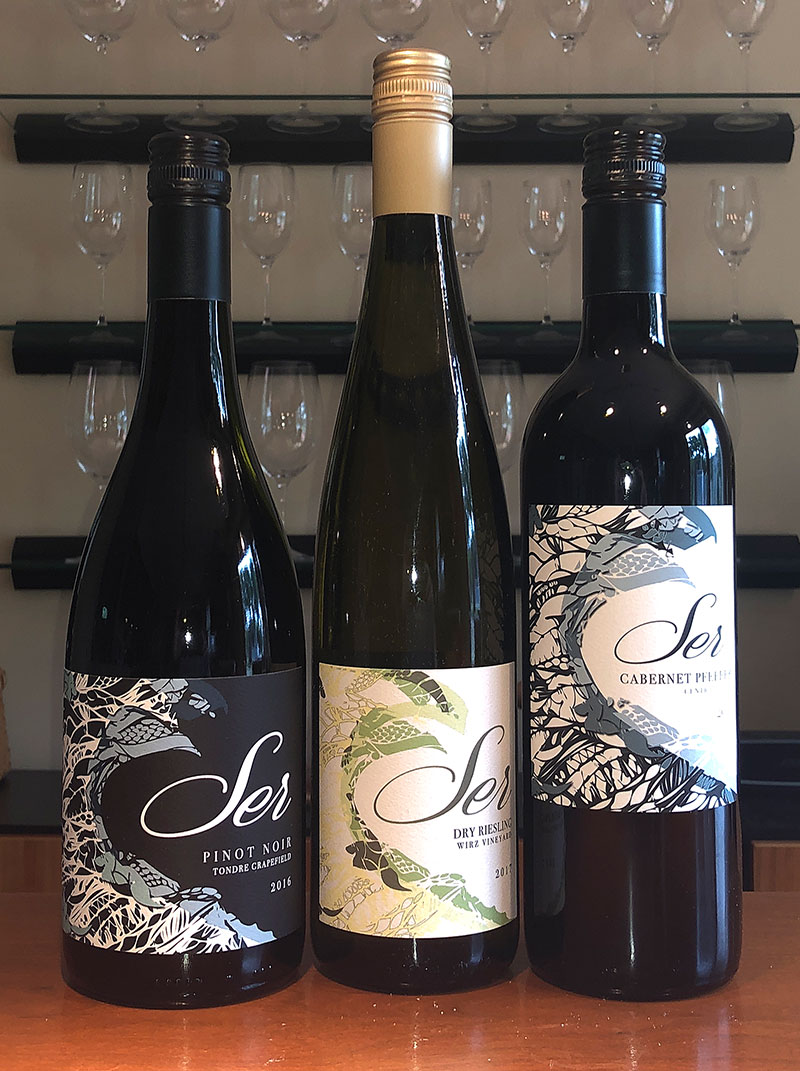
Adega Northwest Double Canyon Vineyard Syrah 2016

Adega Northwest Double Canyon Vineyard Syrah 2016
Adega Northwest Double Canyon Vineyard Syrah 2016 Click here for tasting notes.
Adega Northwest Syrah

When most of us think of a winery, what usually comes to mind is the romantic stereotype of a rustic but exquisite barn situated halfway up a mountain in the western U. S. overlooking a bucolic valley below; a fabulous hundred-years old chateau surrounded by ancient vines somewhere in France; or perhaps even a charming azienda agricola in Italy with a view of Roman ruins. But that’s not the only way to do it.  Adega Northwest of Portland, Oregon, is very much an urban winery.  There are vineyards, of course, you just won’t see them if you pay the winery a visit (by appointment only).  And because they are not tied to an estate, Adega Northwest can and does draw on sources throughout the region.

It doesn’t get much more urban than this.

Continue reading “Adega Northwest Double Canyon Vineyard Syrah 2016”

Ser Graciano

Ser Graciano Bokisch Vineyard 2018
Ser Graciano Bokisch Vineyard 2018. Click here for tasting notes.
Ser Graciano Bokisch Vineyard 2018

In the tradition-bound world of wine, winemaking has, predictably, been dominated by men. For example, there are about 4,800 wineries in California, but only 10 percent have female lead winemakers. (When it comes to winery ownership, the number does jump up to about 19 percent, according to Woman Owned Wineries, a nationwide directory of female wine entrepreneurs.)

Encouragingly, however, greater educational opportunities (as opposed to the historically more usual inheriting a wine operation) have been opening the possibility of becoming a winemaker to more and more women. One of these is Nicole Walsh of Ser Winery in Aptos, California, due east of Santa Cruz. Continue reading “Ser Graciano”

Ser Cabernet Pfeffer

Ser Wirtz and Silletto Vineyards Cabernet Pfeffer 2015
Ser Wirtz and Silletto Vineyards Cabernet Pfeffer 2015. Click here for tasting notes.


Ser Wirtz and Silletto Vineyards Cabernet Pfeffer 2015

In the tradition-bound world of wine, winemaking has, predictably, been dominated by men. For example, there are about 4,800 wineries in California, but only 10 percent have female lead winemakers. (When it comes to winery ownership, the number does jump up to about 19 percent, according to Woman Owned Wineries, a nationwide directory of female wine entrepreneurs.)

Encouragingly, however, greater educational opportunities (as opposed to the historically more usual inheriting a wine operation) have been opening the possibility of becoming a winemaker to more and more women. One of these is Nicole Walsh of Ser Winery in Aptos, California, due east of Santa Cruz. Continue reading “Ser Cabernet Pfeffer”

Ser Cabernet Pfeffer

Ser Cabernet Pfeffer Central Coast 2016
Ser Cabernet Pfeffer Central Coast 2016 Click here for tasting notes.


Ser Cabernet Pfeffer Central Coast 2016

In the tradition-bound world of wine, winemaking has, predictably, been dominated by men. For example, there are about 4,800 wineries in California, but only 10 percent have female lead winemakers. (When it comes to winery ownership, the number does jump up to about 19 percent, according to Woman Owned Wineries, a nationwide directory of female wine entrepreneurs.)

Encouragingly, however, greater educational opportunities (as opposed to the historically more usual inheriting a wine operation) have been opening the possibility of becoming a winemaker to more and more women. One of these is Nicole Walsh of Ser Winery in Aptos, California, due east of Santa Cruz. Continue reading “Ser Cabernet Pfeffer”

Ser Pinot Noir

Ser Pinot Noir Tondre Grapefield 2016
Ser Pinot Noir Tondre Grapefield 2016. Click here for tasting notes.


Ser Pinot Noir Tondre Grapefield 2016

In the tradition-bound world of wine, winemaking has, predictably, been dominated by men. For example, there are about 4,800 wineries in California, but only 10 percent have female lead winemakers. (When it comes to winery ownership, the number does jump up to about 19 percent, according to Woman Owned Wineries, a nationwide directory of female wine entrepreneurs.)

Encouragingly, however, greater educational opportunities (as opposed to the historically more usual inheriting a wine operation) have been opening the possibility of becoming a winemaker to more and more women. One of these is Nicole Walsh of Ser Winery in Aptos, California, due east of Santa Cruz. Continue reading “Ser Pinot Noir”

Ser Rosé

Ser Rosé of Grenache Loma Del Rio Vineyard 2020
Ser Rosé of Grenache Loma Del Rio Vineyard 2020. Click here for tasting notes.


Ser Rosé of Grenache Loma Del Rio Vineyard 2020

In the tradition-bound world of wine, winemaking has, predictably, been dominated by men. For example, there are about 4,800 wineries in California, but only 10 percent have female lead winemakers. (When it comes to winery ownership, the number does jump up to about 19 percent, according to Woman Owned Wineries, a nationwide directory of female wine entrepreneurs.)

Encouragingly, however, greater educational opportunities (as opposed to the historically more usual inheriting a wine operation) have been opening the possibility of becoming a winemaker to more and more women. One of these is Nicole Walsh of Ser Winery in Aptos, California, due east of Santa Cruz. Continue reading “Ser Rosé”

Ser Muscat

Ser Dry Orange Muscat 2020
Ser Dry Orange Muscat 2020. Click here for tasting notes.


Ser Dry Orange Muscat 2020

In the tradition-bound world of wine, winemaking has, predictably, been dominated by men. For example, there are about 4,800 wineries in California, but only 10 percent have female lead winemakers. (When it comes to winery ownership, the number does jump up to about 19 percent, according to Woman Owned Wineries, a nationwide directory of female wine entrepreneurs.)

Encouragingly, however, greater educational opportunities (as opposed to the historically more usual inheriting a wine operation) have been opening the possibility of becoming a winemaker to more and more women. One of these is Nicole Walsh of Ser Winery in Aptos, California, due east of Santa Cruz. Continue reading “Ser Muscat”

Ser Vermentino

Ser Vermentino Cedar Lake Vineyard 2019
Ser Vermentino Cedar Lake Vineyard 2019. Click here for tasting notes.


Ser Vermentino Cedar Lake Vineyard 2019

In the tradition-bound world of wine, winemaking has, predictably, been dominated by men. For example, there are about 4,800 wineries in California, but only 10 percent have female lead winemakers. (When it comes to winery ownership, the number does jump up to about 19 percent, according to Woman Owned Wineries, a nationwide directory of female wine entrepreneurs.)

Encouragingly, however, greater educational opportunities (as opposed to the historically more usual inheriting a wine operation) have been opening the possibility of becoming a winemaker to more and more women. One of these is Nicole Walsh of Ser Winery in Aptos, California, due east of Santa Cruz. Continue reading “Ser Vermentino”

Ser Dry Riesling Wirz Vineyard 2017

Ser Dry Riesling Wirz Vineyard 2017
Ser Dry Riesling Wirz Vineyard 2017. Click here for tasting notes.


Ser Dry Riesling

In the tradition-bound world of wine, winemaking has, predictably, been dominated by men. For example, there are about 4,800 wineries in California, but only 10 percent have female lead winemakers. (When it comes to winery ownership, the number does jump up to about 19 percent, according to Woman Owned Wineries, a nationwide directory of female wine entrepreneurs.)

Encouragingly, however, greater educational opportunities (as opposed to the historically more usual inheriting a wine operation) have been opening the possibility of becoming a winemaker to more and more women. One of these is Nicole Walsh of Ser Winery in Aptos, California, due east of Santa Cruz. Continue reading “Ser Dry Riesling Wirz Vineyard 2017”

Boschis Dolcetto de Dogliani


Boschis Dolcetto

Traveling 290 miles southwest from Alto Adige across the top of Italy’s “boot” will bring you to Dogliani, where Dolcetto [dole-CHET-oh] may have originated and was harvested as early as 1593.

The Francesco Boschis estate estate traces back to 1919, when the family — originally starting with Telesforo Boschis — planted vineyards on the hill of Pianezzo, near the town of Dogliani in Piedmont, Italy.

However, they did not begin bottling their own wines until 1968, under the name “Pianezzo.” Previously theirgrapes were sold to other producers in the area. Dolcetto is the main varietal planted, commanding a dominant 80% of the winery’s production.

Today the estate remains family-run, managed by Telesforo’s descendants: Mario Boschis (current head), his wife Simona Boschis, and their children Paolo Boschis and Marco Boschis. The property remains modest in scale: their total vineyard area is roughly 26 acres [10.5 hectares], of which about 17 acres [6.95 ha] is planted to Dolcetto.

They emphasize sustainable / integrated viticulture. Since at least vintage 2022, they are certified under “The Green Experience.” Their winemaking philosophy leans toward minimum intervention. For many of their wines they avoid filtration and cold stabilization, and avoid unnecessary additions — aiming to let the grapes and terroir show themselves.However, they did not begin bottling their own wines until 1968, under the name “Pianezzo.”

Boschis Dolcetto de Dogliani 2005

This Dolcetto is what Boschis terms an ‘autumn wine,’ but I think it is more suitable to late spring or early summer. Although the color is inky dark, the body is remarkably light (rather too much so for my taste in reds).  and refreshing with black cherry overtones. The nose features black fruits (plum, blackberry), and red fruits (cherry). These continue on the palate, with a bit of earthiness, spice, and leather.

This wine will pair nicely with all things Italiano: a nice antipasto platter, pasta, grilled fish, and of course, pizza.

Back to blog posts: winervana.com/blog/


Elena Walch Gewurztraminer

Elena Walch Gewurztraminer 2006

Geewurzawhat? Gewurztraminer [guh-VURTZ-trah-mean-er] is a white wine most commonly associated with Germany. The name is derived from gewürz (spice) + traminer, (variety of grape), from tramin (Termeno, Italy), where this white-wine grape is thought to have originated over 1000 years ago, although not widely planted there now. This is a wine that’s best drunk fairly young—even vintage Gewürztraminers rarely age well past five years.

Elena Walch is a former architect who became a wine producer in 1985 after marrying into one of the oldest established wine families in Alto Adige. Her two estates, totaling 67 acres, lie on the southern slopes of the Alps, where during the summer the central valleys become filled with warm, Mediterranean air. Under her care, the vineyards have been transformed with low-yielding but high quality-clones of both international and local grape varieties.

Her Gewürztraminer is just a tad more than slightly sweet, with a dry finish on the back of the tongue that has a hint of bitterness. The color is an attractive golden yellow. The nose is characteristically aromatic and flowery.
Serve lightly chilled as a full-flavoured aperitif and with a range of dishes, including savory first courses and grilled fish.

www.elenawalch.com/en/wine/gewurztraminer-3/

Back to blog posts: winervana.com/blog/
 

Chateau La Nerthe Chateauneuf-du-Pape

Chateau La Nerthe Chateauneuf-du-Pape 2020
Chateau La Nerthe Chateauneuf-du-Pape 2020. Click here for tasting notes.

Nestled in the heart of the Southern Rhône Valley, Château La Nerthe is more than just a winery—it is a living chronicle of French viticultural history. With origins dating back to the Renaissance and a reputation built over centuries, La Nerthe is one of the oldest estates in Châteauneuf-du-Pape. Its story is marked by innovation, resilience, and a deep connection to the terroir that defines this iconic appellation.

Origins in the Renaissance: The Birth of a Legacy

The roots of Château La Nerthe trace back to the 16th century. Vines were already cultivated on the estate’s land as early as 1560, when it was known as the Grange de Beauvenir. The estate came under the ownership of the noble Tulle de Villefranche family, who laid the foundations for what would become one of the region’s most respected properties. Continue reading “Chateau La Nerthe Chateauneuf-du-Pape”

WALT Blue Jay Pinot Noir

WALT Blue Jay Pinot Noir 2022
WALT Blue Jay Pinot Noir 2022. Click here for tasting notes.

WALT Blue Jay Pinot Noir

WALT Wines, owned by Kathryn Hall and Craig Hall, is dedicated to the production of Pinot Noir and Chardonnay from the Pacific Coast, spanning nearly 1000 miles and including Sta. Rita Hills, Sonoma County, Anderson Valley, Napa Valley, and the Willamette Valley. They strive to source top fruit from the most distinctive vineyards; practice precise, non-interventionist winemaking; and focus on limited production. The goal is to allow the wines to naturally and honestly express the character of the sites where the wines are grown.

WALT Wines are named after Kathryn Hall’s parents, Bob and Dolores Walt. They were dedicated wine-grape growers who produced six different varietals that were sold to several well-known wineries. For the Walts, growing grapes was the satisfaction of a hard day’s work and the feeling of peace walking through the vineyard before sunset. Kathryn Hall managed the vineyard operations herself from 1982 until 1992.

In 2010 WALT expanded from grape farming to wine production. Today, the winemaking team, led by General Manager Jeff Zappelli, work in a state-of-the-art winemaking facility aided by a passionate winery staff and strong vineyard partners.

Continue reading “WALT Blue Jay Pinot Noir”

Alvear Pedro Ximénez de añada Montilla-Moriles 2018

Alvear Pedro Ximénez de anada Montilla-Moriles
Alvear Pedro Ximénez de añada Montilla-Moriles. Click here for tasting notes.

Alvear Pedro Ximénez

Alvear is the oldest bodega in Montilla-Moriles (Córdoba, Andalucía) and among Spain’s oldest wineries.

Juan Bautista García de Alvear y Garnica was born in Nájera in 1657. He grew up to become mayor of the ‘Noble Kingdom of Nájera’ and the Royal Tax Collector. His son Diego de Alvear y Escalera founded the family wine business.

In 1729, Diego constructed  the Alvear bodega in Montilla. The bodega was regarded as somewhat small and obscure at the time, yet this reduced space, given over to wine butts and amphorae, became Diego’s most intimate universe.

Over time, Diego became one of the most important land-owners in the city. Together with his son, Santiago, he took the bodega to unprecedented heights, never before imagined in Montilla, when he won a contract to ship wine to England in the late 18th century.

Santiago’s son, Diego de Alvear y Ponce de León [1749 – 1830], was a military man and politician as well as being involved in the winery. He procured an assistant from Argentina, Capataz [foreman] Billanueva, who would eventually become his right-hand-man.

Continue reading “Alvear Pedro Ximénez de añada Montilla-Moriles 2018”