
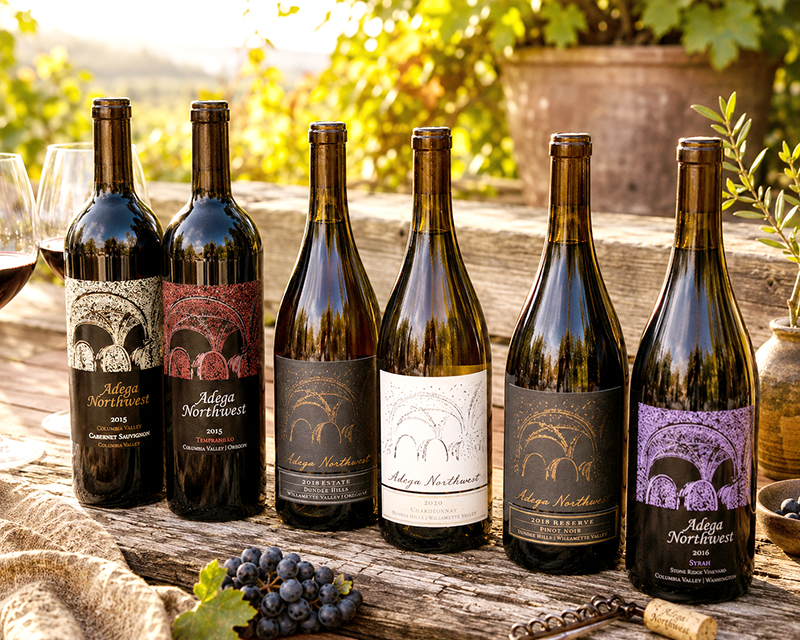
Adega Northwest Double Canyon Vineyard Syrah 2016
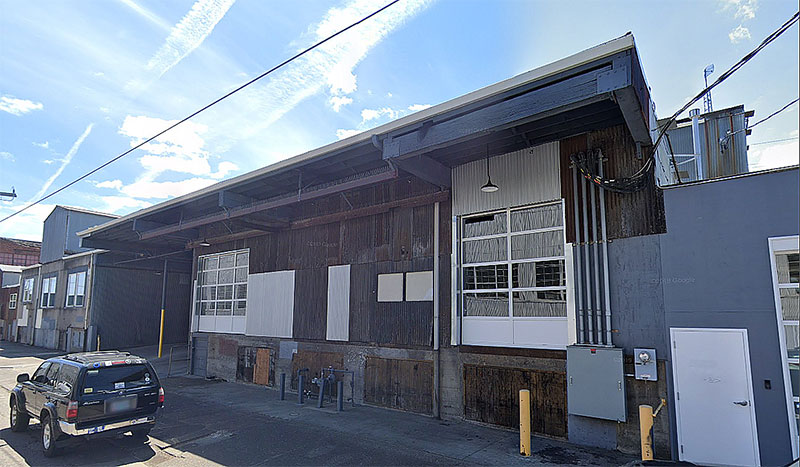
When most of us think of a winery, what usually comes to mind is the romantic stereotype of a rustic but exquisite barn situated halfway up a mountain in the western U. S. overlooking a bucolic valley below; a fabulous hundred-years old chateau surrounded by ancient vines somewhere in France; or perhaps even a charming azienda agricola in Italy with a view of Roman ruins. But that’s not the only way to do it. Adega Northwest of Portland, Oregon, is very much an urban winery. There are vineyards, of course, you just won’t see them if you pay the winery a visit (by appointment only). And because they are not tied to an estate, Adega Northwest can and does draw on sources throughout the region.
THE WINEMAKER
Bradford Cowin began by working in the restaurant industry. He pursued and completed a wine certification from the International Sommelier Guild, and has worked as a sommelier in New York City, Colorado, Washington D.C., Seattle, and now Portland, Oregon.

In 2007 he decided to focus on making wine instead of just serving it. He started as a cellar hand (aka a cellar rat) at R. Stuart & Co. in McMinnville Oregon, followed by working Malbec-focused vintages at Bodegas Renacer in Mendoza, Argentina, where he was also exposed to Italian Amarone-style winemaking techniques through work with renowned winemaker Alberto Antonini.
Once back in the U.S., he toiled at the famous Williams Selyem, Andrew Rich Vintner, and Long Shadows Winery. His time at Long Shadows proved to be an important turning point in his pursuit of full-time winemaking. In 2011, under the mentorship of Gilles Nicault, Long Shadow’s Director of Winemaking and Viticulture, Cowin purchased his first Cabernet Sauvignon grapes from the Weinbau Vineyard in the Wahluke Slope of Washington State (from which he continues to source fruit to this day) and was given space at Long Shadows to produce it. This was the beginning of his first winery, Script Cellars, formed with fellow sommelier Frederick Armstrong and wine enthusiasts Ken and Cheri Hick of Portland, Oregon.
By 2014 Cowin was ready to try something new. Adega is Portugese for wine cellar, and pays homage to his grandfather specifically, and the family’s Portuguese ancestry in general. Cowin teamed with his mother, Tana Mendes Bidwell, to establish the new operation. The aim was to create hand-crafted wines in the Pacific Northwest influenced by the wines of Europe, especially Bordeaux and Rhone in France.
The winery currently produces Alvarinho (aka Albarino), Chardonnay, Cabernet Sauvignon, Cabernet Franc, Merlot, Malbec, Syrah, Grenache, Mataro (aka Mourvedre), Tempranillo, Touriga Nacional, Souzao, and Graciano.
THE VINEYARDS
I mentioned that Adega, not being tied to an estate, can draw from many vineyards. And do they ever. These are their 12 current sources.
Destiny Ridge Vineyard Columbia Valley, Paterson, Washington
 This 267-acre site, the only one actually owned by Adega, is located high on the bluffs overlooking the Columbia River, in the Horse Heaven Hills AVA in southeastern Washington, and is part of the larger Columbia Valley AVA.
Delfino Vineyard, Umpqua Valley, Roseburg. Oregon 
This 18-acre site is similar climatically to Spain’s Ribera del Duero, with a mix of rocky soil types. There are seven grape varieties under cultivation here: Cabernet Sauvignon, Zinfandel, Syrah, Müller Thurgau, Merlot, Dolcetto, and Tempranillo (for which Umpqua is becoming increasingly well known).
Double Canyon Vineyard, Horse Heaven Hills, Prosser, Washington
 Located between Yakima Valley and the Columbia River, the 90-acre Double Canyon Vineyard has a dry desert landscape. The weather is influenced by close proximity to the Columbia River, which creates sweeping winds and other distinctive weather patterns that protect the vines from extreme temperatures, fungal disease, and pests. The soil is sandy, quick-draining loam. The vineyard is planted primarily to Bordeaux varietals and Syrah.
dutchman vineyard, yakima valley, Grandview, Washington
 Dutchman Vineyard was planted in 1991. It is located in a very cool region in the Yakima Valley. Adega Northwest has been sourcing Alvarinho, Marsanne, Roussanne, and Riesling from here since 2017.
Firethorn Vineyard, Columbia Valley, Echo, Oregon

Firethorn was originally developed between 2006 and 2008 by famed NFL quarterback Drew Bledsoe under the name Flying B Vineyard. Jay and Kim Bales purchased the vineyard in 2010 and have done the farming ever since.
french creek Vineyard, yakima valley, prosser, Washington
French Creek was established in 1981 with the planting of nine acres of Wente Clone Chardonnay. The vineyard is on a south-facing slope above the Yakima River, and lies at the edge of a canyon that allows for great air drainage, crucial for mitigating frost damage.
Gamache Vineyard, Columbia Valley, Basin City, Washington
 Planted by brothers Bob and Roger Gamache in 1980, this 180-acre vineyard sits up on the white bluffs overlooking Basin City to the east in the Columbia Valley AVA.
Kamiak Vineyard, Columbia Valley, Pasco, Washington
 Established in the mid-1980s by Jeff Gordon of Gordon Estate Winery, the 100-acre Kamiak Vineyard is south-facing, and is perched 620 feet above sea-level along the Snake River. The vineyard has excellent air drainage and benefits from the river’s moderating influence.
Red heaven Vineyard, red mountain, Benton city, Washington
The many varieties planted here include Cabernet Sauvignon, Petite Sirah (aka Durif), Tinta Cão, Souzão (aka Vinhão), Touriga Nacional, Tempranillo (aka Valdepeñas), Counoise, Grenache, Mourvèdre (aka Mataro), Syrah, Merlot, Zinfandel, and Barbera. Adega Northwest has been sourcing Rhone and Portuguese varieties from Red Heaven since 2017.
Two Blonds, Yakima Valley, Zillah, Washington
 This is the estate vineyard of Andrew Will Winery. Two Blonds, named for proprietor Chris Camarda’s late wife, Annie, who was a 6’2” blond, and Melody, the also-blond wife of vineyard partner Bill Fleckenstein, it was planted in 2000 with Cabernet Sauvignon, Merlot, Cabernet Franc, and Malbec.
Upland Vineyard, Snipes Mountain, Columbia Valley, sunnyside, Washington
 Farming wine grapes since 1968, four generations of the Newhouse family have helped maintain the Upland legacy, which started over 100 years ago. Originally planted by William B. Bridgman in 1917, Snipes Mountain is widely considered the birth place of Washington wine.
Weinbau Vineyard, Wahluke Slope, Washington
 With views of the Rattlesnake Mountains to the south and the Saddle Mountains to the north, Weinbau Vineyard slopes gently south, with elevations ranging from 710 to 950 feet. It is a relatively warm site, with excellent air drainage, and the soil is dominated by Kennewick silt loam.
Adega Northwest normally produces between 2,000 and 2,500 cases annually. Unfortunately, this year COVID-19 has forced a retrenchment back to 1,500. Although Adega Northwest’s production of each selection is quite limited, and therefor harder to find, they are very reasonably priced and are worth seeking out.
The cellar image on the labels was inspired by a picture of a classic Portuguese Adega from an original design by Cowin.
Adega Northwest Double Canyon Vineyard Syrah 2016
This 100% Syrah was fermented in stainless steel, followed by 22 months of barrel aging in 500-liter puncheons made of 100% French oak, 30% of which were new. A semi-transparent dark purple, it opens with aromas of dark fruit, mostly wild blueberries and mountain blackberries, and a hint of camphor (which receeds after the bottle has been open an hour or so). The lean palate follows with muted fruit, especially tart cherry, with some leather thrown in. It all wraps up with a medium-length finish. ABV is 14.6%, and 135 cases were made.
Back to blog posts: winervana.com/blog/