Hedges Red Mountain Dupont 2011

Hedges Red Mountain Dupont 2011
Hedges Red Mountain Dupont. Click here for tasting notes.
Hedges Red Mountain

A winemaker, Nicole Walsh of Ser Winery, recently recommended a wine to me. And I thought, “If a winemaker recommends someone else’s product, it must be worth seeking out.” That wine? Hedges Family Estate Red Mountain Syrah.

In June of 1976, Tom Hedges and Anne-Marie Liégeois married in a 12th century church in Champagne, France, the area where Liégeois was born and raised. This melding of New World and Old World experiences and sensibilities would directly inform them once they entered the world of wine years later. Continue reading “Hedges Red Mountain Dupont 2011”

Hedges Red Mountain Syrah

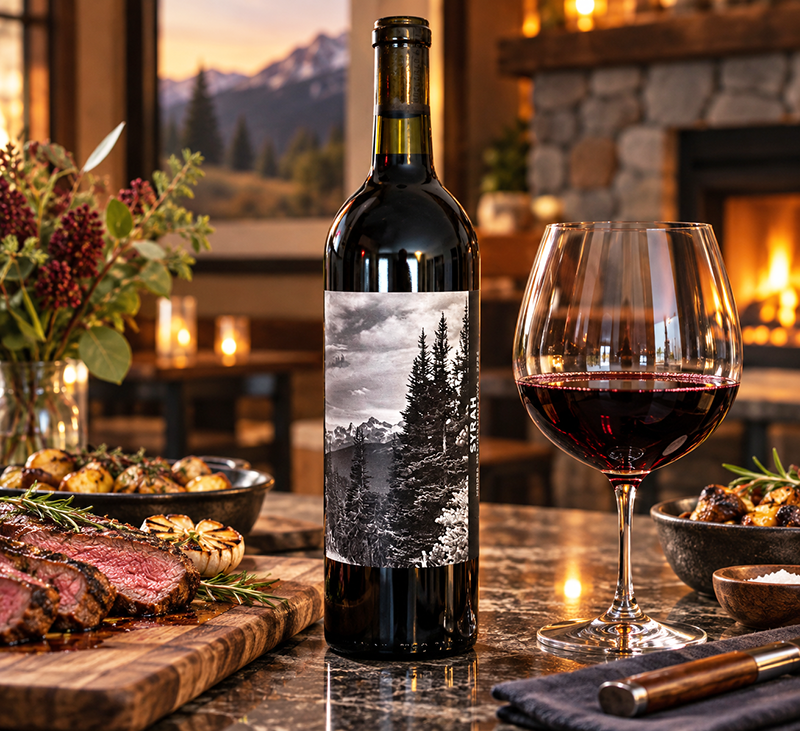
Hedges Family Estates Red Mountain Hedges Vineyard Syrah 2017
Hedges Family Estates Red Mountain Hedges Vineyard Syrah 2017 Click here for tasting notes.
Hedges Red Mountain Syrah

A winemaker, Nicole Walsh of Ser Winery, recently recommended a wine to me. And I thought, “If a winemaker recommends someone else’s product, it must be worth seeking out.” That wine? Hedges Family Estate Red Mountain Syrah.

In June of 1976, Tom Hedges and Anne-Marie Liégeois married in a 12th century church in Champagne, France, the area where Liégeois was born and raised. This melding of New World and Old World experiences and sensibilities would directly inform them once they entered the world of wine years later. Continue reading “Hedges Red Mountain Syrah”

Riley’s Rows Rosé of Syrah

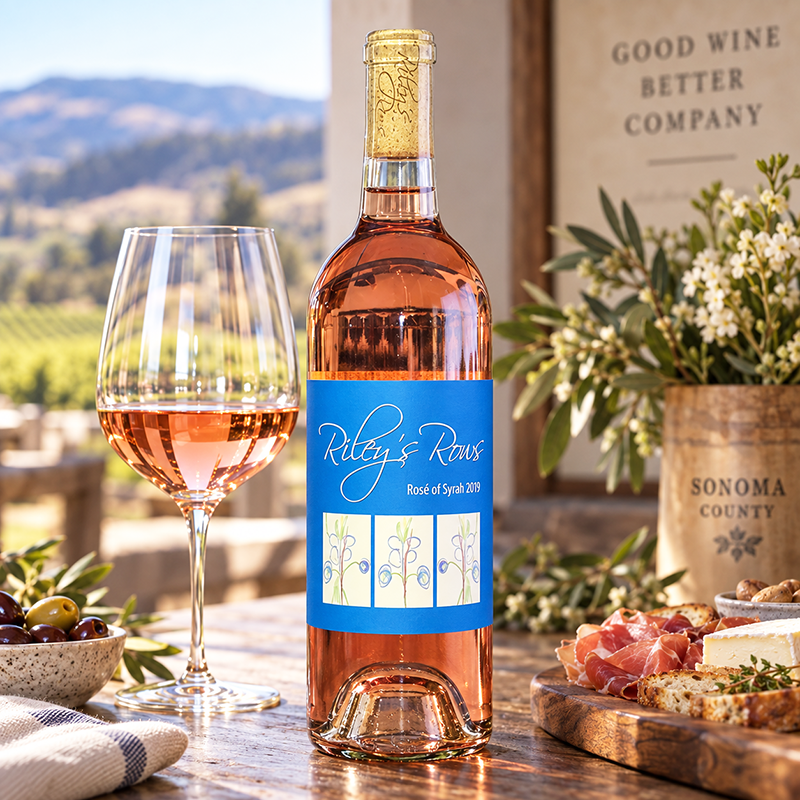
Riley's Rows Rosé of Syrah 2019
Riley’s Rows Rosé of Syrah 2019 Click here for tasting notes.
Riley’s Rows Rosé

There’s an old witticism in the wine business that goes, “If you want to make a million dollars by producing wine, the first thing you need to do is spend a million dollars.” For a young and ambitious vintner to be able to skip that first step would be quite a blessing. Such is the case with Riley Flanagan. She is the eldest daughter of Eric Flanagan, a boutique winemaker and grape supplier in Sonoma, California. Through his Flanagan Wines operation, her father shares the tasting room, winemaking facility, and some of the fruit for his daughter’s own wine label. Continue reading “Riley’s Rows Rosé of Syrah”

Adega Northwest Syrah

Adega Northwest Double Canyon Vineyard Syrah 2016
Adega Northwest Double Canyon Vineyard Syrah 2016 Click here for tasting notes.

Adega Northwest Double Canyon Vineyard Syrah 2016

When most of us think of a winery, what usually comes to mind is the romantic stereotype of a rustic but exquisite barn situated halfway up a mountain in the western U. S. overlooking a bucolic valley below; a fabulous hundred-years old chateau surrounded by ancient vines somewhere in France; or perhaps even a charming azienda agricola in Italy with a view of Roman ruins. But that’s not the only way to do it.  Adega Northwest of Portland, Oregon, is very much an urban winery.  There are vineyards, of course, you just won’t see them if you pay the winery a visit (by appointment only).  And because they are not tied to an estate, Adega Northwest can and does draw on sources throughout the region. Continue reading “Adega Northwest Syrah”

Hedges Family Estate

Hedges Family Estate
Hedges Family Estate Click here for tasting notes.

A winemaker, Nicole Walsh of Ser Winery, recently recommended a wine to me. And I thought, “If a winemaker recommends someone else’s product, it must be worth seeking out.” That wine? Hedges Family Estate Red Mountain Syrah.

In June of 1976, Tom Hedges and Anne-Marie Liégeois married in a 12th century church in Champagne, France, the area where Liégeois was born and raised. This melding of New World and Old World experiences and sensibilities would directly inform them once they entered the world of wine years later. Continue reading “Hedges Family Estate”

Adega Northwest Winery

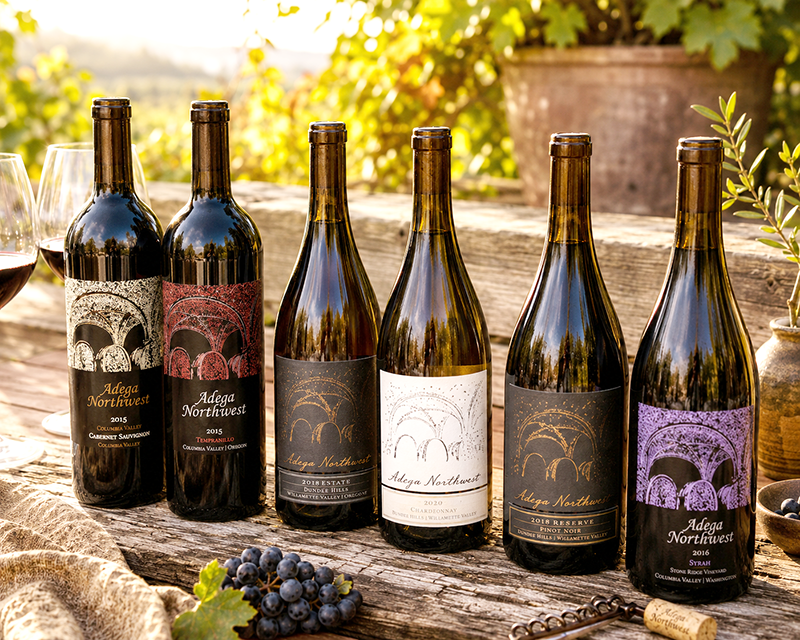
Adega Northwest Winery
Adega Northwest Winery. Click here for tasting notes.

Adega Northwest Winery

When most of us think of a winery, what usually comes to mind is the romantic stereotype of a rustic but exquisite barn situated halfway up a mountain in the western U. S. overlooking a bucolic valley below; a fabulous hundred-years old chateau surrounded by ancient vines somewhere in France; or perhaps even a charming azienda agricola in Italy with a view of Roman ruins. But that’s not the only way to do it.  Adega Northwest of Portland, Oregon, is very much an urban winery.  There are vineyards, of course, you just won’t see them if you pay the winery a visit (by appointment only).  And because they are not tied to an estate, Adega Northwest can and does draw on sources throughout the region. Continue reading “Adega Northwest Winery”

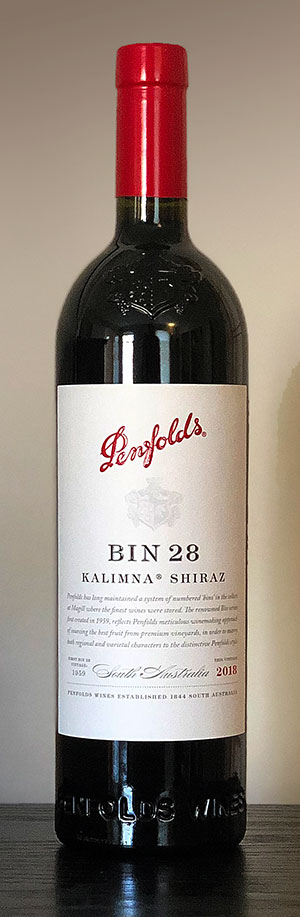
Penfolds Bin 28 Shriaz

Penfolds Bin 28 Kalimna Shiraz 2018
Penfolds Bin 28 Kalimna Shiraz 2018. Click here for tasting notes.

Penfolds Bin 28 Kalimna Shiraz 2018

Until Yellow Tail precipitated the boom in “critter wines” in 2000, it can be argued that Penfolds was just about synonymous with Australian wine in the U.S.  The label is ubiquitous here, in both grocery stores and fine wine shops. Prices range from about $12 per bottle for the Koonunga Hill Shiraz-Cabernet, to $850 for the legendary Grange, and everything in between.  (That $850 is doubly amazing, because just five or six years ago Grange was “only” about $200.) The selections are mostly reds plus a few whites and even a tawny Port.

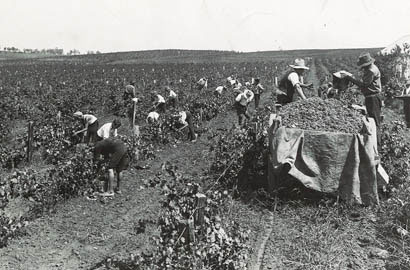
Founders Dr Christopher and Mary Penfold immigrated to Australia from England in 1844, bringing their own French vine cuttings. Not long after, their fledgling vineyard was officially established as the Penfolds wine company at the 500-acre Magill Estate in Adelaide.

The Penfolds were believers in the medicinal benefits of wine, and they planned to concoct a wine tonic for the treatment of anemia.  Initially, they produced fortified wines in the style of sherry and port for Dr Penfold’s patients. The operation enjoyed early growth, and since Dr Penfold was focused on his medical practice, much of the running of the winery was delegated to Mary Penfold, including the cultivation of the vines and wine blending. On Christopher’s death in 1870, Mary assumed total responsibility for the winery. According to one historical account, by that time the business had “grown to over 60 acres with several different grape varieties including Grenache, Vverdelho, Mataro (aka Mourvedre), Frontignac and Pedro Ximenez,” and the estate was “producing both sweet and dry red and white table wines with a growing market in the eastern Australian colonies of Victoria and New South Wales.” Clarets and Rieslings were especially popular.

During her tenure, Mary engaged in experimentation, explored new methods of wine production, looked into ways of combating diseases like phylloxera, and engaged a cellar master by the name of Joseph Gillard.

Penfolds was producing a third of all South Australia’s wine by the time Mary Penfold retired in 1884. The company passed to her daughter Georgina and son-in-law Thomas Hyland.   By 1907, Penfolds had become South Australia’s largest winery (It is still big, but it no longer holds that position.) Eventually, the business was passed onto their two sons and two daughters. The company became public in 1962, and  the Penfold family retained a controlling interest until 1976.

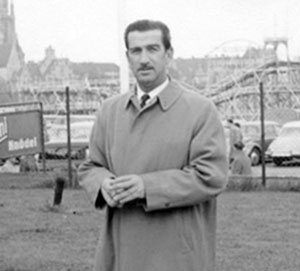
In 1948, Max Schubert
became the company’s first Chief Winemaker. A loyal company man and true innovator, Schubert would propel Penfolds onto the global stage with his creation of Penfolds Grange.  (That’s a story for another time, if I can ever get my hands on a bottle.  Hey, Penfolds!  A little help here?)

In 1959, while Schubert was perfecting his Grange experiment in secret, Penfolds’ tradition of ‘bin wines’ began. The first, a Shiraz with grapes from the company’s own Barossa Valley vineyards, was simply named after the storage area of the cellars where it was aged. And so Kalimna Bin 28 became the first official Penfolds Bin number wine.

In 1988, after four decades of Grange’s  success and growth into a wine world icon, Schubert was named Decanter magazine’s Man of the Year, and on the 50th anniversary of its creation, Penfolds Grange was given a heritage listing in South Australia.

In 1976, control of Penfolds was acquired by Tooth and Co., a brewer based in New South Wales, which in 1982 became part of the Adelaide Steamship Company Group. In 1990, SA Brewing purchased Adelaide Steamship’s wineries. Later, SA Brewing was divided into three separate entities: the wine assets were named Southcorp Wine.

Southcorp Wines became a part of the Foster’s Group in 2005. In 2011, Fosters was split into two separate companies; the wine side became Treasury Wine Estates, headquartered in Melbourne and Penfolds current owner. The chief winemaker since 2002 has been Peter Gago.

Vineyards

Adelaide
Magill Estate
5.34 hectares / 13.2 acres
Shiraz (known as Syrah in other parts of the world

Barossa Valley
Kalimna
153 hectares / 380 acres planted
Shiraz, Cabernet Sauvignon, Mataro (aka Mourvèdre), and Sangiovese
Koonunga Hill
93 hectares / 230 acres
Shiraz ,Cabernet Sauvignon
Waltons
130 hectares / 320 acres planted
Shiraz, Cabernet Sauvignon, Mataro
Stonewell
33 hectares / 82 acres
Shiraz, Cabernet Sauvignon

Eden Valley
High Eden
66.42 hectares / 164.1 acres
Riesling, Pinot Noir, Chardonnay and Sauvignon Blanc
Woodbury
69.56 hectares / 171.9 acres
McLaren Vale
141 hectares / 350 acres
Shiraz, Grenache, and Cabernet Sauvignon
Coonawarra
50 hectares / 120 acres
Cabernet Sauvignon and Shiraz

Penfolds Bin 28 Kalimna Shiraz 2018

Although somewhat deceptively named for a specific Barossa vineyard, this wine is sourced from various South Australian sites.  After fermentation, it was aged for 12 months in American oak.  An impenetrable dark purple in the glass, it has a nose of dark stone fruits, especially plums, and eucalyptus.  The palate is the same, plus cocoa and some bracing tannins.  The finish is long and very dry. ABV is 14.5%.

Back to blog posts: winervana.com/blog/

Coursey Graves Winery

Cabell Coursey

Coursey Graves Winery

Cabell Coursey is a busy guy these days. In addition to being the winemaker at Lombardi Winery, he is also winemaker and co-owner at Coursey Graves Winery in Santa Rosa, California. He began his career in wine in Burgundy, where he worked his first harvest during an undergraduate semester abroad. After graduation, he returned to the States and pursued the menial but necessary chores of picking grapes, scrubbing tanks and barrels, and learning traditional winegrowing methods. He went on to toil in Oregon’s Willamette Valley, and later traveled to Christchurch, New Zealand, where he earned graduate degrees in Enology and Viticulture from Lincoln University. It was there he developed the passion for cool climate wines that guides his style today. Before starting Coursey Graves in 2015 with partner John Graves, Coursey made wine for Alder Springs Vineyard, DuMol, Flanagan, and Kosta Browne.

He is committed to constantly improving the wines he makes from vintage to vintage by understanding his vineyards and maximizing their quality.  He also feels obligated to mentor young winegrowers by teaching parameters they can use to customize and improve grape farming for better produce.

Coursey stated,  “I am interested in making wines that show the place where they are grown, taste great young, but also age [well]. With most wines, aging means maintaining. I strive to make wines that evolve, not just maintain.
Except for a little bit of Chardonnay, I grow all the grapes I make to wine. It’s important, because my team learns about the vineyard and can change how we grow the grapes to make better wines.”
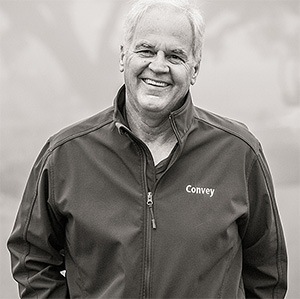
John Graves

John Graves began his career in computer technology, and after a decade spent working for others, he left to strike out on his own. Thirty years later he sold a successful B-to-B software business. He and his wife Denise used a portion of the proceeds to establish the Graves Foundation, whose mission is to provide disadvantaged youth in greater Minneapolis with access to the resources, opportunities, and caring relationships that will propel them to a successful life. Specifically, the foundation focuses on K-12 education reform and providing foster kids with support during the transition to adulthood.

Grave’s interest in wine began as a hobby, influenced by a good friend and by Robert Parker’s reviews in the Wine Advocate. At length his interest expanded until the desire to learn became a desire to own a winery. Serendipitously, about the same time his winemaker friend Cabell Coursey began talking about starting a new venture of wines in a style they both loved to drink and share. Graves acquired the existing Bennett Valley Winery, and the first vintage of Coursey Graves was bottled in 2017.

Bennett Valley AVA

In 1862, Santa Rosa winemaker Isaac DeTurk planted a vineyard on land he purchased from valley namesake James Bennett. DeTurk called his winery, the valley’s first, Belle Mount. However, the combination of phylloxera and Prohibition cleared the valley of vineyards. It wasn’t until the late 1970s that vineyards returned to Bennett Valley in a meaningful way at the pioneering Matanzas Creek Winery.

The Bennett Valley AVA is located south of Santa Rosa, on high ground between the Sonoma Valley and Cotati Valley. The AVA begins where the city’s suburban neighborhood known as Bennett Valley abruptly gives way to rolling oak woodland and horse pastures bordered by ancient stone walls.

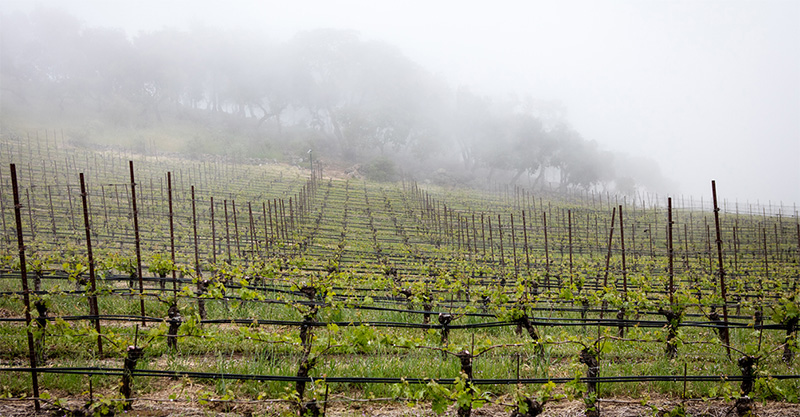
This tiny appellation is one of the coolest AVAs in Sonoma County. This is because of  the Petaluma Gap, where a break in the higher coastal hills lets in cool winds and fog from the Pacific Ocean. Bennett Valley sits directly in the path of the initial incursion.   The fact that there is fog in all of the photos in this post is testament to that!

Although there are plenty of renowned wineries and vineyards throughout Sonoma, of course, the lesser-known vineyards of Bennett Valley quietly yield some of the area’s most highly concentrated fruit. This is because the well-drained volcanic soils of the area ensure that the vines grow deep root systems in search of hydration. Ultimately this leads to concentrated, complex wines, as the water-stressed vines will focus their attention on grapes, rather than luxurious foliage. The rocky soils coupled with the cool weather mimic the austere conditions of Bordeaux.

There are now 650 vineyard acres and four wineries in Bennett Valley, which was awarded AVA status in 2003.

The Coursey Graves Vineyards

Coursey Graves is located on vineyard sites 800 to 1500 feet above sea level on Bennett Mountain overlooking Sonoma, on the western edge of the ancient, volcanic Mayacamas Range that separates Napa and Sonoma. The winery, estate vineyards, and caves are built into the slope overlooking the Bennett Valley below. Eighteen acres are planted to Cabernet Sauvignon, Malbec, Merlot, Petit Verdot, and Syrah.
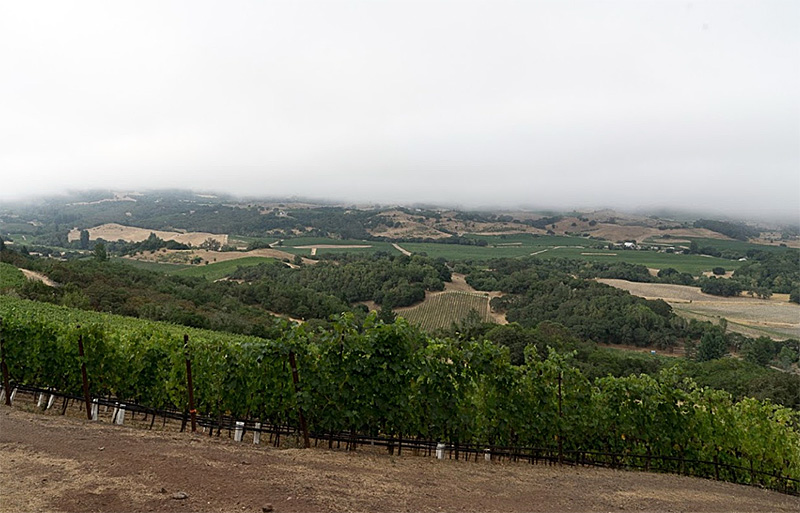
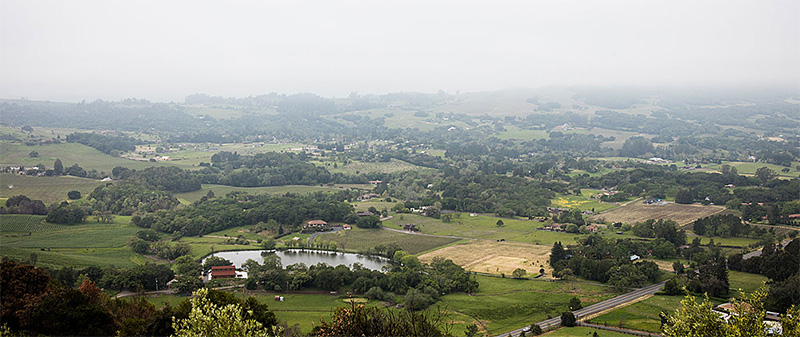
In addition to the estate vineyard, Coursey Graves relies on two others as well. Nestled on the sloped edge of an ancient volcano, Coombsville Vineyard is home to sixteen acres of Bordeaux varieties growing between the red and black igneous basalt and the white, ashy volcanic tuff. At two thousand feet above sea level, Cabernet from Howell Mountain Vineyard benefits from much cooler daytime temperatures and slower ripening.

The wines

I have now had the opportunity to try eight of Cabell Coursey’s wines.  They all have a smooth and silky mouthfeel.  Thinking this had to reflect the intervention of the winemaker, I asked him about how he achieves that, and he had this to say,  “First is vineyard work.  I get up-front and mid-palate concentration through diligent effort in the vineyard, by managing fruit load to the amount of vine canopy, and careful applications of irrigation. I have some control over berry size, and therefore juice to skin ratio, by controlling how much water-stress the vines have at various times during the growing season. Extra stress at flowering and fruit set limits berry size, while more water increases berry size. I don’t have a standard plan each vintage, but rather change according to conditions.

“Second is tannin management during the winemaking process. Certain tannins (phenols) extract from grapes at different ranges in temperature. Also, they bind at different temperatures. I manage the temperatures during fermentation very closely and change to either extract, not extract, or bind, depending on taste and mouthfeel. I do use lab numbers to double check what I taste. However, it’s mostly by taste. After working with these vineyards and my cellar for a few years, I’ve started to learn where the wines’ tannins need to be at the end of fermentation to age properly upon the wines’ release and subsequent aging.”

Coursey Graves Chardonnay 2018

The fruit for this wine was sourced from the Durell and Heintz vineyards on the Sonoma coast. It was fermented in oak and stainless-steel barrels. It is light bright lemon yellow in the glass, which is appropriate as it opens with the smell of lemons, paired with a hint of melon and crushed stone. Those flavors continue on the palate, abetted by a zippy acidity and a suggestion of oak.  It wraps up in a brisk finish.  Only 91 cases were made.

Coursey Graves West Slope Syrah 2016

This 100% Syrah  hails from Coursey Graves’ estate vineyard in Bennett Valley. It is an opaque but brilliant purple color. It features aromas of dark red fruits. The rather lean palate offers flavors of blackberry and olive, with a bit of pepper at the end.  It’s all complemented by good  tannins and a moderately long finish. Production was limited to 268 cases.

Coursey Graves Cabernet Sauvignon 2016

This wine is 100% Cabernet Sauvignon (although in some years Coursey adds and just a bit of Merlot). The grapes were  mostly harvested from vineyards in Howell Mountain and Coombsville in Napa, as well as some from Bennett Valley in Sonoma.  The aromatics are of rich, complex dark fruit. On the palate the wine offers tart cherry, black cherry, red licorice, and cocoa. The  oak tannins are well-integrated and bracing.  According to the winery, it will be at its peak performance around 2023 to 2024, by which time those tannins will inevitably round out, if you prefer them softer. .192 cases were produced. 

Coursey Graves Bennett Mountain Estate Red Blend 2016

This elegant wine was my favorite of the quartet. The blend is 60% Cabernet Sauvignon and 40% Merlot, all from the estate vineyard in Bennett Valley.  This deep-red selection displays aromas of crushed rock and currant, with a hint of strawberry.  These are followed by flavors of dark plum, blueberries, crème de cassis, and a touch of vanilla, supported by fine tannins.  It offers an excellent example of Coursey’s super smooth, lush mouthfeel.  There is just a bit of dried herbs on the long finish.  234 cases were made.
Coursey Graves’ tasting room is located in downtown Healdsburg, just off the historic Healdsburg Plaza.

www.courseygraves.com/

Back to blog posts: winervana.com/blog/

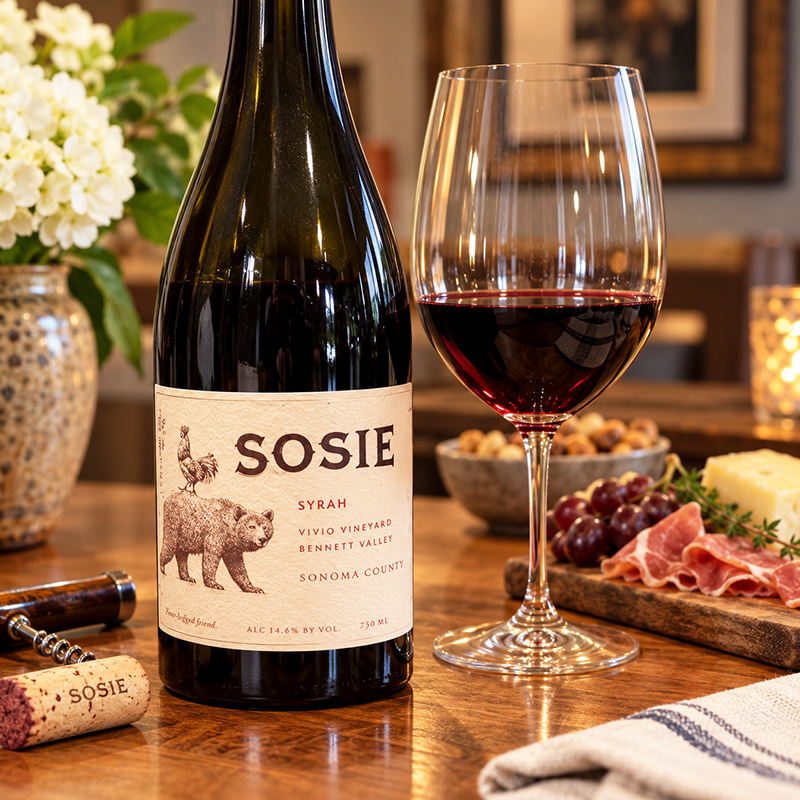
Sosie Syrah

Sosie Winery Syrah

They say imitation is the sincerest form of flattery, and it’s a maxim Sosie Wines lives by. “Sosie” [so-zee] is French for twin or doppelganger, and as it says right on the bottle, “We are inspired by the wines of France. So we employ an Old World approach to wine growing that favors restraint over ripeness, finesse over flamboyance. Our aim is to craft wines that show a kinship with France’s benchmark regions. Wines that are their sosie.”

Sosie Wines also pays homage to the French tradition of location, or terroir, believing that the vineyard site is perhaps the most important component of a bottle of wine.

Sosie Wines co-owner Regina (no last name, apparently) was introduced to wine at an early age, one of the first being Chateauneuf du Pape. “I remember the shape of those bottles and the crossed-keys of the papal crest. It was a symbol you could trust, my mom used to say. I never forgot that, and as a young adult one of the first places I had to visit in France was Chateauneuf. To this day I still love those wines.”

On a quest to cement that fascination, in 2006 she and partner Scott took a trip to the Loire in western France, and then in 2008 they spent 10 days traveling the Côte de Nuits, walking the vineyards and tasting the wines. In 2016 they visited both northern and southern Rhone, working their way down from Côte-Rôtie to St. Joseph

Following their travels, Regina and Scott founded their winery on the belief that their wines should stand for something. That they would not just have a style, but a purpose. They wanted their products to be food-friendly, with lower alcohol levels, higher acidity, and made in small batches with minimal intervention and just a bit of oak.

The couple are hands-on vintners. They prowl the vineyards throughout the growing season and are at the sorting table when the fruit comes in. They taste the berries, check the sugars and acids, and call the pick. They supervise every aspect of their barrels – the cooper, the forest, and the toast level. But they can’t do it all, of course. They get plenty of help from winemaker Kieran Robinson. Kieran had worked previously at Domaine Pierre Gaillard in France (of course), and had the deep appreciation for French viticulture and winemaking they were looking for.

VIVIO VINEYARD

At just above 800 ft, this is one of the highest vineyards in Sonoma’s Bennett Valley. Sosie grows Syrah as well as Roussanne on the mineral-rich, volcanic soil here.  The area, near Petaluma Gap, has a strong marine influence, as cool air pours in from three separate directions and settles into the valley’s bowl, which in the summer months turns to heavy fog. Even so, the days can get quite hot, with temperature swings of 40° to 50° F from daytime highs to nighttime lows. This can mean the fruit is very late ripening due to the extended “hang time” on the vines..  The property is sustainably farmed.

Sosie Wines Syrah 2016

In addition to the Syrah, there is 7% Rousanne in the bottle. It was aged for 20 months in 50% new oak. The nose features aromas of berries, tart cherries, with a hint of plum and menthol. The restrained plum continues on the palate, with some cocoa and, frankly, booming tannins. No worries, though. Decant Sosie Wines Syrah for an hour or two before drinking, and those tannins settle down nicely.

Give this Syrah a try with roast duck with cherries, beef braised in red wine, or pork chops with mustard, cream, and tomato sauce.

Only five barrels (that’s 1500 bottles) of this wine were produced, so get a bottle while you can.

sosiewines.com

Back to blog posts: winervana.com/blog/