
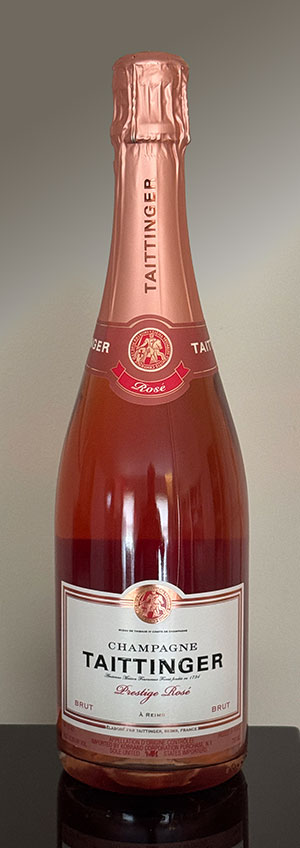
Taittinger Prestige Rosé NV
Few Champagne houses combine elegance, history, and consistency as successfully as Taittinger. Among the Grandes Marques, it has long stood apart for one defining reason: its unusually high proportion of Chardonnay, which gives virtually every wine in its portfolio a lighter, finer, and more graceful personality than many competitors. If Bollinger is muscular, Krug profound, and Pol Roger aristocratic, Taittinger is often described as the most elegant and refined of the major houses.
Tattinger was founded in 1932 (although its roots extend to the historic Forest-Fourneaux house estaablished in 1734). It is one of the few major Champagne houses still controlled by the founding family, after being repurchased in 2006. While many famous Champagne houses are owned by luxury conglomerates such as LVMH or Pernod Ricard. Taittinger remains family-directed, allowing it to emphasize long-term vineyard investment over short-term financial returns.
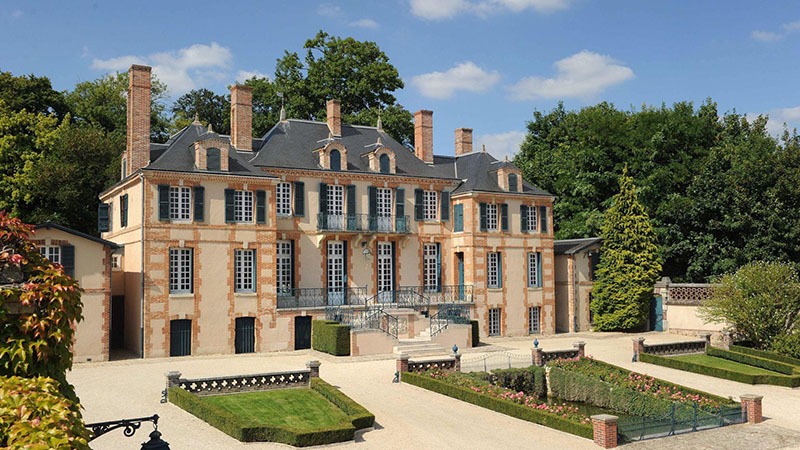
The story begins with Pierre Taittinger, who first encountered the Château de la Marquetterie during World War I while stationed nearby. He became captivated by both the estate and Champagne itself.
In 1932, during the Great Depression, Pierre and his brother-in-law purchased the historic Forest-Fourneaux Champagne house and eventually renamed it Taittinger.
The visionary of the modern house was Pierre’s son François Taittinger, who made Chardonnay the central grape variety, dramatically expanded vineyard holdings, created the legendary Comtes de Champagne Blanc de Blancs in 1952, and established the elegant style still associated with Taittinger today.
One reason Taittinger is so consistent is that it owns an enormous amount of vineyard land, today approximately 288 hectares (712 acres), making it the second-largest vineyard owner among the Champagne Grandes Marques. Those vineyards supply nearly half of the grapes needed for production.
If you enjoy wines like Roederer Collection (like I do) or Ruinart Blanc de Blancs, you’ll probably appreciate Taittinger.
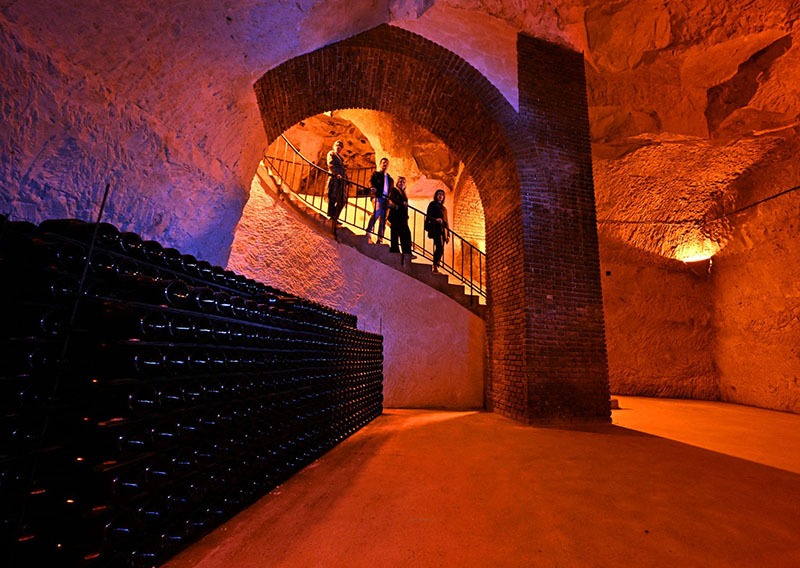
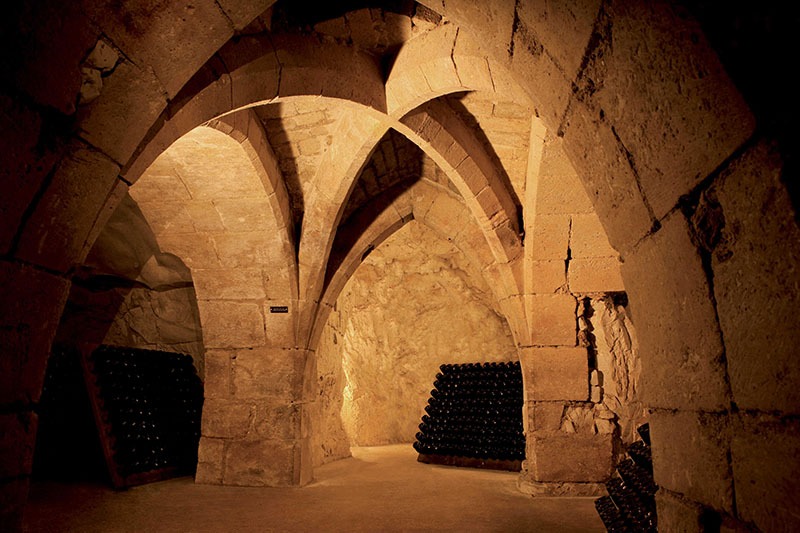
One of Taittinger’s greatest treasures is its cellar system beneath Reims. These Gallo-Roman chalk quarries date back nearly 2,000 years and lie about 18 meters (60 feet) underground. They provide naturally constant humidity and temperature, making them ideal for aging Champagne. Today they are part of the UNESCO-listed “Champagne Hillsides, Houses and Cellars.” The prestige cuvées mature here for roughly a decade before release.
Long before sustainability became fashionable, Taittinger began reducing herbicide use and encouraging natural cover crops. The estate now emphasizes soil cultivation instead of herbicides, biodiversity, sustainable vineyard management, and reduced chemical inputs. Its vineyards have been transitioning toward more environmentally responsible farming since 2005.
Taittinger Prestige Rosé NV
This is one of Champagne’s benchmark rosés. Unlike many rosé Champagnes that rely on a brief skin contact (“saignée”) for color, Taittinger produces Prestige Rosé by blending still red Pinot Noir wine into a white Champagne base. This technique is unique in Champagne and gives the house much greater control over color, aroma, and consistency. Taittinger uses 11–14% still red wine made from Pinot Noir grown primarily in the Montagne de Reims and Les Riceys, areas renowned for producing exceptional red wines.
The current blend is approximately 35% Chardonnay, 40% Pinot Noir, and 25% Pinot Meunier.
In the glass, it is a lovely salmon color with copper highlights. It is noticeably darker than many rosé Champagnes because of the generous addition of red wine rather than minimal skin contact. It pours with fine and energetic bubbles. The nose features a bouquet of vibrant ripe berries. These manifest on the palate as wild strawberry and raspberry, as well as sweet and tart cherry. These are complemented with hints of orange and rose petals. The finish is clean, mineral, and surprisingly long, with very little bitterness. ABV is 12.5%
Back to blog posts: winervana.com/blog/