
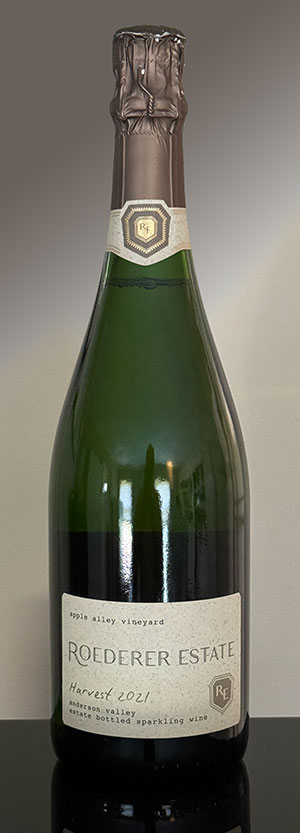
Roederer Estate Apple Valley Vineyard 2021
Louis Roederer [Road-ur-ur], a distinguished champagne producer situated in Reims, France, traces its origins back to 1776, when it began as Dubois Père & Fils. While its early days were marked by still wine production, the focus soon evolved to embrace the art of crafting fine champagnes. The business underwent a transformation under the stewardship of Louis Roederer in 1833 when he inherited the company and also renamed it for himself. He boldly ventured into international markets, focusing particularly on Russia. This endeavor gained him immense recognition, including from Tsar Nicolas II, who appointed Louis Roederer as the official wine provider to the Imperial Court of Russia.
Roederer Estate is Roederer’s California operation. But, it isn’t simply a California winery owned by a French Champagne house—it was built from the ground up specifically to produce world-class sparkling wine under California conditions, while adhering as closely as practical to Champagne philosophy.
During the late 1970s, Jean-Claude Rouzaud, then president of Louis Roederer, believed California possessed sites capable of producing sparkling wines that could rival the world’s best. Instead of buying fruit from growers—as many California sparkling producers did—he insisted on owning vineyards outright.
After evaluating numerous regions, including more famous areas in Napa and Sonoma, he selected the cool, fog-influenced Anderson Valley. At the time, the decision seemed unusual because Anderson Valley was remote and relatively unknown, but its combination of cool temperatures, long growing season, and marine influence closely resembled the conditions prized for Champagne grapes. The estate was founded in 1982.
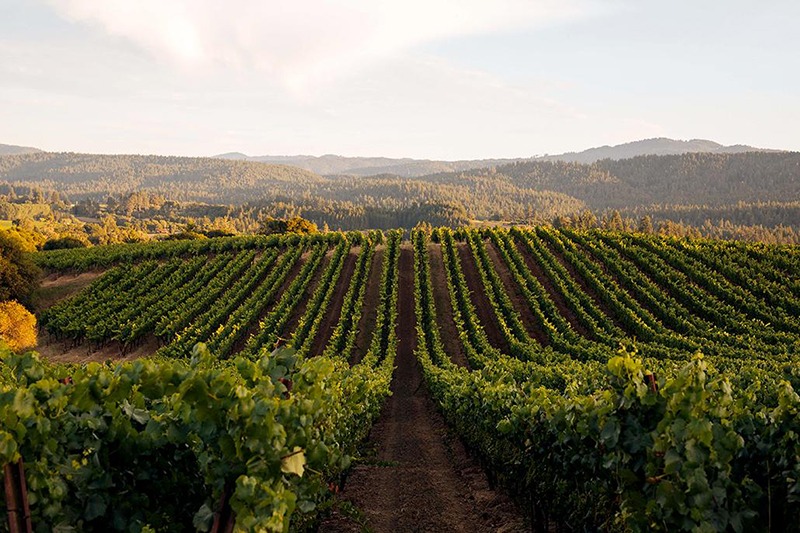
Today the property encompasses approximately 580 acres of estate vineyards, planted almost entirely to Chardonnay and Pinot Noir. Unlike many wineries, Roederer Estate uses only estate-grown fruit. That gives the winemaking team complete control over every aspect of viticulture—from pruning and canopy management to harvest timing. This estate-only approach mirrors the philosophy of Louis Roederer in France.
One reason Roederer Estate consistently outperforms many California sparklers is that it follows several traditional Champagne practices rather than shortcuts, including méthode traditionnelle, primary fermentation, bottle fermentation, extended lees aging, and bottle disgorgement rather than the less expensive tank method.
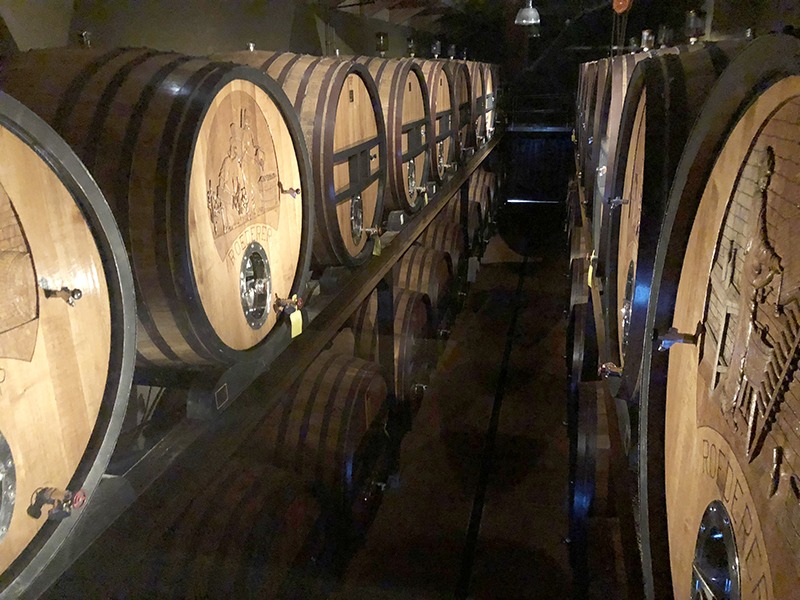
Instead of blending only base wines from the current harvest, Roederer maintains a library of oak-aged reserve wines. That reserve wine program is directly inherited from Champagne Louis Roederer and is relatively uncommon among California producers.
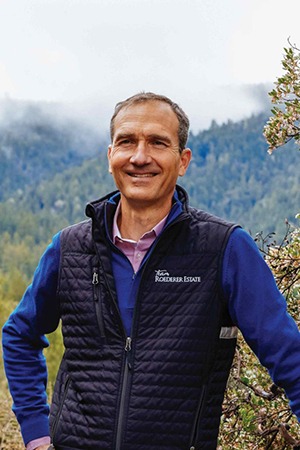
Current winemaker Arnaud Weyrich has led production since the early 2000s after beginning his relationship with the winery as an intern in 1993. Under his leadership, the wines have become even more refined while remaining unmistakably Californian.
Roederer Estate Apple Valley Vineyard 2021
Several details distinguish this wine from Roederer’s standard Brut (but which I still love and consider a great value): traditional bottle fermentation, 22% fermented in oak casks, 3% reserve wine aged in casks, 36 months on the lees, and extra Brut dosage, making it noticeably drier than the regular Brut. The extended lees aging contributes complexity while the restrained dosage keeps the wine focused.
The wine presents with a creamy mousse, but is almost colorless, in a flute at least. The nose features aromas of green apple, white peach, tangerine oil, and wet stone. Things take a different turn on the palate, with flavors of bright citrus, especially lemon and lime, and a hint of toasted brioche. There is plenty of long focused acidity, and it all wraps up with a saline finish. This is a sparkling wine that balances richness with precision. It has more weight than the regular Roederer Estate Brut, but remains vibrant rather than heavy. Overall, quite refreshing.
Back to blog posts: winervana.com/blog/