

Walson Holland Mélange Blanc
Walson Holland is a small winery nestled in the Ojai Valley of Southern California. It was founded in 2018 by seasoned winemaker Benjamin (“Benny”) Holland, and Jonas Svensson, an Ojai-based vineyard owner.
Benjamin Holland began his career by interning at Kosta Browne in 2016, then worked harvest in Central Otago’s Amisfield in New Zealand, and later interned at the prestigious cult winery Sine Qua Non in California. There, he honed the meticulous craft and precision that now define Walson Holland’s style.

The first vintage began with modest scale: in 2018 they produced roughly 600 cases in an Oxnard warehouse, sourced from vineyard sites across California’s Central Coast—Sta. Rita Hills, Ballard Canyon, Alisos Canyon, Happy Canyon, the Santa Ynez Valley, and Edna Valley. Production then grew steadily, reaching around 800 to 1500 cases by 2022.
As early as 2021, the Santa Barbara Independent featured them, celebrating their Rhône-style blends, field-blend approach, and urban tasting room.[Now closed, from what I could determine. The wines are currently sold in a handful of California wine shops, and on an allocation basis on their Web site.]
From the start, the winery has specialized in Rhône‑style blends—including both whites and reds—and also single‑varietal Pinot Noir and Grenache. Their wines have garnered attention from critics including California Wine Advisors and The Wine Independent, with glowing early reviews for their 2018 Grenache and later vintages.
Walson Holland’s focus is on aromatic intensity balanced with restraint and California fruit expression. Holland aims for wines that nod to traditional Rhône elegance without heaviness, while also embracing regional richness.
Vineyards
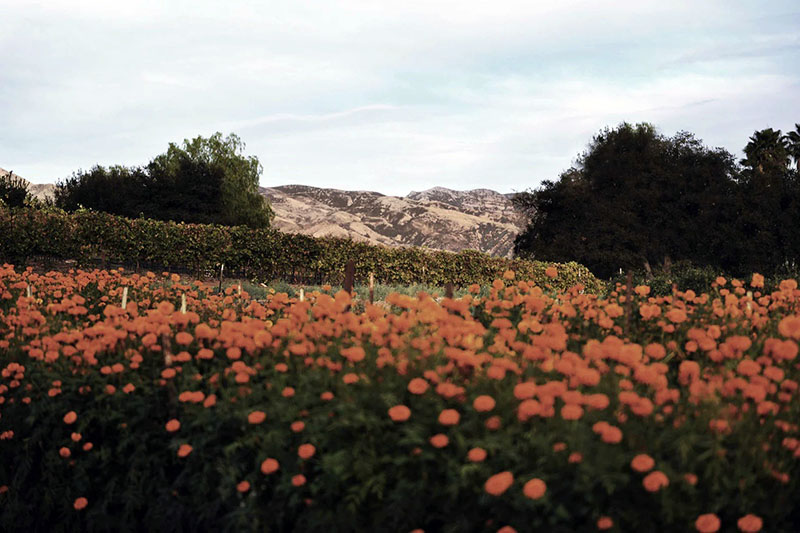
Walson Farms estate is an eight‑acre vineyard located in the heart of Ojai Valley. This former hobby site evolved into an organically-farmed vineyard under Holland’s stewardship. The focus is on Rhône-style varietals, along with Pinot Noir and Chardonnay from Central Coast sources such as the Duvarita Vineyard in Sta. Rita Hills in Santa Barbara county. Fruit is sourced from other AVAs as well, including Alisos Canyon, Happy Canyon, Ballard Canyon, Santa Ynez, and Edna Valley (e.g., Slide Hill Vineyard).
Walson Holland Mélange Rouge 2018
For this white blend, unlike many California Rhône whites that lean heavily on Viognier, Holland chose a remarkably balanced blend of 28% Viognier, 28% Roussanne, 28% Grenache Blanc, and 16% Marsanne. The equal weighting is intentional as each variety contributes something distinct.
Holland treats this wine much more like a fine white Burgundy than a simple California white. It was aged 22 months in French oak, 35% new. Each variety is fermented separately before blending. Extended barrel aging allows for lees-derived richness, integration of the oak, the development of complex tertiary aromas, and greater longevity. The oak is meant to provide texture rather than overt vanilla or toast.
The wine pours a clear medium yellow. The nose features citrus and tropical fruit aromas. On the palate, they emerge as lemon, orange peel, chalk, some apple, and a bit o’ honey. Everything is supported by bracing acidity and a pleasant layered mouthfeel. 180 cases were made, and the ABV is 14.5%.
Note: This selection is guilty of Bloated Bottle Syndrome, which I’m calling out for bottles that weigh more than the wine they contain. The web site of nearly every winery will usually include a mention of the operation’s dedication to “sustainability” and “stewardship.” Unfortunately, this often seems only to extend to the property itself. Many “premium” wines like this one come in heavier bottles to allegedly denote quality. This one weighs in at 789 grams. (As an example of a more typical bottle, Estancia Cabernet’s comes in at 494 grams.) That’s a lot of extra weight to be shipping around the country (or the world.) Unfortunately, this sort of “bottle-weight marketing” is becoming more common, especially at higher price points. But there are other ways to denote quality without weight: unusual label designs, foils, wax dipping, etc.
Plastic bottles have a lower environmental impact than glass, 20% to 40% less, in fact. And, bag-in-box packages are even less than plastic bottles. (Unfortunately, current bag technology will only keep unopened wine fresh for about a year, so they are only suitable for wines to be consumed upon release from the winery; that’s about 90% of all wine sold though.)
The carbon footprint of global winemaking and global wine consumption is nothing to scoff at, amounting to hundreds of thousands of tons per year. The latter, which requires cases of wine be shipped around the world, imprints a deep carbon footprint. Because wine is so region-specific, and only so many regions can create drinkable bottles, ground and air transportation is responsible for nearly all of the wine industry’s greenhouse gas emissions. According to the Sustainable Wine Roundtable, a group of wineries, retailers, and other companies connected to the wine industry, one-third to one-half of that total is due to the glass bottles themselves.
Return to blog posts: https://winervana.com/blog/