
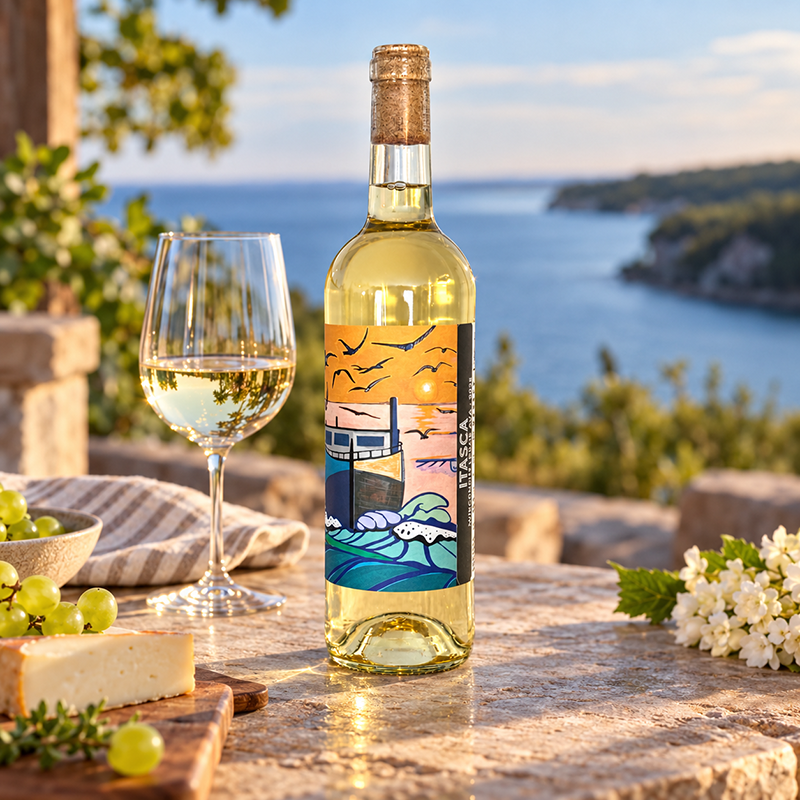
Anchored Roots Itasca 2025
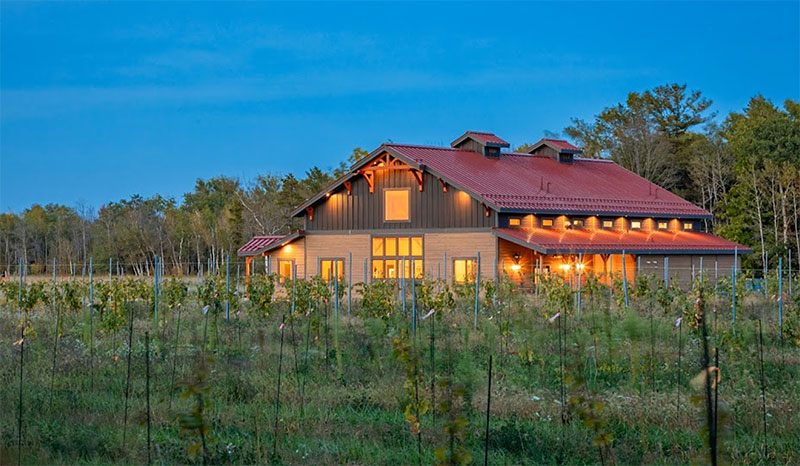
Eric and Amy Gale are the owners and sole full-time employees of Anchored Roots in Door County, Wisconsin, founded in 2020.
The couple make an ideal front-of-house/back-of-house duo. Amy grew up in Milwaukee, with hospitality at the forefront of her career path. Her initial focus was event planning, from non-profit fundraisers and catering, to corporate events and weddings. This was followed by experience in tasting room management at Airfield Estates in Prosser, Washington.
Eric was born and raised in Luxemburg, Wisconsin. Perhaps predictably, while he was growing up he worked summers at a neighbor’s 60-head dairy farm. However, his academic bent led him to a Bachelor’s degree in biology with a minor in chemistry. He then pursued a Masters in Viticulture at Washington State University. After graduation, he landed a job at Chateau Ste. Michelle, Washington state’s oldest winery. His primary responsibility was overseeing the Cold Creek vineyard, Ste. Michelle’s first, originally planted in 1972.

Although their lives in the wine world were nurtured in Washington, when they decided to open a winery of their own, Wisconsin beckoned. As Wisconsin natives, they both grew up spending time on the Door Peninsula with families and friends, and they felt that the story of Door County terroir was worth telling.
Eric believes that 80 to 90 percent of a wine’s quality resides in the grapes. He sources his from growers in northeastern Wisconsin as well as from growers he worked with while in Washington. However, because of his commitment to local sourcing as well as transit challenges, Anchored Roots also has a six and a half acre estate vineyard where he is experimenting with a dozen cold-weather varietals. The first planting in 2020 of three acres of vines included Marquette, Frontenac, Itasca, St. Croix, St. Pepin, Petite Pearl, La Crescent, and Louise Swenson. In 2021, an additional three acres were planted with Adalmiina, Frontenac Gris, and L’Acadie Blanc, as well as an expansion of the Itasca, Marquette, and Petite Pearl blocks. In 2023, came a 1/2-acre planting of Frontenac Blanc. Eric expects his first estate harvest in the fall of 2024.
A voracious reader, Eric is largely self-taught as a winemaker. This has freed him from many of the hide-bound traditions and prescriptions of the wine industry. The winery is steam sanitized, reflecting his commitment to cleanliness. He practices dry farming, which simply means growing grapes without adding additional water. This requires both patience and nerve, as the grower is at the mercy of natural precipitation. He relies on Integrated Pest Management, also known as integrated pest control, a broad-based approach that integrates both chemical and non-chemical practices for economic control of pests. The winery uses no capsules on the bottles, as Eric feels this is both a needless waste and expense.
Perhaps Eric’s biggest innovation is in the use of wood in his winemaking. Because new oak barrels can cost around $1400, many small wineries use wood chips for aging their wines, or forego wood entirely. However, Eric uses Squarrels, a rather goofy yet apt name for a product from the Minnetonka Brewing and Equipment Company.
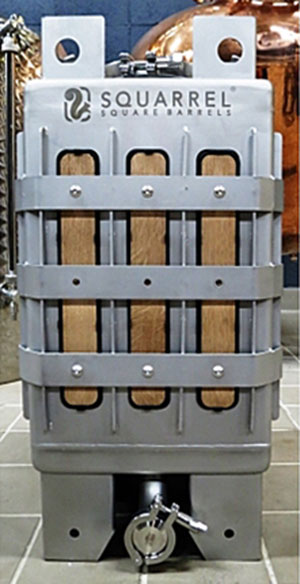
The Squarrel is a reusable square stainless-steel frame that uses individually-cut flat staves. The staves are American White Oak or French Oak (although there are plans to offer additional species), in cross-cut or uncut wood, and four toast, or char, levels. Replacement staves are delivered in shoebox-like shipments, greatly reducing transit costs. Traditional barrel staves are about 35″ long, but since the Squarrel staves are 14″ long they are essentially scraps from the barrel-making process, further reducing costs.
Eric states that the Squarrel offers the best of both worlds for a small producer. It is much more cost-effective than a traditional barrel (the infinitely reusable frame is about half the cost of a barrel), but offers more integrated oak texture and flavor than wood chips, especially because the staves can be custom toasted.
Anchored Roots Itasca 2025
When it comes to wine tastings, my friends and I have occasionally discussed the “resort effect.” You’re on vacation, you’re relaxed, you decide to visit some local wineries. You enjoy the wine and buy a few bottles. Days or weeks later you get around to opening one of those bottles and you exclaim, “What was I thinking?! This juice is awful (or at least disappointing). Sometimes called the Cape Cod of the Midwest (to locals’ chagrin), some Door County wines are certainly susceptible to the resort effect. Eric Gale’s selections seem to be immune. He is making serious wines, to be enjoyed whether on vacation or after a stressful day at work.
Unlike the winery’s Washington-sourced vinifera wines, Itasca is part of Anchored Roots’ effort to demonstrate what genuinely local Door County wine can be. The 2025 Itasca is made from a cold-hardy grape that Anchored Roots grows in its own vineyard in Egg Harbor, and the 2025 bottling has already received a significant accolade: Best of Class Itasca at the 2026 International Cold Climate Wine Competition.
Itasca is a relatively new white-wine grape developed by the University of Minnesota specifically for northern climates. Although Eric does grow Itasca on the estate, this may or may not be 100% estate fruit.
The wine pours a very pale yellow in the glass. The mouthwatering nose is dominated by fresh grapefruit, which carries directly onto the palate, joined by a lively squeeze of lime. Zippy acidity keeps the wine bright, crisp, and refreshing, emphasizing its citrus-driven character through the clean finish. The body is light to medium. ABV is 12.4%.
Serve this white with oysters, simply prepared white fish, shrimp, chèvre, sushi, or a lightly dressed summer salad.
Back to blog posts: winervana.com/blog/