Saké is often called rice wine, but this is a misnomer. While it is an alcoholic beverage made by fermentation, the production process more closely resembles that of beer, and it is made from grain (rice, of course), not fruit. To make saké, the starch of freshly steamed glutinous rice is converted to sugar and then fermented to alcohol. Once fermented, the liquid is filtered, heated, and placed in casks for maturing. Sakés can range from dry to sweet, but even the driest retain a hint of sweetness.
This saké is a domestic product from SakéOne saké brewery in Forest Grove, Oregon. The company began as a saké importer in 1992, and in 1997 they expanded the operation and began brewing their own saké.
In premium saké, water composition matters a great deal. SakéOne’s founder chose Oregon because he believed that the best-quality water for saké brewing is in the Northwest. The other crucial component is rice, and for this bottling SakéOne selected Yamada Nishiki from Arkansas.
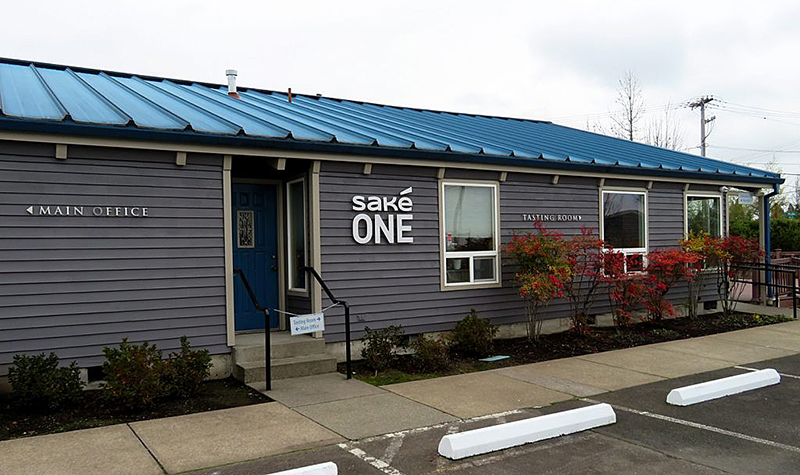
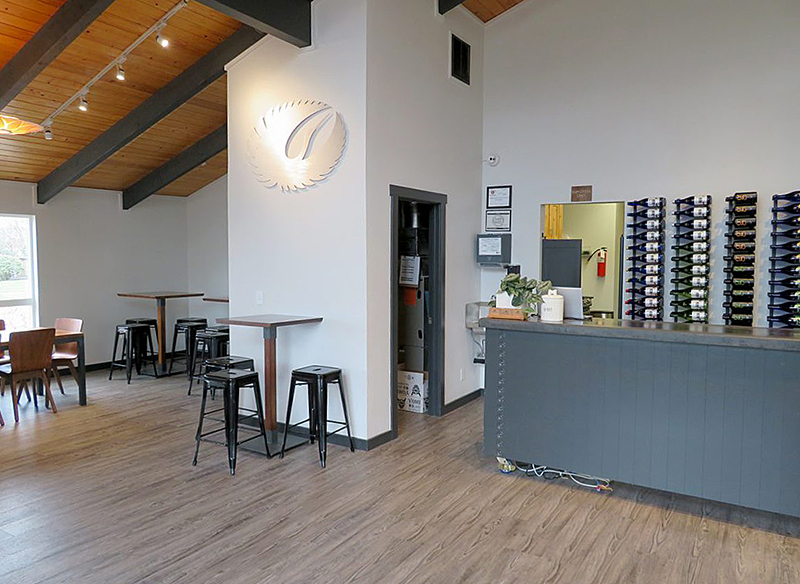
SakéOne’s modest tasting room.
Momokawa Heart and Soul Saké
The producer states that “Heart” refers to the center of the rice grain, or shinpaku. The “Soul” refers to the dedication of the saké brewing team who created this hand-made saké. It is a full-bodied Junmail* Daiginjo** with a slightly yellow hue. It opens with a nose of melon and lychee. These continue on the palate, plus a bit of apple. The overall balance is quite good.
The ABV is 16%, and it has a mid-scale SMV*** of +1.5, but it seems drier. The rice has a polish of 40%, so 60% of the rice has been removed. Serve chilled.
SakeOne offers a three-tiered monthly saké club (but not all three tiers are available in every state, due to local liquor laws). Club membership offers attractive discounts and access to limited production sakés. Unfortunately, SakeOne marks up the actual shipping charges by 30% to 50%, making those discounts in reality rather less attractive. I for one would prefer that the discounts be less, if necessary, and the shipping costs accurate.
*Junmai is pure rice wine, with no added alcohol. Until recently, at least 30% of the rice used for Junmai sake had to be milled away, but Junmai no longer requires a specified milling rate.
**Ginjo designates that at least 40% of the rice has been polished away. If a bottle is labeled just Ginjo, distilled alcohol was added; if it is labeled Junmai Ginjo, no alcohol was added.
***The SMV (Saké Meter Value) measures the density of saké relative to water, and is the method for gauging the dryness or sweetness of saké. The higher the SMV, the drier the saké. The range is from -15 (sweet) to +15 (dry),
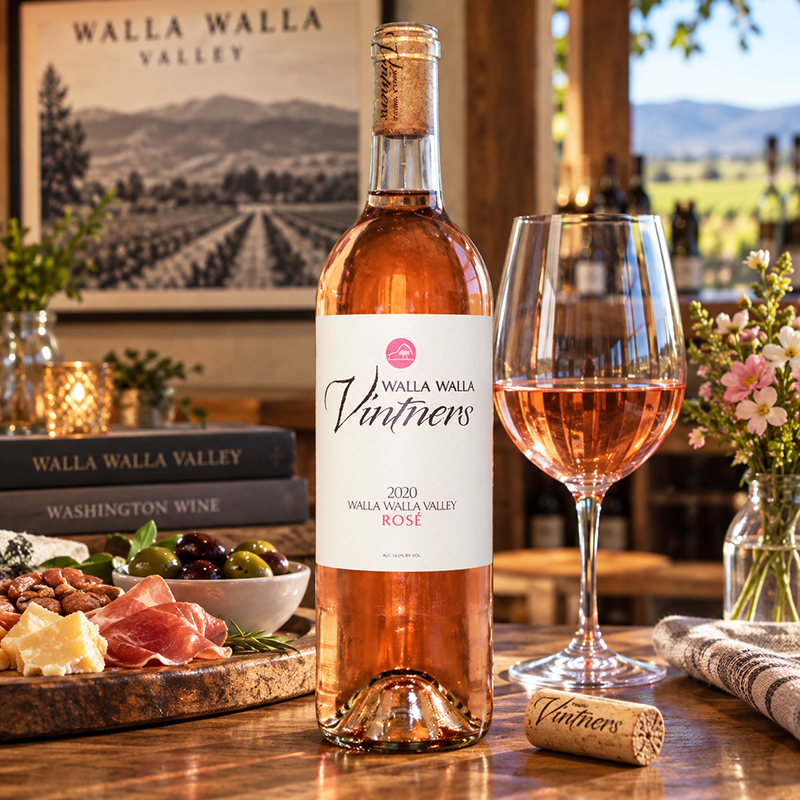
Walla Walla Vintners was founded in 1995 in the shadow of the Blue Mountains by pioneering winemakers Gordy Venneri and Myles Anderson, and was just the AVA‘s eighth winery. Even though there are now more than 140 wineries in Walla Walla Valley, in 2016, Walla Walla Vintners was named “Pacific Northwest Winery of the Year” by Wine Press Northwest.
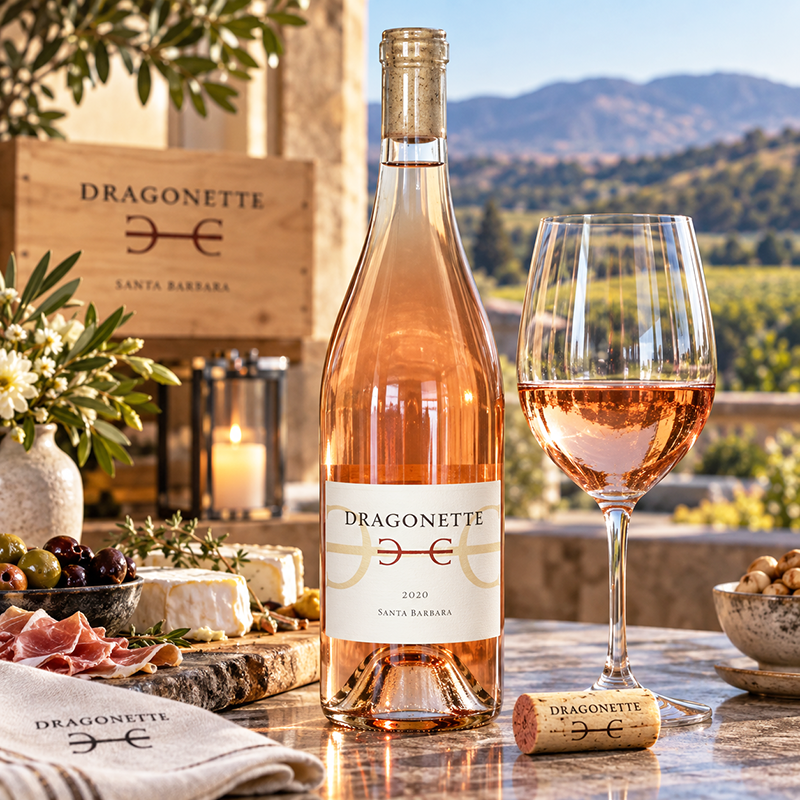
The brothers Dragonette (John, the elder, and Steve, the younger) and close friend Brandon Sparks-Gillis, after having met and worked together at Wally’s, a renowned wine shop in Los Angeles, founded Dragonette Cellars in 2005. They did so in the climatic and soil diversity of the wild, windy, and remote northern Santa Barbara County.
I’m obviously a wine enthusiast, and with my wife will drink all or most of a full bottle of wine with dinner just about every night. However, you may enjoy less wine with your meals. If so, consider 375 mL half bottles. They are also handy if you want a red and your companion wants a white, like the two shown here. Half bottles are also convenient for picnic outings. And, empty half bottles are great for storing leftover wine; just fill the half bottle as close to the top as you can, reseal it (easily done if the closure is a screw cap), and park it in the refrigerator.
Saké is often called rice wine, but that is a misnomer. While it is an alcoholic beverage made by fermentation, the production process more closely resembles that of beer, and it is made from grain (rice, of course), not fruit. To make saké, the starch of freshly steamed glutinous rice is converted to sugar and then fermented to alcohol. Once fermented, the liquid is filtered, heated, and placed in casks for maturing. Sakés can range from dry to sweet, but even the driest retain a hint of sweetness.
You can read more about the history of saké and the specifics of its production here.
Kiku-Masamune Saké Brewing was founded in 1659, when Japan was ruled by Ietsuna, the fourth Tokugawa shogun. Unusual among saké producers, Kiku-Masamune’s entire product line is classified as dry.
Things began when the Kano family built a saké brewery at their residence. At the time, the Nada region in Kobe, Japan, where they lived, had not yet become well known for its saké, but the subsequent popularity in Tokyo of saké from Osaka and Kyoto, known as kudarizake, led to a rapid surge in demand for saké from the Nada area.
During the Meiji period (1868 to 1912), Jiroemon Kano, the eighth head of the family, pioneered improvements in technology and other initiatives to increase the quality of their saké in the service of the ideal of “doing whatever it takes to create a better saké.” It was during this period that the Kiku-Masamune brand was registered as a trademark.
From the Meiji period to the Taisho period (1912 to 1926), the company increased overseas exports and served as a purveyor to the Imperial Household Agency, an arm of the government of Japan in charge of state matters concerning the Imperial Family, and also the keeping of the Privy Seal and State Seal of Japan.
The brewery managed to survive the hardships of the tumultuous Showa period (1926 to 1989), which included the rise of militarism in Japan; Japanese aggression in China and elsewhere in east and southeast Asia; World War II and Japan’s defeat; and the post-war struggle to rebuild, which ultimately succeeded, and spectacularly so.
Just four years after the end of the war, a 1949 opinion survey conducted in six of Japan’s largest cities by a brewing-industry newspaper asked respondents to identify the saké brands they preferred to sell and the brands that they believed offered a particularly high level of quality. Kiku-Masamune took top place in three cities and led in the overall results. The company Is headquartered in Kobe, Japan, where it began, with four additional branch offices.
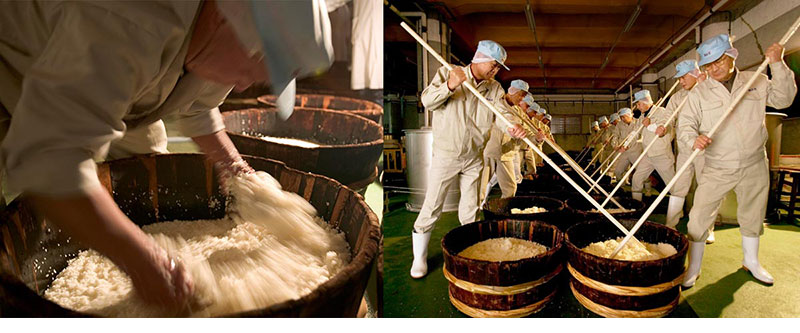
Kiku-Masamune uses one of the oldest production regimens, called “kimoto.” This approach originated during the Edo period in the late 17th century. In the kimoto method, a combination of rice, water, and koji (the mold that drives fermentation) is added to small tubs and then mashed into a paste by brewers using a special pole. This is done with two workers to a tub, standing at opposite ends and alternating sides as they stir. In this ancient tradition, the brewers sing rhythmic songs in order to work in unison and keep the poles from clashing. Some songs are from whatever brewing guild the toji (Master Brewer) belongs to, and some are specific to the brewery itself. Due to the fact that this approach, which takes four weeks from start to finish, consumes about twice as much time and effort as other methods, only a very few of the more than 1,000 saké breweries in Japan employ it.
Three Ingredients
At its most basic, only three ingredients are needed to make saké: water, rice, and koji. Because of this simplicity, the kinds of water and rice play major roles.
Miyamizu is well water drawn from a particular area beneath Nishinomiya City, and is one of the reasons Nada saké became nationally famous. This water contains almost no iron, yet is rich in minerals such as calcium, potassium, magnesium, and phosphorus. The mineral content provides nutrition for the koji as well as a variety of other microbes, and drives a robust fermentation.
Kiku-Masamune has long used only Yamada-nishiki brewer’s rice . This rice, grown specifically for saké, is characterized by a larger grain size than normal rice varieties, low protein content, and a soft consistency that allows the koji to more easily penetrate the rice.
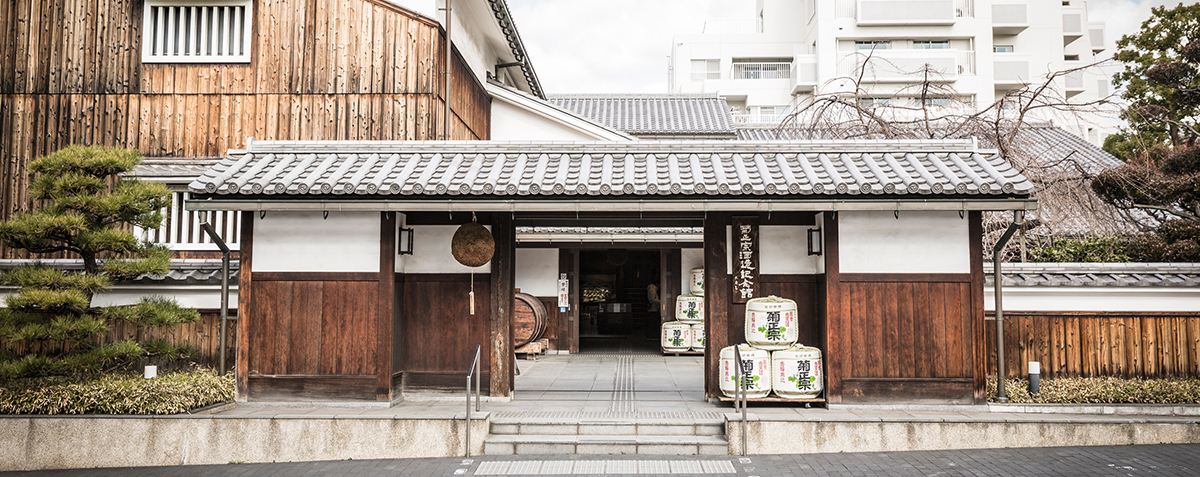
The Kiku-Masamune brewery.
Kiku-Masamune Junmai Taru Saké
Saké classified as Junmai has no added alcohol. Until recently, at least 30% of the rice used for Junmai saké had to be milled away, but Junmai no longer requires a specified milling rate.
Taru saké is matured in barrels made of Yoshino cedar. Ideally, the saké is drawn from the barrel and bottled just as the resulting cedar aroma reaches its peak.
Two tokkuri bottles are on the upper right. The wooden box is called a masu and is made of cedar. It is a traditional saké cup.
A tokkuri is traditionally used for serving. The saké is transferred from the original bottle to the tokkuri, then poured in the drinking vessel. The tokkuri can be immersed in warm water for heating; the bit of twine at the neck is used to pull the bottle out of the warm-water bath. The Kiku-Masamune Taru Saké bottle imitates a tokkuri. This saké is also available in the more-usual tall green bottle.
Both in the nose and on the palate, this crystal-clear saké predominately features aromas and flavors of melons. There is less cedar character than I expected (disappointingly), and it is nicely dry. The mouthfeel is smooth and approachable. It can be served chilled, which I recommend, at room temperature, or at Nurukan temperature (about 113 degrees F.). ABV is 15%.
The SMV (Saké Meter Value) measures the density of saké relative to water, and is the method for gauging the dryness or sweetness of saké. The higher the SMV, the drier the saké. The range is from -15 (sweet) to +15 (dry), and this one comes in at +5.
A winemaker, Nicole Walsh of Ser Winery, recently recommended a wine to me. And I thought, “If a winemaker recommends someone else’s product, it must be worth seeking out.” That wine? Hedges Family Estate Red Mountain Syrah.
Saké, the national alcoholic beverage of Japan, is often called rice wine, but this is a misnomer. While it is a beverage made by fermentation, the production process more closely resembles that of beer, and it is made from grain (rice, of course), not fruit.
To make saké, the starch of freshly steamed glutinous rice is converted to sugar and then fermented to alcohol. Once fermented, the liquid is filtered and usually pasteurized. Sakés can range from dry to sweet, but even the driest retain a hint of sweetness.
In 1711, the Manryo brewery, was established by the first Chobei Osakaya of the Osabe family in Imazu, Nishinomiya City, Hyogo Prefecture. This is a significant saké production region , and the head office is still located there. The famous water found here is known as Miyamizu, groundwater originating in the Rokko mountain system. The region is also ideal for rice production, including Yamada-nishiki, a renowned saké rice.
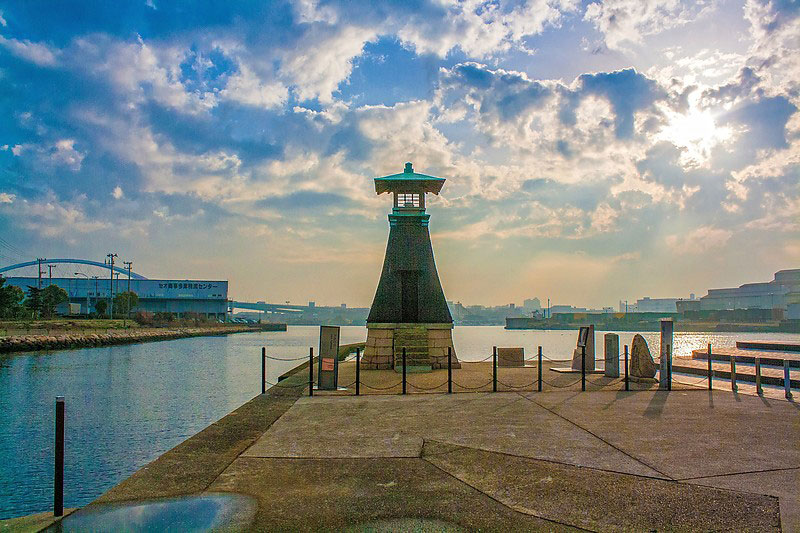
In 1810 the fifth-generation owner of Manryo built a lighthouse to help guide home the ships that had delivered Manryo’s products to Edo, as Tokyo was then known. The Imazu lighthose has been an important cultural edifice in Nishinomiya ever since. In 1984 it underwent an extensive restoration.
The Imazu lighthouse.
In 1884 the company was rebranded from Manryo to Ozeki. The name originates from the world of sumo wrestling, where the grand champion was originally known as the Ozeki (now the second highest rank). Additionally, odeki is Japanese for ‘good job.’ Because it sounds similar to ozeki, this was intended to motivate the production of good saké. As sumo was becoming popular in the late 19th century, it exemplified many of the ideas that were considered important for success, including strenuous hard work and technical skill. Ozeki aimed to build the brand through these concepts, just like winning sumo wrestlers try to do.
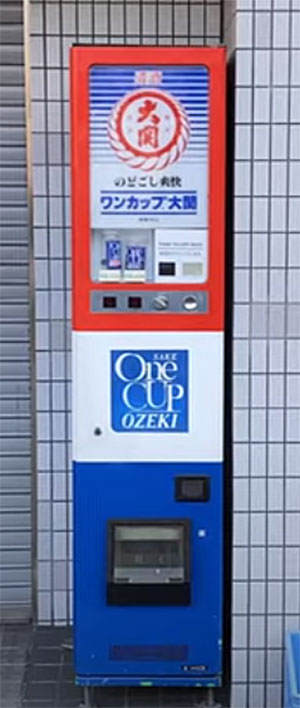
Ozeki’s facilities were destroyed by fire due to a WWII air raid in 1945, but were rebuilt following the end of the war. In 1966, Ozeki introduced a saké vending machine, something we will never see in the United States! They entered the U.S. market in 1979 by establishing Ozeki San Benito Inc. in Hollister, California. The company celebrated 300 years in business in Japan in 2011,
Ozeki Karatamba Saké
Like my wines, I prefer my sakés to be dry. Karatamba is one of the driest I have found, with a Sake Meter Value* of +7. The ABV is 15.5%, and the polish rate** is 70%.
Karatamba (Dry Wave) is brewed and bottled in Japan. It is a honjozo saké. This classification, one level up from the most basic, is made with better-quality rice, and a higher proportion of the alcohol is produced during fermentation rather than being added (a characteristic of honjozo). Also, Karatamba attains its dryness level by the added alcohol; it would be difficult to do so without it.
Predictably, this saké is crystal clear. The nose offers up melon and lychee. These continue on the palate (without the tartness) plus some caramel richness and perhaps a hint of maple syrup. It has a round smooth mouthfeel ending in a pleasant soft finish.
*An important gauge of saké is the SMV (Saké Meter Value). This measures the density of saké relative to water, and is the method for determining the dryness or sweetness of saké. The higher the SMV, the drier the saké. The range is -15 to +15.
**The rice used in saké is called “saka mai” in Japanese, and it is not the same type of rice used for eating. The grains are larger than food rice, contain more starch, and less protein and fat. The rice is first milled, aka “polished,” to remove the outer layer that could cause off-flavors in the finished product. Typically, this will be 25 to 70%, but I have heard of exotic sakés with 99% starch removal! Not surprisingly, the more the rice is milled, the more expensive the saké becomes.
When I profile a wine, I like to start with the story of the producer, and then get into the wine itself. I couldn’t find much about this offering, which is just as well as it is low-quality plonk.
Let’s be clear about this right away: Saké, the national alcoholic beverage of Japan, is often called rice wine, but this is a misnomer. While it is a beverage made by fermentation, the production process more closely resembles that of beer, and it is made from grain (rice, of course), not fruit. To make saké, the starch of freshly steamed glutinous rice is converted to sugar and then fermented to alcohol. Once fermented, the liquid is filtered and usually pasteurized. Sakés can range from dry to sweet, but even the driest retain a hint of sweetness.
History
Saké is an ancient drink, so much so that its origin has been lost in the mists of time. Ironically, the earliest reference to the use of alcohol in Japan is recorded in a third-century Chinese text, the Book of Wei in the Records of the Three Kingdoms which wrote of Japanese party habits. The Kojiki, Japan’s first written history, compiled in 712, is the earliest to mention alcoholic beverages in Japanese itself. Historians place the probable origin of true saké (which is made from rice, water, yeast, and kōji mold (aspergillus oryzae) in the Nara period (710–794).
Saké production was a government monopoly until the 10th century, when temples and shrines began to brew saké as an essential part of religious ceremonies, evolving into the main centers of production for the next 500 years. That being said, the saké of antiquity was not the same as the clear beverage we know today. It was reserved for nobles and priests, and was thick and milky or yellow in color, with a low alcohol content.
In the 16th century, the technique of distillation was introduced into the Kyushu district from Ryukyu. This led to shōchū (literally, fiery spirits), a beverage typically distilled from rice (kome), barley (mugi), sweet potatoes (satsuma-imo), buckwheat (soba), or brown sugar (kokutō), though it is sometimes produced from other ingredients such as chestnut, sesame seeds, potatoes, or even carrots. It usually contains 25% alcohol by volume, and is most often used as a beverage outside of meals.
During the Meiji Restoration, laws were written that allowed anybody with the money and know-how to construct and operate their own sake breweries. Around 30,000 breweries sprang up around the country. As time passed, the government levied increasing taxes on the saké industry and the number of breweries eventually dwindled to 8,000.
Once the 20th century arrived, saké-brewing technology advanced beyond the centuries-old traditions. The government opened a saké-brewing research institute in 1904, and in 1907 the first government-run saké-tasting competition was held. Yeast strains specifically selected for use in brewing were isolated, and enamel-coated steel tanks came into use, which were easier to clean than the traditional wooden barrels, lasted forever, and were devoid of bacterial problems.
During the Russo-Japanese War in 1904–1905, the government banned the home brewing of saké. At the time, saké comprised 30% of Japan’s tax revenue. Home-brewed saké was not taxed, so the thinking was that by banning it sales and tax revenue would increase. This ban ended home-brewed saké, and the law remains in effect even today.
World War II brought rice shortages, and the saké-brewing industry was hampered as the government discouraged the use of this essential food for brewing. Postwar, breweries slowly recovered, and the quality of saké gradually increased. Even so, beer, wine, and spirits became increasingly popular in Japan, and in the 1960s beer consumption surpassed saké for the first time.
While the rest of the world may be drinking more saké and the quality of saké has been increasing, production in Japan has been declining since the mid-1970s. Predictably, the number of saké breweries is also declining; there were 3,229 Japanese breweries nationwide in 1975, but the number had fallen to 1,845 by 2007.
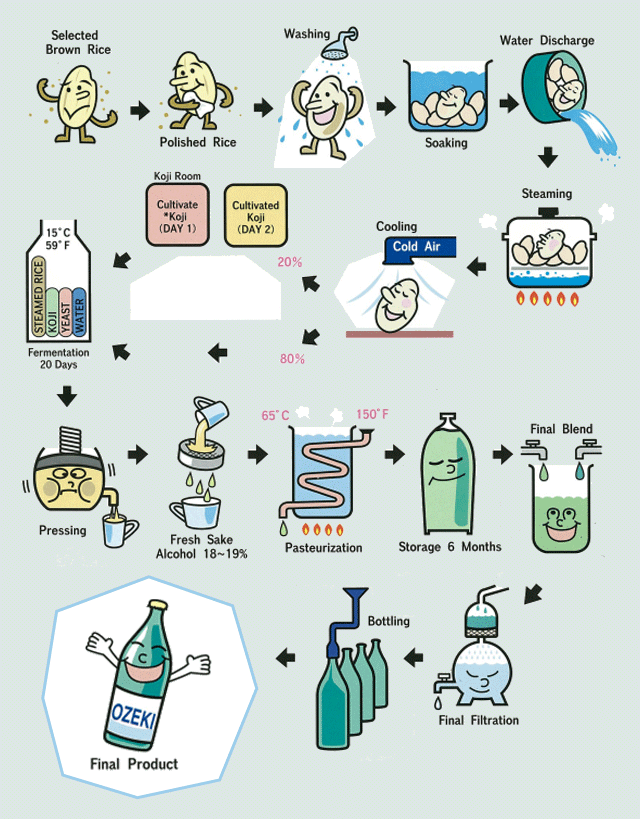
Courtesy of Ozeke Saké
Ingredients
As noted earlier, saké is made from just four ingredients: rice, water, koji, and yeast. With so few components, the quality of each is crucial. Akita is known for its high-quality rice. Some of the best water is found In Nada near Kobe, where rivers course through granite canyons, or Fushimi with its pure spring water.
Although saké breweries often pride themselves on the quality of the rice and local spring water that they use, unlike wine this does not translate into terroir, as the brewing process effectively cooks out any such nuances.
Rice Polishing, Washing, and Soaking
The rice used in saké is called “saka mai” in Japanese, and it is not the same type of rice as food rice. The grains are larger, contain more starch, and have less protein and fat. The rice is first milled, aka “polished,” to remove the outer layer that could cause off-flavors in the finished product. Typically, this milling will be 25 to 70%, but I have heard of exotic sakés with 99% starch removal! Not surprisingly, the more the rice is milled, the more expensive the saké becomes. As an example, it takes 800 grams (28 ounces) of polished rice to make 720 mL (the size most like a wine bottle) of Ginjo saké. (Ginjo designates that at least 40% of the rice has been polished away.)
After polishing, the rice is soaked, either by machine for simple sakés, or by hand for higher-quality ones. Next the rice is steamed. Unlike rice for the dinner table, which is typically simmered in hot water either in a pot or automatic rice cooker, saké rice is prepared by steaming, which allows the rice to maintain a firm outer texture and soft center, thereby helping the brewing process. It is this heating step that more closely aligns saké with beer, which also requires heating, rather than wine, which must not be heated.
Rice Cooling
The rice must be cooled after it has been steamed to the desired degree. Large breweries use a refrigerated conveyor system to lower the temperature, while craft brewers rely on traditional methods of tossing and kneading to adjust the temperature, giving the brewmaster more precise control.
Koji Making
The heart of a saké brewery is its “koji muro”, the cedar-lined room in which koji is made. It is kept at 86 to 90 degrees F. (30 to 32 degrees C.), making it much like a sauna, so you have to enjoy warm weather to work there! Cedar has natural anti-bacterial resins which help to create a clean environment conducive to efficient koji production.
Koji requires 48 hours to prepare, during which the rice is inoculated with koji mold spores, and carefully kneaded in controlled temperature and humidity. The mold converts the starch in the steamed rice to glucose, and microorganisms multiply to create a snow-white fuzz with a strong, sweet fragrance. The finished koji will be about 20 to 35% of the rice used in the production of the saké, depending on the recipe.
Fermentation
Once the koji is ready, it is mixed into chilled spring water and yeast in a fermentation tank, and then the steamed rice is added. The tank is filled gradually, in three stages over a four-day period. This allows the yeast to retain its strength to keep consuming sugar and producing alcohol throughout the fermentation period, which typically continues for 21 days. The temperature is maintained at 46 to 64 degrees F. (8 to 18 degrees C.). The brew, called “moromi,” is stirred on a daily basis to ensure consistent fermentation. Each day, tests are performed to check specific gravity, acidity, and alcohol content.
Pressing And Racking
Once the moromi reaches maturity as determined by the brewmaster, in a craft brewery it is drained into cloth bags which are placed in the traditional “fune” press which works with gravity and hand-applied mechanical pressure. The first run of saké starts emerging from a spout at one end of the press under the natural weight of the filled bags, resulting in a light-and-fruity first-pressed sake known “arabashiri.”
In a large commercial brewery the moromi is machine-pumped into a large accordion like hydraulic press called a “yabuta.” Activated charcoal is usually added to the pressed saké and then filtered out.
Bottling
Once pressed and racked the saké may either be bottled immediately or temporarily tank-stored at close to 32 degrees F. (0 degrees C,). “Go” is the measurement unit traditionally for saké. One go is about 180 mL. Saké bottle sizes are also based on these units, with the most common sizes being: 180 mL (1 go; about 6 ounces); 360 ml (2 go); 720 mL (4 go); and 1800 mL (10 go, the magnum-like bottle you often see in izakayas, informal Japanese bars that serve alcoholic drinks and snacks. The glass may be either green, brown, or clear. After bottling, most sakés are pasteurized.
Storage and Consumption
The entire saké production process takes about 45 to 60 days from start to finish. There are no vintage years, and the product is best consumed within the year it is bottled, as aging does not enhance its flavor in any way, and indeed may degrade it. Once a bottle is opened, it should be refrigerated and drunk fairly quickly.
Grades of Saké
Saké is divided into two main categories. Jozo-shu is made with added alcohol, and junmai-shu is not.
Jozo-shu
Futsu-shu is ordinary table saké and the most widely consumed grade. It is best served warm, and is suitable for use in cooking.
Honjozo-shu is made with better-quality rice, and a higher proportion of the alcohol is produced during fermentation rather than being added.
Honjozo-ginjoshu and honjozo-dai-ginjoshu are the highest grades of alcohol-added saké. They are made with more care from top-quality rice. They should be served cold.
Junmai-shu Junmai-shu is similar to honjozo-shu, but relies on all of its alcohol from the fermentation. It is more likely than jozo-shu to be found in the U.S., and can be served warm (not hot) or cold.
Junmai-ginjoshu and Junmai-daiginjoshu are the highest grades of junmai-shu. Like the highest grades of jozo-shu, they are made with more care from top-quality rice. 50 to 70% of the rice is polished away, respectively. They should be served cold.
Serving Saké
L to R: glass carafe and cup, masu, and two tokkuri with matching ochoko.
The glass carafe above is used for serving cold saké. The blue cavity is filled with ice to keep the saké cool. The wooden box is a “masu.” In addition to being a drinking vessel, it was also traditionally used for measuring rice, appropriately. In traditional restaurant service, the masu is placed on a small saucer and filled until the saké overflows, thus ensuring an honest pour. Some people, particularly native Japanese, will add a small pinch of salt to the corner of the masu before drinking, but I don’t recommend doing so.
In Japan, the process of heating saké is called “okan suru” and the resulting warm saké is called “kanzake.” The ceramic pots used for the heating are “tokkuri,” and the accompanying cups are “ochoko.” These are usually sold as sets, and are available in a very wide variety of styles. And, “warm” is the operative word here. Most heated sakés, both at home and in restaurants here in the U.S., are made too hot. Warm saké should be about 108 degrees F. (42 degrees C.). If you like it a bit hotter, the limit is around 122 degrees F. (50 degrees C.). Heating releases saké’s bright rice aroma, and causes the alcohol to be quickly absorbed into the blood.
In addition to it being a beverage, saké is also used as one of the principal seasonings in Japanese cooking, the other three being dashi stock, fermented bean paste (miso), and soy sauce. Saké acts as a food tenderizer due to the amino acids it contains. It also can suppress saltiness, eliminate fishy tastes, and take away strong odors. It is used sparingly in cooking, and as with wine, only use saké that you would drink on its own.
An important gauge of saké is the SMV (Saké Meter Value). This measures the density of saké relative to water, and is the method for determining the dryness or sweetness of saké. The higher the SMV, the drier the saké. The range is -15 to +15.
Keith Rütz’s first career track was in the fashion industry. He was the proprietor of two trendy clothing boutiques located near the UC Berkeley campus. To search out the latest styles, he frequently travelled to both London and Paris. It was in France where he began to develop his love of Burgundy and interest in wine generally.
OK, if you’re reading this I have to assume you enjoy wine, but don’t know much about it, and would like to become more knowledgeable. So, how can you learn more about wine?
These days, wine drinkers are increasingly seeing the words sustainable, organic, and Biodynamic on wine bottles and in wine producers promotional materials. Stewardship of the land and the lack of chemicals sound appealing, and who doesn’t like something that is dynamic? But what, really, do these terms mean? In fact, they are not just amorphous “feel good” terms, but do have specific definitions as well as institutional certifications to go along with them.
There are many ways to buy wine: at a wine shop or liquor store, at a grocery store, or through a winery’s wine club, among others. There is another option that I use on occasion. These are online “flash sites” that offer one or even a few different bottles for sale per day, at discounts of around 15 to 70%, often with free shipping if you place a minimum order, which tends to be three to six bottles and varies with the price. How do they do this?
The winery approaches the site (or vice versa), looking to sell some wine that the winery has not been able to sell as quickly as they would like. The winery may be stressed by lack of cash flow, not enough storage space, or some other unknown.
They agree on a price that enables the site to sell the wine at well below retail.
The site buys all (or most) of the available stock.
The site then offers the wine at a discounted price, often substantially so.
My wife recently came home with a lovely seven-ounce tuna steak. Well, I love tuna, and because of this I thought, “this isn’t going to feed the two of us.” So I began to consider how to stretch it out. The answer? Tuna pasta, Japanese-style!
Many years ago, while driving through Sonoma County, Arturo Keller and his wife Deborah came upon a piece of property overlooking the Petaluma River with a tremendous view and expansive terrain. Keller, a passionate antique car collector and native of Mexico, purchased the 50-acre parcel in 1982. He soon had a paved road built that wove about the property to serve as his own miniature racecourse. Keller also recognized the potential of the property as a grape-growing site, and in 1989 the La Cruz Vineyard was began.
Over time, Keller added more acreage, and planted Pinot Noir, Syrah, Viognier, and Pinot Gris, and began making wine for family and friends. Keller soon called on his youngest daughter, Ana, who had studied chemistry at the University of Mexico, to become the nascent winery’s winemaker.
Keller Estate released their first wines in 2001, an estate Chardonnay and Pinot Noir. The name ‘Keller Estate’ pays homage to the Keller family’s Swiss heritage, since the word ‘keller’ is cellar in German.
Ana also started a sister brand, Casa Wines, which are sourced exclusively from the family’s La Cruz Vineyard. Casa Wines produces Chardonnay, Pinot Noir and a red blend.
Keller Estate has completed the California Sustainable Winegrowing Program. The winery utilizes a natural water source, promotes local wildlife to live on the property, and is home to thousands of newly planted trees. The vines are all grown sustainably and organically.
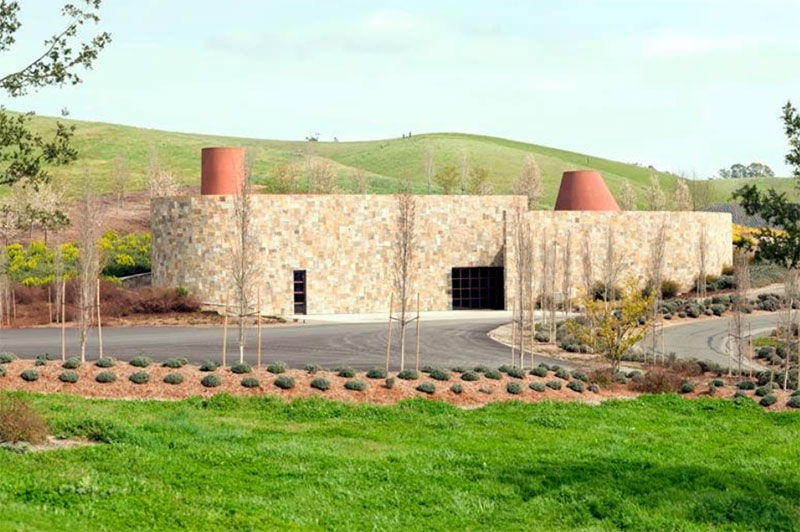
The Keller Estate Winery
The Winemakers
Ana Keller – Estate Director and Winemaker
Raised in Mexico, Ana’s first exposure to wine came early in life when she spent her holidays in France’s Loire Valley harvesting grapes. “When my father asked me to join him in establishing Keller Estate, I was overjoyed,” she related. “We have accomplished much of what we initially set out to do, and it’s up to me to continue to make sure our quality never fluctuates.”
She holds degrees from both the University of Mexico (biopharmaceutical chemistry) and a Masters in Pharmaceutical Development from the prestigious King’s College in London. While there, she took her first formal wine tasting lessons.
Keller was heavily involved in the effort to make her property part of the AVA (American Viticultural Area) called the Petaluma Gap AVA.
“When you consider what the winds of the gap do to the area and to the grapes themselves, it seems to be a no-brainer. The winds force our (Pinot Noir) grapes to develop thicker skins and that in itself changes the equation.”
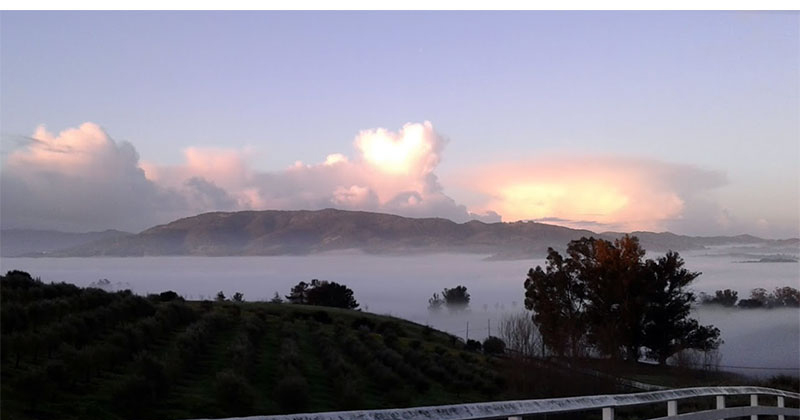
The fog-shrouded Petaluma Gap
Keller devotes 100 percent of her time to Keller Estate, and confided that her parents are still active in the business as well. “Whenever my father is available, he sits in on our meetings and tastings. He is still quite active and his passion for cars takes up a great deal of his time. He cares a great deal about the winery since it is still a relatively small family operation.”
Julien Teichmann – Winemaker
Born in Goettingen, Germany, Julien Teichman joined Keller Estate in 2018. His passion for fermentation began with an internship at a brewery. He next spent some time in Florence, Italy where he had his first contact with winemaking and vineyards. Julien then earned a degree in winemaking from the Weincampus Neustadt in Germany.
Julien traveled the world working harvests and finally came to the United States in 2013, where he spent time at Kosta Brown and Merry Edwards before joining Keller Estate. He espouses a profound respect for the vineyard, and a holistic approach to farming and winemaking.
About the Vineyard
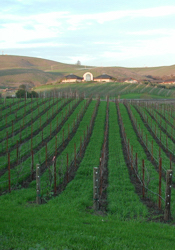
The Keller Estate La Cruz Vineyard features an intricate stone cross sculpture that boldly stands over the vines, and was named to represent the family’s Mexican heritage.
The majority of the La Cruz Vineyard, where Keller Estate grows all of their Chardonnay, Syrah, Pinot Gris, and slightly over half of their Pinot Noir, resides on the lower hills of the property. The soils here are multi-layered, mineral-laden clays there were once San Pablo Bay seabeds. This mineral character comes through in the wines and is very much a part of the Keller Estate’s unique terroir.
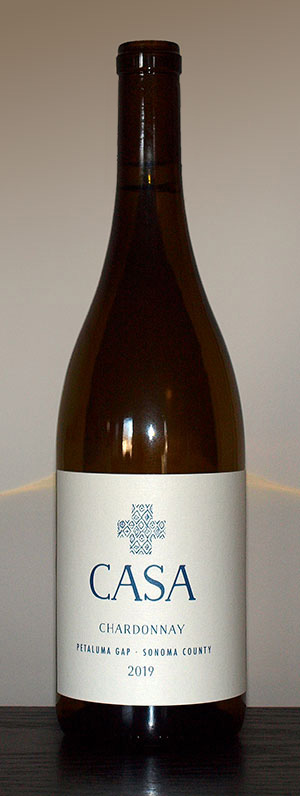
Keller Estate Casa Chardonnay 2019
To start with, this bottle was sealed with a synthetic plastic cork. Not the worst one I’ve ever encountered (although the one in the second bottle was harder to get out than the first), but I’m just not a fan. I’m fine with manufactured corks, where cork is ground up, treated to prevent cork taint, and then reconstituted as closely as possible to the bark itself. But failing that, I’ll take a screw cap over a plastic stopper any day.
Moving on to the wine. The fruit was sourced from the Keller Estate’s La Cruz Vineyard, in the Petaluma Gap region of the Sonoma Coast. The wine was fermented in both barrels and stainless steel. This 100% Chardonnay is very pale yellow in the glass. The moderately aromatic nose features grapefruit and honeydew. These are on the palate as well, with moderate but bright acidity and mineral notes. Although it saw some oak aging, the result is subtle at best. 1,600 cases were produced, and the ABV is 14.2%.








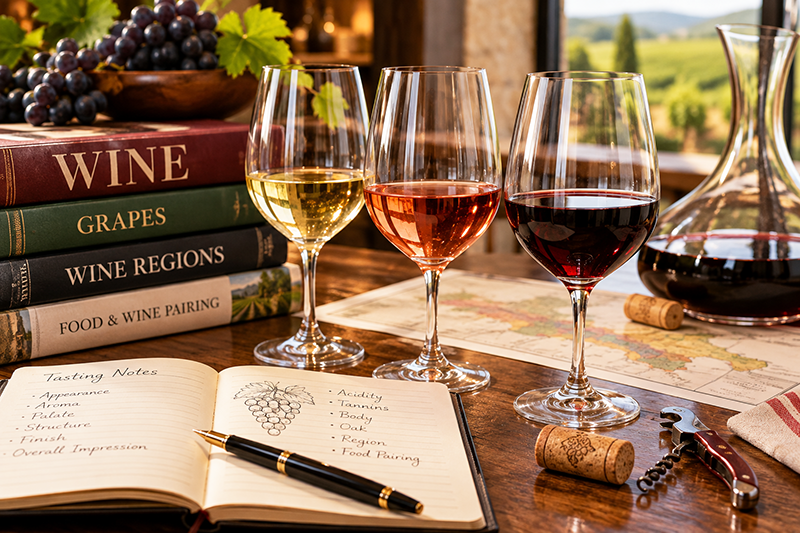 How To Learn About Wine
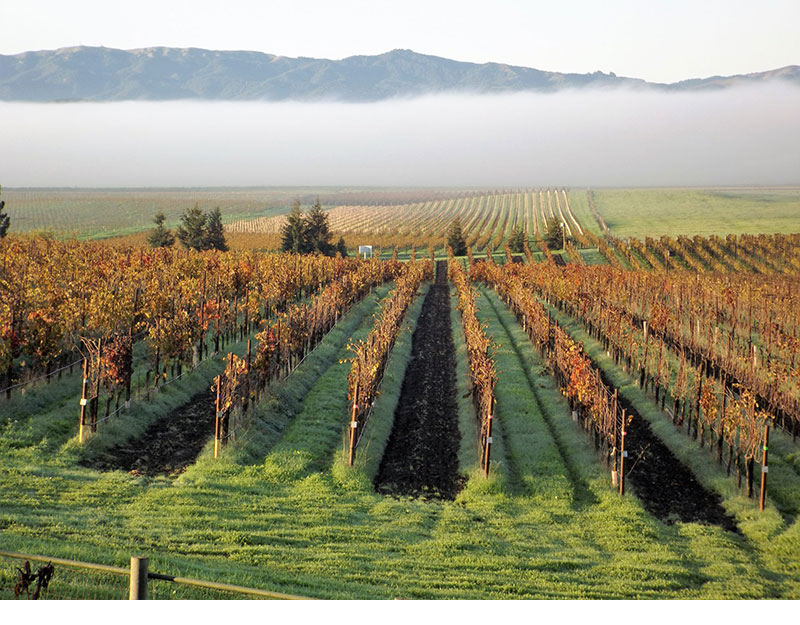 Sustainable, Organic, and Biodynamic Wine