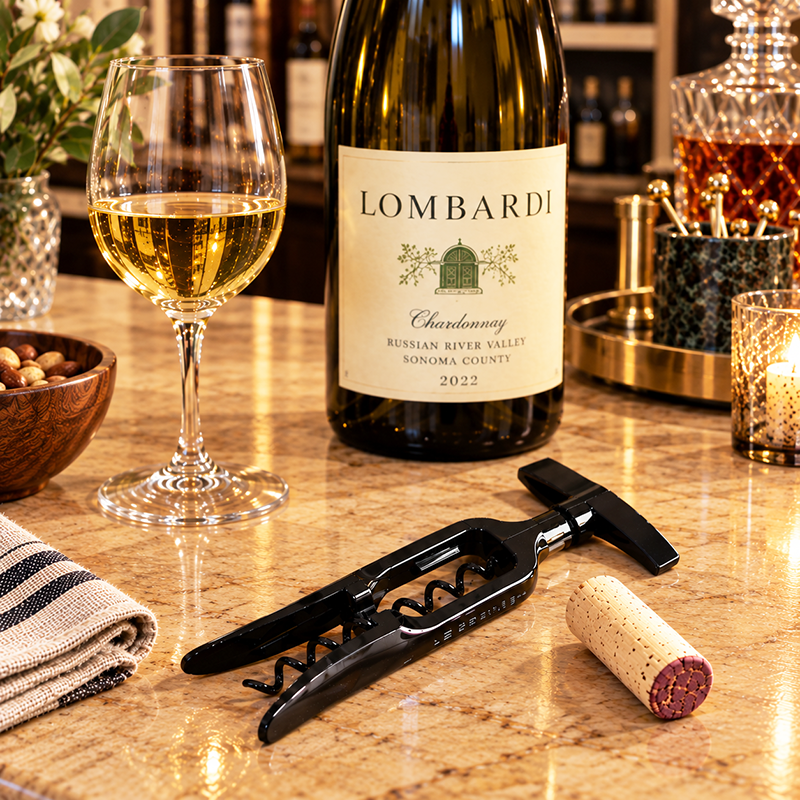
The Best Corkscrew

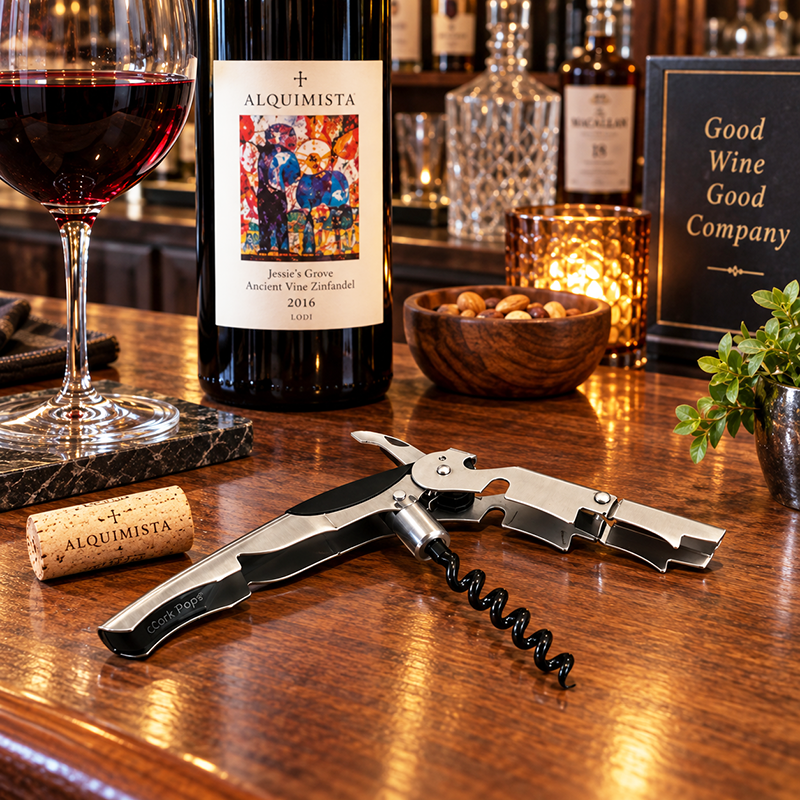
Le Creuset Wine Opener 

Le Creuset Wine Opener

Is this really the best corkscrew?  With hundreds of devices on Amazon alone for opening wine bottles, some costing hundreds of dollars, I realize this is a bold claim.  But yes.  For the money, this corkscrew simply can’t be beat.  It’s dead-simple to use, and works correctly every time.  The Teflon-coated worm pierces the cork with ease, and simply continuing to turn the handle then extracts it smoothly.

This corkscrew was originated by Hallen International Inc., and sold for years under the Screwpull trademark.  In 1991, Le Creuset acquired the Screwpull line, but didn’t rebrand it until the early 2010s.  Le Creuset makes a number of other corkscrews, including a cheaper model that resembles this one.  Although it operates on the same principle, it is flimsier, prone to breakage, and gets mixed reviews on Amazon. 

Although nothing lasts forever, in 30 years I’ve only owned three copies of this corkscrew, one of which was broken by a rowdy party guest.

UPDATE: It would appear that Le Creuset discontinued the more robust original Screwpull design in favor of their cheaper model. Still worth having.  Buy it on Amazon. 

Back to blog posts: winervana.com/blog/
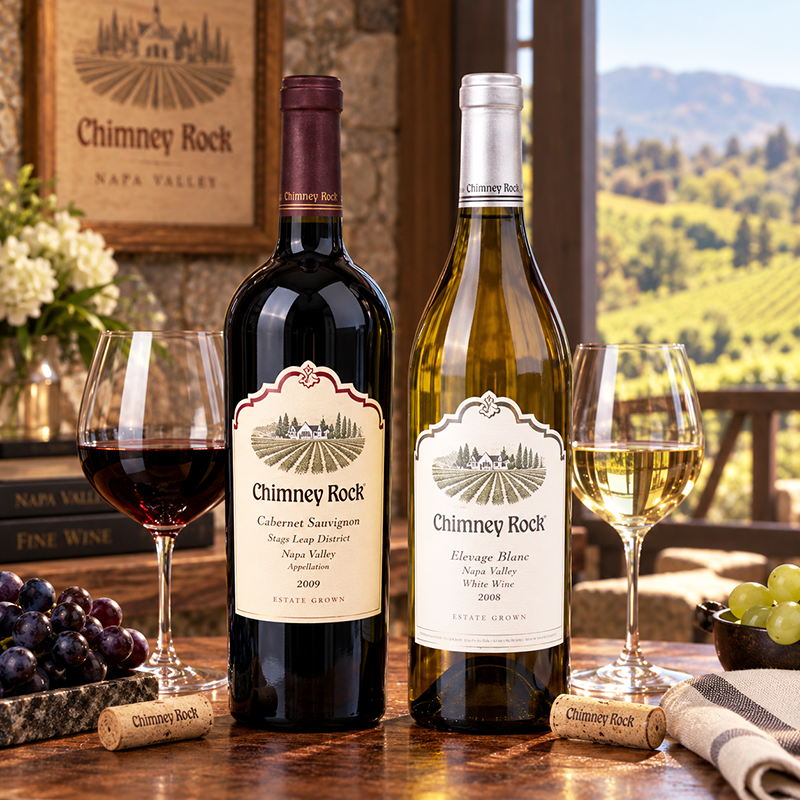
Chimney Rock Winery

Chimney Rock Winery
Chimney Rock Winery. Click here for tasting notes.

Chimney Rock Winery

The Stags Leap District AVA is in the very heart of Napa Valley. It runs from north to south for about three miles along the Silverado Trail, and its 1,350 [very prized] acres were first planted with Cabernet Sauvignon in 1961, for which it would soon become renowned. The name comes from an outcropping of red rocks at the area’s eastern boundary, where a stag supposedly escaped his pursuers by leaping across the treacherous gap.

Continue reading “Chimney Rock Winery”

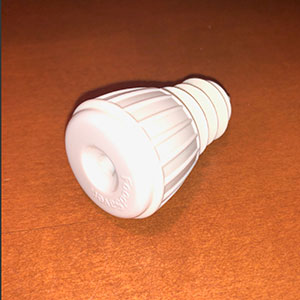
Food Saver Bottle Stoppers

Food Saver Bottle Stopper Food Saver Bottle Stoppers If you have a Food Saver vacuum sealing machine, these bottle stoppers are indispensable. They work on the same principle as the better known Vacu Vin sealing system, but are far more effective. They are made to fit standard wine bottles (and many other standard-size bottles or containers). The stoppers are BPA-free for food safety and non-toxic storage. The core idea is that once you open a bottle, oxygen (i.e. air) is your enemy — it causes oxidation, which degrades wines (and many oils/infusions) over time. Vacuum-sealing removes a lot of that air (or at least reduces oxygen exposure), which slows down the deterioration process. Once vacuum-sealed correctly, the bottle is more airtight than with a simple cork or cap, which helps maintain flavor and quality. Back to blog posts: winervana.com/blog/
Landmark Vineyards

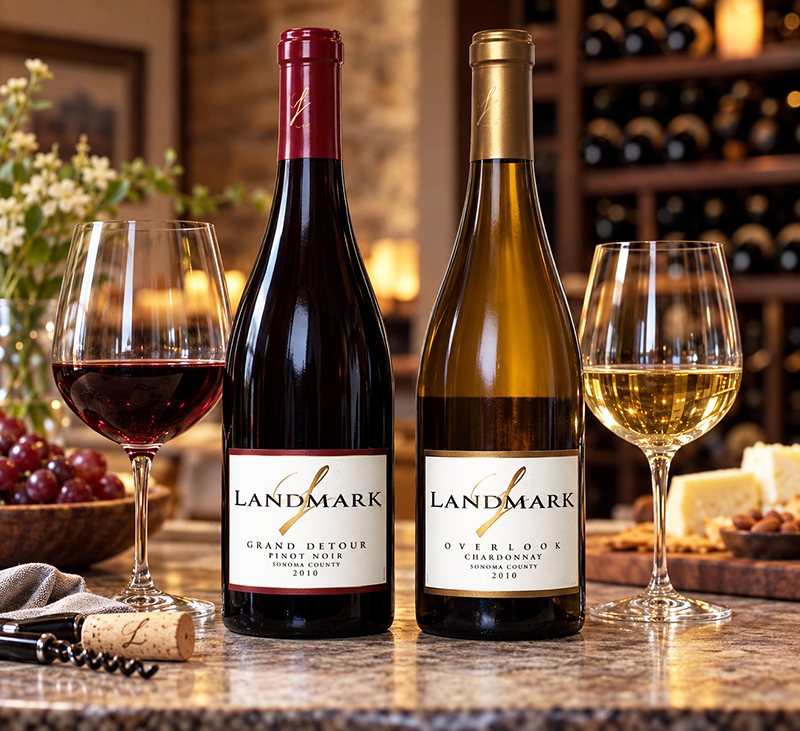
Landmark Grand Detour Pinot Noir 2010 and Landmark Overlook Chardonnay 2010
Landmark Grand Detour Pinot Noir 2010 and Landmark Overlook Chardonnay 2010. Click here for tasting notes.

Landmark Vineyards

Since its founding in 1974 by Damaris Deere Ford, great-great granddaughter of John Deere, Landmark Vineyards has called Sonoma County home. Originally located in Windsor, California, in 1989 Landmark moved to the heart of Sonoma valley to escape the encroaching urbanization to the north.

Continue reading “Landmark Vineyards”

Matchbook Wine Company

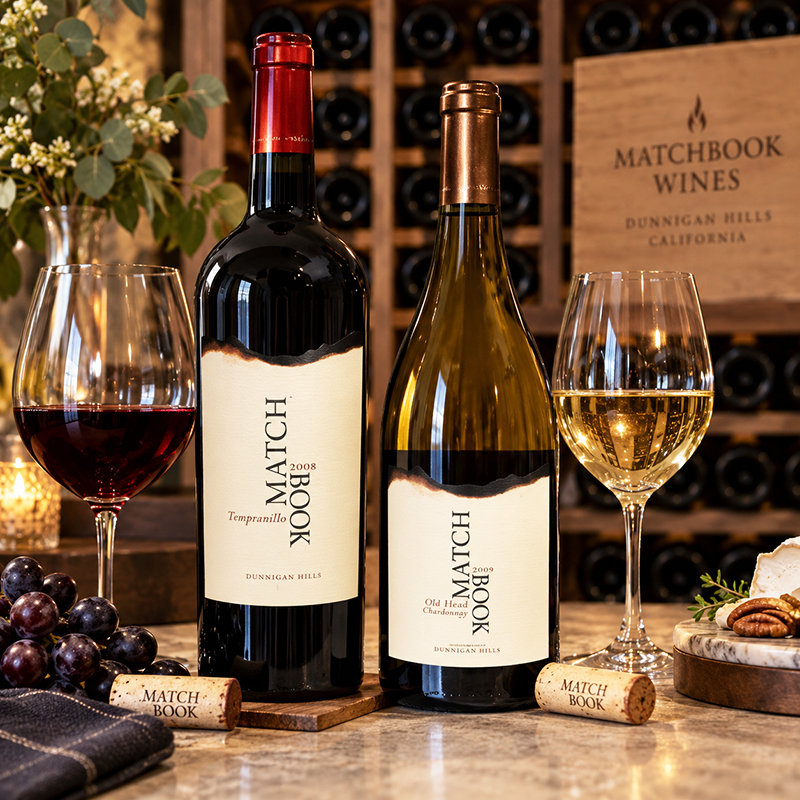
Matchbook Wines Tempranillo 2008 and Matchbook Wines Old Head Chardonnay 2009. Click here for tasting notes.

Matchbook Wines

Founded in 2006, Matchbook Wine is owned and operated by a pair of proprietors with impressive resumés in the wine business.

John Giguiere, with his wife Lane and brother Karl, started R.H. Phillips Winery in 1983 on land that was part of their family farm in the Dunnigan Hills of northwestern Yolo County, 30 miles east of the more-famous Napa. Over the course of 20 years, the Giguieres grew R.H. Phillips from a family winery of 10 acres and a few cases into a publicly-owned behemoth producing 900,000 cases of wine on 2500 acres, including the best-selling Toasted Head and EXP as well as R.H. Phillips.

Continue reading “Matchbook Wine Company”

Simi Wines

Simi Alexander Valley Cabernet Sauvignon and Simi Alexander Valley Chardonnay

Simi Wines

Although Napa Valley is considered by many to be California’s preeminent winemaking region, Sonoma County just to the west offers many pleasures as well, particularly the wines from Alexander Valley, which is one of my personal favorite regions.

Continue reading “Simi Wines”

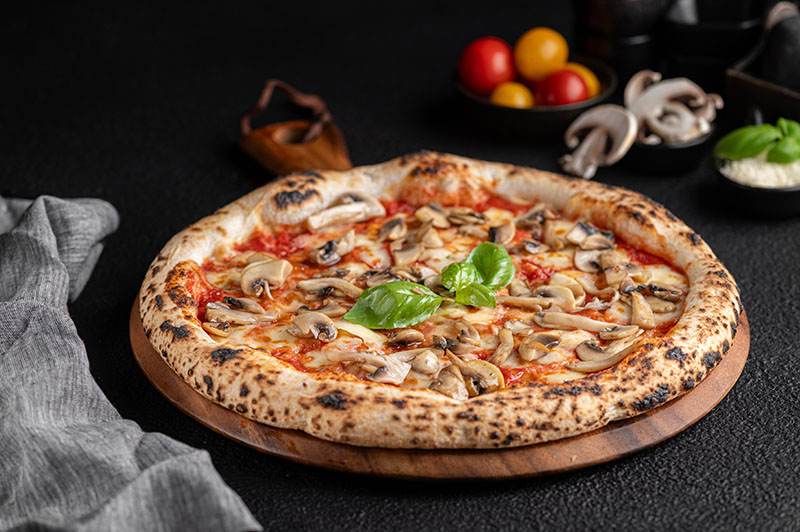
Pepperoni, Sausage, and Mushroom Pizza

Pepperoni, Sausage, and Mushroom Pizza

Pepperoni, Sausage, and Mushroom Pizza

The DOUGH

Start dough at 4pm for dinner between 8pm and 9pm
1 cup warm water
2 tsp instant-rise yeast
3-1/4 C bread flour
1 tsp salt
1/4 cup olive oil (EV not necessary)
2 to 3 tbs dried oregano or Italian herb
mix (optional)
Combine ingredients and knead by hand for 10 minutes or machine
for 5 minutes. Coat dough ball in a thin film of olive oil, cover in plastic wrap and let rise in warm place.

Continue reading “Pepperoni, Sausage, and Mushroom Pizza”

Byington Winery

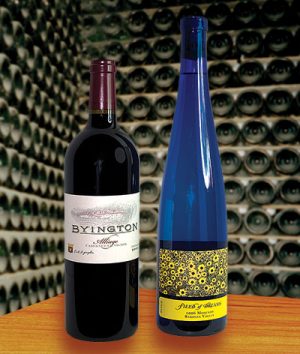
Byington Alliage Cabernet and Field of Dreams Moscato

Byington Alliage Cabernet and Field of Dreams Moscato

Byington Alliage Cabernet Sauvignon 2002

This Sonoma Cabernet Sauvignon comes from an Iowa farm boy who amassed enough wealth as a northern California industrialist that he was able to realize his dream of becoming a winery owner.

Along with the primary grape, it features 11% Cabernet Franc and 9% Syrah, both of which enhance its structure. There is also a very slight sweetness reminiscent of cassis and raisins, as well as a hint of licorice. The lingering and pronounced tannins will appeal to some, while others will want to hold this wine in the cellar for three or four years to allow the tannins to soften. The inky density and good legs suggest such patience will be rewarded. Let this wine breathe for 30 minutes or so before pouring. Then, serve with mildly seasoned pork or chicken.

byington.com/byington.wine

Field of Dreams Moscato 2006

Although made in the Italian Asti style, this Moscato actually comes from Australia’s Barossa Valley. It is one of the few varietals that, when turned to wine, tastes as fresh as the grape from which it is made.

Yes, it is sweet, but not cloying. And although there are tiny bubbles in the glass, there is no fizz. If you like Coke or Pepsi with dinner, you could pair it with the entree, but I’d save it for dessert, especially fresh fruit or delicate cookies.

With an alcohol content of only 8%, it would even be welcome at weekend brunch with waffles or pancakes, instead of the more traditional champagne.

Back to blog posts: winervana.com/blog/