
 Un Travail d’Amour
John and Nancy Lasseter are long-time francophiles, and over the years have traveled extensively in France. It was there that they developed their appreciation of and fondness for Old-World style wines.
It was with some irony then that in 1993 they moved to Sonoma (with Napa, the very heart of “New World” style wines) and began dabbling in amateur winemaking. In 2002, they went all-in when they purchased a badly neglected local winery and 27-acre vineyard property.
This sad state of affairs allowed them to start from scratch, however. The land was restored to natural habitat and good health. The vineyards were converted to 100% organic farming practices, supported by a natural eco-system that includes beehives, owl boxes, and insectaires. A new eco-friendly winery building was completed in 2011.
In addition to wine, the Lasseters have a passion for the arts, and they try to bring an artistic sensibility to the winemaking. They commissioned local painter Dennis Ziemienski to create the label art. They consider their winemaker, Julia Iantosca (one of only a handful of female winemakers), to also be an artist in the way she uses her skills to handcraft the signature blends favored by the Lasseters.
Lasseter Family Winery is a genuine boutique operation. The total production of the four wines currently available is just 1445 cases. It is truly a labor of love.
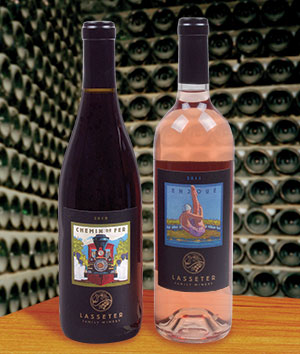
Lasseter Enjoué 2011
None of my friends like rosés, but I’ve never understood why. What’s not to like? They routinely offer delightful color, plenty of flavor, and great versatility. And so it is with this Lasseter Enjoué (meaning joyful, playful, etc.)
The pale salmon-pink color comes from using red grapes (in this case, Grenache, Syrah, and Mourvédre, the classic Rhone GSM trio, sourced from the seven-acre Justi Creek Block) in a white-wine style. Both the nose and the taste suggest strawberry, ruby grapefruit, and lime. There is plenty of acidity, so it will work with a wide variety of foods.
Dine al fresco and enjoy a bottle of Enjoué with Coquilles St. Jacques, Tuna with Wine, Tomatoes, and Herbs, or Pork and Veal Pâté.
Lasseter Chemin de Fer 2010
All aboard! ‘Chemin de Fer’ is French for railroad, and the name recalls a memorable train trip the Lasseters took through southern France many years ago. Although in different proportions, this wine is made with the same Justi Creek Block GSM as is the Enjoué, showing just how varied winemaking can be.
In the glass, Chemin de Fer is transparent ruby in color. The nose features aromas of dark cherry and spice. True to the Lasseters’ preference for an Old-World style, on the palate the wine is dry and lean, with flavors of dark fruit. Structure is provided by plenty of acid and tannins, and the wine has a long smooth finish. Be sure to decant this wine and give it up to two hours to breathe.
Couple Chemin de Fer with Chicken Sautéed with Herbs and Garlic, Coq au Vin, or Pan-broiled Steak.
Back to blog posts: winervana.com/blog/

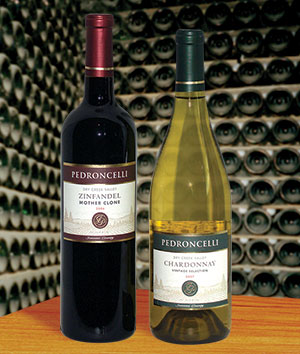 Pedroncelli Winery
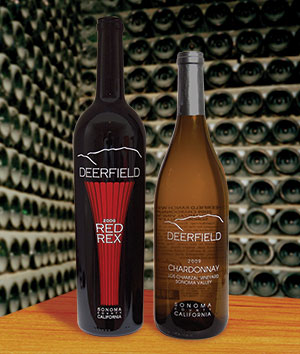 Deerfield Ranch Winery


 Lot 25 Wine
 Martin Miller’s Gin