Vinturi Wine Aerator

Vinturi Wine AeratorVinturi Wine Aerator

When it comes to wine aeration, I am an agnostic. I rarely aerate these days, and when I do I usually use a decanter. For me, decanting and waiting an hour or two offers the best chance of improving a wine’s flavor and aroma.

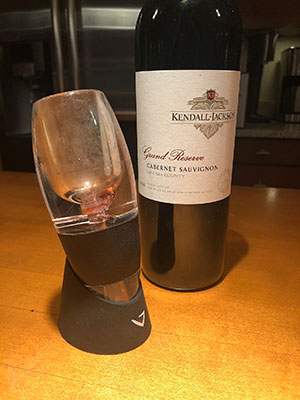
But, there are many gadgets available for aerating a wine either by the glass or an entire bottle, and this Vinturi wine aerator is one that I have relied on for years. It is nicely designed, well built, and couldn’t be simpler to operate. Just hold it above your container, and pour the wine.

The one shortcoming my Vinturi has is that it did not come with a screen for filtering out sediment. I’m happy to note that the current model includes just such a filter. Vinturi does sell replacement filters in five packs now, as well.

Back to blog posts: winervana.com/blog/


Jack Nicklaus Wine

Jack Nicklaus Cabernet Sauvignon and Private Reserve White.
Jack Nicklaus Cabernet Sauvignon and Private Reserve White. Click here for tasting notes.

Jack Nicklaus Cabernet Sauvignon and Private Reserve White

Even among non-players, two names in golf are widely recognized: Arnold Palmer and Jack Nicklaus, aka the Golden Bear. Nicklaus has been a wine collector for many years, but only recently decided to pursue the production of wines carrying his name, although he had been urged to do so for quite some time.

Continue reading “Jack Nicklaus Wine”

Mossback Winery

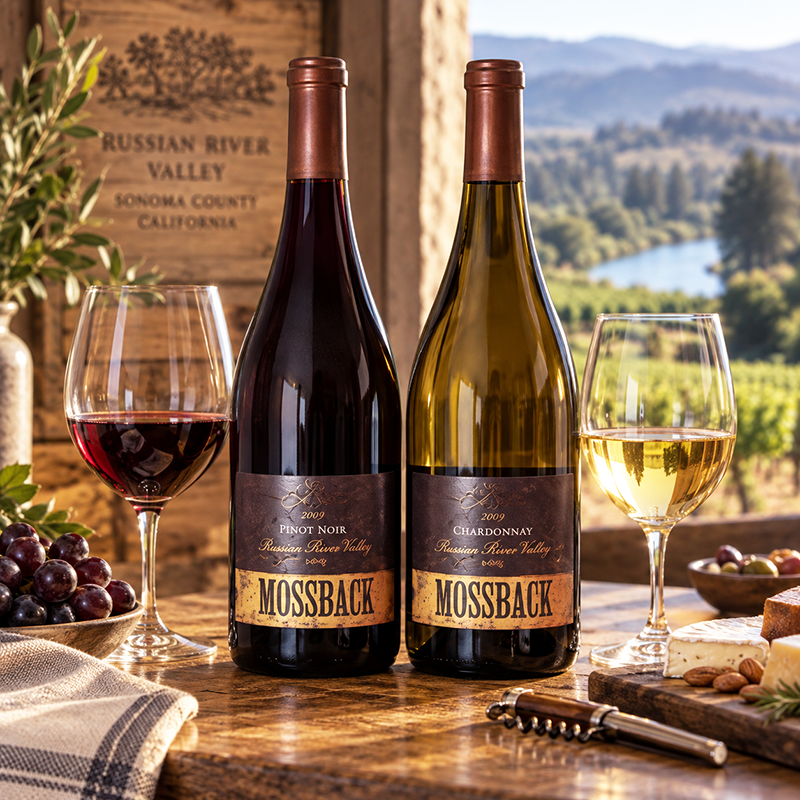
Mossback Pinot Noir and Chardonnay
Mossback Pinot Noir and Chardonnay. Click here for tasting notes.

Mossback Winery

The Russian River AVA sits in the center of northern California’s Sonoma County, and is characterized by a generally cool climate, with sunny days bracketed by fog early and late. This encourages the slow-ripening of fruit, particularly suitable for Chardonnay, Pinot Noir, and Sauvignon Blanc, like these selections from Mossback Winery.

Continue reading “Mossback Winery”

Truchard Vineyards

Truchard Vineyards

Truchard Vineyards

Truchard Vineyards was established in 1974, when native Texans Tony and Jo Ann Truchard purchased a 20-acre parcel of land in Carneros. They transformed what was an abandoned prune orchard into a vineyard, and began selling the fruit to a local winery. Because of the difficult clay soil he had to work with, as well as a dearth of groundwater, Truchard was one of the early adapters of drip irrigation, a practice that was used in Israel for desert farming but not known in California yet. The Truchard Estate Vineyard has since grown to 400 acres, of which 280 are planted.

In 1989, the Truchards began making wine for themselves (even as Tony continued his practice as a physician), using only their estate-grown fruit. Today the winery makes 12 different wines, producing a total of 16,000 cases per year. The Truchard’s remain active at the winery even now, along with able assistance from their son, Anthony Truchard II who serves as General Manager. Their winemaker (and Milwaukee native) is Sal De Ianni. Originally a chemist, De Ianni was sufficiently drawn to wine that he took his M.S. in Enology at UC Davis. In 1998, he responded to a help wanted ad posted by the Truchards, and has been with the winery ever since.

As the most Northeastern vineyard in the Carneros region, Truchard is situated on the foothills of what becomes the Mayacama mountain range and Mount Veeder. The Truchard Estate contains a variety of soils: clay, shale, sandstone, volcanic rock and ash, and enjoys marine-moderated temperatures.

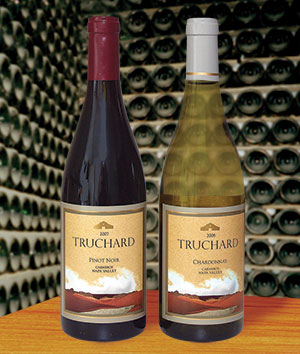
Truchard Chardonnay 2008

A light-yellow colored Chardonnay that starts with pear, citrus, and a hint of sweet banana. The palate is full bodied, with its acidity balanced by flavors of tart green apple, lime, and very light oak. The finish is dry, with suggestions of lemon pith and spice.

Try this Chard with Roasted Trout, Squid with Spinach, or Shrimp with Canellini Beans.

Truchard Pinot Noir 2007

This lean, Old World-style Pinot Noir opens with a bouquet of plum, red berry, and tea. On the palate, the wine is medium bodied and balanced, starting with a bit of sweet vanilla and moving on to spicy oak, cranberry, leather, and tobacco. The finish is dry, with delicate tannins and a hint of bitterness.

People who don’t like “fruit bombs” will enjoy this wine. This Pinot should pair well with Fried Veal Cutlets in Tomato Sauce, Peppery Beef Stew, and Meatloaf.

www.truchardvineyards.com/

Back to blog posts: winervana.com/blog/


Bink Wines

Bink Wines

The unusually-named Bink Wines is owned and operated by two women, which is also rather unusual (but becoming less so).

Fourth-generation-Californian Cindy Paulson grows the grapes, while also maintaining her day job as an environmental engineer (she earned a doctorate in environmental engineering at Colorado University at Boulder). Her farming philosophy is deeply rooted in sustainable practices, coming from her environmental background and love of the outdoors.

Deb Schatzlein makes the wines. This Connecticut native is known as a fun-loving free spirit; her grandparents set the mold early, making gin in their bathtub during Prohibition. She has degrees in chemistry (with an early career as a chemical engineer) and biology, and has taken extensive coursework in viticulture and enology.

And that name? It’s a contraction of ‘black ink,’ the color characteristic of their red wines.

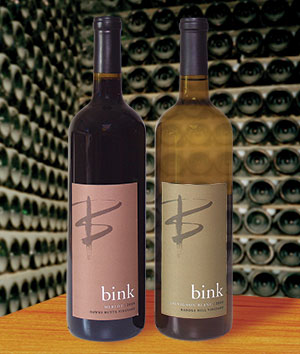
Bink Randle Hill Vineyard Sauvingon Blanc 2008

This all-stainless-steel 100% Sauvignon Blanc is unfiltered. Consequently, this pale-yellow wine can pour out cloudy, without the crystal-clear appearance most consumers expect. To avoid this, let the bottle rest upright for an hour or so, and decant carefully. Or, if you insist on transparency, you could pour it through a paper coffee filter; unorthodox, and it may strip out some of the flavor nuance, but it works.

This wine’s birthplace, the 13-acre Randle Hill Vineyard, is certified organic, and yielded a small production of 350 cases.

The wine opens with delicately sweet honeysuckle and mango flavors, which then lead to a body featuring grapefruit notes and a supportive minerality.

Serve with Red Chile-Honey Glazed Salmon, BBQ Marlin with Avocado Vinaigrette, or Rum-Brown Sugar-Glazed Shrimp with Lime and Cilantro.

Bink Hawks Butte Merlot 2006

The Hawks Butte vineyard is part of the Yorkville Highlands Appellation, and is located mid-way between the small California towns of Yorkville and Boonville. It is 1200 feet above sea level and 35 miles inland from the Pacific coast. The rocky soils and southern exposure of the vineyard make for high-quality but low-yield vines, providing only enough juice to make 150 cases of this wine.

It was aged for 22 months in 30%-new and 70%-old oak barrels.
As is to be expected of Bink, the color is deep garnet in the glass. The nicely full palate features black currant and stone fruits, supported by somewhat forward tannins and some spice. This Merlot is an excellent value.

Enjoy this substantial wine with Balsamic-Marinated Flank Steak, Asian-Spice Rubbed Pork Chops, or Burgers with Cheddar Cheese and Horseradish Mustard.

Unfortunately, Bink Wine closed permanently in 2017. There is now a totally unrelated Bink Winery in Australia. 

Back to blog posts: winervana.com/blog/


Exitus Red Wine

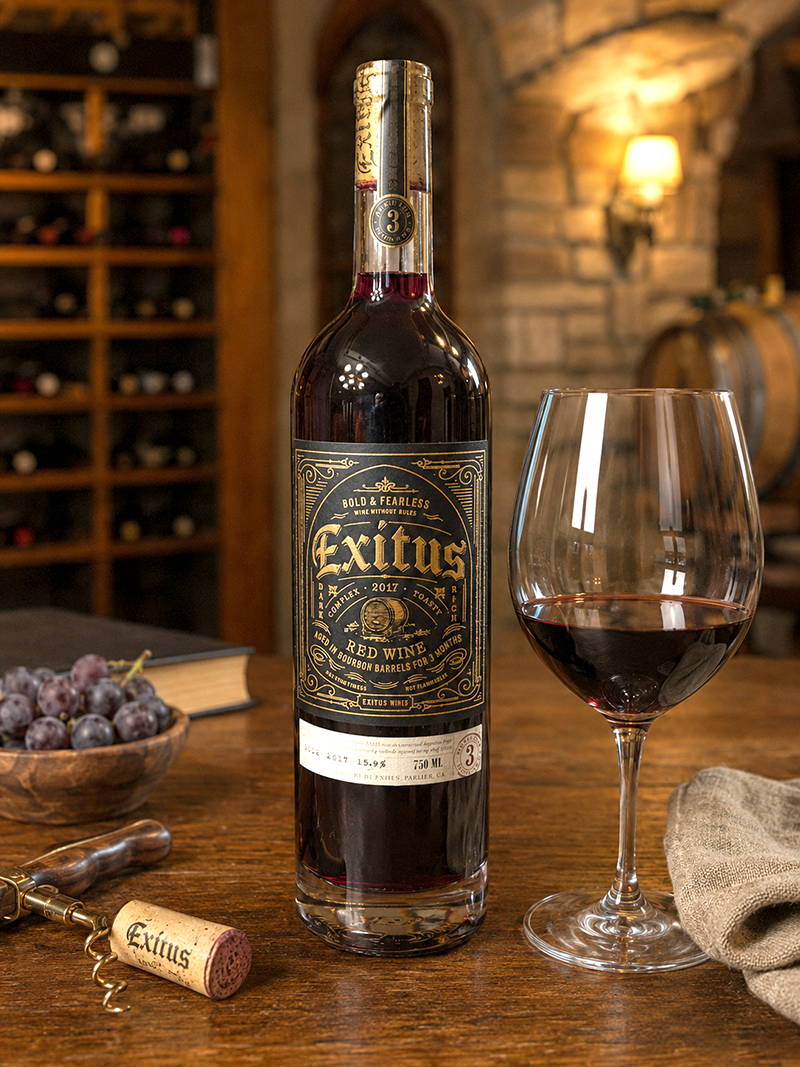
Exitus Bourbon Barrel Aged Red Wine

Exitus Red Wine

The Exitus winery is located in Parlier, California, about 20 miles southeast of Fresno. I don’t know how badass the people of Parlier are, but it’s certainly the image that Exitus is trying to cultivate. Their one current offering is Exitus Bourbon Barrel Aged Red Wine. It is fermented in the usual stainless steel. But, rather than using traditional barrels expressly made for wine, Exitus is matured for three months in charred barrels that were previously used for the production of Kentucky Bourbon. The schtick is supported by distributing the wine in clear liquor bottles.

Continue reading “Exitus Red Wine”

Gainey Vineyard

Gainey Vineyards

Gainey Vineyard

Fifty-seven years ago, in 1962, Dan Gainey purchased 1800 acres in the Santa Ynez valley of California’s central coast region, directly west of Santa Barbara. After twenty-two years of farming and ranching, Gainey became convinced of the area’s potential [and profitability] as a vineyard.

After the Gaineys (three Dans are currently involved) opened their Spanish-style winery in 1984, the winery quickly became one of the most popular wineries to visit in the area, and it was named as “one of the best wineries to visit on California’s Central Coast” by Wine Spectator magazine.

Gainey Vineyard owns properties in both the warm, eastern end of the valley, where they concentrate on Bordeaux varieties, and the cool, western end of the valley, where they have planted Pinot Noir, Chardonnay, and Syrah.

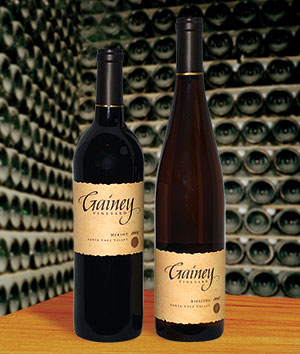
Gainey Merlot 2004

This muscular but lush Merlot features blackberry and cassis on the palate, supported by hints of oak, tobacco, and leather. Velvety mouthfeel, supple tannins, and a long finish round out this attractive wine.

Pair this expressive, cool-climate Merlot with grilled or rotisserie chicken, pork tenderloin, or simply prepared-beef dishes.

Gainey Riesling 2007

Gainey specializes in Riesling, and this wine shows why. If you normally avoid Rieslings, try this one. It is pale gold, completely dry, and has medium acidity. The traditional apricot and pear flavors are present, but the flowery overtones are held well in the background.

gaineyvineyard.com/

Back to blog posts: winervana.com/blog/


Cockfighter’s Ghost Shiraz and Tapestry Chardonnay

Cockfighter’s Ghost Shiraz

Cockfighter’s Ghost Shiraz and Tapestry Chardonnay

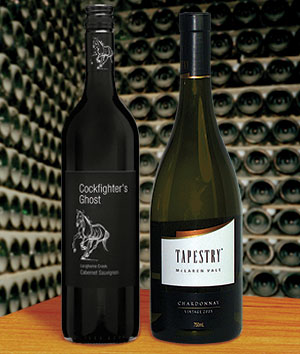
In this post I sample two uncommon wines that only have one thing in common: they both come from Australia’s McLaren Vale.

Cockfighter’s Ghost Shiraz 2002

Some say that if the light of the moon is just right, the ghost of Cockfighter the horse can be seen galloping through the vineyards of Pooles Rock.

Perhaps. The wine named in his memory is anything but ephemeral, however. Cockfighter’s Ghost Shiraz first greets you with a powerful nose of earth and dark berry fruit. The berry and black plum flavors continue on the palate, supported by some spice, black pepper, and oak. The color is a dense, dark crimson.

After letting this shiraz ‘breathe’ for at least an hour to soften its edges, serve with rare roast beef and field mushrooms, spicy sausages with tomatoes and Italian beans, or oven-roasted rack of lamb.

cockfightersghost.com.au/product/single-vineyard-shiraz-2016/

Tapestry Chardonnay 2005

This chardonnay is an excellent value, with more character than its relatively low price would predict.

The wine spent nine months on-lees in new French oak, and features a very appealing balance of juicy stone fruit and a citrus acidity, supported by the spicy, toasty oak, with a moderately long finish. There was no malo-lactic fermentation. The color is pale straw with green tints.

Serve lightly chilled with coquille St. Jacques, fried calamari, or grilled whole red snapper.

[Unfortunately, Tapestry Wines is now reported closed.}

Back to blog posts: winervana.com/blog/

Maison M. Chapoutier Winery

Maison M. Chapoutier

Chapoutier Winery

Thanksgiving is next week, and these two wines would be very appropriate for the holiday feast (Christmas and Hanukkah, too!)

Maison M. Chapoutier is a winery and négociant business located in Tain-l’Hermitage in the Rhône region in southeastern France. (Négociant is the French term for a wine merchant who assembles the produce of smaller growers and winemakers and sells the result under its own name.) Chapoutier produces wine from appellations across the Rhône region, in a wide spectrum of varietals, styles, and price points. The house has holdings in Portugal and Australia, as well.

Polydor Chapoutier established the business in 1879, and it has remained family-owned ever since. Yet despite its long history, by the late 1970s the winery was languishing, the wines weren’t selling, and the firm was in danger of bankruptcy.

In 1990, at age 26, Michel Chapoutier took control, after studying oenology in both France and California. In the intervening years he has transformed the winery into one of the leading Rhône Valley producers. He combines the traditional and the modern, being an early advocate of organic and biodynamic winemaking. He pruned back the vineyards and boldly reduced yields from 2.6 tons per acre to 1.8 tons per acre for both red and white wines. Industrial chemicals, fertilizers, and sprays were eliminated. Grapes are now harvested by hand and only natural yeasts are used to produce unfiltered wines.

Critic Robert Parker has called Chapoutier “one of the most influential wine personalities of the last 20 years.”

Chapoutier’s wine labels are distinctive because of their inclusion of Braille writing on all labels since 1996. The information presented in Braille includes the producer, the vintage, the vineyard, the region, and the color of the wine.

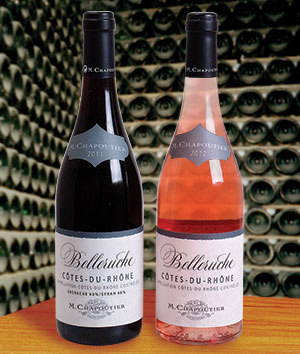
Maison M. Chapoutier Belleruche Rosé 2012

This wine is a fruit-forward blend of Grenache, Cinsault, and Syrah, with a brilliant copper-salmon color. The nose is predominantly aromas of strawberries. On the palette, expect hints of cream soda and grapefruit (yeah, it does work). There is plenty of zippy acidity, as well.

Give this wine a try with a Tomato and Onion Tart, Smoked Shellfish Quesadillas with Fresh Corn Salsa, or Shrimp Kabobs with Lemons and Bay Leaves.

Maison M. Chapoutier Belleruche Rouge 2011

Like most European wines, this lean, fruit-recessive selection is ‘food’ wine, made to drink at the dinner table, not with a pre-meal chat.

Belleruche Rouge is a blend of 60% Grenache and 40% Syrah, and was fermented and aged in vats. It is dark garnet red in the glass, with a subtle nose where no dominant aroma jumps out. The palette has an earthy quality, and features tastes of Morello cherries and black tea. The tannins offer plenty of support, but the finish is rather short.

Enjoy this wine with Wild Mushroom Soup with Blue Cheese Toasts, Beef Stew with Turnips, or Cassoulet.

www.chapoutier.com/en/

Back to blog posts: winervana.com/blog/


Dakota Shy Cabernet Sauvignon

Dakota Shy Cabernet Sauvignon

Dakota Shy Cabernet Sauvignon

Dakota Shy was founded by industry veterans Todd Newman and Tom Garrett in 2008, determined to ultimately create a world-class estate of their own. They began by sourcing Cabernet Sauvignon grapes from a range of vineyards throughout Napa Valley.

Dakota Shy purchased its estate in 2014. It dates back to the 1850s, when George Yount took possession via the Spanish Land Grant. Along side the vines, there are 1.2 acres of Italian and Spanish olives from which Dakota Shy presses their own oil.

In addition to the estate, Dakota Shy continues to source grapes from all over Napa Valley. These sites offer unique and varied characteristics that Dakota Shy relies on in the creation of their Cabernets.

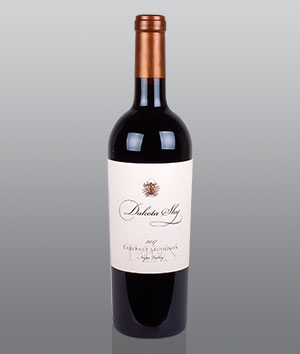
Dakota Shy Cabernet Sauvignon

This wine opens with notes of stone and spice on the nose. Flavors of grass, oak, dried cherry, cocoa and minerals follow. The medium body is supported by well integrated oak and tannin. Decant for three to four hours before serving. Available only by allocation.

www.dakotashywine.com

Back to blog posts: winervana.com/blog/


The Best Corkscrew

Le Creuset Wine Opener 

Le Creuset Wine Opener

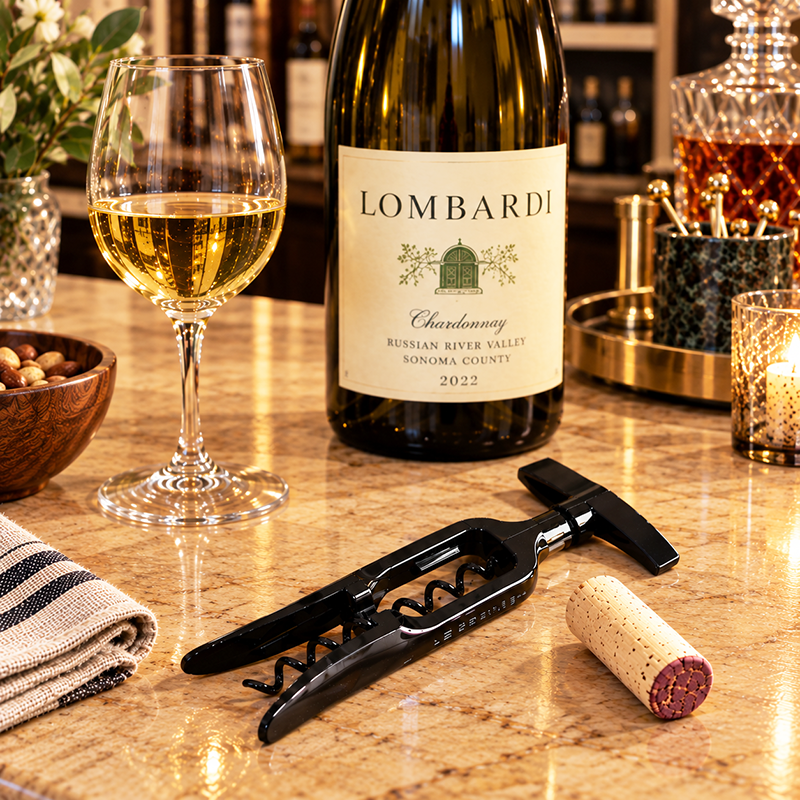
Is this really the best corkscrew?  With hundreds of devices on Amazon alone for opening wine bottles, some costing hundreds of dollars, I realize this is a bold claim.  But yes.  For the money, this corkscrew simply can’t be beat.  It’s dead-simple to use, and works correctly every time.  The Teflon-coated worm pierces the cork with ease, and simply continuing to turn the handle then extracts it smoothly.

This corkscrew was originated by Hallen International Inc., and sold for years under the Screwpull trademark.  In 1991, Le Creuset acquired the Screwpull line, but didn’t rebrand it until the early 2010s.  Le Creuset makes a number of other corkscrews, including a cheaper model that resembles this one.  Although it operates on the same principle, it is flimsier, prone to breakage, and gets mixed reviews on Amazon. 

Although nothing lasts forever, in 30 years I’ve only owned three copies of this corkscrew, one of which was broken by a rowdy party guest.

UPDATE: It would appear that Le Creuset discontinued the more robust original Screwpull design in favor of their cheaper model. Still worth having.  Buy it on Amazon. 

Back to blog posts: winervana.com/blog/

Deep Dish Sausage Pizza

deep dish sausage pizza

Deep Dish Sausage Pizza

It’s pizza night, and that means homemade deep dish. Sorry deep dish haters, but that’s the way I roll.

Start about four hours before you plan to eat.

This California-style dough is from James McNair’s excellent New Pizza.

James McNair's New Pizza

The dough

1 cup water at 110 degrees F
2-1/4 tsp
 instant rise yeast
3-1/4 cup all purpose or bread flour
1 tsp salt
1/4 cup olive oil
Optional: 2 tsp garlic powder and/or 1 Tbl Italian seasoning

Mix the olive oil into the flour, then add the remaining ingredients.  Then knead by hand, stand mixer, food processor, or bread machine.  Time and technique will vary, so I’ll leave that up to you.  Lightly coat the dough with spray oil, cover with plastic wrap, and let rise until doubled.

the pizza

1 Tbs olive oil
1 lb. hot and/or mild Italian sausage
2 cans of anchovies (trust me on this)
1 large onion, chopped
1 large red bell pepper, chopped
1 poblano pepper, chopped
2 cups marinara or pizza sauce, homemade or store bought
1/2 cup green and/or black olives
6 oz. tomato paste
Optional: 8 oz. mushrooms, chopped
3 to 4 tsp Worchestershire sauce
1 Tbs dried oregano
3/4 cup chopped fresh basil
10 – 12 oz. mozzarella or (even better) fontina, coarsely grated
salt and pepper to taste

In a large saucepan, add the tablespoon of olive oil and saute the sausage.  When lightly browned, transfer to a bowl.  Add the anchovies with their oil to the saucepan.  Once the oil has reheated, add all of the vegetables and cook until tender, five to eight minutes.  Add the cooked sausage, 2 cups of sauce, tomato paste, oregano, and Worchestershire sauce.  Bring to a gentle boil, reduce heat as low as you can, and simmer uncovered for at least an hour, stirring occasionally.

About an hour and a half before you want to eat, heat oven to 450 degrees F.  Thirty minutes after starting the oven, punch down the dough and add to the pan.  I used a 12″ deep dish pan, but this would also work with two 9″ cake pans or a 16″ pizza screen.  (For the deep dish, I like to fold the crust in and over for the last step after the filling has been added.) Brush the dough with olive oil and set aside.   It will rise some more, intentionally.

After an  hour of preheating the oven, cover the dough with the sauce (it should be off the heat for at least 15 minutes prior), the basil, and the cheese, in that order.   Bake a flat pie for about 15 minutes, but check the crust for browning after 10.  Bake the deep dish for 30 minutes, assess, and go another 10 minutes if necessary.  Remove pizza from oven, rest for five minutes on a wire rack, and serve.  Will serve six to eight.

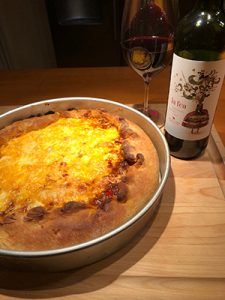
I paired up this hearty pie with a 2018 La Fea Selección Especial Tinto Rojo. This is a fresh and bright blend of 40% Tempranillo, 40% Garnacha, and 20% Syrah from northeast Spain’s Cariñena region. It is named after the unfortunate nickname whispered behind the back of Queen Isabela; La Fea translates as “the ugly one.” But it pours a lovely dark cherry hue in the glass. There is a lively nose of dark fruit, with aromas of raspberry, black cherry, and violet on the palate. 

If you make this pizza, let me know how it went in the comments section.

Back to blog posts: winervana.com/blog/

Chimney Rock Winery

Chimney Rock

Chimney Rock Winery

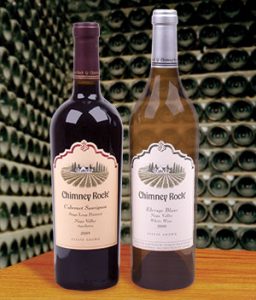
The Stags Leap District AVA is in the very heart of Napa Valley. It runs from north to south for about three miles along the Silverado Trail, and its 1,350 [very prized] acres were first planted with Cabernet Sauvignon in 1961, for which it would soon become renowned. The name comes from an outcropping of red rocks at the area’s eastern boundary, where a stag supposedly escaped his pursuers by leaping across the treacherous gap.

The Stags Leap District’s reputation was assured in 1976, when the 1973 Stag’s Leap Wine Cellar’s S.L.V. Cabernet Sauvignon won the famous (some would say infamous) “Judgement of Paris” International Wine Competition, besting the likes of First Growths Mouton-Rothschild and Haut-Brion. This now-legendary growing region received AVA [American Viticultural Area] status in 1989.

Situated at the far southern end of Stags Leap, the Chimney Rock estate was started on a 180-acre parcel (which originally included a golf course, but that was turned over to vines long ago). Initially, 59 acres were planted with a combination of red and white grapes, and the first vintage of Chimney Rock estate wines was produced in 1989. In the mid-1990s, after a phylloxera infestation necessitated the replanting of the entire property, only red Bordeaux-variety grapes were used in recognition of the unique characteristics and potential of the Stags Leap District.

In 2004, the Terlato Family empire acquired sole ownership of Chimney Rock, and they have diligently worked to steadily improve this already excellent winery, one of my favorites.

Chimney Rock Elevage Blanc 2008

Seeing the very pale straw color of this wine in the glass you might think, “well, this is a lightweight.” But, you would be wrong. There is much to like in this unusual blend of Sauvignon Blanc [70%] and the rarely used Sauvignon Gris [30%]. The nose shows aromas of mango, pineapple, and vanilla, and there is a hint of coconut on the finish. Even so, this wine is strictly dry, with a full, rich mouthfeel. The fruit is nicely balanced with the proper amount of acidity.

Pair Elevage Blanc with Quail Stuffed with Ricotta, Bacon, and Greens, or Soft-Shell Crabs with Vegetable Slaw.

Chimney Rock Cabernet Sauvignon 2009

I strive to be coolly unbiased in this blog, but I have to be honest: this is one of my all-time favorite wines. The color is deep garnet red. The bouquet features black currant and vanilla. Although a classic Big Cab (with support from Merlot and Cabernet Franc), this wine is completely approachable. The dark fruit flavors are supported by smooth tannins and just the right amount of acidity for balance and liveliness. Aging was 18 months in 50/50 new/used French oak. 100% sourced from the Stags Leap District, this wine will easily cellar for ten years; ten days is more like it in mine. And although expensive, this Chimney Rock will easily compete with Cabernet Sauvignons costing twice as much.

Serve with Filets of Beef Stuffed with Roast Garlic and Herbs, or Goat Cheese-Stuffed Roasted Chicken.

https://www.chimneyrock.com/

Back to blog posts: winervana.com/blog/
 

Food Saver Bottle Stoppers

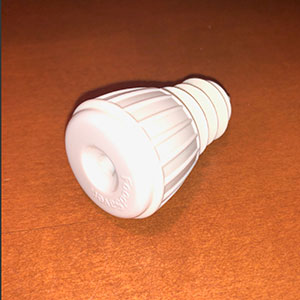
Food Saver Bottle Stopper Food Saver Bottle Stoppers If you have a Food Saver vacuum sealing machine, these bottle stoppers are indispensable. They work on the same principle as the better known Vacu Vin sealing system, but are far more effective. They are made to fit standard wine bottles (and many other standard-size bottles or containers). The stoppers are BPA-free for food safety and non-toxic storage. The core idea is that once you open a bottle, oxygen (i.e. air) is your enemy — it causes oxidation, which degrades wines (and many oils/infusions) over time. Vacuum-sealing removes a lot of that air (or at least reduces oxygen exposure), which slows down the deterioration process. Once vacuum-sealed correctly, the bottle is more airtight than with a simple cork or cap, which helps maintain flavor and quality. Back to blog posts: winervana.com/blog/