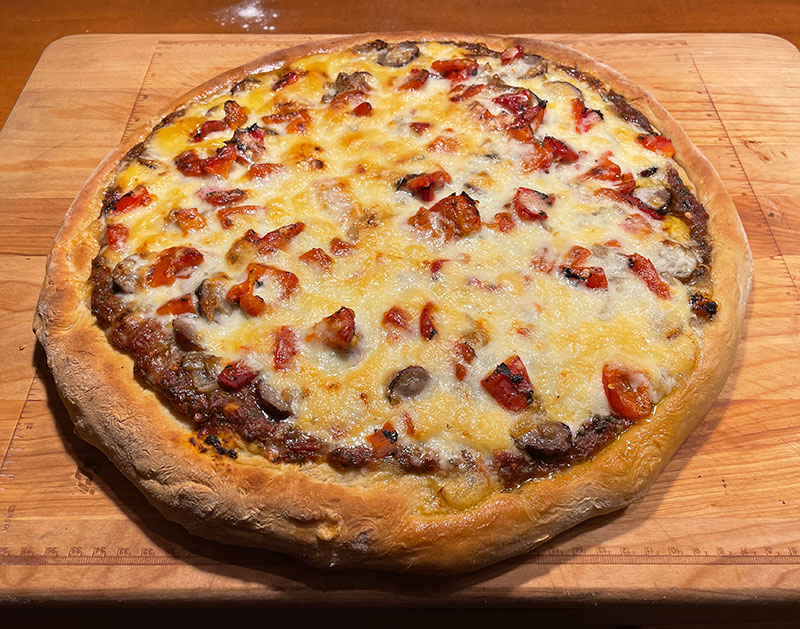
Pizza Giambotta

This pizza features Italian sausage , sweet peppers, and onions.

Giambotta Pizza

THE DOUGH

Start dough at 4p for dinner between 7p and 8p
1 cup warm water (90 to 110 degrees F.)
2 tsp instant-rise yeast
3-1/4 cup bread flour
1 tsp salt
1/4 cup olive oil (extra virgin not necessary)
Combine ingredients and knead by hand for 10 minutes or machine
for two to five minutes. Coat dough ball in a thin film of olive oil or cooking spray, cover in plastic wrap, and let rise in warm place until doubled in size.

THE PIZZA

3/4 lb. sweet Italian sausage in casing
2 Tbls olive oil
2 cups chopped onion (about one large)
1 lb. mozzarella cheese, shredded (You can also substitute fontina, as I often do.)
1-1/2 cups tomato sauce with fresh basil and parsley and dried oregano
2 bell peppers, roasted, peeled, and chopped  (The color is up to you, but I like red and orange or yellow, rather than green.)
2 tsp. dried oregano, crumbled

About an hour before dinner time, turn the oven up as high as it will go, preferably 500 degrees. Thirty to forty minutes before baking, roll dough out to 15” circle. [Or divide dough if you want to make two smaller pizzas.] Place on pizza screen if available, being careful not to press the dough into the mesh. With your fingers, press and form a 1/2 inch border around the edge.  Gently brush or rub the dough with the olive oil.  Cover with plastic wrap for this second rise

Cut the sausage into 1/2-inch thick coins.  In a large skillet, cook the sausage still in their casing in the olive oil over medium heat until cooked through, stirring occasionally, about 10 minutes.

In the pan you used to cook the sausage, add the onion and cook over medium heat for two minutes to soften.

Spread the tomato sauce over the dough up to the raised border.  Spread the onion over the sauce.  Arrange the sausage coins evenly over the onion. Sprinkle the oregano over all, followed by the shredded cheese.  Arrange the bell peppers over the cheese, pressing them in gently.

Bake the  pizza on the bottom rack of the preheated oven for 5 to 10 minutes, or until the crust is golden brown and the cheese is melted and speckled.

My wife particularly liked this one.

Mangia! Mangia!

Serves 4 to 6.

James McNair's New PizzaThe dough for this recipe came from James McNair’s excellent New Pizza.  Don’t be discouraged by the one-star reviews, they are bogus, imho.  One dweeb complained that McNair didn’t cover such arcane techniques as cold fermentation.  Geez.  If you want a cold ferment, use room temperature water and let the dough rise in the refrigerator for 24 hours.  But, you’re not going to have pizza tonight, and you won’t taste the subtleties a cold ferment brings to dough under all those toppings.


The Ultimate Pizza by Pasquale Bruno, JrThe Giambotta recipe itself is derived from one in The Ultimate Pizza by Pasquale Bruno, Jr., another quite reliable pizza book.


Back to blog posts: winervana.com/blog/
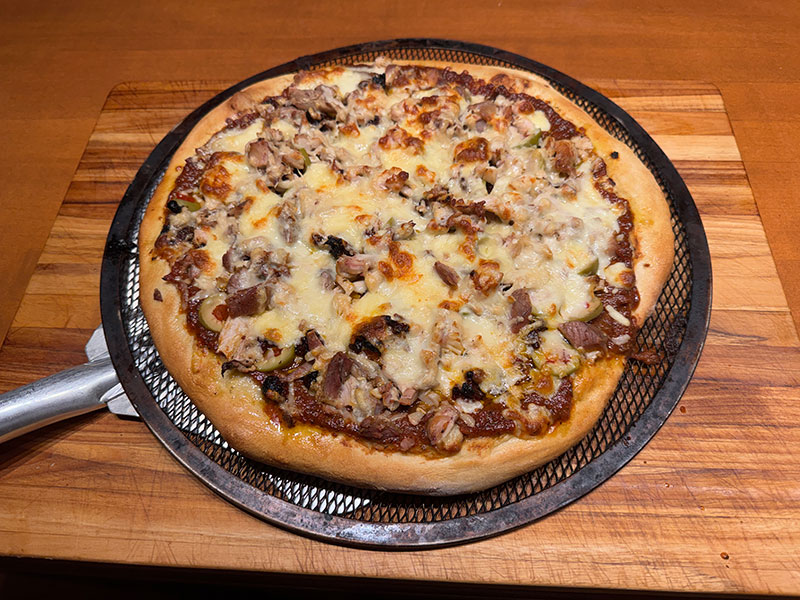
Turkey, Green Olive, and Sun-dried Tomato Pizza

Turkey, Green Olive, and Sun-dried Tomato Pizza
This pizza features leftover Turkey, Green Olives, and Sun-dried Tomatoes

Turkey, Olive, and Tomato Pizza

I had plenty of turkey left over from Thanksgiving and a big jar of green olives from Costco, so I came up with a recipe to use them.

THE DOUGH

Start dough at 4p for dinner between 7p and 8p
1 cup warm water (90 to 110 degrees F.) [280 grams]
2 tsp instant-rise yeast
3-1/4 cup bread flour [415 grams]
1 tsp salt
6 Tbls olive oil (extra virgin not necessary)
Combine ingredients and knead by hand for 10 minutes or machine
for two to five minutes. Coat dough ball in a thin film of olive oil or cooking spray, cover in plastic wrap, and let rise in warm place until doubled in size, about two hours.

THE PIZZA

10 oz. cooked turkey
6 oz. pimento-stuffed green olives, sliced
4 oz. sun-dried tomatoes, coarsely chopped
2 Tbls olive oil
8 oz. mozzarella cheese, shredded (You can also substitute fontina, as I often do.)
1-1/2 to 2 cups thick tomato sauce seasoned with:
1 can of anchovies (or salt to taste)
2 Tbls Italian seasoning
1 Tbls garlic powder
1 Tbls onion powder

About an hour before dinner time, turn the oven up as high as it will go, preferably 500 degrees. Thirty to forty minutes before baking, roll dough out to 15” circle. [Or divide dough if you want to make two smaller pizzas.] Place on pizza screen if available, being careful not to press the dough into the mesh. With your fingers, press and form a 1/2 inch border around the edge.  Gently brush or rub the dough with the olive oil.  Cover with plastic wrap for this second rise

Spread the tomato sauce over the dough up to the raised border.  Arrange the turkey, green olives, and sun-dried tomatoes evenly over the sauce. Cover with the shredded cheese.

Bake the  pizza on the bottom rack of the preheated oven for 5 to 10 minutes, or until the crust is golden brown and the cheese is melted and speckled.

Mangia! Mangia!

Serves 4 to 6.

The dough for this recipe came from James McNair’s excellent New Pizza.  Don’t be discouraged by the one-star reviews on Amazon, they are bogus, imho.  One dweeb complained that McNair didn’t cover such arcane techniques as cold fermentation.  Geez.  If you want a cold ferment, use room temperature water and let the dough rise in the refrigerator for 24 hours.  But, you’re not going to have pizza tonight, and you won’t taste the subtleties a cold ferment brings to dough under all those toppings.

I paired this pizza with this excellent Chianti Classico.

Back to blog posts: winervana.com/blog/

Decadent Mac and Cheese

Mac and Cheese 

In addition to being a wine blogger, I am also an amateur chef with advanced skills. All of my friends have fond nostalgic memories of mac and cheese which they enjoyed while growing up. However, I had never had mac and cheese, but finally wanted to try it.  I decided that the Blue Box wouldn’t do, so I  came up with  a recipe that captures their enthusiasm, but that would appeal to adult tastes.

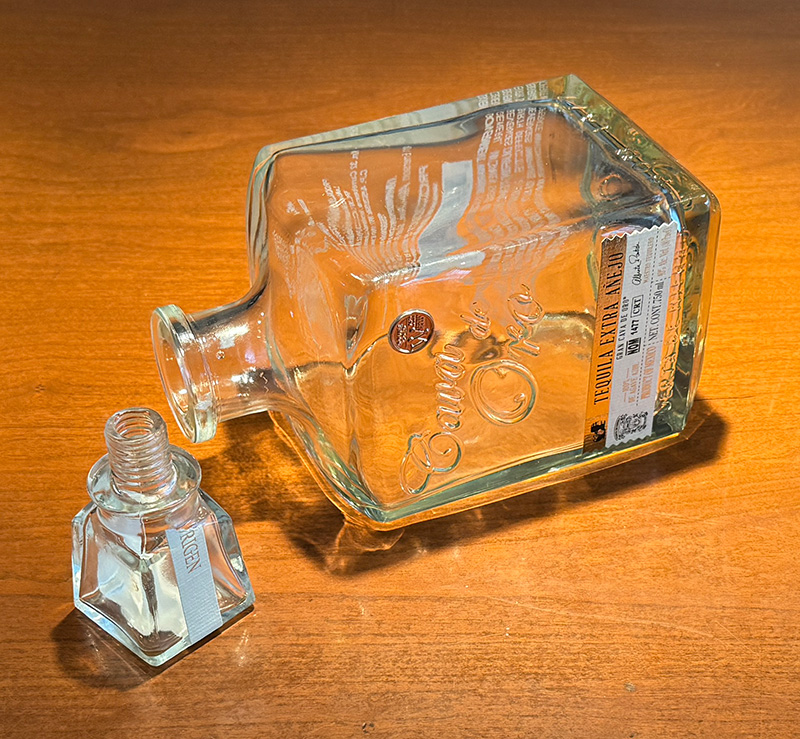
Cava de Oro Tequila

Cava de Oro Tequila Extra Anejo

Cava de Oro Tequila Extra Anejo

Cava de Oro is a tequila brand produced in Jalisco, Mexico at a facility historically known as Tequilera Puerta de Hierro (NOM 1477), near the town of El Arenal, Jalisco. The brand traces back to founders Gildardo Partida Meléndez and Leticia Hermosillo Ravelero, who began working in the agave fields in the early 1990s — planting, harvesting, cultivating and marketing blue agave (specifically the 100 % Blue Weber agave used for tequila). Over time, the facility expanded, first installing an “alembic” (still), then packaging equipment, and eventually launching the Cava de Oro brand.

Today, Cava de Oro markets itself as a “craft / artisanal” tequila producer. They grow their own agave, harvest “estate-grown” blue Weber agave, and control the process from field to bottle.

You could spend $100 on this incredibly sweet Cava de Oro Extra Anejo Tequila.  Or, you could buy a bottle of agave syrup for $5 and a mid-range Blanco tequila for $20, mix them, and get basically the same result.  I got through the bottle by making Millionaire’s Margaritas, which were actually pretty tasty.

Millionaire’s Margarita

3 oz. absurdly sweet and expensive tequila, such as Cava de Oro Extra Anejo  or Clase Azul Reposado

1 oz. Grand Marnier

2 oz. Rose’s Lime Juice

Serve over ice in glass with salted rim (or even sugar if you really have a sweet tooth.).

Cost for a single margarita: For the Cava de Oro: $15 at home, $45 in a bar (at least).  For the Clase Azul, $23 at home, $70 in a bar.

Back to blog posts: winervana.com/blog/
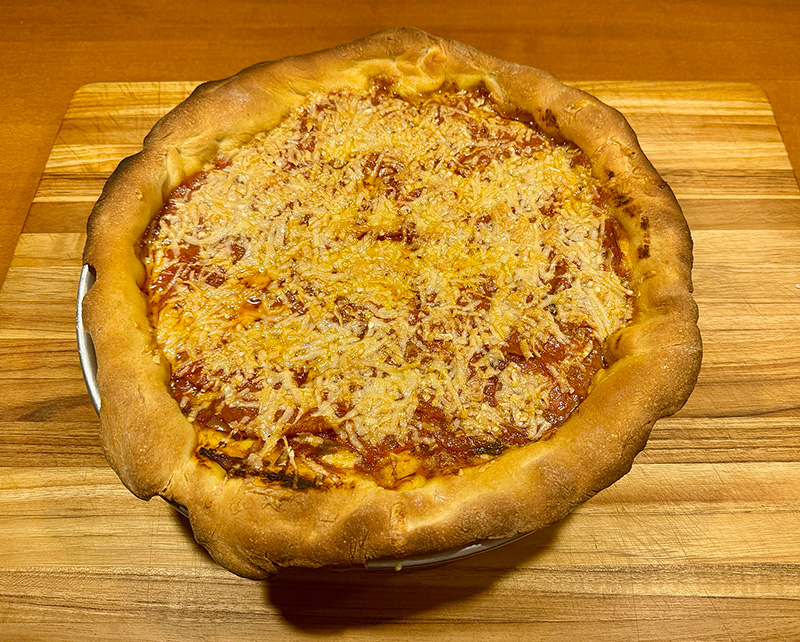
Pepperoni, Mushroom, and Banana Pepper Deep Dish Pizza

Pepperoni, Mushroom, and Banana Pepper Deep Dish Pizza

Pepperoni and Mushroom Pizza

I didn’t grow up in Chicago, but I’ve lived in the suburbs for over 40 years. Two things that I discovered when I moved up from Texas were blues music and deep dish pizza, both of which I love to this day.  This riff on Chicago Deep Dish is far from authentic, but uses the ingredients I had on hand.

Continue reading “Pepperoni, Mushroom, and Banana Pepper Deep Dish Pizza”

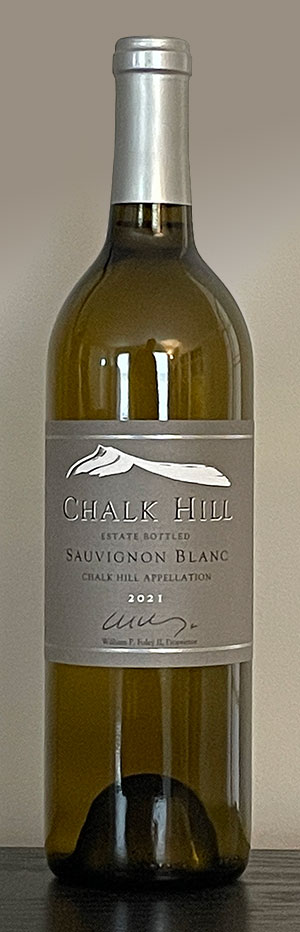
Chalk Hill Sauvignon Blanc

Chalk Hill Sauvignon Blanc Chalk Hill Appellation
Click here for tasting notes.

Chalk Hill Sauvignon Blanc Chalk Hill Appellation 2021

One fine spring day in 1972, attorney, private pilot, and wine aficionado Fred Fruth was piloting his plane over the Russian River Valley area.  Down below, he hoped he saw what he had been searching for: a property that had the climate and soils to grow first-class wine grapes.  Furth and his second wife, Peggy, purchased the land, named the estate Chalk Hill, and started producing wine about a decade later.  They gradually planted more than 270 acres of vines.  Years later, Furth said, “I have always been interested in wine because my grandfather had vineyards. I’m actually more interested in the working-the-soil aspect, but I have many very talented people in the winery who know how to produce a world-class wine. When I bought this property, I was told it was too hilly to be a vineyard, but I simply planted the grapes in rows going uphill. People said you can’t do that, but I’d seen it done in Germany so I knew it would work.”  After a rich and varied life, Furth died in 2018 at the age of 84.

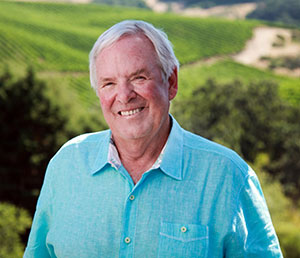
Bill Foley

 Lawyer Bill Foley acquired Chalk Hill in 2010.  Although Foley is titled as “vintner,” I doubt he sees the interior of the winery very often.  He is a vintner in the broader sense of “someone who sells wine.”  He also owns the National Hockey League’s Vegas Golden Knights,  is the Executive Chairman of the Board of Directors for Fidelity National Financial Inc., is Vice Chairman of the Board of Directors for Fidelity National Information Services, Inc., and owns fifteen other wineries.
Continue reading “Chalk Hill Sauvignon Blanc”

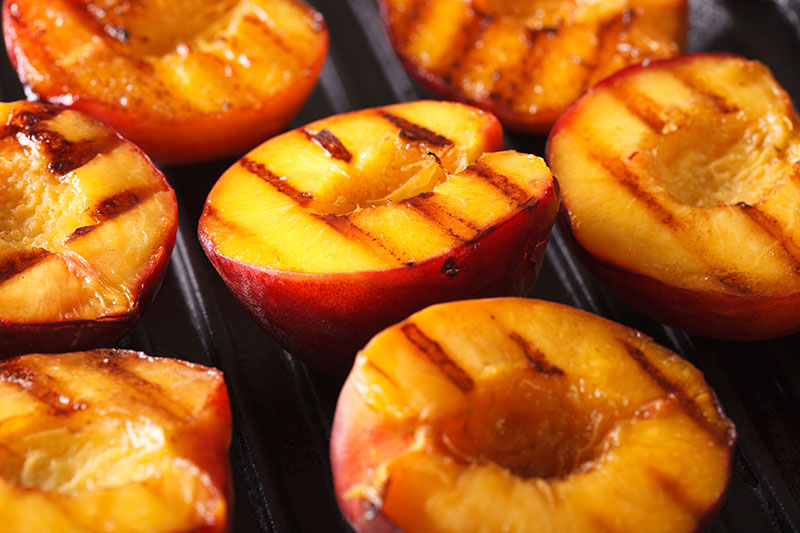
Grilled Nectarines

Grilled nectarines

Grilled Nectarines

Celebrate spring with this recipe from Alec Graham, Chalk Hill Estate Vineyards’ onsite chef who oversees the culinary program there.

Grilled Nectarines with Chive Oil, Thyme, and Chèvre

Serves 8

INGREDIENTS

8 nectarines, slightly under ripe
1 bunch of chives
1 tsp chopped fresh thyme
1 tbs red wine vinegar*
1/2 cup neutral oil, such as vegetable
6 oz. chèvre
Olive oil
Salt and pepper to taste

DIRECTIONS
  1. Preheat a grill or oven broiler to high heat
  2. Whiz chives and neutral oil in blender on high for about 45 seconds. Pour chive oil through a coffee filter and let drip through.
  3. Pit nectarines and slice into halves. Toss with olive oil, red wine vinegar, salt, pepper, and thyme.
  4. Grill nectarine halves until lightly charred and caramelized.
  5. To serve, top nectarines with strained chive oil, fresh thyme sprigs, and crumbles of chèvre.

*If you have a bottle of leftover red wine that is no longer worth drinking, you can easily make your own red wine vinegar. There are plenty of easy recipes online, like this one: homemade red wine vinegar

Chalk Hill Sauvignon Blanc

Chalk Hill Sauvignon Blanc Windy Ridge 2021
Chalk Hill Sauvignon Blanc Windy Ridge 2021 Click here for tasting notes.

Chalk Hill Sauvignon Blanc Windy Ridge 2021

One fine spring day in 1972, attorney, private pilot, and wine aficionado Fred Fruth was piloting his plane over the Russian River Valley area.  Down below, he hoped he saw what he had been searching for: a property that had the climate and soils to grow first-class wine grapes.  Furth and his second wife, Peggy, purchased the land, named the estate Chalk Hill, and started producing wine about a decade later.  They gradually planted more than 270 acres of vines.  Years later, Furth said, “I have always been interested in wine because my grandfather had vineyards. I’m actually more interested in the working-the-soil aspect, but I have many very talented people in the winery who know how to produce a world-class wine. When I bought this property, I was told it was too hilly to be a vineyard, but I simply planted the grapes in rows going uphill. People said you can’t do that, but I’d seen it done in Germany so I knew it would work.”  After a rich and varied life, Furth died in 2018 at the age of 84.

Bill Foley

 Lawyer Bill Foley acquired Chalk Hill in 2010.  Although Foley is titled as “vintner,” I doubt he sees the interior of the winery very often.  He is a vintner in the broader sense of “someone who sells wine.”  He also owns the National Hockey League’s Vegas Golden Knights,  is the Executive Chairman of the Board of Directors for Fidelity National Financial Inc., is Vice Chairman of the Board of Directors for Fidelity National Information Services, Inc., and owns fifteen other wineries.
Continue reading “Chalk Hill Sauvignon Blanc”

Aged Eggnog

Aged Eggnog


Aged eggnog?!  WTF is that?  I had never heard of such a thing until I stumbled across a recipe for it on Alton Brown’s web site.  As it turns out, it is indeed a real, if arcane, preparation, even covered by Cook’s Illustrated, which researches all things food.  The idea is that the eggnog ages for at least two weeks, and up to a year.   One benefit of aging is that after three weeks, the alcohol renders the eggnog completely sterile.  Some writers suggest that is plenty of time; longer aging means that the eggnog loses its eggy freshness and becomes aggressively boozy.  I don’t think I will be able to confirm that.  I expect the batch I made to only last a month or so.

Continue reading “Aged Eggnog”

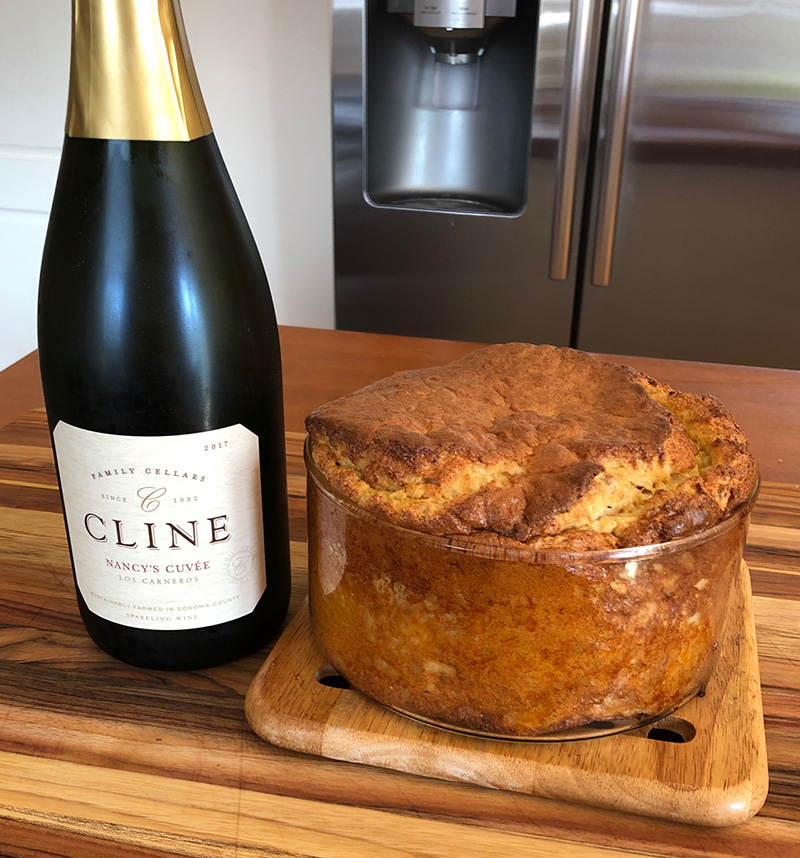
Mackerel Souffle

Mackerel SouffleMackerel Souffle

The New York Times Cookbook
My well-worn copy of The New York Times Cookbook.

The first cookbook I ever got, and to this day is still my favorite, is Craig Claiborne’s The New York Times Cookbook.  Not long after getting the book, I was asked to bring dessert to a dinner party.  I made chocolate-covered cream puffs.  They were a huge hit, and people were amazed that I hadn’t purchased them.   Cooking out of this book over the years since, Craig taught me that it isn’t hard to cook and eat well, if you are interested in doing so.

Although not widely consumed in the US, mackerel is inexpensive and highly sustainable.  Since it is an oily fish, it is rich in omega-3 fatty acids.  In Japan, mackerel is called saba, and is sold salted and vinegared in sushi bars.  If you enjoy sushi, I highly recommend that you try saba.

Continue reading “Mackerel Souffle”

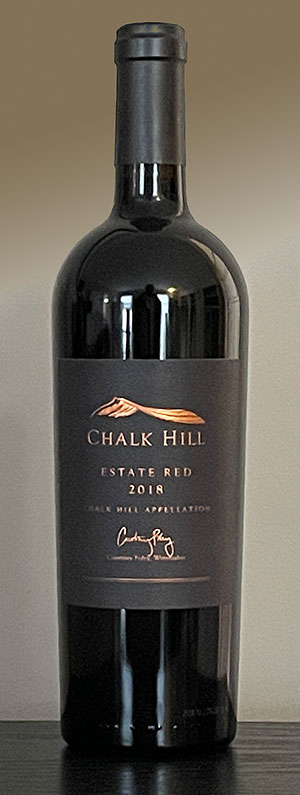
Chalk Hill Estate Red

Chalk Hill Estate Red 2018
Chalk Hill Estate Red 2018 Click here for tasting notes.

One fine spring day in 1972, attorney, private pilot, and wine aficionado Fred Fruth was piloting his plane over the Russian River Valley area.  Down below, he hoped he saw what he had been searching for: a property that had the climate and soils to grow first-class wine grapes.  Furth and his second wife, Peggy, purchased the land, named the estate Chalk Hill, and started producing wine about a decade later.  They gradually planted more than 270 acres of vines.  Years later, Furth said, “I have always been interested in wine because my grandfather had vineyards. I’m actually more interested in the working-the-soil aspect, but I have many very talented people in the winery who know how to produce a world-class wine. When I bought this property, I was told it was too hilly to be a vineyard, but I simply planted the grapes in rows going uphill. People said you can’t do that, but I’d seen it done in Germany so I knew it would work.”  After a rich and varied life, Furth died in 2018 at the age of 84.

Bill Foley

 Lawyer Bill Foley acquired Chalk Hill in 2010.  Although Foley is titled as “vintner,” I doubt he sees the interior of the winery very often.  He is a vintner in the broader sense of “someone who sells wine.”  He also owns the National Hockey League’s Vegas Golden Knights,  is the Executive Chairman of the Board of Directors for Fidelity National Financial Inc., is Vice Chairman of the Board of Directors for Fidelity National Information Services, Inc., and owns fifteen other wineries.
Continue reading “Chalk Hill Estate Red”

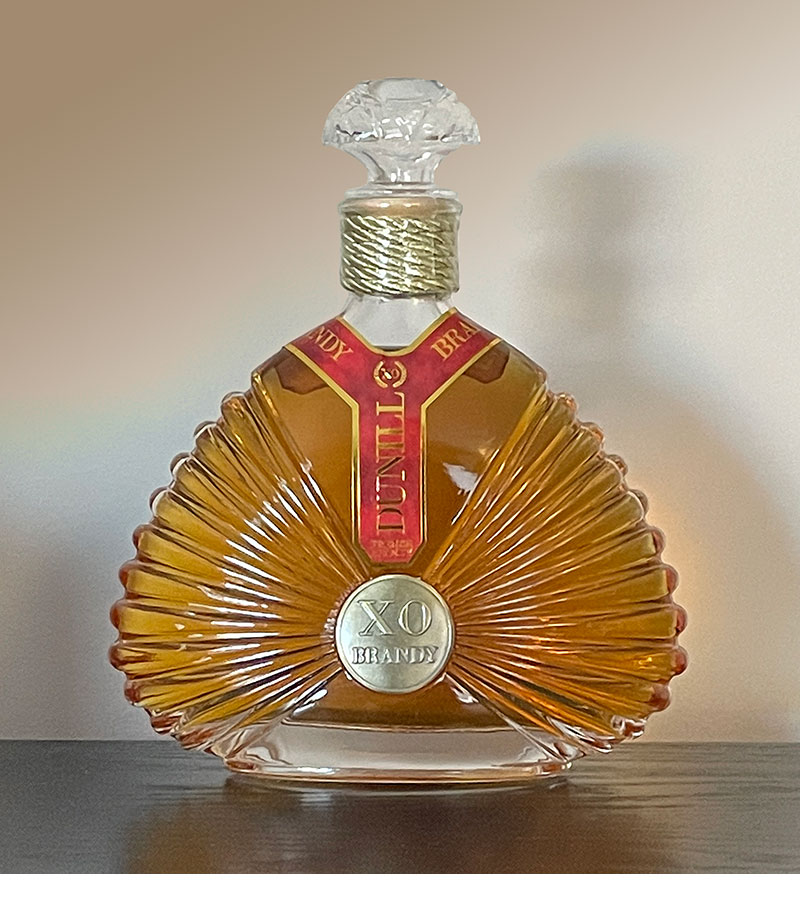
Dunill XO French Brandy

Dunill XO French Brandy


Dunill XO Brandy

Is it possible to get a quality XO brandy for $20?  If this Dunill XO is any indication, the answer is no.  (For just one comparison, Courvoisier XO costs $170.  Most XOs cost at least $100, and go up from there.)

First off, this is Dunill brandy, no doubt named to confuse buyers with the Alfred Dunhill luxury goods company of London.  The bottle, with its extravagant design to mimic crystal (it isn’t, of course), and its gold braid around the neck is further intended to convey quality.  But, the faux “aged bronze” seal in the center of the bottle even popped off two days after I got it home.

Sadly, the quality just isn’t there.  This is what the producer claims, “Produced in the South of France, out of the best grapes, and handcrafted in small batches. Distilled in the pure tradition of the region. The cellar master has extracted the most subtle aromas of the brandy through a very slow distillation and aging for 10 years in French oak barrels, to give the taste of an exceptional brandy. Deep amber color.”

Continue reading “Dunill XO French Brandy”

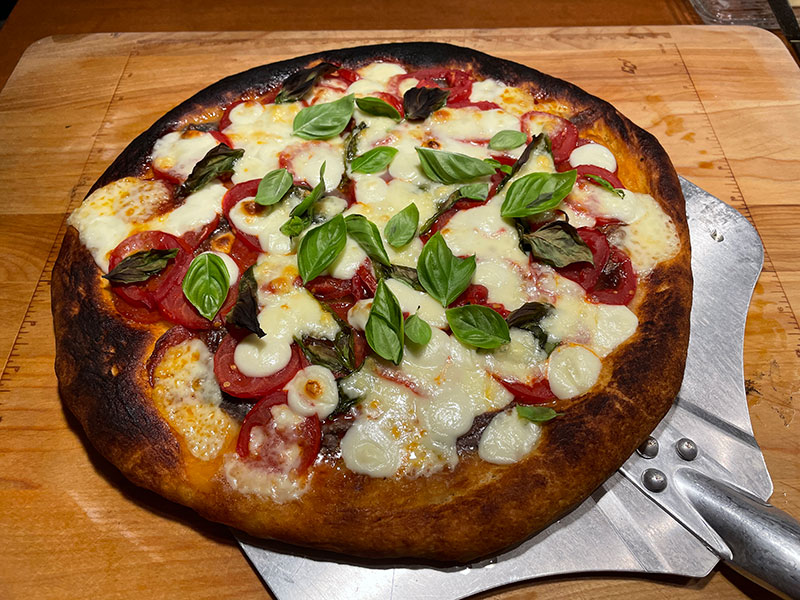
Pizza Margherita

Pizza Margherita

I have nine pizza cookbooks, and seven of them have  a recipe for Pizza Margherita.  In part this is because it is a classic, and in part because the story of its creation is clearly known and iconic.  In 1889, the Italian royal couple King Umberto and Queen Margherita paid a visit to Naples.  While there, local pizzaiolo Raffaele Esposito made three types of pizza for them: a marinara pizza with anchovies; a bianca (white) pizza with lard, provolone or caciocavallo cheese, and basil; and a pizza with tomatoes, mozzarella, and basil, featuring the red, white, and green of the Italian flag.  The queen was particularly delighted by that last one, and when Esposito received a note of thanks from her, he dedicated the pizza to her.

Continue reading “Pizza Margherita”

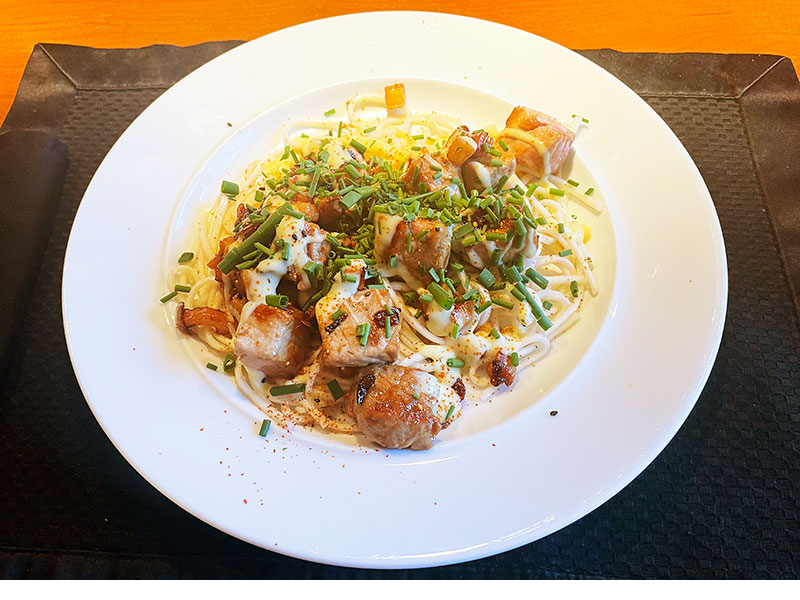
Tuna pasta, Japanese-style

Tuna pasta, Japanese-style

My wife recently came home with a lovely 7 ounce tuna steak.  Well, I love tuna, and because of this I thought, “this isn’t going to feed the two of us.”  So I began to consider how to stretch it out.  The answer?  Tuna pasta, Japanese-style!

Serves 2

6 to 8 oz. tuna steak (mine was sushi grade, but that isn’t necessary since it will be cooked)
4 oz. of udon noodles
3 or 4 green onions (scallions)
Lotus root, about 3″ long
2T soy sauce
2T mirin
2T peanut oil (I used ginger-infused oil for a bit of flavor boost)
Chives, chopped fine
Shichimi Togarashi (Japanese hot pepper mix, available in Asian markets, the Asian section of some supermarkets, and online, of course.)

    1. Heat lightly-salted water to boiling in a saucepan large enough to fit the udon noodles easily.
    2. Peel the lotus root, then rinse under cold water. Slice the lotus root into 1/4″ rounds. then cut the lotus root into 1/4″ dice. Rinse again, then set in a bowl with cold water and splash of vinegar to prevent discoloration.
    3. Meanwhile, chop the scallions, green parts and all.
    4. Heat the oil in a 10″ skillet on low, and add the scallions and drained lotus root until slightly softened.  Browning is not necessary.
    5. Cut the tuna into 1/2″ cubes.
    6. Add the tuna, soy sauce, and mirin to the skillet until the tuna is cooked to medium rare (140 degrees F) and a sauce forms.  This will only take two or three minutes.  Turn off the heat, but keep the skillet on the burner.
    7. Cook the udon in the boiling water until not quite al dente.  This will vary with the brand of udon, but plan on 2 to 8 minutes.  Mine took about 4 minutes.
    8. Remove the udon with tongs, keeping the water in the saucepan at a low boil, and rinse in a colander under cold water to remove excess starch.  Return the udon to the saucepan, bring to a boil, and heat for one minute.
    9. Drain the udon, place half on each plate, top each plate with half of the tuna mixture from the skillet, garnish with chopped chives, and finish with the shichimi togarashi

Back to blog posts: winervana.com/blog/