Chimney Rock Winery

Chimney RockThe Stags Leap District AVA is in the very heart of Napa Valley. It runs from north to south for about three miles along the Silverado Trail, and its 1,350 [very prized] acres were first planted with Cabernet Sauvignon in 1961, for which it would soon become renowned. The name comes from an outcropping of red rocks at the area’s eastern boundary, where a stag supposedly escaped his pursuers by leaping across the treacherous gap.

The Stags Leap District’s reputation was assured in 1976, when the 1973 Stag’s Leap Wine Cellar’s S.L.V. Cabernet Sauvignon won the famous (some would say infamous) “Judgement of Paris” International Wine Competition, besting the likes of First Growths Mouton-Rothschild and Haut-Brion. This now-legendary growing region received AVA [American Viticultural Area] status in 1989.

Situated at the far southern end of Stags Leap, the Chimney Rock estate was started on a 180-acre parcel (which originally included a golf course, but that was turned over to vines long ago). Initially, 59 acres were planted with a combination of red and white grapes, and the first vintage of Chimney Rock estate wines was produced in 1989. In the mid-1990s, after a phylloxera infestation necessitated the replanting of the entire property, only red Bordeaux-variety grapes were used in recognition of the unique characteristics and potential of the Stags Leap District.

In 2004, the Terlato Family empire acquired sole ownership of Chimney Rock, and they have diligently worked to steadily improve this already excellent winery.

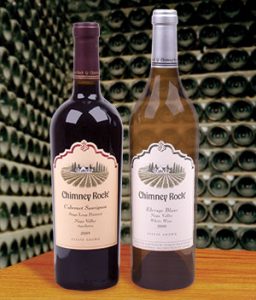
Chimney Rock Elevage Blanc 2008

Seeing the very pale straw color of this wine in the glass you might think, “well, this is a lightweight.” But, you would be wrong. There is much to like in this unusual blend of Sauvignon Blanc [70%] and the rarely used Sauvignon Gris [30%]. The nose shows aromas of mango, pineapple, and vanilla, and there is a hint of coconut on the finish. Even so, this wine is strictly dry, with a full, rich mouthfeel. The fruit is nicely balanced with the proper amount of acidity.

Pair Elevage Blanc with Quail Stuffed with Ricotta, Bacon, and Greens, or Soft-Shell Crabs with Vegetable Slaw.

Chimney Rock Cabernet Sauvignon 2009

I strive to be coolly unbiased in this blog, but I have to be honest: this is one of my all-time favorite wines. The color is deep garnet red. The bouquet features black currant and vanilla. Although a classic Big Cab (with support from Merlot and Cabernet Franc), this wine is completely approachable. The dark fruit flavors are supported by smooth tannins and just the right amount of acidity for balance and liveliness. Aging was 18 months in 50/50 new/used French oak. 100% sourced from the Stags Leap District, this wine will easily cellar for ten years; ten days is more like it in mine. And although expensive, this Chimney Rock will easily compete with Cabernet Sauvignons costing twice as much.

Serve with Filets of Beef Stuffed with Roast Garlic and Herbs, or Goat Cheese-Stuffed Roasted Chicken.

https://www.chimneyrock.com/

Back to blog posts: winervana.com/blog/
 

Food Saver Bottle Stoppers

Food Saver Bottle Stoppers
If you have a Food Saver vacuum sealing machine, these bottle stoppers are indispensable. They work on the same principle as the better known Vacu Vin sealing system, but are far more effective. They are made to fit standard wine bottles (and many other standard-size bottles or containers). The stoppers are BPA-free for food safety and non-toxic storage. The core idea is that once you open a bottle, oxygen (i.e. air) is your enemy — it causes oxidation, which degrades wines (and many oils/infusions) over time. Vacuum-sealing removes a lot of that air (or at least reduces oxygen exposure), which slows down the deterioration process. Once vacuum-sealed correctly, the bottle is more airtight than with a simple cork or cap, which helps maintain flavor and quality. Back to blog posts: winervana.com/blog/  

Ratchet Corkscrew

Cork Pops Ratchet Corkscrew

Cork Pops Ratchet Corkscrew

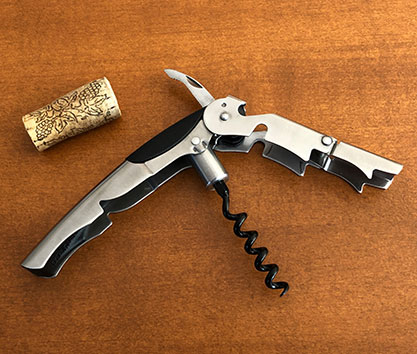
Many people, including some servers themselves, are intimidated or bewildered by so-called waiter’s corkscrews. That’s too bad, because once mastered they can be highly portable and simple to use.

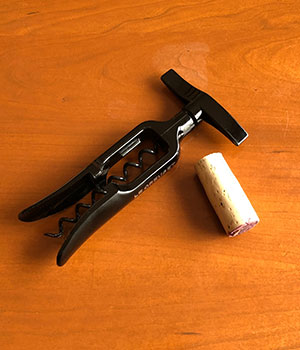
One such corkscrew is the Ratchet Corkscrew from Cork Pops. It is designed to simplify opening wine bottles compared with a basic traditional corkscrew. It uses a “ratcheting” mechanism (a small internal gearbox) rather than relying solely on brute pulling force. This mechanism is meant to make removing the cork easier and smoother — more like the action of a ratcheting screwdriver than a standard corkscrew.

The tool includes a worm (the screw that goes into the cork), a foil cutter (often built into the handle), and a folding lever/handle. The worm, foil-cutter, and handle fold neatly to a compact length.

Instead of just screwing the worm into the cork then pulling straight up, the ratchet corkscrew allows incremental ratcheting — you turn or pump the handle to drive the screw into or out of the cork using mechanical advantage, reducing manual effort, handy for wine drinkers with limited hand mobility and strength).

Once the worm fully penetrates the cork, the ratchet mechanism helps pull the cork out smoothly — so you don’t need to apply large upward force or “yank” on the bottle, making it easier for people with less hand strength or dexterity.

It is it is nicely designed and built like a tank. Perhaps too much so, because that limits its portability.

Back to blog posts: winervana.com/blog/

Landmark Vineyards

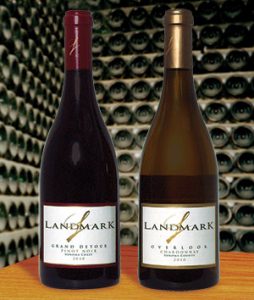
Landmark Winery Grand Detour Pinot Noir 2010 and Landmark Winery Overlook Chardonnay 2010
Landmark Grand Detour Pinot Noir 2010 and Landmark Overlook Chardonnay 2010

Since its founding in 1974 by Damaris Deere Ford, great-great granddaughter of John Deere, Landmark Vineyards has called Sonoma County home. Originally located in Windsor, California, in 1989 Landmark moved to the heart of Sonoma valley to escape the encroaching urbanization to the north.

In 1991, Landmark decided to focus primarily on Chardonnay. This effort was reinforced in 1993 when they retained the highly-regarded winemaker and consulting enologist Helen Turley, who has also worked for wineries such as Pahlmeyer, Bryant Family Vineyard, Colgin, and Blankiet. Turley is credited for being one of the first people in the early 1990s to see Sonoma’s potential for world-class wines, particularly Chardonnay. The work came together nicely in 1997, when Landmark’s 1995 Overlook Chardonnay landed a spot on the Wine Spectator’s Top 100 List, the first of seven such appearances.

Landmark sources its Chardonnay fruit from a variety of growers in Sonoma valley, allowing them to take advantage of a dozen microclimates and growing conditions. Landmark also maintains a modest 11-acre organically-farmed estate vineyard, planted to traditional Chateauneuf du Pape varietals—Grenache, Syrah, Mourvedre, Counoise, and Viognier.

Landmark Overlook Chardonnay 2010

After harvest and pressing, the juice for this wine is racked into French oak barrels. There, indigenous yeasts carry out the primary fermentation. This traditional practice allows a medley of yeast species to each contribute its own unique flavor components to the wine. Next comes a second malo-lactic fermentation. The wine then spends eight to ten months in barrel sur lees, after which it is finally blended.

In the glass, this wine is a pale gold tinged with green. The nose offers aromas of grapefruit and preserved lemon. The citrus theme continues on the palate, abetted by good acidity and just enough oak to temper and mellow the flavors.
Serve this up with Chicken Breasts with Artichokes and Mustard Sauce, or Sea Bass with Gingered Broth.

Landmark Grand Detour Pinot Noir 2010

This Pinot Noir shows that Landmark has a way with reds as well as whites. Grand Detour is sourced from five vineyards in the cool-climate Sonoma Coast appellation. The climate of this region allows the wine to mature at a leisurely pace to improve structure and develop tannins.

This wine is medium brick in color, with a nose of wild strawberries and plums. The taste follows through with plum and other stone fruits. There is plenty of body (especially for a pinot noir) supported by tart tannins.

Salmon en Papillote would be a classic pairing with this wine. Also consider Veal Scallopine with Lemon and Capers or Roasted Pork Loin with Apricot-Armagnac Compote.

www.landmarkwine.com/

Back to blog posts: winervana.com/blog/

Matchbook Wine Company

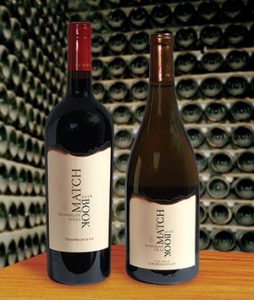
Matchbook Wines Tempranillo 2008 and Matchbook Wines Old Head Chardonnay 2009

Matchbook Wine

Founded in 2006, Matchbook Wine is owned and operated by a pair of proprietors with impressive resumés in the wine business.

John Giguiere, with his wife Lane and brother Karl, started R.H. Phillips Winery in 1983 on land that was part of their family farm in the Dunnigan Hills of northwestern Yolo County, 30 miles east of the more-famous Napa. Over the course of 20 years, the Giguieres grew R.H. Phillips from a family winery of 10 acres and a few cases into a publicly-owned behemoth producing 900,000 cases of wine on 2500 acres, including the best-selling Toasted Head and EXP as well as R.H. Phillips.

When John and Lane left the company in 2005 to return to more-personalized winemaking, they were joined by Dan Cederquiest to found Crew Wine Company, which produces a variety of wines under the Matchbook, Mossback, Chasing Venus, and Sawbuck labels. Cederquiest had an auspicious start at Stag’s Leap in 1987, and then moved to De Loach in 1993, where he tripled output.

Matchbook Wine Company

Matchbook Wines Old Head Chardonnay 2009

This wine is a blend of 91% Chardonnay from Dunnigan Hills, with the balance from the Russian River Valley. It was night-harvested to retain freshness, and barrel-fermented in two- to five-year-old used barrels, the “old heads” of the wine’s name.

Eschewing the heavier oaky/buttery style, this Chardonnay is pale yellow in the glass, and features a delicate nose and velvety mouthfeel. On the palate, there are flavors of baked banana and vanilla with a hint of sweetness, balanced by stone fruit and a crisp, mineral finish.

Serve this wine with Grilled Shrimp with Pineapple Salsa, Cayenne-spiked Crab Cakes, or Baked Trout with Mushrooms.

Matchbook Wines Tempranillo 2008

Tempranillo [tem-prah-NEE-yoh] is an important grape in Spain, and is widely planted in the northern and central parts of that country. In those areas, Tempranillo is characterized by flavors of strawberry, spice, fresh tobacco, and low acidity.

Matchbook’s unusual (for California) vines are from cuttings imported from the Pesquera region of Spain, and, like the Chardonnay, are planted in Dunnigan Hills. While suggestions of the traditional earthy and spicy flavors are evident from the old-world varietals, the wine shows its California home in the aromas of raspberry, vanilla, and a hint of dried black cherries. The flavors of rich red berries are complemented by low oak, moderate tannins, and medium acidity. The finish is short. The color in the glass is a slightly translucent, deep garnet. There is no need to cellar this very food-friendly wine; enjoy it with dinner tonight.

A few good food pairings would be Grilled Ham and Gouda Sandwiches with Caramelized Onions, Duck Sausage Pizza with Green Onions and Tomato, or Tortellini with Mushroom Carbonara Sauce.

www.matchbookwines.com/

Back to blog posts: winervana.com/blog/

Arrowood Vineyards

Arrowood Vineyards
Me and My Arrowood

Arrowood Vineyards was founded by Richard and Alis Arrowood, the culmination of what up until then had been twenty-one years of winemaking.

Born in San Francisco and raised in Santa Rosa, Arrowood started his winemaking career in 1965 at Korbel Champagne Cellars, after earning a degree in organic chemistry at California State University, Sacramento and completing graduate work in enology at California State University, Fresno.

From Korbel he moved on, first to United Vintners, then Sonoma Vineyards, and in 1974 was chosen by the founders of Chateau St. Jean Winery to become their first employee and winemaker.

Arrowood Winery opened in 1986 while he was still at Chateau St. Jean, and for the first three years Alis ran the winery as Richard fulfilled his obligations at Chateau St. Jean. In April 1990 Richard joined Alis to devote himself full-time to Arrowood Winery.

Arrowood is located just ouside of Glen Ellen, California, in Sonoma County, and sources all of its grapes from the county’s diverse viticultural areas, such as Russian River Valley, Alexander and Dry Creek Valleys, and Sonoma-Carneros. Sonoma has some of the most varied and complex terroir in the world, with soils that include marine deposits, clay, loam, and volcanic rock.This unusual variety allows a skilled winemaker to match the grape variety he is working with to the most appropiate soil.

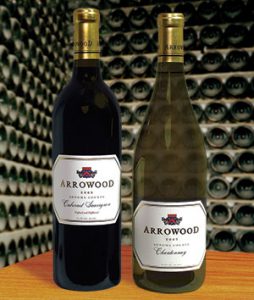
Arrowood Vineyards Sonoma County Cabernet Sauvignon

Sourced primarily from organic or sustainably-farmed vineyards on the western slopes of the Mayacama Mountain Range, this deep, dense Cabernet opens on the nose with vanilla, earth, and toast. The flavor is intense but wonderfully balanced, featuring plum, cassis, currant, and a hint of unsweetened cocoa, all supported by nicely integrated tannins. The wine is certainly drinkable now in its youthful exuberance, and should cellar well for ten more years, also. Pair this excellent Cabernet with Beef Tenderloin with Bordelaise Sauce, Steak Diane, or Pork Chops with Onion Marmalade. If you can afford it, buy it by the case.

Sonoma County Chardonnay

This Chardonnay is another balanced and harmonious wine, with an elegant structure and body. The color is quite pale, but the mouthfeel is pleasingly unctious. The taste is crisp and fresh, with notes of apple, peach, and just a hint of sweetness. There is plenty of oak, too, from nine months in French barrels; sadly, this is becoming ever less common. Serve this with Seared Salmon with Balsamic Glaze, Mussels with Garlic and White Wine, or Paprika Chicken.

www.arrowoodvineyards.com/

Back to blog posts: winervana.com/blog/

Simi Wines

Simi Wines

Although Napa Valley is considered by many to be California’s preeminent winemaking region, Sonoma County just to the north offers many pleasures as well, particularly the wines from Alexander Valley, which is one of my personal favorites.

The Simi brothers immigrated from Tuscany, Italy, to California during the Gold Rush of 1876. They soon discovered the rolling hills of Sonoma County near San Francisco, which reminded them of home. In 1881 they established their winemaking operations in Healdsburg, where they completed construction of Simi’s first stone cellar in 1890. The winery has been in continuous operation ever since, giving it the distinction as California’s oldest.

Early success led to doubling the size of the winery by 1904, and it continued to grow until the disaster of Prohibition in 1920. Forbidden to sell their wine, Simi continued to make and store wine for the 15 years that Prohibition lasted. (They were able to sell “sacramental” wine during this time, which provided a much-needed income to barely keep the winery in operation.)
With Repeal in 1933, Simi was ready with a large supply of perfectly cellared wine to sell, and with their survival we are able to enjoy their products today.

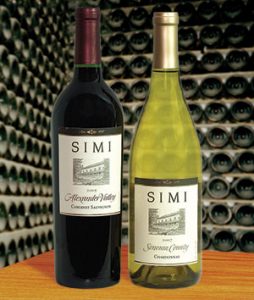
Simi Alexander Valley Cabernet Sauvignon 2005

If you are a fan of Cabernet Sauvignon, the Simi Alexander Valley is an excellent choice for everyday drinking (the $26 list price is often discounted).
Simi sources the grapes for this wine from the nearly 600 acres they own devoted to red wine production. The diverse soils of these vineyards are a result of eons of geologic activity, including a catastrophic landslide which changed the course of the Russian River.

The color is the usual dense, dark red purple. The nose offers blackberry, cassis, and plum. It serves up ripe black cherry and blackberry on the tongue. This Cabernet is medium-bodied, with moderate tannins and a touch of vanilla and oak for structure. The wine shows good legs, and the 13.5% alcohol level is right in line with current winemaking style.

Enjoy this Cabernet Sauvignon with grilled skirt steak sandwiches on rye with horseradish mayonnaise, roast prime rib au poivre, and grilled Tuscan pork rib roast with rosemary coating and red bell pepper relish.

Simi Sonoma County Chardonnay 2007

This very pale gold Chardonnay features nicely balanced notes of lemon and citrus paired with a crisp, lively acidity. The nose is ripe melon and slight white peach. The fruit flavors are supported by an unassuming oak floor.
Pair this creamy smooth wine with richer foods such as baked salmon filled with mascarpone spinach, baked cod with tarragon butter, or pork sauté with caramelized pears.

www.simiwinery.com/wines#

Bwinervana.com/blog/

Philipponnat Brut Royal Reserve Champagne

NV Philipponnat Brut Royal Reserve Champagne
Click here for tasting notes.

Philipponnat Champagne

Philipponnat is one of Champagne’s most historically significant houses—famous among collectors, sommeliers, and serious Champagne lovers.

Philipponnat stands among the oldest winegrowing families in Champagne, with documented roots in 1522. The family originally served as suppliers to the royal courts and maintained vineyards throughout the Marne Valley.

The modern house was formally established in the early 20th century and rose to international prominence after 1935, when the family acquired one of Champagne’s greatest terroirs: Clos des Goisses, a steep, sun-drenched hillside in Mareuil-sur-Aÿ that would become the estate’s calling card.

Today, the house is owned by the Lanson-BCC group, but remains family-influenced, with Charles Philipponnat (a direct descendant) serving as Director—largely credited with elevating quality, transparency, and terroir focus.

Terroir and Viticulture

Philipponnat sources grapes primarily from ;Mareuil-sur-Aÿ (their home commune; premier cru); Aÿ, Avenay-Val-d’Or; Mutigny (Pinot Noir strongholds); and select Côte des Blancs parcels for Chardonnay. About 20–25% of production comes from estate-owned vineyards, unusually high for a mid-size Champagne house.

Signature Style

Philipponnat is known for their Pinot Noir–dominant blends. These wines feature richness and viscosity, and are often barrel-fermented. They use first-press juice only. No taille goes into their Champagnes.

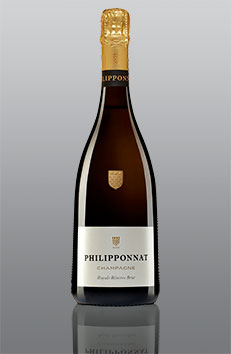
Philipponnat Brut Royal Reserve  Champagne NV

This is Philipponnat’s flagship NV cuvée, composed of 65 to 70% Pinot Noir blended with Chardonnay and a bit of Pinot Meunier.

It is made in the traditional method: a second fermentation occurs in the bottle after the addition of the “liqueur de tirage” (natural fermenting agents and a small quantity of cane sugar). Wines from previous years are incorporated (up to 20%) to maintain the house style.

This wine features plenty of effervescence, so there is a caldron of those tiny bubbles in the glass. It features an appealing light honey color. It is quite dry, which allows the pleasant yeastiness to come through, with flavors of brioche and gentle toast. There are also hints of apple and citrus peel. The nicely balanced acidity lends structure, but leaves a hint of bitterness on the finish.

Although incorrectly used as a generic term for all sparkling wines, Champagne comes only from the Champagne region of France. Too often reserved for special occasions, sparklers deserve to be sampled more often. They make excellent aperitifs, and pair well with a wide range of foods; fish obviously (try them with sushi), spicy Thai dishes, and fruits and desserts, to name a few.

philipponnat.com/pages-en/wines

Back to blog posts: /winervana.com/blog/


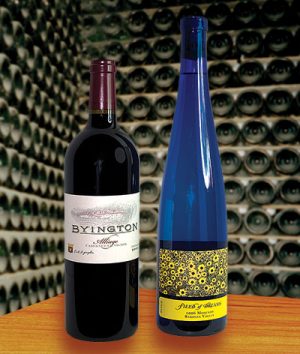
Byington Alliage Cabernet and Field of Dreams Moscato

Byington Alliage Cabernet and Field of Dreams MoscatoByington Winery

In this post, I’m reviewing two distinctly different wines: Byington Alliage Cabernet and Field of Dreams Moscato

Byington Alliage Cabernet Sauvignon 2002

This Sonoma Cabernet Sauvignon comes from an Iowa farmboy who amassed enough wealth as a northern California industrialist that he was able to realize his dream of becoming a winery owner.

Along with the primary grape, it features 11% Cabernet Franc and 9% Syrah, both of which enhance its structure. There is also a very slight sweetness reminiscent of cassis and raisins, as well as a hint of licorice. The lingering and pronounced tannins will appeal to some, while others will want to hold this wine in the cellar for three or four years to allow the tannins to soften. The inky density and good legs suggest such patience will be rewarded. Let this wine breathe for 30 minutes or so before pouring. Then, serve with mildly seasoned pork or chicken.

byington.wine/products/2014-byington-cabernet-sauvignon-alliage

Byington Field of Dreams Moscato 2006

Although made in the Italian Asti style, this Moscato actually comes from Australia’s Barossa Valley. It is one of the few varietals that, when turned to wine, tastes as fresh as the grape from which it is made.

Yes, it is sweet, but not cloying. And although there are tiny bubbles in the glass, there is no fizz. If you like Coke or Pepsi with dinner, you could pair it with the entree, but I’d save it for dessert, especially fresh fruit or delicate cookies.

With an alcohol content of only 8%, it would even be welcome at weekend brunch with waffles or pancakes, instead of the more traditional champagne.

Back to blog posts: winervana.com/blog/