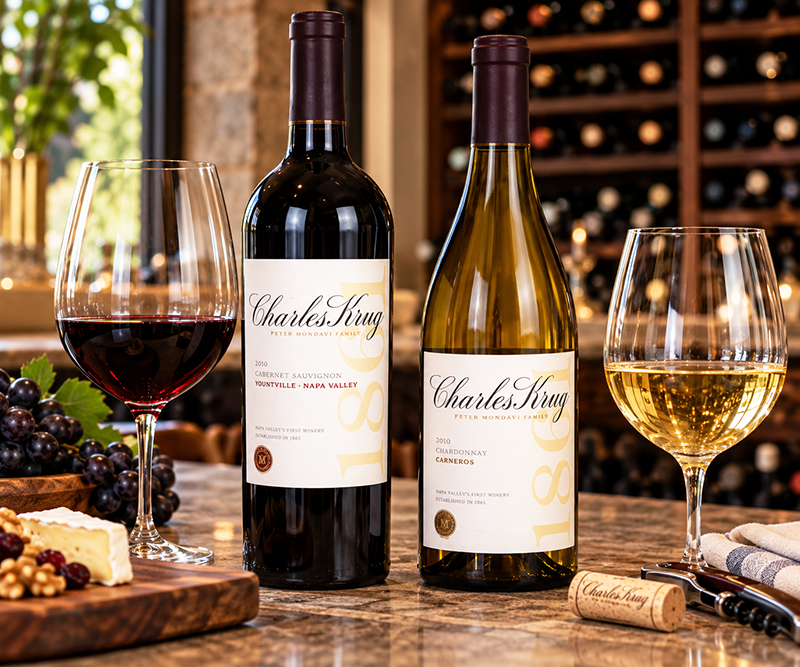
Charles Krug Winery
After stints as a teacher, political activist, newspaper editor, U.S. Treasury employee, and inventor, in 1861 the restless German immigrant Charles Krug established the very first commercial winery in Napa Valley.

Reviews of wines and spirits for the curious drinker.
Charles Krug Winery
After stints as a teacher, political activist, newspaper editor, U.S. Treasury employee, and inventor, in 1861 the restless German immigrant Charles Krug established the very first commercial winery in Napa Valley.

True Ports hail from the Douro valley in Northern Portugal, and have done so for over three hundred years. The region’s predominant soil is schist, composed of various medium-grained to coarse-grained metamorphic rocks with laminated, often flaky parallel layers of micaceous minerals. The low annual rainfall makes this probably one of the driest regions of the world where grapes are grown without irrigation. This terroir results in very low-yielding vineyards, with vines bearing only a very few small bunches of full-flavored grapes whose thick skins protect them from dehydration.
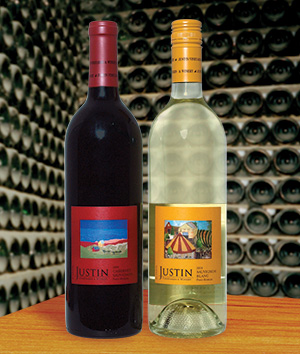
Justin Vineyards and Winery
Justin Vineyards and Winery is located in Paso Robles in California’s Central Coast region. William Randolph Hearst’s famous “castle,” San Simeon, is due west over the Sierra Madre mountains.
Continue reading “Justin Vineyards”
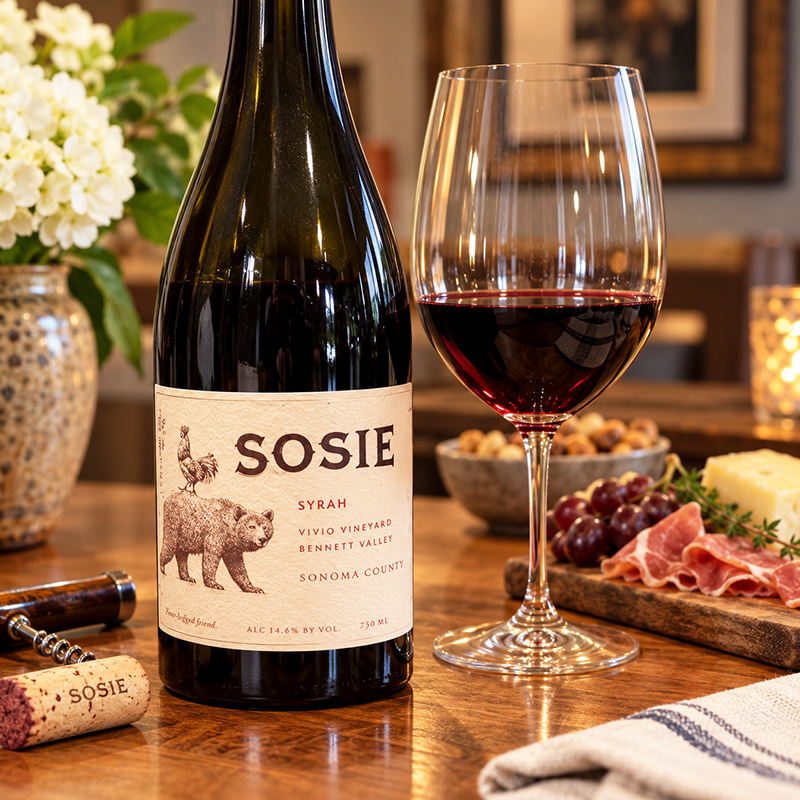
They say imitation is the sincerest form of flattery, and it’s a maxim Sosie Wines lives by. “Sosie” [so-zee] is French for twin or doppelganger, and as it says right on the bottle, “We are inspired by the wines of France. So we employ an Old World approach to wine growing that favors restraint over ripeness, finesse over flamboyance. Our aim is to craft wines that show a kinship with France’s benchmark regions. Wines that are their sosie.”

Amapola Creek Cabernet Sauvignon and Zinfandel
Born in San Francisco and raised in Santa Rosa, Richard Arrowood started his winemaking career in 1965 at Korbel Champagne Cellars, after earning a degree in organic chemistry at California State University, Sacramento, and completing graduate work in enology at California State University, Fresno.

Carmel Winery Private Collection
The first mention of wine in the Bible appears in Genesis, chapter 9, verse 20, “And Noah began to be an husbandman, and he planted a vineyard.” The story goes on to recount some unpleasantness after Noah over imbibes, but there is no reason to go into that here. The point is, wine is as old as history itself, with some of its earliest beginnings in the Middle East. Indeed, references to wine appear hundreds of times in Scripture, through both the Old and New Testaments.
Continue reading “Carmel Winery”
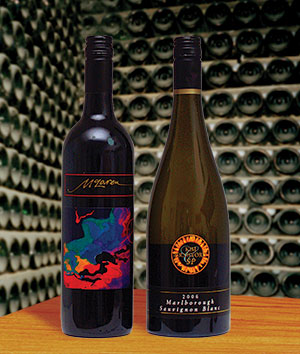
This award-winning Shiraz hails from McLaren Vale on Australia’s southern coast. The complex soil types here combine with the St. Vincent’s Gulf breezes to make for ideal vineyard conditions.
Continue reading “Linchpin Shiraz and Kim Crawford Sauvignon Blanc”
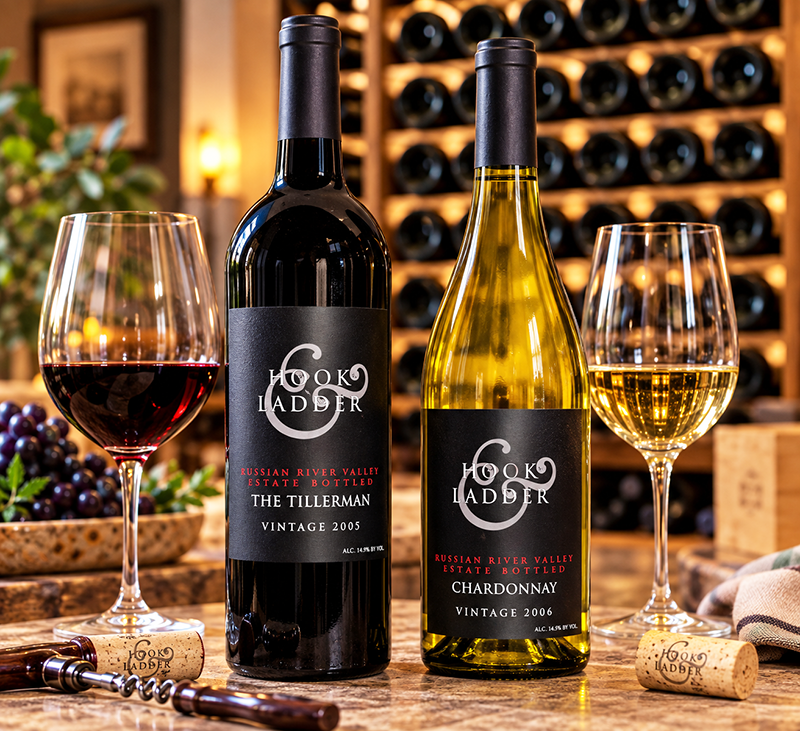
Hook and Ladder Winery
Looking toward his eventual retirement, in 1970 San Francisco firefighter Cecil De Loach bought 24 acres of old-vine Zinfandel in the Russian River Valley of Sonoma County. For six years De Loach worked the acreage part time, selling grapes to other producers, as neophyte winemakers often do. In 1976 De Loach released his first wine, 1,000 cases of a vintage 1975 Zinfandel, and in so doing became one of the first Russian River wineries.
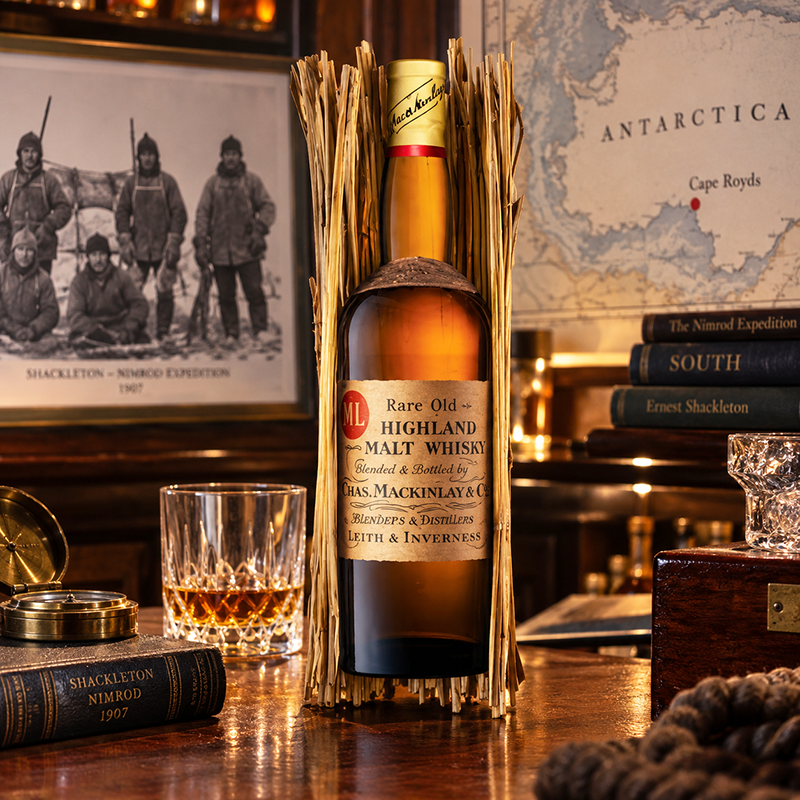
Looking for a good story to tell your house guests over an after-dinner drink? MacKinlay’s Rare Old Highland Malts are re-creations of the original malt whisky shipped to Antarctica in 1907 by explorer Ernest Shackleton on his “Nimrod” expedition.
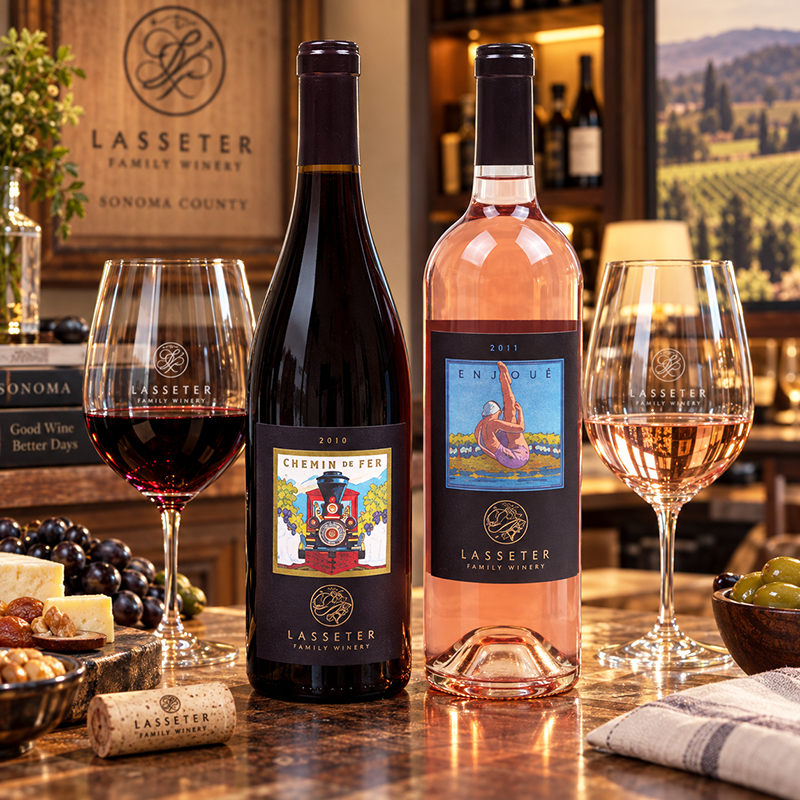
John and Nancy Lasseter are long-time francophiles, and over the years have traveled extensively in France. It was there that they developed their appreciation of and fondness for Old-World style wines.

Acquaviva Winery
Although the address is officially in Maple Park, Illinois, Acquaviva Winery and Bistro is on a very rural stretch of Illinois Route 38, 60 miles due west of Chicago. The faux-Italianate building incongruously appears, mirage-like, as you approach.
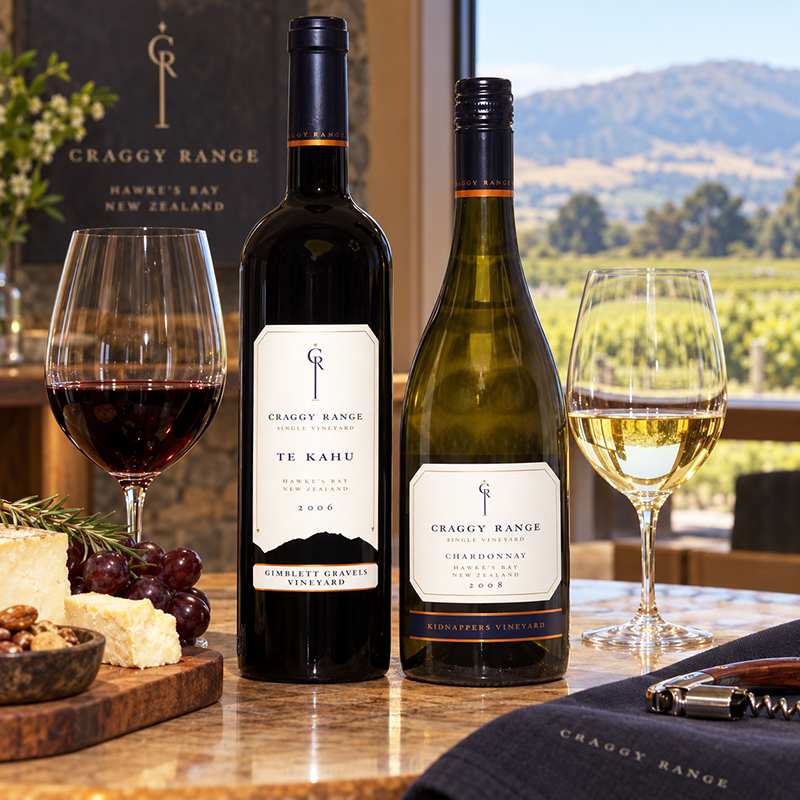
Although wine production started in New Zealand as early as 1819, that nation of beer drinkers didn’t really start to get serious about it until the mid 1960s, time-wise much like California. Real success didn’t come until the early ‘80s, however, with the varietal New Zealand has become famous for, sauvignon blanc. The first release to get wide attention was the 1979 from Montana Wines (New Zealand’s biggest wine maker) and an even more compelling product followed from Cloudy Bay Vineyards in 1985, finally putting “the land of the long white cloud” on the world’s wine-making map.
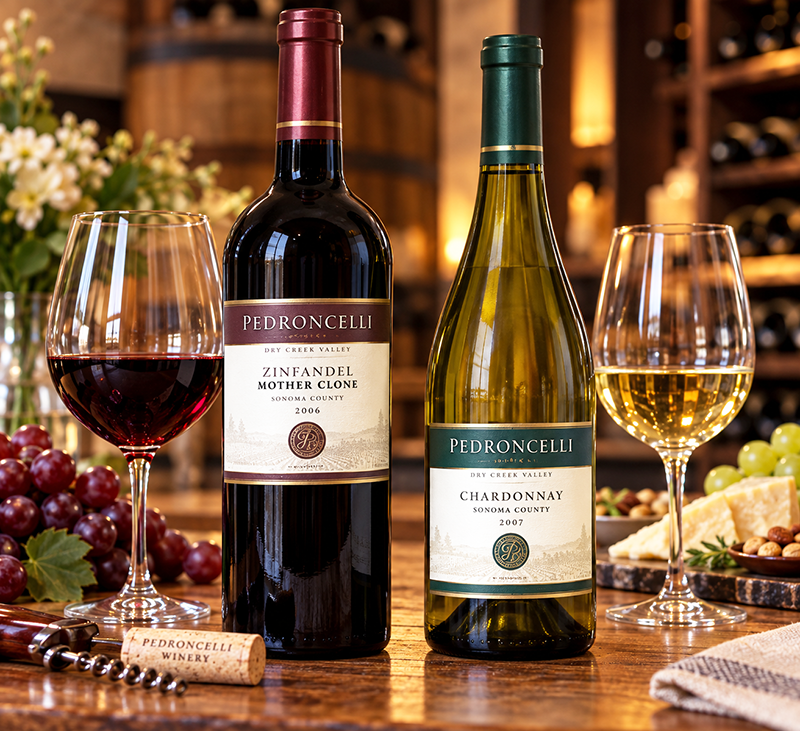
Pedroncelli Winery
Pedroncelli was founded in 1927 in Geyerserville, California, during the middle of Prohibition, and began by selling grapes to local home winemakers. After Repeal in 1933, Pedroncelli began to make their own wines in a winery that had been sidelined as a barn.
Sonoma Vineyards
Tom Klein graduated from Stanford Graduate School of Business in 1979, and established a career as a management consultant. In 1985, Klein received an assignment to evaluate the business of Rodney Strong Vineyards. He liked what he saw, and in 1989 he and his family purchased the winery.
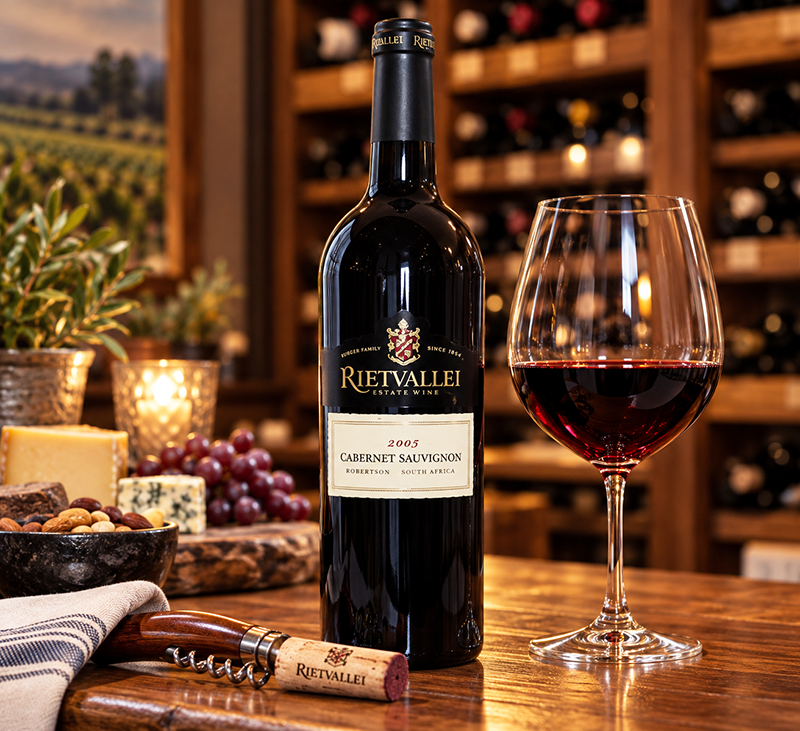
Rietvallei Cabernet Sauvignon
This cab comes from the Rietvallei Wine Estate, located in the Robertson region of South Africa, outside of Johannesburg. This warm, low-rainfall area has excellent lime-rich soils, and is usually known for white wine, sherry, and brandy.