
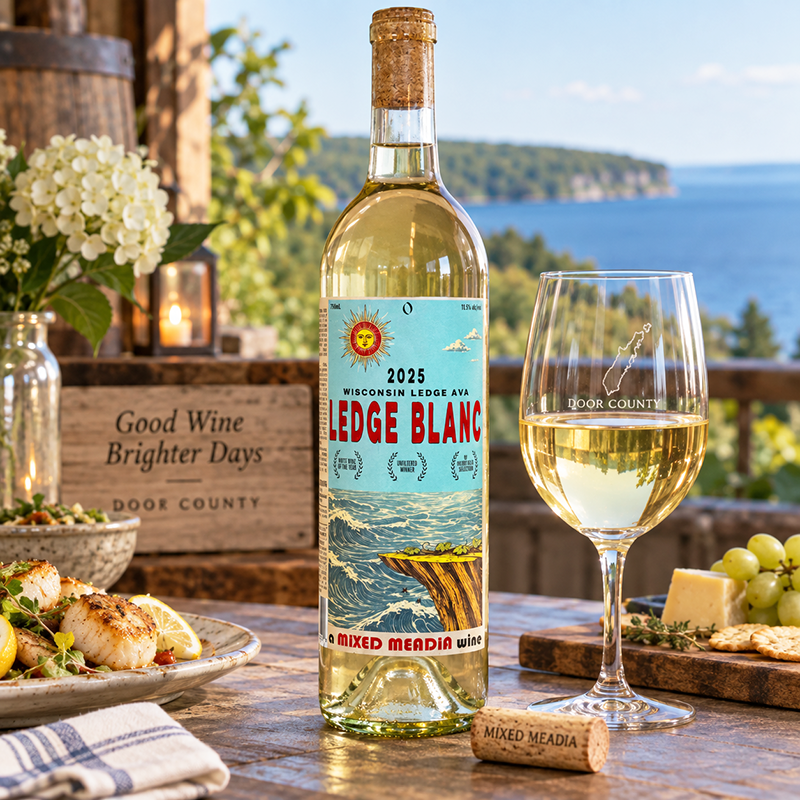
Mixed Meadia Ledge Blanc 2025
Mixed Meadia’s whole premise is Door County and Wisconsin-grown ingredients, cold-climate grapes, native fermentation, and minimal-intervention winemaking. It produces wine, mead, and cider inside the Hatch Distilling Co. facility.
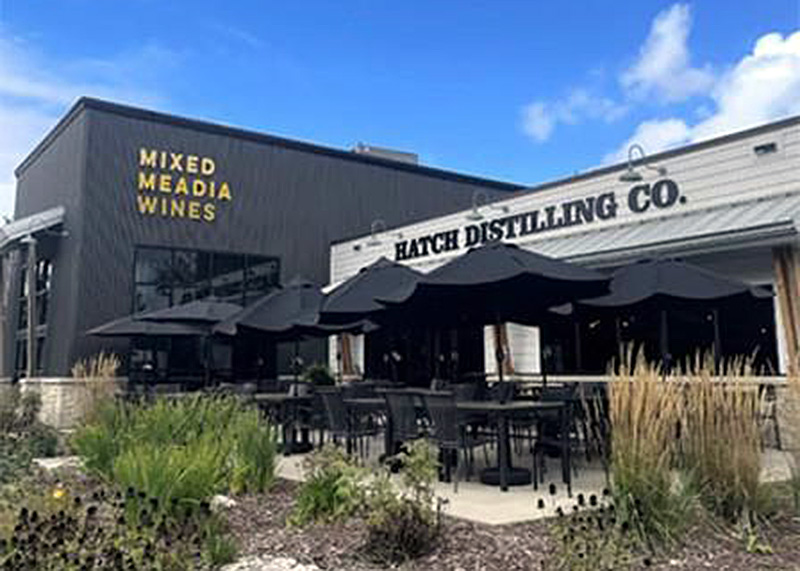
The people behind Mixed Meadia are Allan Hyland and Emily Butteris, described by the winery as its growing/winemaking/creative team. They joined Hatch in the summer of 2022. Mixed Meadia shares Hatch’s production space, equipment and tasting room. Fermentation, blending, aging, and bottling are done on site.
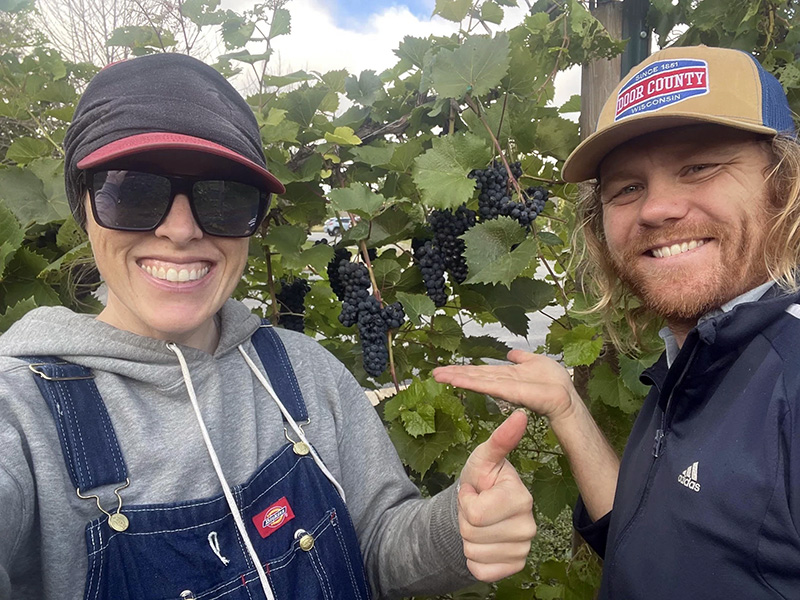
The vineyards and the “local” philosophy
Mixed Meadia says all of its grapes come from the Wisconsin Ledge AVA. It has two small vineyards of roughly three acres each—one in Egg Harbor and another in Sturgeon Bay—and its long-term goal is to grow all the grapes used for its wines itself.
Rather than fighting Wisconsin’s climate by attempting to grow Cabernet Sauvignon, Chardonnay, or other classic Vitis vinifera varieties, Mixed Meadia embraces cold-hardy hybrids bred for northern growing conditions. The winery explicitly argues that hybrids offer better disease resistance and require fewer vineyard inputs while still making distinctive wine.
At Egg Harbor, the vineyard isn’t irrigated and the winery says it uses no insecticides or synthetic fertilizers. It currently uses fungicide for disease control but says its goal is eventually to move away from that as well. The younger Sturgeon Bay vineyard is being established organically.
And the local-food idea extends well beyond grapes. Its honey comes from northeastern Wisconsin; apples and cherries come from Egg Harbor; and most of the herbs, fruit and other ingredients used in its experimental beverages are grown, foraged, or sourced in Wisconsin.
The winemaking is quite unusual
Mixed Meadia’s grape wines aren’t simply inoculated with a standard commercial wine yeast. Before harvest, the winemakers pick clusters from the vineyard and put them into five-gallon containers in the vineyard to ferment spontaneously. At harvest they evaluate those fermentations. Batches producing undesirable aromas or flavors are discarded; the successful native-yeast cultures are then used to start the main fermentation.
What makes mixed meadia important in Door County
They represent a very different model of Wisconsin winery from the traditional Door County operation that brings in West Coast grapes or juice and makes the wine locally, or one that focuses on sweet fruit wines such as ones made from apples or cherries.
Mixed Meadia is deliberately pursuing regional wine: Wisconsin Ledge grapes, cold-climate hybrids, local native yeasts, local fruit and honey, and wines designed to taste like something that could plausibly come only from northeastern Wisconsin.
Mixed Meadia Ledge Blanc 2025
Mixed Meadia is part of The Ledge Blanc Project, an attempt to establish a recognizable Wisconsin Ledge regional wine style, rather like a small-scale appellation-driven project. The bottles can vary by producer and vintage, but “Ledge Blanc” is intended to tell the consumer something specific about origin, style, and minimum quality. Read more about the project here.
This blend is 25% Itasca, 20% L’Acadie Blanc, 20% LaCresent, 15% St. Pepin, 10% Frontenac Gris, and 10% Briana.
It is a very pale yellow in the glass. There is a delicate nose of pineapple and melon. These continue on the palate, plus some pear, guava, lemon and a bit o’ honey. There is also a floral undertone. It wraps up in a short finish. Overall, a very easy sipper. The wine is unfined and unfiltered. The ABV is 11.5%.
Back to blog posts: winervana.com/blog/