
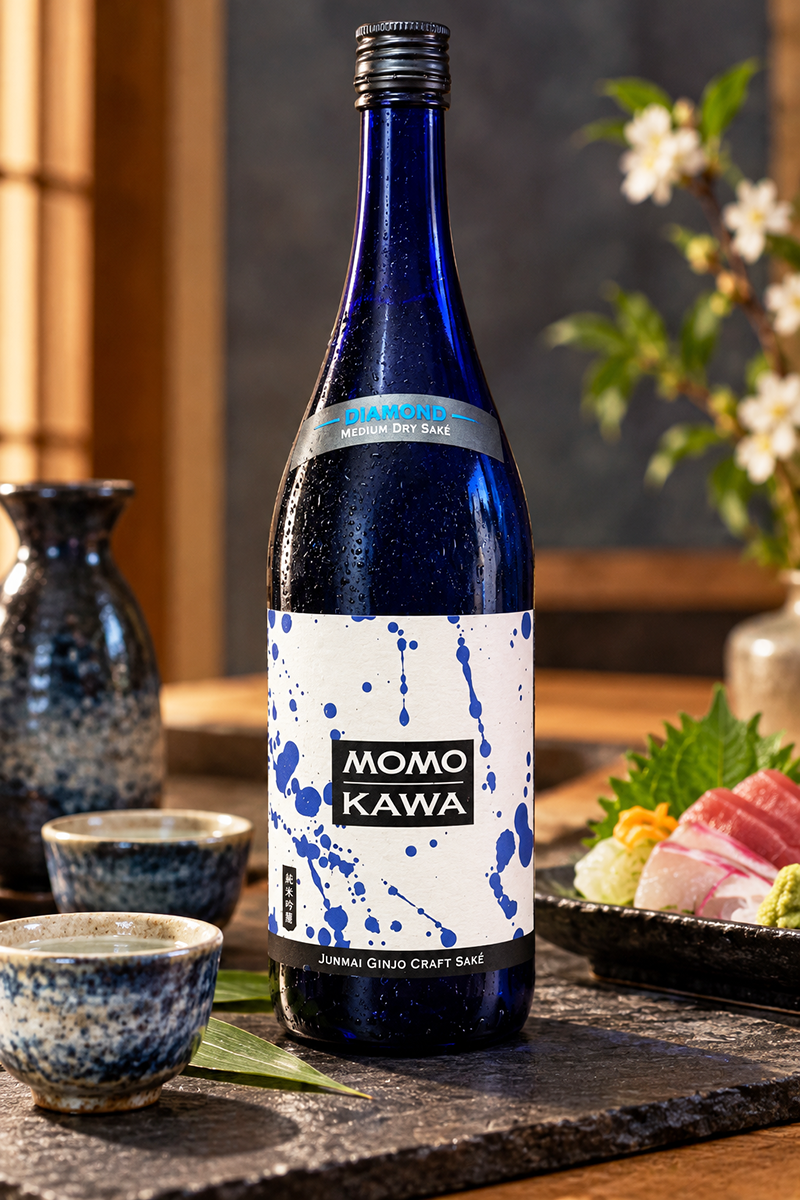
Momokawa Diamond Saké
Saké is often called rice wine, but this is a misnomer. While it is an alcoholic beverage made by fermentation, the production process more closely resembles that of beer, and it is made from grain (rice, of course), not fruit. To make saké, the starch of freshly steamed glutinous rice is converted to sugar and then fermented to alcohol. Once fermented, the liquid is filtered, heated, and placed in casks for maturing. Sakés can range from dry to sweet, but even the driest retain a hint of sweetness.
This saké is a domestic product from SakéOne saké brewery in Forest Grove, Oregon. The company began as a saké importer in 1992, and in 1997 they expanded the operation and began brewing their own saké.
In premium saké, water composition matters a great deal. SakéOne’s founder chose Oregon because he believed that the best-quality water for saké brewing is in the Northwest. The other crucial component is rice, and for this bottling SakéOne selected Yamada Nishiki from Arkansas.
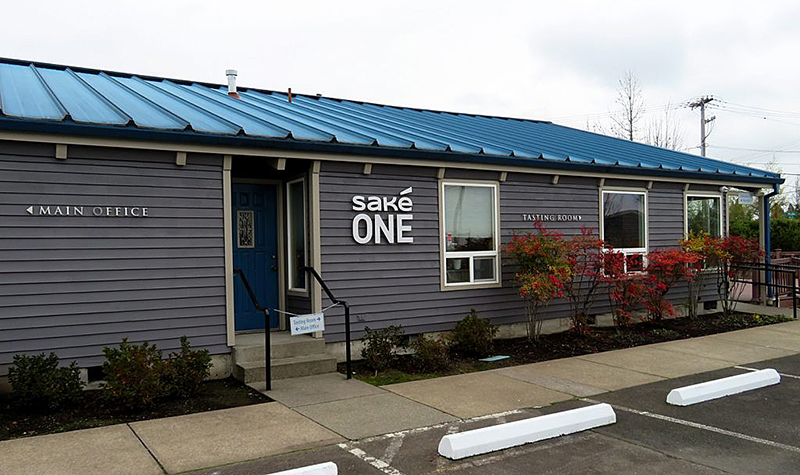
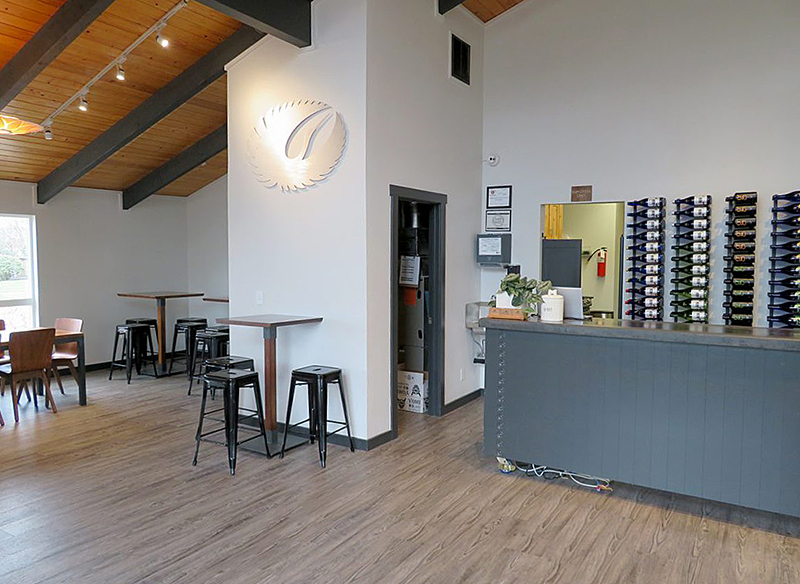
Momokawa Diamond Saké
Ths is SakéOne’s signature bestseller, offering genuine junmai* ginjo** quality at a relatively modest price. The rice polishing is 58% (meaning 42% of the outer portion of each grain has been removed), and the Saké Meter Value*** is +4 (medium dry).
This rice wine pours clear, with just the faintest bit of yellow. The nose offers aromas of melon and apple. On the medium-light body of the palate, the melon, especially, continues, coupled with a hint of ginger. It is crisp and relatively dry. The finish is clean and refreshing, with lingering pear, a touch of white pepper, and a faint saline impression. Serve it chilled to approximately 45–50°F. ABV is 14.8%.
Here are some pairing suggestions: hamachi or tuna sashimi; seared sea scallops; pork tenderloin with ginger, white miso, and a light soy glaze: grilled chicken yakitori; shrimp tempura; or spicy tuna poke.
What I actually served was:
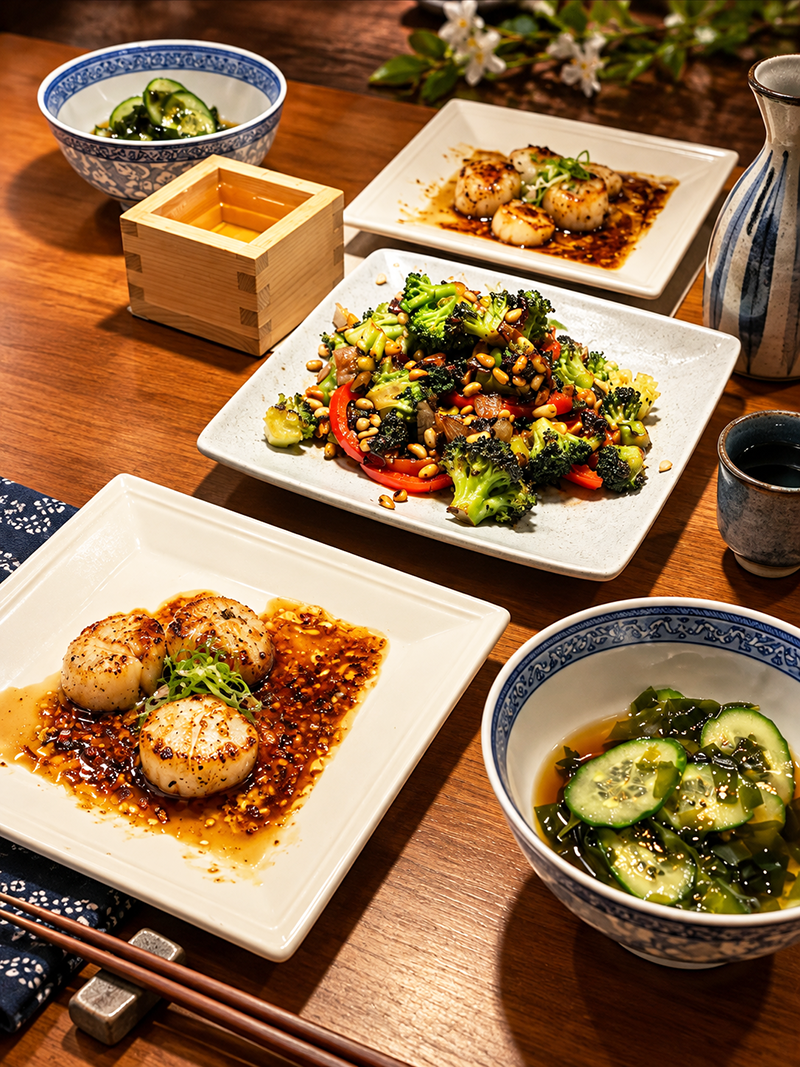
Butter Soy Sauce Scallops from justonecookbook.com; Stir-fried Broccoli with Hoisin Sauce from The Wok Cookbook by Gina Steer; and Vinegared Cucumber from Japanese Cooking by Shizuo Tsuji.
Other expressions of Momokawa are: Momokawa Pearl, a rich, full-bodied Junmail Ginjo Nigori that is quite sweet. Momokawa Ruby Fields is a rich, full-bodied moderately-dry saké. Momokawa Silver is dry and crisp. Momokawa Organic Nigori is lush, smooth, fruity, and floral.
SakéOne also offers: Yomi, g, and Moonstone.
Yomi was the first canned sake available in the United States. Yomi is junmai ginjo saké, with a lower acidity and a medium body. It is 13% ABV.
g saké is genshu, undiluted sake. There are two varieties of g saké: g fifty genshu and g joy genshu, which have different taste profiles. Both are 18% ABV.
Moonstone is SakéOne’s Asian pear flavored saké. It is sweet, with an SMV of +8.
*Junmai is pure rice wine, with no added alcohol. Until recently, at least 30% of the rice used for Junmai sake had to be milled away, but Junmai no longer requires a specified milling rate.
**Ginjo designates that at least 40% of the rice has been polished away. If a bottle is labeled just Ginjo, distilled alcohol was added; if it is labeled Junmai Ginjo, no alcohol was added.
***The SMV (Saké Meter Value) measures the density of saké relative to water, and is the method for gauging the dryness or sweetness of saké. The higher the SMV, the drier the saké. The range is from -15 (sweet) to +15 (dry),
Top of page: https://winervana.com/blog/