
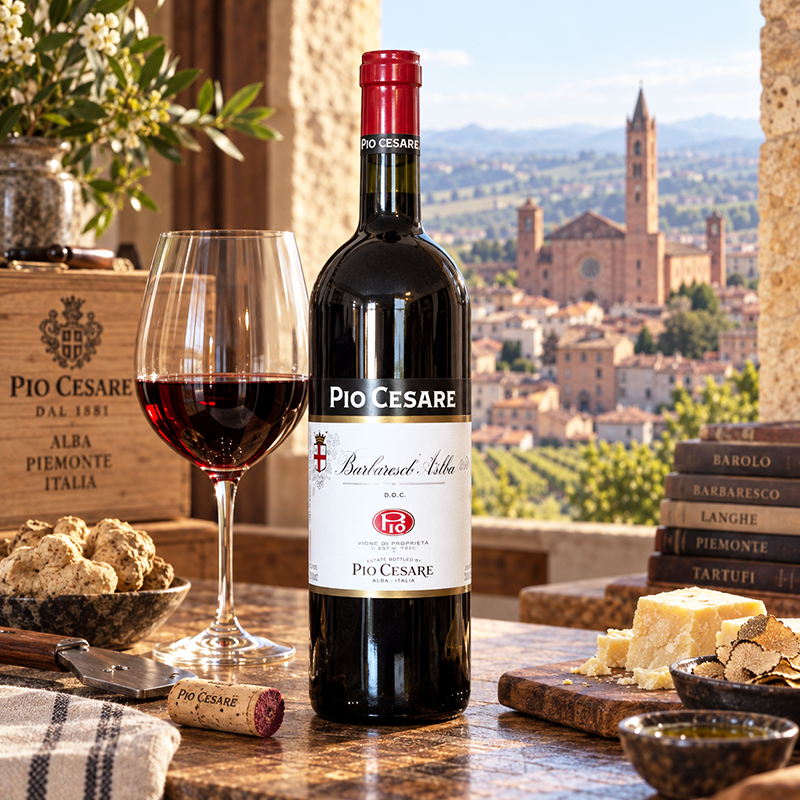
Pio Cesare Barbera d’Alba
Pio Cesare [pee-oh chez-are-eh] was founded in 1881 in Alba, in the Piedmont region of northwest Italy by Cesare Pio. Alba is known for its white truffles; the Gothic Alba Cathedral with a bell tower that overlooks the city; and the Church of San Giovanni Battista, which contains artworks from the 14th century onward.
Pio Cesare is one of the oldest wineries in the region and one of the first to export their products. Pio, a successful entrepreneur, was inspired to produce a small and select quantity of wines from the hills of Barolo and Barbaresco for himself, his family, friends, and customers. He was dedicated to the terroir of the Piedmont region and to producing wines of the highest quality. The operation is still owned and run by the fifth-generation of the original family, now led by Federica Boffa and her cousin Cesare Benevenuto.
Pio Cesare produces five single-vineyard wines, which are only produced in select vintages. There are also more generic offerings of Barolo and Barbaresco, as well as Langhe Nebbiolo wines, Dolcetto d’Alba, Barbera d’Alba, Grignolino, and Freisa. The range of white wines includes a Gavi and one of the best-regarded Arneis wines in Piedmont, and is led by the single-vineyard barrel-fermented Chardonnay Piodilei.
Cesare Pio’s entrepreneurial spirit drove him to travel throughout Europe in the early 20th century to publicize and promote his wines. His passport, which is proudly displayed at the winery in Alba, bears the number 55.
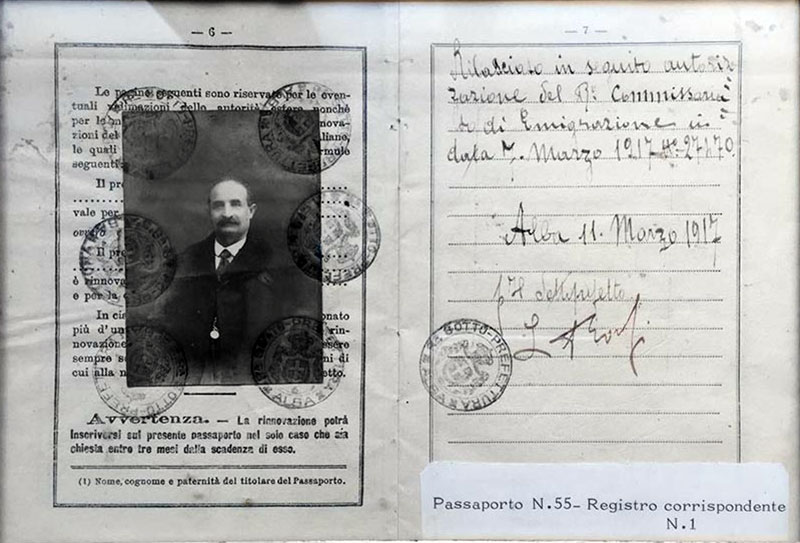 Cesare Pio’s well-used passport.
His son, Giuseppe Pio, was lucky enough to inherit a thriving winery at the turn of the 20th century. He carried on his father’s mission and invested in expansion of the cellars and the business, making Pio Cesare a benchmark brand for the wines of the region.
The Vineyards
Pio Cesare now owns a substantial 185 acres [75 hectares] in Barolo and Barbaresco, including holdings in the famous Ornato vineyard in Barolo and Il Bricco in Barbaresco. Fruit for Pio Cesare wines is also sourced from managed vineyards under long-term contracts with local growers.
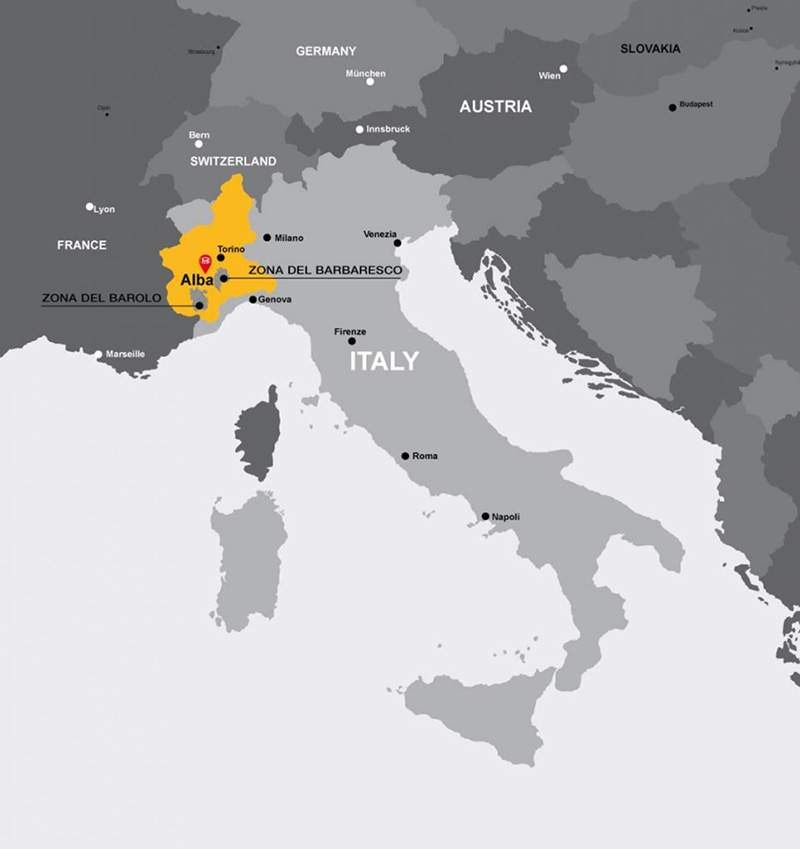
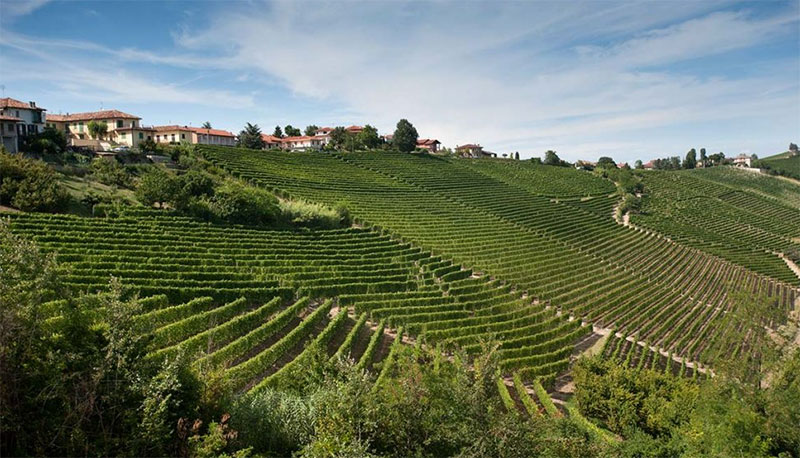
The location of the vineyards was not chosen randomly, but was determined by a strong belief in blending the different characteristics of each vineyard and region in order to produce wines that represent the styles of each appellation’s terroir as a whole, instead of individual sites. This was the method of producing Barolo, Barbaresco, and the other classic wines at the end of the 19th century, and it still remains the winery’s guiding philosophy today. Production is about 33,000 cases a year from these two regions.
![The Barolo region holdings are comprised of 78.5 acres [31.8 hectares].51 acres [20.7 hectares] are planted with Nebbiolo for Barolo.](https://winervana.com/wp-content/uploads/2021/10/barolo-region-851x1024-1.jpg)
![The Barbaresco region holdings are comprised of 66.5 acres [27 hectares].34.75 acres [14 hectares] are planted with Nebbiolo for Barbaresco.](https://winervana.com/wp-content/uploads/2021/10/barbaresco-region-975x1024-1.jpg)
![Other vineyards include a total of 25.5 acres [10.25 hectares] in Diano d’Alba, Trezzo Tinella, Roddino, and Sinio.](https://winervana.com/wp-content/uploads/2021/10/other-vineyards-913x1024-1.jpg)
The Cellars
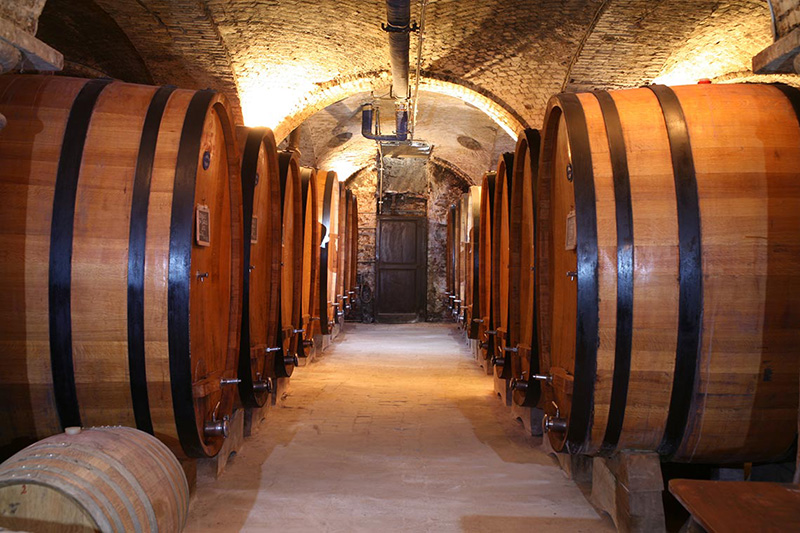
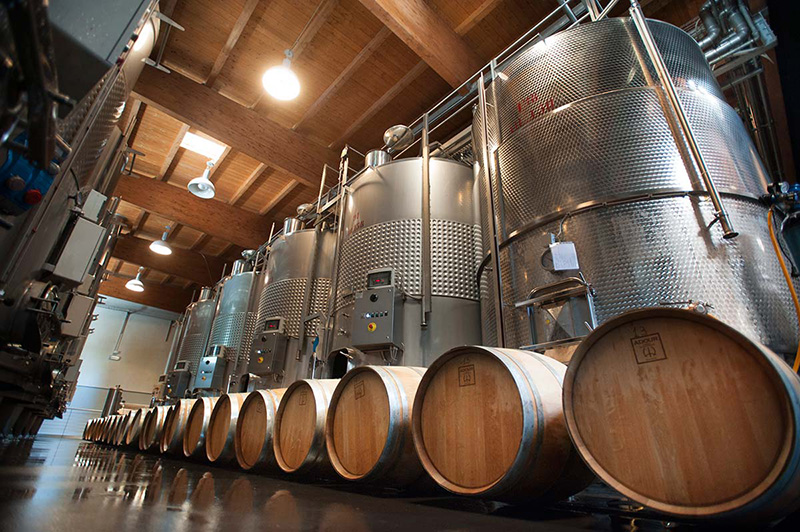
In the cellar, the approach isn’t easily pigeonholed. It’s a sort of fusion between traditional approaches and more modern winemaking. There’s a strong reliance on large-format neutral oak barrels (botti), but most of the top wines also have a portion that goes through small oak barrels for part of their elevage.
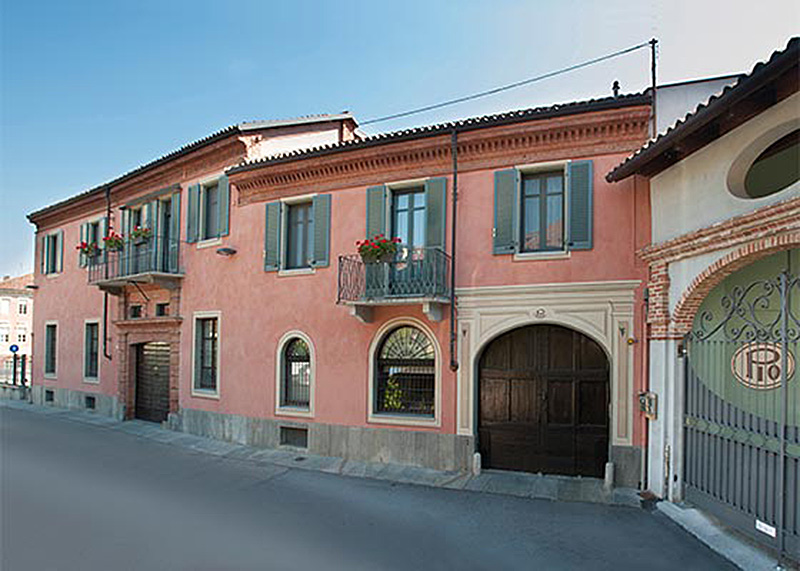
The cellars were built at the end of the 1700s, but the main foundation walls are much older, dating back to the Roman period, about 50 BCE. There are four different levels, one of which is even lower than the nearby Tanaro River. They feature naturally-occurring constant temperatures and appropriate humidity. Significant renovations have been made over the years to rebuild and restructure the cellars, including a new fermentation cellar with a gravity racking area and a new barrel-ageing room 36 feet underneath the existing facility.
Pio Cesare Barbera d’Alba 2018
This reliable Italian is DOC (Denominazione di Origine Controllata) under the Italian rules of appellation classification. DOC is the main tier, the third highest of four, and covers almost every traditional Italian wine style. There are around 330 individual DOC titles, each with a set of laws governing its viticultural zone, permitted grape varieties, and wine style.
100% Barbera, this wine was fermented in stainless steel tanks, followed by a long maceration on the skins for 20 to 25 days. It was primarily aged in big French oak “botti” for 12 months, but a small amount was aged in barriques as well.
It presents with a transparent purple. Next come medium aromas of blueberry and blackberry, which repeat nicely on the palate. It’s supported by tart-cherry acidity and black-tea tannins, and wraps up in a long finish. ABV is 14.5%.
Back to blog posts: winervana.com/blog/