Sanford Winery, the first such operation in Santa Barbara wine country, was established when the Sanford & Benedict vineyard was planted in 1971. Botanist Michael Benedict and his friend Richard Sanford were committed to finding a cool-climate location with just enough heat accumulation to ripen, but not over ripen, wine grapes. A place where they could plant and grow grapes and craft wines, where they hoped the quality might equal the best of Europe.
Benedict began researching and touring the cool coastal regions of California in search of a site that would suit this mission. His pursuit took him to a unique part of the Santa Ynez Valley, to the property that would ultimately become the Sanford & Benedict vineyard. The area owes its magic to an unusual east-west mountain valley that runs from the vineyards to the Pacific Ocean. This passage allows a meteorological ebb-and-flow of air temperature between the mountains and the sea that is ideal for cool-climate varietals.( It was also this vineyard that supplied the cuttings for many of the surrounding vineyards that sprang up in the wake of its success.)
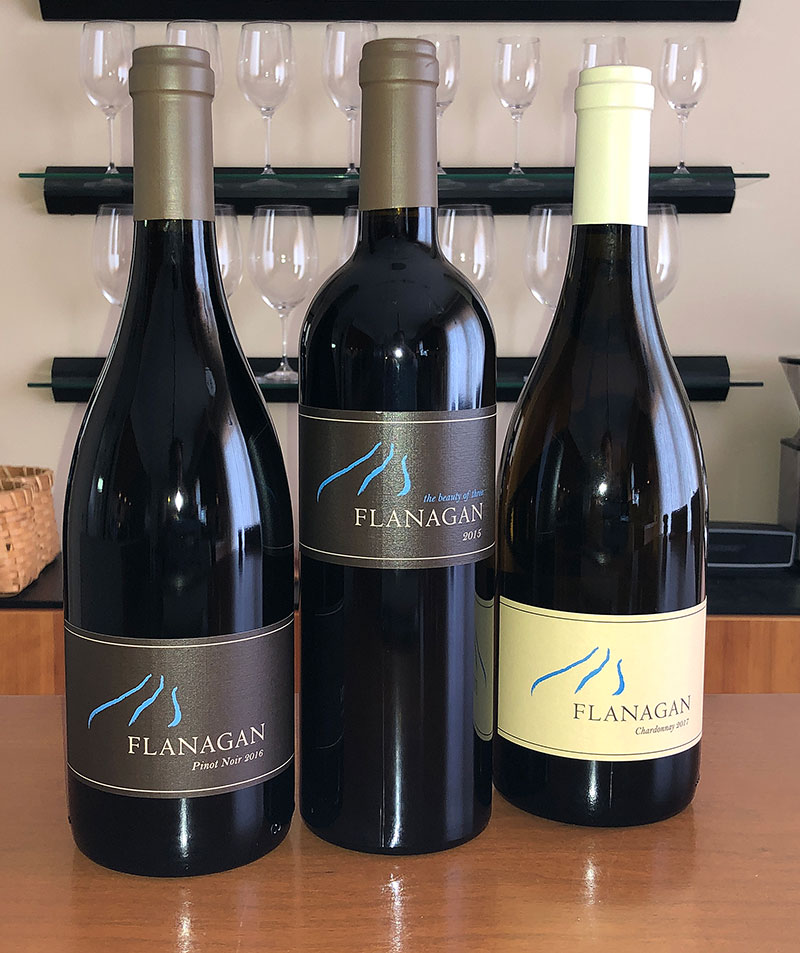
Eric Flanagan did not come of age with a background in the wine business, or even farming. After graduating from college in 1985, he embarked on a banking career, which he pursued until 2013. His job during those years took him on journeys around the world. He had always had an interest in wine, and over the course of these trips Flanagan became fascinated by how grapes of the same variety expressed themselves in different places.
the siren call of wine
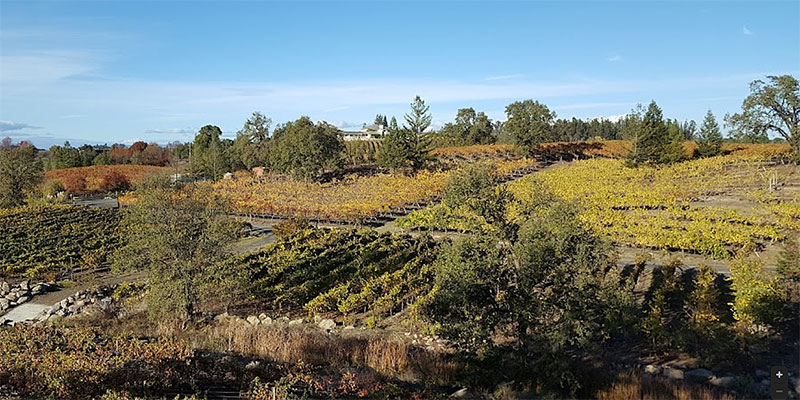
Seeing no need to wait for retirement to start a second career, at the age of 36 in 1999 he decided to act on his deep interest in the world of wine. He purchased 40 acres of open land on the side of Bennett Mountain in Sonoma, California, (in what would later become the Bennett Valley AVA). The site sits at 1200 feet on the south and southwest slopes of Bennett Ridge at the confluence of San Pablo Bay and Petaluma Gap. The soil is rocky, volcanic cobbles with excellent drainage. Having a warm micro-climate in a cool region means that bud break here is early, but harvest is late. The extra hang time for the grapes, along with the low yields and the hillside site, can deliver intense, complex fruit. Flanagan and his then very-young first daughter, Riley (who has gone on to become a vintner herself), planted his first vines there in 2001. Continue reading “Flanagan Chardonnay Russian River Valley”
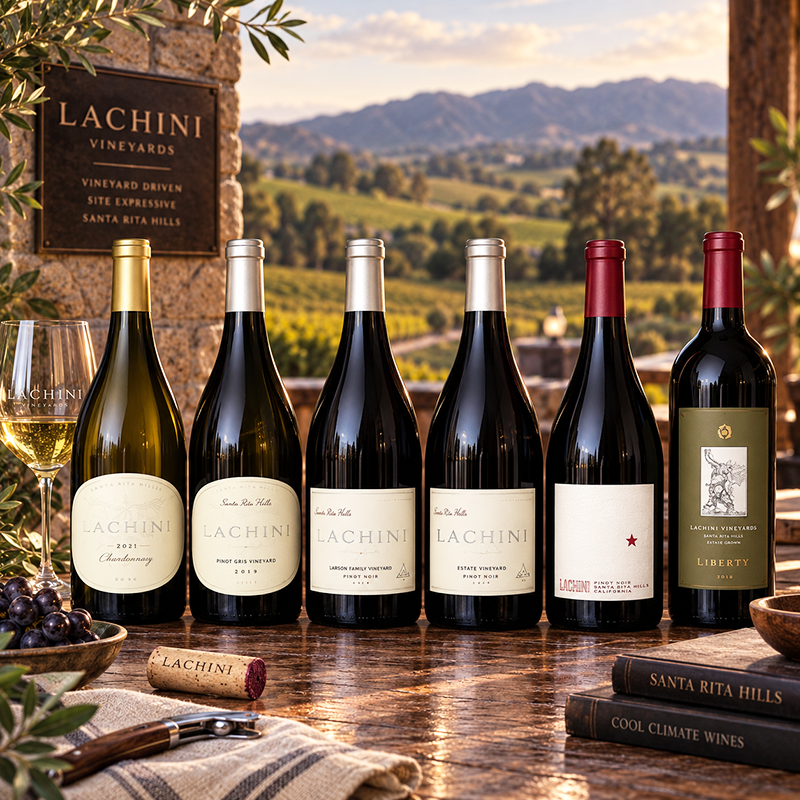
Proprietor Ron Lachini’s family hails from the Tuscan town of Lucca. At some point, his grandfather immigrated to the United States, settling in the large Italian community of San Francisco’s North Beach. He started making wine with his father and grandfather in their garages as a child.
He and his wife Marianne both attended U.C. Davis, where they were exposed to the world of viticulture and enology. Travels to some of the world’s esteemed wine regions and wineries cemented their love and collection of fine wines. After college, Ron began a career in the financial industry in 1997, which he pursued until 2008. Nearly simultaneously, in 1998, he and Marianne purchased a 45-acre property in Newberg, Oregon, approximately 30 miles southwest of Portland, with the intention of eventually owning a winery. After clearing and natural site preparation, in June of 1999 they planted their first five acres of Pinot Noir. In the following seven years, additional blocks were planted that now entail just over 30.5 acres of Pinot Noir plus an additional one and a half acres of Chardonnay. This land is now the Lachini Estate Vineyard. Continue reading “Lachini Vineyards Al di La Chardonnay”
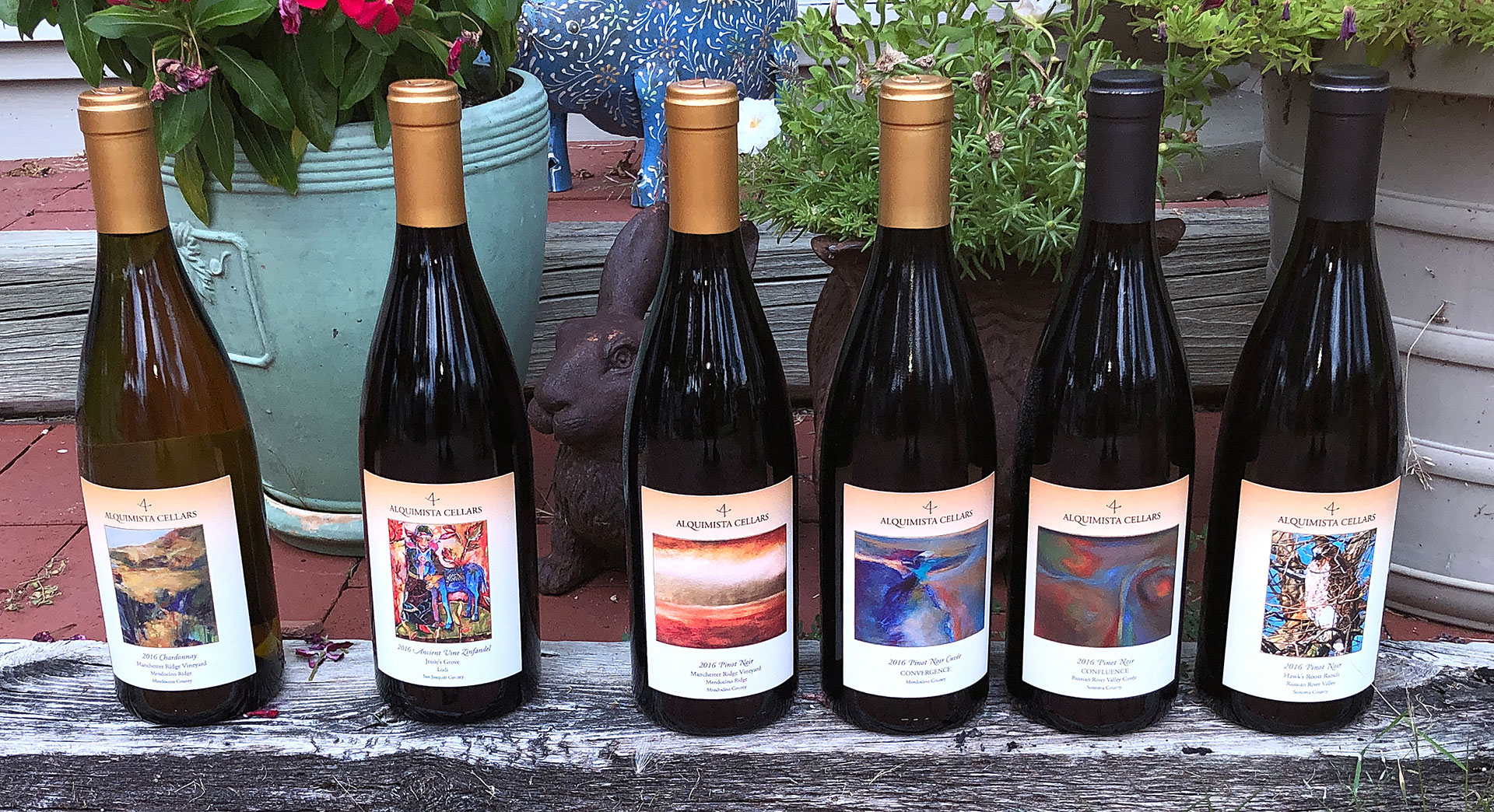
Some winemakers and winery proprietors are born into the business. Some buy into the business. And some evolve into it. Greg LaFollette of Alquimista evolved quite successfully. He has been called a “vine whisperer,” a “cellar magician,” and a “tireless coaxer and protector of handcrafted wines.” He is one of Sonoma’s most revered winemakers, and was honored as Winemaker of the Year in 2010. He has also been tagged “Prince of Pinot” by the website of the same name.
first, a career in science
La Follette’s early years were spent as a musician. At 17, he became the bagpiper for the Queen Mary berthed in Long Beach, California. (And he plays the bagpipes to this day.) “I wanted to be a winemaker since my teens,” admitted La Follette. “But who in Los Angeles becomes a winemaker?” Eventually he decided that neither music nor wine offered a viable way forward, and after earning degrees in Plant Biology and Chemistry, La Follette started his professional career in 1984 at the University of California, San Francisco, as an Infectious Disease researcher specializing in HIV suppression. While there, he co-authored over a dozen papers in the field. But, he was also still feeling the pull of his early interest in the wine industry. Continue reading “Alquimista Manchester Ridge Chardonnay”
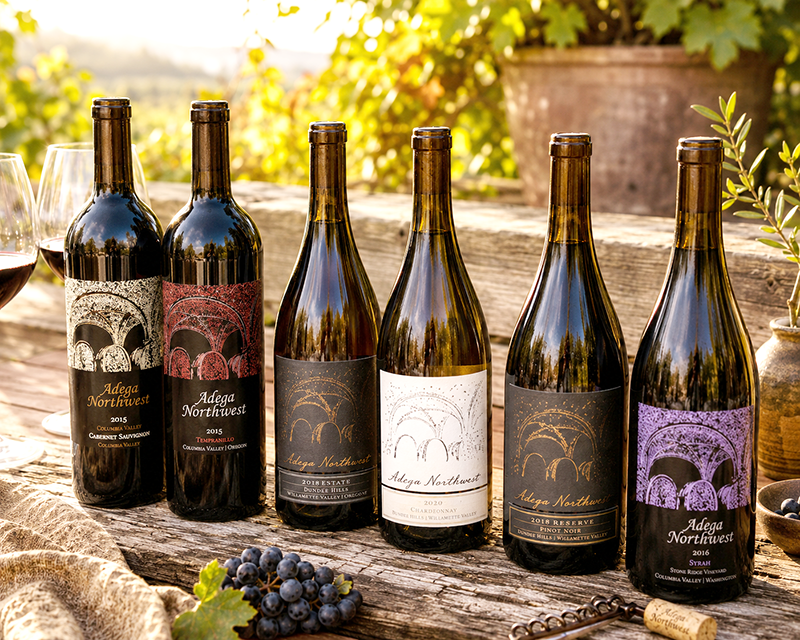
Adega Northwest Chardonnay 2018 Click here for tasting notes.
Adega Northwest Chardonnay 2018
When most of us think of a winery, what usually comes to mind is the romantic stereotype of a rustic but exquisite barn situated halfway up a mountain in the western U. S. overlooking a bucolic valley below; a fabulous hundred-years old chateau surrounded by ancient vines somewhere in France; or perhaps even a charming azienda agricola in Italy with a view of Roman ruins. But that’s not the only way to do it. Adega Northwest of Portland, Oregon, is very much an urban winery. There are vineyards, of course, you just won’t see them if you pay the winery a visit (by appointment only). And because they are not tied to an estate, Adega Northwest can and does draw on sources throughout the region.
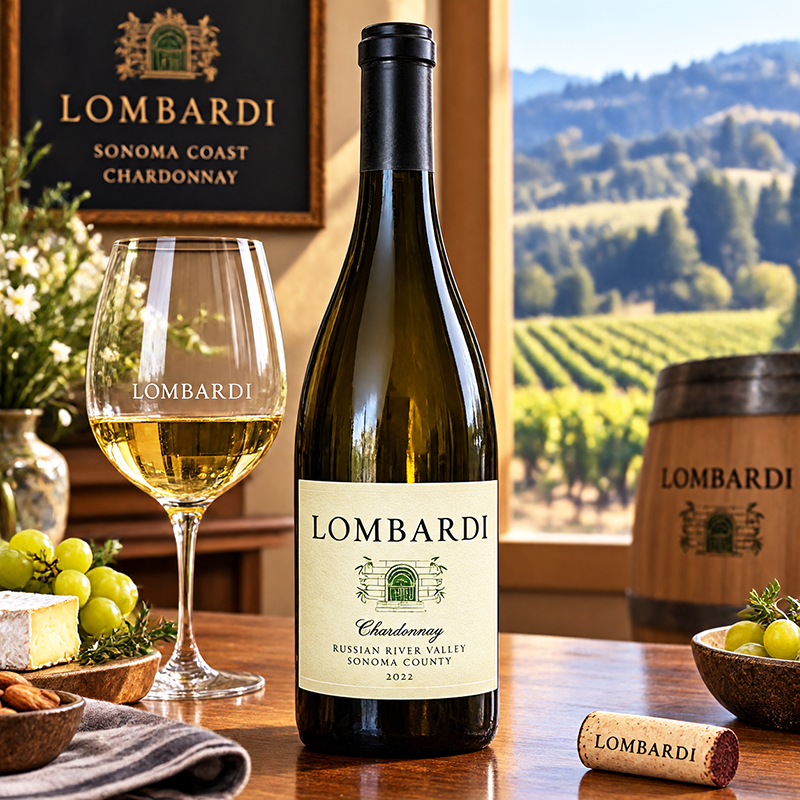
Tony Lombardi was born into a family of small business owners, and grew up in Sonoma County. His first job in the wine business came in 1998 when he joined the hospitality team at Clos Du Bois Winery, located in Geyserville, California.
From 2001 to 2013, Lombardi held senior leadership positions in marketing, public relations, and sales for such companies as Allied Domecq Wines, Beam Wine Estates, J Vineyards & Winery, Ascentia Wine Estates, and Kosta Browne Winery.
In partnership with his wife Christine, Lombardi founded Lombardi Wines in 2013 with a barrel of Chardonnay and a barrel of Pinot Noir. He describes himself as a storyteller/connector at heart, and loves to tell the unique and interesting personal stories of Sonoma and Napa wineries and winemakers, and connect them and their wines to people across the country. As part of that effort, he was encouraged to take the leap of faith in creating his own label from his former employers Dan Kosta and Michael Browne. They told him, “We did it, so should you!”
Lombardi hired Cabell Coursey in 2015 to be his winemaker and viticulturist/grower relations manager after he had held those jobs for three years at Kosta Browne. Coursey also toils at his own winery, Coursey Graves. Prior to those efforts, he was the winemaker with Andy Smith at Dumol. Well traveled, he has made wines all over the world, including Burgundy, New Zealand, Oregon, and California. Continue reading “Lombardi Chardonnay”
Tony Lombardi was born into a family of small business owners, and grew up in Sonoma County. His first job in the wine business came in 1998 when he joined the hospitality team at Clos Du Bois Winery, located in Geyserville, California.
From 2001 to 2013, Lombardi held senior leadership positions in marketing, public relations, and sales for such companies as Allied Domecq Wines, Beam Wine Estates, J Vineyards & Winery, Ascentia Wine Estates, and Kosta Browne Winery.
In partnership with his wife Christine, Lombardi founded Lombardi Wines in 2013 with a barrel of Chardonnay and a barrel of Pinot Noir. He describes himself as a storyteller/connector at heart, and loves to tell the unique and interesting personal stories of Sonoma and Napa wineries and winemakers, and connect them and their wines to people across the country. As part of that effort, he was encouraged to take the leap of faith in creating his own label from his former employers Dan Kosta and Michael Browne. They told him, “We did it, so should you!”
Lombardi hired Cabell Coursey in 2015 to be his winemaker and viticulturist/grower relations manager after he had held those jobs for three years at Kosta Browne. Coursey also toils at his own winery, Coursey Graves. Prior to those efforts, he was the winemaker with Andy Smith at Dumol. Well traveled, he has made wines all over the world, including Burgundy, New Zealand, Oregon, and California. Continue reading “Lombardi Chardonnay”
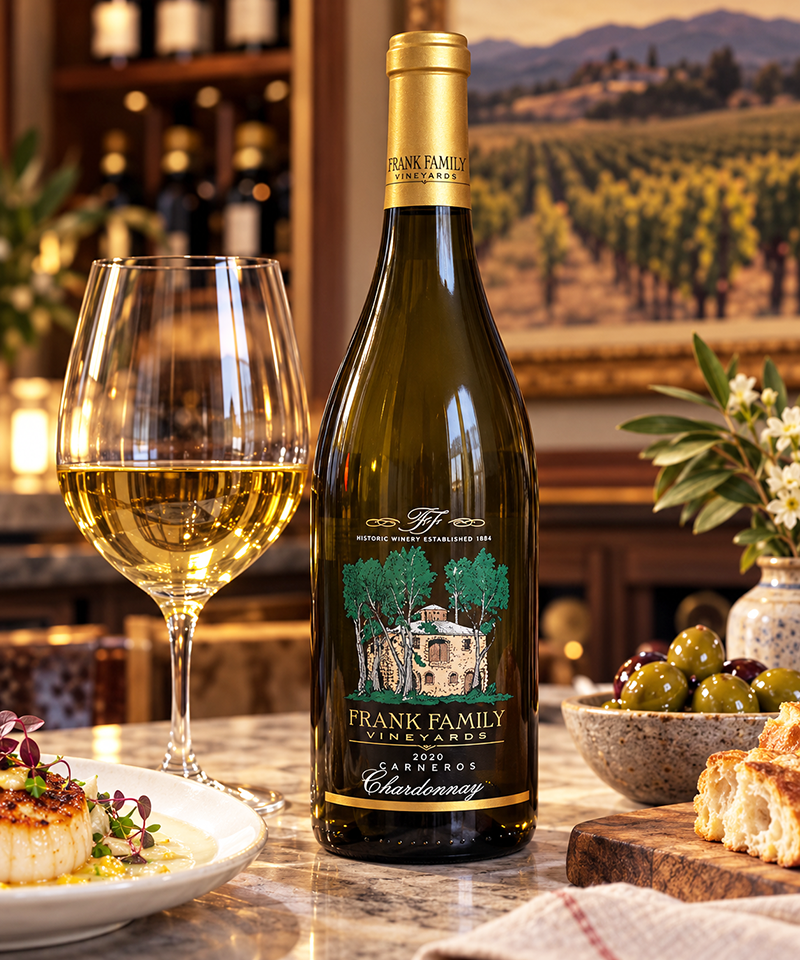
Nestled amid the picturesque landscapes around Calistoga in Napa Valley lies a story that spans generations. It all began in 1993 when Rich and Leslie Frank embarked on a journey to establish Frank Family Vineyards, unaware of the rich tapestry of tales woven into the very soil they tread upon. Little did they know that they were about to become stewards of a legacy that stretches back to the late 19th century.
Larkmead Lane, where the Frank Family Vineyards stand today, has a storied history. It was once graced by the presence of Lillie “Firebelle” Hitchcock Coit, who was a patron of San Francisco’s volunteer firefighters and the benefactor for the construction of Coit Tower in San Francisco for whom it was named.
Lillie Hitchcock Coit
In 1948, the property was purchased by one of Napa’s pioneering winemakers, John Solari. It next passed to a German-born sekt (sparkling wine) maker named Hanns Kornell, who established Kornell Champagne Cellars in 1958 (not to be confused with Korbel California Champagne). The following year, Kornell’s daughter Paula was born, and the winery continues to this day as the Paula Kornell Winery in a different, and undisclosed, location. (Stories have been told of Marilyn Monroe making annual visits to Kornell to stock up on the bubbly.) Continue reading “Frank Family Chardonnay”
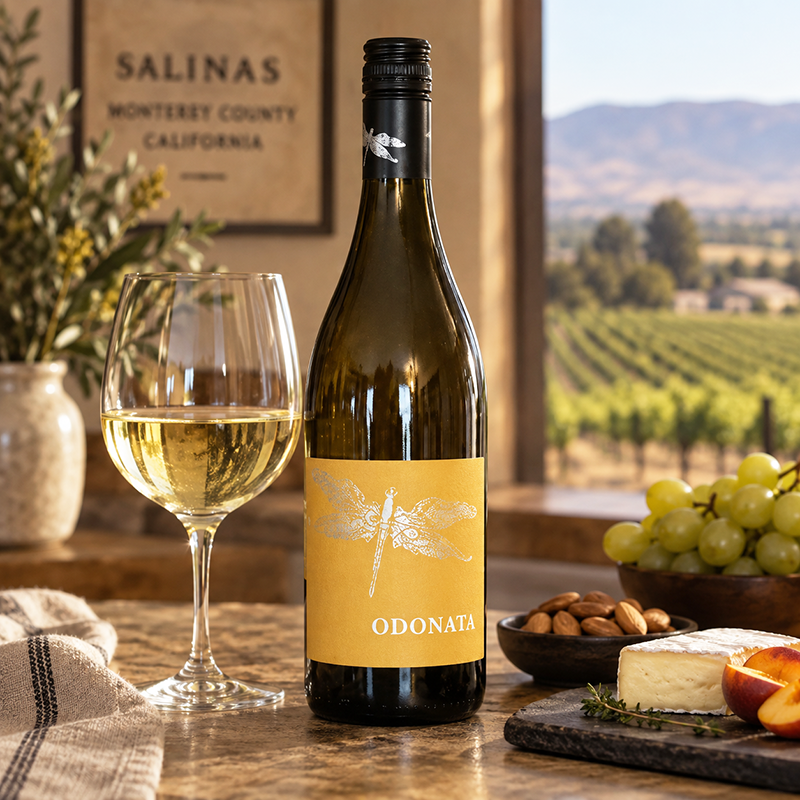
Odonata is a small boutique winery near Salinas, California. It is owned and operated by Denis Hoey, who traveled a winding road from business management, to would-be firefighter, to brewery worker, and finally to winemaker.
Hoey is a native of Sacramento, and grew up in a family that enjoyed wines of all kinds. In 2004 he graduated from the University of California at Santa Cruz with a degree in Business Management. But before he did any work in that field, he landed a job at Bison Organic Brewery in San Jose, where he learned sanitizing protocols and how to run a bottling line.
More profoundly, he soon met Jeff Emery, who had just taken over as owner and winemaker at Santa Cruz Mountain Vineyard. SCMV was started in 1975 by Ken Burnap, who based his winemaking on Old World approaches such as moderate levels of alcohol and oak, with the goal that the true characteristics of the grape varieties are expressed. Burnap passed that philosophy down to Emery, who in turn guided Hoey in that direction. Once Hoey began his apprenticeship, his life course was permanently altered. He became the production manager for SCMV before starting Odonata Wines in Santa Cruz in 2005. That year production was a mere 65 cases. By 2008 that was up to a still modest 150 cases, mostly Petite Sirah. Production is now about 6,000 cases, of which 1,000 are bubblies.
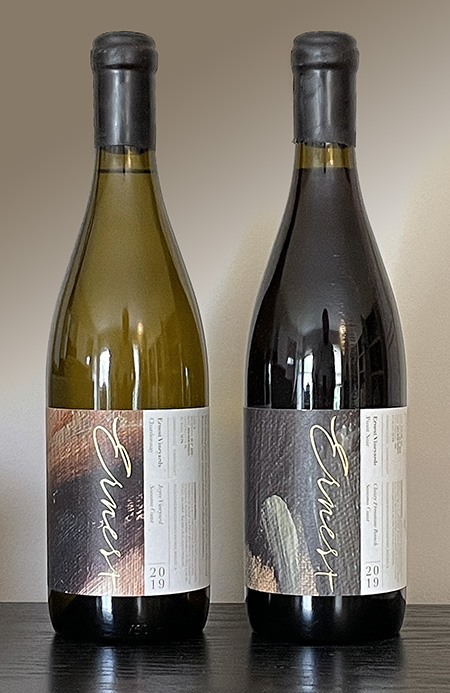
Ernest Vineyards Joyce Vineyard Chardonnay and Ernest Vineyards Cleary Freestone Ranch Pinot Noir Click here for tasting notes.
Ernest Vineyards Joyce Vineyard Chardonnay 2019 and Ernest Vineyards Cleary Freestone Ranch Pinot Noir 2019
An American Viticultural Area, or AVA, is an American wine-growing region classification system inspired by the French Appellation d’Origine Contrôlée, or AOC, but without the French rigor. An AVA simply defines a geographic area, and omits grape varieties, maximum production per acre, alcohol levels, etc. The requirements for wine with an AVA designation is that 85 percent of the grapes used must be grown there, and the wine be fully finished within the state or one of the states in which the AVA is located. AVAs range in size from several hundred acres to several million; some reside within other larger AVAs.
California’s newest AVA is the West Sonoma Coast American Viticultural Area, located on the farthest western sliver of Sonoma County, holding approximately 50 vineyards planted with varieties ranging from Pinot Noir and Chardonnay to Syrah in this cold, marginal grape-growing region.
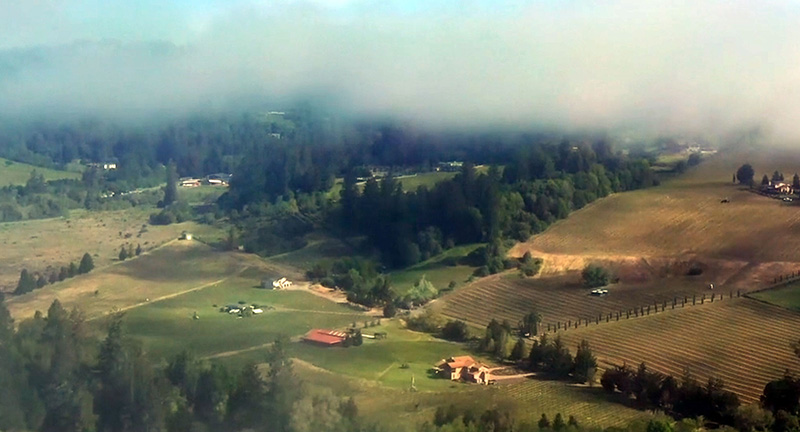
Sonoma’s 19th AVA encompasses the steep, rugged mountainous terrain along the Pacific Ocean coastline. Elevations range from 400 to 1,800 feet, with vineyards planted on steep ridge tops along the San Andreas fault line up against the consistently cold Pacific Ocean, both above and below the fog line. The maritime conditions moderate the temperature in the vineyards – daytime highs are cooler, while nighttime lows are warmer than just a few miles inland. This modest diurnal temperature swing allows the fruit to ripen slowly throughout the day and the night, a phenomenon experienced only in a truly cold-climate, maritime environment.
For West Sonoma Coast Vintners member Alma Fria, the West Sonoma Coast is distinguished by its remarkable originality, “The West Sonoma Coast combines a cold, maritime climate with rocky, well-drained soils and a mountainous topography. It is a rare terroir indeed, one that distills coastal redwoods with a seafaring spirit. It has lured adventurers, naturalists, and pioneers for a near century.”
Indeed, the area comprising the West Sonoma Coast AVA has a long agricultural history dating back to the 1880s, with the earliest vitis vinifera vines planted as early as 1817. In addition to wine grapes, the area still produces commercial apples and supports a lively dairy and ranching industry, as well as many nature parks, conservancy efforts and environmental projects.
Ernest Vineyards
Todd Gottula and Erin Brooks
Located in the new AVA, Ernest Vineyards was co-founded by wife and husband team Erin Brooks and Todd Gottula in 2012. The winery was named for Gottula’s grandfather, Ernest, who he credits with introducing him to every aspect of good food, good service, and good wine. First working in the technology industry, Gottula has been in the wine world since 2007, when he bought a four-acre vineyard and planted Pinot Noir, embarking on a new phase as a grape grower. He went on to develop relationships with winegrowers and wine producers in the Sonoma region. Continue reading “Ernest Vineyards”
Nancy Tenuta is one of only six female winery owners in the Livermore Valley, due east of San Francisco. Tenuta and her then-husband Ron purchased a 22-acre lot just east of the Ruby Hill subdivision in Livermore in June 2000 with the vision of immersing themselves in the world of wine. There, 14 acres of Pinot Noir and Chardonnay were being grown in about a 50/50 mix. All of the vines were between 12 and 25 years old at the time. To establish Tenuta Vineyards, over the next three years the Tenutas built a 16,000-square-foot winery and a 5,000-square-foot estate home nearby. In all, they invested more than $5 million in the project, money that Nancy Tenuta collected using a variety of “creative” means, according to her, given that banks aren’t fond of such risky ventures.
Nancy Tenuta graduated from Portland State University in 1981, and spent the next twenty years in the business world. She held a number of sales positions, and in the 1990s she traded stocks. Ron Tenuta was general manager of Protection Services Industries in Livermore, which specializes in commercial security.
With the owner’s extensive business savvy, Tenuta Vineyards quickly became Livermore’s third-largest winery in a valley that has produced wine for more than 150 years. The first and second spots are held by Wente Vineyards (300,000 cases a year) and Concannon Vineyards (200,000 cases a year) respectively. As they began to plan their operation, the Tenutas researched the local market and discovered that many wineries there were small and had no production facilities or space to store their wine. Therefor, they ambitiously built a winery facility much larger than they needed so they could provide custom crushing, sorting, barrel storage, bottling, and even vineyard maintenance to others. Because of this, Tenuta’s own wines are a minority of the operation. Only 3,000 cases of the 30,000 produced annually is released under the Tenuta label. The rest is private labeled for 15 other growers in the area. Continue reading “Tenuta Vineyards”
Rod Bergland, with the assistance of some other partners, founded La Crema Viñera in 1979 in a Petaluma business park. The name, which translates as the Best of the Vine, was an intentional boast: Bergland believed his vineyards produced the best grapes in Sonoma.
1n 1975, Bergland, then a biology student at Sonoma State University, worked a harvest without pay for Joseph Swan, even then an iconic California winemaker, who would become his mentor. In 1976 he worked the crush (for which it is believed that he was paid). Swan was a perfectionist who would readily dispose of wines that did not meet his standards, and he willingly used marginal equipment, including a tiny press that was allegedly broken half the time.
Initially, La Crema focused efforts on developing Pinot Noir and Chardonnay from the Sonoma Coast, using Swan’s techniques like gentle handling, precision sorting, whole-cluster pressing, and open-top fermentation. The early years were difficult however, and Bergland later recounted to wine writer Dan Berger that he worked the night shift at Safeway to make ends meet.
In 1986 Bergland married Joseph Swan’s stepdaughter, Lynn. The couple worked with Swan on the 1977 vintage but that would turn out to be Swan’s last. He was ill with cancer and passed away in 1989.
In 1993, Jess Jackson and Barbara Banke purchased La Crema Viñera, shortened the name of the operation to La Crema, and produced the first wine under their team in 1994 (Bergland made the 1993 for them). Jackson had already decided that La Crema would become part of an expanding portfolio of wineries, each with its own specialty and identity. La Crema would make wines from cool-climate regions on the Pacific coast states, mainly from the principal Burgundian varieties, Chardonnay and Pinot Noir, with which the winery was already well established. He started with the Russian River wines that Bergland had created, but soon moved into other regions. The winery began working extensively with fruit from appellations such as Sonoma Coast, Green Valley, Anderson Valley, and Los Carneros, extending its reach into Monterey in 2008, and then to Oregon’s Willamette Valley in 2012. Though the growing regions are different, the vineyards themselves all fall within cool climates with well-drained soils.
In 1996, a new winery (not open to the public) was constructed in the Russian River Valley appellation, and a tasting room opened in the town of Healdsburg in 2006. During this decade, Jackson’s daughters, Laura Jackson Giron and Jenny Jackson Hartford, along with his sons-in-law, Rick Giron and Don Hartford, began managing the day-to-day operations and representing the winery out in the market.
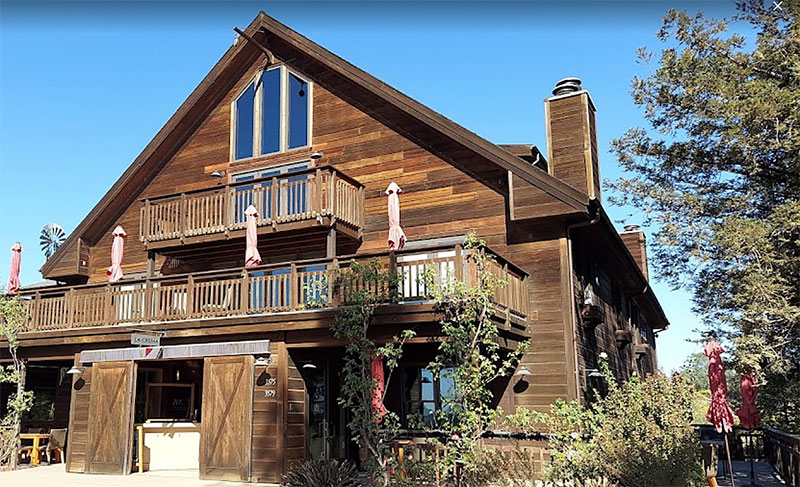
La Crema had been sourcing some of their Pinot Noir and Chardonnay from the renowned Saralee’s Vineyard in Russian River Valley. The winery had developed a close relationship with Richard and Saralee McClelland Kunde, and eventually purchased the vineyard from them in 2013. The circa-1900 barn on the property was modernized and reopened as the La Crema Estate at Saralee’s Vineyard in 2016, replacing the Healdsburg tasting room.
Saralee’s Vineyard. Photo: Deborah Beyes
The renovated barn. Photo: Robert Lewis
The Winemakers
Head winemaker Craig McAllister has made wine in his native New Zealand, Australia, Chile, and Cyprus. He joined La Crema in 2007 as the Harvest Enologist after studying at Lincoln University in New Zealand, where he received his Bachelor of Science degree in viticulture and enology. He has been a steward of La Crema’s Monterey program and worked extensively on the Sonoma Coast Chardonnay. He also helped to further develop La Crema’s collection of single vineyard Chardonnay and Pinot Noir wines. He was promoted to head winemaker in 2017. “There’s an authenticity to our wines; we allow the grapes to fully express themselves without manipulation in the winery and they’re made in traditional ways,” McAllister shared. “We barrel-ferment Chardonnay and punch it down by hand, as it was done in La Crema’s early years.”
McAllister is assisted by winemaker Eric Johannsen, who received undergraduate degrees in Chemistry and Philosophy. He pursued a Master of Science in Enology at the University of California, Davis. Before joining La Crema in 2004, Johannsen spent his early career at such wineries as Mount Eden Vineyards in the Santa Cruz Mountains, Cuvaison Estate Wines in Napa, and Williams Selyem Winery in Healdsburg. After 20 years in the industry, he counts being in the vineyard, soaking in its cyclical rhythms, as his favorite aspect of winemaking. “Even early in the growing season, your conception starts to develop about what the wines will eventually become.”
Sustainability
Sustainability is a touch-stone at wineries everywhere, and La Crema is no different. The winery itself is third-party certified under the Sustainable Winegrowing Alliance’s program. All of La Crema’s Estate Vineyards are third-party certified under the Sustainable Winegrowing Alliance’s program and the SIP program.
All facilities are managed by a central computer to manage and monitor the most efficient use of energy, including lighting, boilers, and refrigeration systems.
Cover crops provide beneficial insect habitat and improve water holding. Leaf pulling reduces disease and reduces road dust to control mite populations. Habitat conservation in and around the vineyards provides biodiversity.
Only drip irrigation is used to conserve water and the energy to pump it. 100% of winery water used is recycled for landscaping and vineyard irrigation.
La Crema Sonoma Coast Chardonnay 2019
One of Sonoma County’s largest AVAs, the Sonoma Coast Appellation stretches from the San Pablo Bay in the south to Mendocino County line to the north, and runs primarily along the mountainous coastline of the Pacific Ocean. The AVA is known for its strong maritime influence that provides a cool growing climate throughout the year, with fog-moderating warmer summer temperatures. The fruit for this wine was sourced from several of La Crema’s estate vineyards including Saralee’s, Kelli Ann, and Durell. Soils across the vineyards are predominantly free draining and low vigor.
Once picked, the fruit is gently pressed and allowed to settle for 24 hours before being fermented. This Chard spent seven months on the lees in barrels, which were a mix of 75% French and 25% American oak, of which just 17% was new. It presents with a very pale yellow in the glass, followed by very delicate aromas, primarily citrus. This continues on the palate as crisp grapefruit, orange, and lemon meringue, supported by moderate acidity. The wine becomes richer and rather more balanced about an hour after opening, unusual for a white. The ABV is 13.5%.
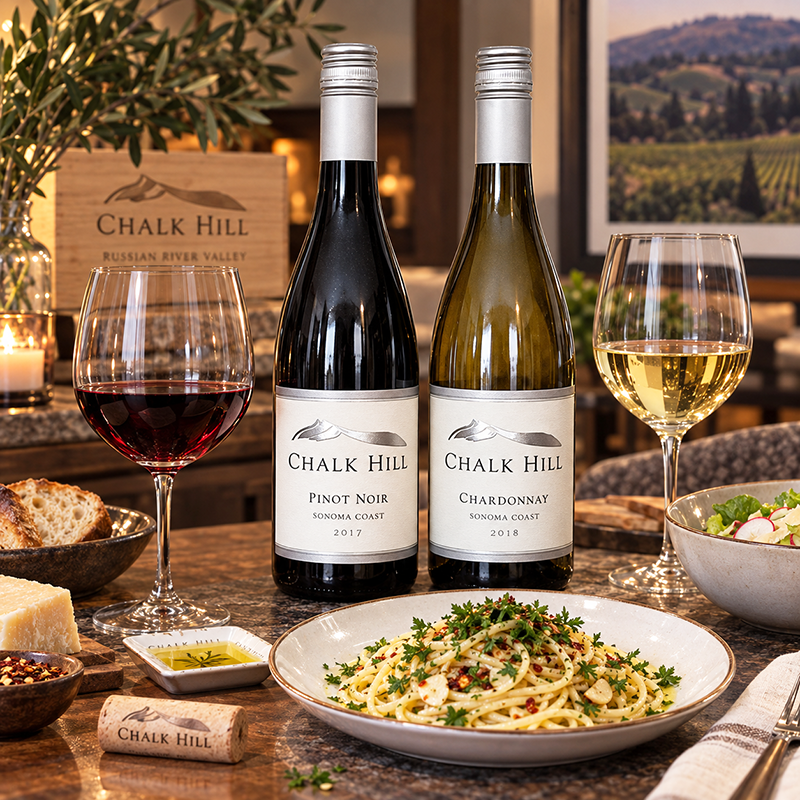
I’m obviously a wine enthusiast, and with my wife will drink all or most of a full bottle of wine with dinner just about every night. However, you may enjoy less wine with your meals. If so, consider 375 mL half bottles. They are also handy if you want a red and your companion wants a white, like the two shown here. Half bottles are also convenient for picnic outings. And, empty half bottles are great for storing leftover wine; just fill the half bottle as close to the top as you can, reseal it (easily done if the closure is a screw cap), and park it in the refrigerator.
The only real downside to half bottles is that they will cost somewhat more than half what the same wine in a full bottle will, since, other than the wine itself, the remaining expenses of filling, labeling, packing and shipping are more or less the same as for a full bottle. For instance, the Chardonnay is $15 for a half bottle, and $26 for a full one. Similarly, the Pinot Noir is $15 for a half bottle, and $29 for a full one (but really, not much of a penalty on this one). Finding your favorite wines in half bottles can also sometimes be difficult, although like wine in cans they are becoming more common. And now, on to the wines.
One fine spring day in 1972, attorney, private pilot, and wine aficionado Fred Fruth was piloting his plane over the Russian River Valley area. Down below, he saw a natural amphitheater carved into the hills of eastern Sonoma. In addition to this other interests, he had been thinking of starting a winery, and it seemed as if this might just be the place to do it.
Fred Furth
Soon after, a tour of the extensive property confirmed that the site indeed had the climate and soils to grow first-class wine grapes. Furth and his second wife, Peggy, purchased the land, named the estate Chalk Hill, and started producing wine about a decade later. They gradually planted more than 270 acres of vines. Years later, Furth said, “I have always been interested in wine because my grandfather had vineyards. I’m actually more interested in the working-the-soil aspect, but I have many very talented people in the winery who know how to produce a world-class wine. When I bought this property, I was told it was too hilly to be a vineyard, but I simply planted the grapes in rows going uphill. People said you can’t do that, but I’d seen it done in Germany so I knew it would work.” After a rich and varied life, Furth died in 2018 at the age of 84.
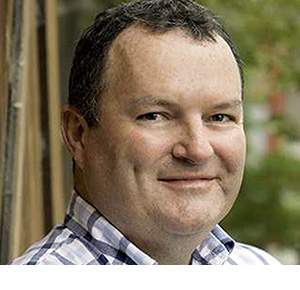
Bill Foley
Lawyer Bill Foley acquired Chalk Hill in 2010. Although Foley is titled as “vintner,” I doubt he sees the interior of the winery very often. He is a vintner in the broader sense of “someone who sells wine.” He also owns the National Hockey League’s Vegas Golden Knights, is the Executive Chairman of the Board of Directors for Fidelity National Financial Inc., is Vice Chairman of the Board of Directors for Fidelity National Information Services, Inc., and owns fifteen other wineries.
The Estate
x
The Chalk Hill AVA is one of 13 in Sonoma County, and is distinguished from the neighboring appellations of the cooler Russian River Valley to the west and the warmer Alexander Valley to the northeast. Elevations are higher and soil fertility is lower. The soils include gravel, rock, and heavy clay. Under the topsoil is a distinctive layer of chalk-colored volcanic ash which inspired the name of Chalk Hill.
x
Each vineyard block has been planted based on criteria that include: soil profile and chemistry, slope, orientation to the sun, and climate. Under Fred Furth’s direction, Chalk Hill was an early leader in planting its hillside vineyards “vertically,” following the rise of the terrain, rather than across it. Because of this, the topsoil must be protected with a diverse cover crop serving many purposes. It anchors and protects the soil, preventing erosion; captures and affixes nitrogen; and harbors a varied community of beneficial insects that aid in pest management. Water conservation is addressed through a precisely controlled drip-irrigation system. Air movement through these vertical channels of the vineyard reduces mildew. All of the grapevines are a grafted combination of plants: a specific wine-grape variety above ground, and a complementary rootstock below.
Photo: devonwayne.com
More than two-thirds of Chalk Hill’s 1300 acres remain uncultivated. In addition to the vineyards, the property features wilderness areas, the winery, a hospitality center, a culinary garden, a residence, stables, and an equestrian pavilion.
The Winemakers
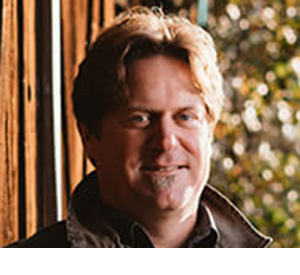
Michael Beaulac, Senior Winemaker
Michael Beaulac
Beaulac, a Vermont native, has as of this writing just become senior winemaker, bringing with him over thirty years of experience. He began his winemaking career when Tim Murphy of Murphy-Goode offered him a job as a harvest intern in 1989. Immediately after and through 1991 he worked as a cellar master with long-time Russian River winemaker Merry Edwards. Beginning in 1997, he spent four years as winemaker for Markham Vineyards in St. Helena. He became Vice President of St. Supéry Vineyards in Rutherford in 2001, working closely with Michel Roland and Denis Dubourdieu. Beaulac was general manager and winemaker at Napa’s Pine Ridge Vineyards from 2009 until coming to Chalk Hill this year.
Michael shared, “Be proactive in the vineyards. Let the fruit find its balance. Do not force the wine to be anything it’s not. Let it express [itself]. Once in the winery, the wine should be touched as little as possible. In a perfect vintage, we really shouldn’t have to do anything.”
Darrell Holbrook, Winemaker
Darrell Holbrook
A Sonoma County native, Holbrook spent his childhood among the vineyards there. By age 12, he often accompanied his father to his job at Lytton Springs Winery, [now Ridge Vineyards] driving tractors and helping where he could. In 1994, after working at Lytton Springs in the vineyards, he began an apprenticeship under David Ramey, Chalk Hill’s winemaker at the time. He worked his way up from a cellar intern (aka cellar rat) to enologist and production manager, and then assistant winemaker in 2009. Ten years later he was promoted to winemaker.
Courtney Foley, Vintner
Courtney Foley
The youngest daughter of Chalk Hill Estate proprietors Bill and Carol Foley, she studied enology and viticulture at both Napa Valley College and Fresno State University. Her practical experience began under winemaker Leslie Renaud at Lincourt Vineyards and Foley Estates (surprise!) in Santa Barbara County. Once back in Sonoma, she again found herself working with Renaud at Roth Estate Winery in Healdsburg. Just in case the wine thing doesn’t work out, she also has a J.D. degree with a focus on Environmental and Ocean Law from the University of Oregon School of Law.
Chalk Hill Chardonnay 2018
This offering underwent 100% malolactic fermentation, followed by 10 months of sur lie barrel aging in French, American, and Hungarian oak, of which 25% was new. It is rather pale for a Chardonnay, but that doesn’t mean it’s insipid. It features moderate aromas of citrus and melon, which continue on the palate, plus some vanilla custard. It has a full, unctuous mouthfeel, and plenty of zippy acidity. ABV is 14%.
Chalk Hill Pinot Noir 2017
This wine also underwent 100% malolactic fermentation, followed by nine months of aging in French oak, of which 25% was new. It presents with a transparent, light to medium purple in the glass. It is mildly aromatic, with flavors of raspberry, tart cherry, and a bit of dust on the medium body. Enjoy this easy-sipping Pinot now. ABV is 13%.
Keith Rütz’s first career track was in the fashion industry. He was the proprietor of two trendy clothing boutiques located near the UC Berkeley campus. To search out the latest styles, he frequently travelled to both London and Paris. It was in France where he began to develop his love of Burgundy and interest in wine generally.
This growing interest was also informed by Rütz’s ancestral roots, which go back six generations to his great great grandfather, Fernand Lebegue, who grew up in Aigne, in France’s Languedoc region. There he worked as a cooper, fashioning barrels from the Vosges, Nevers, Allier, and Troncais forests, all famous sources for top-quality barrels used in wine production.
After graduating from UC Berkely, Rütz spent several years working in the fashion industry, eventually starting his own business in 1982 that produced belts for such icons as Kenneth Cole and Anne Klein.
Due to the demands of ever-changing fashion, Rütz traveled frequently, visiting Asia and South America five times each year, Europe (and France in particular) another three times a year, and an annual pilgrimage to New York for the beginning of the fashion season.
“It finally became very exhausting,” Rütz recalled. “I led what you would call a completely hectic existence. The fashion industry is one of getting to the top and staying there. There is little respite.”
Although during this period Rütz’s life was quite frantic, in 1992 he carved out enough free time to start Rütz Cellars in the Russian River Valley, where, in addition to being the owner, he was also the winemaker, focusing on California Pinot Noir and Chardonnay in the tradition of his favorite Burgundian wines. From the beginning, his stated goal was “to make the finest small-batch wines possible that would stand up to those made by the top French producers.”
“I had been able to combine the fashion and winery aspects of my businesses quite easily,” Rütz noted, “whenever I traveled to Europe for a fashion event I was able to tote some wines and get people interested in my products. They found my approach quite novel and that was all right by me. When I finally realized that we were represented in twelve countries and just about every major market in the United States, I knew I had to do something about it.”
That “something” was to leave the world of fashion behind and focus solely on Rütz Cellars. “I have always believed that quality will dictate the size of any winery,” he shared. “What I want to do at this point is produce the very finest wine I am capable of producing. I am also a firm believer in not rushing the process, so I imagine what I envision could take quite some time.”
In 2020, Rütz Cellars expanded into the Chalk Hill appellation for Cabernet Sauvignon production, as well as Napa Valley in the Rutherford AVA working with the Morisoli Vineyard. Rütz brought on winemaker Mike Trujillo to oversee the production of that varietal under the Domaine Rütz label.
The Russian River Valley AVA
The Russian River Valley got its name when Russian settlers arrived along the Sonoma Coast at historic Fort Ross. There, they found that the fertile soils of the area were excellent for farming in general and grape-growing in particular.
Fort Ross. Photo: Harald Padeborn
This AVA is best-known for Pinot Noir and Chardonnay, The region earned AVA status in 1983, and comprises 15,000 vineyard acres and 70 wineries. Rütz Cellars sources fruit from such respected vineyards as Dutton Ranch, Martinelli , and Bacigalupi.
In the growing season, warm daytime temperatures plummet when fog regularly intrudes from the Petaluma Gap to the south, and the Russian River to the west. In the late afternoon, a fog bank can often be seen hovering above the appellation’s border in the hills west of Sebastopol.
Rütz Proprietor’s Reserve Chardonnay 2018
This is 100% Chardonnay, all sourced from the Russian River Valley. While it was aged in French Allier and Troncais oak, all of it must have been previously used, as the wood is barely noticeable. It is the typical pale gold, with moderate aromatics of citrus and a hint of stone fruit like golden apple and pears. Grapefruit and limestone dominate on the refreshing palate. There is plenty of supporting acidity, and just a bit of bitterness at the end. 950 cases were produced, and the alcohol is 13.9%.
Many years ago, while driving through Sonoma County, Arturo Keller and his wife Deborah came upon a piece of property overlooking the Petaluma River with a tremendous view and expansive terrain. Keller, a passionate antique car collector and native of Mexico, purchased the 50-acre parcel in 1982. He soon had a paved road built that wove about the property to serve as his own miniature racecourse. Keller also recognized the potential of the property as a grape-growing site, and in 1989 the La Cruz Vineyard was began.
Over time, Keller added more acreage, and planted Pinot Noir, Syrah, Viognier, and Pinot Gris, and began making wine for family and friends. Keller soon called on his youngest daughter, Ana, who had studied chemistry at the University of Mexico, to become the nascent winery’s winemaker.
Keller Estate released their first wines in 2001, an estate Chardonnay and Pinot Noir. The name ‘Keller Estate’ pays homage to the Keller family’s Swiss heritage, since the word ‘keller’ is cellar in German.
Ana also started a sister brand, Casa Wines, which are sourced exclusively from the family’s La Cruz Vineyard. Casa Wines produces Chardonnay, Pinot Noir and a red blend.
Keller Estate has completed the California Sustainable Winegrowing Program. The winery utilizes a natural water source, promotes local wildlife to live on the property, and is home to thousands of newly planted trees. The vines are all grown sustainably and organically.
The Keller Estate Winery
The Winemakers
Ana Keller – Estate Director and Winemaker
Raised in Mexico, Ana’s first exposure to wine came early in life when she spent her holidays in France’s Loire Valley harvesting grapes. “When my father asked me to join him in establishing Keller Estate, I was overjoyed,” she related. “We have accomplished much of what we initially set out to do, and it’s up to me to continue to make sure our quality never fluctuates.”
She holds degrees from both the University of Mexico (biopharmaceutical chemistry) and a Masters in Pharmaceutical Development from the prestigious King’s College in London. While there, she took her first formal wine tasting lessons.
Keller was heavily involved in the effort to make her property part of the AVA (American Viticultural Area) called the Petaluma Gap AVA.
“When you consider what the winds of the gap do to the area and to the grapes themselves, it seems to be a no-brainer. The winds force our (Pinot Noir) grapes to develop thicker skins and that in itself changes the equation.”
The fog-shrouded Petaluma Gap
Keller devotes 100 percent of her time to Keller Estate, and confided that her parents are still active in the business as well. “Whenever my father is available, he sits in on our meetings and tastings. He is still quite active and his passion for cars takes up a great deal of his time. He cares a great deal about the winery since it is still a relatively small family operation.”
Julien Teichmann – Winemaker
Born in Goettingen, Germany, Julien Teichman joined Keller Estate in 2018. His passion for fermentation began with an internship at a brewery. He next spent some time in Florence, Italy where he had his first contact with winemaking and vineyards. Julien then earned a degree in winemaking from the Weincampus Neustadt in Germany.
Julien traveled the world working harvests and finally came to the United States in 2013, where he spent time at Kosta Brown and Merry Edwards before joining Keller Estate. He espouses a profound respect for the vineyard, and a holistic approach to farming and winemaking.
About the Vineyard
The Keller Estate La Cruz Vineyard features an intricate stone cross sculpture that boldly stands over the vines, and was named to represent the family’s Mexican heritage.
The majority of the La Cruz Vineyard, where Keller Estate grows all of their Chardonnay, Syrah, Pinot Gris, and slightly over half of their Pinot Noir, resides on the lower hills of the property. The soils here are multi-layered, mineral-laden clays there were once San Pablo Bay seabeds. This mineral character comes through in the wines and is very much a part of the Keller Estate’s unique terroir.
Keller Estate Casa Chardonnay 2019
To start with, this bottle was sealed with a synthetic plastic cork. Not the worst one I’ve ever encountered (although the one in the second bottle was harder to get out than the first), but I’m just not a fan. I’m fine with manufactured corks, where cork is ground up, treated to prevent cork taint, and then reconstituted as closely as possible to the bark itself. But failing that, I’ll take a screw cap over a plastic stopper any day.
Moving on to the wine. The fruit was sourced from the Keller Estate’s La Cruz Vineyard, in the Petaluma Gap region of the Sonoma Coast. The wine was fermented in both barrels and stainless steel. This 100% Chardonnay is very pale yellow in the glass. The moderately aromatic nose features grapefruit and honeydew. These are on the palate as well, with moderate but bright acidity and mineral notes. Although it saw some oak aging, the result is subtle at best. 1,600 cases were produced, and the ABV is 14.2%.