The first cookbook I ever got, and to this day is still my favorite, is Craig Claiborne’s The New York Times Cookbook. Not long after getting the book, I was asked to bring dessert to a dinner party. I made chocolate-covered cream puffs. They were a huge hit, and people were amazed that I hadn’t purchased them. Cooking out of this book over the years since, Craig taught me that it isn’t hard to cook and eat well, if you are interested in doing so.
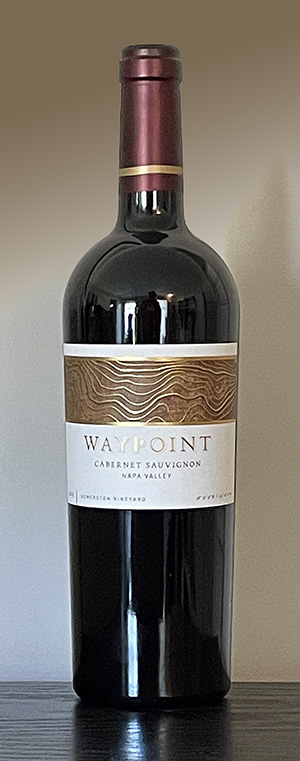
I couldn’t find anything about this wine. Their website is nonexistent, and there is even a totally different Waypoint line from Napa now on the market. Too bad, because this wine was really good. Pick up a few bottles if you stumble across them.
Waypoint Napa Valley Cabernet Sauvignon 2015
This Cabernet is the correct dark red color, with just a tinge of brick; it is seven years old, after all. The nose opens with dark, rich fruit. On the palate, there is a full mouthfeel, with flavors of blackberry, baked plum, dark cocoa, and tart red currant. The well-structured tannins, oak backbone, and just-so acidity offer great balance, making for a really appealing glass of Cabernet. ABV is a robust 15.4%.
Rémy Martin 1738 Accord Royal Cognac. Click here for tasting notes.
Rémy Martin 1738 Accord Royal Cognac
Rémy Martin is one of the world’s oldest and best known cognac brands, with selections that range, at my local liquor store at least, from the $13 St. Remy French brandy to the $9000 Rémy Martin Louis XIII Time Collection: City of Lights – 1900. (I have tried one of these, but not both.)
Asbach (formerly Asbach Uralt), one of Germany’s oldest and best known brandies, celebrated its 125th anniversary in 2017.
The picture-perfect town of Rüdesheim sits along the Rhein river, the old town seeming as though it has always existed. It was here, in 1892, that the ambitious, 24-year-old Hugo Asbach (1868–1935) founded his distillery. In 1908, he registered the brand name “Asbach & Co. Uralt” at the Trade Registry of the Imperial Patent Office. Uralt is German for “ancient.” and has since been dropped.
Asbach, a native of Cologne, learned the distillery trade at a local firm named “Export-Company for German Cognac,” and further improved his knowledge in France. Like other brandy producers of his time (as well as ours), Cognac was the ideal he aspired to in his own brandy distilling. And “Rüdesheim Cognac” was what he called his product, which soon became popular. After World War I, however, the Treaty of Versailles decreed that the word Cognac could only be used for French products, specifically from that region. Asbach pivoted and coined the term “Weinbrand,” literally wine brandy, for German brandy, which in 1923 became an official classification according to German wine law.
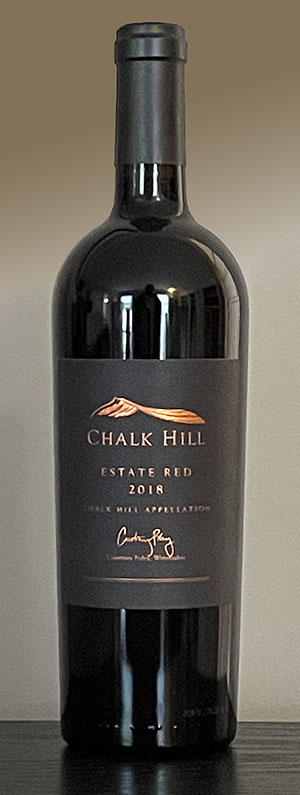
One fine spring day in 1972, attorney, private pilot, and wine aficionado Fred Fruth was piloting his plane over the Russian River Valley area. Down below, he hoped he saw what he had been searching for: a property that had the climate and soils to grow first-class wine grapes. Furth and his second wife, Peggy, purchased the land, named the estate Chalk Hill, and started producing wine about a decade later. They gradually planted more than 270 acres of vines. Years later, Furth said, “I have always been interested in wine because my grandfather had vineyards. I’m actually more interested in the working-the-soil aspect, but I have many very talented people in the winery who know how to produce a world-class wine. When I bought this property, I was told it was too hilly to be a vineyard, but I simply planted the grapes in rows going uphill. People said you can’t do that, but I’d seen it done in Germany so I knew it would work.” After a rich and varied life, Furth died in 2018 at the age of 84.
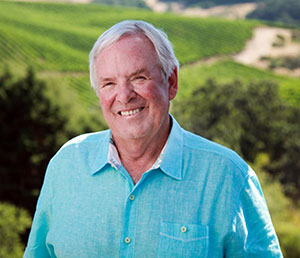
Bill Foley
Lawyer Bill Foley acquired Chalk Hill in 2010. Although Foley is titled as “vintner,” I doubt he sees the interior of the winery very often. He is a vintner in the broader sense of “someone who sells wine.” He also owns the National Hockey League’s Vegas Golden Knights, is the Executive Chairman of the Board of Directors for Fidelity National Financial Inc., is Vice Chairman of the Board of Directors for Fidelity National Information Services, Inc., and owns fifteen other wineries. Continue reading “Chalk Hill Estate Red”
First, let’s talk about brandy vs. Cognac. Brandy is a liquor distilled from wine and aged in wood. (Brandy can be made from fruits other than grapes as well, but that’s a story for another time.) Cognac is brandy that specifically comes from the town of Cognac and the delimited surrounding areas in western France. (The one which has the most favorable soil and geographical conditions is Grande Champagne.) So, all Cognacs are brandy, but not all brandies are Cognac. For more detail on brandy and Cognac, click here.
As you can see, Clase Azul tequilas come in some of the most distinctive bottles out there, made in the mountainous Mexican town of Santa Maria Canchesda, population 1,750. There, the 180 or so employees, 80% of whom are women who grew up in poverty and with little, if any, formal schooling, decorate each bottle by hand. The entire production process takes about two weeks. And the cap isn’t chrome-plated plastic. Oh no. It is metal, that drinkers will often strike to produce a little ring after the pour. “You may have heard people talk about ‘ringing the bell’ on their Clase Azul bottle, which was actually discovered quite by accident” mentions Brand Experience Specialist Saskia Iha. “In order to use a more sustainable material, we redesigned the cap which happened to make a ringing sound when tapped just the right way. We now consider this sound the ‘unleashing’ of the magic inside the bottle.” Whatevs. Continue reading “Clase Azul Reposado Tequila”
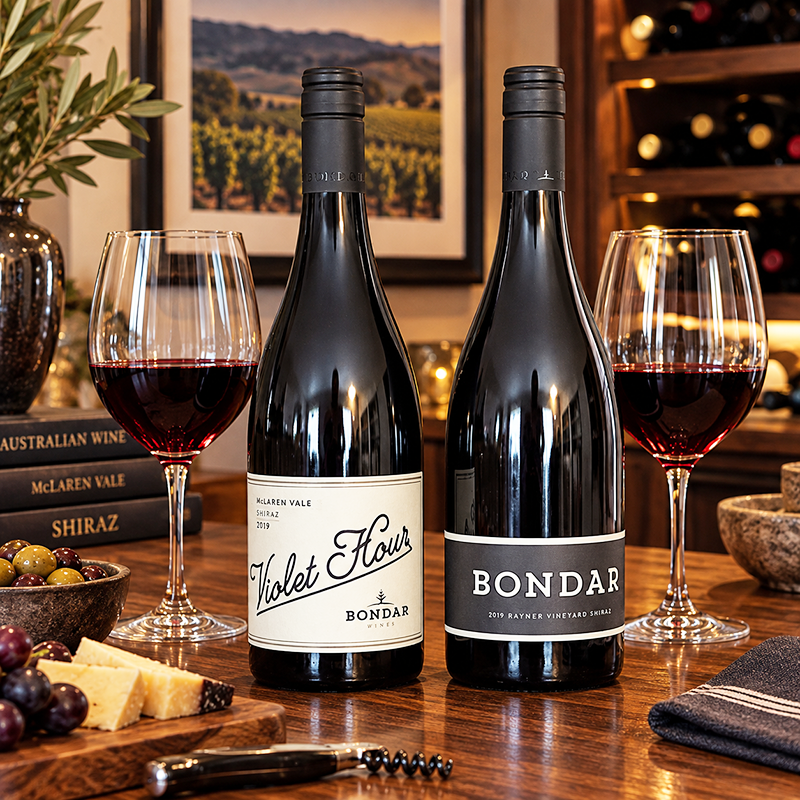
McLaren Vale is a wine region in south Australia about 20 miles from “Australia’s Wine City,” Adelaide. Vines were first planted here in 1838, but things didn’t really get going until about 40 years later. By the turn of the twentieth century, McLaren Vale was established as one of Australia’s premier wine regions, a position it holds until this day, with over 80 wineries and 13,000 acres under vine. This coastal zone sits between the Mount Lofty Ranges and the tempering sea. The growing season is long and warm, and features good air drainage to prevent frosts.
Scheid Family Wines got their start in 1972 when Al Scheid first purchased property in Monterey County and wine grape growing there was in its infancy. Scheid was drawn to the region for what he considered its untapped potential, for making money as well as farming. Scheid was running his own investment company at the time. A graduate of Harvard Business School and an investment banker, he realized that vineyards could make an excellent tax shelter, with their usual heavy investment on the front end and no income until at least five years later. Originally named Monterey Farming Corporation, the enterprise he founded was a limited partnership; the tax laws at that time allowed investors to offset losses in one business against regular income from another one elsewhere. And even before one acre was planted, Scheid, shrewd operator that he was, had found a customer for 100% of the grape production he anticipated (although, I’m guessing, not allowing revenue to outpace expenses, for a few years at least).
In 1881, Josephine Marlin Tychson and her Danish husband, John, traveled from Pennsylvania to St. Helena in the hope of alleviating his tuberculosis and becoming vintners. They purchased 147 acres of property just north of town from a retired sea captain, William Sayward, who had earlier bought the land from Charles Krug. They planted Zinfandel, Riesling, and “Burgundy” vines on the estate. Five years later, Tychson Cellars was established, but not before John’s despair over his affliction caused him to kill himself.
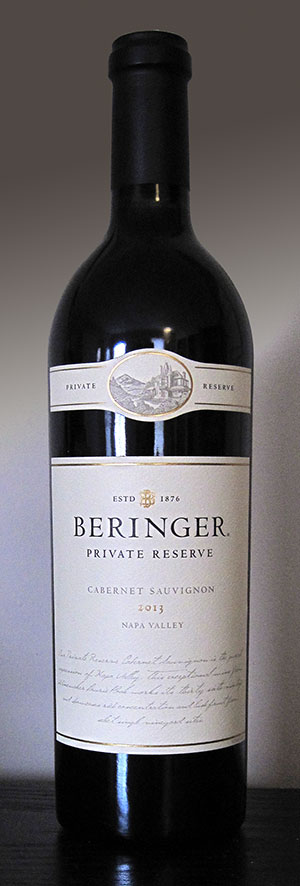
Three decades ago, on my first visit to Napa valley, I stopped by Beringer for a tasting. I didn’t know much about Beringer at the time, mostly that they had a long history and made some well-regarded wines. Back then, tastings were free, but a friend had given me a tip to skip that and head upstairs to the Founders room, where you could sample Beringer’s best wines for $10. As a bonus, there was a crowd downstairs, but I had upstairs nearly to myself. I left that session with a life-long affinity and appreciation of what Cabernets from Napa could be like. (Today, the basic tasting is $45, and the high-end samplings are $125 or $150, depending on which way you go. Ouch.)
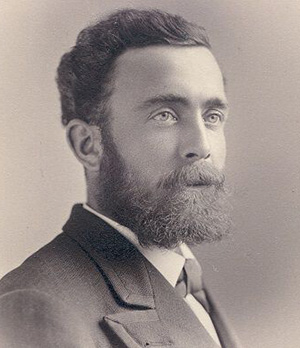
Jacob Beringer
In 1868, Jacob Beringer, enticed by the opportunities of the new world, sailed from his home in Mainz, Germany, to New York. However, after hearing that the rocky hillside soil and fertile valley floor of Napa Valley resembled that of vineyards back home in Germany, Jacob made his way to California in 1869. He became cellar foreman for Charles Krug, one of the first commercial winemakers in Napa Valley. A few years later, in 1875, Jacob and his brother, Frederick, purchased 215 acres next door to Charles Krug in St. Helena for $14,500. This parcel of land, known as Los Hermanos (the brothers), became the heart of the Beringer estate.
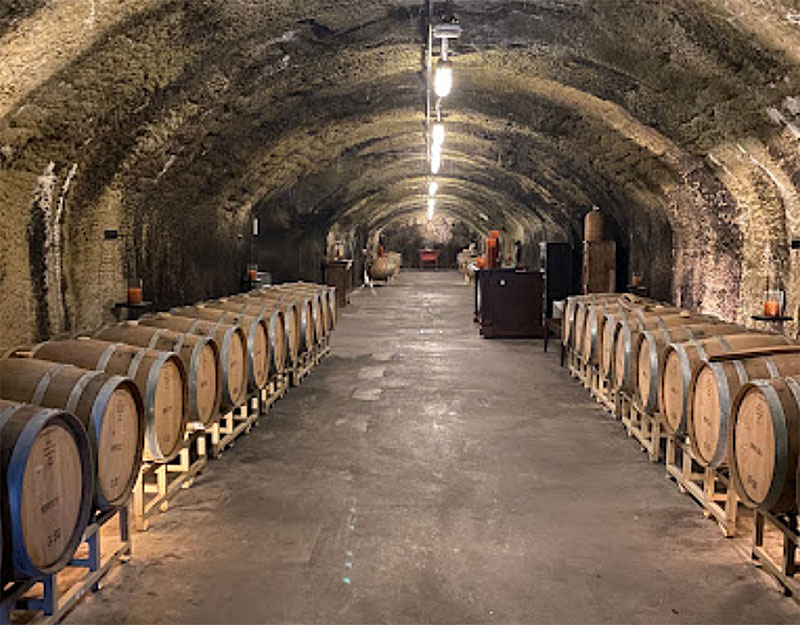
Here, the brothers oversaw their first harvest and crush in 1876. With Jacob serving as winemaker and Frederick as financier, they made approximately 40,000 gallons of wine, or 18,000 cases, that first year. In order to house the fermentation tanks, the first two floors of the original winery were built, and Chinese workers began digging a 1,200-foot-long tunnel to store the wine for aging.
In 2002, Mark Wenzel, his wife Teri, and childhood friend Sean Ginocchio (who sold his interest in 2010) founded August Hill Winery on the hilltop land his grandfather August Engelhaupt had farmed, occasionally with Wenzel’s help. Located in Utica, Illinois, about 90 miles southwest of Chicago, in the ensuing years August Hill has expanded to include caves for aging wine, a tasting room, and a sparkling wine label called Illinois Sparkling Company.
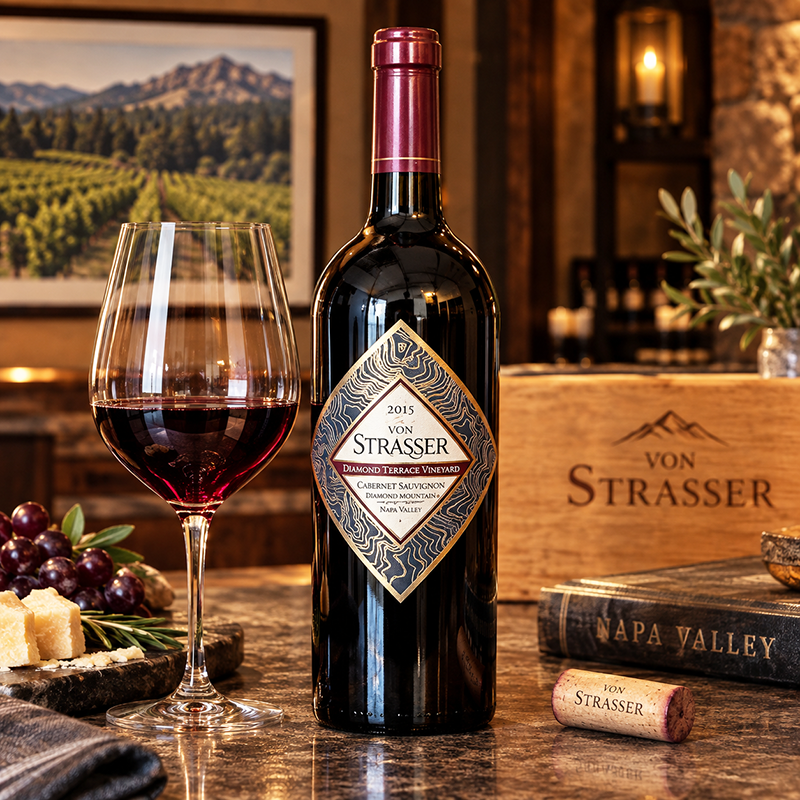
Rudy von Strasser is a Napa legend; he’s worked there for over 30 years, and played a huge part in founding the Diamond Mountain District, a part of the Mayacamas Range dividing Napa Valley from Sonoma Valley, and famous for its Cabernet. He was also instrumental in having the region designated as an AVA (American Viticultural Area).
Scheid Family Wines got their start in 1972 when Al Scheid first purchased property in Monterey County and wine grape growing there was in its infancy. Scheid was drawn to the region for what he considered its untapped potential, for making money as well as farming. Scheid was running his own investment company at the time. A graduate of Harvard Business School and an investment banker, he realized that vineyards could make an excellent tax shelter, with their usual heavy investment on the front end and no income until at least five years later. Originally named Monterey Farming Corporation, the enterprise he founded was a limited partnership; the tax laws at that time allowed investors to offset losses in one business against regular income from another one elsewhere. And even before one acre was planted, Scheid, shrewd operator that he was, had found a customer for 100% of the grape production he anticipated (although, I’m guessing, not allowing revenue to outpace expenses, for a few years at least).

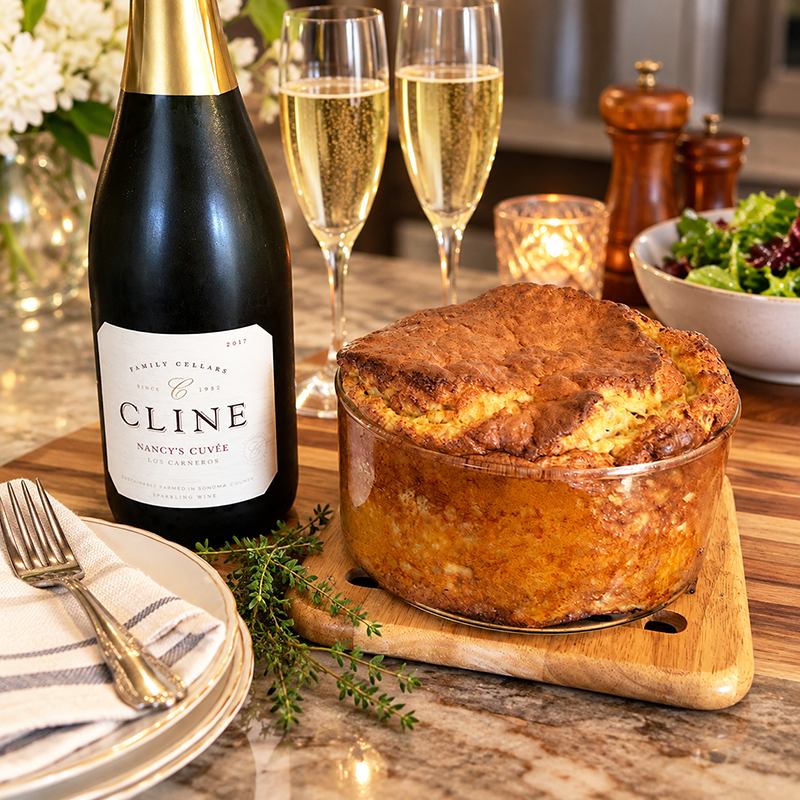 Mackerel Soufflé