Although my observation is that the risk of cork taint in wine has been reduced over the past couple of decades, it does still exist, and some even maintain that it is an increasing problem, affecting up to 5 percent of wines. Cork taint is the result of a chemical compound that can occur in the bark of cork trees (a type of oak grown in Spain and Portugal) 2,4,6-Trichloroanisole or TCA, which produces a musty, moldy odor that people are sensitive to in varying degrees. Although harmless to health, it is a fault that negatively impacts the enjoyment of a wine. Whether because of this risk or other factors such as cost or convenience, some producers have turned to other ways to close their wine bottles. These include corks that are made from bark that has been ground up, processed to eliminate TCA, and reconstituted as corks; synthetic stoppers manufactured to look and feel as much as possible like natural cork; ever-increasingly popular screw caps; rarely-seen glass stoppers; and plastic plugs. Plastic plugs are my absolute least favorite solution. They are hard to extract, hard to reinsert, and regardless of what the plastics industry continues to assert, nearly impossible to recycle.
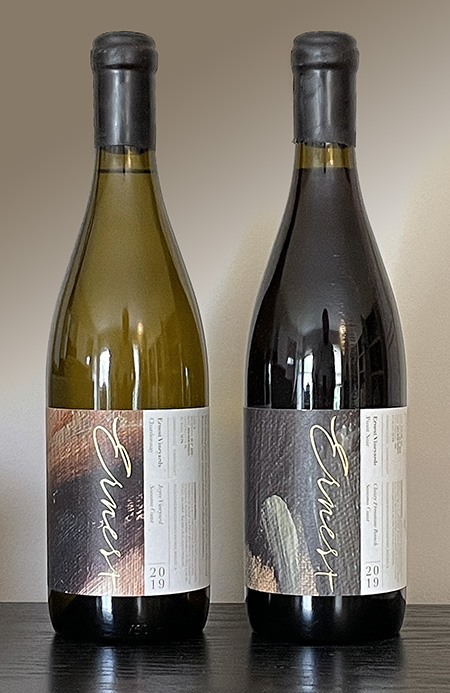
Ernest Vineyards Joyce Vineyard Chardonnay and Ernest Vineyards Cleary Freestone Ranch Pinot Noir Click here for tasting notes.
Ernest Vineyards Joyce Vineyard Chardonnay 2019 and Ernest Vineyards Cleary Freestone Ranch Pinot Noir 2019
An American Viticultural Area, or AVA, is an American wine-growing region classification system inspired by the French Appellation d’Origine Contrôlée, or AOC, but without the French rigor. An AVA simply defines a geographic area, and omits grape varieties, maximum production per acre, alcohol levels, etc. The requirements for wine with an AVA designation is that 85 percent of the grapes used must be grown there, and the wine be fully finished within the state or one of the states in which the AVA is located. AVAs range in size from several hundred acres to several million; some reside within other larger AVAs.
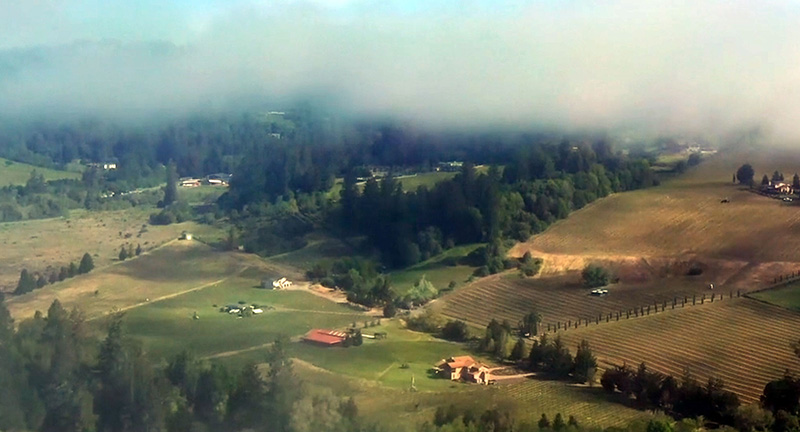
California’s newest AVA is the West Sonoma Coast American Viticultural Area, located on the farthest western sliver of Sonoma County, holding approximately 50 vineyards planted with varieties ranging from Pinot Noir and Chardonnay to Syrah in this cold, marginal grape-growing region.
Sonoma’s 19th AVA encompasses the steep, rugged mountainous terrain along the Pacific Ocean coastline. Elevations range from 400 to 1,800 feet, with vineyards planted on steep ridge tops along the San Andreas fault line up against the consistently cold Pacific Ocean, both above and below the fog line. The maritime conditions moderate the temperature in the vineyards – daytime highs are cooler, while nighttime lows are warmer than just a few miles inland. This modest diurnal temperature swing allows the fruit to ripen slowly throughout the day and the night, a phenomenon experienced only in a truly cold-climate, maritime environment.
For West Sonoma Coast Vintners member Alma Fria, the West Sonoma Coast is distinguished by its remarkable originality, “The West Sonoma Coast combines a cold, maritime climate with rocky, well-drained soils and a mountainous topography. It is a rare terroir indeed, one that distills coastal redwoods with a seafaring spirit. It has lured adventurers, naturalists, and pioneers for a near century.”
Indeed, the area comprising the West Sonoma Coast AVA has a long agricultural history dating back to the 1880s, with the earliest vitis vinifera vines planted as early as 1817. In addition to wine grapes, the area still produces commercial apples and supports a lively dairy and ranching industry, as well as many nature parks, conservancy efforts and environmental projects.
Ernest Vineyards
Todd Gottula and Erin Brooks
Located in the new AVA, Ernest Vineyards was co-founded by wife and husband team Erin Brooks and Todd Gottula in 2012. The winery was named for Gottula’s grandfather, Ernest, who he credits with introducing him to every aspect of good food, good service, and good wine. First working in the technology industry, Gottula has been in the wine world since 2007, when he bought a four-acre vineyard and planted Pinot Noir, embarking on a new phase as a grape grower. He went on to develop relationships with winegrowers and wine producers in the Sonoma region. Continue reading “Ernest Vineyards”
Nancy Tenuta is one of only six female winery owners in the Livermore Valley, due east of San Francisco. Tenuta and her then-husband Ron purchased a 22-acre lot just east of the Ruby Hill subdivision in Livermore in June 2000 with the vision of immersing themselves in the world of wine. There, 14 acres of Pinot Noir and Chardonnay were being grown in about a 50/50 mix. All of the vines were between 12 and 25 years old at the time. To establish Tenuta Vineyards, over the next three years the Tenutas built a 16,000-square-foot winery and a 5,000-square-foot estate home nearby. In all, they invested more than $5 million in the project, money that Nancy Tenuta collected using a variety of “creative” means, according to her, given that banks aren’t fond of such risky ventures.
An American Viticultural Area, or AVA, is an American wine-growing region classification system inspired by the French Appellation d’Origine Contrôlée, or AOC, but without the French rigor. An AVA simply defines a geographic area, and omits grape varieties, maximum production per acre, alcohol levels, etc. The requirements for wine with an AVA designation is that 85 percent of the grapes used must be grown there, and the wine be fully finished within the state (or one of the states) in which the AVA is located. AVAs range in size from several hundred acres to several million; some reside within other larger AVAs.
Located 20 miles inland from the Pacific Ocean halfway between Los Angeles and San Francisco, Paso Robles is in California’s South Central Coast region. It is one of California’s oldest wine production areas, with a winemaking tradition that stretches back to the 1790s. Nearly 80% of the wines produced here are red varietals, including Syrah, Zinfandel, Cabernet Sauvignon, and Merlot. The climate of hot days ripen the grapes, and cool nights help to maintain acidity, complexity, and aromatics. Soils vary from silts to silt loams to clay to limestone.
An entrepreneur out of St. Paul, Minnesota who founded and grew a broad range of innovative businesses, Robert Hall and his family went on a trip to southern France in the 1970s and their passion for wine began. After “retiring” in 1999, he came to Paso Robles to realize his dream of owning a winery, which he did until his death in 2014.
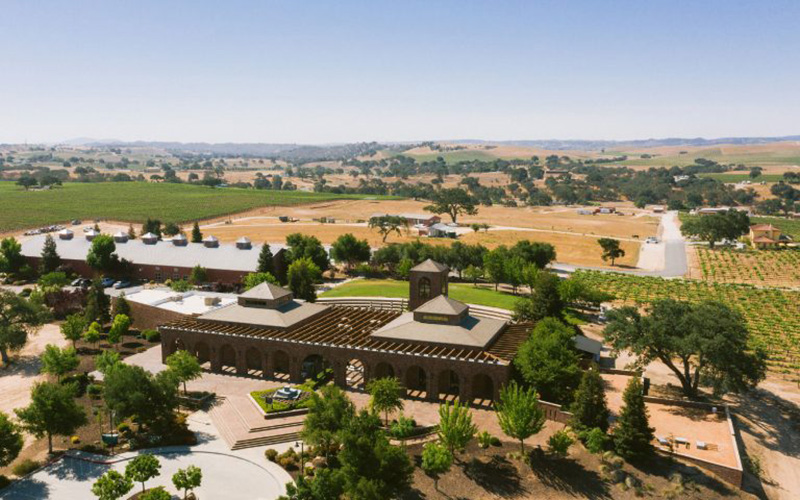
When Hall and his wife Margaret purchased the land “there was nothing there” as she recalled, “but dirt.” The two were hands-on building their dream, designing the production facilities and winery. Twenty-six feet below ground are 19,000 square feet of caves. This cool sanctuary is home to 4,000 premium French oak barrels. Now the fifth-largest winery in Paso Robles, Robert Hall was named “Winery of the Year” by the California State Fair and California Mid-State Fair.
The winery and tasting room.
In August of 2016, Robert Hall was purchased by O’Neill Vintners & Distillers, the seventh-largest wine producer in California by volume. In addition to Robert Hall, the company’s national brands include Line 39, Harken, Exitus, Day Owl Rose, Austerity, and Intercept. Continue reading “Robert Hall Cabernet Sauvignon”
A fifth-generation farmer, Vijay Reddy came to the U.S. in 1971 to pursue a graduate degree in soil and plant science, and obtained a doctorate in 1975 from Colorado State University. Along with his wife Subada, Dr. Reddy established and ran a soil consulting laboratory for 20 years while also farming cotton, peanuts, and various other produce in the high plains of west Texas near Lubbock (Reddy is a fifth-generation farmer).
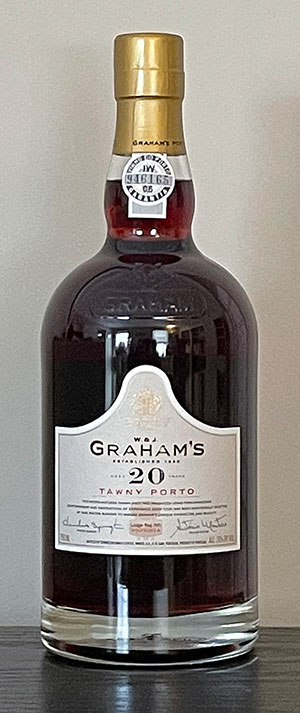
True Ports (now often referred to as Portos) hail from the Douro valley in northern Portugal, and have done so for over three hundred years. The region’s predominant soil is schist, composed of variousmedium-grained to coarse-grainedmetamorphicrocks with laminated,oftenflakyparallellayers of micaceousminerals. The low annual rainfall makes this probably one of the driest regions of the world where grapes are grown without irrigation. This terroir results in very low-yielding vineyards, with vines bearing only a very few small bunches of full-flavored grapes whose thick skins protect them from dehydration.
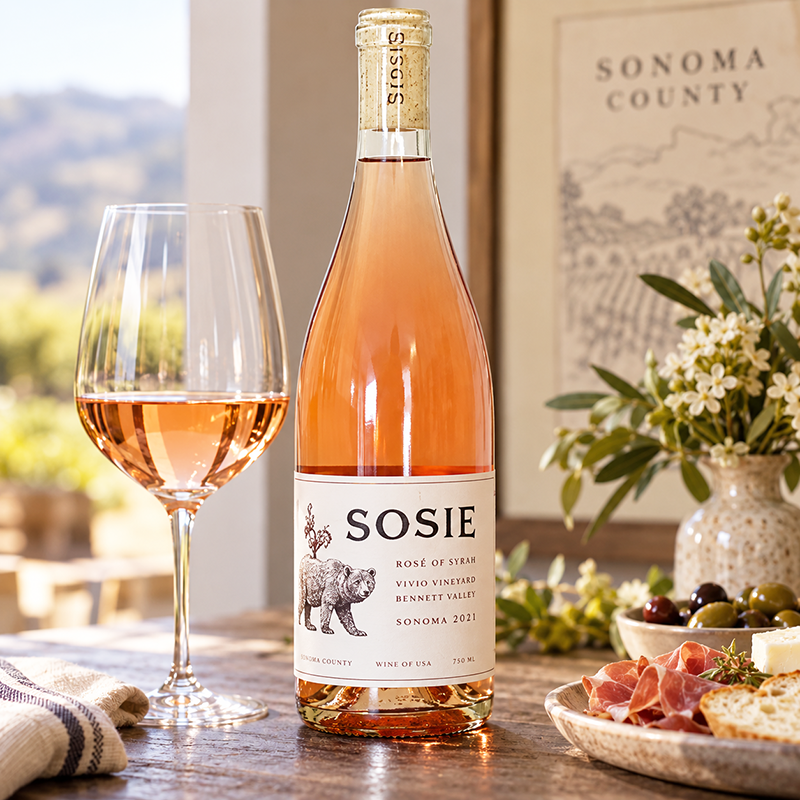
Sosie Rosé of Syrah Vivio Vineyard Bennett Valley Sonoma 2021
They say imitation is the sincerest form of flattery, and it’s a maxim Sosie Wines lives by. “Sosie” [so-zee] is French for twin or doppelganger, and as it says right on the bottle, “We are inspired by the wines of France. So we employ an Old World approach to wine growing that favors restraint over ripeness, finesse over flamboyance. Our aim is to craft wines that show a kinship with France’s benchmark regions. Wines that are their sosie.”
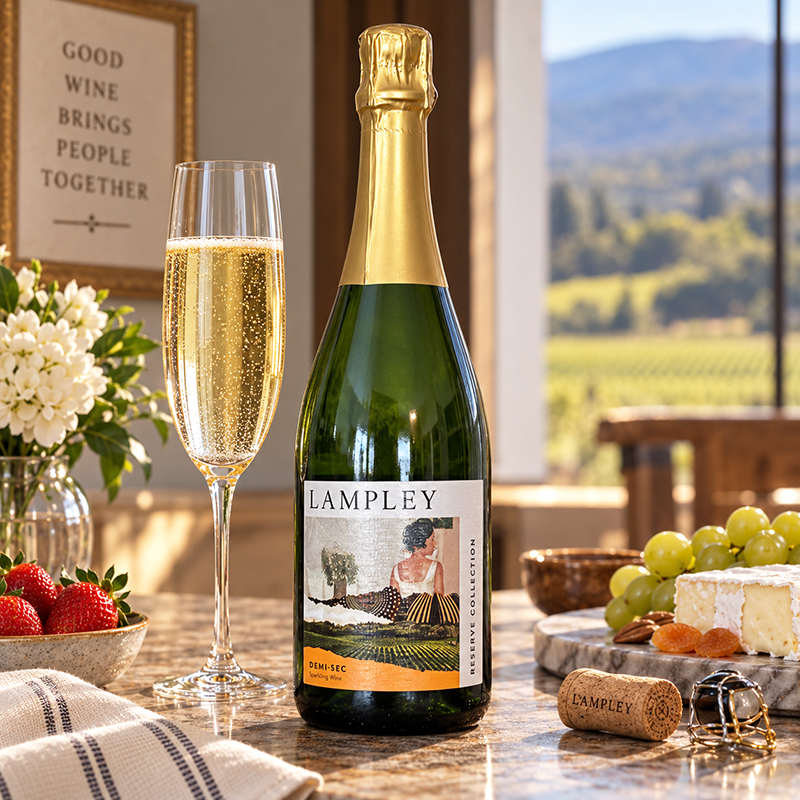
The founder and proprietor of Lampley Reserve is Illinois-native Chrishon Lampley, a remarkable African American woman, and the first in the Midwest to go national with a wine brand. She is also one of the less than 1% of wine industry negociants, vineyard owners, or winery owners who are black females in the traditionally Euro-centric, white, male-dominated world of wine. A rarity, to say the least.
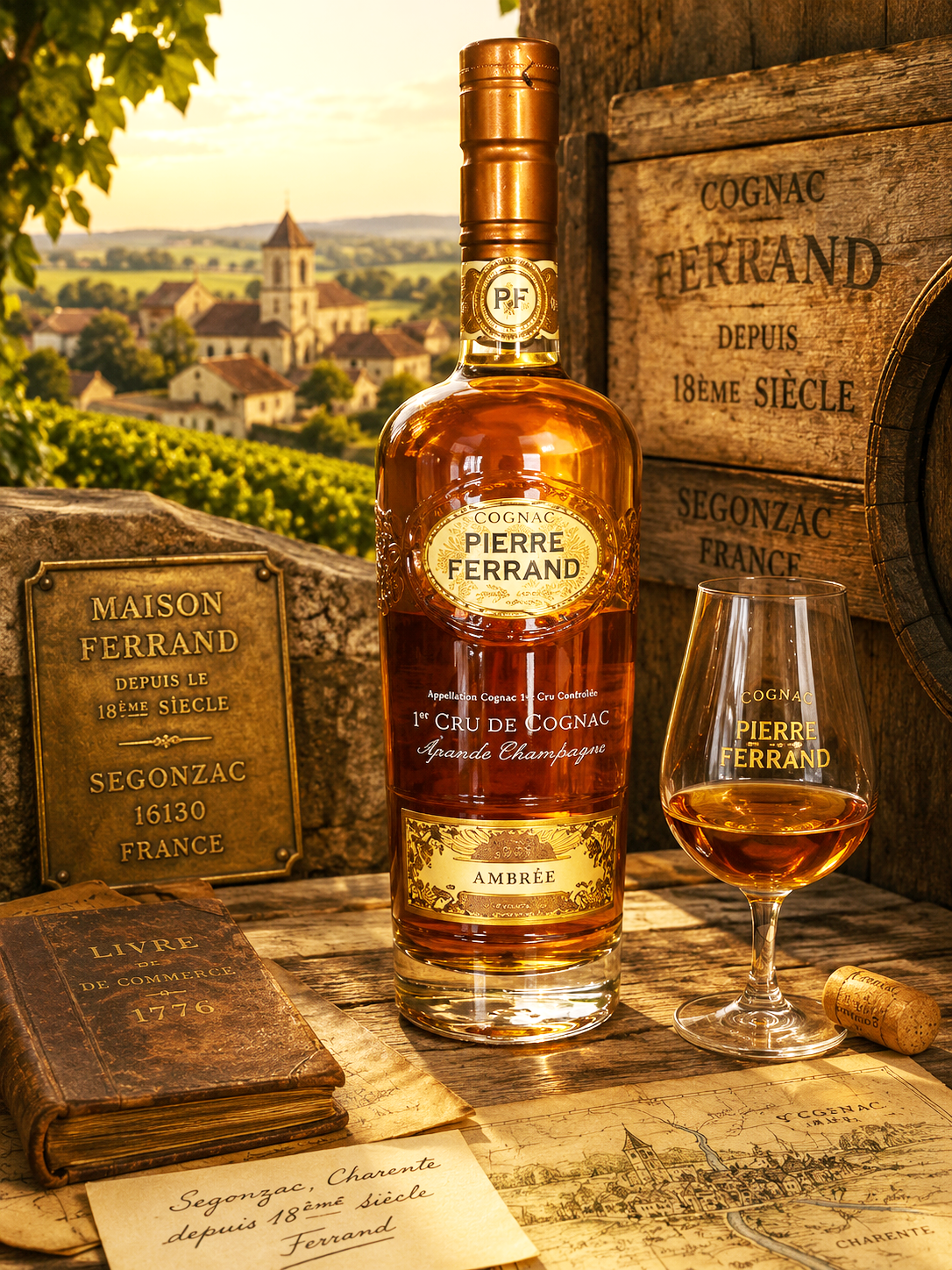
First, let’s talk about brandy vs. Cognac. Brandy is a liquor distilled from grape wine and aged in wood. (Brandy can be made from fruits other than grapes as well, but that’s a story for another time.) Cognac is brandy that specifically comes from the town of Cognac and the delimited surrounding areas in western France. (The one which has the most favorable soil and geographical conditions is Grande Champagne.) So, all Cognacs are brandy, but not all brandies are Cognac. For more detail on brandy and Cognac, click here.
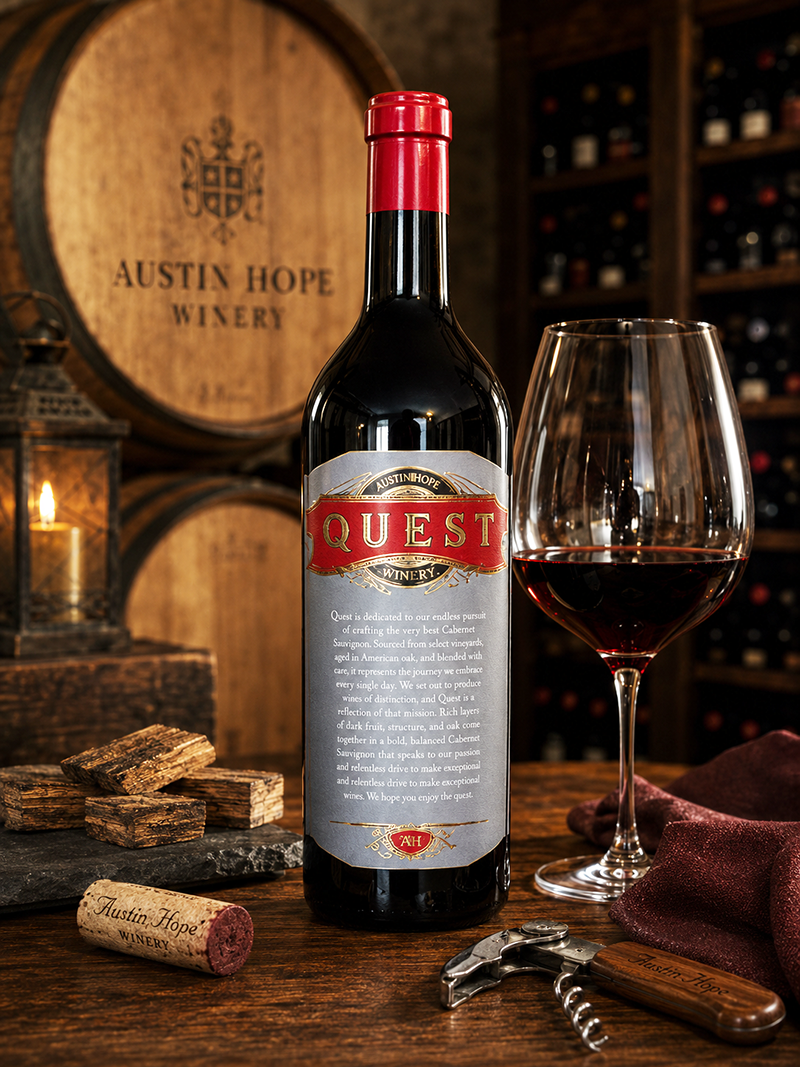
Chuck Hope and his wife Marilyn came to Paso Robles (which roughly means “passageway of oaks”) in California’s Central Coast in 1978 to farm, and eventually to start what would become Hope Family Wines. This early arrival put them on the forefront of the Central Coast becoming a world-class viticultural region. Initially, the Hopes planted apples and grapes in this then sparsely-populated area. Seeing the property’s potential for grape growing, Hope eventually replanted the apple orchards with grapes. Vine density was increased, and each vine was pruned to limit yield for better-quality fruit.
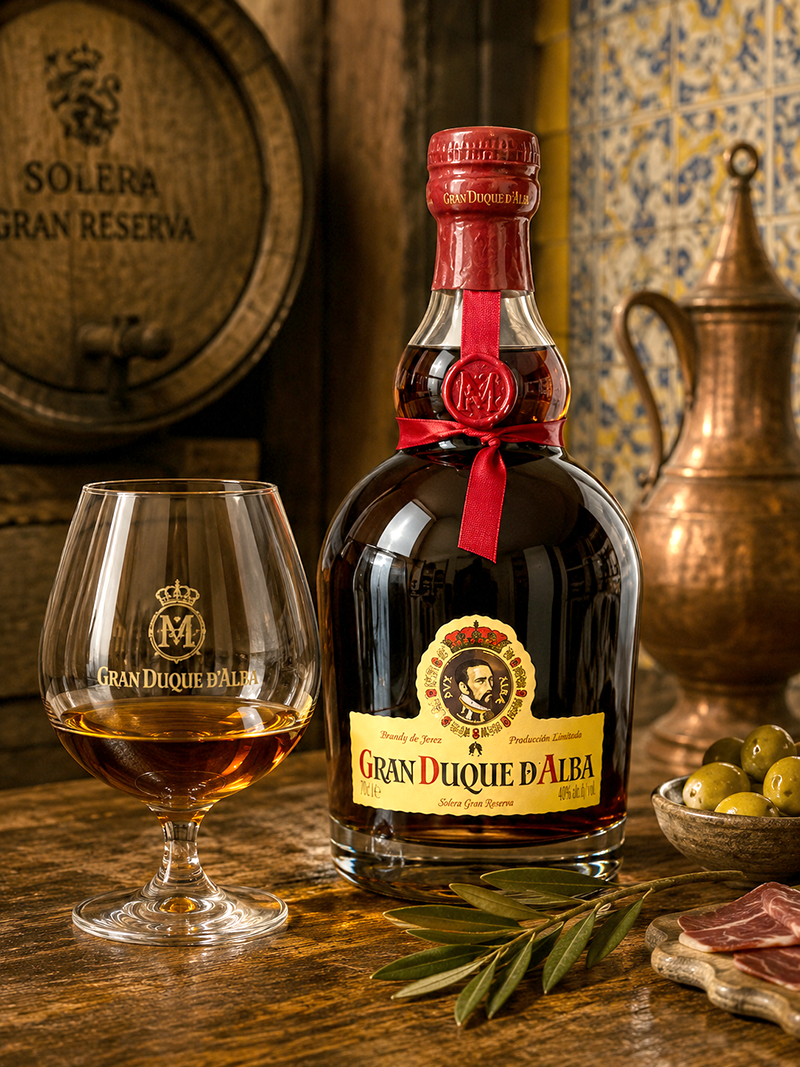
Gran Duque d’Alba Solera Gran Reserva Spanish Brandy
For those who don’t know, brandy is distilled from wine and aged in wood to give it its characteristic flavor and color. The word brandy comes from the Dutch brandewijin, meaning “burned (distilled) wine.” It is usually made from grape wine, but can be distilled from other fruit wines, most often apple, in which case it is called apple brandy or applejack generically, and Calvados in France. (Calvados is in northwestern France, on the English Channel.) Cognac, perhaps the best-known type of brandy, specifically comes from the town of Cognac and the delimited surrounding areas in western France. So, all Cognacs are brandy, but not all brandies are Cognac. For more detail on Cognac, click here.
In 1947, Dr. Lewis Gibbs Carpenter Jr., a farmer and psychologist, moved to Saint Helena from Gilroy and bought land on the Napa Valley floor. He began to work the property by growing walnuts, dates, and a small selection of grapes in the 1950s. Over the next twenty years, he replaced most of the nut and fruit orchards with several Bordeaux varietals of grapes, including Cabernet Sauvignon, Cabernet Franc, Sauvignon Blanc, and Merlot, all of which were beginning to gain international attention following the Judgement of Paris in 1976. It was at this momentous event that Napa Valley garnered international respect as a premier wine growing region. This no doubt helped propel not only Carpenter’s vineyards to esteem, but the entire valley as a whole.
True Ports hail from the Douro valley in Northern Portugal, and have done so for over three hundred years. The region’s predominant soil is schist, composed of variousmedium-grained to coarse-grainedmetamorphicrocks with laminated,oftenflakyparallellayers of micaceousminerals. The low annual rainfall makes this probably one of the driest regions of the world where grapes are grown without irrigation. This terroir results in very low-yielding vineyards, with vines bearing only a very few small bunches of full-flavored grapes whose thick skins protect them from dehydration.
If you want a good cheap brandy, consider blending your own
Obviously, I enjoy wine, but I’m a fan of liquor too, especially brandy. Brandy is distilled from wine and aged in wood to give it its characteristic flavor and color. The word brandy comes from the Dutch brandewijin, meaning “burned (distilled) wine.” It is usually made from grape wine, but can be distilled from other fruit wines, most often apple, in which case it is called apple brandy or applejack generically and Calvados in France. Cognac is brandy that specifically comes from the town of Cognac and the delimited surrounding areas in western France. So, all Cognacs are brandy, but not all brandies are Cognac. For more detail on Cognac, click here.