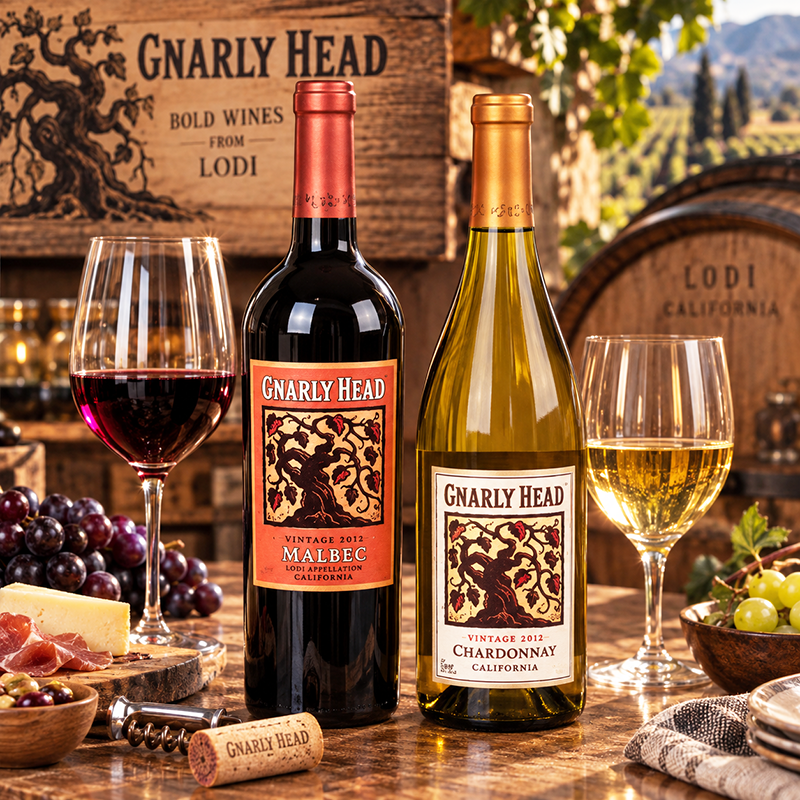
Hey, man, check out this gnarly wine. Gnarly Head wine, actually.
Starting from San Francisco, go about 100 miles east and a bit north and you’ll reach Lodi, California, home of Gnarly Head Winery.

Reviews of wines and spirits for the curious drinker.
Hey, man, check out this gnarly wine. Gnarly Head wine, actually.
Starting from San Francisco, go about 100 miles east and a bit north and you’ll reach Lodi, California, home of Gnarly Head Winery.

Rabble Wine Company
If you are looking for affordable, approachable, easy-drinking wines, I suggest you seek out those from Paso Robles. This large but lesser-known appellation was established in 1983 (a mere toddler in wine years), and is located around the town of Paso Robles in the northern part of California’s San Luis Obispo County. Most of the growing area is classified as Region III, equivalent to France’s Rhône region. At last count, there were over 18,000 acres under vine.
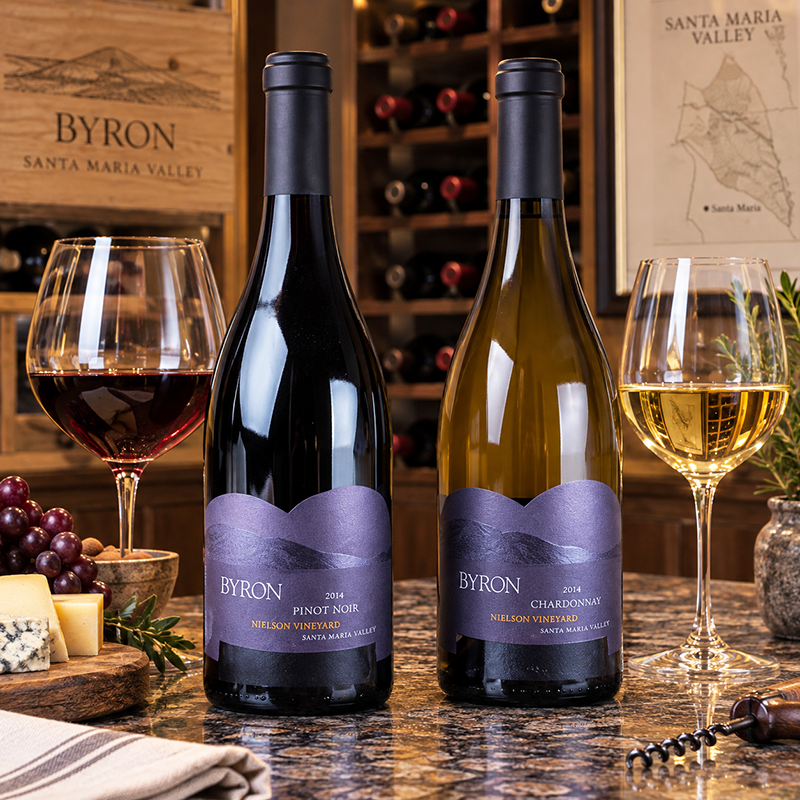
Byron Wines
Designated in 1981, the Santa Maria Valley AVA is located in the northernmost part of Santa Barbara County, just east of Santa Maria city. The east–west orientation of the wide, open valley means cool winds and fog flow in freely from the Pacific Ocean, settling most noticeably in lower-lying areas. This cool maritime influence lengthens the growing season (among the longest in the world), and contributes to the eventual sugar/acid balance in Santa Maria Valley’s wines.
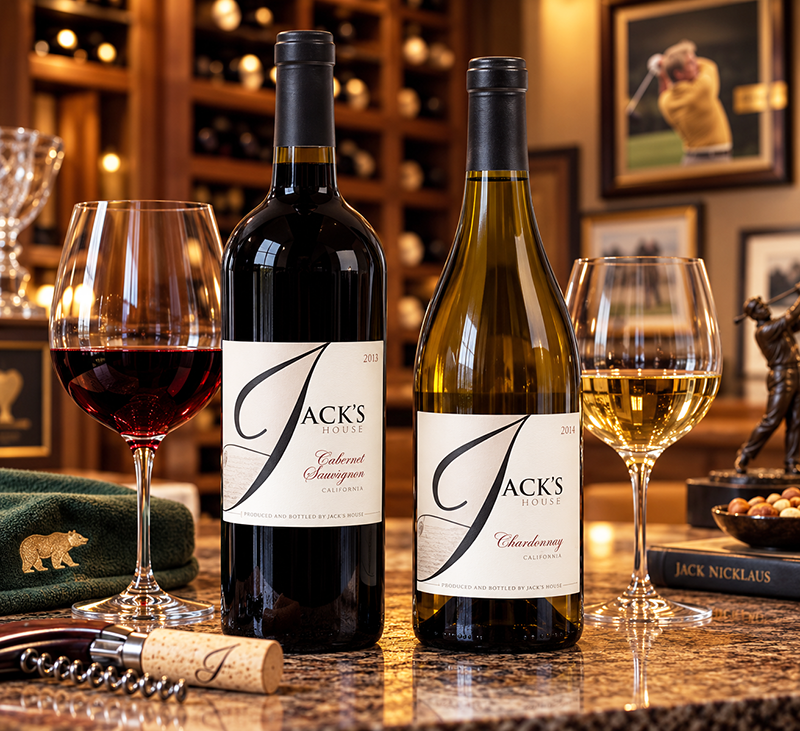
Jack’s House Wines
Jack Nicklaus needs no introduction, of course. The Golden Bear is the winner of 18 major golf championships, a golf course designer, a tournament manager, a golf equipment manufacturer, a product endorser, an author, and a philanthropist.
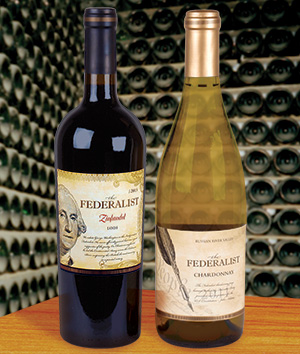
The Federalist, later known as The Federalist Papers, is a series of tracts written in support of the ratification of our nascent nation’s Constitution. The Federalists believed in strong national government, supported modernization, manufacturing, and industrial development, and the use of a tariff to fund the Treasury. (That’s the IRS, folks.) They supported a national Bank of the United States, and funding national and state debts incurred during the Revolutionary War. In foreign affairs the Federalists opposed the French Revolution, and sought a strong army and navy. Noted Federalists were: Alexander Hamilton, James Madison, John Jay, George Washington, and John Adams, the only Federalist president of the U.S.
The Federalist wines are produced by the somewhat mysterious 2Sons Winery, which is owned and managed by the Terlato Family wine empire. The vineyards and winery were founded in 1981. Three friends, John Grace, Mark Rafanelli, and Philip Staley (so why isn’t the winery named 3Sons? See? Mystery.), joined forces and purchased the site that was formerly the Alderbrook Estate. In 2000 the Terlatos were asked to develop a long-range plan to produce world-class wines and market 2Sons throughout the U. S. The Terlatos later purchased a majority share, and invested in both vineyard sources and winery to provide the winemaking team with the best grapes and equipment available. This has helped position the winery to produce single vineyard and estate wines with an on-going focus on Zinfandel.
This golden Chardonnay hails from the Russian River Valley AVA’s northern end near Healdsburg, approximately 80 miles north of San Francisco. Things start out with aromas of lemon and green apple. The lemon continues on the palate, with the addition of lime and pear. All of this means a bracing acidity, of course. The oak is certainly present, adding to a round, rich mouth feel, as is just a hint of sweetness. The nicely long finish features hints of cinnamon and bitter almond.
Separate Chardonnay blocks were barrel fermented in 30% new oak and aged in barrel for nine months. 2500 cases were produced.
This food-friendly wine calls for an Artichoke and Leek Frittata, Dungeness Crab Risotto with Lemon and Parsley, or Steamed Mussels with Saffron Aioli.
We now travel from 80 miles north of San Francisco to 80 miles east, to the vineyards near Lodi, which produce about 18% of California’s wine grapes, more than Sonoma and Napa combined. The area is particularly hospitable to Zinfandel, a uniquely American grape, and this wine is no exception.
The nose reveals red fruits: cherry with a bit of plum. This dark-purple wine features flavors of blackberry, plum, and cinnamon. It also includes Zinfandel’s characteristic pepperiness, which some winemakers are moving away from.
Enjoy this Zin with Bruschetta with Cherry Tomatoes, Wine Braised Short Ribs with Balsamic Glaze, or Grilled Rib-eye Steaks with Roasted Garlic Butter.
federalistwines.com/american-craft-wine
Back to blog posts: winervana.com/blog/
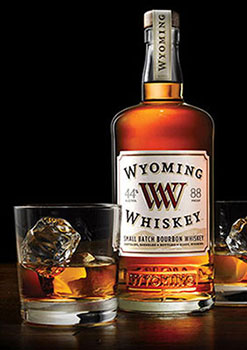
Wyoming Whiskey
Small batch whiskey, we have been told, is a welcome trend. The Mead family first came to Wyoming in 1890 as ranchers. While subsequent generations have endeavored in law, politics, and extreme skiing, Sam Mead is leading the fifth generation toward renown as a premier whiskey producer. Wyoming Whiskey products include four varieties. Small Batch Bourbon Whiskey is a traditional bourbon whiskey that is dark amber in color and smooth to the taste buds. Flavors that can be detected include brown baking spices, vanilla crème, caramel, and cinnamon.
By Spirits Contributor Neal Kotlarek
Back to blog posts: winervana.com/blog/

Trapiche Broquel Winery
Come with us now to Argentina, famous for the tango, Che Guevara, gauchos, and, increasingly, wine. Like 85 percent of Argentina’s quality producers, Trapiche is located in Mendoza in the north-central part of the country near the eastern foothills of the Andes.
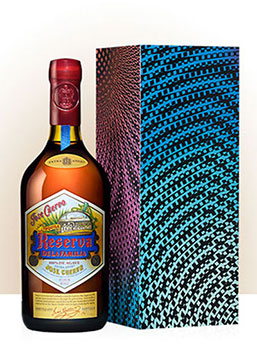
Cuervo Reserva de la Familia is the world’s first extra-añejo tequila. It is drawn from the Cuervo® family’s private reserve collection of tequilas, relying on a family recipe handed down over ten generations. Each bottle is numbered, dated, and sealed in wax. All by hand. The tequila is made using only the flavorful inner portion of hand-selected blue agave plants harvested at peak maturity after seven to twelve years of growing in the field. After distillation, it is aged in French and American oak barrels for a minimum of two years, although the final blend includes tequila from reserves as old as 30 years.
Definitely not for shots or margaritas, Reserva de la Familia is best served in a snifter, allowing for full appreciation of its flavors and aromas of rich oak, toasted almonds, vanilla, and cinnamon. There is a long and velvety finish. At about $170 per 750ml bottle, this is a rare treat for most of us, but worth it if you can swing it. Cuervo commissions a different well-known Mexican artist each year to design the wooden presentation box Reserva de la Familia comes in, so the current offering won’t match this photograph.
Back to blog posts: winervana.com/blog/
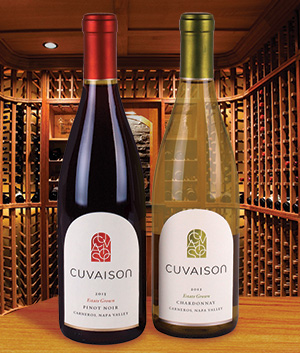
Cuvaison Winery
Established in 1969, Cuvaison (French for maceration, the period of time grape juice spends in contact with the skins and seeds) is an estate vineyard and winery that produces primarily Chardonnay and Pinot Noir, both grown exclusively in the Carneros AVA on the northern end of both Sonoma and Napa. When the winery was founded, the Carneros region was little known for grape growing, and much of the acreage was pastureland. But, the area’s cool bay breezes and frequent fog are ideal for wine, and it is now home to thirty-one wineries and an equal number of growers.

Migration Sonoma Chardonnay and Sonoma Pinot Noir
Duckhorn Portfolio is the umbrella corporation of an expanding wine mini-empire. First came the flagship Duckhorn Vineyards, established in 1976 by Dan and Margaret Duckhorn to pioneer and feature premium Napa Merlot. (Duckhorn has a “second growth” label named Decoy, as well.) Next came Paraduxx in 1994, specializing in Zinfandel-based blends. This was followed by Goldeneye, which began making Pinot Noir in 1996.
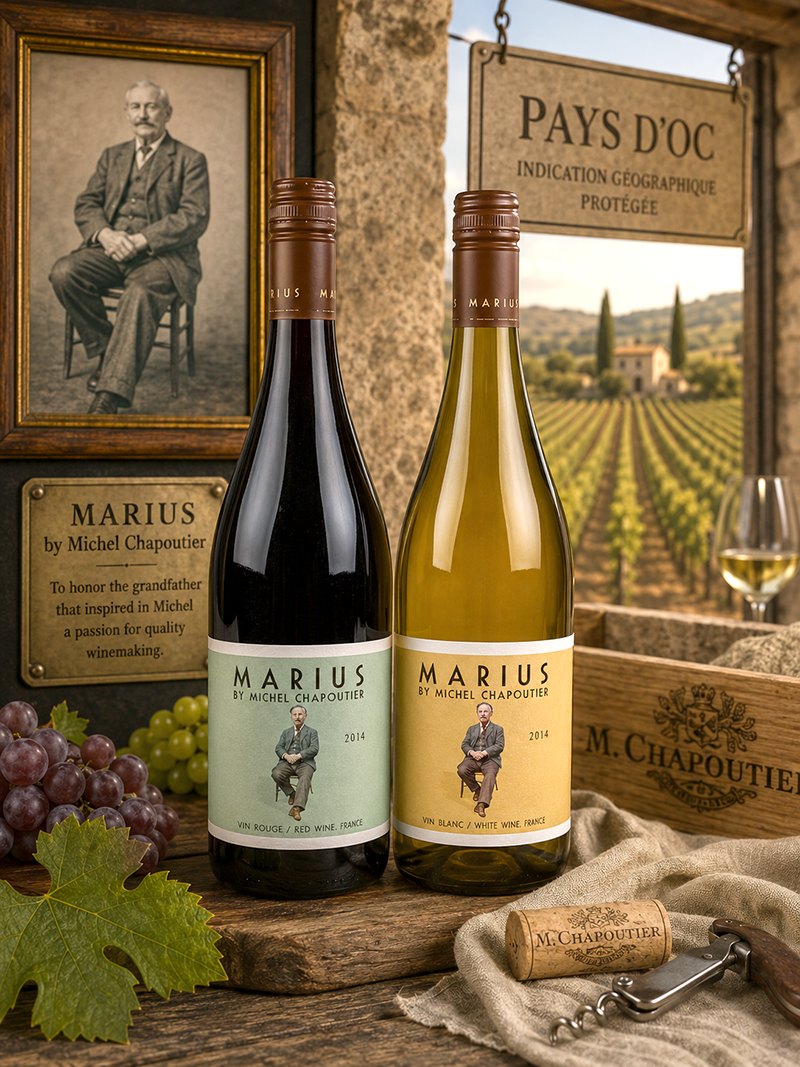
Marius Wine
Languedoc-Roussillon (often called “the Languedoc”) is a historical coastal region in southern France, extending from Provence to the Pyrenees Mountains and the border with Spain. It’s now part of Occitanie. The area is a major wine producer, with Vin de Pays d’Oc and sparkling Crémant de Limoux among its best-known varieties. The regional capital, Montpellier, is home to a well-preserved medieval quarter.
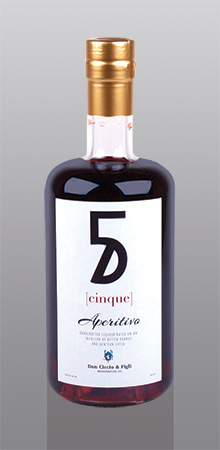
Cinque Aperitivo
As you cocktail mavens may be aware, aperitivos and amaros are currently having a moment in bars across the U.S. The rest of you are probably asking, “A what and a what?”
An aperitivo (in Italian) or apéritif (in French) is a light alcoholic drink taken before a meal to stimulate the appetite, and is therefore usually dry rather than sweet. An amaro (Italian for “bitter”) is an Italian herbal liqueur that is commonly drunk as an after-dinner digestif. It usually has a bittersweet and sometimes syrupy flavor.
Cinque is an aperitivo created following a traditional recipe developed in 1929. It is based on an infusion of 12 selected roots and herbs, highlighted by bitter orange and gentian lutea, selected for its bitter root (the overall bitterness level is an approachable “medium”). It’s perfect for fans of Campari and Aperol looking for something a bit different.
Although Cinque is labeled to look as Italian as possible, and the parent company, Don Ciccio & Figli, has roots to the Old Country going back as far as 1883, it is in fact produced in Washington, D.C.
Here’s a sample recipe: 1 oz. gin, 1oz. Cinque Aperitivo, 1 oz. amaro, a splash of soda, and a dash of lemon bitters. Stir well and serve on the rocks with an orange twist and sweet cherry as garnish. Salute!
www.donciccioefigli.com/cinque-aperitivo
Back to blog posts: winervana.com/blog/
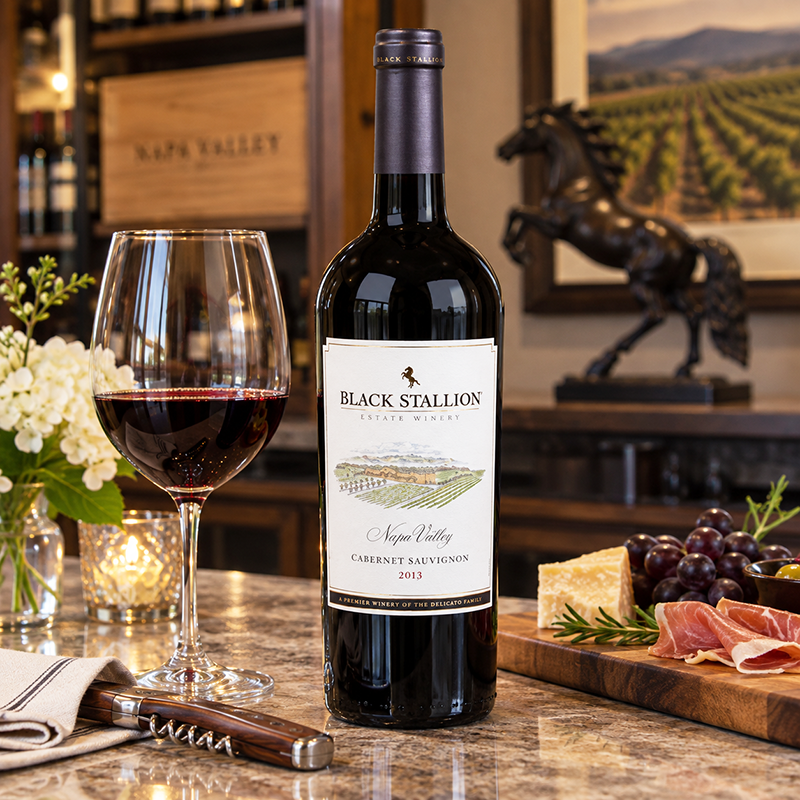
Black Stallion Cabernet Sauvignon
In 1894, Gaspare Indelicato was born in the small village of Campobello di Mazara in the province of Trapani, Sicily. In 1911, at the tender age of 16, he emigrated by himself to the United States through Ellis Island, New York, as many European immigrants of the time did.

Tangley Oaks Wines
Négociant [nay-goh-SYAHN] is the French word for “dealer” or “merchant,” and is used in wine circles to denote an individual or company that negotiates, sells, and ships wine as a wholesaler. Traditionally, négociants have often handled all aspects of wine production except the actual farming, including purchasing grapes, making the wine, blending, bottling, and shipping. In some transactions, there is another intermediary: a courtier or “wine broker,” who helps establish the price paid by a négociant to a small producer. Some of the better known French négociants are Barton & Guestier, Calvet, Cordier, Moueix, and Sichel.

Roberto Anselmi is a legend of north Italian winemaking, a charismatic, motorbike-riding rebel whose uncompromising quality-over-quantity approach has helped redefine the wines of the Veneto through his insistence on higher standards. It has earned him the title, “the conscience of Soave.”
Anselmi produces crisp white wines from the indigenous Garganega (gahr-GAH-neh-gah) grapes. Garganega is known for its distinctive lemon and almond flavor profiles.
These two summer sippers are characteristic of his work.
Anselmi San Vincenzo 2013 is grown on 110 acres in the Monteforte area of northern Italy. Light straw in color, with scents of minerals, lemon/lime, apricot ,and yellow apple. It is medium-bodied and dry.
Anselmi Capitel Foscarino 2013 comes from 24 acres of vineyards on south-facing slopes 1,140 feet above sea level at the top of the Foscarino Hill. Light straw-gold in the glass, opening to vibrant aromas of tropical fruit, citrus, and honey. Its medium to full body features flavors of fresh apples, peach, and lime underscored by mineral notes.
For both of these wines, the soil is volcanic tuff, a type of rock made of volcanic ash ejected from a vent during an eruption. Following ejection and deposition, the ash is compacted into a solid rock in a process called consolidation. Over time, the tuff is broken up with grass undergrowth.
The vines are trained using the horizontal spurred cordon method. In earlier times, this method was common for training grapes on house façades. Foliage and fruit grow from one or two horizontal, strictly trained arms or cordons. Unilateral cordons (1 angle) and bilateral cordons (T-shape) are possible; the vertical main trunk usually remains without foliage.
www.terlatowines.com/brands/italy/anselmi/san-vincenzo
www.terlatowines.com/brands/italy/anselmi/capitel-foscarino
Back to blog posts: winervana.com/blog/