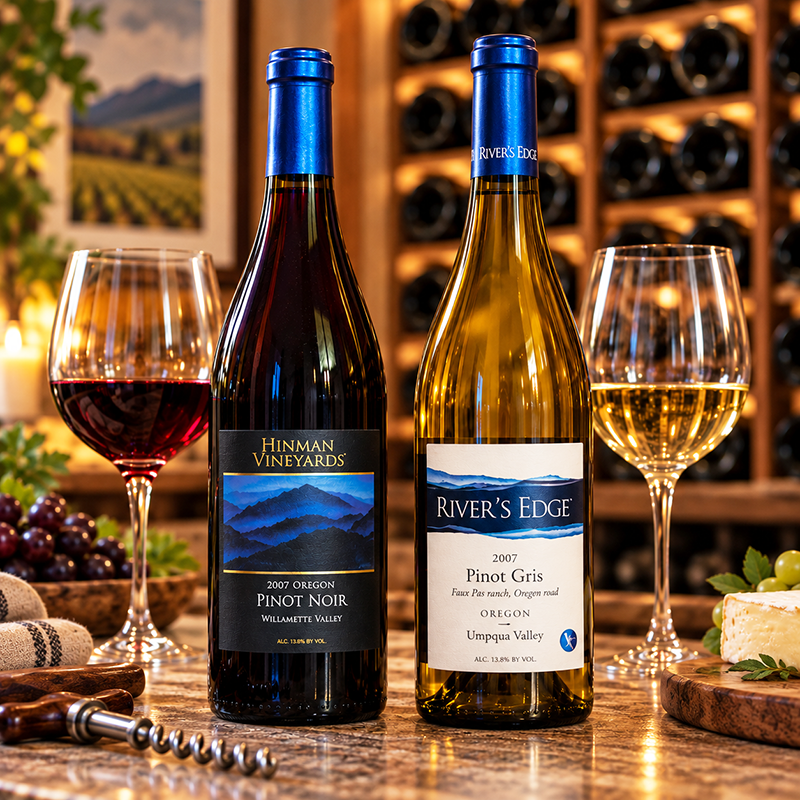
Hinman Vineyards Pinot Noir 2007 and River’s Edge Pinot Gris 2007. Click here for tasting notes.
Hinman Vineyards
Doyle Hinman and David Smith opened Hinman Vineyards in 1979. By 1988, the winery had become Oregon’s top selling winery. In 1993, Hinman started releasing their premium line of reserve wines under the Silvan Ridge label, relegating Hinman to second-tier status.
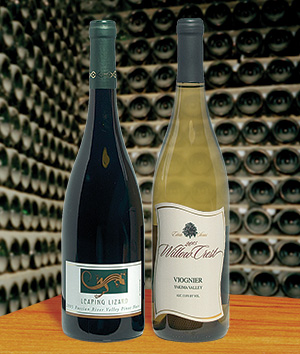
Leaping Lizard Pinot Noir and Willow Crest Viognier
“This weekend is not about me. It is about you. I’m gonna show you a good time. We’re gonna drink a lot of good wine. We’re gonna play some golf. We’re gonna eat some great food and enjoy the scenery and we are going to send you off in style, mon frere.” And so Miles and Jack set off on their most excellent adventure in Sideways, the 2004 film that by some accounts was single-handedly responsible for a 10% increase in sales of pinot noir.
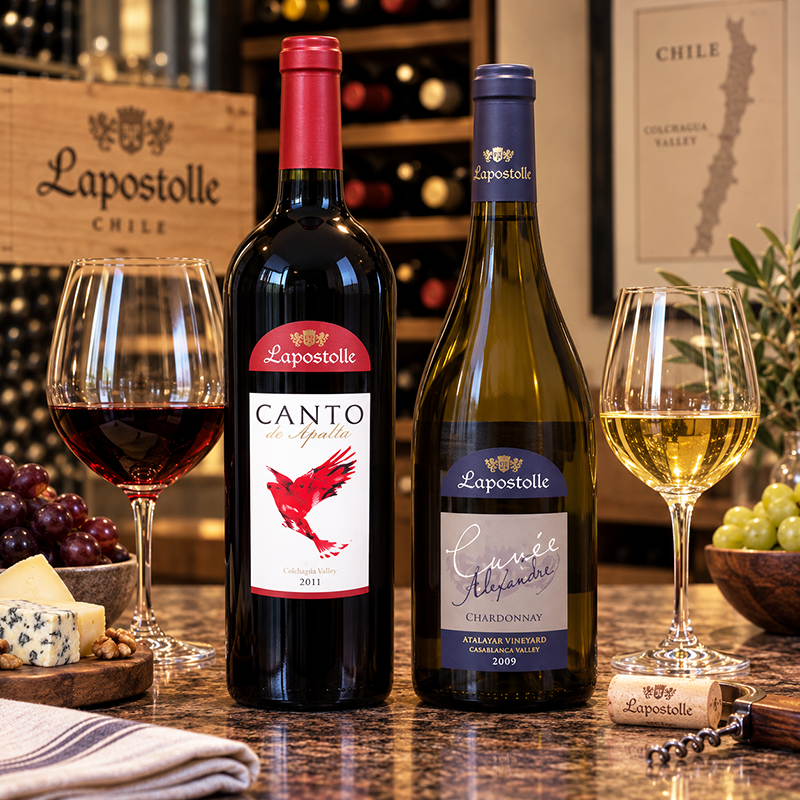
If you’re looking for good value in wine, head for the Chilean section of your local wine shop.
Winemaking was established in Chile in the mid-sixteenth century by Spanish missionaries, and for 300 years wine production was based on the Pais grape they carried. In 1851, French wine experts arrived, and with them the more familiar European grape varieties. And now, even with over 400 years of experience, and free of the twin scourges of Prohibition and phylloxera, Chile has yet to attain its full potential.
The Luke Donald Wine Collection is the result of a collaboration between professional golfer Donald and Bill Terlato, head of the behemoth wine distribution operation, Terlato Wines International.
As you enter Sonoma county from the south on California 121, one of the first wineries you encounter is Cline Cellars, and there could hardly be a better introduction to the Carneros AVA.
Even as a young teenager, Fred Cline learned to make wine from his grandfather, Valeriano Jacuzzi (yes, he of the hydrotherapy tub, as well as many other innovations). With a $9000 inheritance from Valeriano, in 1981 Cline founded the eponymous Cline Cellars in Oakley, California.
The winery was relocated to its current location in 1991. The property is the original site of the Mission San Francisco de Solano, the 21st and final of the historic California missions. Although the mission was moved in 1823, the Cline tasting room is located in a rustic 1850s farmhouse that is original to the property, surrounded by spring-fed ponds and thousands of rose bushes. The vineyards also reflect this history, with vines ranging from 80 to 120 years old.
Cline is one of the first of the pioneering Rhone Rangers, a group dedicated to wines from the grapes of the Côtes du Rhône in France (ironic for a boy with an Italian grandfather, no?)
Cline also has been a pioneer in sustainable farming. It is the second-largest completely solar-powered winery in California. Natural cover crops are used to nourish the soils, sheep and goats roam freely as they graze on weeds, and compost teas are used as fertilizer. “We’d be considered ‘organic’ if we wanted to follow the rules of the government,“ said Cline. “We are actually more sustainable [than the law calls for] by not following their organic rules.“ He calls his methods “beyond organic.”
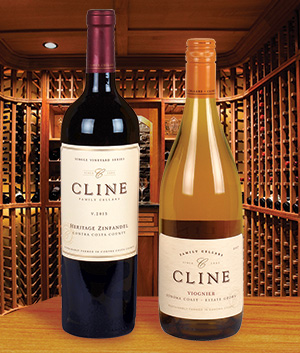
Cline Cellars Heritage Zinfandel 2015
The provenance of this Zin is the 100-year-old Big Break, Live Oak, and Bridgehead vines in Oakley, which are dry-farmed in deep, sandy soil. It is crystal ruby in the glass. Flavors of cola, blueberry, and coffee greet you on the tongue. There is just a hint of Zinfandel’s characteristic pepper. The body has a nice satin quality, supported by nicely balanced medium tannins and acidity. An eminently drinkable wine.
Enjoy this red with braised pork with sweet and hot peppers, Niçoise chicken with tomatoes and black olives, or lamb with artichokes.
Cline Cellars Viognier 2017
Ah, Viognier [vee-oh-NYAY], such an elusive and underappreciated wine. The grapes are finicky to grow, and once vinified exhibit a wide range of floral qualities, some more delightful than others.
This expression is pale reddish-golden in the glass, with a BAM! nose of honeysuckle. This is followed on the palate by the expected flavor of peach, as well as mango and sour orange. This unoaked wine tastes dry, but has a surprising, slightly sweet finish. To enjoy its nuance, do not overchill.
Drink this tipple with braised tuna in white wine, oven-braised halibut steaks, or Provençal seafood with aioli.
In the 1970s, Portugese rosés such as Lancers and Mateus were the height of sophistication to many young wine drinkers: “It’s imported, and comes in a fun bottle!” With age comes wisdom, and these wines were eventually abandoned for the justifiably famous fortified wines of Portugal, Port and Madeira, produced by many ancient and famous houses.
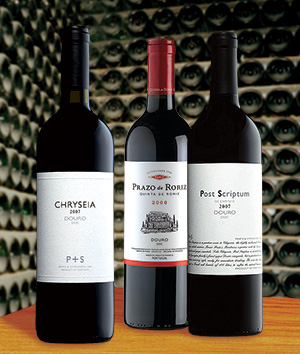
Much less well-known is Portugal’s status as a producer of both red and white table wine, ranking in the world’s top ten in production. With a population of just 10 million, but top five in per capita consumption, much of that wine is sipped by the thirsty Portuguese.
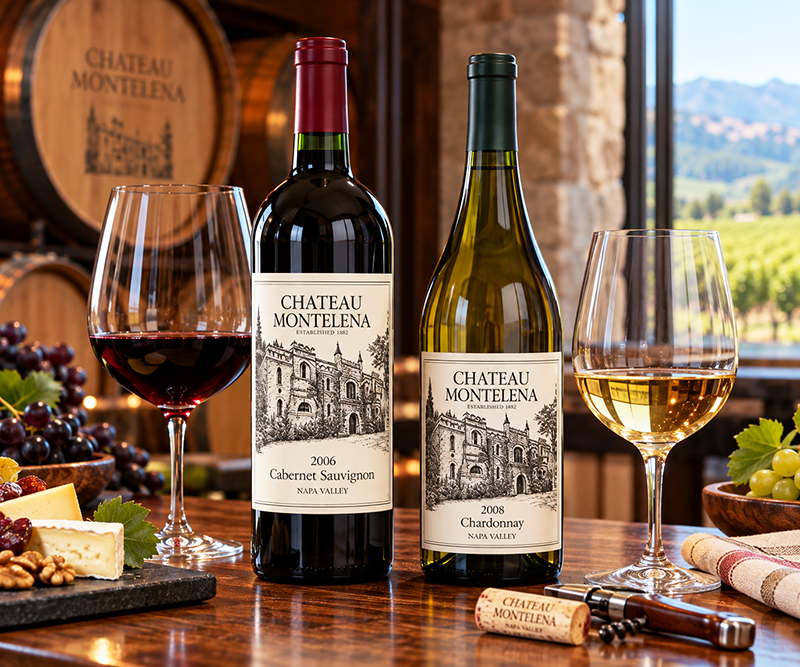
Chateau Montelena Napa Valley Cabernet Sauvignon and Chateau Montelena Napa Valley Chardonnay. Click here for tasting notes.
Chateau Montelena
Steven Spurrier was an Englishman who once owned a wine shop in Paris that catered to the English-speaking expatriate community. In 1976, in order to drum up interest in his business, he hit upon the idea of holding a blind tasting pitting ten of France’s and California’s best producers against one another. He was able to enlist nine esteemed French wine experts as judges, among them Odette Kahn, editor of the influential Revue du Vin de France; and Christian Vannequé, sommelier of the three-star Parisian restaurant La Tour d’Argent. The French wines included the 1970 Haut-Brion, the 1970 Mouton Rothschild, and the 1973 Domaine Leflaive Puligny-Montrachet Les Pucelles.
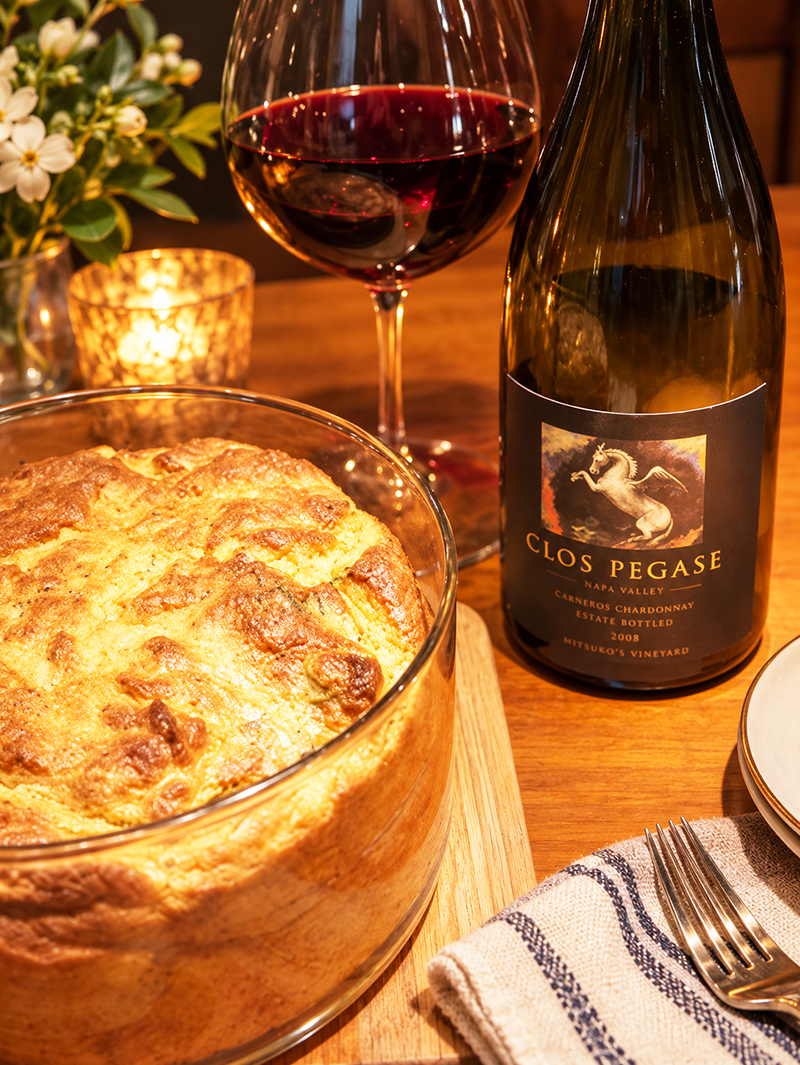
There are few things as elegant, or as easy to make, as a soufflé. My stepdaughter and her partner dropped by for Christmas, and he mentioned that, even though he is 45, he had never had a savory soufflé, much less made one. I assured him it was really simple, so I whipped up one with salmon.
Dry Creek Vineyard founder David Stare arrived in Dry Creek Valley in Sonoma, California, in 1972, opening the first winery there since Prohibition. Years of neglect of the valley’s acreage had convinced locals that Dry Creek was no longer suitable for grape growing.
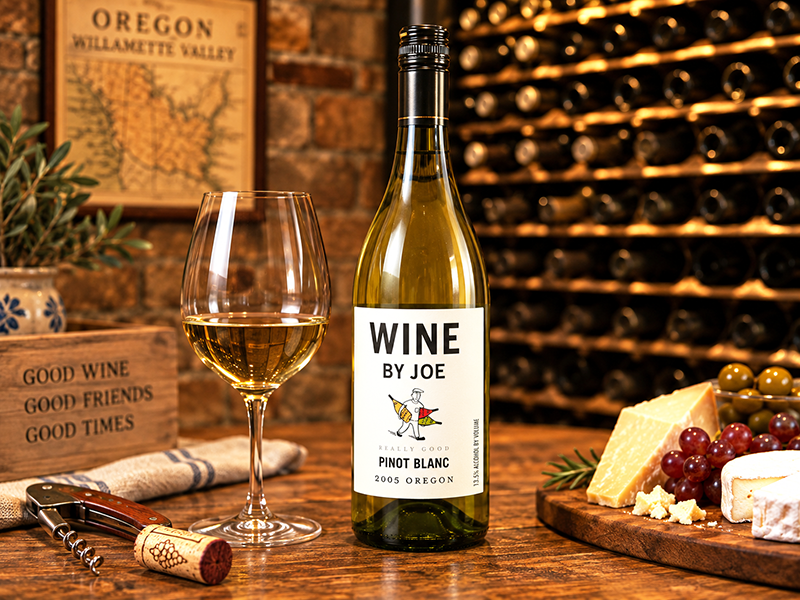
Joe Dobbes is a native of Oregon, born in the Willamette Valley. Dobbes has been making wine for others in Oregon for over twenty years, and in 2003 he started Wine by Joe as a consulting and crushing company. In 2004, Joe expanded it into a complete winery, and he added the title of winemaker. He has since passed that to Travis Procter, Director of Winemaking Operations.
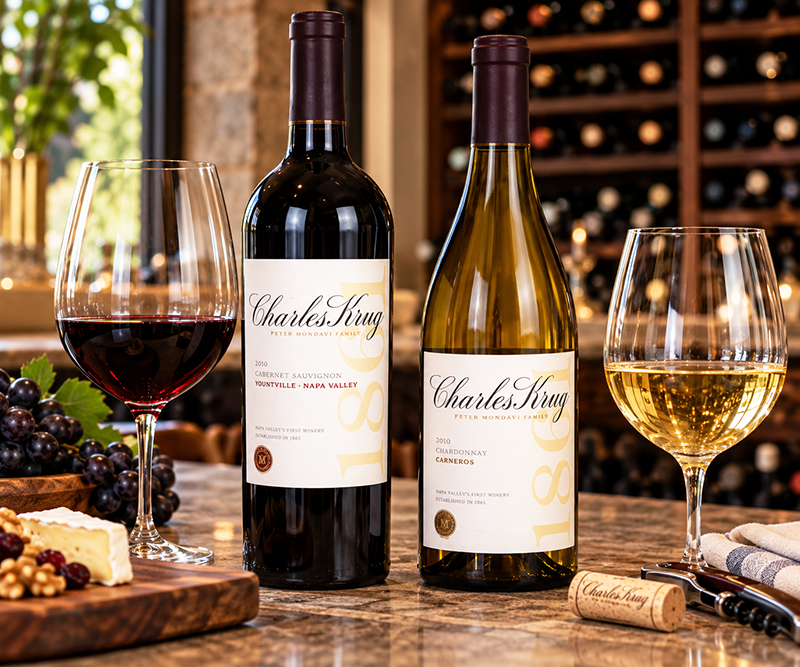
After stints as a teacher, political activist, newspaper editor, U.S. Treasury employee, and inventor, in 1861 the restless German immigrant Charles Krug established the very first commercial winery in Napa Valley.
True Ports hail from the Douro valley in Northern Portugal, and have done so for over three hundred years. The region’s predominant soil is schist, composed of variousmedium-grained to coarse-grainedmetamorphicrocks with laminated,oftenflakyparallellayers of micaceousminerals. The low annual rainfall makes this probably one of the driest regions of the world where grapes are grown without irrigation. This terroir results in very low-yielding vineyards, with vines bearing only a very few small bunches of full-flavored grapes whose thick skins protect them from dehydration.
Justin Vineyards and Winery is located in Paso Robles in California’s Central Coast region. William Randolph Hearst’s famous “castle,” San Simeon, is due west over the Sierra Madre mountains. Continue reading “Justin Vineyards”
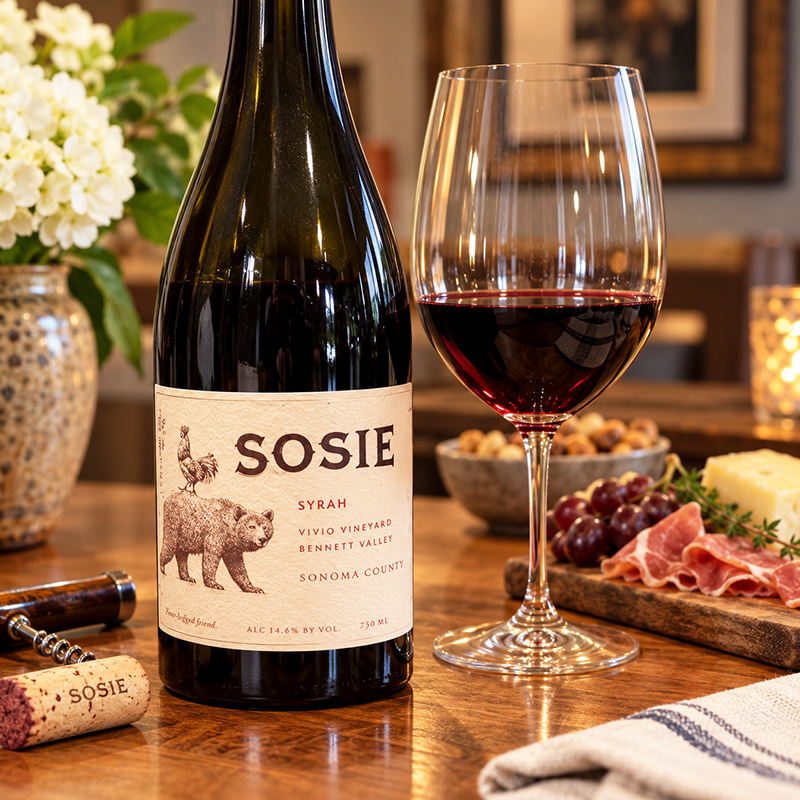
They say imitation is the sincerest form of flattery, and it’s a maxim Sosie Wines lives by. “Sosie” [so-zee] is French for twin or doppelganger, and as it says right on the bottle, “We are inspired by the wines of France. So we employ an Old World approach to wine growing that favors restraint over ripeness, finesse over flamboyance. Our aim is to craft wines that show a kinship with France’s benchmark regions. Wines that are their sosie.”
Born in San Francisco and raised in Santa Rosa, Richard Arrowood started his winemaking career in 1965 at Korbel Champagne Cellars, after earning a degree in organic chemistry at California State University, Sacramento, and completing graduate work in enology at California State University, Fresno.


 Portugese Red Table Wine