First, let’s talk about brandy vs. Cognac. Brandy is a liquor distilled from wine and aged in wood. (Brandy can be made from fruits other than grapes as well, but that’s a story for another time.) Cognac is brandy that specifically comes from the town of Cognac and the delimited surrounding areas in western France. (The one which has the most favorable soil and geographical conditions is Grande Champagne.) So, all Cognacs are brandy, but not all brandies are Cognac. For more detail on brandy and Cognac, click here.
As you can see, Clase Azul tequilas come in some of the most distinctive bottles out there, made in the mountainous Mexican town of Santa Maria Canchesda, population 1,750. There, the 180 or so employees, 80% of whom are women who grew up in poverty and with little, if any, formal schooling, decorate each bottle by hand. The entire production process takes about two weeks. And the cap isn’t chrome-plated plastic. Oh no. It is metal, that drinkers will often strike to produce a little ring after the pour. “You may have heard people talk about ‘ringing the bell’ on their Clase Azul bottle, which was actually discovered quite by accident” mentions Brand Experience Specialist Saskia Iha. “In order to use a more sustainable material, we redesigned the cap which happened to make a ringing sound when tapped just the right way. We now consider this sound the ‘unleashing’ of the magic inside the bottle.” Whatevs. Continue reading “Clase Azul Reposado Tequila”
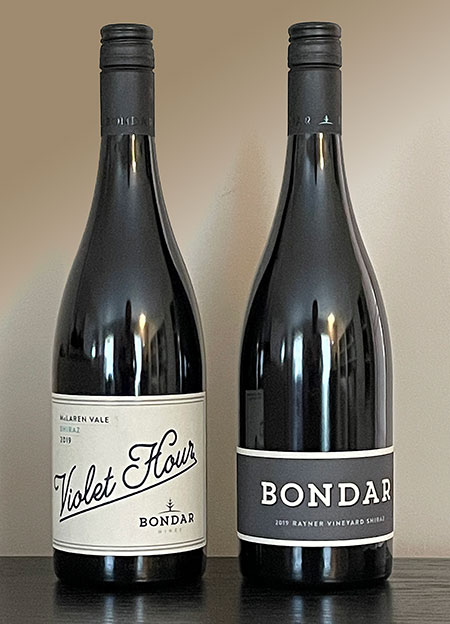
McLaren Vale is a wine region in south Australia about 20 miles from “Australia’s Wine City,” Adelaide. Vines were first planted here in 1838, but things didn’t really get going until about 40 years later. By the turn of the twentieth century, McLaren Vale was established as one of Australia’s premier wine regions, a position it holds until this day, with over 80 wineries and 13,000 acres under vine. This coastal zone sits between the Mount Lofty Ranges and the tempering sea. The growing season is long and warm, and features good air drainage to prevent frosts.
It was here that Andre Bondar decided to set up shop. He originally got the wine bug in 2001 after working a vintage in Oregon. Following that, he worked at Tyrrell’s, in the Hunter, and historic Hardys Tintara, in McLaren Vale, as well as at Padthaway. He credits a vintage with Northern Rhône legend Alain Graillot with being hugely influential, particularly in respect to the impact of whole bunch fermentation. “It changed the way I made wine,” Bondar says. Finally came formal training, and Bondar took a postgraduate winemaking degree at Adelaide University in 2005. He then worked at Nepenthe, in the Adelaide Hills, from 2006. He started as a cellar hand and left seven years later as the senior winemaker. Continue reading “Bondar Shiraz”
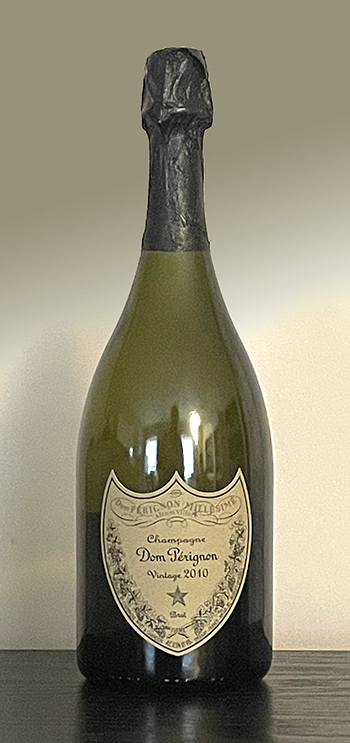
There’s sparkling wine. There’s Champagne. And then, as far as I’m concerned, there is Dom Pérignon.
Sparkling wine is simply wine that contains bubbles of carbon dioxide gas. There are four methods of infusing the wine with bubbles, which I won’t bother with here, and fizzy wine is made around the world.
“Champagne” has for a long time been used generically and interchangeably with sparkling wine. But, in the European Union and many other countries the name Champagne has been legally protected by the Madrid system as far back as an 1891 treaty, which reserved it for the sparkling wine produced in the eponymous region and adhering to the standards defined for it as an appellation d’origine contrôlée. In the early 2000s Australia, Chile, Brazil, Canada, and China passed laws that limit the use of the term “Champagne” to only those products produced in the Champagne region. Since 2006, the United States has banned the use from all U.S.-produced wine brands, with a specific exception: producers that had approval to use the term on labels before 2006 may continue to use it, provided the term is accompanied by the wine’s actual origin (e.g., “California”). Hence, a wine such as “Korbels California Champagne,” is still allowed.
Dom Pérignon is named after a Benedictine monk, Dom Pérignon (1638–1715), who was a pioneer in Champagne wine but who, contrary to popular myth, did not discover how to make sparkling wines*. However, he was the inventor of the second fermentation in the bottle, the Méthode Traditionelle (formerly Méthode Champenoise), that creates Champagne as we know it.
Scheid Family Wines got their start in 1972 when Al Scheid first purchased property in Monterey County and wine grape growing there was in its infancy. Scheid was drawn to the region for what he considered its untapped potential, for making money as well as farming. Scheid was running his own investment company at the time. A graduate of Harvard Business School and an investment banker, he realized that vineyards could make an excellent tax shelter, with their usual heavy investment on the front end and no income until at least five years later. Originally named Monterey Farming Corporation, the enterprise he founded was a limited partnership; the tax laws at that time allowed investors to offset losses in one business against regular income from another one elsewhere. And even before one acre was planted, Scheid, shrewd operator that he was, had found a customer for 100% of the grape production he anticipated (although, I’m guessing, not allowing revenue to outpace expenses, for a few years at least).
In 1881, Josephine Marlin Tychson and her Danish husband, John, traveled from Pennsylvania to St. Helena in the hope of alleviating his tuberculosis and becoming vintners. They purchased 147 acres of property just north of town from a retired sea captain, William Sayward, who had earlier bought the land from Charles Krug. They planted Zinfandel, Riesling, and “Burgundy” vines on the estate. Five years later, Tychson Cellars was established, but not before John’s despair over his affliction caused him to kill himself.
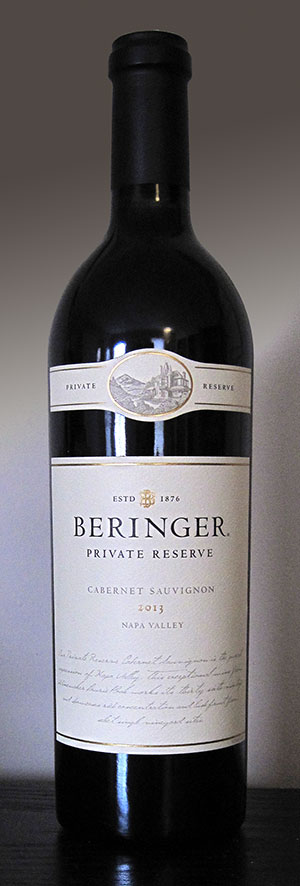
Three decades ago, on my first visit to Napa valley, I stopped by Beringer for a tasting. I didn’t know much about Beringer at the time, mostly that they had a long history and made some well-regarded wines. Back then, tastings were free, but a friend had given me a tip to skip that and head upstairs to the Founders room, where you could sample Beringer’s best wines for $10. As a bonus, there was a crowd downstairs, but I had upstairs nearly to myself. I left that session with a life-long affinity and appreciation of what Cabernets from Napa could be like. (Today, the basic tasting is $45, and the high-end samplings are $125 or $150, depending on which way you go. Ouch.)
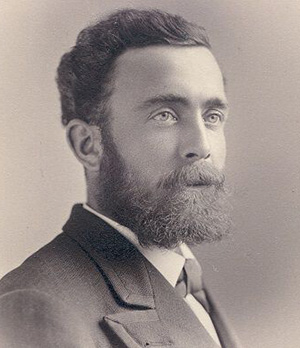
Jacob Beringer
In 1868, Jacob Beringer, enticed by the opportunities of the new world, sailed from his home in Mainz, Germany, to New York. However, after hearing that the rocky hillside soil and fertile valley floor of Napa Valley resembled that of vineyards back home in Germany, Jacob made his way to California in 1869. He became cellar foreman for Charles Krug, one of the first commercial winemakers in Napa Valley. A few years later, in 1875, Jacob and his brother, Frederick, purchased 215 acres next door to Charles Krug in St. Helena for $14,500. This parcel of land, known as Los Hermanos (the brothers), became the heart of the Beringer estate.
Here, the brothers oversaw their first harvest and crush in 1876. With Jacob serving as winemaker and Frederick as financier, they made approximately 40,000 gallons of wine, or 18,000 cases, that first year. In order to house the fermentation tanks, the first two floors of the original winery were built, and Chinese workers began digging a 1,200-foot-long tunnel to store the wine for aging.
In 2002, Mark Wenzel, his wife Teri, and childhood friend Sean Ginocchio (who sold his interest in 2010) founded August Hill Winery on the hilltop land his grandfather August Engelhaupt had farmed, occasionally with Wenzel’s help. Located in Utica, Illinois, about 90 miles southwest of Chicago, in the ensuing years August Hill has expanded to include caves for aging wine, a tasting room, and a sparkling wine label called Illinois Sparkling Company.
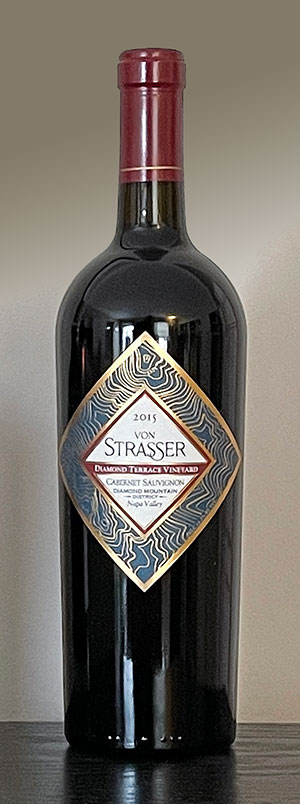
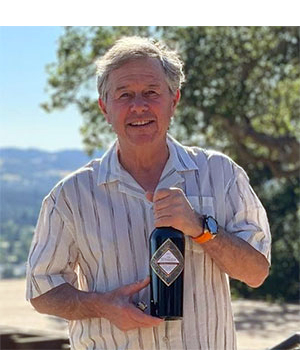
Rudy von Strasser is a Napa legend; he’s worked there for over 30 years, and played a huge part in founding the Diamond Mountain District, a part of the Mayacamas Range dividing Napa Valley from Sonoma Valley, and famous for its Cabernet. He was also instrumental in having the region designated as an AVA (American Viticultural Area).
Von Strasser first entered the wine business in 1989, but he didn’t start out there. He graduated from the University of New Hampshire in 1980 with a thesis on hard-cider production, quite arcane for the time. His vision was to modernize the cider industry. While traveling the country with the intention of gleaning tips-and-tricks from the wine industry to apply to hard-cider production, he took a job at Robert Mondavi Winery in 1980; while there, he ended up falling in love with wine instead. He enrolled in UC Davis, famous for spawning thousands of winemakers, and graduated in 1985. Blessed by good fortune, a family friend introduced him to Baron Eric de Rothschild at Chateau Lafite-Rothschild and von Strasser became the first American intern at the venerable chateau. After his year was up, von Strasser returned to Napa Valley and worked for both Trefethen in the cellar and then Newton Vineyard as the assistant winemaker under John Kongsgaard. In 1989, immediately after his marriage to Rita, the couple began looking for a vineyard property on which to make their home.
In short order, they located a small block of property on Diamond Mountain that was originally planted in 1970 and was known as Roddis Cellars, but was being used by its then owner the British Gilby Gin family as a corporate retreat. In 1990, the von Strassers bought the estate and began renovating and modernizing the property, including an historic barn. Getting off to a running start, the first vintage was produced that same year from the existing six acres of Cabernet Sauvignon. Located in a large bowl in the mountain, which is also home to Diamond Creek and Reverie wineries, the von Strasser estate vineyard today is planted with 12 acres of Cabernet Sauvignon plus about three acres of Petit Verdot, Malbec, and Grüner Veltliner at 500 to 1,000 feet in elevation. Continue reading “Von Strasser Cabernet Sauvignon”
Scheid Family Wines got their start in 1972 when Al Scheid first purchased property in Monterey County and wine grape growing there was in its infancy. Scheid was drawn to the region for what he considered its untapped potential, for making money as well as farming. Scheid was running his own investment company at the time. A graduate of Harvard Business School and an investment banker, he realized that vineyards could make an excellent tax shelter, with their usual heavy investment on the front end and no income until at least five years later. Originally named Monterey Farming Corporation, the enterprise he founded was a limited partnership; the tax laws at that time allowed investors to offset losses in one business against regular income from another one elsewhere. And even before one acre was planted, Scheid, shrewd operator that he was, had found a customer for 100% of the grape production he anticipated (although, I’m guessing, not allowing revenue to outpace expenses, for a few years at least).
Although my observation is that the risk of cork taint in wine has been reduced over the past couple of decades, it does still exist, and some even maintain that it is an increasing problem, affecting up to 5 percent of wines. Cork taint is the result of a chemical compound that can occur in the bark of cork trees (a type of oak grown in Spain and Portugal) 2,4,6-Trichloroanisole or TCA, which produces a musty, moldy odor that people are sensitive to in varying degrees. Although harmless to health, it is a fault that negatively impacts the enjoyment of a wine. Whether because of this risk or other factors such as cost or convenience, some producers have turned to other ways to close their wine bottles. These include corks that are made from bark that has been ground up, processed to eliminate TCA, and reconstituted as corks; synthetic stoppers manufactured to look and feel as much as possible like natural cork; ever-increasingly popular screw caps; rarely-seen glass stoppers; and plastic plugs. Plastic plugs are my absolute least favorite solution. They are hard to extract, hard to reinsert, and regardless of what the plastics industry continues to assert, nearly impossible to recycle.
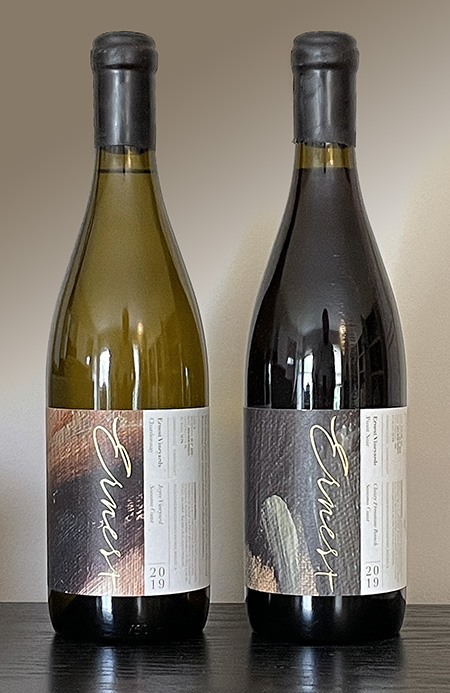
Ernest Vineyards Joyce Vineyard Chardonnay and Ernest Vineyards Cleary Freestone Ranch Pinot Noir Click here for tasting notes.
Ernest Vineyards Joyce Vineyard Chardonnay 2019 and Ernest Vineyards Cleary Freestone Ranch Pinot Noir 2019
An American Viticultural Area, or AVA, is an American wine-growing region classification system inspired by the French Appellation d’Origine Contrôlée, or AOC, but without the French rigor. An AVA simply defines a geographic area, and omits grape varieties, maximum production per acre, alcohol levels, etc. The requirements for wine with an AVA designation is that 85 percent of the grapes used must be grown there, and the wine be fully finished within the state or one of the states in which the AVA is located. AVAs range in size from several hundred acres to several million; some reside within other larger AVAs.
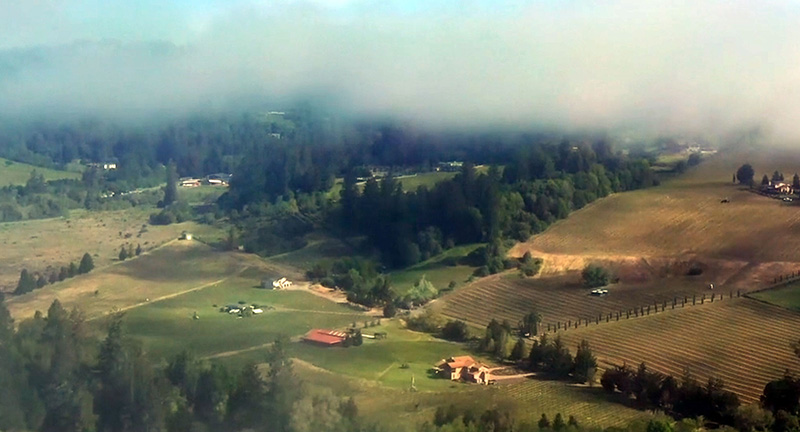
California’s newest AVA is the West Sonoma Coast American Viticultural Area, located on the farthest western sliver of Sonoma County, holding approximately 50 vineyards planted with varieties ranging from Pinot Noir and Chardonnay to Syrah in this cold, marginal grape-growing region.
Sonoma’s 19th AVA encompasses the steep, rugged mountainous terrain along the Pacific Ocean coastline. Elevations range from 400 to 1,800 feet, with vineyards planted on steep ridge tops along the San Andreas fault line up against the consistently cold Pacific Ocean, both above and below the fog line. The maritime conditions moderate the temperature in the vineyards – daytime highs are cooler, while nighttime lows are warmer than just a few miles inland. This modest diurnal temperature swing allows the fruit to ripen slowly throughout the day and the night, a phenomenon experienced only in a truly cold-climate, maritime environment.
For West Sonoma Coast Vintners member Alma Fria, the West Sonoma Coast is distinguished by its remarkable originality, “The West Sonoma Coast combines a cold, maritime climate with rocky, well-drained soils and a mountainous topography. It is a rare terroir indeed, one that distills coastal redwoods with a seafaring spirit. It has lured adventurers, naturalists, and pioneers for a near century.”
Indeed, the area comprising the West Sonoma Coast AVA has a long agricultural history dating back to the 1880s, with the earliest vitis vinifera vines planted as early as 1817. In addition to wine grapes, the area still produces commercial apples and supports a lively dairy and ranching industry, as well as many nature parks, conservancy efforts and environmental projects.
Ernest Vineyards
Todd Gottula and Erin Brooks
Located in the new AVA, Ernest Vineyards was co-founded by wife and husband team Erin Brooks and Todd Gottula in 2012. The winery was named for Gottula’s grandfather, Ernest, who he credits with introducing him to every aspect of good food, good service, and good wine. First working in the technology industry, Gottula has been in the wine world since 2007, when he bought a four-acre vineyard and planted Pinot Noir, embarking on a new phase as a grape grower. He went on to develop relationships with winegrowers and wine producers in the Sonoma region. Continue reading “Ernest Vineyards”
Nancy Tenuta is one of only six female winery owners in the Livermore Valley, due east of San Francisco. Tenuta and her then-husband Ron purchased a 22-acre lot just east of the Ruby Hill subdivision in Livermore in June 2000 with the vision of immersing themselves in the world of wine. There, 14 acres of Pinot Noir and Chardonnay were being grown in about a 50/50 mix. All of the vines were between 12 and 25 years old at the time. To establish Tenuta Vineyards, over the next three years the Tenutas built a 16,000-square-foot winery and a 5,000-square-foot estate home nearby. In all, they invested more than $5 million in the project, money that Nancy Tenuta collected using a variety of “creative” means, according to her, given that banks aren’t fond of such risky ventures.
An American Viticultural Area, or AVA, is an American wine-growing region classification system inspired by the French Appellation d’Origine Contrôlée, or AOC, but without the French rigor. An AVA simply defines a geographic area, and omits grape varieties, maximum production per acre, alcohol levels, etc. The requirements for wine with an AVA designation is that 85 percent of the grapes used must be grown there, and the wine be fully finished within the state (or one of the states) in which the AVA is located. AVAs range in size from several hundred acres to several million; some reside within other larger AVAs.
Located 20 miles inland from the Pacific Ocean halfway between Los Angeles and San Francisco, Paso Robles is in California’s South Central Coast region. It is one of California’s oldest wine production areas, with a winemaking tradition that stretches back to the 1790s. Nearly 80% of the wines produced here are red varietals, including Syrah, Zinfandel, Cabernet Sauvignon, and Merlot. The climate of hot days ripen the grapes, and cool nights help to maintain acidity, complexity, and aromatics. Soils vary from silts to silt loams to clay to limestone.
An entrepreneur out of St. Paul, Minnesota who founded and grew a broad range of innovative businesses, Robert Hall and his family went on a trip to southern France in the 1970s and their passion for wine began. After “retiring” in 1999, he came to Paso Robles to realize his dream of owning a winery, which he did until his death in 2014.
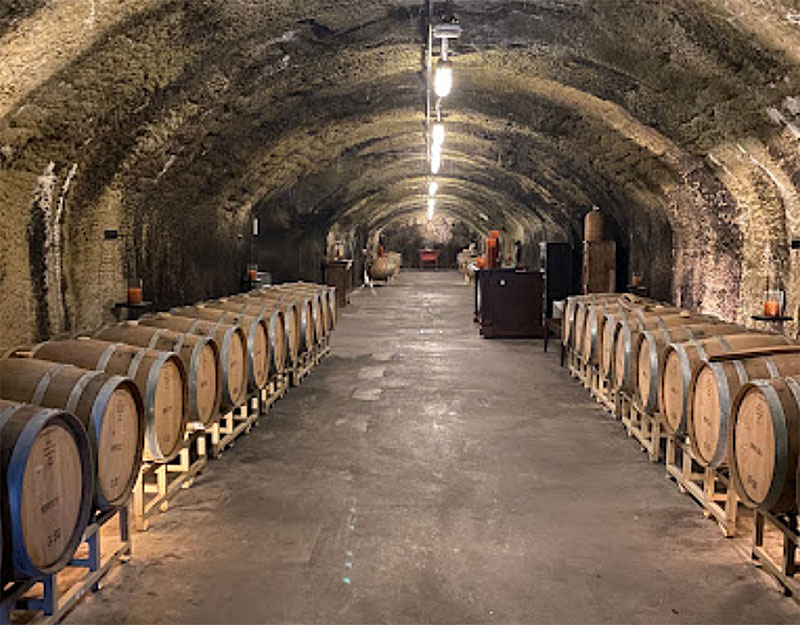
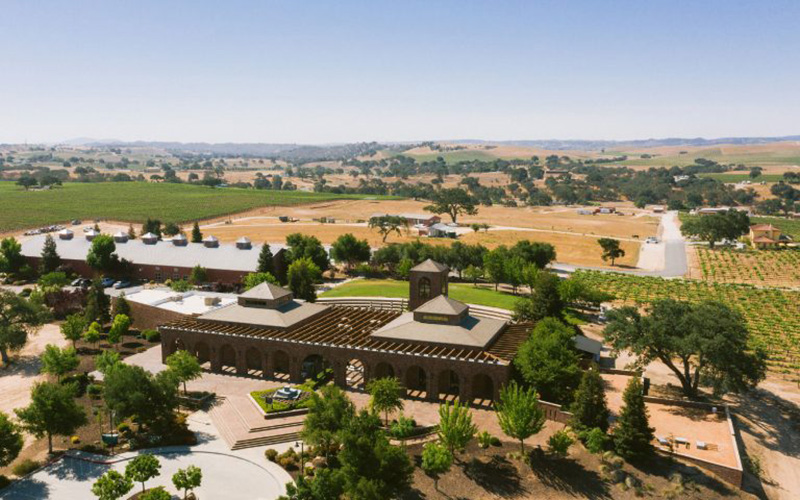
When Hall and his wife Margaret purchased the land “there was nothing there” as she recalled, “but dirt.” The two were hands-on building their dream, designing the production facilities and winery. Twenty-six feet below ground are 19,000 square feet of caves. This cool sanctuary is home to 4,000 premium French oak barrels. Now the fifth-largest winery in Paso Robles, Robert Hall was named “Winery of the Year” by the California State Fair and California Mid-State Fair.
The winery and tasting room.
In August of 2016, Robert Hall was purchased by O’Neill Vintners & Distillers, the seventh-largest wine producer in California by volume. In addition to Robert Hall, the company’s national brands include Line 39, Harken, Exitus, Day Owl Rose, Austerity, and Intercept. Continue reading “Robert Hall Cabernet Sauvignon”