Laphroaig Scotch

Laphroaig Scotch

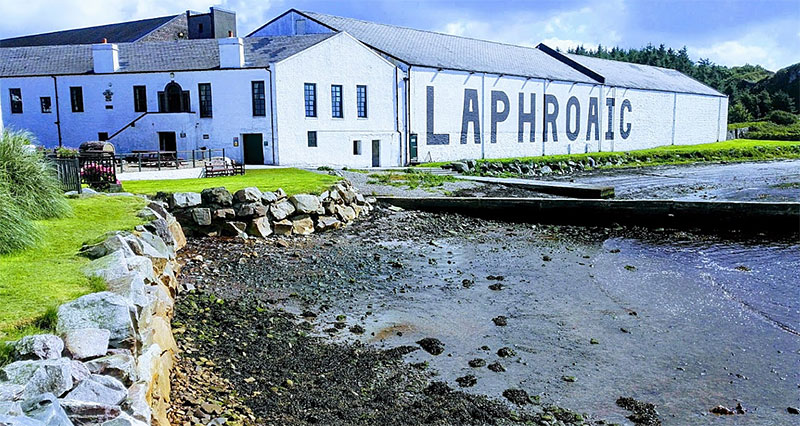
Laphroaig (La-‘froyg) literally means “the beautiful hollow by the broad bay.” The secret to Laphroaig is that it benefits from the happy circumstances of where it is produced—next to ocean water and on land that gives Laphroaig a unique peaty taste. It is one of only a few distilleries that still uses traditional malting floors, and dries and infuses its own malt with the thick smoke from old peat-fired kilns.

The History

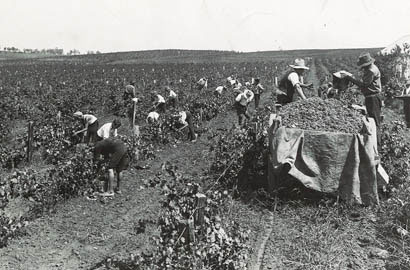
Around 1810, two brothers, Donald and Alexander Johnston, leased 1000 acres from the laird of Islay for rearing cattle.  They require “feed” barley to sustain them during the long winter months, and often there is a surplus.  But, what do you do with it? For an Islay Scotsman there is only one thing to do: distill whisky.

Word soon spread around Islay that the whisky being produced at Laphroaig was particularly good, in part because of their water being very soft and lacking in minerals. In short order, it became  more profitable to distill whisky than raise cattle, and in 1815  Laphroaig whisky was “officially” born.
x
In 1836, Donald bought out his brother Alexander for £350.  He later emigrated to Australia, where he died in 1881. Unfortunately, Donald only lived until 1847. It is believed that he died after falling into a vat of partially-made whisky, a fitting end if true. Donald’s only heir was his son, Dugald. At just 11 years old, he was too young to take over, obviously, so the distillery was looked after by his uncle, John Johnston, and a local farmer, Peter McIntyre.

By 1857, Dugald Johnston was old enough to take over the running of the distillery, assisted by his cousin, Alexander Johnston. Together they ran the operation until Dugald died in 1877.

Alexander died in 1887, and the distillery was inherited by his sisters, Mrs William Hunter and Katherine Johnston, and his nephew, J. Johnston-Hunter.  That same year, the leading whisky journalist of the time, Alfred Bernard, reported. “The whisky made at Laphroaig is of exceptional character. The distillery is greatly aided by circumstances that cannot be accounted for… largely influenced by the accidents of locality, water and position.”

Ian Hunter took over the running of the distillery in 1921, and revitalized it after years of costly disagreements with nearby competitors.

By 1923 the Laphroaig capacity had doubled, and the malting floors (where the barley germinates into malt, prior to fermenttion) as they now stand, were completed. A new wash still and spirit still were erected.  Hunter, being a stickler for detail, insisted they be exact duplicates of the originals.

With the increased production, exports grew to Latin America, Europe, and Canada. Even Prohibition America was targeted.  Ian managed to persuade US customs and excise officials that the whisky’s pungent seaweed or iodine-like nose was evidence of Laphroaig’s medicinal properties. A skillful salesman, indeed.

Bessie Williamson left Glasgow University with an MA in 1932. In her search for regular employment during the ongoing Depression, she kept in close touch with her uncle Willie, who was accountant to none other than Ian Hunter. One summer, Hunter wrote to Willie asking if he knew of a reliable woman for a summer office job. Bessie jumped at the chance, and arrived unaware that it would be 40 summers before she left.

Hunter was the last of the family line. The firm’s secrets had been carefully guarded by the family over the years, and Ian was incredibly protective with regards to the distillery, its setup, and the whisky’s recipe. However, in Bessie he found a person that had passion, integrity, and the drive to maintain the traditions of Laphroaig. So, over the years, he passed on to her all the distillery knowledge he had acquired.

Hunter died in 1954, bequeathing the distillery to Williamson.  She took the reigns as one of the first female owners and distillers in the industry. She was a pragmatist, and knew that for Laphroaig to continue to grow, it needed the support of an international group, one that would continue the old traditions but had the financial muscle to carry the brand through to new global markets. So, between 1962 and 1967 she gradually sold the operation to Seager Evans & Co (a subsidiary of Schenley International).

Williamson retired in 1972, and died 10 years later. John McDougal, who succeeded her as distillery manager, reminisced, “It was an honour to work with Bessie Williamson, and I will never forget her words of wisdom. They have stood me in good stead the years since she left the office next to mine. So far as I am concerned, she has never left Laphroaig.”

Over the course of the 1980s, Laphroaig’s reputation grew under a succession of managers. McDougal was followed by Denis Nicol, who in turn was replaced by Murdo Reed.  Iain Henderson arrived in 1989.  His 14-year tenure marked the dawn of a new era, one that saw the distillery being granted a Royal Warrant by Prince Charles and the accumulation of a raft of top-class awards.

In 1990, the distillery was sold to Allied Spirits, a subsidiary of Allied Lyons, which in 1994 changed its name to Allied Domecq after acquiring the Spanish brandy and sherry giant Pedro Domecq. It was during this time that Laphroaig 10 Year Old became the world’s fastest-selling single malt.

In 2005, Allied Domecq was acquired by Pernod Ricard, which immediately sold Laphroaig to Fortune Brands, rebranded as spirits specialist Beam, Inc. in 2011.

John Campbell was named distillery manager in 2006, fulfilling a 12-year-old ambition. He is the first Ileach (native of Islay) to run the distillery in its over 200-year history.

Three of the Whiskys

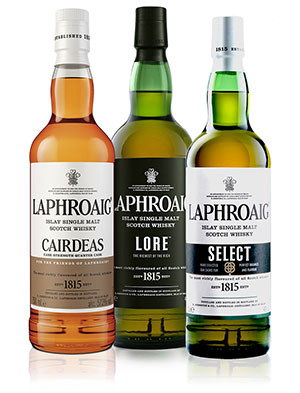
Laphroaig Cairdeas

Each year, Campbell crafts a limited-edition malt to celebrate friendship (“Cairdeas” in Gaelic).  (Visit the distillery’s web site for information on the most recent selection.)  For 2017, Laphroaig Cairdeas Quarter Cask offered a doubling of flavor, due to maturation in pairs of American oak barrels. The 2017 Cairdeas featured different ages of Laphroaig matured for more than five years in first-fill bourbon casks, then laid to rest for a second time in smaller quarter casks. After six months of further maturation, the liquid from 177 of the casks was bottled at Cask Strength — no color added, no chilling, and a simple barrier filtration. The flavor features a sweet vanilla dryness that develops into a creamy, oily mouth-feel with bitter licorice root and a throat full of smoke. The finish is long, creamy, and (predictably) smoky.

Laphroaig Lore

This whisky is rich and deep with smoke, peat, and seaside minerality. The flavor is the result of liquid being drawn from a selection of casks, including first-fill ex-Bourbon barrels, virgin European oak, first-fill Oloroso Sherry butts, first-fill and refill quarter casks, and refill ex-Laphroaig stock. The taste is richly peaty with a spicy chili bite. The finish is short and dry, but with an unexpected long, sweet aftertaste.

Laphroaig Select

This expression brings selections of Quarter Cask, PX Cask, Triple Wood, and 10 Year Old together to create a subtle blending of peat, oak, and sweetness. The spirit sees a final maturation in new American Oak casks. For the last six months of aging, Select rests in the highest, warmest reaches of the Laphroaig warehouse during the Scottish summer. On the palate, this whisky is deep, complex, and smoky, with a bit of sweetness. The long finish features smoke and spice.

By Spirits Contributor Neal Kotlarek

www.laphroaig.com/en/

Back to blog posta: winervana.com/blog/
Riedel Glasses

Riedel Glasses

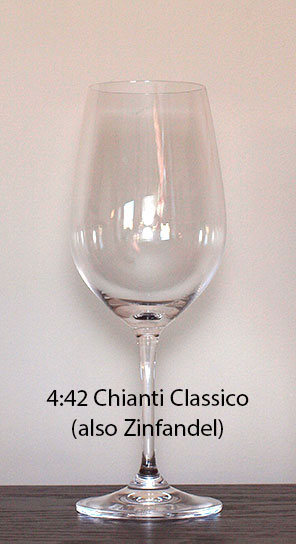
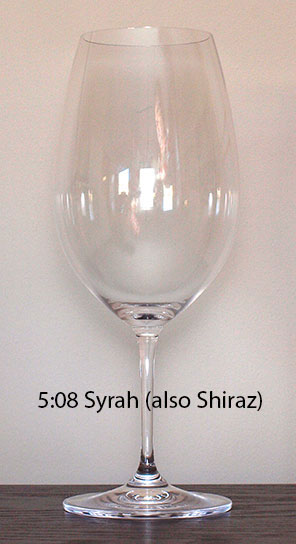
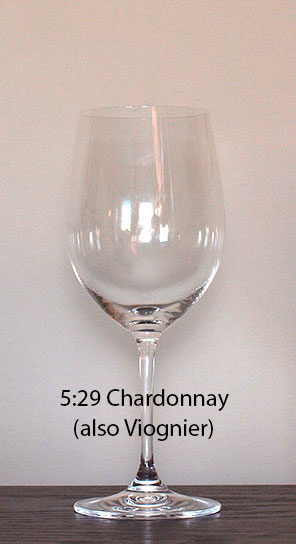
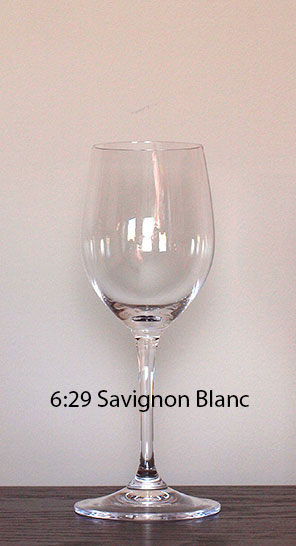
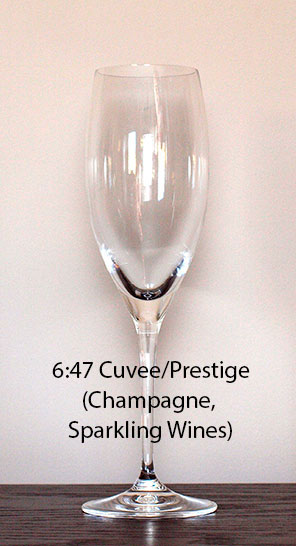
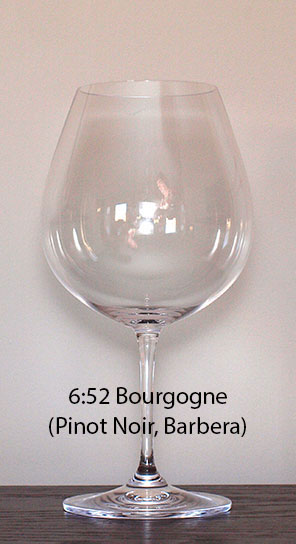
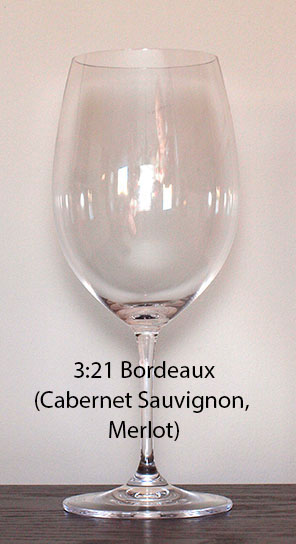
Established in Bohemia in 1756, Riedel (REE-dəl) Crystal is a glassware manufacturer based in Kufstein, Austria.  Riedel was an early pioneer and proponent of glassware designed to enhance different varietals of wines.  In the early 1990s, wine writer Robert Parker of the Wine Advocate became a major fan and proselytizer.  The glasses below are the ones I own and discuss in my podcast on stemware (these are from Riedel’s Vinum line).   If you are interested in Riedel but think this is overkill, I suggest you go with the Bordeaux and Chardonnay.  Those two glasses should accommodate about 85% of your needs.

Read about Riedel’s in-depth explanation of why different glasses matter here.

Although, like Parker and many others, I am a fan of Riedel, not everyone agrees.  In 2004, Gourmet magazine reported that “Studies at major research centers in Europe and the U.S. suggest that Riedel’s claims are, scientifically, nonsense.” The article cites further evidence from Yale researcher Linda Bartoshuk, saying that the “tongue map,” claimed by Riedel as an important part of their research, does not exist. According to Bartoshuk, “Your brain doesn’t care where taste is coming from in your mouth … and researchers have known this for thirty years.”  I leave it to you to decide for yourself.

Back to blog posts: winervana.com

Trefethen Vineyards

Trefethen Oak Knoll Cabernet Sauvignon 2018 and Trefethen Oak Knoll Chardonnay 2018.
Trefethen Oak Knoll Cabernet Sauvignon 2018 and Trefethen Oak Knoll Chardonnay 2018. Click here for tasting notes.

Trefethen Family Vineyards

The pioneering Trefethen Family Vineyards is truly a rarity in the Napa Valley: a winery that grows, vinifies, and ages all of its wines entirely on the property, and has been helmed by a single family for three generations.

The area in which Trefethen is located is one of the oldest in Napa Valley’s wine history. Nearly 2,000 acres were originally purchased in 1851 by J.W. Osborne, who called it Oak Knoll. He planted grapes there the following year, and by 1860 had the largest vineyard in Napa, at 50 acres.

In 1886, banker brothers James and George Goodman founded the Eschol winery in Oak Knoll. The name was taken from the Old Testament,  Numbers 13:24, “The place was called the brook Eschol, because of the cluster of grapes which the children of Israel cut down from thence.” The original estate was 280 acres, with 40 acres planted in vineyards. The winery used a gravity-flow system: a horse-drawn winch brought grapes to the third floor of the three-story structure for crushing; gravity carried the juice to the second floor for fermenting; and, eventually, the wine descended to the first floor for aging. It is now the only surviving example in Napa Valley of a wooden gravity-flow winery from the 1800s. After struggling through Prohibition, by 1940 the winery building had fallen into disuse, although for a time in the ’40s Beringer Winery used the space as a storage facility and leased the surrounding vineyards.

x
Following retirement from a successful career, including CEO, with Kaiser Industries, Eugene Trefethen along with his wife Catherine, better known as Katie, purchased Eshcol and six adjoining properties in 1968, with the goal of become genteel farmers.  They installed a robust water system that still serves the vineyard today, but neither of them ever wanted a winery.

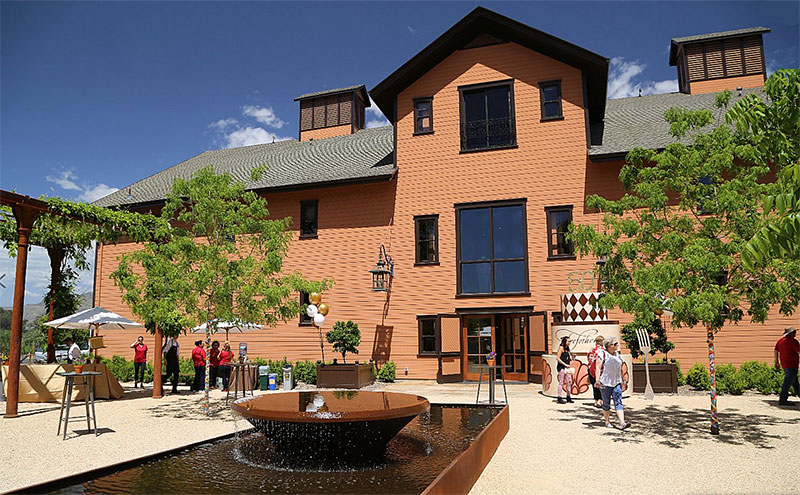
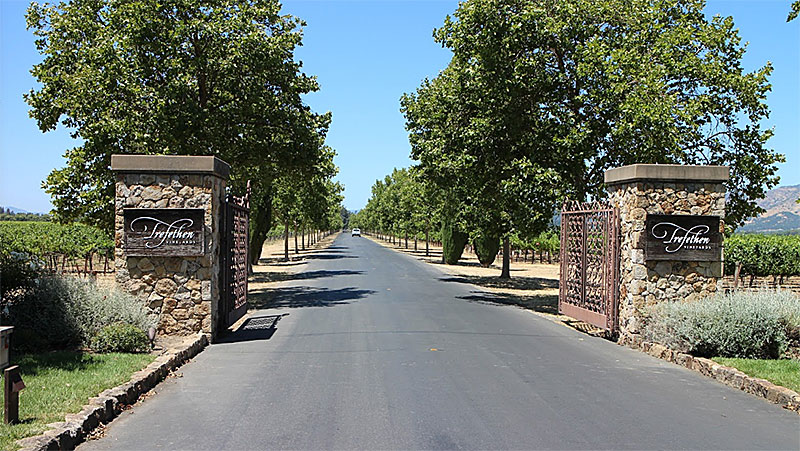
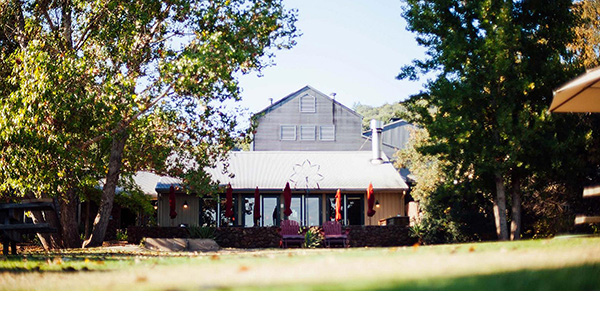
The winery operation got going in 1973, the year the Trefethen’s son John and his wife Janet produced their first commercial vintage (2,000 cases of Chardonnay and Pinot Noir).  They also replanted the vineyards and restored the historic winery building.  Located at the end of what is possibly the longest winery driveway on the Napa Valley floor, it is the largest winery in the Oak Knoll district.

The trees were eventually planted to prevent John Trefethen from using the driveway to land his private plane. Photo: Carlin Arthurs

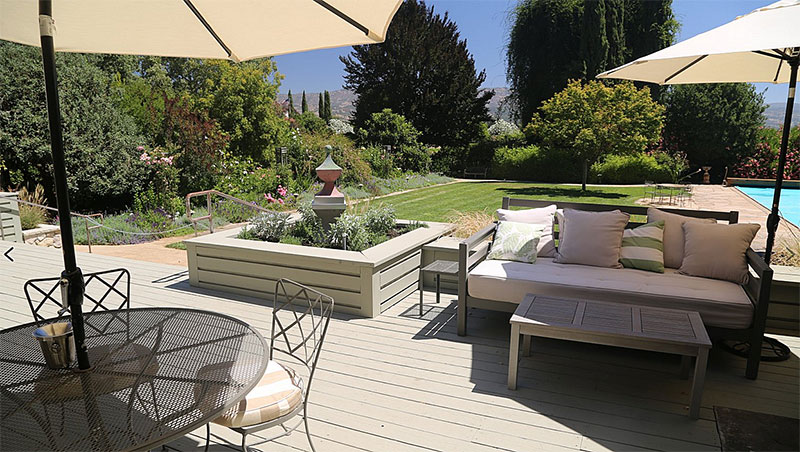
The Trefethens’ restoration efforts were recognized in 1988 by the Department of the Interior, which placed the winery on the National Register of Historic Places. The property is also known for an extensive garden established by Katie. It has been featured in many publications, and has been a destination for many gardening enthusiasts since it was created.

The flower logo shown here has been part of Trefethen’s branding since the  beginning. Katie had originally used it on signage in her garden areas, and the winery put it on the bottle capsules from very early on. It was long referred to as the “Welsh Flower,” thinking that Katie had tapped into her Welsh heritage. But later research couldn’t find any Welsh history for the mark, so its origins remain a mystery, and it is now just called the “Trefethen Flower” instead.

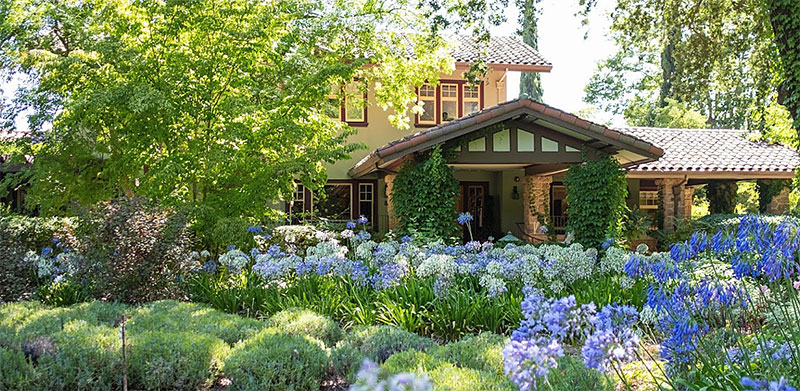
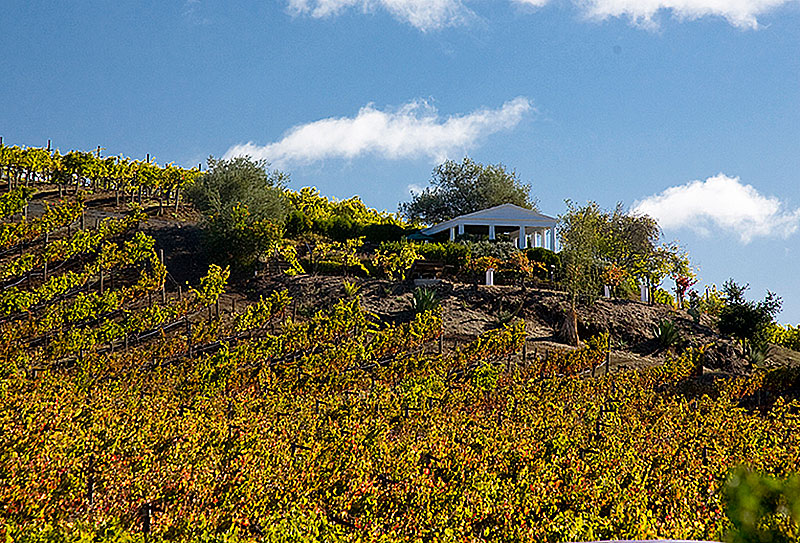
Eugene and Katie Trefethen's residence, The Villa, is now used for special events.
Eugene and Katie Trefethen’s residence, The Villa, is now used for special events.

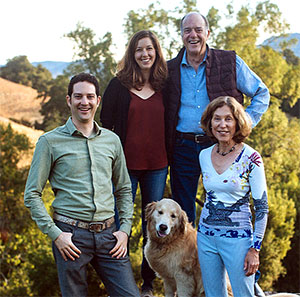
John and Janet Trefethen have largely stepped back from day-to-day oversight, and the third generation of the family is now deeply involved in the operation. Son Lorenzo focuses on sales and marketing, and daughter Hailey on vineyards and employees.

In addition to the family, Jon Ruel has long been a part of the business.  He started as the viticulturist, but steadily increased his involvement over the years that have followed. He is now fully responsible for all aspects of the company’s operations and strategy, and was named named CEO in 2015. He had this to say about Trefethen, ““As a true estate winery, we have the unique opportunity to bring integrity to every step of the process, from the soil to the table. My entire focus these days is on cultivating this extended family – and when we succeed, you  can not only taste it in the wine, you can feel it.”

Winemaker Bryan Kays joined Trefethen in 2006 as a viticulture intern. Fascinated with estate-grown wines, he started in the cellar, and eventually worked up to the position of winemaker in 2015.

x

In 1979, a “Wine Olympics” was organized by the French restaurant guide Gault Millau in Beaune, France. A total of 330 wines from 33 countries were evaluated by 62 experts from ten countries. The 1976 Trefethen Chardonnay won first place in the category that pitted California Chardonnays against those from Burgundy, and was judged best in the world. This came three years after the more-famous “Judgement of Paris,” further helping to establish the quality of American wine in the world market.

The spirit of support and cooperation in northern California’s wine country that has been so much in evidence during this year’s wildfires goes way back.  Two now-notable wineries got their start at Trefethen. Cakebread Cellars purchased some grapes for their first vintage from Trefethen, and made their initial wine there. Domain Chandon (the American operation of the French Champagne leviathan Moët et Chandon) began their winemaking efforts by taking over the second floor of the winery while their own facility was being constructed.

The Vineyards and Environmental Commitment

The Main Ranch Vineyard.   Photo: Arturo Pardavila
The Vineyards

The original 400 acres surrounding the winery are known as the Main Ranch.  It sits on the largest alluvial fan in Napa Valley, where Dry Creek spills onto the valley floor and spreads gravel eroded from the Mayacamas mountains over clay and loam left by an ancient ocean. Over twenty different soil types have been identified in the vineyard, allowing Trefethen to grow nine different varieties there, all planted in their preferred soil.

Trefethen now also owns another 150 mostly hillside acres surrounding a spring-fed creek, the Hill Spring Vineyard, of which 40 acres are planted to Bordeaux varieties. It is about three miles from the winery in the foothills of the Mayacamas.

Although a relatively large producer (about 75,000 cases annually, but it varies with each harvest). Trefethen has farmed their vineyards sustainably since the beginning. They are all managed by employees, without outsourcing the work to a vineyard management company. A true “estate” operation, they have never purchased grapes from anyone.

Biodiversity

Bluebirds, owls, and bats inhabit the vineyards. All of these species are native to the area and play important roles as natural predators. The property also attracts other birds of prey such as kestrels and red-tailed hawks. Cover crops provide habitat for beneficial insects, spiders, jackrabbits, and more, all of which play important roles in the ecosystem. Cover crop use also increases water infiltration as the roots create channels in the soil that can directly impact soil fertility via nitrogen fixation.

Soil Health

Every part of the grape cluster but the juice– the stem, skins, and seeds – is combined with clippings from the gardens and manure from the  stables to make a compost which is spread out into the vineyard each year.

Water Conservation

The property includes two reservoirs. After collection, the water is transferred to biological settlement ponds, where the organic compounds are digested by bacteria, rendering the water appropriate for re-use in vineyard irrigation.

Energy Usage

A number of solar arrays are on the property, providing power for the winery and production facilities. They were one of the first wineries to offset 100% of their electricity usage with on-site solar power.

Certifications

As a major part of their commitment to ecological responsibility, Trefethen participates in a number of certification programs.

The Napa Green organization supervises two programs.  Land is an umbrella program that recognizes growers with validated environmental compliance and verified farm plans as meeting standards for watershed stewardship. Winery is one of only four sustainable winegrowing programs nationwide, offering the opportunity for comprehensive soil-to-bottle certification in both the vineyard and winery.

The California Sustainable Winegrowing Alliance is a certification program that provides verification that a winery or vineyard implements sustainable practices and continuous improvement

Trefethen Family Vineyards Oak Knoll District Estate Chardonnay 2018

Trefethen’s highest-volume wine, this Chardonnay was 100% sourced from the Main Ranch. After both barrel and malolactic fermentation, the wine was aged for nine months in 13% new oak.

It is a pale straw gold in the glass. The nose presents aromas of lemon, lime, and grapefruit, plus a hint of peach. The smooth palate features these same flavors, as well as some lemon curd and just a suggestion of oak. It’s all wrapped up in a refreshing zippy acidity. The ABV is 13.3%, and 28,800 cases were produced.

Trefethen Family Vineyards Oak Knoll District Estate Cabernet Sauvignon 2018

This wine is a blend of 84% Cabernet Sauvignon (enough that it isn’t labeled a “red blend”), 10% Petit Verdot, 3% Merlot, 2% Malbec, and 1% Cabernet Franc, all sourced from the Main Ranch vineyard. It always amuses me when winemakers include 1 or 2% of something.  It’s hard to imagine how much difference that could make, but they certainly think it is worth the effort. After fermentation, it was aged for 18 months in 52% new oak.

This full-bodied wine is inky dark purple. The nose displays aromas of dark stone fruits, particularly plum, and earth.  These continue on the palate, with the addition of prunes and cocoa, plus a little vanilla.  There is well-balanced acidity, as well as plenty of grippy but nicely integrated tannins.  The ABV is 14.2%, and 23,880 cases were produced.

www.trefethen.com/

Note: Trefethen releases some of their red wines fairly young – if you have the patience, consider holding these for several years while they develop additional complexities and nuances.  But do as I say and not as I do; there was a time when I would have bottle aged a wine like this for 10 years or so, but I have largely abandoned holding bottles more than four or five years at the most, as I prefer the more up-front characteristics, especially tannins, of a young red.

Back to blog posts: winervana.com/blog/
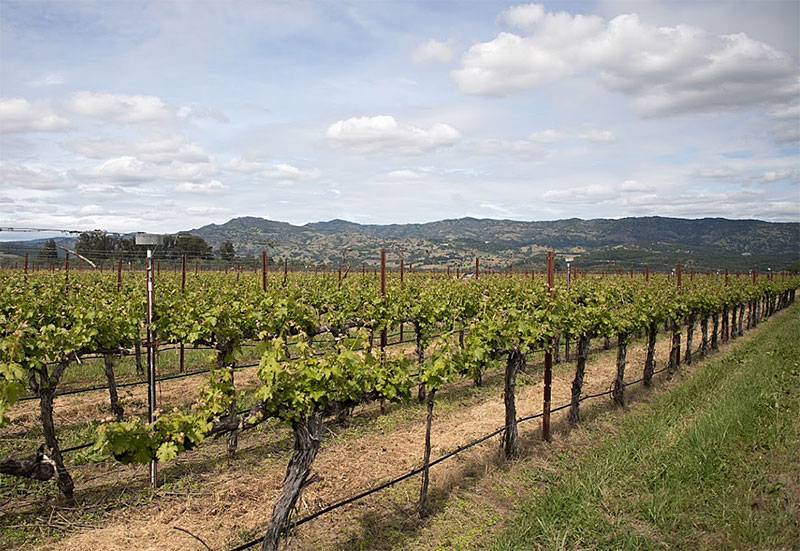
Estancia Cabernet Sauvignon

Estancia Cabernet Sauvignon.
Estancia Cabernet Sauvignon. Click here for tasting notes.

Estancia Cabernet Sauvignon 2017

Wikipedia says an “estancia is a large, private plot of land used for farming or cattle-raising. Estancias in the southern South American grasslands, the pampas, have historically been estates used to raise livestock, such as cattle or sheep. In Puerto Rico, an estancia was a farm growing frutos menores, that is, crops for local sale and consumption; the equivalent of a truck farm in the United States. In some areas of Spanish America, especially Argentina, they are large rural complexes with similarities to what in the United States is called a ranch.”

Continue reading “Estancia Cabernet Sauvignon”

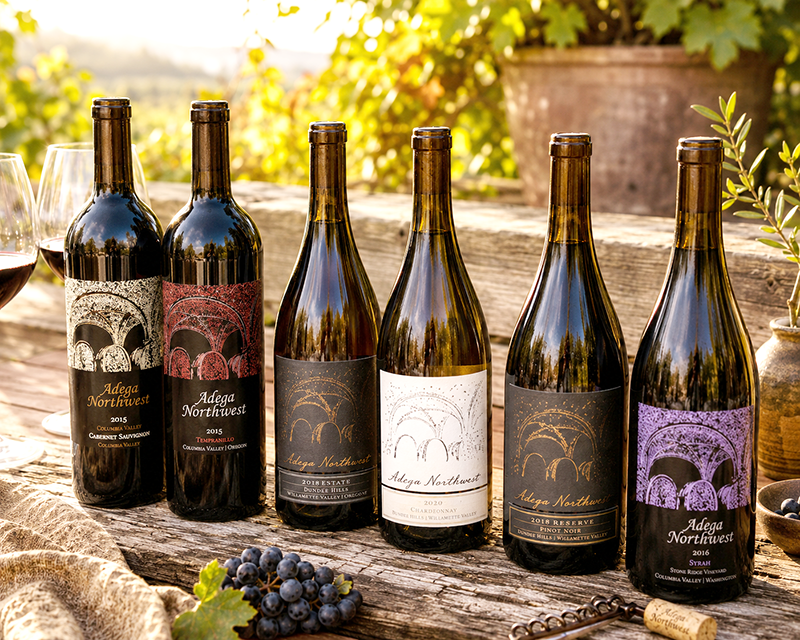
Adega Northwest Winery

Adega Northwest Winery
Adega Northwest Winery. Click here for tasting notes.

Adega Northwest Winery

When most of us think of a winery, what usually comes to mind is the romantic stereotype of a rustic but exquisite barn situated halfway up a mountain in the western U. S. overlooking a bucolic valley below; a fabulous hundred-years old chateau surrounded by ancient vines somewhere in France; or perhaps even a charming azienda agricola in Italy with a view of Roman ruins. But that’s not the only way to do it.  Adega Northwest of Portland, Oregon, is very much an urban winery.  There are vineyards, of course, you just won’t see them if you pay the winery a visit (by appointment only).  And because they are not tied to an estate, Adega Northwest can and does draw on sources throughout the region. Continue reading “Adega Northwest Winery”

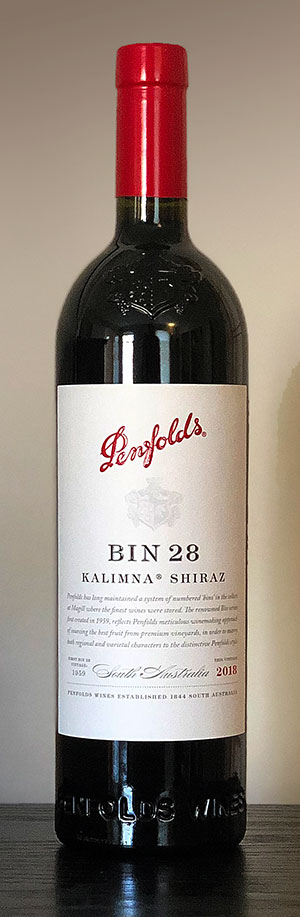
Penfolds Bin 28 Shriaz

Penfolds Bin 28 Kalimna Shiraz 2018
Penfolds Bin 28 Kalimna Shiraz 2018. Click here for tasting notes.

Penfolds Bin 28 Kalimna Shiraz 2018

Until Yellow Tail precipitated the boom in “critter wines” in 2000, it can be argued that Penfolds was just about synonymous with Australian wine in the U.S.  The label is ubiquitous here, in both grocery stores and fine wine shops. Prices range from about $12 per bottle for the Koonunga Hill Shiraz-Cabernet, to $850 for the legendary Grange, and everything in between.  (That $850 is doubly amazing, because just five or six years ago Grange was “only” about $200.) The selections are mostly reds plus a few whites and even a tawny Port.

Founders Dr Christopher and Mary Penfold immigrated to Australia from England in 1844, bringing their own French vine cuttings. Not long after, their fledgling vineyard was officially established as the Penfolds wine company at the 500-acre Magill Estate in Adelaide.

The Penfolds were believers in the medicinal benefits of wine, and they planned to concoct a wine tonic for the treatment of anemia.  Initially, they produced fortified wines in the style of sherry and port for Dr Penfold’s patients. The operation enjoyed early growth, and since Dr Penfold was focused on his medical practice, much of the running of the winery was delegated to Mary Penfold, including the cultivation of the vines and wine blending. On Christopher’s death in 1870, Mary assumed total responsibility for the winery. According to one historical account, by that time the business had “grown to over 60 acres with several different grape varieties including Grenache, Vverdelho, Mataro (aka Mourvedre), Frontignac and Pedro Ximenez,” and the estate was “producing both sweet and dry red and white table wines with a growing market in the eastern Australian colonies of Victoria and New South Wales.” Clarets and Rieslings were especially popular.

During her tenure, Mary engaged in experimentation, explored new methods of wine production, looked into ways of combating diseases like phylloxera, and engaged a cellar master by the name of Joseph Gillard.

Penfolds was producing a third of all South Australia’s wine by the time Mary Penfold retired in 1884. The company passed to her daughter Georgina and son-in-law Thomas Hyland.   By 1907, Penfolds had become South Australia’s largest winery (It is still big, but it no longer holds that position.) Eventually, the business was passed onto their two sons and two daughters. The company became public in 1962, and  the Penfold family retained a controlling interest until 1976.

In 1948, Max Schubert
became the company’s first Chief Winemaker. A loyal company man and true innovator, Schubert would propel Penfolds onto the global stage with his creation of Penfolds Grange.  (That’s a story for another time, if I can ever get my hands on a bottle.  Hey, Penfolds!  A little help here?)

In 1959, while Schubert was perfecting his Grange experiment in secret, Penfolds’ tradition of ‘bin wines’ began. The first, a Shiraz with grapes from the company’s own Barossa Valley vineyards, was simply named after the storage area of the cellars where it was aged. And so Kalimna Bin 28 became the first official Penfolds Bin number wine.

In 1988, after four decades of Grange’s  success and growth into a wine world icon, Schubert was named Decanter magazine’s Man of the Year, and on the 50th anniversary of its creation, Penfolds Grange was given a heritage listing in South Australia.

In 1976, control of Penfolds was acquired by Tooth and Co., a brewer based in New South Wales, which in 1982 became part of the Adelaide Steamship Company Group. In 1990, SA Brewing purchased Adelaide Steamship’s wineries. Later, SA Brewing was divided into three separate entities: the wine assets were named Southcorp Wine.

Southcorp Wines became a part of the Foster’s Group in 2005. In 2011, Fosters was split into two separate companies; the wine side became Treasury Wine Estates, headquartered in Melbourne and Penfolds current owner. The chief winemaker since 2002 has been Peter Gago.

Vineyards

Adelaide
Magill Estate
5.34 hectares / 13.2 acres
Shiraz (known as Syrah in other parts of the world

Barossa Valley
Kalimna
153 hectares / 380 acres planted
Shiraz, Cabernet Sauvignon, Mataro (aka Mourvèdre), and Sangiovese
Koonunga Hill
93 hectares / 230 acres
Shiraz ,Cabernet Sauvignon
Waltons
130 hectares / 320 acres planted
Shiraz, Cabernet Sauvignon, Mataro
Stonewell
33 hectares / 82 acres
Shiraz, Cabernet Sauvignon

Eden Valley
High Eden
66.42 hectares / 164.1 acres
Riesling, Pinot Noir, Chardonnay and Sauvignon Blanc
Woodbury
69.56 hectares / 171.9 acres
McLaren Vale
141 hectares / 350 acres
Shiraz, Grenache, and Cabernet Sauvignon
Coonawarra
50 hectares / 120 acres
Cabernet Sauvignon and Shiraz

Penfolds Bin 28 Kalimna Shiraz 2018

Although somewhat deceptively named for a specific Barossa vineyard, this wine is sourced from various South Australian sites.  After fermentation, it was aged for 12 months in American oak.  An impenetrable dark purple in the glass, it has a nose of dark stone fruits, especially plums, and eucalyptus.  The palate is the same, plus cocoa and some bracing tannins.  The finish is long and very dry. ABV is 14.5%.

Back to blog posts: winervana.com/blog/

Maritana Vineyards

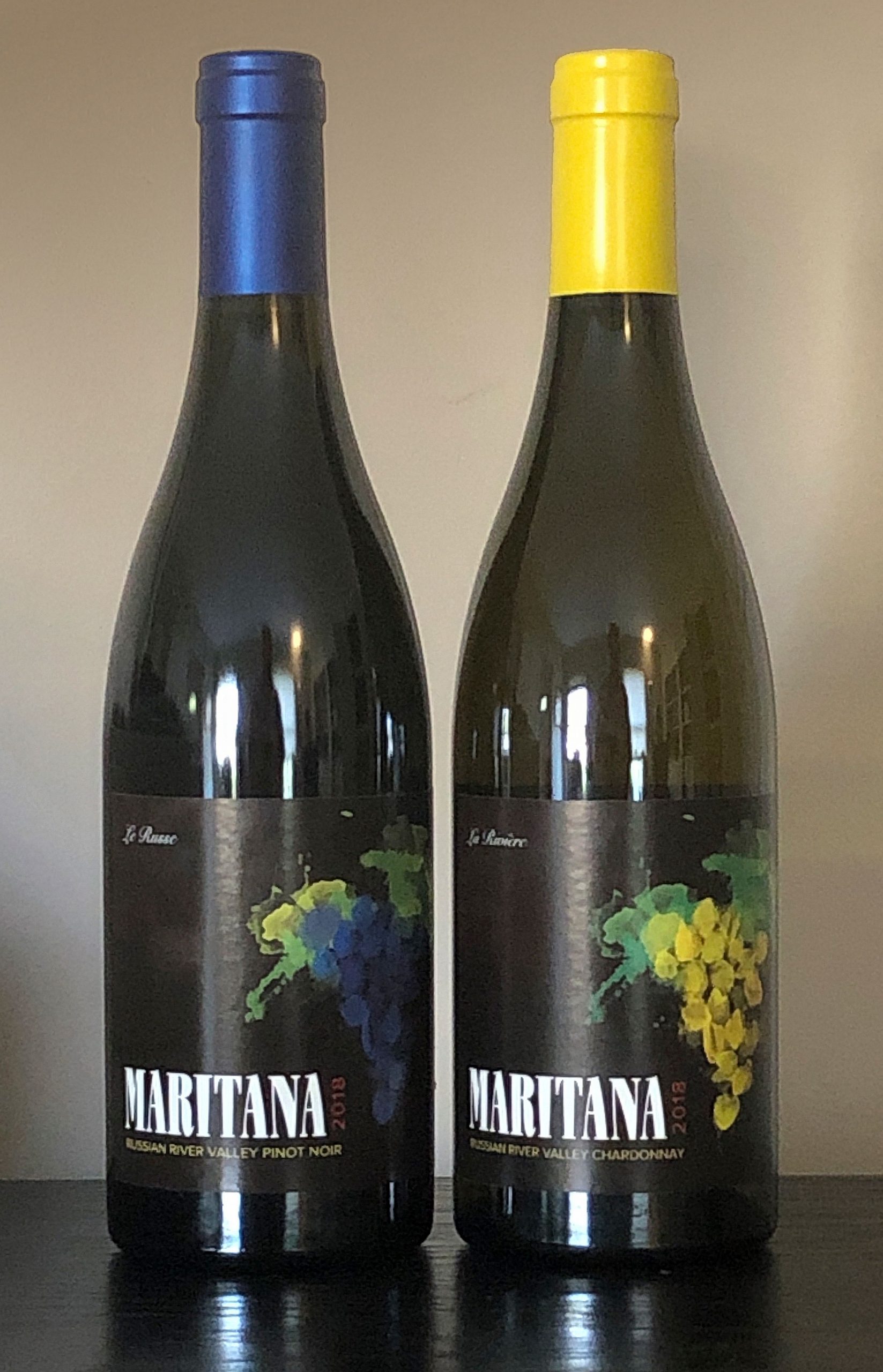
Maritana Chardonnay "La Rivière" 2018 and Maritana Pinot Noir "Le Russe" 2018
Maritana Chardonnay “La Rivière” 2018 and Maritana Pinot Noir “Le Russe” 2018. Click here for tasting notes.

Maritana Vineyards

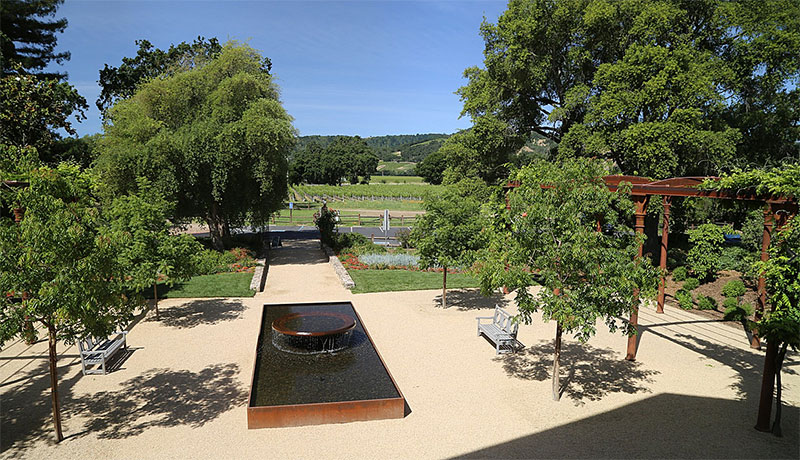
Patz & Hall was founded in 1988 when two Flora Springs Winery and Vineyards employees, assistant winemaker James Hall and national sales manager Donald Patz, decided to strike out on their own. Their ambition was to apply traditional (i.e. French) winemaking techniques to fruit from elite, small vineyards, specializing in Chardonnay and Pinot Noir.  The winery went on to great success.

Patz left Patz & Hall in 2017 to establish the Donald Patz Wine Group.  The project oversees three distinct labels:  Terminum produces Mendocino County Marsanne/Roussanne and Syrah, Secret Door Winery exclusively makes Cabernet Sauvignon from Napa Valley, and Maritana Vinyards focuses on Russian River Valley Chardonnay and Pinot Noir.

Patz shared, “Deep in my heart this is the best and most satisfying thing – making and sharing/selling wine. It’s been a centerpiece for my professional career for more than three decades and honestly, I could not imagine not being involved. I realized that working with the Patz & Hall model was not the end of all things for me. I wanted a chance to rethink, refocus, and renew my vision for wines under my control.

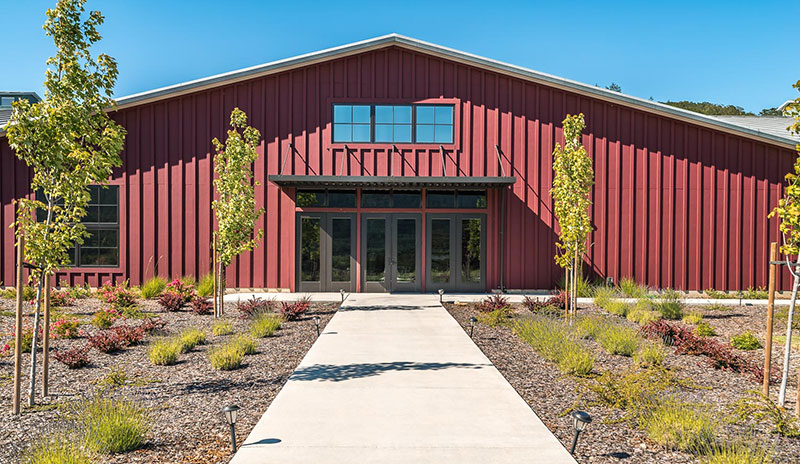
Since Maritana is a small, personal project, Patz needed to find a production partner.  A fortuitous lunch with Adam Lee of Siduri Winery, who specializes in Pinot Noir, led to Patz selecting Lee’s Sugarloaf Crush near Santa Rosa as the base for Maritana’s 2017 and 2018 selections.  A “crush” is minimally a mechanical device consisting of paddles and rollers that break grapes and extract the juice.   As a crush service provider, Sugarloaf goes beyond that to offer processing, fermentation, tank and barrel storage, bottling, and a tasting room.

Drawing on his long experience in the wine business, for his latest venture Patz was particularly attracted to the Russian River Valley, source of his favorite wines.  The Russian River Valley AVA accounts for about one-sixth of the total planted vineyard acreage in Sonoma County. The appellation was granted AVA status in 1983 and enlarged in 2005. The area lies between Sebastopol and Santa Rosa in the south, and Forestville and Healdsburg in the north. The valley has a characteristically cool climate, heavily affected by fog that drifts in through the Petaluma Gap from the Pacific Ocean.

The complex geography of the valley was shaped millions of years ago by collisions between the North American and Pacific tectonic plates and eruptions by volcanic vents that deposited volcanic ash over layers of eroded bedrock. This created a sandy loam known as “Goldridge soil.” Near Sebastopol, there is a different soil that is more clay based, known as “Sebastopol soil,” which retains less water than Goldridge soil does. Both types have been shown to work well with Pinot Noir plantings. A third soil type, found close to the river, is predominately alluvial sediment and makes up the benchland regions of the river.

Viticulture in the Russian River region dates back to the 19th century when immigrants from Mediterranean countries descended on the region and began planting vines. While most vineyards were “gardens” for personal family consumption, some commercial producers sprung up as well, and by the start of the 20th century there were nearly 200 wineries operating. Predictably, Prohibition induced a precipitous mid-century decline, but the region had largely rebounded by the time AVA status was conferred.

Patz created the name “Maritana” out of whole cloth;  since Sonoma is defined by an ocean on one side and mountains on the other, he came up with:
Ocean ~ MARItime
Mountains ~ MonTANA
MARI-TANA, ergo Maritana.
Easy, huh?

Maritana Chardonnay “La Rivière” 2018

Patz decided on a program of once-used barrels to make up the majority of the barrels used for all the Maritana Chardonnays.  Specifically for this La Rivière, the mix is 90% once-used barrels and 10% new barrels from Burgundy. According to Patz, “This blend of used [and] new barrels, retains the brighter, fresher notes of the Russian River Valley fruitiness and compliments the mineral, floral components of the grapes very precisely.”

The fruit came from three sources, with at least five clones of Chardonnay in the blend. The vineyards included Dutton Ranch, some fruit from Martinelli, and others from the Lynmar Estate.

La Rivière, aka “The River,” was entirely indigenous-yeast fermented in barrel, and aged on the primary fermentation lees throughout its time in barrel. It pours a pale yellow, with aromas of mango and honeysuckle.  The smooth, full palate features lemon, quince, lemon curd, and a touch of caramel. There is plenty of acidity, and those used barrels make for subtle tannins. The ABV is 14.5%, and 2000 cases were produced.

Maritana Pinot Noir “Le Russe” 2018

Le Russe, aka “The Russian,” is a blend of several sites and clones within the appellation, including Martaella Vineyard, one of the Martinelli sites called River Road Vineyard, Jenkins Ranch, Moonshine Ranch, and a little Pinot Noir from an old Russian Hill site. Fermentation was one-half whole cluster. Said Patz, “The purpose of using [some] whole cluster for the Pinot Noir wines was to bring out that beautiful aromatic side of Pinot Noir.” After primary fermentation, for aging the wine was placed into small French oak barrels, 50 to 80% new, depending on the vineyard source.

It has a transparent, medium-purple color. The nose offers juicy aromas of plums and strawberries. The full-bodied mouthfeel carries flavors of tart cherry, cola, and vanilla.  These are supported by forward tannins and very good acidity. The ABV is 14.5%, and 1400 cases were produced.

maritanavineyards.com

Back to blog posts: winervana.com/blog/
Broadbent Rainwater Madeira

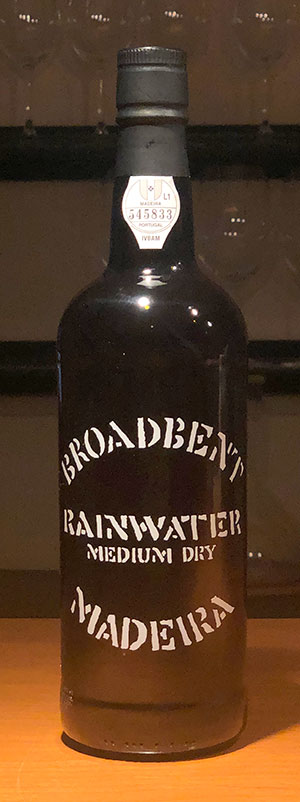
Broadbent "Rainwater" Madeira
Broadbent Rainwater Madeira Click here for tasting notes.

Broadbent Rainwater 

Ports, Sherries, Marsalas, and Madeiras are all beverages that fall under the broad category of fortified wines.  During fermentation, the wine is “fortified” with brandy or neutral grain spirits.  Originally, this was done to preserve and stabilize the wine for shipment, usually to England.  It is now done to create sweet wine; the addition of the alcohol kills the fermentation yeasts, retaining any residual sugar.

A true Madeira such as this one comes from Portugal’s Madeira island, about 400 miles due west of Morocco in northern Africa.  The small island has an oceanic, tropically-influenced climate and volcanic soil. Because of high heat and humidity, fungal diseases and botrytis (also known as grey mold) are constant hazards. To combat them, Madeira vineyards are often planted in low trellises known as latada that raise the canopy off the ground. The wine is cultivated in terraced steps of red and basaltic bedrock called poios.

Madeira’s unique flavor comes from two elements that would ruin other wines: heat and oxidation. During the era when the earliest Madeiras were shipped, it was discovered that aeration of the sloshing barrels in the warm hold of the ship made for delightful wine.  (The Kelt line of cognacs get the same treatment even today.)  As for Madeira, the process is emulated through the estufagem process, whereby the wine is placed in hot rooms or heated tanks (estufas) and slowly baked for a minimum of 90 days.  Depending on when they are dosed with alcohol, Madeiras can range from quite dry to very sweet.

There are four distinct styles of Madeira. The pale, golden Sercial is the driest and lightest.  Verdelho is sweeter and stronger, and Boal is fuller and sweeter still.  Malmsey is the richest, darkest, and sweetest of all.

Although the history of Madeira goes as far back as the 18th century, Broadbent has been producing wines in Portugal for just over 20 years. In the mid-1990s Michael Broadbent, Director of Christie’s auction house, prolific wine author, and Madeira expert, partnered with Justino’s Madeira Wines, S.A. to create the Broadbent line.  Justino’s was formed as a limited company in 1953, although it had been in existence since 1870 in Madeira as a private family company, when it was known as “Justino Henriques.”

BARTHOLOMEW BROADBENT

Broadbent is now helmed by Michael’s son Bartholomew. He was raised in the English wine trade in a formal apprenticeship to his father.  The Broadbent line includes Port from the Douro, Madeiras and Vinho Verde from Portugal, and a Gruner Veltliner made in Austria.

He is credited as being responsible for the growth of Port consumption in North America during the mid 1980s. He was responsible for the re-introduction of Madeira to America in 1989, and instrumental in its growth since then.

He currently lives in Virginia, where he is also involved in the distribution of Virginia wines, now available in over 30 states.

Broadbent Rainwater Madeira

“Rainwater” is a soft, medium dry variant of Verdelho.  According to legend, early shipments of Madeira were left on the island’s beaches to await pickup prior to shipment.  During that time, the barrels absorbed water during rain showers. This diluted the alcohol and created a less potent wine.

This is one of six Madeiras under the Broadbent label.  (There are 11 others branded as Justino’s produced by the house.) The fruit is 98% Tinta Negra, and 2% other regional red varieties. Aged in oak casks for at least three years, this wine is dark orange in color, with a nose of dried dates, figs, and orange peel. There are fresh citrus and caramel flavors on the full-bodied, satiny palate backed up with a zoomy acidity.  It is indeed medium dry. It can be served as an apéritif or as an after-dinner drink. The ABV is 19% and 20,000 cases were produced.

www.broadbent.com/

Back to blog posts: winervana.com/blog/
J-M-L Cabernet Sauvignon

J-M-L Cabernet Sauvignon 2018.
J-M-L Cabernet Sauvignon 2018. Click here for tasting notes.

J-M-L Cabernet Sauvignon 2018

Patz & Hall was founded in 1988 when two Flora Springs Winery and Vineyards employees, assistant winemaker James Hall and national sales manager Donald Patz, decided to strike out on their own. Their ambition was to apply traditional (i.e. French) winemaking techniques to fruit from elite, small vineyards in Napa Valley specializing in Chardonnay and Pinot Noir.  The winery went on to great success.

Continue reading “J-M-L Cabernet Sauvignon”

Brooks Wines

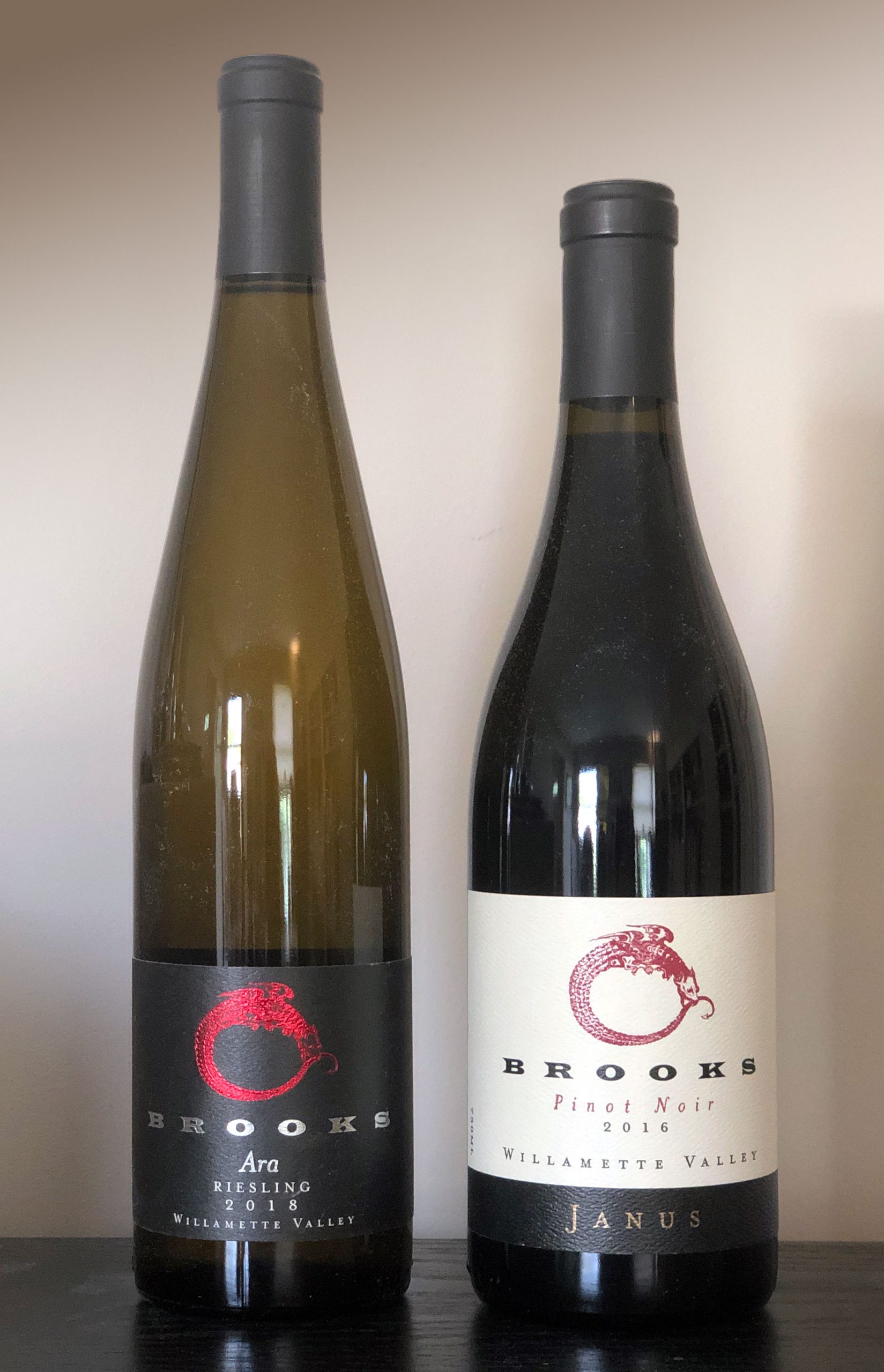
Brooks Ara Riesling 2018
Brooks Ara Riesling 2018 and Brooks Janus Pinot Noir 2016. Click here for tasting notes.

The Brooks Winery of Amity, Oregon in the Willamette Valley was founded in 1998 by Jimi Brooks, a native of Portland and son of a pediatrician.  The winery’s production is focused on Pinot Noir and Riesling, and includes about 20 selections of each in any given year.  Brooks also dabbles in Tempranillo, Muscat, Pinot Gris, Pinot Blanc, Melon de Bourgogne (aka Muscadet),  Gewurztraminer, and Viognier, all sourced from nearby vineyards.

All of the Pinot Noirs are destemmed and cold soaked; all of the whites go straight to press. In the winery, small lot fermenters are used and the components are kept separate until right before blending. For all Pinot Noirs, all estate fruit, and most whites, fermentation is driven by only the yeasts naturally occurring on the grapes, and the coolest fermentation temperatures possible are adhered to. Finally, the reds are finished in French oak, while the whites are all made in stainless steel.

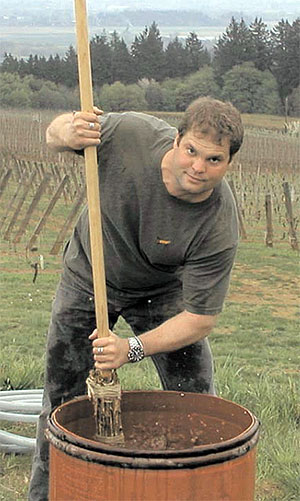
The free-spirited Jimi Brooks began his career by spending eight years throughout Europe, particularly Beaujolais, learning his craft in the vineyards and wineries there. After that sojourn, he returned to Oregon committed to a life in wine, based on his own intuition as well as holistic and biodynamic farming practices, still a relative novelty just over twenty years ago. He continued to hone his skills with winemaking stints at Maysara and WillaKenzie Estate wineries before establishing Brooks Wines.

In 2008 the winery purchased the estate vineyard it had been working since 2002.  Plantings include Pinot Noir and Riesling vines that are now over 35 years old, and contribute about 30% of Brooks’ fruit. Official biodynamic certification from Demeter was obtained in 2012.  This was followed by the opening of an entirely new winemaking facility and tasting room in 2014, which overlooks the Cascade Range and Willamette Valley.

Brooks Wines’ motto is Peace/Bread/Land/Wine.

Peace

It may seem rose-colored, but Brooks genuinely believes in kindness, inclusivity, caring, community, and social responsibility as guiding principles.

Bread

Brooks features a number of culinary experiences from cooking classes to wine and food pairing classes.. Their organic garden supplies herbs, vegetables, and cut flowers. Their eggs come from chickens on the property which are fed organically. Anything that doesn’t come directly from the grounds is sourced locally.

Land

Careful stewardship of the estate vineyard is achieved by
• Utilizing a rock garden to diffuse rain water.
• Encouraging botanical species diversity
• Protecting predator habitats
• Applying balanced crop nutrition
• Rotating cover crops
• Not using synthetic chemicals to control pests or diseases
• Utilizing mechanical weed control

Wine

Riesling is the bedrock at Brooks, and they claim to produce more of it than any other winery in America.

A bittersweet success

Behind all of this accomplishment lurks sadness and tragedy. Founder Jimi Brooks suddenly died in 2004 just before harvest at the age of 38 from the rupture of an aortic aneurysm (an abnormal bulge that occurs in the wall of the major blood vessel  that carries blood from the heart to the body). Winemakers from all over the Willamette Valley, many of them competitors, volunteered to help the Brooks family cope with his untimely death and keep the winery open. The following year the winery was bequeathed to Jimi’s son, Pascal, who was eight when his father died and became the youngest winery owner in the world.

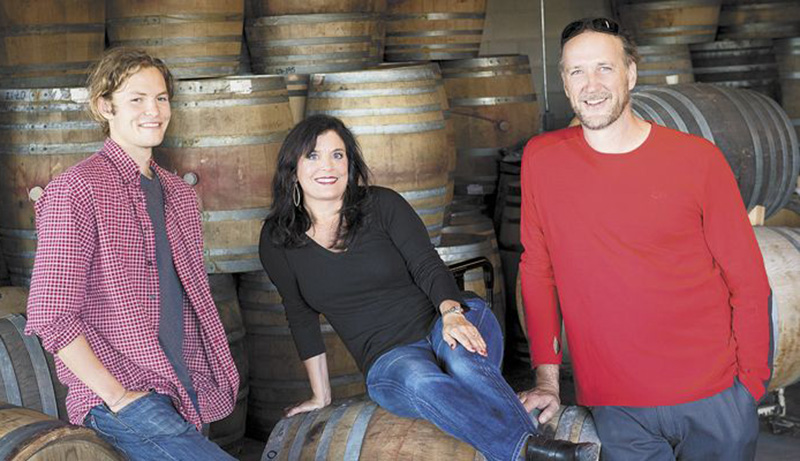
Once the future of the operation was assured, two key figures emerged. Brooks’ friend and assistant winemaker Chris Williams ascended to full-time winemaker. Brooks’ sister, Janie Brooks Heuck, reluctantly became head of winery operations.  It’s quite the commitment; she lives in California with her husband and two children and is constantly commuting between the two states.  It is a commitment that has paid off, though.  Under her supervision the business has grown by 400%.

L to R: Pascal Brooks, Janie Brooks Heuck, and Chris Williams


Heuck had always had been close to her brother. “We were a year and a half a part. As adults and parents, our conversation centered around our children and his business,” Heuck said. “It’s not so much that the winery brings back memories for me, but I [continue to] learn about new stories and memories that would have been Jimi’s.”

She believes the wines are a vehicle for conveying an important message about life, about living in the moment and to the fullest, about keeping the big picture in mind. “I feel like through the wines and the experiences that people are having,” she said, “the connections and the conversations and the sharing of the Brooks story, and having it remind people of how important every day is and every moment is. I just don’t ever want that to stop. The more lives we can touch and the more times the story is told and the more it brings perspective to people, that’s the gift from this whole situation.”

If you have access to Amazon Video, the film American Wine Story profiles Jimi Brooks and a number of other winery owners drawn to the business based on sheer passion.

Brooks Wines’ distinctive logo is an ouroboros (or uroboros).  It is an ancient symbol depicting a serpent or dragon eating its own tail to assure its future existence. Originating in ancient Egyptian iconography, the ouroboros entered western tradition via Greek magic and mysticism. Heuck shared, “We like to talk about it symbolizing the circle of life, continuation. My brother got it as a tattoo on his left shoulder in the early ’90s. It meant so much to him that he decided to make it his wine label.”

Although Pascal remains emotionally invested in the winery and his father’s legacy, he is at the beginning of his life journey and feels the need to find his own way. Now 24 years old, Pascal is living in Paris after graduating from UC Santa Cruz in 2018 with a double major in creative writing and sustainable agriculture, an interesting pairing for sure. He has been working as a wine steward there and also doing urban rooftop farming. Following in his father’s footsteps, in 2019 he worked harvest at Domaine Dechamps, and currently is involved at Domaine Ostertag in Alsace. (Read more about a pivotal part of Jimi Brooks’ time in France here.)

Brooks Ara Riesling 2018

Brooks has staked their reputation on Riesling, so they better know what to do with it.  Happily, this expression doesn’t disappoint.  Indeed, it’s one of the most interesting Rieslings I’ve ever had.  Ara (the Altar), is a constellation. In ancient Greek mythology, Ara was the altar where the gods first made offerings and formed an alliance before defeating the Titans. This was one of the very first Rieslings Jimi Brooks made after starting his winery, and the name reflects his passion and interests in mythology and astrology.

The wine is 100% Riesling, half from the Brooks estate vineyard in the Eola-Amity Hills AVA and half from the Yamhill vineyard in the Yamhill-Carlton AVA. It is a bright lemon yellow in the glass, with aromas of lemon curd and orange blossom.  The lemon theme continues on the palate, with the addition of nectarines, Sweetarts, and apples, but the wine is definitely dry.  The flavors are well-supported by tingly acidity.   ABV is 14% and just 325 cases were produced.

Brooks Janus Pinot Noir 2016

Brooks considers this their flagship Pinot Noir, and was Jimi Brooks’ first Pinot release.  Janus was the two-faced Roman god who looked both to the past and future, a reference now to the winery’s timeline being divided by Jimi Brooks’ premature death.

This 100% Pinot Noir was sourced from 60% Brooks Estate and the remainder from seven other sites around Willamette Valley. After fermentation, it saw 18 months in French oak barrels. It is a medium purple in the glass, with a nose of rich plum, vanilla, and rose.  The palate features tart cherry, ligonberry, and black tea on the medium finish, all supported by lively acidity and balanced tannins. The ABV is 13.8% and 1000 cases were made.

www.brookswine.com/

Back to blog posts: winervana.com/blog/

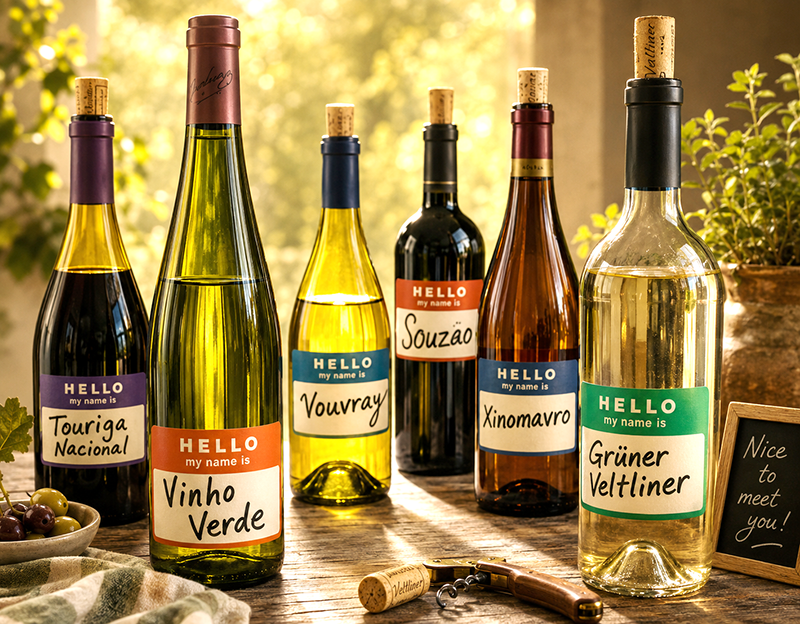
Unusual and Exotic Wines

Unusual and Exotic Wines from Around the World

Unusual and Exotic Wines from Around the World

Looking for something completely different?  Here are some grape varieties and wines from around the world to consider to really shake up your drinking experience.

Argentina

Charbono is a relatively obscure French variety, but today it is much more widely grown in Argentina, as well as Napa Valley. It is often mistaken for the more common Dolcetto grape, though genetic testing has proven that they are not related. This grape produces a dark wine that is high in both tannins and acidity.

Austria

Austria offers Gruner Veltliner, its most widely-planted varietal. Gruner’s naturally high acidity makes it one of the world’s best food wines, especially with spicy cuisine. It can be light and easy, or with lower yields and higher ripeness, it can burst with aromas of white flower and flavors of grapefruit, herbs, mineral, and fresh-ground white pepper. .

The Austrian red varietal Blaufränkisch has characteristics of both Pinot Noir and Syrah. (And it is sometimes incorrectly thought to be the same variety as Gamay.) The wines it produces are lighter-styled reds, usually with plenty of acidity. It is grown in Germany, as well, where it is usually called Lemberger.

France

Gewürztraminer is thought to have originated in Italy’s Alto Adige region, but is now mostly famously grown in Alsace, located between France and Germany. It is planted throughout other nations in Europe, as well as California, Oregon, Washington, and New Zealand. These highly fragrant and crisp wines have flavors of spices such as clove, nutmeg, and lychee. You should drink a Gewürztraminer when young; they won’t last past five years.

Picpoul is normally grown in the Languedoc-Roussillon region of France, but is also sometimes grown in Spain. It is notable for its strikingly high acidity. One reason this grape isn’t as well known as others is because it is much more likely to develop a certain kind of fungus, making it more difficult to grow. There are three varieties of Picpoul: Picpoul Noir, Picpoul Gris, and the most well-known variety, Picpoul Blanc. Piquepoul Blanc is used both for blending and for varietal wines. Red wines produced from Picpoul Noir are high in alcohol, are richly scented, but have a very pale color, which has made the variety more popular as a blending ingredient than as a producer of varietal wines.

Valdiguié also hails from the Languedoc-Roussillon region. In the 1980s, this grape experienced a boom in Napa Valley, but poor cultivation and problems with disease quickly ended that. However, recently some intrepid wine makers in the United States have been trying to save Valdiguié’s tarnished reputation. When properly cultivated and prepared, Valdiguié is a unique wine, one with distinct fruity notes and a sweet-and-sour flavor profile, with a notably low alcohol conent.

Vouvray is the largest white wine appellation of the Anjou-Saumur-Touraine region of the Loire Valley, known for its siliceous-clay and limestone-clay soils and cool climate. The wine is made from the Chenin Blanc grape, grown in the region since the fourth century. It is capable of both dry wines and elegant sparklers. In years when botrytis cinerea, the mold responsible for sweet whites, hits, harvest is delayed in order to pick the grapes at their peak ripeness to produce a rich dessert wine.

Georgia

Grown in Georgia (the country, not the state) the white varietal Rkatsiteli can drink like a Pinot Grigio. It’s also popping up in wines from New York’s Finger Lakes region, having been adopted and planted by the Dr. Konstantin Frank Winery there.

Mtsvane is like Sauvignon Blanc, but without the grassy notes that I find to be off-putting.

Kisi has been described as something between Chenin Blanc and Viognier on steroids.

Finally, Georgia’s Tavkveri is a workhorse, and the best examples are often vinified as light red wines (ala Beaujolais), with similar tangy, red-fruited, bright, and zesty characteristics.

Greece

Assyrtiko hails from the island of Santorini, where the volcanic soil produces juicy wines with good body and high acidity, great with South Asian food.

Malagousia is a rare variety grown mainly in Macedonia, with flavors of white peaches spritzed with jasmine.

Moschofilero, a pink/gray-skinned grape grown in central Peloponnese, has vibrant citrus acidity, attractive aromatics such as exotic spice and violet, and is often made as a Rosé.

Retsina, the wine I like to call “The Greek Wine Even Greeks Won’t Drink.” The traditional grape for Retsina is Savatiano with Assyrtiko and Rhoditis sometimes blended in. Retsina is made like other white wines, but with the addition of small pieces of Aleppo pine resin being added during fermentation. It is this pine resin that gives Retsina its name, as well as its unique flavor profile.

From Macedonia comes Xinomavro, Greece’s premier red grape, which typically shows characteristics of red fruit, sun-dried tomatoes, kalamata olives, and spices.

Hungary

Egri Bikaver (”Bull’s Blood of Eger”), is a vintage-dated red wine that is made mainly from the Kadarka grape. I’ve been drinking it for decades, and it is relatively widely available, but aside from Hungarians it seems as almost no one knows about it.

Italy

Sicily’s white Carricante is likened to cool-climate Chardonnays, and the red Nerello Mascalese, with its earthy, herbaceous, yet muscular notes echoes some of the wines of Burgundy.

Verdicchio is a white wine grape grown mainly in the Marches region. The wines made from it have a subtle greenish hue, are generally crisp and dry, and have a light but elegant aroma and flavors of minerals and lemon. Verdicchio traditionally comes in a green, two-handled urn-shaped bottle called an amphora.

Portugal

Grapes such as Souzao and Touriga Nacional, traditionally used to make Port, can make a classic table wine, too, that tends to be juicy and unpretentious. They are drink-me-now wines, particularly those from Douro, which stretches across north-central Spain and Portugal.

Vinho Verde comes from Portugal’s largest designated growing region. The wines made from it are slightly effervescent, can be red or white, are fresh and fruity and are meant to be drunk while still young.

South Africa

South Africa is famous for its Pinotage, but it’s an enthusiasm I don’t share. It was cultivated there in 1925 as a cross between Pinot Noir and Cinsaut. It typically produces deep red wines with flavors of smoke, bramble, and earth, sometimes with notes of bananas and tropical fruit.

Orange Wine

Emerging recently is a new category called orange wine. While Rosé is made from red grapes with a little grape skin contact to impart a small amount of color, orange wine is made from white grapes with extended skin contact creating anywhere from a peach to orange to amber color. So, since orange wine is a “white wine” made in the style of a red, there is at least the potential for plenty of flavor.

Ice Wine

Ice wine is a type of dessert wine produced from grapes that have frozen while still on the vine. The sugars and other dissolved solids do not freeze, but the water does, and this makes for a more concentrated juice, which is then pressed from the still-frozen grapes in unheated wineries. This is then fermented, resulting in a small amount of highly concentrated, very sweet wine with high acidity.

Ice wine production is risky (the frost may not come at all before the grapes rot or are otherwise lost) and requires the availability of a large enough labor force to pick the whole crop within a few hours, at a moment’s notice, on the first morning that is cold enough. This low yield both in the field and in the winery makes them generally expensive. Canada is the largest producer, followed by Germany. There are also ice wine producers in the Niagara region of New York.

Odd-Ball Wines

The Rapazzini Winery of Gilroy, California, “Garlic Capital of the World,” makes four garlic-infused wines, two reds and two whites. British wine expert Oz Clarke once braved one of the garlic white wines, describing it as an “unholy alliance of flavors.” Not a fan, apparently.

Winemaker Ian Hutcheon runs Tremonte Vineyard in Chile, as well as an astronomy center there. He has played off of that theme for a number of his wines. He has installed a “wave room” at his observatory which captures cosmic power from outer space that is then converted into audio. He claims that these sound waves trigger a structural molecular change in the wine stored in bottles and black oak barrels in the room. “The sound is eerie, and tourists state that they feel goose-pimples and even energized as they sip their cosmic wines while huge images of Galileo, Newton, and Einstein observe them from the dark,” said Hutcheon.

In 2012, Hutcheon produced Sacrificio wine, a blend of Cabernet Sauvignon, Carmenere, and Syrah aged in French oak barrels for 12 months. These were then buried at the summit of Mount Tunca (in Australia, a long way to send the wine) and left to the elements for an entire winter. Tourists wanting to try the Sacrficio wine had to climb the mountain and locate the wine using a map.

Also in 2012, Hutcheon produced a Cabernet Sauvignon wine called Meteorito, which was aged with a chunk of a 4.5-billion-year-old meteorite placed into the barrel. “The meteorite used in the creation of this wine came from the Asteroid Belt between Mars and Jupiter,” he explained. “And the idea behind submerging it in wine was to give everybody the opportunity to touch something from space, an extra-terrestrial rock, the very history of the solar system, and feel it via a grand wine.” Ahem.

In western Massachusetts, Vermont, Nova Scotia, and other spots in North America’s “maple belt,” farmers sometimes blend grape wines with maple syrup or ferment straight-up maple sap. The sweet result works well as a dessert wine.

Non-grape Wines

And, there are wines that aren’t made from grapes at all. If something has sugar in it, you can get alcohol out of it, and you can bet that someone has, or will, try that.

If some pumpkin-spiced booze appeals to you, California Fruit Wine Co. adds pumpkin-pie spices to fermented pumpkin juice, creating a semi-sweet, fall-flavored beverage.  Very big with Harry Potter fans, apparently.

Omerto, made in Quebec, Canada, relies on a secret family recipe for a pale-gold wine made from heirloom tomatoes. Winemaker Pascal Miche produces dry and sweet versions of this aperitif wine, comparing them to Sauvignon Blanc and white port. Unfortunately, you’ll have to go to Canada, Belgium, France, or Monaco to get it. The Florida Orange Groves Winery makes a spicier tomato wine, spiked with hot peppers.

Schnebly Redland’s Winery in Florida makes a wine from avocados. They peel and pit the fruit, then blend the flesh with water, sugar, and yeast before fermentation in stainless-steel vats. In addition to both dry and sweet all-avocado wines, they turn out blends made with coconut and guava.

How about wine made from grapefruit juice? Look to Florida once again, where juice from the state’s famous pink grapefruit gets aged for several months after fermentation to mellow its tart edge. I couldn’t find a commercial producer, but there are a number of DIY recipes on the Interwebs.

If you’re a fan of tropical-fruit aromas in your Chardonnay or Riesling, you could plunge into an all-mango wine. Several southern Florida wineries, as well as Island Mana on Kauai, Hawaii, make this sweet tipple.

And finally, North Dakota’s Maple River Winery makes a hard-to-find semi-sweet pink wine. It does not contain any grapes or grape juice, but is made with white and lavender lilac flowers, water, sugar, yeast, and “adjuncts” according to the producer.  Whatever “adjuncts” are.

See, I told you this would be something completely different.

Return to blog posts: winervana.com/blog/

Clos Pegase Cabernet Sauvignon

Clos Pegase Cabernet Sauvignon 2014.
Clos Pegase Cabernet Sauvignon 2014. Click here for tasting notes.

Disclaimer: I’ve been a member of the Clos Pegase wine club for years, so this post is hardly impartial.

Clos Pegase Cabernet Sauvignon 2014

Clos Pegase was founded by Jan Shrem in 1983 on a 50-acre vineyard near Calistoga in Napa Valley. He was born in Colombia in 1930 to Jewish-Lebanese parents, and spent his childhood in Jerusalem and his early adolescence back in Colombia. After he arrived in the United States at age 16, he attended the University of Utah and UCLA. While in college, he sold encyclopedias.

Continue reading “Clos Pegase Cabernet Sauvignon”

Imagery Winery

Imagery Petite Sirah 2016 and Imagery Gee eS eM 2017.
Imagery Petite Sirah 2016 and Imagery Gee eS eM 2017. Click here for tasting notes.

Imagery Petite Sirah 2016 and Imagery Gee eS eM Red Wine 2017

My first career paths as a young man were art and architecture.  I have a Bachelor’s degree in architecture, and got half way through a Master’s in fine-art printmaking.  I ended up traveling neither of those avenues professionally, but have remained keenly interested in both ever since.  So, I was intrigued to learn of Imagery Estates’ commitment to fine art.

In 1973, newlyweds Mike and Mary Benziger drove west and permanently settled in Northern California. Seven years later, Mike and and his brother Bruno Benziger purchased the historic Wegener Ranch on Sonoma Mountain in Glen Ellen, California. Hearing the Sirens’ call of the Golden State, over the next six years the four remaining siblings — Bob, Joe, Jerry, and Patsy, with their spouses — made their way to California.

Joe Benziger
Joe Benziger

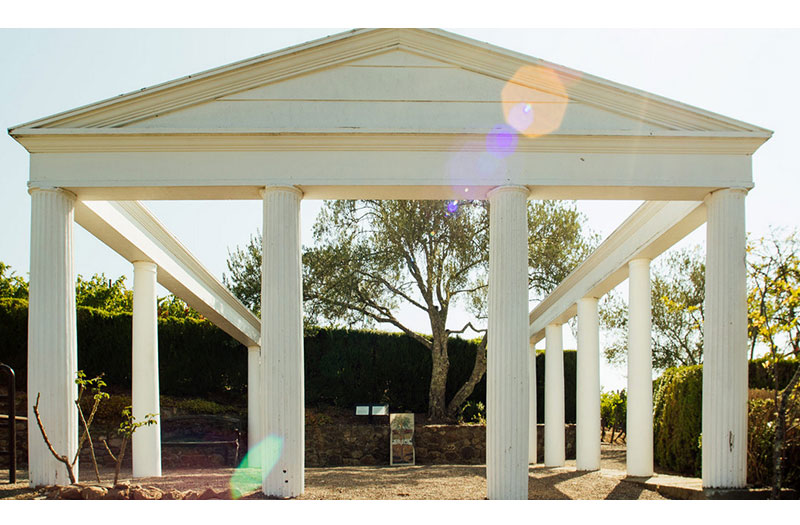
In 1986, winemaker Joe Benziger first partnered with artist Bob Nugent to launch the Imagery Series of wines in a converted brewery. This pairing of wine and art continues to this day, and permeates every aspect of Imagery Winery, including unique artwork replicated on every label.  The winery’s dedicated on-site art gallery features 500 works from over 300 notable contemporary artists. Usually, between 60 and 150 pieces are on view in the gallery at any one time. Contributing artists have been selected from around the world, including: Sol LeWitt of Connecticut, Shoichi Ida of Japan, William Wiley of California, Goncalo Ivo of Brazil, David Nash of Wales, and Judy Pfaff, Pat Steir, and Terry Winters of New York. The artists are specially commissioned by Imagery to create a new and original piece; unsolicited submissions from others are not considered. At any given time, as many as 35 artists are working on pieces that will appear on future Imagery wine labels. Of the 200 or so artists reviewed each year, only five are actually offered a commission. The artists are not limited by size, medium, or content, except for one requirement.  It can be either representational or abstract, but every image must include the Benziger Estate‘s “Parthenon.” it was on the property when the Benzigers first arrived and overlooks the rolling vineyards.

Imagery Parthenon

Imagery ParthenonJamie Benziger

In December 2017, Joe Benziger retired, and his daughter Jamie took over as second-generation winemaker. She was named the 2019 Best Woman Winemaker in the International Women’s Wine Competition, and was also included on Wine Enthusiast’s list of 40 Under 40 Tastemakers.

Although she studied marketing at Loyola Marymount University, Jamie eventually came to realize she wanted the family wine business to be her future after all. Jamie transferred to Sonoma State University to complete her marketing degree, and added wine business to her studies. She interned in marketing with Gundlach Bundschu Winery during school, but while working her first harvest  at Benziger Jamie realized her heart was really in winemaking.

Since then, Jamie has aggressively pursued her knowledge of wine, working in the wine labs at St. Francis and Bogle, traveling to New Zealand to work harvest at Villa Maria, and getting her hands dirty in the field at Enterprise Vineyards. Mentored by her father and just as adventurous, Jamie says she is, “passionate about taking Imagery to a broader audience.”

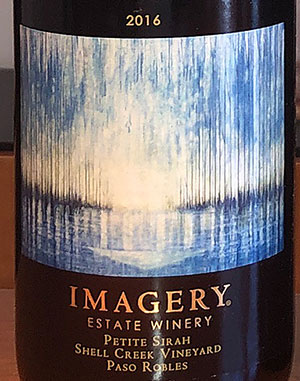
Imagery Petite Sirah 2016

The origins of Petite Sirah (aka Petite Syrah) have been shrouded in mystery and confusion.  It was originally thought to be related to the renowned Syrah of France’s Rhône region. Then it was decided it was actually Durif, a minor Rhône varietal now nearly extinct. But then along came pesky science, and a DNA analysis in the late 1990s identified the grape as a cross between Syrah and Peloursin.  It is grown much more extensively in California than France, but can also be found in Argentina, Brazil, and Mexico. Somewhat disparaged at the turn of this century, it is now enjoying a renewed popularity.

Petit Sirah can make big, full-bodied wines, and this selection is an excellent example.  Imagery likes to call this a “toothbrush wine” because of its deep color and bold flavor (although dentists caution against brushing your teeth soon after drinking wine, as the lingering acidity can damage tooth enamel by doing so.)

Made by Joe Benziger not long before he turned the winemaking over to Jamie, the fruit for this wine was sourced from the Shell Creek vineyard in Paso Robles, one of Imagery’s longest-standing grape suppliers. The wine itself is dark inky purple, with a nose of blackberries and plums.  These continue on the palate, with a plush, full body, and big but controlled tannins. This was accomplished by tasting the juice at every pump over, to assure that the tannins did not become excessive. Jammy concentrated fruit comes  through mid palate, with a lingering richness on the finish. The ABV is 14.6%, and 1074 cases were made.
The label artist is Robin Denevan of San Francisco, California.  The image is part of Denevan’s River Series, and is an encaustic painting, a mixed media technique that involves using heated beeswax to which colored pigments have been added. The liquid/paste is then applied to a surface — usually prepared wood, although canvas and other materials are also used. The term is derived from Greek, meaning a burning in. A subtle reflection of the “Parthenon” is shown in the water in the bottom third of the picture.
https://robindenevan.com/

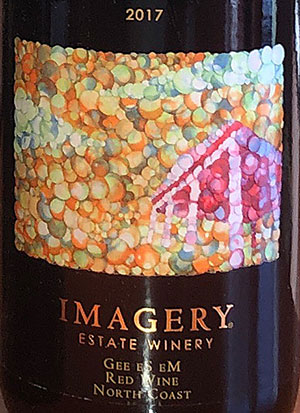
Imagery Gee eS eM Red Wine 2017

This too-cutely named (for my taste anyway) blend is made from 35% Grenache, 35% Syrah, and 30% Mourvèdre sourced from a number of North Coast vineyards. GSM, as it’s more commonly referred to, is a mix traditionally produced in the Côtes du Rhône region. It is also a favorite of the so-called “Rhône Rangers,” a group of American winemakers who promote the production of wines containing at least 75% of the 22 Rhône grape varieties. This is Jamie Benziger’s first solo effort.

Dark garnet in the glass, this wine starts with aromas of figs and roast plums and a bit of vanilla. These are followed by flavors of strawberries and tart cherries. There is just the right amount of acidity, and the soft tannins are restrained. The silky structure all wraps up in a nice long finish. The ABV is 14.9%, and 558 cases were produced.

The art adorning this bottle is by Santa Rosa artist Sami Lange. ​It is one of her paper collage “quilts” that are created by hand cutting, dying, and stitching thousands of circles to create intricate meditative patterns. The fuchsia “Parthenon” arises from a field of orange.

www.samilangeart.com/

www.imagerywinery.com/

Return to blog posts: winervana.com/blog/
Waipapa Bay Rosé

Waipapa BayWaipapa Bay Rosé

In 1819 English missionaries first brought vines to New Zealand. For the next 150 years or so, most of the wine produced there was for local consumption. That began to change in 1973, when Sauvignon Blanc was planted in Marlborough. Within the next decade, the wines and the region became New Zealand’s most famous.

Althogh the nation is, surprisingly, made up of around 600 islands, there are two primary ones, the aptly named North and South Islands. Predictably, most of its regions have a maritime climate. The country is divided along its length by a spine of mountains, which causes a rain shadow that keeps things fairly dry on the eastern side, where almost all of the grape growing is done, while it’s quite rainy on the west.

In 1987 Brent and Shirley Rawstron started farming 7.5 acres of Chardonnay and Pinot Noir on the banks of the Halswell River in Canterbury, New Zealand. They soon re-planted to almost all Pinot Noir, which they found to be much more suited to the property. Eventually the estate expanded to 15 acres, all on north-facing slopes. In 2004, they pressed into Marlborough in search of additional desirable vineyard sites, and the couple now owns 100 acres of vineyards there, planted to Sauvignon Blanc, Chardonnay, and Pinot Gris. Like 98% of New Zealand’s production, their grapes are sustainably grown.

Marlborough offers a special combination of climatic features that create the ideal site for bright, ripe, balanced fruit: plentiful sunshine, long, warm summer days, and cool nights that keep acidity in the grapes. These conditions particularly suit Sauvignon Blanc. Soils vary considerably in the region, allowing subtle differences between and even within vineyards. These are divided into blocks according to soil and aspect, and are harvested and vinified separately.

The name Waipapa Bay comes from a spot on the Pacific Ocean known for surfing and marine life. It is located halfway between the Canterbury home of the Rawstrons (native New Zealanders) and their vineyards in Rapaura.

The Waipapa Bay line is imported by Broadland Drinks, a 50-year-old international wine business with a British heritage. It has also been co-owner of the brand since 2012.

Waipapa Bay Pinot Noir Rosé

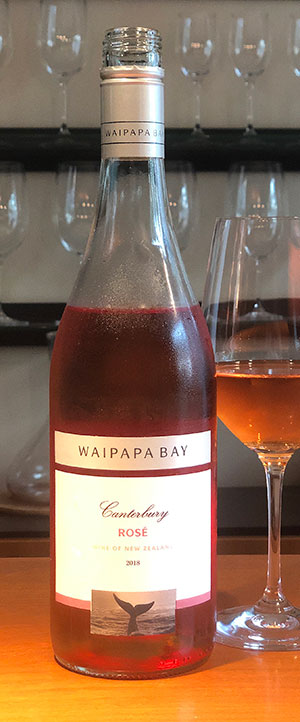
This 100-percent Pinot Noir hails from the Rawston’s estate in Canterbury. To produce the wine’s pale salmon hue, the skins are in contact with the wine for the first 24 hours. This rosé has aromas of strawberries and summer fruits, with a dash of spice. Carried by a medium body, on the palate there are plenty of red fruit flavors, especially raspberries and strawberries, which linger on the long finish. These come with a grapefruit-like zippy acidity. Serve lightly chilled. The ABV is 13%.

waipapabaywines.com/

Note: In 2001, a small group of winemakers created The Screwcap Initiative, and the closure has become ubiquitous there, with 99% of New Zealand’s wines now released under screwcap.  The closure has gained major acceptance from Australian producers as well.

Back to blog posts: winervana.com/blog/