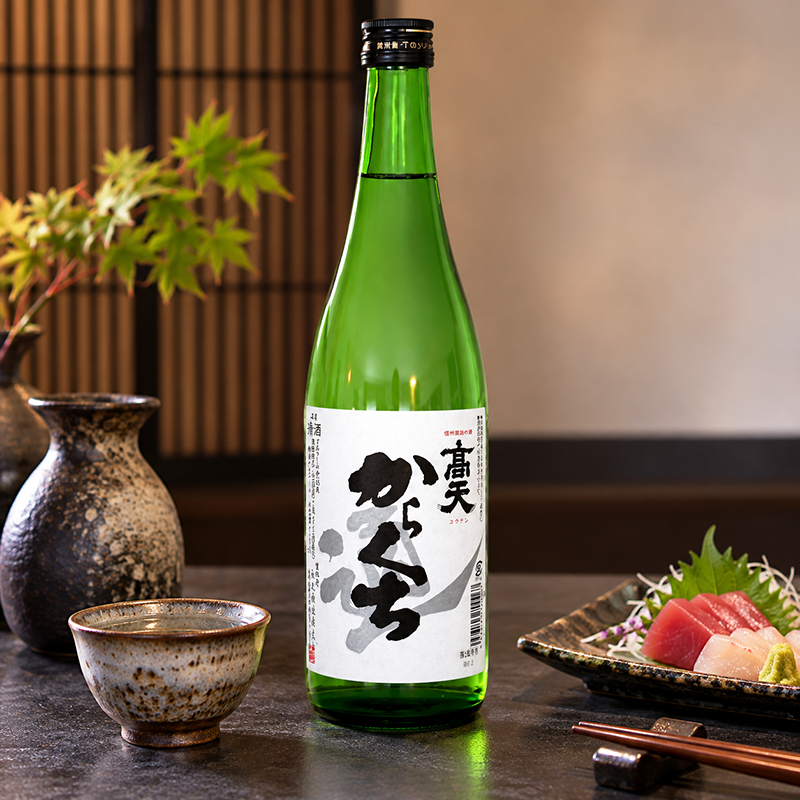
Takaten Shuzo is a historic, family-run Japanese sake brewery founded in 1871 in Okaya, Nagano Prefecture. Its Karakuchi Tsu is a traditional, dry, food-friendly sake that emphasizes the flavor of rice rather than the floral and fruity aromas associated with many premium ginjo sakes.
Saké is often called rice wine, but this is a misnomer. While it is an alcoholic beverage made by fermentation, the production process more closely resembles that of beer, and it is made from grain (rice, of course), not fruit. To make saké, the starch of freshly steamed glutinous rice is converted to sugar and then fermented to alcohol. Once fermented, the liquid is filtered, heated, and placed in casks for maturing. Sakés can range from dry to sweet, but even the driest retain a hint of sweetness.
L. to R.: Nanbu Bijin Southern Beauty, Tozai Snow Maiden, Dassai 45
Dassai 45 Junmai Daiginjo Saké
Saké, the national alcoholic beverage of Japan, is often called rice wine, but this is a misnomer. While it is a beverage made by fermentation, the production process more closely resembles that of beer, and it is made from grain (rice, of course), not fruit. To make saké, the starch of freshly steamed glutinous rice is converted to sugar and then fermented to alcohol. Once fermented, the liquid is filtered and usually pasteurized. Sakés can range from dry to sweet, but even the driest retain a hint of sweetness.
L. to R.: Nanbu Bijin Southern Beauty, Tozai Snow Maiden, Dassai 45
Tozai “Snow Maiden” Nigori Junmai Saké
Saké, the national alcoholic beverage of Japan, is often called rice wine, but this is a misnomer. While it is a beverage made by fermentation, the production process more closely resembles that of beer, and it is made from grain (rice, of course), not fruit. To make saké, the starch of freshly steamed glutinous rice is converted to sugar and then fermented to alcohol. Once fermented, the liquid is filtered and usually pasteurized. Sakés can range from dry to sweet, but even the driest retain a hint of sweetness.
Saké, the national alcoholic beverage of Japan, is often called rice wine, but this is a misnomer. While it is a beverage made by fermentation, the production process more closely resembles that of beer, and it is made from grain (rice, of course), not fruit. To make saké, the starch of freshly steamed glutinous rice is converted to sugar and then fermented to alcohol. Once fermented, the liquid is filtered and usually pasteurized. Sakés can range from dry to sweet, but even the driest retain a hint of sweetness.
Saké is often called rice wine, but this is a misnomer. While it is an alcoholic beverage made by fermentation, the production process more closely resembles that of beer, and it is made from grain (rice, of course), not fruit. To make saké, the starch of freshly steamed glutinous rice is converted to sugar and then fermented to alcohol. Once fermented, the liquid is filtered, heated, and placed in casks for maturing. Sakés can range from dry to sweet, but even the driest retain a hint of sweetness.
Saké is often called rice wine, but that is a misnomer. While it is an alcoholic beverage made by fermentation, the production process more closely resembles that of beer, and it is made from grain (rice, of course), not fruit. To make saké, the starch of freshly steamed glutinous rice is converted to sugar and then fermented to alcohol. Once fermented, the liquid is filtered, heated, and placed in casks for maturing. Sakés can range from dry to sweet, but even the driest retain a hint of sweetness.
Saké, the national alcoholic beverage of Japan, is often called rice wine, but this is a misnomer. While it is a beverage made by fermentation, the production process more closely resembles that of beer, and it is made from grain (rice, of course), not fruit.
L. to R.: Nanbu Bijin Southern Beauty, Tozai Snow Maiden, Dassai 45
Three Interesting Sakés
Saké, the national alcoholic beverage of Japan, is often called rice wine, but this is a misnomer. While it is a beverage made by fermentation, the production process more closely resembles that of beer, and it is made from grain (rice, of course), not fruit. To make saké, the starch of freshly steamed glutinous rice is converted to sugar and then fermented to alcohol. Once fermented, the liquid is filtered and usually pasteurized. Sakés can range from dry to sweet, but even the driest retain a hint of sweetness.
Saké, the national alcoholic beverage of Japan, is often called rice wine, but this is a misnomer. While it is a beverage made by fermentation, the production process more closely resembles that of beer, and it is made from grain (rice, of course), not fruit. To make saké, the starch of freshly steamed glutinous rice is converted to sugar and then fermented to alcohol. Once fermented, the liquid is filtered and usually pasteurized. Sakés can range from dry to sweet, but even the driest retain a hint of sweetness.
Saké, the national alcoholic beverage of Japan, is often called rice wine, but this is a misnomer. While it is a beverage made by fermentation, the production process more closely resembles that of beer, and it is made from grain (rice, of course), not fruit. To make saké, the starch of freshly steamed glutinous rice is converted to sugar and then fermented to alcohol. Once fermented, the liquid is filtered and usually pasteurized. Sakés can range from dry to sweet, but even the driest retain a hint of sweetness.
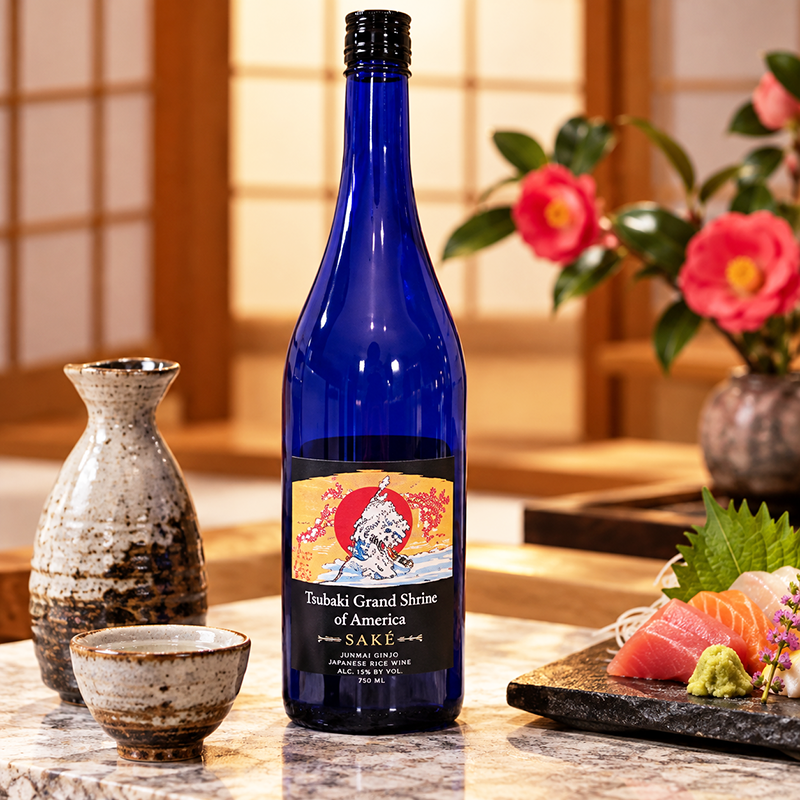
The Tsubaki Grand Shrine of America (aka Tsubaki America Jinja) is the first Shinto shrine built in the mainland United States after World War II. It was erected in 1986 in Stockton, California, and moved to its current location next to the Pilchuck River in Granite Falls, Washington, in 2001.