
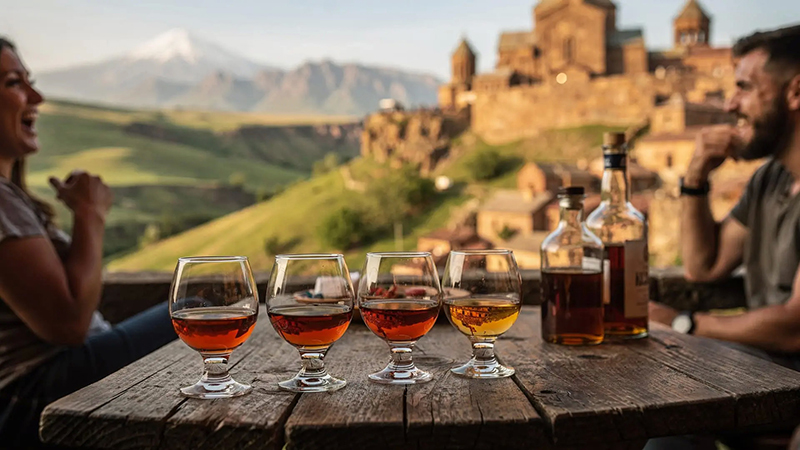
What is Armenian brandy?
Armenia has one of the most interesting brandy traditions outside of France. What makes it unusual is that Armenian brandy was deliberately modeled on Cognac from the beginning—Charentais pot stills, double distillation, long oak aging and blending—but developed a distinctly Armenian character through indigenous grapes, climate, and Caucasian oak.
Before brandy: Armenia’s ancient wine culture
Armenian brandy itself is relatively young, dating from the late 19th century, but grape growing and winemaking in Armenia are extraordinarily old. The country’s high-altitude vineyards, hot dry summers, and native grape varieties provided exactly the raw material needed when entrepreneurs began experimenting with European-style distillation.
The decisive figure was Nerses Tairyan (also rendered Tairov or Tairyants), an Armenian merchant and philanthropist. Tairyan had established wine production in Yerevan on the grounds of the former Erivan Fortress in the 1870s. In 1887 he began distilling brandy there.
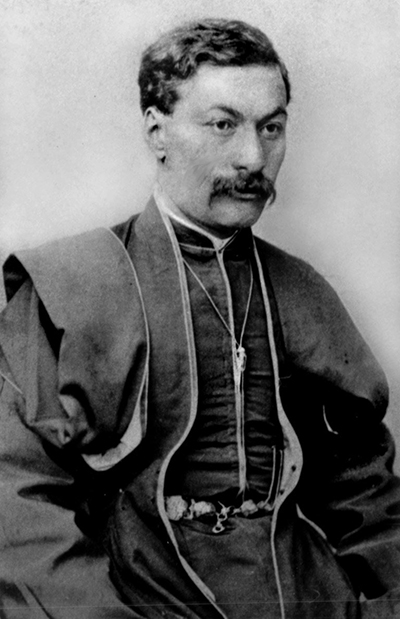
His brother Vasily Tairov, an important Russian Empire viticulturist and wine journalist, encouraged the venture. Rather than making a crude grape spirit, the Tairyan operation consciously adopted French Cognac methods. It imported Charentais-type copper pot stills from France and used double distillation.
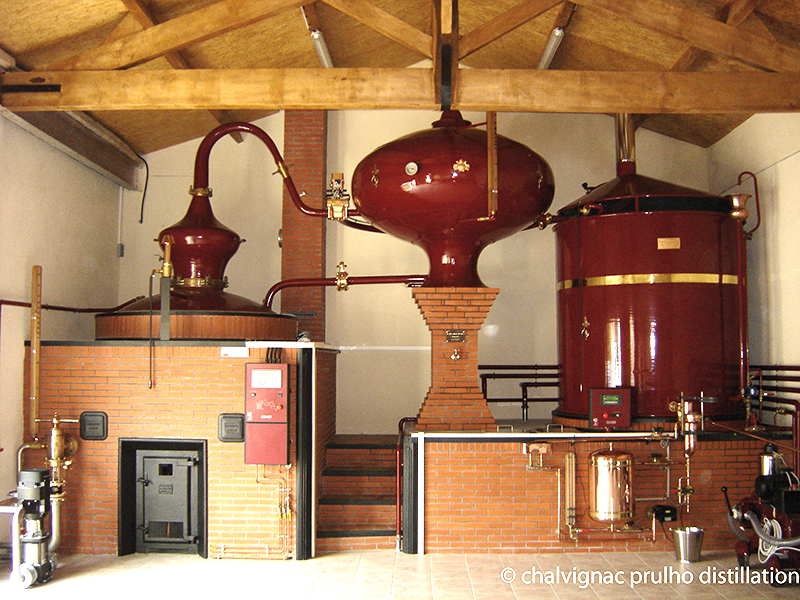
Armenian raw materials
Although the technology came from Cognac, the ingredients did not. Tairyan used Armenian grapes, and this became one of the defining characteristics of Armenian brandy. Modern Armenian regulations likewise require Armenian brandy to be produced in Armenia from grapes grown there.
Over time varieties such as Voskehat, Kangun, Mskhali, Garan Dmak, and Rkatsiteli became important sources of base wine for distillation. And instead of relying exclusively on French Limousin or Tronçais oak, Armenian producers developed a tradition of aging spirits in Caucasian oak. So, Armenian brandy isn’t simply “Cognac made somewhere else.” The grapes and oak give it a different aromatic signature—often richer, darker, and more fruit-and-spice driven than traditional Cognac.
Shustov transforms a small distillery into an industry
The second great figure is Russian spirits magnate Nikolay Shustov. Tairyan apparently had difficulty marketing his production on a large scale. In 1899 he leased the business to N.L. Shustov & Sons; Shustov subsequently acquired it outright.
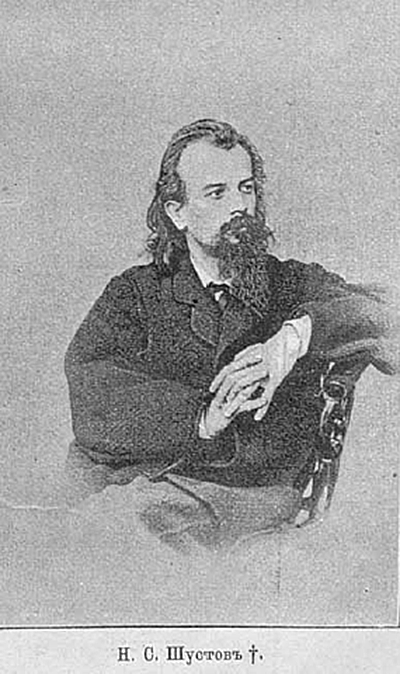
Shustov had something Tairyan lacked: an enormous distribution and marketing network throughout the Russian Empire. He modernized and expanded production and brought in trained specialists. Two particularly important names appeared around 1900: Kirill Silchenko, a distiller, and Mkrtich Musinyants, engineer and master blender. Musinyants created an early prestige blend called Fine Champagne Select/Otborny, deliberately borrowing French terminology. The brandy received recognition at a French exhibition in Bordeaux in 1902.
By the early 20th century, Armenian brandy was no longer merely a local curiosity. Shustov products became fashionable throughout the Russian Empire, and the company eventually became a supplier to the Imperial Court of Nicholas II.
Other Armenian distilleries also appeared. By 1914 there were reportedly 15 brandy factories in the Yerevan province, although Shustov was dominant.
Why Armenians call it “cognac”
Throughout the Russian Empire and later the Soviet Union, grape brandy made in the Cognac style was routinely called коньяк — konyak, essentially “cognac.” So an Armenian asking for konyak is normally asking for Armenian brandy.
Internationally, however, Cognac is a protected French geographical designation. Consequently bottles intended for many export markets are labeled Armenian Brandy, even though Armenian and Russian speakers continue to call the spirit Armenian cognac. You’ll therefore encounter older bottles and historical documents freely using “Cognac” where a modern Western-market label would say “brandy.”
Revolution and nationalization
World War I, the Russian Revolution, and the upheavals surrounding Armenia’s brief period of independence radically changed the industry. The brandy enterprises were eventually nationalized. Under Soviet Armenia they were consolidated into a state-controlled wine-and-brandy organization generally associated with the Ararat Trust.
Paradoxically, Soviet control ultimately helped Armenian brandy become enormous. The USSR had a vast captive market stretching from the Baltic to Siberia. Armenian konyak developed a reputation as one of the Soviet Union’s luxury products.
Markar Sedrakyan and the golden age
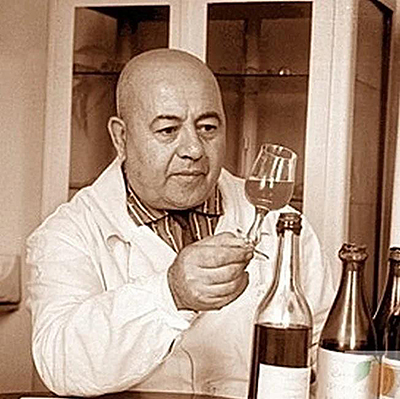
The towering figure of the Soviet period was master blender Markar Sedrakyan, who joined the industry in the 1930s. Sedrakyan created or helped establish many of the blends that defined Armenian brandy for generations. Among them were names that still exist today, including Dvin, Nairi, Akhtamar and various Jubilee/anniversary bottlings. The modern Ararat company traces much of its house style and blending tradition to his work. This is really the period when Armenian brandy developed its mature identity.
Churchill and Armenian brandy
According to the famous and endlessly repeated story, Joseph Stalin introduced Winston Churchill to Armenian Dvin brandy at the 1945 Yalta Conference. Churchill supposedly loved it so much that Stalin subsequently arranged for regular shipments to Britain. There are increasingly elaborate versions of the story—including claims that Churchill received a bottle every day and that he complained when the flavor changed after Sedrakyan temporarily disappeared from production., But, I’d treat those details cautiously. They are better understood as part history, part Armenian-brandy folklore.
Independence nearly destroyed—and then revived—the industry
The collapse of the Soviet Union was extremely disruptive. Armenia suddenly lost much of the economic system that had supported its vineyards, distilleries, and enormous Soviet distribution network. Production and exports declined sharply during the economic crisis of the 1990s. Then foreign investment arrived. That brought capital, improved quality control, international distribution, and much stronger protection of the Armenian-brandy identity.
What makes Armenian brandy distinctive today
The most interesting way to think about Armenian brandy is not as inexpensive imitation Cognac. It is essentially a parallel tradition that began with Cognac technology and then evolved for roughly 140 years under completely different agricultural, political, and cultural circumstances.
The traditional flavor profile tends toward dried apricot, peach, prune, raisin, walnut, vanilla, cocoa, baking spice and darker caramelized fruit, frequently with considerably more oak sweetness than a similarly aged Cognac. Cognac often emphasizes floral aromas, fresh fruit, citrus, grape, rancio, and progressively more delicate tertiary characteristics. Armenian brandy frequently feels broader, darker, sweeter, and more overtly oaky.
Here are two Armenian brandies I suggest you try:
For more detail on brandy and Cognac, click here.
Back to blog posts: winervana.com/blog/