
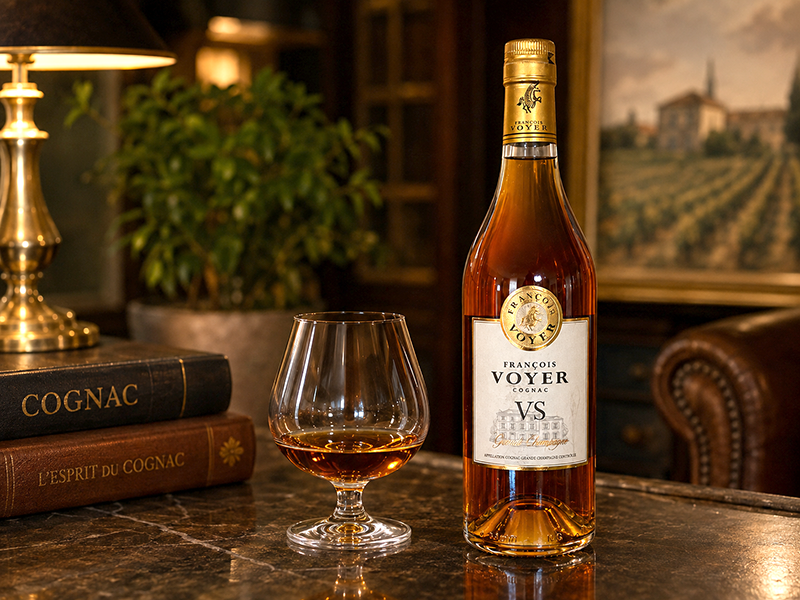
François Voyer VS Cognac
Cellar master Pierre Vaudon took over the Voyer Cognac house from the founding family after working on its blends for many years, and now owns it with his wife Anne-Marie.
François Voyer is in Verrières, right in Grande Champagne, the premier cru of Cognac. The family’s viticultural roots there go back roughly 200 years, while actual distillation by the Chauchet-Voyer family is generally dated to the 1870s. Paul André was among the relatively unusual growers of the late 19th century who distilled his own wine rather than simply selling it to a négociant. So, Voyer was able to amass stocks of its own mature eaux-de-vie rather than functioning primarily as a brand buying young spirits and assembling them.
Pierre Vaudon is arguably the most important person in understanding modern François Voyer. He is an oenologist, distiller, and blender who comes from a winegrowing family. Their own estate is associated primarily with Fins Bois, while François Voyer is his Grande Champagne operation.
He became Voyer’s cellar master around the beginning of the 2000s. After roughly two decades making the blends, he acquired the François Voyer business and stocks, somewhere around 2017. Vaudon has now been blending for Voyer for 25 years.
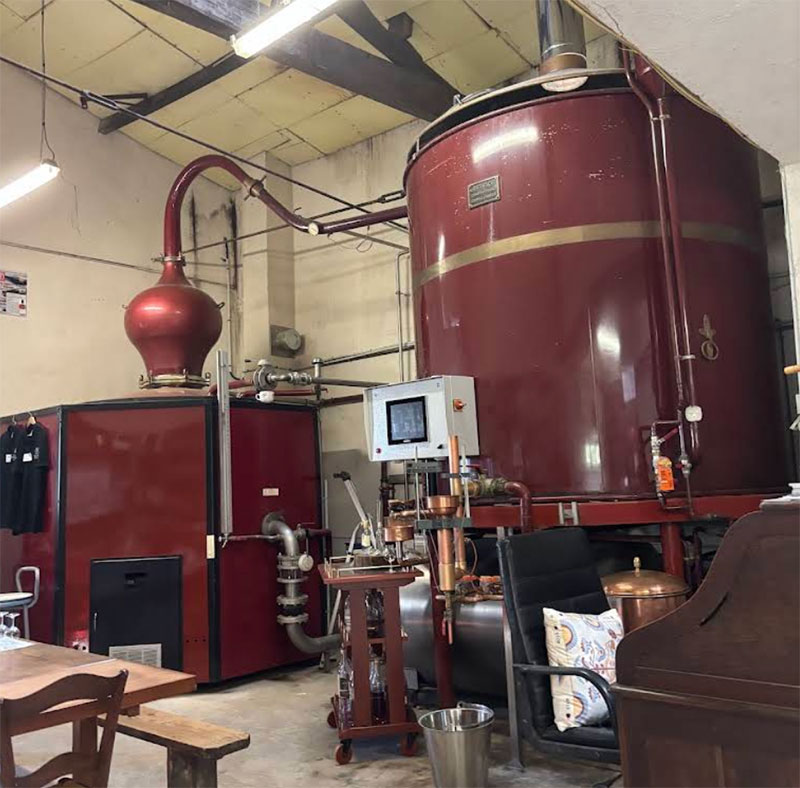
Voyer Cognacs are 100% Grande Champagne Premier Cru. The chalky soils there tend to produce relatively high-acid, delicate eaux-de-vie that can initially seem lean but develop extraordinary complexity with long barrel aging. The core grape is Ugni Blanc, typical for modern Cognac. Distillation is in their two traditional double Charentais pot-stills. Voyer also works with other Grande Champagne growers in addition to the estate production, giving Vaudon a broader palette of Grande Champagne eaux-de-vie for blending.
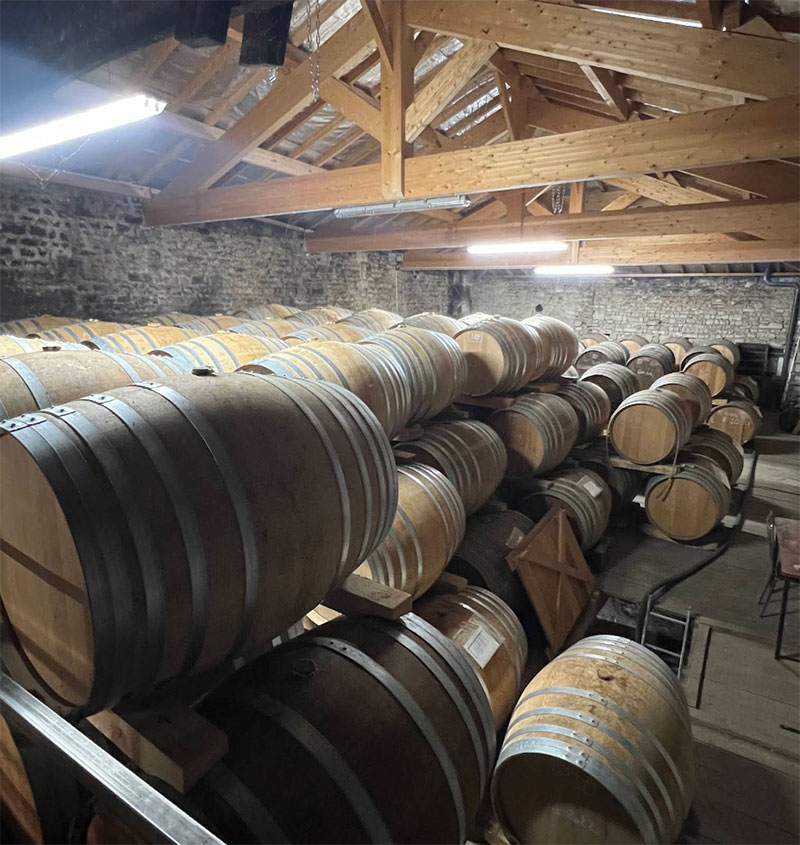
Roughly 10 to 20% of each harvest initially goes into new oak for about three years, followed by older barrels for slower maturation. Individual components are kept and developed separately before blending. Voyer reportedly uses barrels sourced from several French forests, including Limousin and other oak sources, and employs both humid and dry cellar environments.
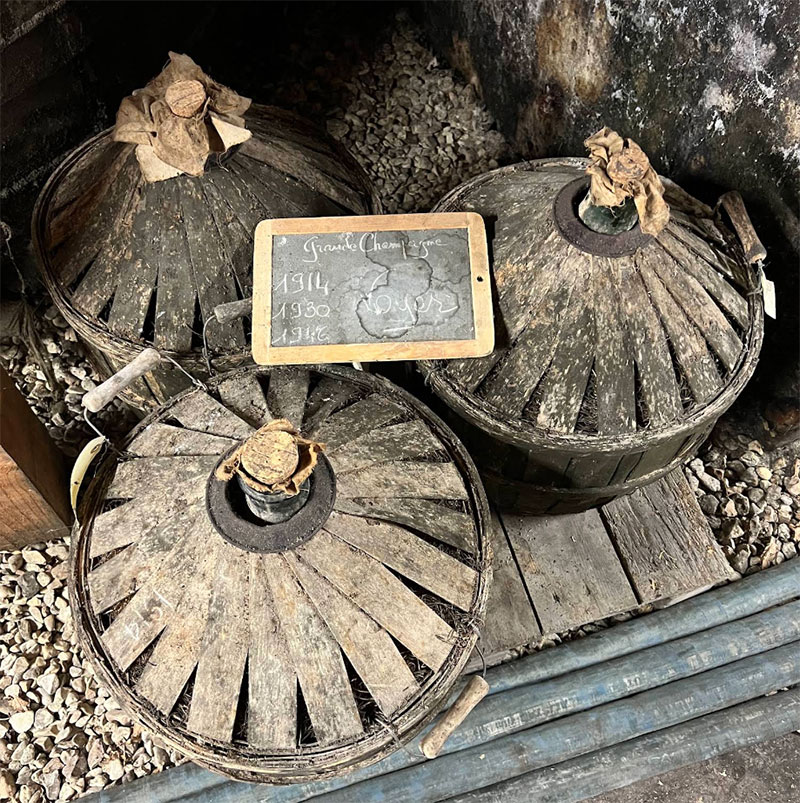
The current range is unusually broad. It includes Terres de Grande Champagne, VS. VSOP, Napoléon, XO 1er Cru, XO Gold, Extra, vintage Cognacs, Hors d’Âge, Ancestral bottlings, and very old special lots.
Voyer VS Cognac
This VS is a nice medium honey gold. It was matured in virgin Limousin-oak casks for at least two years, as is required for the VS designation. The mouth-watering nose offers aromas of peach, apricot, and banana. On the palate, it adds caramel, vanilla, and a hint of pepper. The finish is fairly short, and somewhat tingling and hot for sipping neat, which is how I drink brandy 99% of the time. The ABV is the usual 40%.
Listen to my podcast about brandy, Cognac, and Armagnac here.
A note about brandy vs. Cognac: brandy is a liquor distilled from wine and aged in wood. (Brandy can be made from fruits other than grapes as well, but that’s a story for another time.) Cognac is brandy that specifically comes from the town of Cognac and the delimited surrounding areas in western France. (The one which has the most favorable soil and geographical conditions is Grande Champagne.) So, all Cognacs are brandy, but not all brandies are Cognac. For more detail on brandy and Cognac, click here.
Back to blog posts: winervana.com/blog/