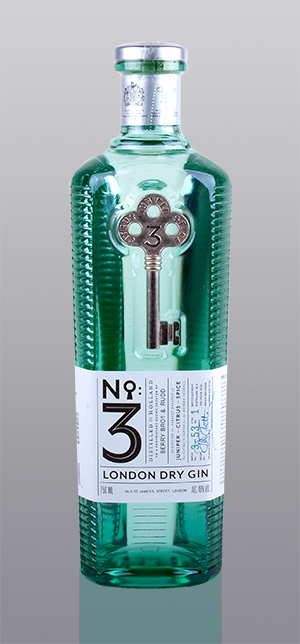
No. 3 London Dry Gin

No. 3 Gin
No. 3 London Dry Gin. Click here for tasting notes.

No. 3 Gin

Berry Bros. & Rudd is a family-run British merchant founded in London in 1698. Since then, the company has grown from a small coffee shop into an international business with six offices worldwide.

The company started out selling coffee, and then diversified into cocoa, tea, snuff, spices, and other foreign goods, becoming one of London’s most fashionable grocers. Its West End location and close proximity to St James’s Palace also contributed to its growing popularity.
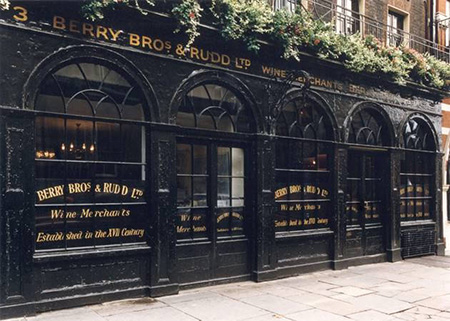
No.3 St James's Street
No.3 St James’s Street


Today, the company offers an extensive range of wines from Bordeaux, Burgundy, the Rhône and Italy. Berry Bros. & Rudd has been the official wine supplier to the British Royal Family since the reign of King George III. They received their first Royal Warrant of Appointment in 1903 when they formulated a ginger liqueur to revive Edward VII from cold car journeys, still sold as The King’s Ginger. Queen Elizabeth II granted the company her royal warrant in 1995, and Charles, Prince of Wales granted his in 1998.

The company also offers wine investment opportunities, wine storage, wine tastings, events, and educational courses.

From 1923 to 2010 Berry Bros. & Rudd controlled Cutty Sark Scotch whisky, whose yellow label is famous the world over.

Once Berry Bros. & Rudd decided to try their hand at gin, it took a team of spirit specialists 730 days to refine and create No. 3 Gin.

The key prominently displayed on the bottle is a replica of that to The Parlour, one of the oldest rooms in the Berry Bros. shop. Chairman Simon Berry says that the key is a symbol of trust; a promise, as it were, that the gin is what customers would expect from such an establishment. The high-shouldered green bottle is inspired from the open pontil gin bottles that date back to 17th century.
David Clutton
Dr David Clutton – the only person in the world with a PhD in Gin.

Each batch is presided over by distiller Dr. Clutton, who starts by weighing and blending the six botanicals (grapefruit peel, orange peel, coriander, cardamom, juniper berries, and angelica root) in the recipe. They are then added to the still and steeped for over 16 hours in pure grain spirit. The next day, the distillation begins and lasts over seven hours. The ‘heart’ of the distillate is then collected. Finally, No. 3 is diluted to 46% ABV (the producer claims this is “the ideal amount”), and bottled.

No. 3 London Dry Gin

This gin opens with crisp and fresh grapefruit, with forest-like juniper. The piney juniper continues on the palate, correctly, supported by floral notes and hints of spicy cardamom. There’s plenty of citrus ‘zing’ complemented by the gingery spiciness of the coriander. It all ends with the earthy dryness of angelica. The whole package is quite smooth and balanced. But remember that 46% ABV, and drink responsibly. This is high-octane stuff, and that smoothness can fool you if you’re not careful.

www.no3gin.com

Back to blog posts: https://winervana.com/blog/
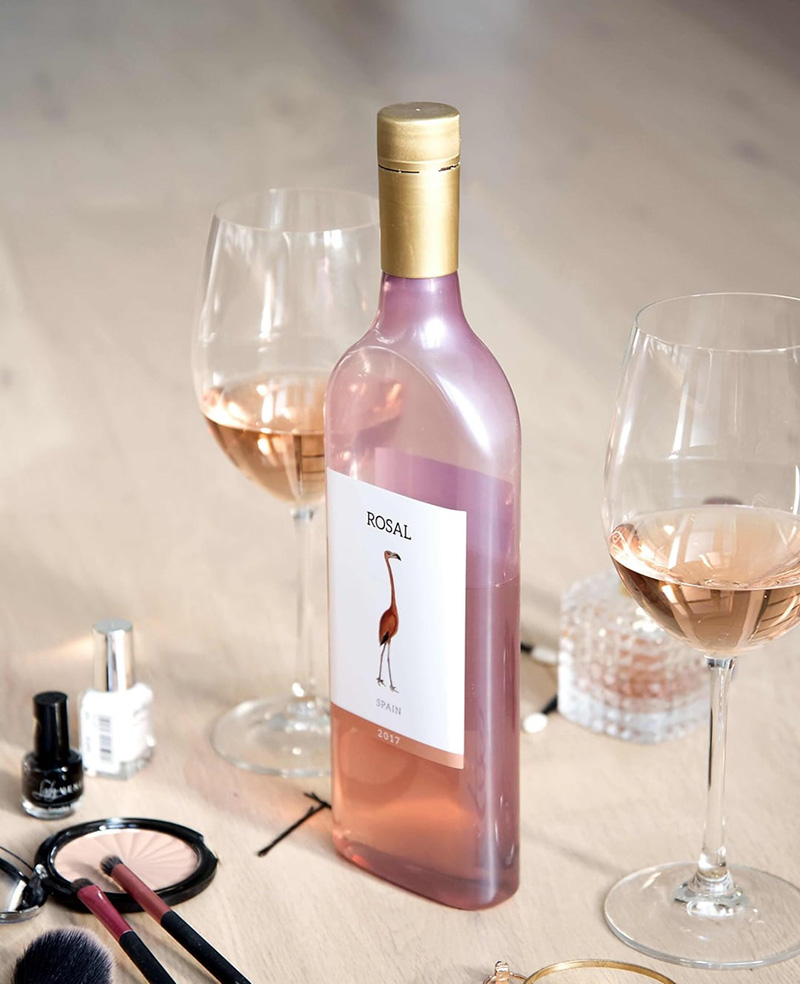
Garçon Flat Wine Bottles

Garçon Wines Flat Wine Bottles

The single biggest contributor to a bottle of wine’s carbon footprint is the glass bottle itself, which represents 29% of the carbon footprint of getting that wine to you. Add in the impact of other packaging such as case boxes, as well as transport, and the total burden increases to a total of 51%.

To address this issue, UK-based Garçon Wines invented patented, eco-friendly, flat wine bottles made of recycled polyethylene terephthalate [PET], which have the profile of traditional wine bottle shapes, but are lighter and more energy- and space-efficient than round, glass bottles of the same volume. Garçon Wines’ bottles also lend themselves to innovative transit packaging, which amplifies the single- bottle environmental benefits.

PET, which has rapidly become one of the world’s preferred packaging materials, is lightweight, shatterproof, resealable, reusable, and infinitely recyclable*. PET plastic bottles often have the lowest carbon footprint of competing products, and their production results in up to 70% less greenhouse gas emissions.

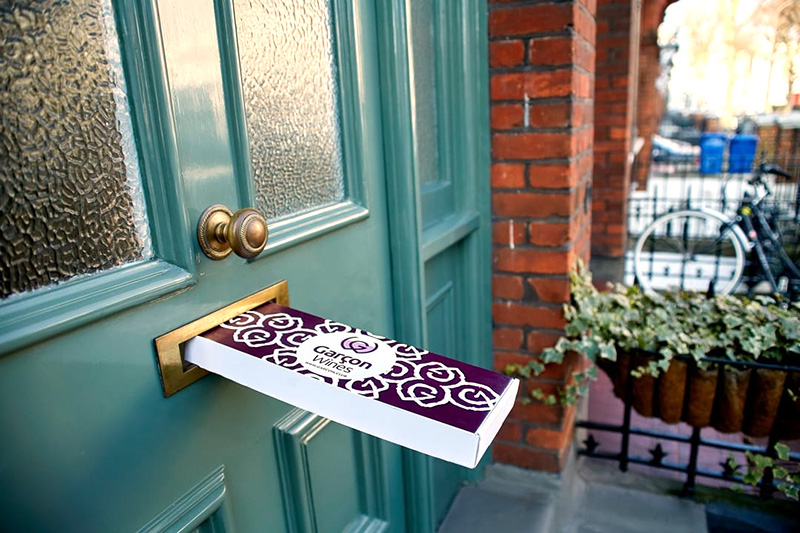
Amusingly, these flat bottles were developed originally to facilitate the delivery of wine into UK homes via the letterbox, by inventors and wine-retailing entrepreneurs Santiago Navarro and Joe Revell. They set out to improve consumer convenience, cut the costs of failed deliveries, and help to reduce the near 1 million kilograms (2.2 million pounds) of carbon emissions associated with deliveries in the UK.

“As we are facing a climate emergency and existential threat, we urgently need to be making changes to products to slash their carbon footprint. Flattening the wine bottle saves space and making it from recycled PET saves weight and energy,” said Santiago Navarro, CEO and co-founder of Garçon Wines.

To bring their unique product to the U.S. Garçon is partnering with Amcor, a global leader in developing and producing responsible packaging for food, beverage, pharmaceutical, medical, home- and personal-care, and other products. The company is focused on making packaging that is light-weight, recyclable, and reusable, and made using a rising amount of recycled content.

“We know today’s wine consumers are looking for a unique experience,” said Beth Rettig, vice president of spirits, wine and food, Amcor Rigid Packaging. “Amcor’s concepts are sleek, modern and perfectly matched to today’s lifestyle requirements for convenience and sustainability. PET bottles are unbreakable, beach- and pool-friendly, and the designs are only limited by the imagination.”

A 2018 Dow Packaging Innovation Awards Diamond Finalist, Garçon Wines’ flat wine bottle is expected to become widely available in the U.S. in the second half of 2020.

*With existing technologies including chemical recycling.

www.garconwines.com

www.amcor.com

Back to blog posts: winervana.com/blog/


LEAF Vodka

Leaf Vodka

LEAF Vodka

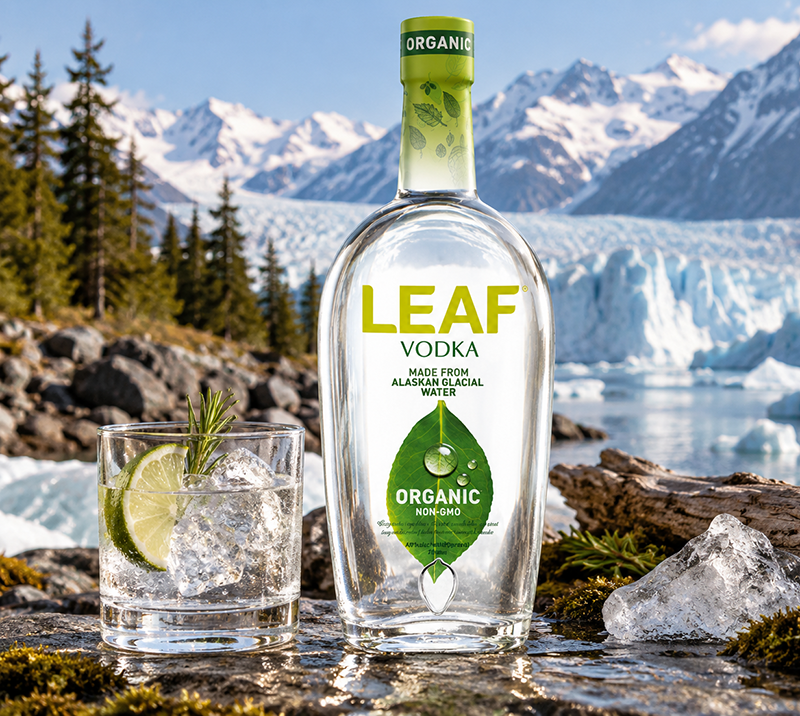
Leaf Vodka is sourced from two unique American waters. These water sources give LEAF vodkas their signature tastes.

LEAF Vodka made from Alaskan glacial water has a pure, smooth taste with a hint of sweetness, while LEAF vodka made from Rocky Mountain mineral water offers richness and complexity, lending a warm and savory impression on the palate. Both expressions are distilled five times, are made with USDA Certified Organic non-GMO wheat, and are unflavored. The difference is in the water, which constructs two distinct tastes for different taste profiles.

To date, LEAF has won over 20 awards since 2014 including multiple Double Gold and Best in Show awards from a variety of organizations, including the San Francisco World Spirits Competition, the San Diego Spirits Festival, TheFiftyBest.com, the SIP International Consumer Tasting Awards, and the Ultimate Spirits Challenge among others.

by Spirits Contributor Neal Kotlarek

leafvodka.com

Back to blog posts: winervana.com/blog/

HandCraft Wines

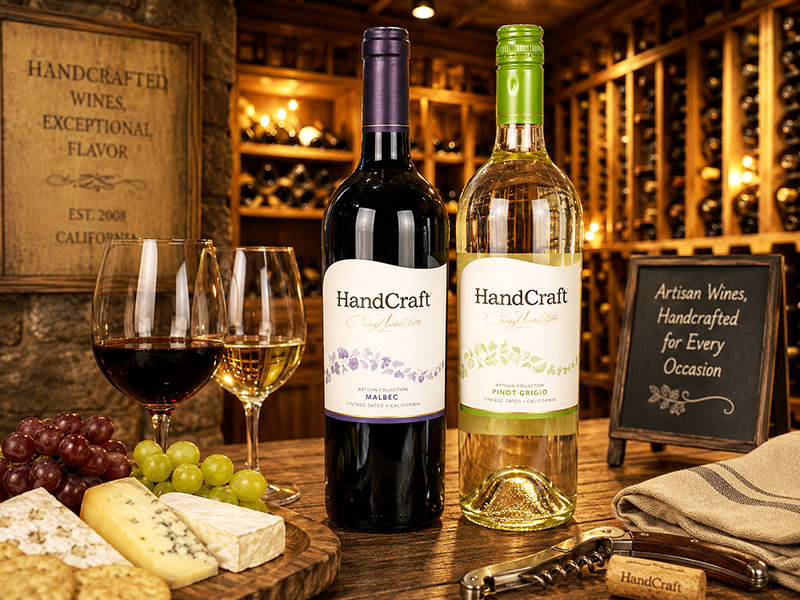
HandCraft Malbec 2013 and HandCraft Pinot Grigio 2014.
HandCraft Malbec 2013 and HandCraft Pinot Grigio 2014. Click here for tasting notes.

HandCraft Wines

Cheryl Indelicato is part of the third generation of the family that owns Delicato Family Vineyards. Delicato offers wines under such brands as Black Stallion, Bota Box, Gnarly Head, La Merika, Massimo, and others.

Although born into the wine business, doing odd jobs at the winery as a little girl, her parents insisted that their children graduate from college and gather outside experience by working elsewhere for at least three years before coming back to the family business, if they wished to do so.

Accordingly, Cheryl earned a Registered Nursing degree in 1985 and a Bachelor of Science Degree in Business in 1989. However, the family wine-making enterprise kept its hold on her, and she returned to the fold in 1990, working in various facets of the business.

All the while, she dreamed of creating her own wine brand. “I have always wanted to create my own wine with a style and flavor profile that appealed directly to women,” says Cheryl.

Cheryl began the project, called HandCraft Artisan Collection, in early 2010 when she teamed up with veteran winemaker Alicia Ysais to develop a wine that would be fruit-forward, distinct, and easy to enjoy—similar to the field-blend wines that Cheryl recalled from her family’s dinner table. The line includes Chardonnay, Pinot Noir, Cabernet Sauvingnon, and Petite Syrah, as well as the more rarely seen (for California, at least) Pinot Grigio and Malbec, featured below.

As part of her passion to make a positive difference in people’s lives, Cheryl created “HandCraft Cares” to support important causes with financial and in-kind donations. She is involved in a number of initiatives at the community level to increase awareness and early detection of breast cancer. Since 2012, HandCraft has contributed $235,000 to support breast cancer research, prevention, and awareness.

HandCraft Pinot Grigio 2014

This Pinot Gigio underwent a cold-temperature fermentation and was aged entirely in stainless steel, for those of you put off by any oak. It is nearly colorless in the glass. But, no worries. The nose offers aromas of peaches and tropical fruit, with a floral background. In the mouth, the wine is medium bodied, with flavors of melon and key lime. It offers a nicely balanced, crisp acidity, and the finish is relatively short.

Enjoy this easy-going wine with Swordfish with Tarraogn Beurre Blanc, Tomatoes, and Black Olives; Chicken Marsala Burgers; or Crab with Bok Choy and Egg Stir Fry.

HandCraft Malbec 2013

Deep purple in the glass, this Malbec delivers aromas of plums and blackberries on the nose. The ripe plum continues as you begin to taste, complemented by a hint of dusty cocoa. The wine has a medium body and a medium finish, accompanied by a fair amount of tannins, but nothing excessive. A good value for the price.

This wine would go nicely with Guiness Pub Burgers, Oaxacan Black Mole with Braised Chicken, or Slathered Mesquite-Smoked Ribs.

www.handcraftwines.com/

Back to blog posts: winervana.com/blog/

Sanford Winery

Sanford Winery.
Sanford Winery. Click here for tasting notes.

Sanford Winery

Sanford, the first winery in Santa Barbara wine country, was established when the Sanford & Benedict vineyard was planted in 1971. Botanist Michael Benedict and his friend Richard Sanford were committed to finding a cool-climate location with just enough heat accumulation to ripen, but not over ripen, wine grapes. A place where they could plant and grow grapes and craft wines, where they hoped the quality might equal the best of Europe.

Continue reading “Sanford Winery”

Hall Craig’s Red Wine

Hall Craig's Red Wine 2014.
Hall Craig’s Red Wine 2014. Click here for tasting notes.

Hall Craig’s Red Wine 2014

Kathryn Walt Hall has a most impressive curriculum vitae. To touch on just a few of the high points, she is the proprietor of HALL Wines and WALT Wines [family businesses she has been involved with for over thirty years], was assistant city attorney in Berkeley, California, worked as an attorney and businesswoman in Dallas, Texas, and has served on numerous non-profit and institutional boards, with an emphasis on issues related to social care and mental health. From 1997 to July 2001, Ms. Hall served as the United States Ambassador to Austria. In the midst of this, together with her husband Craig she has raised four children.

Continue reading “Hall Craig’s Red Wine”

Kelt Commodore Cognac

Kelt Commodore Cognac.
Kelt Commodore Cognac. For tasting notes, click here.

Kelt Commodore 

First, let’s talk about brandy vs. Cognac. Brandy is a liquor distilled from wine and aged in wood. (Brandy can be made from fruits other than grapes as well, but that’s a story for another time.) Cognac is brandy that specifically comes from the town of Cognac and the delimited surrounding areas in western France. (The one which has the most favorable soil and geographical conditions is Grande Champagne.) So, all Cognacs are brandy, but not all brandies are Cognac. For more detail on Cognac, click here.

Continue reading “Kelt Commodore Cognac”

Parallel 44 Winery

Parallel 44 Winery
Parallel 44 Winery. Click here for tasting notes.

Parallel 44 Winery

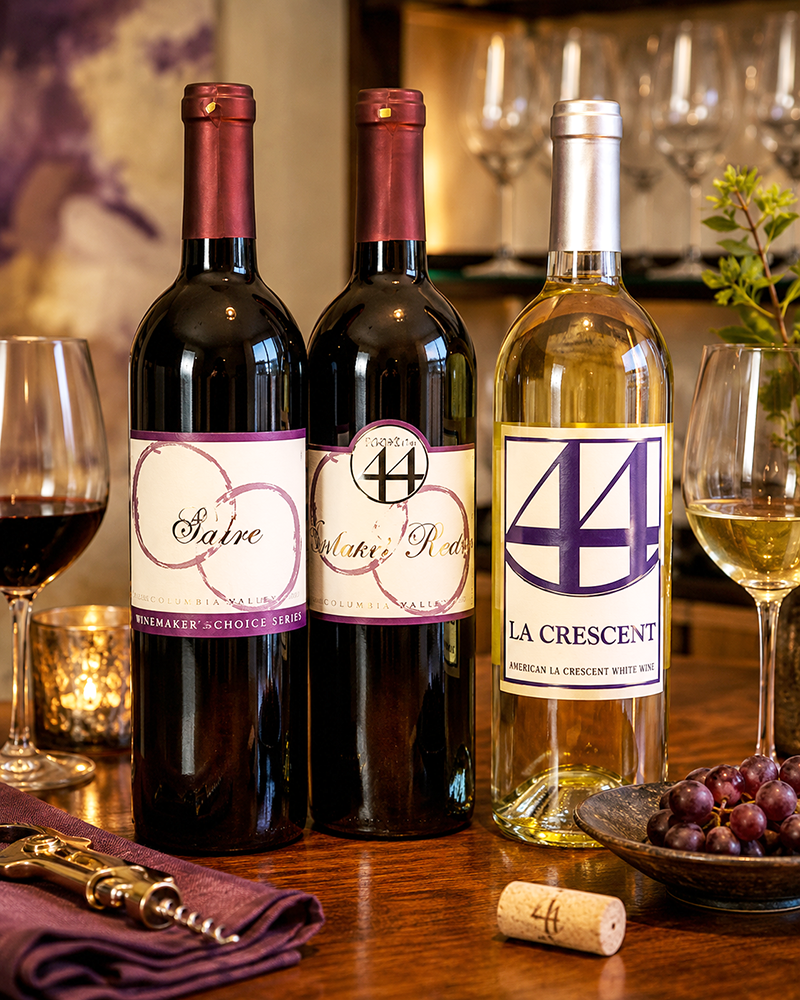
The story of Parallel 44 Vineyard & Winery began in 2005, when husband and wife team Steve Johnson and Maria Milano planted their first grape vines. Steve grew up in Green Bay, where his father Carl experimented early on with growing grapes. Maria grew up in Stevens Point, Wisconsin, where her Italian-born father continued his tradition of making wine for friends and family celebrations. Steve and Maria met while in school at the University of Wisconsin in Madison, and then attended law school together. While working as attorneys, they attended seminars on grape growing in Wisconsin, with an eye towards getting into the wine business. Continue reading “Parallel 44 Winery”