
Today is Earth Day, first held on April 22, 1970. An ideal moment to examine Scheid Family Wines, a producer deeply committed to earth-friendly practices (an enthusiasm shared by more and more winemakers every year, fortunately).’

Reviews of wines and spirits for the curious drinker.
Today is Earth Day, first held on April 22, 1970. An ideal moment to examine Scheid Family Wines, a producer deeply committed to earth-friendly practices (an enthusiasm shared by more and more winemakers every year, fortunately).’
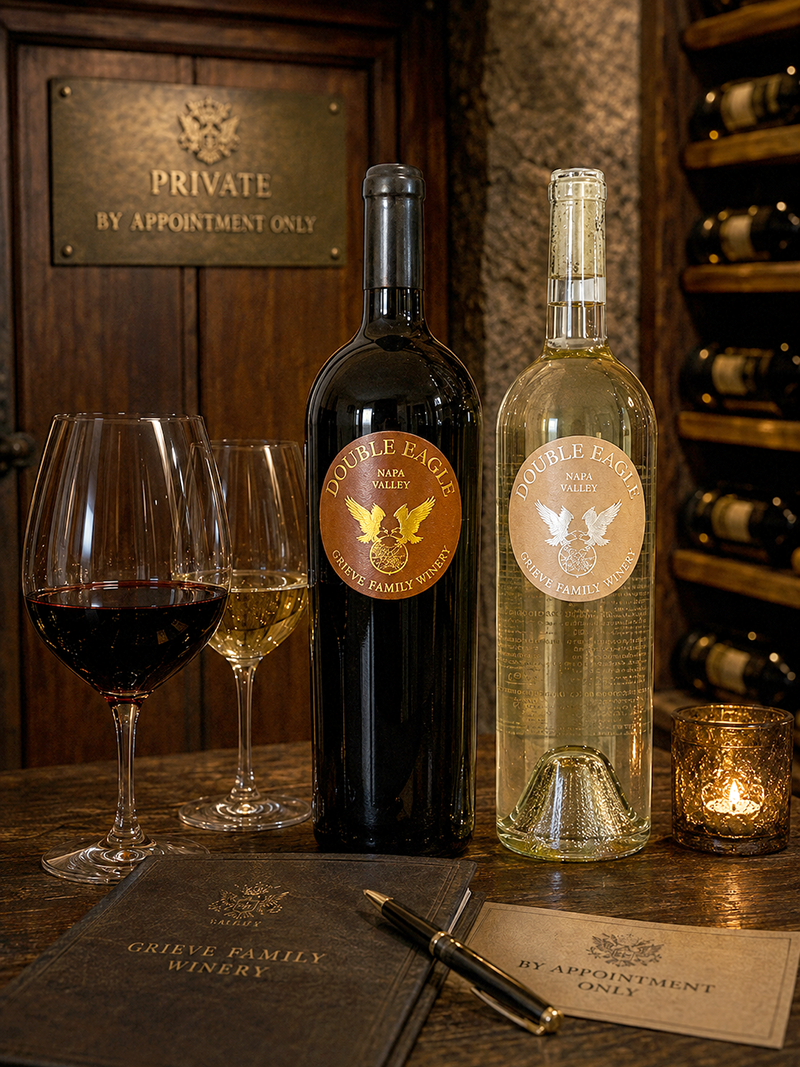
Grieve Family Winery Double Eagle
The Grieve Family Winery is located in a secure and undisclosed location in Napa Valley. It is not open to the public, and tastings are offered exclusively to wine club members by appointment only. Remarkably, there is no access from Napa Valley itself; the rare visitor must navigate a long, winding dead-end road that begins in Sonoma Valley. The following dossier is the information that agents Mulder and Scully have been able to assemble so far about the operation.

Can you make wine in Arizona, of all places? You sure can. In fact, wine is made in every single one of these United States.
In the 1600s, missionaries brought grapevines to the deserts south of Tucson to make communion wine (surprise!). Henry Schuerman established the state’s first known commercial winery near Sedona in the late 1880s.
Although he had never been a farmer, he eventually planted an orchard on 160 acres that he had acquired. In addition to apples, peaches, apricots, pears, and quinces, in recognition of his Germanic roots he planted a vineyard. 76 acres of Zinfandel to be exact.
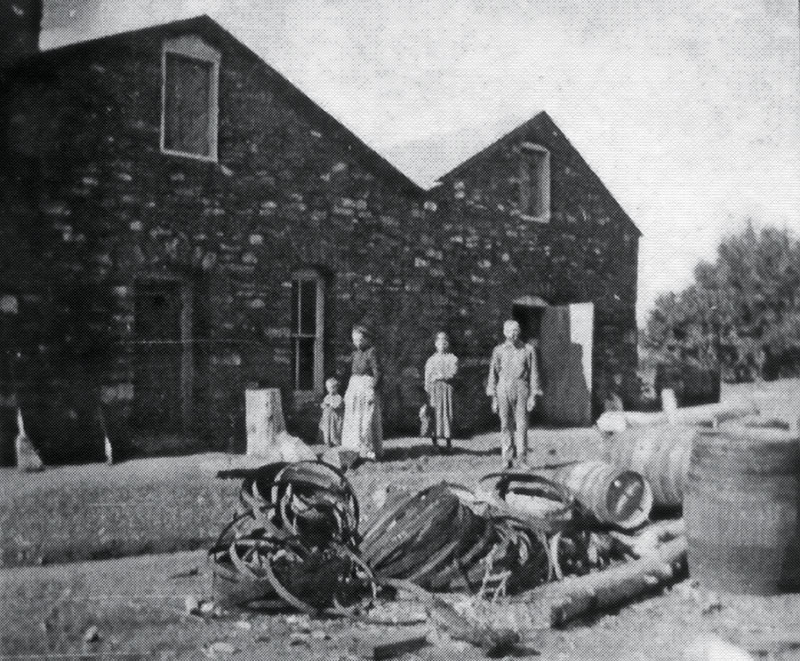
For 25 years, the Schuerman Winery sold Zinfandel throughout Arizona. Then came New Year’s Day 1915, when, by popular vote, the good citizens of the infant state of Arizona instituted a total ban on alcohol (predating national Prohibition by five years). And that was the end of that.
At least for a while. In the 1970s, as Americans’ interest in wine was beginning to grow, a soil scientist named Gordon Dutt got a grant to study water retention in southern Arizona, and happened to learn that grapes might grow well in the Sonoita area. Dutt founded Vina Sonoita Vineyards, then advocated to change state laws to allow vintners to sell on a large scale once again. Today, Arizona’s 110 licensed wineries gross over $56 million per year.
One of those wineries is Lightning Ridge Cellars, founded by husband-and-wife team Ann and Ron Roncone in 2004. Both began with engineering careers in San Francisco in the early 1980s. At the time, it was quite unusual for a woman to be in such a male-dominated field. It’s not all that common even today.
They also both shared an Italian heritage, and growing up in Italian families there was always wine on the table as a matter of course. Even during her work as an engineer, Ann was drawn to winemaking as a hobby. “Wine was just a drive, and I wanted to try my hand at making some,” she said. “So, I got a kit. A five-gallon bucket, a can of concentrate, and parts.”
Rather than relying on that concentrate, an easy intro for novices, she bought 200 pounds of Zinfandel grapes and handcrafted her first wine from that fruit. She soon planted vines on the property that she owned with Ron, and continued to make wine while working as an engineer. Her growing thirst for knowledge led her to the University of California – Davis, the renowned college for viticulture. “I took every single course that I could,” said Ann.
For two weeks every September for the next four years, Ann took a “vacation” and worked as a cellar rat at various wineries in the Bay area. “I would show up for work and semi flatbeds filled with grapes that needed processing would show up,” she recalled. “It was a rag-tag little group but it was really fun, and it was amazing to get that hands-on experience.”
By 2002, Ann told her husband that that she wanted to be a winemaker full time. He was cautious about the decision, but agreeable. The idea of doing so in northern California was quickly squashed, due to the high prices they encountered for land . But, at the beginning of his career Ron had completed his graduate work at the University of Arizona in Tucson, and knew the area well. They learned that the Sonoita-Elgin region was designated as an American Viticultural Area (AVA) which gave it credibility, although at the time there were just three wineries in the area.
Once relocated, in 2004, Ann and Ron purchased a 20-acre property at 5,100 ft. elevation in Sonoita. They then planted their first grapes: Montepulciano, Primitivo (aka Zinfandel), Malvasia Bianca, Muscat Cannelli, and Aglianico. “It was a little unnerving because no one in Sonoita-Elgin had these grapes growing at the time,” said Ann.
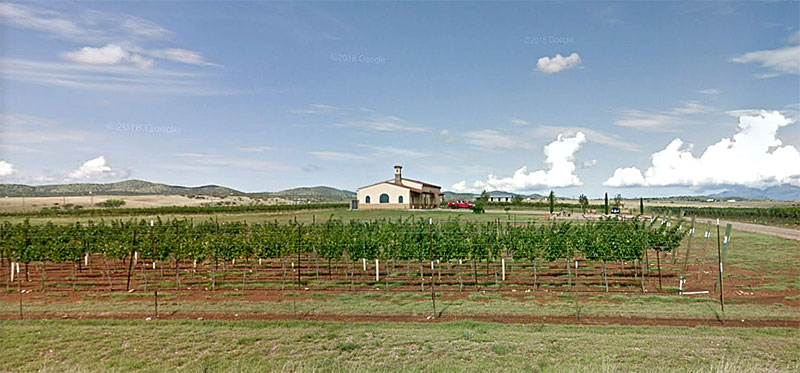
Rather than beginning production immediately, Ann wanted to open Lightning Ridge Cellars with estate wines (not a particularly cost-effective plan). So, they patiently waited. On Halloween 2009, they finally opened their tasting room.
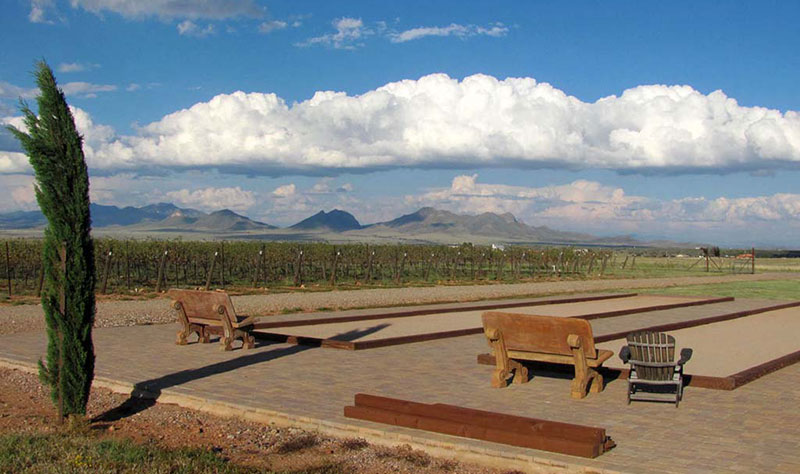
Their vineyard only sees about 18 inches of rain each year, most of which falls from July to August during Arizona’s monsoon season, so the need to draw water from a well is imperative.
Montepulciano is widely planted throughout Italy, especially in the southeastern regions. This 100% Montpulciano was sourced from the Lightning Ridge estate vineyard in Sonoita, and is Lightning Ridge’s flagship varietal. “A lot of Italian [grapes] are warm-weather varietals, and man, they love it here,” Ann shared. She added that Sonoita’s 5,000-foot elevation can bring April frosts, so late-budding Montepulciano fares well in the area.
This wine was aged for 30 months in 50% new European and American oak barrels. A dark opaque brick red, it is moderately aromatic, featuring bright red fruit and cola notes. The smooth palate offers raspberry, red plum, cranberry, and spice, especially white pepper. There is a little bit of Madiera-like raisin flavor as well. There is good supporting acidity. Because the tannins are quite moderate, drink this young, as its aging potential is limited. Production was 190 cases. ABV is 14.4%.
Graciano [grah-see-YAH-no Sp. grah-THYAH-no] hails from the Rioja and Navarra regions of Spain. This selection is an outlier in the Lightning Ridge portfolio, as the varietal is not Italian, and, although sourced from Sonoita, the fruit comes from a third-party grower.
It follows Ann’s 100% varietal credo. The wine spent two years in 30% new European and 60% neutral oak barrels. It is a semi-transparent garnet, and is lightly aromatic. Those aromas include boysenberries and leather. The palate features rather recessive fruit, some cocoa, zippy acidity, and well-balanced tannins. Ann made 90 cases. ABV is 14.9%.
http://lightningridgecellars.com/
Back to blog posts: winervana.com/blog/

Fajita Pizza
Many people like fajitas. Many people like pizza. So, how about … a Fajita Pizza! Ole! Grazia!
Start marinade (see below) as early in the day as you like.
Start dough at 4p for dinner between 8p and 9p
1 cup warm water
2 tsp instant-rise yeast
3-1/4 cup bread flour
1 tsp salt
1/4 cup olive oil (extra virgin not necessary)
Combine ingredients and knead by hand for 10 minutes or machine
for 2 to 5 minutes. Coat dough ball in a thin film of olive oil, cover in plastic wrap and let rise in warm place.
About an hour before dinner time, turn the oven up as high as it will go.
Twenty to thirty minutes before dinner, roll dough out to 15” circle. [Or divide dough if you want to make two smaller pizzas.] Place on pizza screen if available, being careful not to press the dough into the mesh. Cover with plastic wrap.
2 Tbs chili powder
2 Tbs ground cumin
1 Tbs ground coriander
1 tsp crumbled dried oregano
Salt to taste
Freshly ground black pepper to taste
Ground cayenne to taste
1 pound beef skirt or flank steak, or chicken (thighs are best), cut into slices about 3 in. long and 1/4 in. thick. (I actually used duck, but My Lovely Wife wasn’t amused by the extravagance. And honestly, the nuance of the duck was lost in this pie.)
2 medium bell peppers. Any color will do, but I like red
1 medium onion, cut into thick slices
1/4 cup olive oil
1/4 cup freshly squeezed lime juice
1/4 cup water
3 cups freshly shredded cheese: cheddar, Monterey Jack, mozzarella, fontina, whatever you like
1/4 cup fresh chopped cilantro
1-1/2 cups chunky salsa, store bought is fine. I like Pace.
In a large zip-lock bag, combine all of the ingredients except the cheese, cilantro and salsa. Marinade for as long as you like.
While the dough is undergoing its final rise, place a large skillet over medium-high heat. Add 2 tablespoons of olive oil. When the oil is shimmering, pour the entire contents of the zip-lock bag into the skillet. Cook until the meat is done, the vegetables have softened, and the liquid has evaporated. Remove plastic wrap from dough and brush liberally with olive oil. Spread salsa evenly over dough. Spread contents of skillet evenly over salsa. Evenly spread the cheese over the pizza.
Bake in rippin’ hot oven until crust nicely browns, about 10
minutes. Remove pizza to a cutting board, sprinkle with cilantro, slice, and serve.
This would go nicely with a robust Italian or Spanish red wine or a good Mexican beer.
Serves 4 to 6.
Here are some wines to try with this pizza:
Two Unusual Wines from Italy, and One of My Original Pizza Recipes

This recipe was derived from James McNair’s excellent New Pizza. Don’t be discouraged by the one-star reviews on Amazon, they are bogus, imho. One dweeb complained that McNair didn’t cover such arcane techniques as cold fermentation. Geez. If you want a cold ferment, use room temperature water and let the dough rise in the refrigerator for 24 hours. But, you’re not going to have pizza tonight, and you won’t taste the subtleties a cold ferment brings to dough under all those toppings
Back to blog posts: winervana.com/blog/
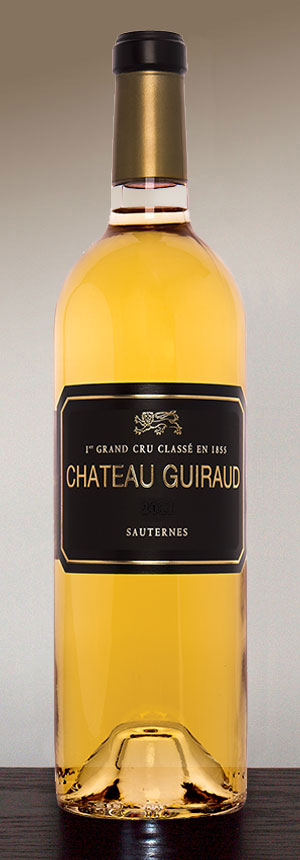
Sauternes is the famous French appellation that is home to some of the greatest sweet wines in the world, and to which it is largely dedicated. It lies within the Graves district of the Bordeaux region.
The wine of the same name is made primarily of Sémillon, but smaller amounts of Sauvignon Blanc and Muscadelle are often included. The unique characteristic of Sauternes is that in years with just the right conditions, including cool, foggy mornings and dry, sunny afternoons, the grapes are plagued with Botrytis Cinerea, or Noble Rot. This beneficial mold causes the grapes to shrivel, driving out water and leaving the fruit rich and loaded with sugar. Winemakers must have a clear understanding of this phenomenon, as only the grapes that have been perfectly concentrated by the Botrytis will be picked, one by one. It is very much a risky, hit-or-miss proposition, subject to many variables of weather and harvest. Because of this, Sauternes’ are not made every year and are expensive.

This house originated as La Maison Noble du Bayle, but was purchased by the Bordeaux négociant Pierre Guiraud in 1766. They intentionally built up an atmosphere of mystery around the operation. The domain remained in the Guiraud family until 1837, and, during this time they constructed the Protestant chapel that still stands today on the grounds of the estate. The property was awarded the Premiers Cru [First Growth] Classé in 1855 in the classification system established by Emperor Napoleon III.
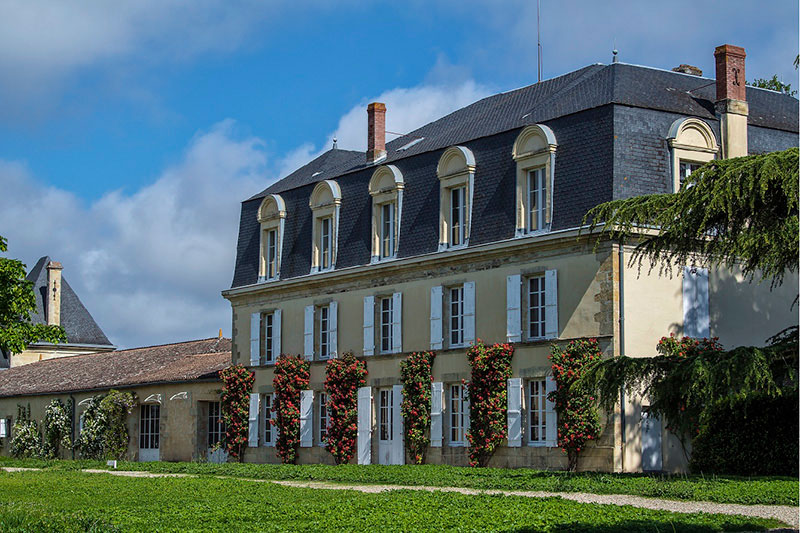
Over the years Guiraud has changed hands several times. It was sold to the Bernard family in 1837; they eventually sold to the Maxell family; and the next owner was Paul César Rival. In 1981, the estate was sold to the Narby family, Canadians of Egyptian origin, and Xavier Planty was retained as manager in 1988. The Narbys and Planty restored the business to its previous esteem after standards slipped in the 1970s. It changed hands again in 2006 when it was purchased by a four-man partnership of Planty, Robert Peugeot, Olivier Bernard, and Stephan von Neipperg. The partners removed the red wine grape varietals that had been planed in the 1930s, and modernized the cellars and winemaking equipment. A new drainage system was installed, and extensive replanting was conducted also.
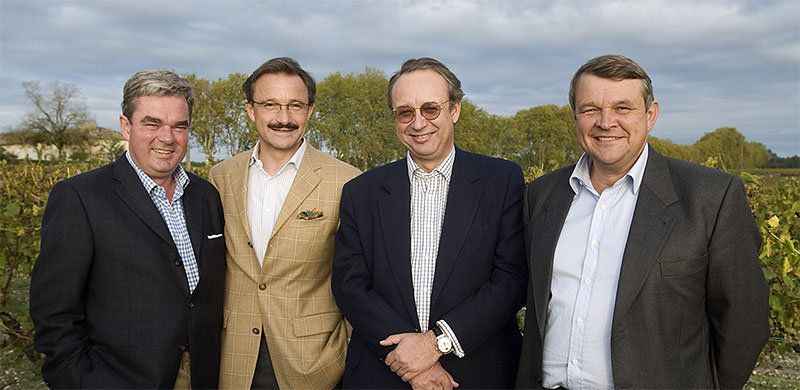
The co-owners of Guiraud have other interests as well. Planty is president of the Organisation for the Defence and Management of the Sauternes and Barsac appellations, and he represents the territory and its wines at the CIVB, the interprofessional council for Bordeaux wines. Peugeot is president and general manager of the company FFP. He is an influential gourmet and is also a member of the prestigious Club des 100 in Paris. Bernard is president of the Union des Grands Crus and is also manager of Domaine de Chevalier, the well-known first-classified growth in the Graves appellation. Von Neipperg runs, among others, Château Canon La Gaffelière and Château La Mondotte, both Premier Grand Cru Classé in Saint-Emilion.
In 2001, Guiraud established a conservatory of white-wine grape varieties, the only one of its kind in the world. This reserve contains 135 original strains of Sémillion and of Sauvignon Blanc. The mission is to maintain the diversity of the vines and ensure the sustainability of the vineyard.
Guiraud registered the term BioViticulture in 2010, a name reflecting their focus on organic farming and sustainable viticulture (they began farming organically in 1996). The following year, the estate earned the status of full Agenace Bio (AB) organic certification. Nature and a respect for biodiversity were driving factors (planting hedgerows, wild grass in between the vine rows, bird houses, and ‘insect hotels’) even before that. The whole running of the domain is ecologically minded, from the choice of energy and water supplies to the recovery of carbon dioxide during vinifcation.
“A study undertaken in the summer of 2010 revealed 635 species of insects and spiders in our vineyards. This illustrates the harmony that reigns in a well-balanced environment. The vine thus concentrates on the quality of its fruit.”
–Luc Planty, technical director de Château Guiraud
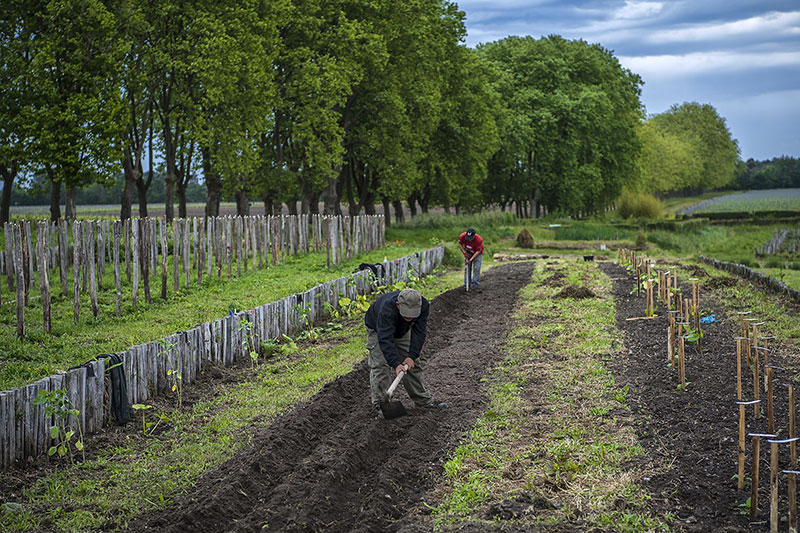 The Château Guiraud estate vineyard is 210 acres [85 hectares] planted to 65% Semillon and 35% Sauvignon Blanc. These two varietals are vinified separately before blending. The soil is a mix of sand, gravel, clay, and limestone on sloping hillsides which rise to 240 feet [73 meters] at their peak. At the bottom of the slopes the presence of natural springs ensures perfect drainage of the vineyard. The vines average age is 25 to 30 years.
Any discussion of Sauternes is incomplete without mentioning the legendary Château d’Yquem, the most famous Saurternes of them all, and the only one granted the highest Premier Grand Cru Classé. It is one of the longest-lasting (and expensive) wines in the world. For example, “The 1811 Château d’Yquem is prized as one of the greatest wines in the history of Bordeaux, and one of the most supreme vintages ever produced. It was rated the ultimate ‘100 points’ by critic Robert Parker, and again 100 points by The Wine Spectator‘s Per-Henric Mansson in 1999.” Although I tend to avoid pricing here on Winervana, as a point of reference the 2015 Guiraud Sauternes in a 375 mL half bottle sells for about $30. The d’Yquem averages 10 times that at $300 for a half bottle.
A blend of 65% Sémillon and 35% Sauvignon Blanc, this 2015 is the fifth vintage to be certified as organic. Vinification occurred in new French oak barrels. The wine was aged for approximately 21 months in 90% new oak and 10% used.
This rich elixer is very deep gold in the glass. The nose features dried apricots and citrus. The apricots continue on the palate, backed up by pineapple, honey, an unctious mouthfeel, and nicely balanced acidity. Spendy but worth it. Case production was about 5,800, and ABV is 13.5%
Note: Chaptalization, or sugaring, is the procedure of adding sugar to grape juice or must prior to or during fermentation. This is done when natural grape sugars aren’t high enough to produce reasonable alcohol levels. The process is legal in France and Germany, but not in California and Italy. Planty is committed to using the least possible amount of chaptalization in his winemaking.
Back to blog posts: winervana.com/blog/
Here at Winervana, I use this disclaimer, “Although you will see vintage dates throughout Winervana, I don’t put too much importance on them. Major producers these days strive for a consistent style, year after year, and largely succeed. For instance, when shopping for a particular wine, if you have a choice between a current release and one that’s a few years old, there will certainly be differences in price and the character of the wine. But upon release, those two examples of the same wine are likely to be quite similar.”
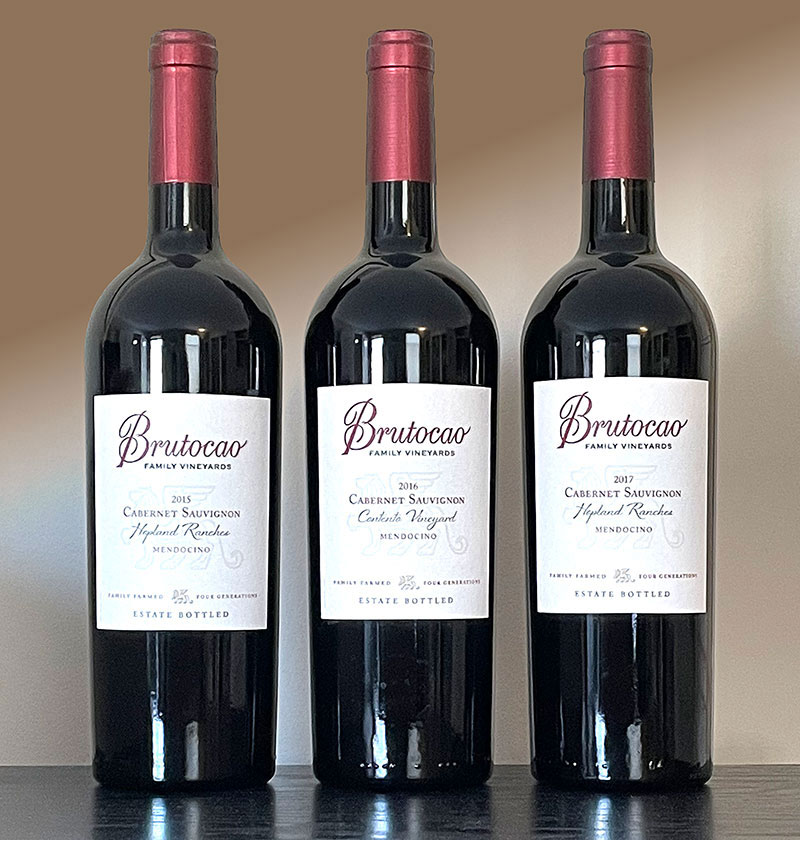
To test that position, I acquired a “vertical” of three Brutocao Cabernet Sauvignons. A vertical tasting is simply the same wine from different vintages. These three selections were indeed quite similar. Sourced from Brutocoa’s estate vineyards in Mendocino county, they all were aged 18 months in oak, 50% French and 50% American, and all have an ABV of 14.5% and .69% acidity.
These wines are a deep garnet in the glass. Surprising for Cabernet Sauvignon, they are semi-transparent rather than opaque. They start, predictably, with aromas of dark fruit, particularly blackberry, with hints of cedar. Those dark fruits continue on the palate, but these wines are restrained instead of fruit-forward, perhaps to be expected from a producer with a strong Italian heritage. They have a medium-long finish that features black-tea tannins.
There were subtle differences, however. Nothing that you would notice tasting the wines weeks or even days apart, but they were there. The 2015 had the highest levels of perceived acidity (all three were bottled at .69%) and tannins. Very unforeseen, because the common wisdom is that as a wine ages in the bottle both acidity and tannins become softer, rounder, and more balanced. Go figure. The 2016 was the most integrated of these selections, with well-balanced acidity and tannins, both less demanding of attention than in the 2015. Finally, the 2017 fell between the other two, with slightly more acidity but softer tannins than the 2016.
You can read more about Brutocao here: winervana.com/brutocao-cellars/
Back to blog posts: winervana.com/blog/

Three Interesting Sakés
Saké, the national alcoholic beverage of Japan, is often called rice wine, but this is a misnomer. While it is a beverage made by fermentation, the production process more closely resembles that of beer, and it is made from grain (rice, of course), not fruit. To make saké, the starch of freshly steamed glutinous rice is converted to sugar and then fermented to alcohol. Once fermented, the liquid is filtered and usually pasteurized. Sakés can range from dry to sweet, but even the driest retain a hint of sweetness.

Proprietor Ron Lachini’s family hails from the Tuscan town of Lucca. At some point, his grandfather immigrated to the United States, settling in the large Italian community of San Francisco’s North Beach. He started making wine with his father and grandfather in their garages as a child.

Winemaker Katy Wilson founded LaRue Wines in 2009 when she was just 26, but already had years of experience. She is one of the few but growing number of women in the wine industry. Continue reading “LaRue Wines”
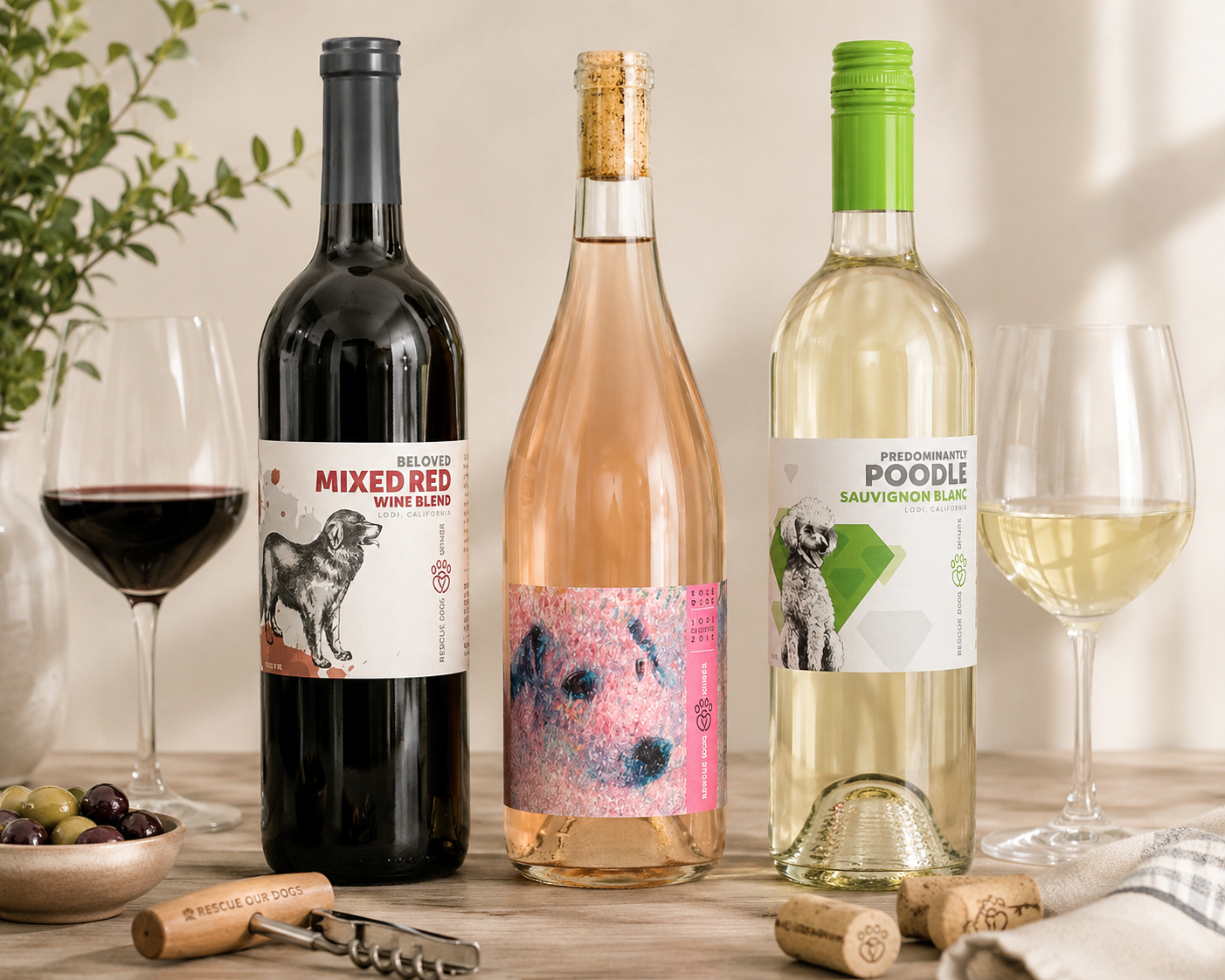
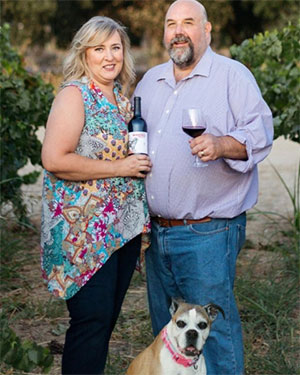
Founded in 2017 by Blair and Laura Lott, Rescue Dog Wines has an unusual and commendable mission: a generous 50% of their profits go to rescue dog organizations across the country. The Lotts explained that they started planning a new life in wine country around 2015. “We knew that we wanted to embrace sustainable growing practices and create a new, more rewarding lifestyle for ourselves. In addition, we knew that we wanted enough land to grow wine grapes and foster dogs. In addition, we knew that we wanted to create high quality, premium wines. During this period of exploration throughout many of California’s wine regions it dawned on us that we could combine our two passions and Rescue Dog Wines was born,” they reminisced. Continue reading “Rescue Dog Wines”
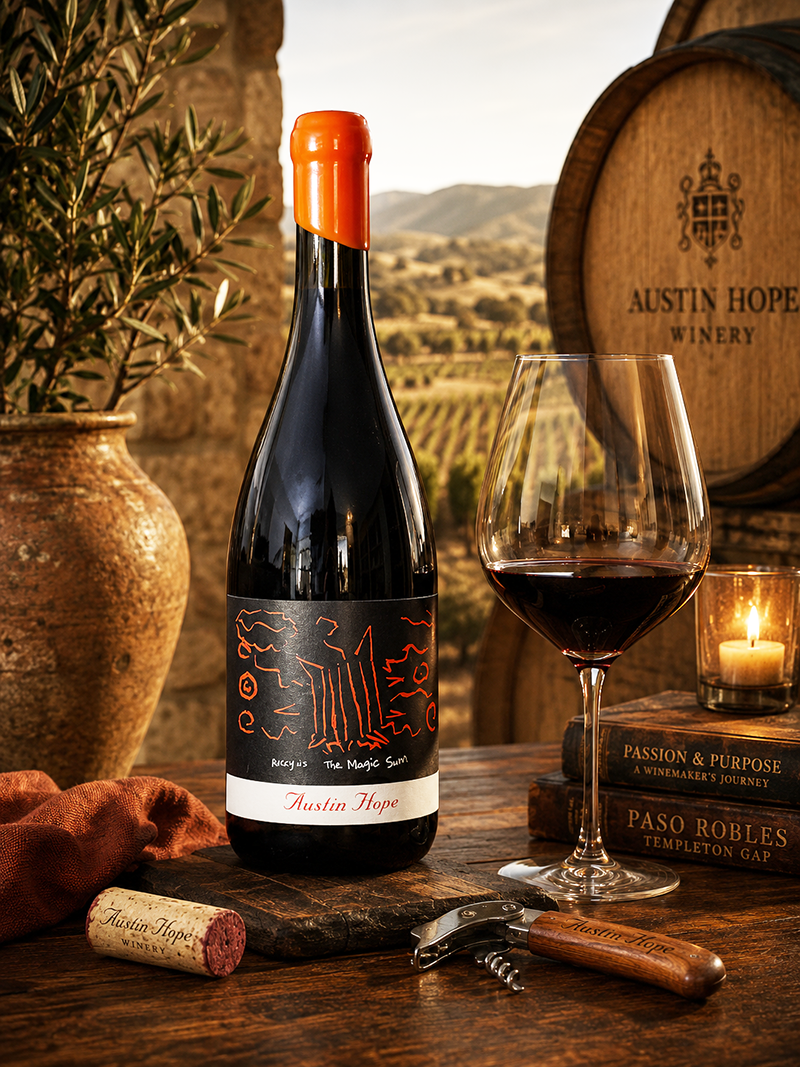
Chuck Hope and his wife Marlyn came to Paso Robles (which roughly means “passageway of oaks”) in California’s Central Coast in 1978 to farm, and eventually to start what would become Hope Family Wines. This early arrival put them on the forefront of the Central Coast becoming a world-class viticultural region. Initially, the Hopes planted apples and grapes in this then sparsely-populated area. Seeing the property’s potential for grape growing, Hope eventually replanted the apple orchards with grapes. Vine density was increased, and each vine was pruned to limit yield for better-quality fruit.
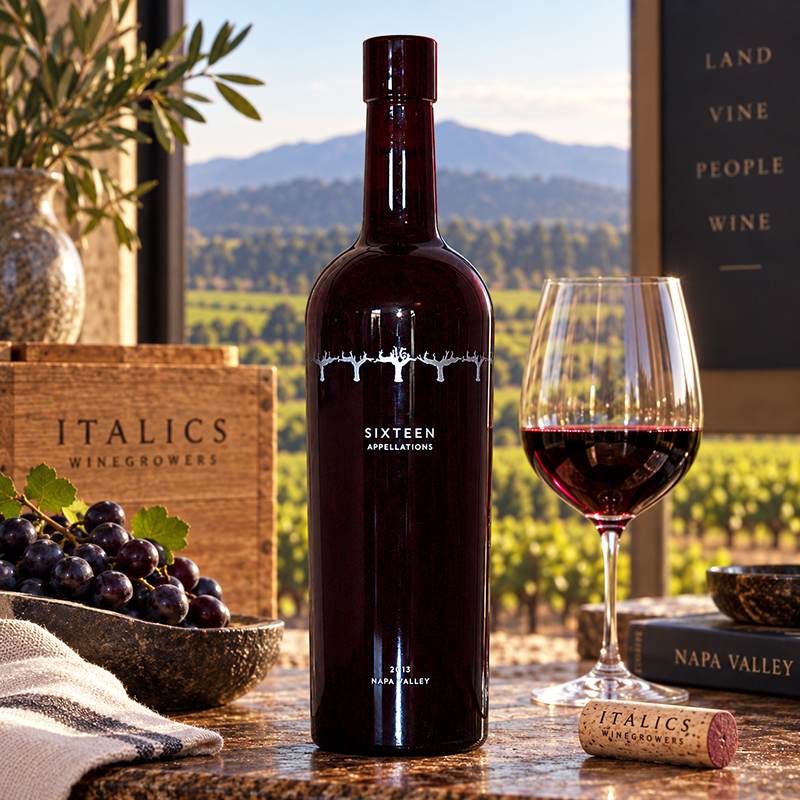
Sixteen Appellations Red Wine
In 1870 the Carbone family purchased a large parcel on Coombsville Road in Napa, California. They opened a winery, which is long gone, and that was about it for winemaking in the area for the next hundred years.
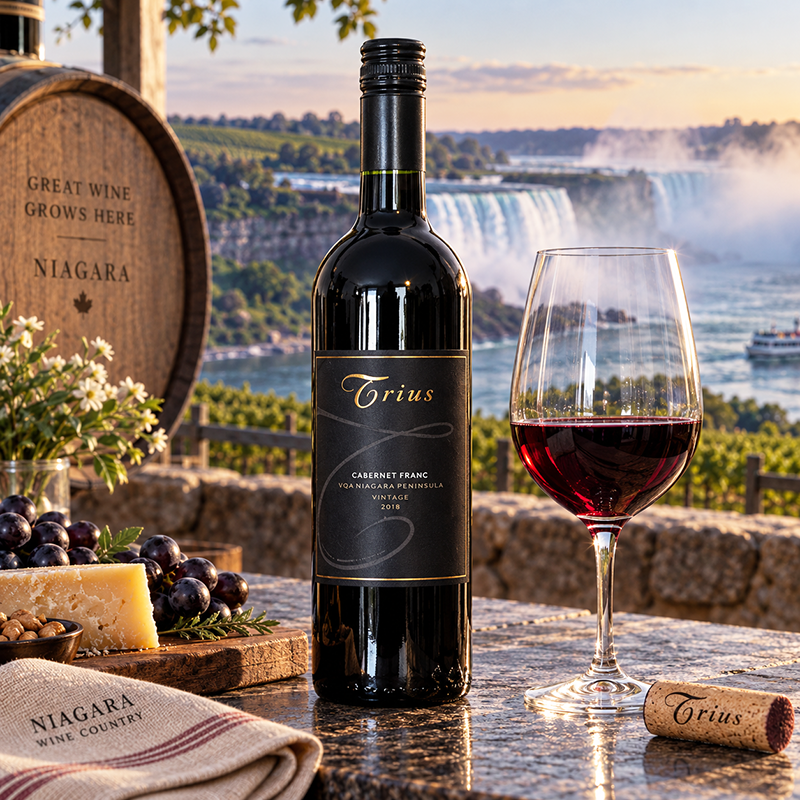
Mention the word “Niagara” and the first thing that occurs to most people is Niagara Falls, of course. But this region, which straddles both the United States and Canada, is becoming increasingly well known for the quality of its wines.
Riedel of Austria, famous for its varietal-specific stemware, makes both of these glasses, and both are intended for use with brandy and its variants Cognac, and Armagnac. How is this possible? They could hardly be more different.
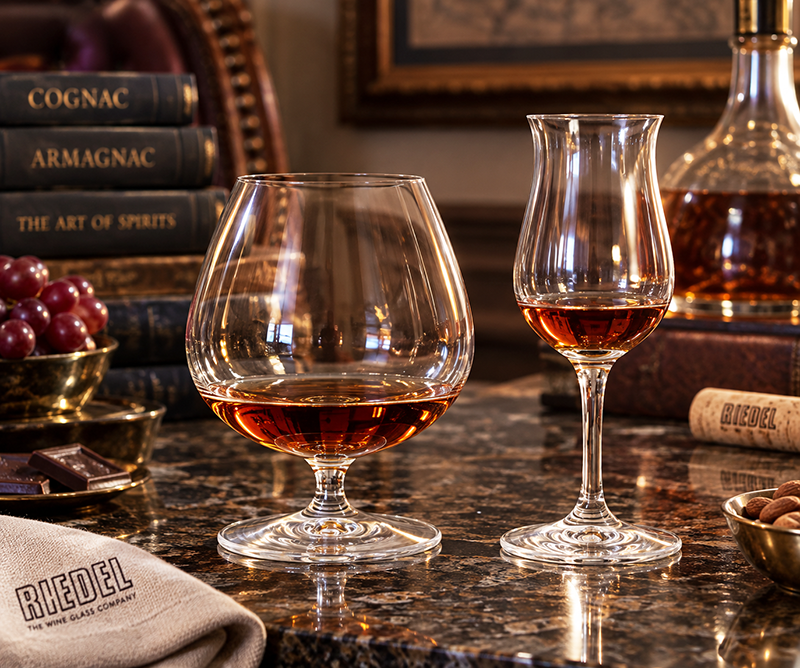
The glass on the left is the iconic brandy snifter, as instantly recognizable as a martini glass. Its large balloon bowl is intended to display as much of a brandy’s aroma as possible. And the wide bottom is intended for cradling in the palm of your hand, warming the brandy to further enhance the nose.
The glass on the right, although named by Riedel specifically for Hennessey Cognac, is suited for any brandy, Cognac, or Armagnac, and is the one preferred by connoisseurs and professionals. The bowl still allows for appreciating the aroma, without accelerating the evaporation like a snifter can, and the tulip shape concentrates it. A similarly-sized and -shaped wine glass can work nearly as well.
While I enjoy stemware like this, as always my advice is to use whatever you like. As far as I’m concerned, if you don’t have to slurp your beverage directly off the counter you’re good to go.
Find out more about brandy by listening to the Winervana Podcast Episode 10 – Brandy, Cognac, and Armagnac.
A note about brandy vs. Cognac: brandy is a liquor distilled from wine and aged in wood. (Brandy can be made from fruits other than grapes as well, but that’s a story for another time.) Cognac is brandy that specifically comes from the town of Cognac and the delimited surrounding areas in western France. (The one which has the most favorable soil and geographical conditions is Grande Champagne.) So, all Cognacs are brandy, but not all brandies are Cognac. For more detail on brandy and Cognac, click here.
Back to blog posts: winervana.com/blog/
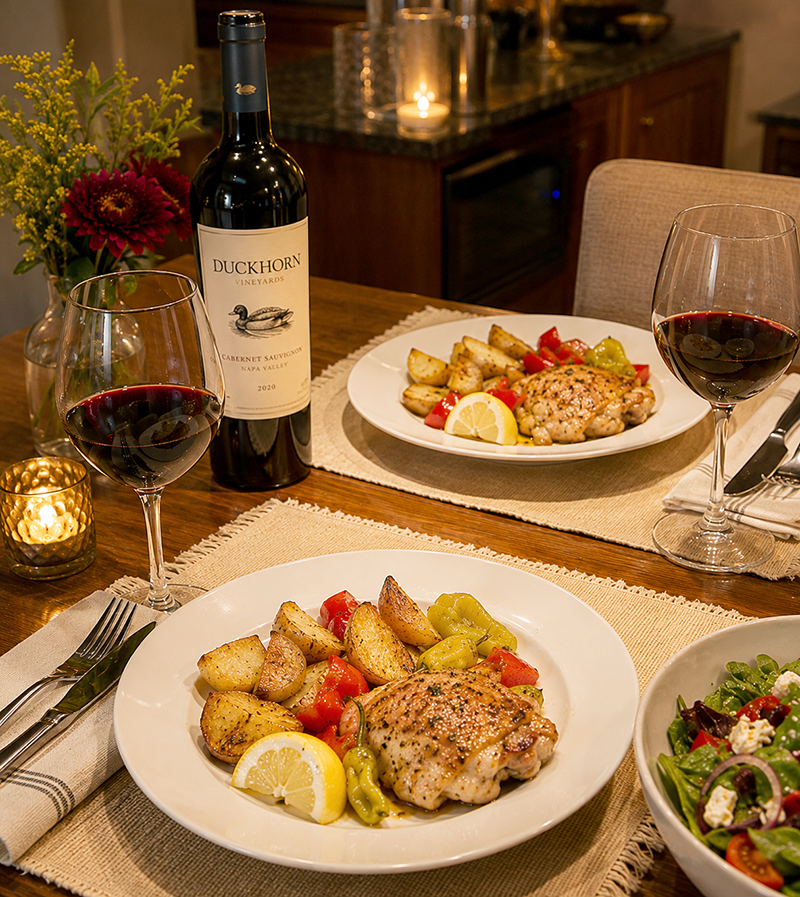
Gene & Georgetti is a legendary old-school Chicago steakhouse, founded in 1941, and still with us, happily. On November 1, 1987, the Chicago Tribune‘s food critic at the time, William Rice (excellent name for a food writer, no?), published a recipe for Chicken alla Joe. Like Spicy Grilled Tuna, this is one of the very few recipes I have made many times. (I have about 200 cookbooks and I don’t like to repeat.) Unlike that one, however, I have modified it somewhat, to make it a bit simpler and even more flavorful. (There is a link to Rice’s original recipe at the end of this post. ) And about ten years ago, I realized I almost always made this in January. So, now I must make it in January. Sometimes late, like January 31, 2020, and sometimes early, like January 1, 2021.
Chicken alla Joe is named for the man who invented it. Gene & Georgetti retains servers for years, if not decades. One of them was Joe Pacini, a native of Tuscany, who worked tables beside the bar in the restaurant’s front room. He had a regular customer, Morris Krumhorn, who liked spicy food. He would order broiled chicken and ask Pacini to have the chef, Mario Navarro, put red pepper on it. “One night I went to the chef and told him, ‘My customer is complaining that the chicken you make is not spicy enough,'” Pacini recalled. Chef Mario responded, “What can I do?” and Joe says, “He really likes it hot. Let’s put some hot pepperoncini with the chicken and green pepper and red pepper.” After serving the dish, Joe returned to the kitchen and said to Mario, “Mr. Krumhorn is a happy customer. He asks what you call this dish?” Mario answered, “It was your idea, not mine. I call it Chicken alla Joe.”
Serves 6 to 8
3-1/4 lbs. bone-in skin-on chicken thighs, or a mix of thighs and breasts
2 teaspoons salt
1 teaspoon black pepper
4 teaspoons dried oregano
1 or 2 teaspoons dried red-pepper flakes, depending on how hot you want it
9 tablespoons olive oil
1 red bell pepper and 1 yellow bell pepper, stemmed, seeded, and cut into broad strips or chunks, about 12 each
16 oz. jar of pepperoncini, drained, rinsed and left whole (but pierced once, so you don’t get a mouthful of vinegar when you bite into one)
3 – 4 russet potatoes, sliced into spears
2 lemons, cut in half
Serve with a green vegetable such as spinach or a salad of your choice, and an Italian red wine, perhaps a Dolcetto.
William Rice’s original column and recipe are here: www.chicagotribune.com/1987/11/01/chicken-alla-joe
And if you are ever in Chicago, you can try Chicken alla Joe at Gene & Georgetti itself, where the dish remains quite popular to this day. geneandgeorgetti.com/
If you decide to make my modified recipe, or Rice’s original, I would love to hear about it in the comments below.
Return to blog posts: winervana.com/blog/