Jeff Gordon (no, not that Jeff Gordon) is a fourth-generation farmer, born and raised in Washington state. Although tied to the land, Gordon realized early on that affection wasn’t enough, and was shrewd enough to take a Bachelor’s degree in Agriculture in 1971.
By 1977, Jeff and his brother Bill were growing potatoes on 130 acres of rented farmland. Several years later, Jeff’s attention to the local microclimate and rich volcanic soil of southeastern Washington’s Columbia Valley led the Gordon family to take the then-audacious step of planting wine grapes on a sagebrush-covered slope overlooking the Snake River. Much to the amusement of local fellow farmers, Jeff made a bold decision to plant red grape varietals. “As far as everyone was concerned, the Columbia Valley was Riesling country. That was all there was to it. We thought red grapes would work. We took a chance. It was the right thing to do.”
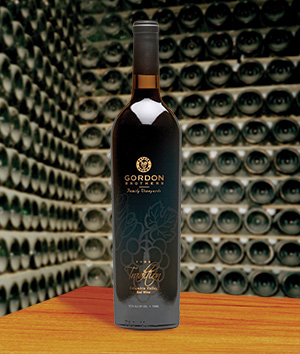
Gordon Brothers Tradition 2003
This wine is a blend of 47.6% Cabernet Sauvignon, 47.6% Merlot, and 4.8% Syrah (all from estate-grown grapes). After pressing and fermentation, the wine aged in oak for a total of 40 months.
Tradition is a jewel-like ruby in the glass. The nose features hints of cinnamon and clove. The velvety mouth-feel is complimented by restrained flavors of dark cherry and chocolate, and moderate tannins.
This very food-friendly wine will pair well with autumnal meats such as roast duckling with soy sauce and cloves, or braised lamb shanks.
River’s Edge Winery is located in the northern-most part of the Umpqua Valley. River’s Edge, founded in 1998, specializes in the production of cool weather varieties such as pinot noir and gewürztraminer. The ocean is only 36 miles away from the winery, and morning fog frequently shrouds the vineyards even in the summer, reflecting the strong marine influence on the climate.
Their two estate vineyards, Black Oak and Elkton, are the primary sources for the wines. These two vineyards were planted in 1972 and are among the oldest in the state.
The River’s Edge wine making style emphasizes a low-tech, hands-on approach utilizing small batch fermentation, exclusively barrel aging, and bottling without fining.
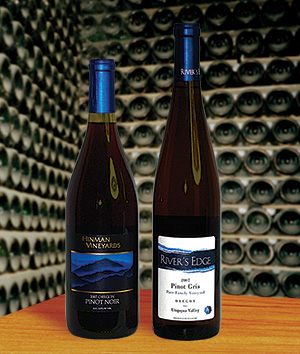
River’s Edge Pinot Gris 2007
Let me announce my bias up front: I’m not that big a fan of Pinot Gris (pee-no gree) and Pinot Grigio (pee-no gree-joe). They are often watery and lacking a distinct character. Not so this one from River’s Edge.
This pinot gris was vinified in the traditional Alsatian manner in older oak barrels, with seven months of aging. The resulting wine has the pale yellow color, citrus/lemon flavor, and ripe pear bouquet typical of this varietal. The boldness of the flavors make it unique, with plenty of structure.
Enjoy this wine with grilled whole red snapper, broiled halibut steaks with tarragon butter, or raw oysters.
Doyle Hinman and David Smith opened Hinman Vineyards in 1979. By 1988, the winery had become Oregon’s top selling winery. In 1993, Hinman started releasing their premium line of reserve wines under the Silvan Ridge label, relegating Hinman to second-tier status.
Silvan Ridge | Hinman Vineyards produces approximately 25,000 cases of wine annually, including Pinot Noir, Pinot Gris, Muscat, Syrah, Grenache Rosé, Chardonnay, Cabernet, Merlot, and Riesling.
The Hinman winemaking style strives to express classic European technique, while applying new-world innovation.
The fruit for this pinot noir was sourced from the Willamette Valley, which begins just south of Eugene and runs north to Portland. It is Oregon’s coolest growing region and the source for most of the state’s wine grapes. Vineyards are typically located on bench-land hillsides at the western edge of the valley.
Hinman Vineyards Pinot Noir 2007
The color of this pinot noir is like that of cherry juice, and while color is not necessarily a predictor of taste or complexity, this time it’s fairly accurate. This is a simple, fruity wine, with plenty of cherry and berry on the palate. A tad on the sweet side, but with enough acidity to keep things in balance.
Pair this wine with salmon gravlax, risotto with artichokes, or pan-fried soft shell crabs.
“This weekend is not about me. It is about you. I’m gonna show you a good time. We’re gonna drink a lot of good wine. We’re gonna play some golf. We’re gonna eat some great food and enjoy the scenery and we are going to send you off in style, mon frere.” And so Miles and Jack set off on their most excellent adventure in Sideways, the 2004 film that by some accounts was single-handedly responsible for a 10% increase in sales of pinot noir.
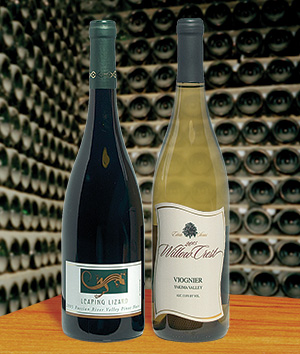
Leaping Lizard Pinot Noir 2005
This pinot noir hails from the cool and foggy Russian River Valley in Sonoma County, California. The Russian River has long been home to winemakers serious about pinot noir, and Leaping Lizard joined their ranks in 1996.
The winemaker is Harry Parducci Jr. He is yet another quality winemaker to come from a family better known for its jug wines, as some Gallos and Martinis are as well.
This wine is a lovely garnet color. There’s plenty of fruit, dominated by bright cherry and rich strawberry. It’s quite well balanced, though, and definitely dry with good supporting tannins and just a hint of oak.
Planked salmon is a classic pairing with pinot noir. (Yes, reds can be quite delicious with fish, especially richer species such as salmon, tuna, and swordfish.) Roast turkey or duck, fruit-glazed pork chops, and grilled barbeque ribs would work well also.
And now for something completely different: we head north to Washington state, and Willow Crest winery’s Yakima-grown viognier (vee-ohn-yay).
This varietal originated in the Rhone area of France, and continues to be extensively cultivated there. In the ‘90s, California’s so-called Rhone Rangers helped to bring it to attention here in the States.
Like Leaping Lizard, Willow Crest is a relative new-comer. After growing grapes for other winemakers in the Yakima Valley for more than a decade, David Minick realized a long-time dream of producing his own wine when he opened Willow Crest in 1995. Most of Minick’s 185 acres of grapes are sold to other winemakers, but he now also retains a small amount of his annual harvest to craft about 3,000 cases of premium wines in his own style, primarily pinot gris and syrah.
Willow Crest Viognier 2005
Viogniers can range from the highly floral and fragrant to a lighter, more balanced aperitif-style, such as this one. It offers delicate aromas of citrus and pear, with a palate that adds melon and apple to the flavor mix. The wine should be only slightly chilled; otherwise its nuances will be masked. Like most viogniers, this is a limited-production wine.
Excellent with white seafood of all kinds. Try it with scallops, whitefish, or sole in a light butter sauce, or pair it with appetizers.
If you’re looking for good value in wine, head for the Chilean section of your local wine shop.
Winemaking was established in Chile in the mid-sixteenth century by Spanish missionaries, and for 300 years wine production was based on the Pais grape they carried. In 1851, French wine experts arrived, and with them the more familiar European grape varieties. And now, even with over 400 years of experience, and free of the twin scourges of Prohibition and phylloxera, Chile has yet to attain its full potential.
This promise continues to attract winemakers from around the world. One of the French concerns is the Marnier Lapostolle family, founders and owners of the famous orange liqueur Grand Marnier, as well as other spirits. Lapostolle was established in 1994, with the goal of creating top-quality wines using French expertise and the unique terroirs of Chile.
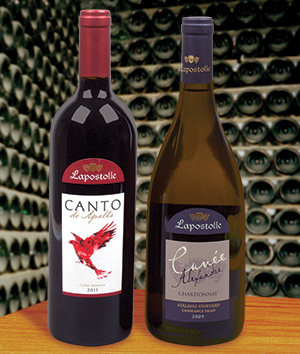
Casa Lapostolle Cuvee Alexandre Chardonnay 2009
The home of this wine is the Atalayas vineyard in the Casablanca Valley, in the Coastal Cordillera, 47 miles west of Santiago. Atalayas was originally planted in 1997, and enjoys cool coastal winds and a low annual rainfall. 100% of Atalayas vineyard is under organic and biodynamic agriculture management.
This is the rare white that will benefit from thirty minutes or so of ‘breathing’ before pouring. While you’re waiting, admire its bright lemon-yellow color and nose of citrus and melon. This wine suggests grapefruit on the palate, which is supported by its zippy acidity. There is oak, but it is well integrated and in a secondary role. Look for a hint of crème brûlée on the finish. Fermentation was on 68% new and used French oak, as well as 32% stainless steel. 20% of the total underwent a further malolactic fermentation.
This wine would go nicely with Braised Snapper and Mussels, Shrimp in a Picante Sauce, or Chicken à la Chinita.
Casa Lapostolle Canto de Apalta 2011
The horseshoe-shaped Apalta vineyard is located 124 miles southwest of Santiago, 42 miles away from the Pacific Ocean, between the Andes mountain range and the Coastal Cordillera. The first vines in Apalta were planted in 1920, and some of these were transplants that had originally been brought from France at the end of the 19th century. Apalta is also 100% under organic and biodynamic management.
“Song of Apalta” is a Bordeaux-style red blend that was born from the relationship between Carmenère, Merlot, Cabernet Sauvignon, and Syrah. All fermentations were made with wild yeasts and minimal intervention on the part of the winemaking team.
Here’s a food-friendly wine that is also good for quaffing. It is rich garnet in the glass, with delicate legs. The nose shows spice and eucalyptus, as well as black and red fruits. The body is light in the mouth, with flavors of ripe red berries and figs. These are backed up by medium tannins and a surprising amount of acidity. The wine has a medium-length finish.
Serve with Roast Beef in a Black Pepper Crust, Leg of Lamb with Pistachios, or Lemon Veal Chops.
The Luke Donald Wine Collection is the result of a collaboration between professional golfer Donald and Bill Terlato, head of the behemoth wine distribution operation, Terlato Wines International.
Terlato first met Donald when the golfer was a student at Northwestern University. Terlato took lessons from Donald’s coach, Pat Goss, who initially suggested the two get together. Along with an interest in golf, the two men shared an interest in sports cars and ultimately, wine.
Golfer-endorsed wines are a growing trend, and already include such players as Ernie Els, Nick Faldo, David Frost, Cristie Kerr, Jack Nicklaus, Greg Norman, and Arnold Palmer. In 2006, Terlato approached Donald with the idea of creating a pair of wines for him under the Luke Donald label. He was adamant, however, that he didn’t want merely a celebrity endorser. Terlato wanted someone who would be involved in the development of the product. The wines that resulted from this partnership are serious wines, rather than a vanity effort (and are priced accordingly).
Luke Donald Chardonnay 2010
This 100% Chardonnay is sourced from vineyards in the Carnaros AVA, which lies at the northern end of San Pablo Bay (the northern section of San Francisco Bay).
The wine is pale yellow in the glass. On entry, it offers a full mouthfeel. That buttery sensation continues to develop on the palate, followed by just the right amount of acidity.
For this wine’s flavor profile, Donald looked to the white Burgundies of France. The flavor is predominantly of tart citrus fruits; the wood (25% new French oak, 75% used French oak) is there, but is nicely balanced.
Enjoy this wine with Summer Vegetable Stir-fry with Couscous, Braised Greek Chicken and Artichokes, or Almond-crusted Sole with Leek-and-lemon Cream.
Luke Donald Claret 2009
Befitting Donald’s background, this red wine blend is a Claret. Although “claret” has no legal definition, it is generally a term used by the English when referring to certain red wines of Bordeaux with a light, refreshing style.
This easy-drinking red blend (mostly Cabernet Sauvignon and Merlot, 100% Napa Valley) is transparent ruby in color. The taste features wild black berries and subtle spice notes. This is supported by well-integrated tannins.
This Claret would go well with Chicken Simmered with Cream and Onions, Roast Duck with Cherries, or Braised Ham with Mushroom Stuffing.
These wines are limited production, each limited to less than 1000 cases, but are well worth seeking out.
As you enter Sonoma county from the south on California 121, one of the first wineries you encounter is Cline Cellars, and there could hardly be a better introduction to the Carneros AVA.
Even as a young teenager, Fred Cline learned to make wine from his grandfather, Valeriano Jacuzzi (yes, he of the hydrotherapy tub, as well as many other innovations). With a $9000 inheritance from Valeriano, in 1981 Cline founded the eponymous Cline Cellars in Oakley, California.
The winery was relocated to its current location in 1991. The property is the original site of the Mission San Francisco de Solano, the 21st and final of the historic California missions. Although the mission was moved in 1823, the Cline tasting room is located in a rustic 1850s farmhouse that is original to the property, surrounded by spring-fed ponds and thousands of rose bushes. The vineyards also reflect this history, with vines ranging from 80 to 120 years old.
Cline is one of the first of the pioneering Rhone Rangers, a group dedicated to wines from the grapes of the Côtes du Rhône in France (ironic for a boy with an Italian grandfather, no?)
Cline also has been a pioneer in sustainable farming. It is the second-largest completely solar-powered winery in California. Natural cover crops are used to nourish the soils, sheep and goats roam freely as they graze on weeds, and compost teas are used as fertilizer. “We’d be considered ‘organic’ if we wanted to follow the rules of the government,“ said Cline. “We are actually more sustainable [than the law calls for] by not following their organic rules.“ He calls his methods “beyond organic.”
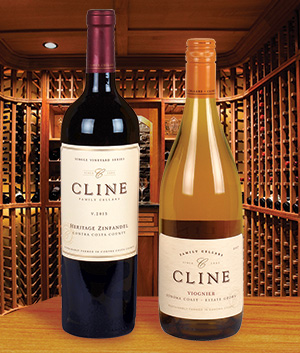
Cline Cellars Viognier 2017
Ah, Viognier [vee-oh-NYAY], such an elusive and underappreciated wine. The grapes are finicky to grow, and once vinified exhibit a wide range of floral qualities, some more delightful than others.
This expression is pale reddish-golden in the glass, with a BAM! nose of honeysuckle. This is followed on the palate by the expected flavor of peach, as well as mango and sour orange. This unoaked wine tastes dry, but has a surprising, slightly sweet finish. To enjoy its nuance, do not overchill.
Drink this tipple with braised tuna in white wine, oven-braised halibut steaks, or Provençal seafood with aioli.
Cline Cellars Heritage Zinfandel 2015
The provenance of this Zin is the 100-year-old Big Break, Live Oak, and Bridgehead vines in Oakley, which are dry-farmed in deep, sandy soil. It is crystal ruby in the glass. Flavors of cola, blueberry, and coffee greet you on the tongue. There is just a hint of Zinfandel’s characteristic pepper. The body has a nice satin quality, supported by nicely balanced medium tannins and acidity. An eminently drinkable wine.
Enjoy this red with braised pork with sweet and hot peppers, Niçoise chicken with tomatoes and black olives, or lamb with artichokes.
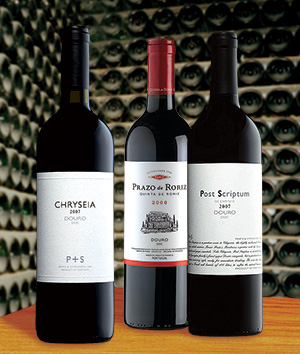
In the 1970s, Portugese rosés such as Lancers and Mateus were the height of sophistication to many young wine drinkers: “It’s imported, and comes in a fun bottle!” With age comes wisdom, and these wines were eventually abandoned for the justifiably famous fortified wines of Portugal, Port and Madeira, produced by many ancient and famous houses.
Much less well-known is Portugal’s status as a producer of both red and white table wine, ranking in the world’s top ten in production. With a population of just 10 million, but top five in per capita consumption, much of that wine is sipped by the thirsty Portuguese.
Chateau Montelena Napa Valley Cabernet Sauvignon 2006 and Chateau Montelena Napa Valley Chardonnay 2008. Click here for tasting notes.
Chateau Montelena
Steven Spurrier is an Englishman who once owned a wine shop in Paris that catered to the English-speaking expatriate community. In 1976, in order to drum up interest in his business, he hit upon the idea of holding a blind tasting pitting ten of France’s and California’s best producers against one another. He was able to enlist nine esteemed French wine experts as judges, among them Odette Kahn, editor of the influential Revue du Vin de France; and Christian Vannequé, sommelier of the three-star Parisian restaurant La Tour d’Argent. The French wines included the 1970 Haut-Brion, the 1970 Mouton Rothschild, and the 1973 Domaine Leflaive Puligny-Montrachet Les Pucelles.
The famous tasting, held May 24, 1976, at Paris’ InterContinental Hotel, has come to be known as The Judgement of Paris. Neither Spurrier, a Francophile to the core, nor anyone else expected the upstart Yanks to really put up a fight against the French heavyweights. However, when the votes were tallied, the judges were shocked to discover they had awarded the top prize for the red to the 1973 Stag’s Leap Wine Cellars Cabernet Sauvignon, and top prize for the white to Chateau Montelena Chardonnay, both from Napa Valley. It was the shock heard ‘round the world, and legitimized California as a world-class wine-making region.
George M. Taber, the Time magazine correspondent present at the time, details the event in Judgment of Paris: California vs. France and the Historic 1976 Paris Tasting That Revolutionized Wine. The story was also dramatized in the 2008 film Bottle Shock.
Thirty years later, in May of 2006, as a celebration of the original Judgement, the same wines were retasted to gauge their aging potential. The French were confident that here the weak Californians would stumble. Instead, mon dieu, they placed first through fifth. Boo Ya!
Chateau Montelena has seen three cycles of family stewardship. The first began in 1882 when the winery was founded by Alfred L. Tubbs, a European immigrant and San Fransciso entrepreneur. The original property was 254 acres of rugged, well drained, stony, and loose land just two miles north of Calistoga at the base of Mount Saint Helena. (Montelena is a contracted form of Mount Saint Helena.) By 1896 Tubbs’ winery was the seventh largest in the Napa Valley.
The Tubbs family sold the winery in 1958, at which time the Chateau and its overgrown grounds passed into the hands of Yort and Jeanie Frank, who were looking for a peaceful spot to retire. The setting inspired Frank to excavate a lake and add landscaping to reflect the Chinese gardens of his homeland.
The modern renaissance of Chateau Montelena started under the leadership of Jim Barrett, who purchased the winery in 1972. The vineyard was cleared and replanted, and the winery was renovated and outfitted with modern winemaking equipment, complemented by the highest-quality grapes from the Napa Valley. In 1972 wines were made for the first time, and shortly thereafter Chateau Montelena stunned the wine world with its win at the 1976 Paris Tasting. The winery continues today with Jim Barrett at the helm.
Chateau Montelena Napa Valley Chardonnay 2008
This Chardonnay started by being harvested at night in order to preserve delicate flavors and aromas. The wine is brilliantly clear with a golden-straw color. The nose suggests pear and tropical passion fruit. On the palate, there are flavors of juicy peach, citrus notes of pink grapefruit, honey tangerine, and starfruit, conveyed by an appealing softness. The mid-palate features an understated, nutty, oak tone which segues into an interesting long and spicy finish. The wine was aged for 10 months in 100% French barrels, 11% of which were new.
Serve this legendary wine with Morroccan Lemon Chicken, Sea Bass with Gingered Broth, Risotto with Scallops, or, if your dinner guests are French, Crow.
Chateau Montelena Napa Valley Cabernet Sauvignon 2006
Although famous for their Chardonnay, Montelena makes a number of reds as well, including this Cabernet Sauvignon. The blend is 88% Cabernet Sauvignon, 8% Merlot, and 4% Cabernet Franc.
Dark ruby in color, this wine offers rich, complex aromas of ripe dark cherry, plum, cinnamon, and tobacco, with top notes of earth and forest floor. In the mouth, this wine makes a full soft round entry, after which the acid builds nicely, supporting the dominant flavor of black currant, plus licorice and spice. Plenty of fine-grain tannin completes the mouthfeel. Nice notes of toasted oak round out the tremendous long finish. This is a very well-balanced wine that will age for ten to twelve years, if you have the patience.
Pair this Cabernet with Tenderloin of Beef with Blue Cheese, Cider-Braised Pork Medallions, or Broiled Lamb Chops.
There are few things as elegant, or as easy to make, as a souffle. My stepdaughter and her partner dropped by for Christmas, and he mentioned that, even though he is 45, he had never had a savory souffle, much less made one. I assured him it was really simple, so I whipped up one with salmon.
I first learned to make souffles from The New York Times Cookbook by Craig Claiborne, and that was the starting place for this one.
3 Tbl butter 3 Tbl flour 4 oz. sliced mushrooms 1 C milk or half and half 4 eggs, separated Salt and dry mustard to taste 2 Tbl teriyaki sauce 14 oz. can salmon
Preheat oven to 375 deg. F.
1. Melt the butter in a saucepan and saute the mushrooms until lightly browned. 3. Stir in the flour and blend with a wire whisk. Meanwhile, drain the salmon into a 1 cup measure. Add enough milk to come to 1 cup. Bring the milk to a boil, and add all at once to the butter-flour mixture (aka a roux), stirring with the whisk until thickened and smooth. Let cool. 3. Beat in, one at at time, the four egg yolks. Season with salt, mustard, and teriyaki sauce. 4. Flake the salmon, and blend well into the white sauce and egg mixture. 5. Using a rotary beater or an electric mixer, beat the egg whites until they stand in peaks. Do not over beat. Fold the whites gently into the salmon mixture with a rubber spatula or wooden spoon, being careful not to overblend. 6. Pour into a 1-1/2 quart souffle dish, which may be greased or ungreased. Place in oven and bake thirty to forty minutes. Serve with Hollandaise sauce.
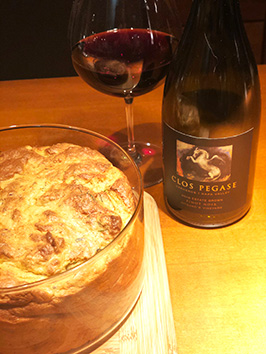
I paired this salmon souffle with Clos Pegase Pinot Noir Mitsuko’s Vineyard 2016. This wine pours a jewel-like ruby red into the glass. The nose greets you with aromas of vanilla and ripe red cherries. Those cherries come forward on the palate, along with hints of cinnamon and clove. There is harmonious balance between the oak, acid, and tannins. It’s all rounded out by a nice medium finish.
Dry Creek Vineyard founder David Stare arrived in Dry Creek Valley in Sonoma, California, in 1972, opening the first winery there since Prohibition. Years of neglect of the valley’s acreage had convinced locals that Dry Creek was no longer suitable for grape growing.
But Stare was undeterred. He had decided to fashion his wines by following the traditions, standards, and styles of the Loire Valley in France after extensive travels and tastings in the region.
In short order, Stare had overturned the conventional wisdom. The winery debuted with a characteristic Fumé Blanc (made with the Sauvignon Blanc grape), which met with immediate success and remains Dry Creek’s signature wine.
Dry Creek has since extensively diversified into reds as well as other whites, championing Zinfandel and Bordeaux blending techniques.
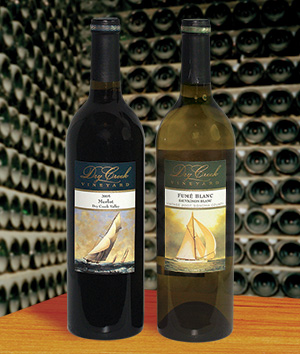
Dry Creek Fumé Blanc 2007
This refreshing unoaked Fumé Blanc is pefect for when the weather turns nice. The dominant citrus notes are joined by green melon and just a hint of grass. Mineral and spice notes also emerge and linger to the very last.
Dry Creek Merlot 2005
This nicely balanced Merlot features flavors of ripe blackberry and currant, supported by a hint of vanilla. There is just enough oak and tannins to restrain the fruit and give it structure. The wine finishes relatively soft and with moderate length. The merlot in this Bordeaux-like blend is augmented by smaller quantities of cabernet sauvignon, cabernet franc, and malbec.
For a look at Dry Creek Vineyard Cabernet Sauvignon and Chardonnay:
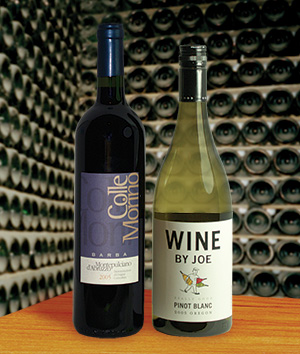
Joe Dobbes is a native of Oregon, born in the Willamette Valley. Dobbes has been making wine for others in Oregon for over twenty years, and in 2003 he started Wine by Joe as a consulting and crushing company. In 2004, Joe expanded it into a complete winery, and he added the title of winemaker. He has since passed that to Travis Procter, Director of Winemaking Operations.
The 214-acre vineyard, in the Eola Hills / Amity AVA, gets cool coastal breezes from the Pacific ocean, 45 miles to the west. Pinot Blanc was planted in 1989 under previous owners.
If you like your whites subtle and unassuming, this one’s for you. The color in the glass is pale, almost to the point of colorless. The taste features hints of pears, peaches, and a bit of smokiness (no wood, though), supported by a crisp talc-flinty acidity. The finish is short.
Feature this wine at brunch with sea bass and roasted bell pepper, baked cod with tarragon, or almond-crusted sole.
The Fratelli [Brothers] Barba winery, completed in 1991, is in Scerne di Pineto, at the foot of the Colle Morino hills. This relatively young winery prides itself on using the latest technology and equipment, especially after a major renovation in 2005.
This Montepulciano is nicely rustic. It was fermented for about ten days in conical oak vats, and then aged in the winery’s air-conditioned cellars.
The fruit is there (primarily stone fruits like cherry and plum), but in the old world, slightly under ripe, style. Structure comes from a robust punch of tannins, particularly evident after an hour and a half or so of breathing. The initial taste is surprisingly “hot,” even with a respectable alcohol level of 13%.
During summer, scrape off that grill and pair this Montepulciano with black pepper / ancho beef filets, barbequed porterhouse steaks, beer-simmered bratwurst with grilled onions and ‘kraut, or lamb chops with fresh thyme and grilled lemons.
After stints as a teacher, political activist, newspaper editor, U.S. Treasury employee, and inventor, in 1861 the restless German immigrant Charles Krug established the very first commercial winery in Napa Valley.
Krug was not only a pioneer, but was innovative and inspirational as well. He became the major local winery figure of his era. He introduced the cider press for winemaking (no more foot stomping!), and carefully selected rootstocks, varietals, and vineyards, a novel approach to winemaking at the time.
Upon Krug’s death in 1892, James Moffitt became proprietor of the winery, and succeeded in keeping it open during the dark days of Prohibition. In 1943, Robert Mondavi persuaded his parents, Cesare and Rosa, to purchase the winery from Moffitt for $75,000. Robert Mondavi developed his wine career there, until he founded his own winery in 1966 and went on to become one of the greatest legends in all of California’s wine industry.
Cesare rejuvinated the winery, and reestablished it as one of Napa’s premier producers. Following Cesare’s death in 1959, Rosa ran the winery until 1976 when it was inherited by Peter Mondavi, Sr.
Innovation continued under Peter, who introduced vintage dating, cold fermentation, cold filtration, and fermentation in small French oak barrels. He was active in the affairs of the winery nearly up until his death in 2016 at the age of 101. The operation continues under the guidance of his sons Mark and Peter Jr.
Krug Carneros Chardonnay 2010
The color of this 100% chardonnay in the glass is bright yellow with a hint of green. The nose features aromas of tropical fruit, particularly lime, and fermenting bread dough. On the palate, the citrus and peach flavors are balanced with a lively acidity. There is a surprisingly creamy mouthfeel, complemented by a lingering finish. Fermentation was 70% stainless steel and 30% barrel, so the oak is present but not overbearing.
Please your guests and yourself by serving this wine with Chicken ala Kiev, Sea Bass Stuffed with Crabmeat, or Scallops Sauteed in Garlic Butter.
Krug Yountville Cabernet Sauvignon 2010
This cabernet sauvignon favors elegance and finesse over power. The dark purple color is more transparent than inky. Black cherry dominates the nose. The taste displays the same dark fruit, abetted with cocoa and hints of tobacco and vanilla. The supple tannins help to support a relatively long finish. The blend includes 84% cabernet sauvignon, 10% merlot, 4% petit verdot, and 2% cabernet franc. Fermentation was for 20 months in French and American oak.
Enjoy this wine with Steak Diane, Ragout of Lamb, Herb-stuffed Pork Chops with Wine Sauce, or just with some honest bread and artisanal cheeses.
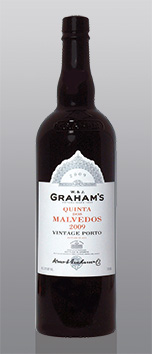
In the Douro valley of Portugal, home of true Port wines, only the finest years are declared as Vintages, the best of the best. The last declared vintage was 2017. (Remarkably, this followed the declared 2016. Back to back declarations are qute rare.)
However, the grapes grow every year, of course, and the foremost houses still have a high-quality product to offer even in non-declared years. This is usually released as a single quinta [Portugese literally for farm, but understood as vineyard or estate] bottling. These wines also receive a vintage designation, rather than being used for more anonymous blended ports.
Graham’s Quinta dos Malvedos is just such a product, a ruby port expressing Graham’s finest efforts of 2009. This wine has seen two years in barrel, and although I’m sure it will age well, I suggest drinking it now. The wine is delightfully approachable, with none of the aggressive characteristics so often seen in a young Vintage Port.
The alcohol, tannins, and fruit are nicely balanced, with the palate displaying the classic port flavors of cassis and blackberries.
Enjoy this wine either as an aperitif or with dessert (blue cheese and walnuts are traditional, but chocolate mousse would be delicious as well). And, please forgo fussy liqueur glasses or port “pipes;” a white wine glass will do just fine.
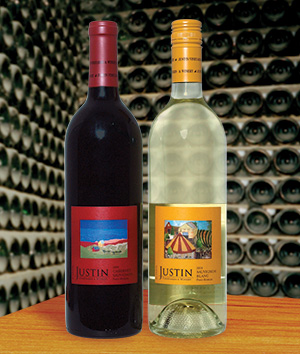
Justin Vineyards and Winery is located in Paso Robles in California’s Central Coast region. William Randolph Hearst’s famous “castle,” San Simeon, is due west over the Sierra Madre mountains.
Justin was founded in 1981 by Justin Baldwin when he planted the 160-acre property with the major grapes of Bordeaux, and the emphasis on Bordeaux-style blends and single varietals remains to this day. In addition to the estate vineyard, Justin sources grapes from thirteen affiliated growers in the area.
The winery’s three prime areas of focus are: a “left bank” Bordeaux-style blend of Cabernet Sauvignon, Merlot, and Cabernet Franc, named Isosceles, Justin’s flagship and most well-known offering; Justification, its “right bank” Merlot and Cabernet Franc cousin; and varietal bottlings of Cabernet Sauvignon and Syrah. They also produce limited amounts of Tempranillo, Zinfandel, Malbec, Petit Verdot, Port, Sauvignon Blanc, Chardonnay, and Viognier.
For these varietals, each year Justin commissions a different artist to execute the art portion of the label. The winery buildings and their surrounding vineyards are always the subject matter, the idea being that the artists’ interpretation of the winery is like the winemaker’s interpretation of the vineyard’s grapes.
In addition to the tasting room, there is also an inn and restaurant on the property.
Justin Vineyards Sauvignon Blanc 2010
This unoaked wine spent five and a half months in stainless steel before bottling. It is almost colorless, with hints of pale straw and delicate green.
The nose offers aromas of fresh peach, citrus notes dominated by ruby grapefruit, and a hint of coconut.
On the palate the wine is dry, with bright acidity, and some of the peach flavor carries over from the nose. The body has very good structure for a sauvignon blanc.
Pair this wine with Rosemary-Lemon Chicken, Crab and Shrimp Etouffee, or Broiled Scallops.
Justin Vineyards Cabernet Sauvignon 2009
After a balanced growing season and unchallenging harvest, Justin’s ‘09 Cabernet was matured for 16 months in French and American oak, 33% of it new.
In the glass, this wine is a not-quite opaque ruby red. It features aromas of black fruits, with a vanilla note from the oak. Surprisingly, there were almost no legs.
Its taste offers up red and black cherries and red currents, although the fruit is somewhat recessive, and is reflective of Justin’s preference for an old-world style, rather than what one might usually expect from the Central Coast. The wine is nicely tannic, with a medium finish.
This food-friendly wine would work well with Yankee Pot Roast, Creole Pork Chops, or Chicken Cacciatore.
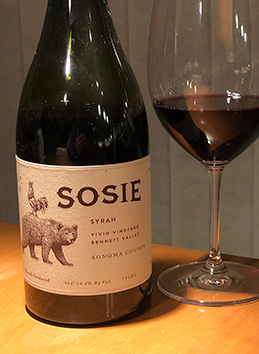
They say imitation is the sincerest form of flattery, and it’s a maxim Sosie Wines lives by. “Sosie” [so-zee] is French for twin or doppelganger, and as it says right on the bottle, “We are inspired by the wines of France. So we employ an Old World approach to wine growing that favors restraint over ripeness, finesse over flamboyance. Our aim is to craft wines that show a kinship with France’s benchmark regions. Wines that are their sosie.”
Sosie Wines also pays homage to the French tradition of location, or terroir, believing that the vineyard site is perhaps the most important component of a bottle of wine.
Sosie Wines co-owner Regina (no last name, apparently) was introduced to wine at an early age, one of the first being Chateauneuf du Pape. “I remember the shape of those bottles and the crossed-keys of the papal crest. It was a symbol you could trust, my mom used to say. I never forgot that, and as a young adult one of the first places I had to visit in France was Chateauneuf. To this day I still love those wines.”
On a quest to cement that fascination, in 2006 she and partner Scott took a trip to the Loire in western France, and then in 2008 they spent 10 days traveling the Côte de Nuits, walking the vineyards and tasting the wines. In 2016 they visited both northern and southern Rhone, working their way down from Côte-Rôtie to St. Joseph
Following their travels, Regina and Scott founded their winery on the belief that their wines should stand for something. That they would not just have a style, but a purpose. They wanted their products to be food-friendly, with lower alcohol levels, higher acidity, and made in small batches with minimal intervention and just a bit of oak.
The couple are hands-on vintners. They prowl the vineyards throughout the growing season and are at the sorting table when the fruit comes in. They taste the berries, check the sugars and acids, and call the pick. They supervise every aspect of their barrels – the cooper, the forest, and the toast level. But they can’t do it all, of course. They get plenty of help from winemaker Kieran Robinson. Kieran had worked previously at Domaine Pierre Gaillard in France (of course), and had the deep appreciation for French viticulture and winemaking they were looking for.
VIVIO VINEYARD
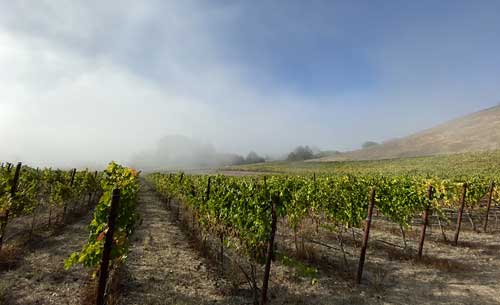
At just above 800 ft, this is one of the highest vineyards in Sonoma’s Bennett Valley. Sosie grows Syrah as well as Roussanne on the mineral-rich, volcanic soil here. The area, near Petaluma Gap, has a strong marine influence, as cool air pours in from three separate directions and settles into the valley’s bowl, which in the summer months turns to heavy fog. Even so, the days can get quite hot, with temperature swings of 40° to 50° F from daytime highs to nighttime lows. This can mean the fruit is very late ripening due to the extended “hang time” on the vines.. The property is sustainably farmed.
Sosie Wines Syrah 2016
In addition to the Syrah, there is 7% Rousanne in the bottle. It was aged for 20 months in 50% new oak. The nose features aromas of berries, tart cherries, with a hint of plum and menthol. The restrained plum continues on the palate, with some cocoa and, frankly, booming tannins. No worries, though. Decant Sosie Wines Syrah for an hour or two before drinking, and those tannins settle down nicely.
Give this Syrah a try with roast duck with cherries, beef braised in red wine, or pork chops with mustard, cream, and tomato sauce.
Only five barrels (that’s 1500 bottles) of this wine were produced, so get a bottle while you can.

 Gordon Brothers Tradition
 River’s Edge Winery is located in the northern-most part of the Umpqua Valley. River’s Edge, founded in 1998, specializes in the production of cool weather varieties such as pinot noir and gewürztraminer. The ocean is only 36 miles away from the winery, and morning fog frequently shrouds the vineyards even in the summer, reflecting the strong marine influence on the climate.
 “This weekend is not about me. It is about you. I’m gonna show you a good time. We’re gonna drink a lot of good wine. We’re gonna play some golf. We’re gonna eat some great food and enjoy the scenery and we are going to send you off in style, mon frere.” And so Miles and Jack set off on their most excellent adventure in Sideways, the 2004 film that by some accounts was single-handedly responsible for a 10% increase in sales of pinot noir.
 Between the Mountains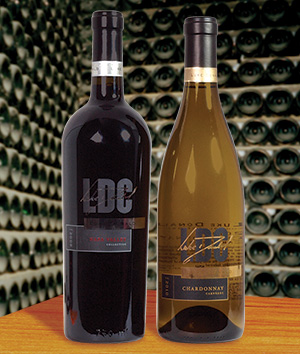
 Cline Cellars
 Portugese Red Table Wine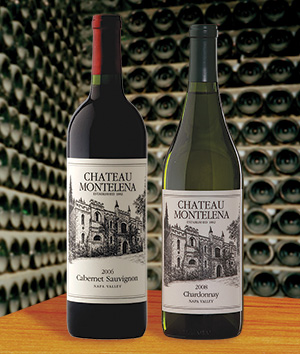
 Salmon Souffle
 Dry Creek Vineyard
 Wine by Joe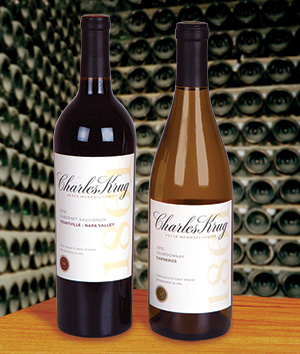
 Graham’s Malvedos
 Justin Vineyards and Winery