Parallel 44 Salve

Parallel 44 Winery
Parallel 44 Salve NV Click here for tasting notes.

Parallel 44 Salve

The story of Parallel 44 Vineyard & Winery began in 2005, when husband and wife team Steve Johnson and Maria Milano planted their first grape vines. Steve grew up in Green Bay, where his father Carl experimented early on with growing grapes. Maria grew up in Stevens Point, Wisconsin, where her Italian-born father continued his tradition of making wine for friends and family celebrations. Steve and Maria met while in school at the University of Wisconsin in Madison, and then attended law school together. While working as attorneys, they attended seminars on grape growing in Wisconsin, with an eye towards getting into the wine business.

Steve Johnson and Maria Milano

After years of searching for a location with the soil, sun exposure, and temperatures for growing grapes, they found the location that Parallel 44 now sits on. Originally, it was a simple corn field and former gravel pit. As soon as they purchased the land, they began to plant vines, a novel idea at the time.

A year after the vineyard was planted, in 2006 construction was started on the winery and tasting room. Since opening on Memorial Day weekend in 2007, Parallel 44 has continued to grow and expand. Today, all of the wines produced by Parallel 44 are either made with grapes grown in their own vineyards, or at one of the vineyards that the winery contracts with throughout the state of Wisconsin and the Upper Midwest.

The original Kewaunee facility.

To capitalize on the resort trade, Steve and Maria decided in 2013 to open a second location, located in Door County forty miles due north, where tens of thousands of tourists flock each summer.

The Door County facility.
This building was originally constructed as a tasting room in Door County under the Door 44 label. In April 2026 the Kewaunee facility was closed, production was moved here, and the Door 44 label was discontinued.

The vineyard is situated on 44° north latitude (hence the name), which is renowned for the world’s finest grape growing and winemaking regions, such as Bordeaux in France, and Tuscany in Italy. Parallel 44 shares many similarities with these regions, such as seasonal growing period, annual rainfall, and length of daylight. But, a big difference from their European counterparts is that Parallel 44 suffers through winters of subzero temperatures, adding the challenge of growing grapes on the “frozen tundra” of Wisconsin.

The estate vineyard in Kewanee. Photo: Dave Bloedum

Johnson and Milano decided to forgo the classic European varietals we are all familiar with, knowing that the vines would struggle to even survive the harsh northern Wisconsin winters, much less thrive.

So, they turned their attention to cold-climate grape varietals available for commercial planting, of which there were only a few. Most of the varietals were quite new to the world of wine and were less than 20 years old. Undetered, Steve and Maria carried on with their dream and today, 15 years later, there are approximately 7000 vines on 10 acres planted at Parallel 44.

The grape varietals they grow are known as “cool climate grapes.” This means that some of the vines can withstand temperatures as low as -36° F in winter, but as summer approaches they spring back to life!

These cool-climate varietals have the hallmark qualities of bright acidity, fruit forward aromas, and flavors that are unique to the region. Some of these varietals are Marechal Foch, Frontenac, Louise Swenson, St. Pepin, and Petite Pearl. These are the genetic cousins of such well-known varietals such as Cabernet Sauvignon, Pinot Noir, Moscato, and Riesling.

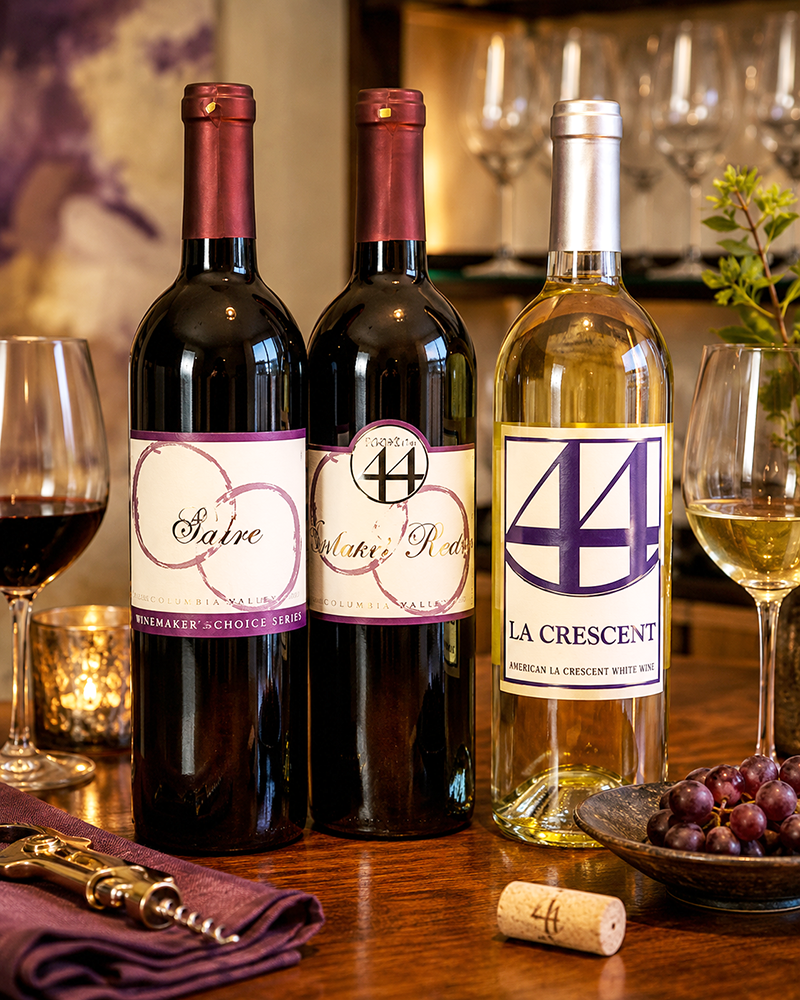
Parallel 44 Salve NV

Salve is a traditional Italian greeting that comes from the word “to be well.” This unassuming red wine is fresh and easily approachable.

The source grape is primarily Petite Pearl, with a small amount of a white varietal called Prairie Star, bred by Elmer Swenson. It produces a neutral white wine with good mouth feel, and is perhaps even hardier than Frontenac, a widely-planted cool-climate varietal. It can have a strong floral nose. Prairie Star is also consumed as a table grape. The addition of a white varietal during fermentation is a traditional practice in some other countries, including Italy, and is more common than you might expect.

This light red wine has a quite transparent ruby color. The nose shows strawberry and red cherry. That light cherry follows through on the palate, joined by a hint of cola. The finish is short, and without much tannins.

This simple but food-friendly wine would play well with Grilled Butterflied Salmon, Spinach and Bacon Souffle, or Veal Escalopes with Tomato Sauce.

www.44wineries.com/

Here’s a post on another Door County winery, but this one brings in juice from California rather than growing locally: Simon Creek.

And in my opinion, Anchored Roots in Door County is making wines superior to either of these.  Although they also import grapes, mostly from Washington state, they also source fruit from Wisconsin, some of it from their estate vineyard.

Back to blog posts: winervana.com/blog/

Parallel 44 Vintner’s Reserve

Parallel 44 Vintner's Reserve NV
Parallel 44 Vintner’s Reserve NV Click here for tasting notes.

Parallel 44 Vintner’s Reserve

The story of Parallel 44 Vineyard & Winery began in 2005, when husband and wife team Steve Johnson and Maria Milano planted their first grape vines. Steve grew up in Green Bay, where his father Carl experimented early on with growing grapes. Maria grew up in Stevens Point, Wisconsin, where her Italian-born father continued his tradition of making wine for friends and family celebrations. Steve and Maria met while in school at the University of Wisconsin in Madison, and then attended law school together. While working as attorneys, they attended seminars on grape growing in Wisconsin, with an eye towards getting into the wine business.

Steve Johnson and Maria Milano

After years of searching for a location with the soil, sun exposure, and temperatures for growing grapes, they found the location that Parallel 44 now sits on. Originally, it was a simple corn field and former gravel pit. As soon as they purchased the land, they began to plant vines, a novel idea at the time.

A year after the vineyard was planted, in 2006 construction was started on the winery and tasting room. Since opening on Memorial Day weekend in 2007, Parallel 44 has continued to grow and expand. Today, all of the wines produced by Parallel 44 are either made with grapes grown in their own vineyards, or at one of the vineyards that the winery contracts with throughout the state of Wisconsin and the Upper Midwest.

The original Kewaunee facility.

To capitalize on the resort trade, Steve and Maria decided in 2013 to open a second location, located in Door County forty miles due north, where tens of thousands of tourists flock each summer.

The Door County facility.
This building was originally constructed as a tasting room in Door County under the Door 44 label. In April 2026 the Kewaunee facility was closed, production was moved here, and the Door 44 label was discontinued.

The vineyard is situated on 44° north latitude (hence the name), which is renowned for the world’s finest grape growing and winemaking regions, such as Bordeaux in France, and Tuscany in Italy. Parallel 44 shares many similarities with these regions, such as seasonal growing period, annual rainfall, and length of daylight. But, a big difference from their European counterparts is that Parallel 44 suffers through winters of subzero temperatures, adding the challenge of growing grapes on the “frozen tundra” of Wisconsin.

The estate vineyard in Kewanee. Photo: Dave Bloedum

Johnson and Milano decided to forgo the classic European varietals we are all familiar with, knowing that the vines would struggle to even survive the harsh northern Wisconsin winters, much less thrive.

So, they turned their attention to cold-climate grape varietals available for commercial planting, of which there were only a few. Most of the varietals were quite new to the world of wine and were less than 20 years old. Undetered, Steve and Maria carried on with their dream and today, 15 years later, there are approximately 7000 vines on 10 acres planted at Parallel 44.

The grape varietals they grow are known as “cool climate grapes.” This means that some of the vines can withstand temperatures as low as -36° F in winter, but as summer approaches they spring back to life!

These cool-climate varietals have the hallmark qualities of bright acidity, fruit forward aromas, and flavors that are unique to the region. Some of these varietals are Marechal Foch, Frontenac, Louise Swenson, St. Pepin, and Petite Pearl. These are the genetic cousins of such well-known varietals such as Cabernet Sauvignon, Pinot Noir, Moscato, and Riesling.

Parallel 44 Vintner’s Reserve NV

This dry red wine is a blend of 60% Marquette and 40% Petite Pearl.

Marquette is a University of Minnesota offering, introduced in 2006. It is a complex hybrid, one that involves vitis vinifera as well as American species. It is named after Pere Marquette, a Jesuit missionary and 17th century explorer of North America, and has been said by the university to be a cousin of Frontenac and a grandson of Pinot Noir.

Petite Pearl was bred by Tom Plocher, a well-respected northern climate viticulturist and grape breeder; currently, Parallel 44’s is the largest planting.

Winemaker Steve Johnson sees Petite Pearl as “the holy grail, so far” and “to date, the one with the most promise” when it comes to northern red grapes such as Marechal Foch and Marquette that are transforming the quality of wine from the Upper Midwest. As he explains it, compared with other cold-hardy red grapes, Petite Pearl has a more balanced chemical makeup with lower acidity and higher tannin levels.

This medium-bodied red has a nose of bright fruit, especially strawberry and blueberry. Those are complemented on the palate by plum and black cherry, balanced acidity, and light but firm tannins. There is a bit of spice and pepper, as well. The mouth-feel is somewhere between Pinot Noir and Merlot.

Try it with Peppered Salmon with Snow Peas and Ginger, Spinach and Bacon Souffle, or Boned Pork Loin with Apple Cream Sauce.

www.44wineries.com/

Here’s a post on another Door County winery, but this one brings in juice from California rather than growing locally: Simon Creek.

And in my opinion, Anchored Roots in Door County is making wines superior to either of these.  Although they also import grapes, mostly from Washington state, they also source fruit from Wisconsin, some of it from their estate vineyard.

Back to blog posts: winervana.com/blog/

Flanagan The Beauty of Three Proprietary Red

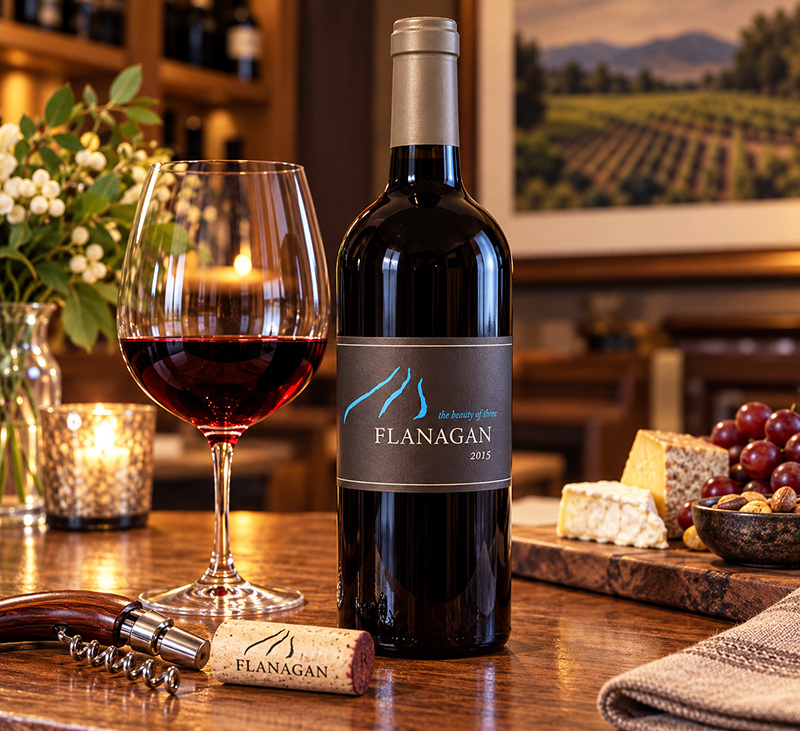
Flanagan The Beauty of Three Proprietary Red 2015
Flanagan The Beauty of Three Proprietary Red 2015 Click here for tasting notes.


Flanagan The Beauty of Three

Eric Flanagan did not come of age with a background in the wine business, or even farming. After graduating from college in 1985, he embarked on a banking career, which he pursued until 2013. His job during those years took him on journeys around the world. He had always had an interest in wine, and over the course of these trips Flanagan became fascinated by how grapes of the same variety expressed themselves in different places.

the siren call of wine

Seeing no need to wait for retirement to start a second career, at the age of 36 in 1999 he decided to act on his deep interest in the world of wine. He purchased 40 acres of open land on the side of Bennett Mountain in Sonoma, California, (in what would later become the Bennett Valley AVA). The site sits at 1200 feet on the south and southwest slopes of Bennett Ridge at the confluence of San Pablo Bay and Petaluma Gap. The soil is rocky, volcanic cobbles with excellent drainage. Having a warm micro-climate in a cool region means that bud break here is early, but harvest is late. The extra hang time for the grapes, along with the low yields and the hillside site, can deliver intense, complex fruit. Flanagan and his then very-young first daughter, Riley (who has gone on to become a vintner herself), planted his first vines there in 2001. Continue reading “Flanagan The Beauty of Three Proprietary Red”

Tooth & Nail The Fiend

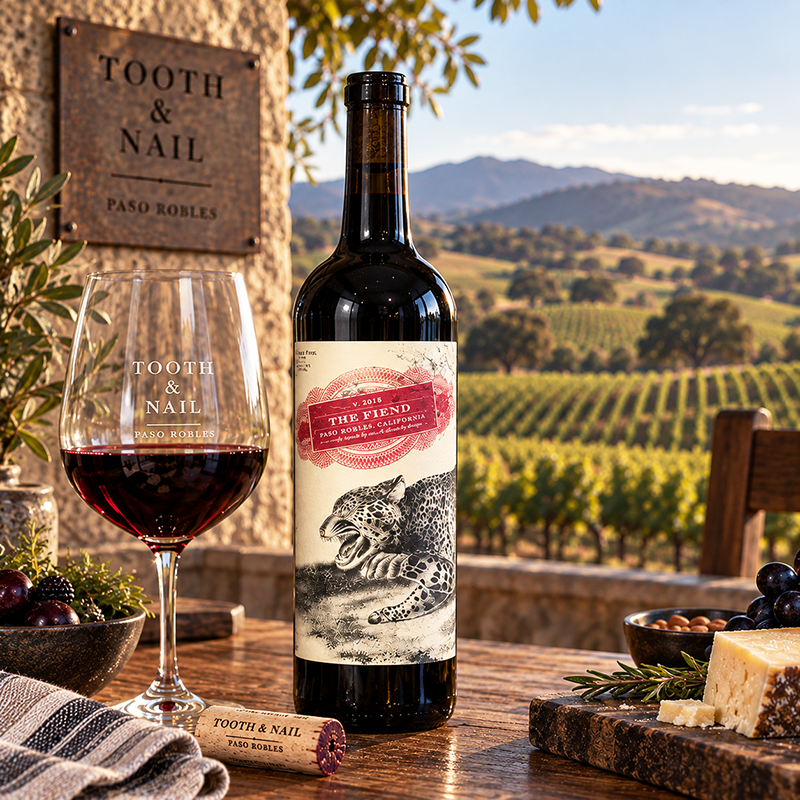
Tooth & Nail The Fiend 2017.
Tooth & Nail The Fiend 2017. Click here for tasting notes.

Tooth & Nail The Fiend

Tooth & Nail is one of four brands from Rabble Wine Company, the others being Rabble, Stasis, and Amor Fati. Rabble was founded by Rob Murray, a longtime wine grower with a vineyard-first mindset. The company has relied on four vineyards for more than 10 years, carefully overseeing all aspects of farming.

Continue reading “Tooth & Nail The Fiend”

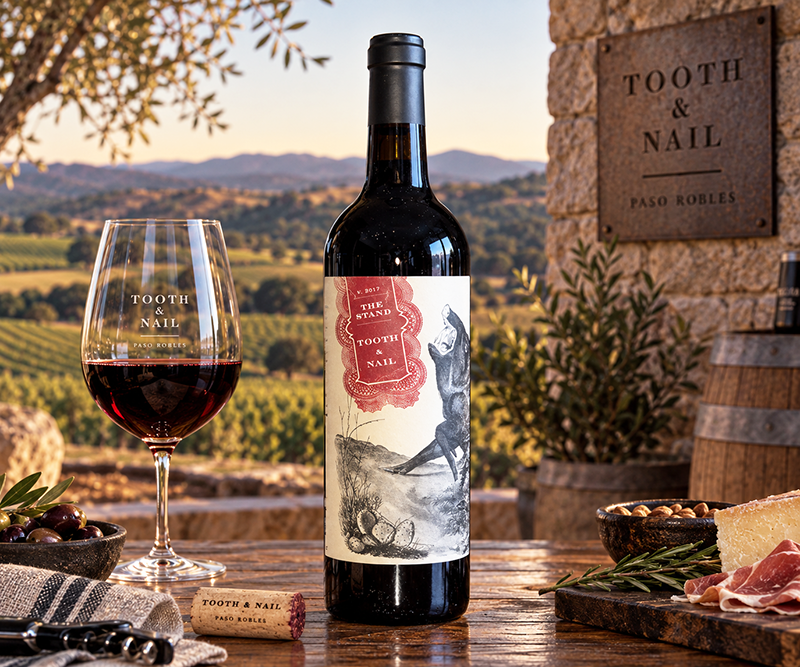
Tooth & Nail The Stand

Tooth & Nail The Stand 2017
Tooth & Nail The Stand 2017. Click here for tasting notes.

Tooth & Nail The Stand

Tooth & Nail is one of four brands from Rabble Wine Company, the others being Rabble, Stasis, and Amor Fati. Rabble was founded by Rob Murray, a longtime wine grower with a vineyard-first mindset. The company has relied on four vineyards for more than 10 years, carefully overseeing all aspects of farming.

Continue reading “Tooth & Nail The Stand”

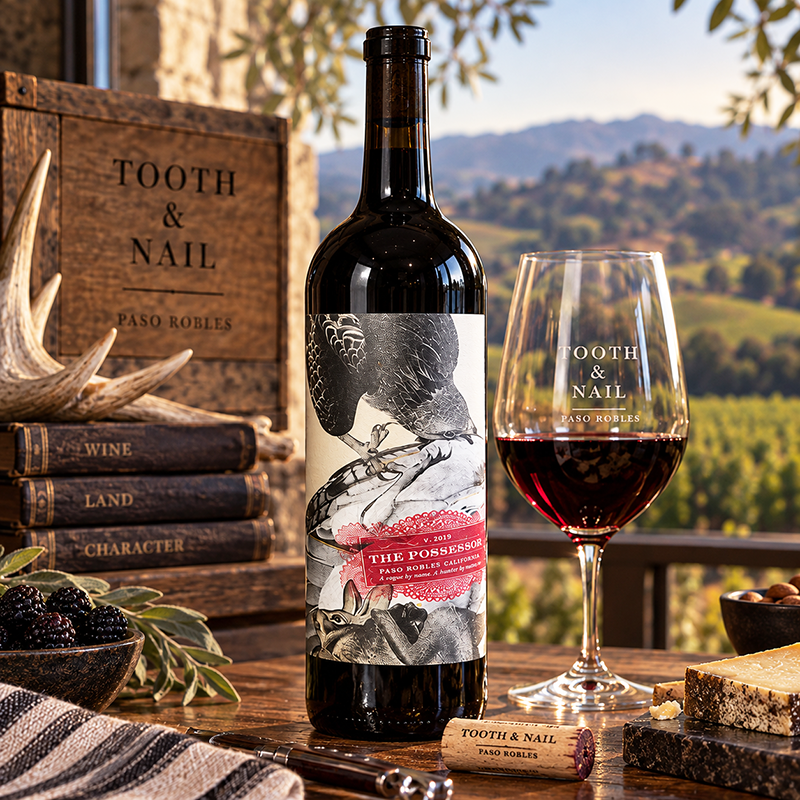
Tooth & Nail The Possessor

Tooth & Nail The Possessor 2016.
Tooth & Nail The Possessor 2016. Click here for tasting notes.

Tooth & Nail The Possessor

Tooth & Nail is one of four brands from Rabble Wine Company, the others being Rabble, Stasis, and Amor Fati. Rabble was founded by Rob Murray, a longtime wine grower with a vineyard-first mindset. The company has relied on four vineyards for more than 10 years, carefully overseeing all aspects of farming.

Continue reading “Tooth & Nail The Possessor”

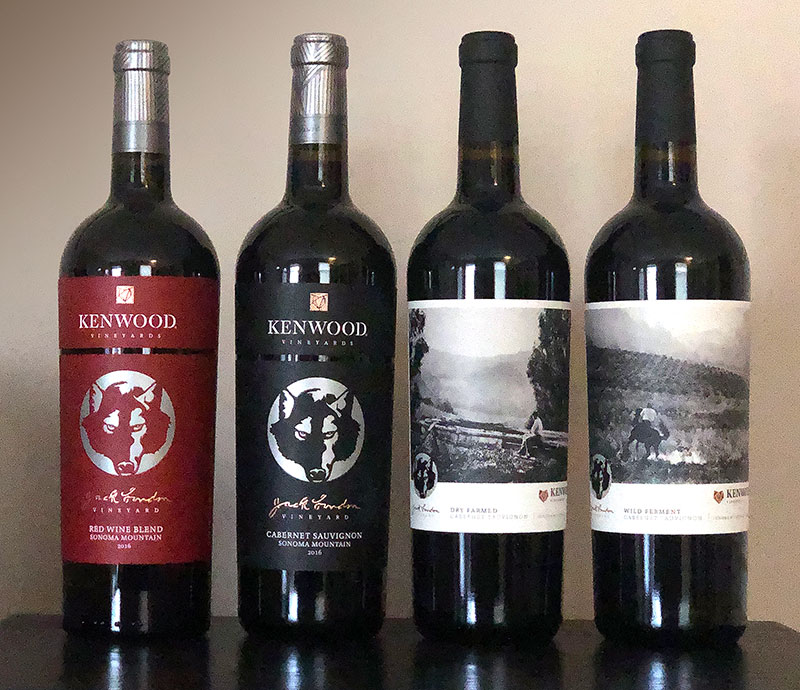
Kenwood Red Blend

Kenwood Vineyards Jack London Red Blend 2016
Kenwood Vineyards Jack London Red Blend 2016 Click here for tasting notes.

Kenwood Jack London Red Blend 2016

Author Jack London (1876 – 1916) was an American novelist, journalist, and social activist. A pioneer of unabashedly commercial fiction in both novels and  magazines, he was one of the first American authors to become an international celebrity and earn a large fortune from writing. His most famous works include The Call of the Wild and White Fang, both set during the Klondike Gold Rush.

In 1905, London purchased a 1,000 acre property in Glen Ellen, California, on the western slope of Sonoma Valley which he named Beauty Ranch. He wrote, “Next to my wife, the ranch is the dearest thing in the world to me. I write for no other purpose than to add to the beauty that now belongs to me. I write a book for no other reason than to add three or four hundred acres to my magnificent estate.” Continue reading “Kenwood Red Blend”

Austin Hope Rhone Blend

Austin Hope Rhone Blend.
Austin Hope Rhone Blend. Click here for tasting notes.

Austin Hope Rhone Blend 2021

Chuck Hope and his wife Marlyn came to Paso Robles in California’s Central Coast in 1978 to farm, and eventually to start what would become Hope Family Wines. This early arrival put them on the forefront of the Central Coast becoming a world-class viticultural region. Initially, the Hopes planted apples and grapes in this then sparsely-populated area. Seeing the property’s potential for grape growing, Hope eventually replanted the apple orchards with grapes.

Continue reading “Austin Hope Rhone Blend”

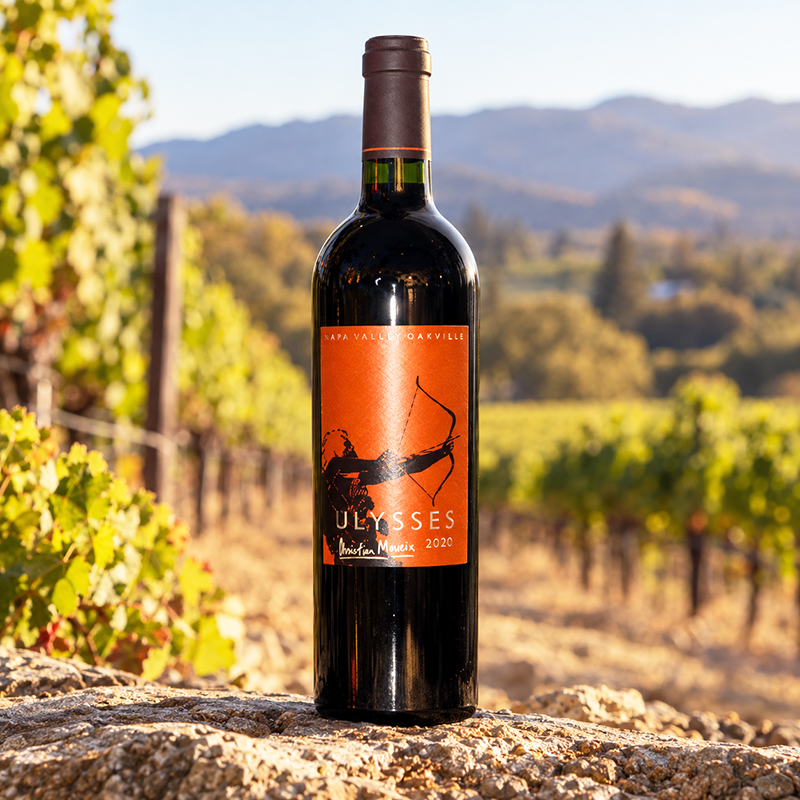
Ulysses

Ulysses 2020
Ulysses 2020
Click here for tasting notes.

Ulysses 2020

Charles Hopper first planted what is now known as the Missouri Hopper Vineyard (named for his daughter rather than the state) in 1873 in what is now Oakville, California. The parcel for this vineyard was purchased from George Yount. Now owned by the Beckstoffer family, a part of the original Missouri Hopper vineyard is used to produce Ulysses, a wine from Christian Moueix, a French wine maker famous for Petrus in France and Dominus in the U.S., as well as several other top wines from the region today.

Christian Moueix is one of the few winemakers to produce classic wines in both the old and new worlds, and he is also one of the most well-known. The son of Jean-Pierre Moueix, a Bordeaux wine merchant, he  was born in Libourne, France in 1946. After completing his agricultural engineering studies in Paris and graduate studies in viticulture and enology at the University of California at Davis in 1968-69, he joined his father’s company in 1970 to manage the family vineyards, and in 1991 became its president. He oversaw the legendary Chateau Petrus for 38 years, ending with the 2008 vintage. Continue reading “Ulysses”

Butaud Cease & Desist

C.L. Butaud Cease & Desist Red Wine Blend 2021. 
C.L. Butaud Cease & Desist Red Wine Blend 2021.   Click here for tasting notes.

Butaud Cease & Desist Red Wine Blend 2021

Texas isn’t the first place that comes to mind when most people think about wine, especially “serious” high-quality wine. And yet, Texas is fifth in the nation in both wine production and consumption. The history of grape growing in the state goes back at least to the 1660s, when Franciscan monks planted Mission grapes adjacent to their missions.* Today, Texas is home to a number of American Viticultural Areas, or AVAs; the two most prominent are the Texas High Plains AVA around Lubbock in northwestern Texas, and the Texas Hill Country AVA in central Texas west of Austin.

Continue reading “Butaud Cease & Desist”

Anchored Roots “The Summit”

Anchored Roots "The Summit" Red Blend 2018.
Anchored Roots “The Summit” Red Blend 2018. Click here for tasting notes.
Anchored Roots “The Summit” 2018

Eric and Amy Gale are the owners and sole full-time employees of Anchored Roots, Door County, Wisconsin’s newest winery, founded in 2020.

The couple make an ideal front-of-house/back-of-house duo. Amy grew up in Milwaukee, with hospitality at the forefront of her career path. Her initial focus was event planning, from non-profit fundraisers and catering, to corporate events and weddings. This was followed by experience in tasting room management at Airfield Estates in Prosser, Washington.

Continue reading “Anchored Roots “The Summit””

Eight Years in the Desert

Eight Years in the Desert.
Eight Years in the Desert. Click here for tasting notes.

Orin Swift Eight Years in the Desert

Orin Swift Cellars was a relative newcomer on the California wine scene, having been established in 1998, but not by “Orin Swift,” as I had long assumed. Rather, it was by the now iconic, and iconoclastic, winemaker David Phinney. Orin is Phinney’s father’s middle name and Swift is his mother’s maiden name.

Continue reading “Eight Years in the Desert”

Penfolds Bin 389 Cabernet Shiraz

Penfolds Bin 389 Cabernet Shiraz 2018
Penfolds Bin 389 Cabernet Shiraz 2018. Click here for tasting notes.

Penfolds Bin 389 Cabernet Shiraz 2018

Until Yellow Tail precipitated the boom in “critter wines” in 2000, it can be argued that Penfolds was just about synonymous with Australian wine in the U.S.  The label is ubiquitous here, in both grocery stores and fine wine shops. Prices range from about $12 per bottle for the Koonunga Hill Shiraz-Cabernet, to $700 for the legendary Grange, and everything in between.  (That $700 is doubly amazing, because just five or six years ago Grange was “only” about $200.) The selections are mostly reds plus a few whites and even a tawny Port.

Founders Dr. Christopher and Mary Penfold immigrated to Australia from England in 1844, bringing their own French vine cuttings. Not long after, their fledgling vineyard was officially established as the Penfolds wine company at the 500-acre Magill Estate in Adelaide.

Continue reading “Penfolds Bin 389 Cabernet Shiraz”

The Prisoner

The Prisoner.
The Prisoner. Click here for tasting notes.

Orin Swift Cellars was a relative newcomer on the California wine scene, having been established in 1998, but not by “Orin Swift,” as I had long assumed. Rather, it was by the now iconic, and iconoclastic, winemaker David Phinney. Orin is Phinney’s father’s middle name and Swift is his mother’s maiden name.

Continue reading “The Prisoner”