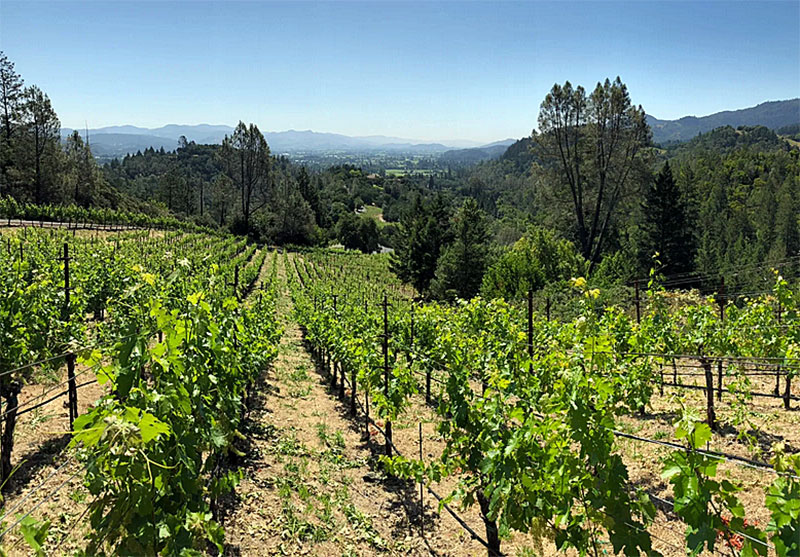
Here at Winervana, I use this disclaimer, “Although you will see vintage dates throughout Winervana, I don’t put too much importance on them. Major producers these days strive for a consistent style, year after year, and largely succeed. For instance, when shopping for a particular wine, if you have a choice between a current release and one that’s a few years old, there will certainly be differences in price and the character of the wine. But upon release, those two examples of the same wine are likely to be quite similar.”
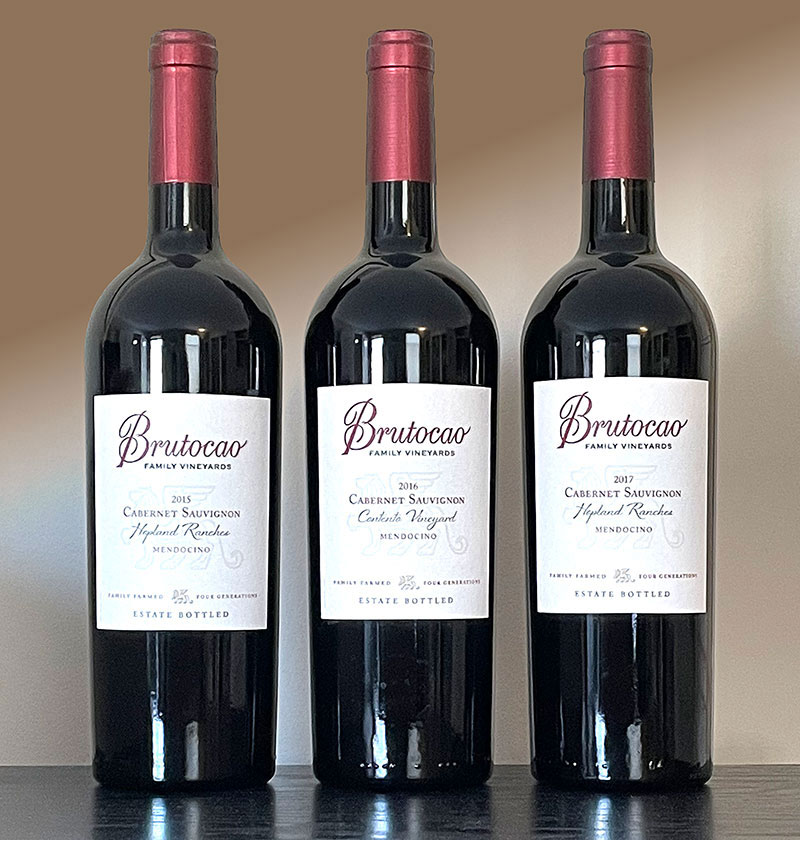
To test that position, I acquired a “vertical” of three Brutocao Cabernet Sauvignons. A vertical tasting is simply the same wine from different vintages. These three selections were indeed quite similar. Sourced from Brutocoa’s estate vineyards in Mendocino county, they all were aged 18 months in oak, 50% French and 50% American, and all have an ABV of 14.5% and .69% acidity.
These wines are a deep garnet in the glass. Surprising for Cabernet Sauvignon, they are semi-transparent rather than opaque. They start, predictably, with aromas of dark fruit, particularly blackberry, with hints of cedar. Those dark fruits continue on the palate, but these wines are restrained instead of fruit-forward, perhaps to be expected from a producer with a strong Italian heritage. They have a medium-long finish that features black-tea tannins.
There were subtle differences, however. Nothing that you would notice tasting the wines weeks or even days apart, but they were there. The 2015 had the highest levels of perceived acidity (all three were bottled at .69%) and tannins. Very unforeseen, because the common wisdom is that as a wine ages in the bottle both acidity and tannins become softer, rounder, and more balanced. Go figure. The 2016 was the most integrated of these selections, with well-balanced acidity and tannins, both less demanding of attention than in the 2015. Finally, the 2017 fell between the other two, with slightly more acidity but softer tannins than the 2016.
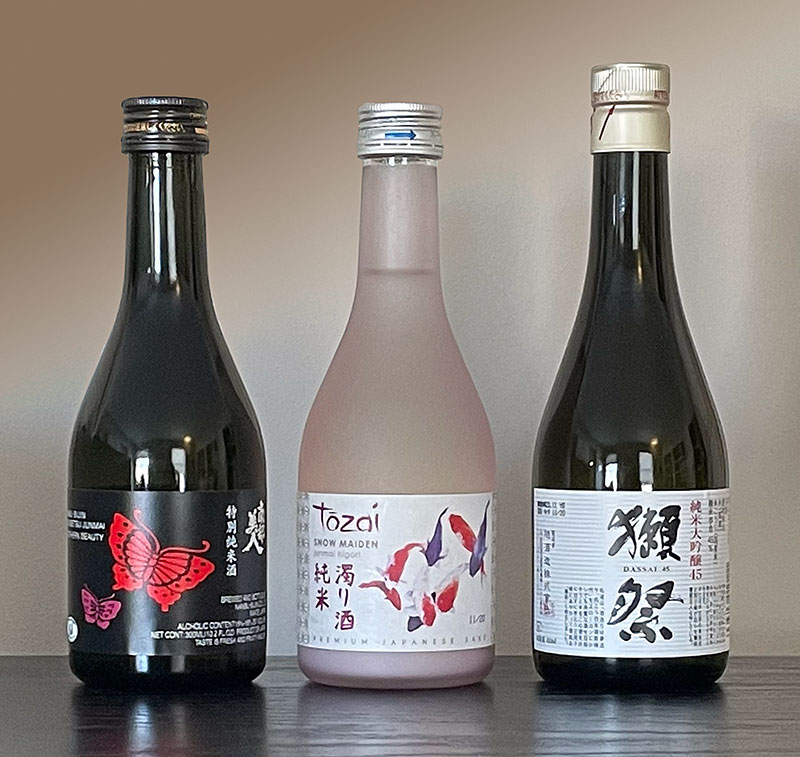
L. to R.: Nanbu Bijin Southern Beauty, Tozai Snow Maiden, Dassai 45
Three Interesting Sakés
Saké, the national alcoholic beverage of Japan, is often called rice wine, but this is a misnomer. While it is a beverage made by fermentation, the production process more closely resembles that of beer, and it is made from grain (rice, of course), not fruit. To make saké, the starch of freshly steamed glutinous rice is converted to sugar and then fermented to alcohol. Once fermented, the liquid is filtered and usually pasteurized. Sakés can range from dry to sweet, but even the driest retain a hint of sweetness.
Here are three interesting sakés to try. All should be served chilled, or at room temperature. Although the cheap sake you may encounter in sushi restaurants will usually be heated, often too much so, such treatment will destroy the subtleties of these selections.
Nanbu Bijin “Southern Beauty” Tokubetsu Junmai
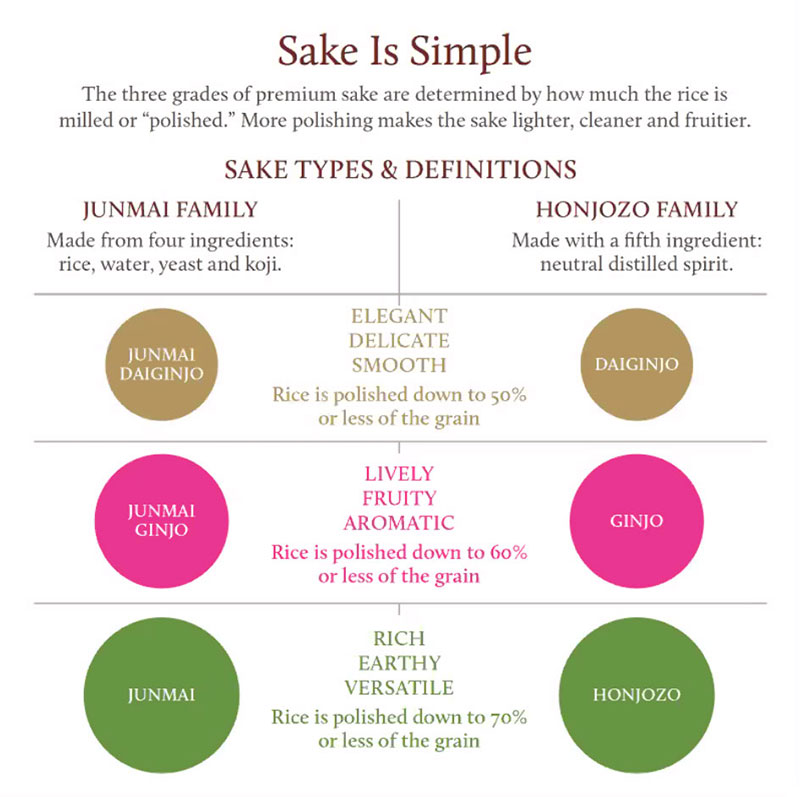
Tokubetsu translates to “special,” indicating that a special element was incorporated into the brewing process at the discretion of the brew master. In the case of this sake, that element is the use of the local Ginginga rice which took over eight years to develop and perfect, according to the brewery. The water, yeast, and brewing team are also all from Iwate prefecture. Junmai is pure rice wine, with no added alcohol. Until recently, at least 30% of the rice used for junmai sake had to be milled away, but Junmai no longer requires a specified milling rate.
Junmai is historically considered the “way saké was” and means “rice and water only,” These brews can have their rice milled to many different levels, from 80% with 20% removal to 55% with 45% removal, as long as the milling percentages are on the label. The result is that some Junmai can drink very rich and full-bodied, and some drink lighter and more elegant. They can be served chilled, at room temperature, or warmed (but I suggest avoiding warming this one).
Southern Beauty has been milled to 55%, with 45% removal of rice, as high as it gets. It is Kosher certified, unusual among sakés. It has a soft, round character, with a flavor reminiscent of mandarin oranges. ABV is 15.3%.
Tozai “Snow Maiden” Nigori Junmai
Snow Maiden, also known as Hanako, was a koi fish that lived to the age of 226 years in pure mountain water at the base of Japan’s Mt. Ontake. Nigori, or nigorizake, translates roughly to “cloudy” because of its appearance, and is the oldest style of saké. The cloudiness is produced when a brewer leaves in some of the rice lees, or sediment. Nigori is not an unfiltered saké however, as the sake is filtered to some degree. I’m not a big fan of nigori saké because of the rice grit that it always contains. It is quite delicate here, however, and I found it acceptable.
This expression is relatively dry for a nigori saké, as they always tend toward sweetness. It has been milled to 70%, and has a soft, floral palate, with flavors of cantaloupe and a suggestion of daikon. ABV is 14.9%.
Dassai 45 Junmai Daiginjo
Daiginjo is the highest grade of saké. Junmai Daiginjo has the highest milling rates in saké production, with a minimum of 50% rice polished away and 50% remaining. But that standard is often surpassed by brewers looking to push the rice milling envelope, resulting in sakés that can be milled down to 35%, down to 23%, and even 7% remaining! These sakés are always served chilled.
Dassai translates to ‘Otter Festival.’ The name comes from a local Yamaguchi legend that involves a bunch of happy-go-lucky otters showing off their fishing skills and showing us humans how it’s done properly. Back in 1981, the Toshiko Akiyoshi-Lew Tabackin Big Band released an album called Tanuki’s Night Out, which tells the story, in music, of Tanuki, another hard-partying otter.
Like Southern Beauty, Dassai 45 has been polished to 45% rice remaining, hence the name. The nose features a banana aroma, with lychee, green apple, and “acidic bubble gum” on the palate. AVB is 16%.
Proprietor Ron Lachini’s family hails from the Tuscan town of Lucca. At some point, his grandfather immigrated to the United States, settling in the large Italian community of San Francisco’s North Beach. He started making wine with his father and grandfather in their garages as a child.
He and his wife Marianne both attended U.C. Davis, where they were exposed to the world of viticulture and enology. Travels to some of the world’s esteemed wine regions and wineries cemented their love and collection of fine wines. After college, Ron began a career in the financial industry in 1997, which he pursued until 2008. Nearly simultaneously, in 1998, he and Marianne purchased a 45-acre property in Newberg, Oregon, approximately 30 miles southwest of Portland, with the intention of eventually owning a winery. After clearing and natural site preparation, in June of 1999 they planted their first five acres of Pinot Noir. In the following seven years, additional blocks were planted that now entail just over 30.5 acres of Pinot Noir plus an additional one and a half acres of Chardonnay. This land is now the Lachini Estate Vineyard. Continue reading “Lachini Vineyards”
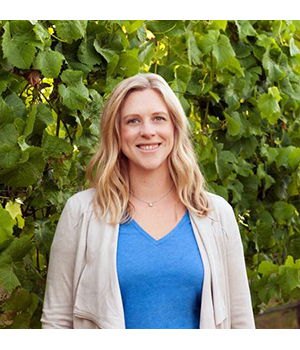
March is Women’s History Month, and an apt time to feature winemaker Katy Wilson, one of the few but growing number of women in the wine industry.
Wilson founded LaRue Wines in 2009 when she was just 26, but already had years of experience.
For Wilson, there was never a “Plan B” career path. She grew up on a walnut orchard in California’s Central Valley and felt an affinity for the land from a young age. True to the cliché, she learned to drive a tractor before she could drive a car. Following high school, she pursued her higher education in the Agricultural Business program at Cal Poly, San Luis Obispo. During her first semester there, she was exposed to the possibility of a life in wine, and the die was cast. After graduating with degrees in Wine and Viticulture and Agricultural Business, her odyssey began.
The first stop was Testarossa Winery in Los Gatos, California, where she scrubbed the facility and discovered the possibilities of Pinot Noir. Next, a big move to Torbreck Vintners in Australia’s Barossa Valley, where she was given the chance to work with some of the oldest vines in the world. Then it was back to California, specifically Napa Valley, where she spent a year making Cabernet Sauvignon at the famous Joseph Phelps Vineyards. The peripatetic Wilson then went half-way around the world once again, to work at Craggy Range in Hawkes Bay, New Zealand.
Finally, she landed on the Sonoma Coast at Flowers Vineyards & Winery, famous for their Pinot Noir and Chardonnay. While there, Wilson worked her way up from harvest enologist to assistant winemaker, and realized the Sonoma Coast would be where her wandering would end, but not before a stint at Kamen Estate Wines in 2009 as the associate winemaker, making big, bold Cabernet Sauvignons and Syrahs there for five years.
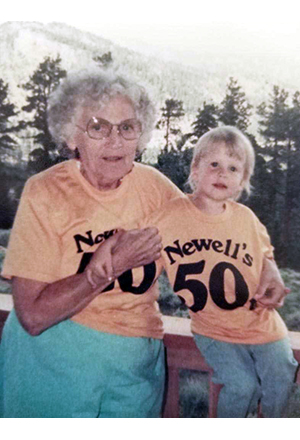
That same year, 2009, Wilson launched her own winery, LaRue Wines, as well. It is named in honor of her great-grandmother, Veona LaRue Newell, who Wilson has described as inspirational and unique; others have used the adjectives bold, independent, and feisty. Regardless, there was a strong bond between the two. The winery is very much a boutique operation, focusing on small lots of Pinot Noir and Chardonnay, with total production limited to just 500 cases. Drawing on the cool conditions and remote coastal vineyards of the Sonoma Coast, Wilson strives for wines that are complex and vibrant with elegant acidity, and that drink well when young but also age gracefully. She is guided by a steadfast, non-interventionist winemaking philosophy that champions the land from which the grapes come.
Still young and with energy to spare, Wilson also works as a consulting winemaker, partnering with Banshee Wines from 2012 to 2018, Claypool Cellars from 2012 to 2020, Anaba Wines since 2014, Reeve Wines, and Smith Story Wine Cellars all, predictably, in the Sonoma region. “There are so many different types of consultants and reasons why you would hire a consultant, from winemaking knowledge to vineyard connections to marketing,” says Wilson. “Some wineries already have a full-time winemaker but are in need of advice or guidance in a particular area or to address an issue. Others hire a consultant to work as the winery’s sole winemaker.”
Wilson operates in both capacities. “My path to where I am today has been almost like a ‘choose your own adventure book!’ ” exclaims Wilson. “As I worked my way up in the winemaking world, I learned very quickly that in addition to maintaining a ‘never-stop-learning’ work ethic, relationships are everything in this surprisingly small industry.”
Wilson has her signature style for LaRue (which she calls “very hands-off”), but she tailors her approach to fit the the vision of the other winery owners she works with through lots of conversation, side-by-side work, and tasting. “As a consultant, I look at what I do as a collaboration. The wines that I make for my own winery, LaRue, are different than any wines that I am making for my clients,” says Wilson.
She was touted as a “Winemaker to Watch” by the San Francisco Chronicle in 2013.
The Vineyards from which these wines were drawn
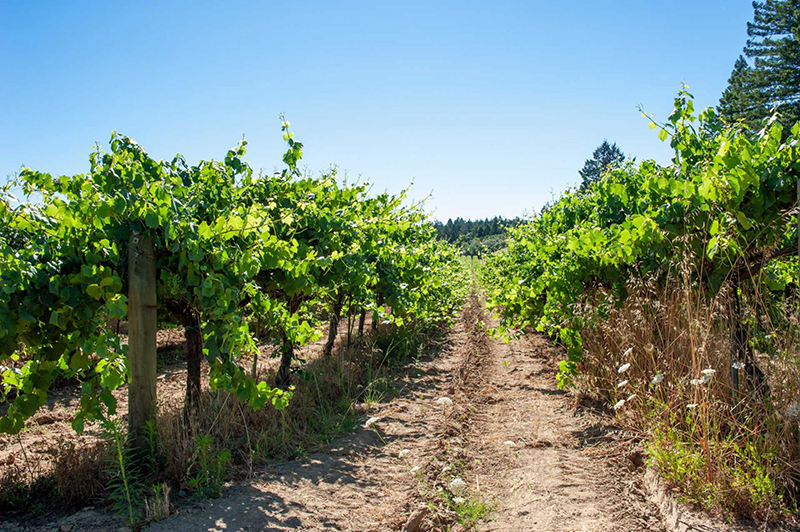
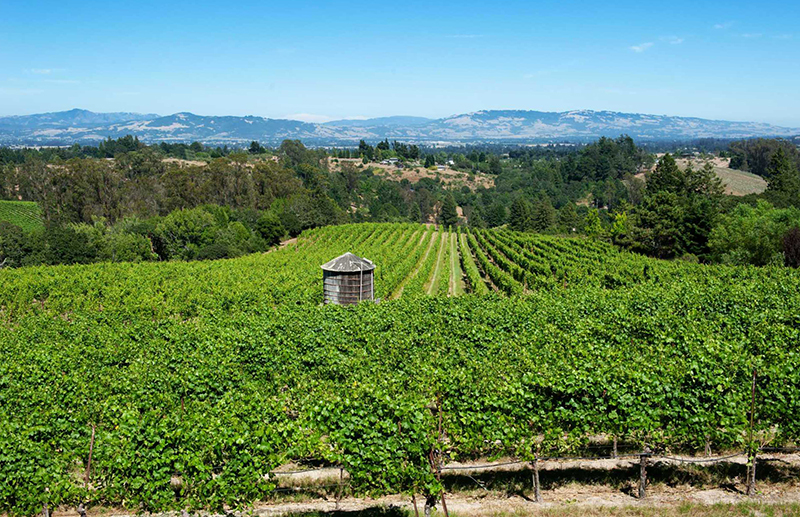
“For more than a decade, I have been devoted to showcasing small lot Pinot Noir and Chardonnay exclusively from a particular sliver of the Sonoma Coast that lies 7 to 10 miles from the Pacific Ocean and is heavily influenced by the coastal marine weather. Each site has a special fingerprint that I try to capture and express,” shared Wilson.
Charles Heintz Vineyard
Since 1912, the Heintz family has owned and operated this site just east of the town of Occidental. It is a highly sought-after vineyard for premium wine producers for its quintessential expression of Sonoma Coast Chardonnay. Wilson has been producing a Chardonnay from this property since 2014. Her 2018 product is reviewed below.
Thorn Ridge Vineyard
Ted Klopp and his daughter, Lauren Klopp-Williams, farm Thorn Ridge Vineyard. Wilson started working with this vineyard in 2014. The east-facing orientation of Thorn Ridge enjoys ample morning sun, resulting in fruit that is more rustic and has a darker character than that of the other Pinot Noir vineyards LaRue sources from. It is planted on Goldridge sandy loam soils. Thorn Ridge is located just west of the town of Sebastopol, which features a heavy marine influence.
Rice-Spivak Vineyard
Planted in 1999 and owned by Russell Rice and Helene Spivak, Wilson has been working with this vineyard since LaRue was founded. Wilson first met Russell and Helene in 2007 during her time as the assistant winemaker at Flowers Winery. This six-acre, cool, north-facing site lies south of the town of Sebastopol. Its Goldridge sandy loam soils are, unusually for this area, mixed with volcanic ash.
Emmaline Ann Vineyard
Emmaline Ann is a three-acre vineyard planted in 2001 by owners Wayne and Nancy Hunnicutt, and is named after Nancy’s grandmother. Like the Spivaks, Wilson first met the Hunnicutts in 2007 during her time at Flowers Winery. All of LaRue’s tastings are staged here, as well as the annual LaRue Wines Summer BBQ. This small vineyard faces southwest toward the Pacific Ocean and is frequently enveloped in fog.
LaRue Wines Charles Heintz Vineyard Chardonnay 2018
The fruit for this Chard was sourced entirely from the Charles Heintz Vineyard and then aged for 17 months in once-used French oak. It pours a clear bright yellow, and the nose offers up aromas of mango and grapefruit, with a touch of lemon meringue. The palate features a full, smooth mouthfeel and flavors of lemon and creme brûlée, all supported with mouthwatering acidity and a hint of vanilla. Production was 75 cases. ABV is 13.1%.
LaRue Wines Sonoma Coast Pinot Noir 2018
Wilson drew on three vineyards for this selection: 46% from the Thorn Ridge Vineyard, 38% from the Rice-Spivak Vineyard, and 16% from the Emmaline Ann Vineyard. The wine saw 20 months in French oak barrels, 20% of which were new. It is a quite pale cherry red, but looks can be deceiving. It starts with aromas of dark stone fruit, particularly plum, followed by predominantly strawberry on the palate, with some cranberry. Hints of violets and vanilla lead to a medium finish. It all wraps up with zippy acidity and delicate tannins. Wilson made 125 cases. ABV is 13.3%.
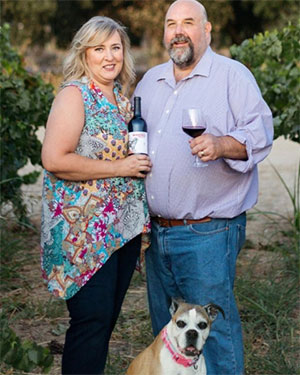
Founded in 2017 by Blair and Laura Lott, Rescue Dog Wines has an unusual and commendable mission: a generous 50% of their profits go to rescue dog organizations across the country. The Lotts explained that they started planning a new life in wine country around 2015. “We knew that we wanted to embrace sustainable growing practices and create a new, more rewarding lifestyle for ourselves. In addition, we knew that we wanted enough land to grow wine grapes and foster dogs. In addition, we knew that we wanted to create high quality, premium wines. During this period of exploration throughout many of California’s wine regions it dawned on us that we could combine our two passions and Rescue Dog Wines was born,” they reminisced. Continue reading “Rescue Dog Wines”
Chuck Hope and his wife Marlyn came to Paso Robles (which roughly means “passageway of oaks”) in California’s Central Coast in 1978 to farm, and eventually to start what would become Hope Family Wines. This early arrival put them on the forefront of the Central Coast becoming a world-class viticultural region. Initially, the Hopes planted apples and grapes in this then sparsely-populated area. Seeing the property’s potential for grape growing, Hope eventually replanted the apple orchards with grapes. Vine density was increased, and each vine was pruned to limit yield for better-quality fruit.
Throughout the 1980s and 1990s, the Hope family grew grapes for various wine producers. In the 1980s, the Wagner family, owners of Napa Valley’s Caymus Vineyards, turned to the Hope family to source Cabernet Sauvignon fruit for their Liberty School label. Thus began a long-lasting partnership between the two families.
Since that beginning, in Paso Robles specifically and throughout the region generally, Hope Family Wines has built long-standing relationships with over 50 growers. They coordinate with farmers to carefully limit crop yields to ensure concentrated flavors.
In 1995, the Hopes acquired Liberty School from the Wagners. In 1996, they launched Treana Winery with Chris Phelps serving as winemaker.
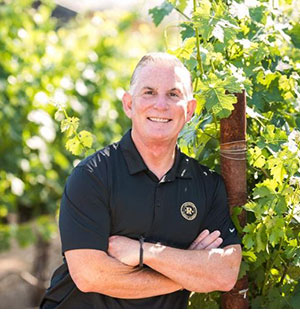
At about this same time, while studying fruit science at California Polytechnic State University, San Luis Obispo, the Hope’s son Austin spent some time working in Napa Valley under Caymus winemaker Chuck Wagner. This opportunity solidified his decision to pursue winemaking for his family. He became the head winemaker in 1998, and has held the position ever since. Since taking the lead as president and winemaker, Hope has helped Hope Family Wines grow from producing around 20,000 cases per year to over 300,000 cases per year. Austin’s wife Celeste, a professional photographer, produces all winery-related photography.
Hope shared, “At Hope Family Wines, we believe that it is our job to demystify wine and make it approachable. As a beverage that often accompanies food, we need to get away from the rules and intimidation, and trust our individual preferences. I am excited to see the wine industry becoming more dynamic and approachable as younger generations embrace education through online sources that are right at our fingertips.”
In 2000, the family started a limited-production label, Austin Hope (surprise!), focused exclusively on Rhone varietals grown on the family’s estate vineyard, based on the calcareous loam, marine sediment, and dense clay soil of the Templeton Gap, which has the coolest microclimate in Paso Robles. It closely matches the climate of the Rhône Valley in France, as well as Napa’s acclaimed Rutherford district. The winery’s now-mature vineyards produce Cabernet Sauvignon, Syrah, Merlot, Mourvedre, and Grenache.
In 2008, the winery introduced Candor Wines, a multi-vintage label focusing on Zinfandel and Merlot wines with fruit sourced from family-owned vineyards in Santa Barbara, Paso Robles, and Lodi. It introduced its second multi-vintage blend, named Troublemaker, in 2010.
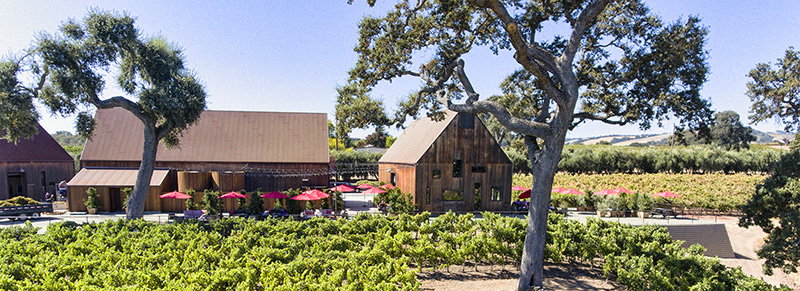
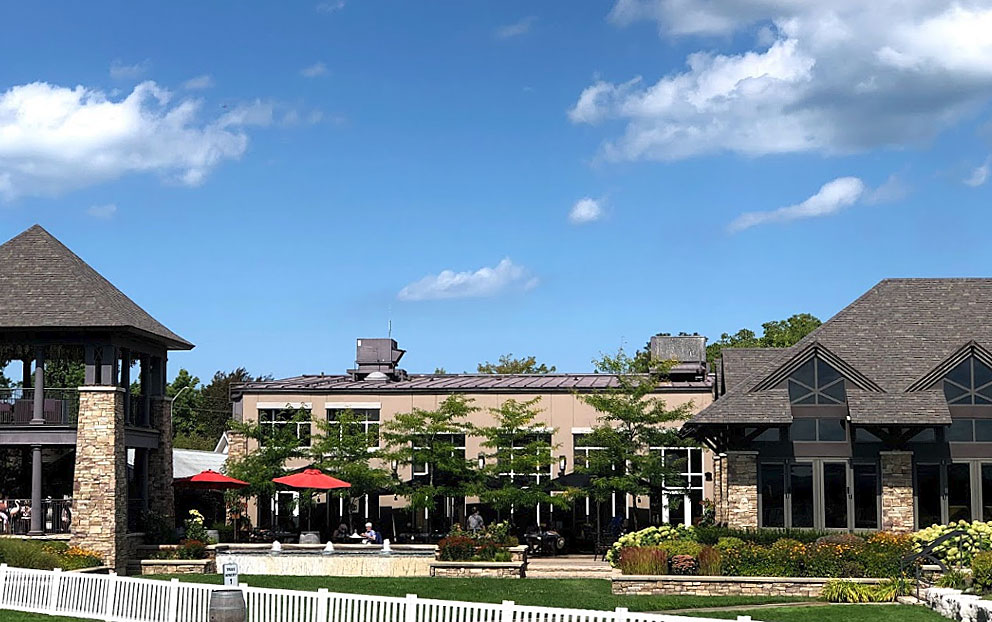
The winery.
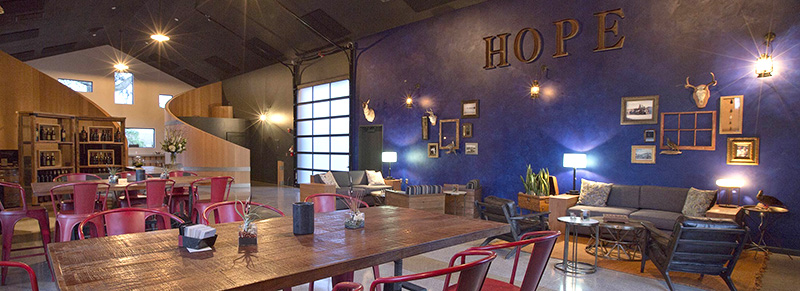
The tasting room.
Hope Family Wines is committed to sustainable growing practices that promote vine health, improve wine quality, and ensure that growers remain profitable. Spraying is only done when necessary, and never after August first. The number of tractor passes is kept to a minimum, protecting the integrity of the root structures and avoiding compacting the soil. The winery works actively to promote best practices in the vineyards of the growers they partner with. They use the self-assessment tools put together by the Wine Institute and the California Association of Winegrape Growers to gauge progress and identify areas for improvement over time.
Austin Hope GSM 2017
This wine is a blend of 43% Grenache, 35% Syrah, and 22% Mourvedre. These are three important grapes grown in the Côtes du Rhône region of France, but this popular blend is produced throughout the world. The fruit for this selection was hand-picked from the Hope estate vineyards in the Templeton Gap district of Paso Robles, and then fermented in five-ton, open-top tanks. After extended maceration for up to 60 days, the wine was aged for 25 months in 72% new French oak barrels.
This GSM is ruby-black in the glass, with big aromas of rich, dark fruit. The subtly sweet palate showcases jammy blackberries, blueberries, currants, a hint of pencil shavings, grippy but balanced tannins, and a long finish.
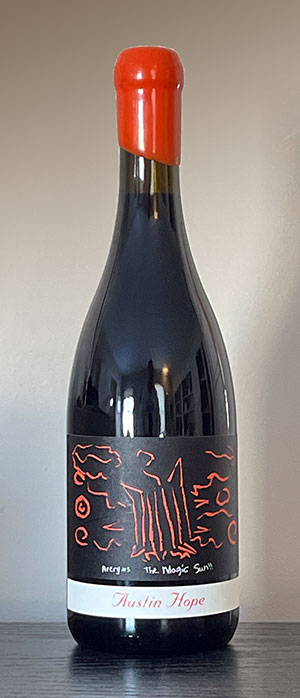
The label art, by Austin Hope’s youngest daughter Avery, is a linocut titled The Magic Sun. And the wax seal, although certainly attractive, made opening the bottle rather tricky. ABV is 15%.
In 1870 the Carbone family purchased a large parcel on Coombsville Road in Napa, California. They opened a winery, which is long gone, and that was about it for winemaking in the area for the next hundred years.
Around 1970, dozens of wineries started appearing along Highway 29 in Oakville, Rutherford, and St. Helena, but Coombsville remained largely uninvolved in the burgeoning wine scene. By the 1990s, however, a number of up-valley wineries, looking to expand their production, came looking for additional sources of fruit. They were impressed by the rolling benchlands, moderate temperatures, and volcanic soils of Coombsville.
In 1995, the winery that would eventually become Italics was founded in Coombsville by commercial pilot turned vintner Bill Frazier. Frazier sold the winery in 2011 to a China-based company that renamed it Zhang Winery. The Chinese owners expanded the existing small cave system into what is now 16,000 square feet carved into a hill, and made a number of practical and visual improvements. In 2014, the operation was purchased by Mike Martin of Texas, who once again renamed it, this time to Italics. (The name Italics was chosen because “words in italics are used to emphasize something or to make something stand out.”) He was president of Rio Queen Citrus, Inc., his family produce business, until selling it in 2012. Rio Queen began with a small 20-acre grapefruit orchard in the south part of the state, but grew to become one of the largest distributors of produce in Texas (including citrus, onions, and melons).
Italics’ founding winemaker was Steve Reynolds, who Martin met by chance at a wine dinner in McAllen, Texas. Martin was particularly interested in one of Reynold’s many ongoing projects, Thirteen Appellations, which began in 2002 when 100 cases were made. The idea behind the label was to create a wine with fruit from all of Napa’s then extant sub-appellations. The thinking was that, “each wine taken individually has its own unique colors, aromas, and flavors, and blending them results in an arguably richer, perhaps more complex wine.” The wines from each sub-appellation are fermented and aged separately – all coming together when the final blend is made. Ultimately Martin acquired Thirteen Appellations, a brand that evolved into Sixteen Appellations. As additional sub-appellations were approved in Napa, further vintages were called Fourteen and then Fifteen Appellations. With the Coombsville sub-appellation finally being added in 2011, the wine is now Sixteen Appellations
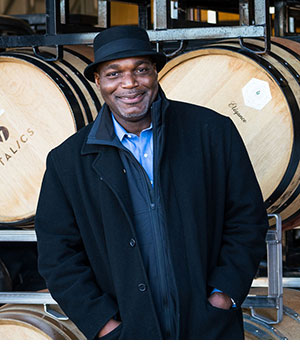
In 2019, Marbue Marke became Italics’ winemaker. He was born in Sierra Leone, West Africa, and originally studied to become a doctor, enrolling in UC Davis’ Pre-Med program at just 15 years old. However, he soon realized that he tended to get woozy at the sight of blood, a definite problem for a doctor. Abandoning that career path, he transferred to the UC Davis wine program, and graduated with a degree in Viticulture and Enology. He later earned an M.B.A. from Sonoma State University. Prior to Italics, he toiled at Caldwell Vineyard,Marston Family Vineyard, J Winery, Cosentino, Benziger Family Winery, and industry giant EJ Gallo Winery. In 2018 he was named U.S. Winemaker of the Year by Bonfort’s Wine and Spirits Journal.
The entire Italics operation resides in caves carved into the hillside.
In addition to the Sixteen Appellations offering, Italics Winegrowers focuses on wines made from traditional red Bordeaux varietals, with a total current production of about 5,000 cases annually. The fruit for these wines thrives in vineyards not far from the San Pablo Bay. Breezes that blow in from the bay bring fog by day and cool air at night, moderating extreme temperatures. Coombsville is surrounded by a partially collapsed caldera, the remnant of a fractured volcanic vent. The caldera’s half-bowl reaches some 1,800 feet in elevation, and acts as a collector for the cool marine air from the Bay. The grapes grown here can hang longer without dehydrating while retaining their natural acidity.
The film Decanted premiered at the 2016 Napa Valley Film Festival. It depicts what it takes to open a winery in the Napa Valley, and it follows Italics Winegrowers from the inception. Winemaker Steve Reynolds and owner Mike Martin were included in the cast.
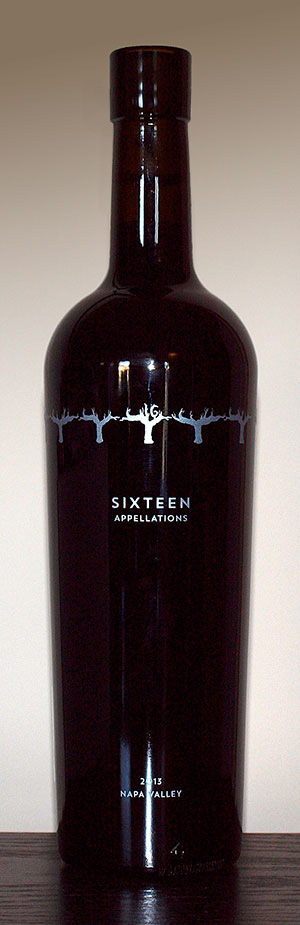
ISixteen Appellations Red Wine 2013
This red is composed of 45% Cabernet Sauvignon, 35% Merlot, 15% Cabernet Franc, and 5% Petit Verdot. Some of the vineyards sourced are owned by Robert Keenan, Blackbird, Annapurna, and Constant, as well as Italics’ estate vineyard (these change every vintage). After fermentation in 25% new French oak and 75% stainless steel, it was aged for 22 months in French oak barrels, 60% new and 40% used.
This quite dry, dark garnet wine greets you with a heady nose of mouthwatering rich dark fruits. These are most evident on the palate as somewhat restrained blueberry and blackberry, plus dust and a hint of clove. The flavors tend to fade as the bottom of the bottle approaches. The acid and tannins are in excellent balance, complemented by a medium-long finish. ABV is 14.5% and 1,337 cases were made.
Mention the word “Niagara” and the first thing that occurs to most people is Niagara Falls, of course. But this region, which straddles both the United States and Canada, is becoming increasingly well known for the quality of its wines.
Founded in 1979 by teacher, engineer, grape farmer, and amateur winemaker Joe Pohorly on his family farm, Newark was the third winery at the beginning of the industry on the Niagara peninsula (after Inniskillin [1974] and Chateau des Charmes[1978]).
In 1982, Pohorly sold a majority share of the winery to a German company which changed the name to Hillebrand Estate Winery. In 1983, Hillebrand was the first Ontario winery to successfully make icewine. As icewine originated in Germany, I assume this was what the buyers had in mind for the acquisition.
In 1989, Hillebrand released Trius Red for the first time. Inspired by Bordeaux blends, it was made from the winery’s best Cabernet Sauvignon, Cabernet Franc, and Merlot grapes. Just two years later, in 1991, Trius Red was the first-ever Canadian wine named as the ‘Best Red Wine in the World’ at the International Wine and Spirits Competition in London, England. The accolade marked an important step not only for the winery, but for the Canadian wine industry as a whole, sending a signal that the country’s wines could stand on their own against Old World wines.
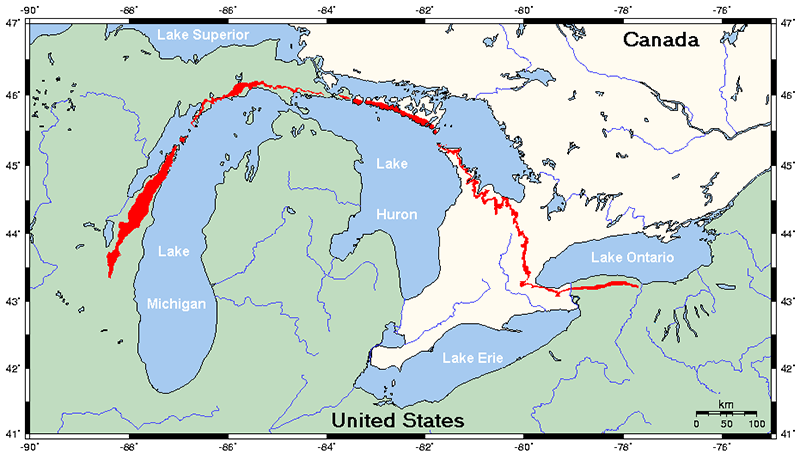
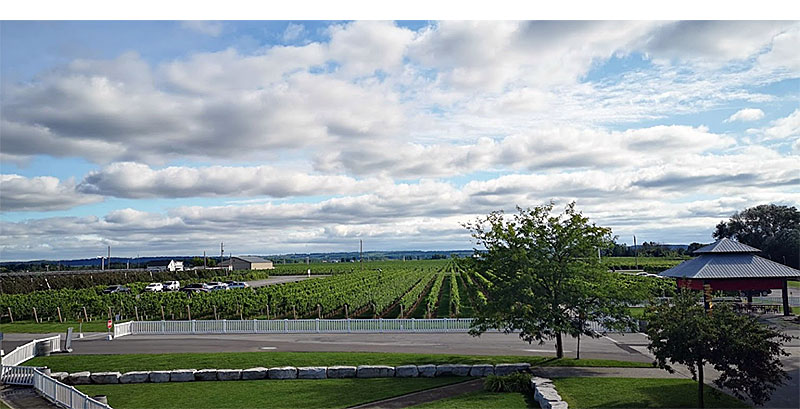
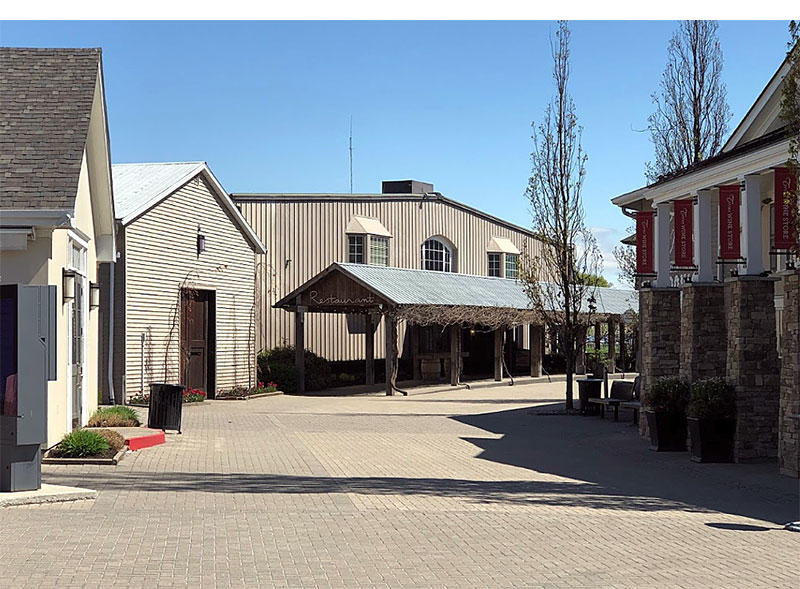
Trius Winery, as Hillebrand was renamed in 2012, is located in Niagara-on-the-Lake, Ontario, in the Niagara Escarpment AVA. Long a cherry-growing area, about 30 years ago grapes began being widely planted there. Because of its northern location, at first glance this region hardly seems suited to quality winemaking. However, the climate is moderated by lake effect* from Lake Ontario. Also, the Niagara Escarpment, an approximately 600-foot-high ridge that runs from east to west through the Great Lakes, retards winds coming off the lake. This makes for good air circulation and helps protect the local vineyards from frost and disease. (The escarpment is most famous as the cliff over which the Niagara River plunges at Niagara Falls.)
x
Nestled between the Niagara escarpment and Lake Ontario, Trius produces BC VQA** wines from grapes grown in the four appellations of Niagara-on-the-Lake, including Niagara River, Niagara Lakeshore, Four Mile Creek, and St. David’s Bench.
Photo: Emil IstroforPhoto: Chen ShenPhoto: Emil Istrofor
The Winemaker
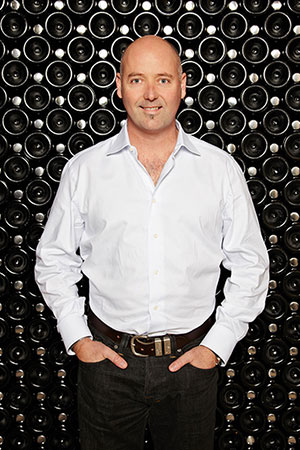
Australian Craig McDonald has worked at wineries in Australia, New Zealand, Spain, Oregon, and California. At one point on a trip to visit friends in Toronto, he made a quick detour to Niagara to check out the wine scene there. He was surprised by and impressed with what he saw and tasted. One of the wines he discovered on that trip was Trius Red.
McDonald became winemaker at Trius in 2010. He noted, “I’m inspired by the fact that as a wine region we have so much untapped potential. Ontario wines keep getting better every year, despite the arduous conditions and challenges we constantly face. There is no sameness to our seasons, and we’re constantly adjusting our approach from grape growing right through the winery to blending.”
The Corporate Overlord
Trius is part of the Andrew Peller Ltd. conglomerate, which also controls Sandhill, Wayne Gretzky Estates, Red Rooster Winery, Calona Vineyards, Thirty Bench Wine Makers, Black Hills Estate, Gray Monk Estate Winery, and Tinhorn Creek Vineyards
Andrew Peller first arrived in Canada from Hungary in 1927 to pursue his dream that Canadians, like Europeans, could produce premium quality wines. (How he came to that radical conclusion, I have no idea.) To that end, he finally established Andrés Wines Ltd. in 1961. In 1964, operations were established in Calgary, Alberta and in Truro, Nova Scotia. In 1970 Andrés purchased Beau Chatel Wines in Winona, Ontario. In 1974 Andrés moved into Quebec with the founding of Les Vins Andrés in St. Hyacinthe. In 1975 Andrés bought the Valley Rouge Winery located in Morris, Manitoba. In 1994 Andrés acquired Hillebrand Estates Winery, which eventually would become Trius. 2006 marked the 46th year of the company, and the name was changed from Andrés Wines Ltd. to Andrew Peller Ltd. in honor of the founder.
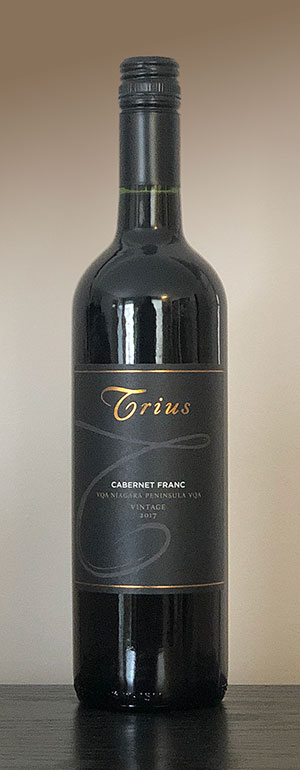
Trius Cabernet Franc 2017
Cabernet Franc is often used as a blending grape, but here it stands alone. This medium-bodied wine was aged in a combination of French and American oak. It pours a deep but transparent red. The nose has bright cherry, a hint of spice (anise), and some subtle earthy notes. It’s quite dry and rather lean on the tongue, with flavors of blackberry, cherries, and pencil shavings. There are robust black-tea tannins. It ends in a medium finish with a bit of cranberry bitterness. ABV is an approachable 13%.
For now, Trius’ wines are unobtainable outside of Canada since the borders have been closed due to the Covid-19 pandemic. Hopefully this restriction will be lifted by 2022 at the latest.
* As the spring growing season begins, the lake’s cooling effect retards the vines from budding until the spring frost season is over. The lake stores daytime heat as the growing season continues. The effect of the warming water lessens the variation between day and night temperatures, which can lengthen the growing season by as much as four weeks. As summer draws to an end, the stored warmth of the lake water delays frost that might damage the vines or fruit in the early fall. In winter, the lake also causes heavy, moist snowfall, which blankets the vineyards, insulating and protecting the vines from the frigid air.
** BC VQA (Vintners Quality Alliance) is the appellation of origin and quality standard for British Columbia wine, established in 1990. It has since been expanded to cover wines from Ontario as well. BC VQA certified wines must meet standards with respect to their origin, vintage, and varietals.
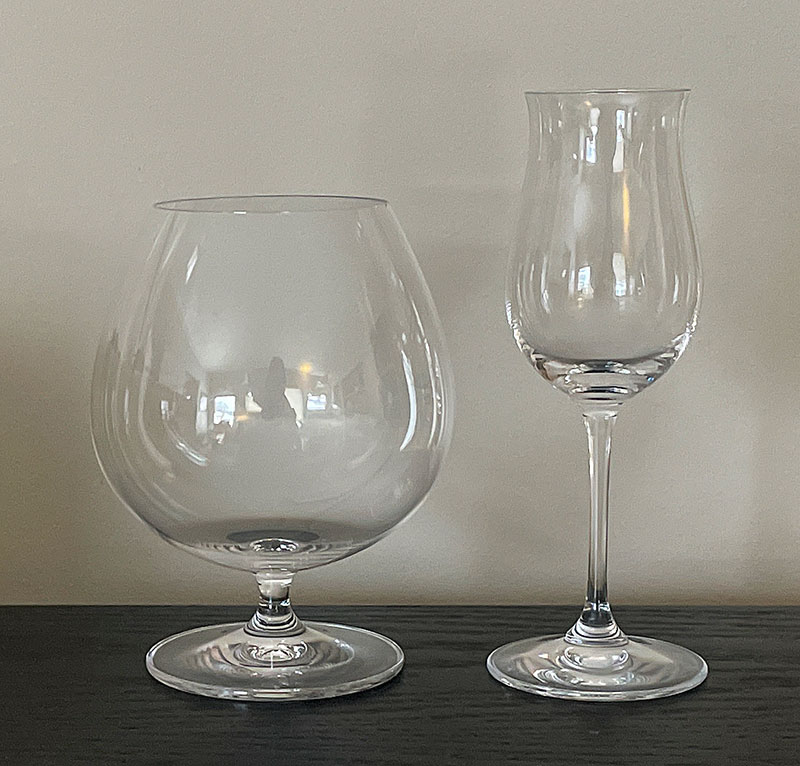
Riedel of Austria, famous for its varietal-specific stemware, makes both of these glasses, and both are intended for use with brandy and its variants Cognac, and Armagnac. How is this possible? They could hardly be more different.
The glass on the left is the iconic brandy snifter, as instantly recognizable as a martini glass. Its large balloon bowl is intended to display as much of a brandy’s aroma as possible. And the wide bottom is intended for cradling in the palm of your hand, warming the brandy to further enhance the nose.
The glass on the right, although named by Riedel specifically for Hennessey Cognac, is suited for any brandy, Cognac, or Armagnac, and is the one preferred by connoisseurs and professionals. The bowl still allows for appreciating the aroma, without accelerating the evaporation like a snifter can, and the tulip shape concentrates it. A similarly-sized and -shaped wine glass can work nearly as well.
While I enjoy stemware like this, as always my advice is to use whatever you like. As far as I’m concerned, if you don’t have to slurp your beverage directly off the counter you’re good to go.
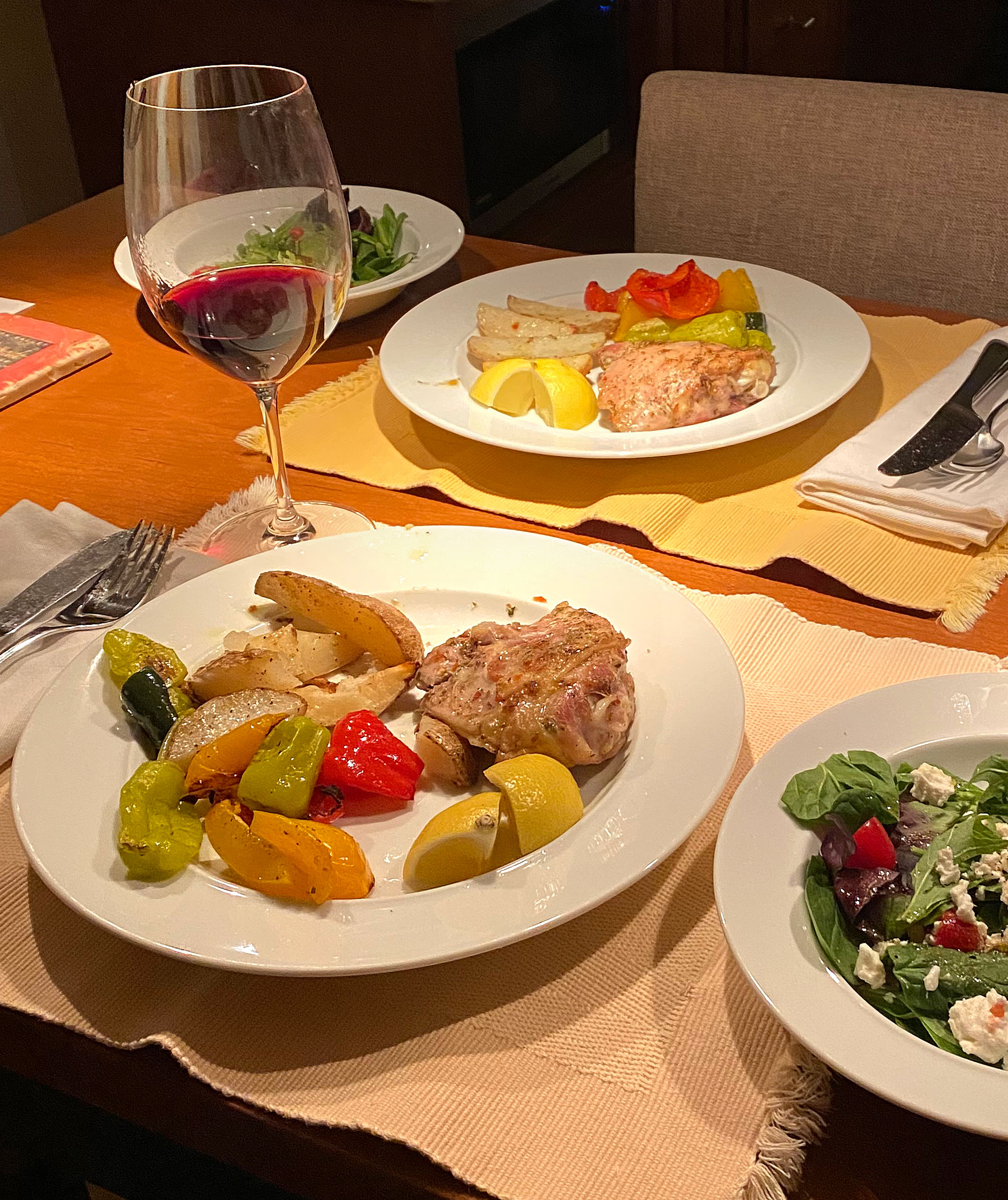
Gene & Georgetti is a legendary old-school Chicago steakhouse, founded in 1941, and still with us, happily. On November 1, 1987, the Chicago Tribune‘s food critic at the time, William Rice (excellent name for a food writer, no?), published a recipe for Chicken alla Joe. Like Spicy Grilled Tuna, this is one of the very few recipes I have made many times. (I have about 200 cookbooks and I don’t like to repeat.) Unlike that one, however, I have modified it somewhat, to make it a bit simpler and even more flavorful. (There is a link to Rice’s original recipe at the end of this post. ) And about ten years ago, I realized I almost always made this in January. So, now I must make it in January. Sometimes late, like January 31, 2020, and sometimes early, like January 1, 2021.
Chicken alla Joe is named for the man who invented it. Gene & Georgetti retains servers for years, if not decades. One of them was Joe Pacini, a native of Tuscany, who worked tables beside the bar in the restaurant’s front room. He had a regular customer, Morris Krumhorn, who liked spicy food. He would order broiled chicken and ask Pacini to have the chef, Mario Navarro, put red pepper on it. “One night I went to the chef and told him, ‘My customer is complaining that the chicken you make is not spicy enough,'” Pacini recalled. Chef Mario responded, “What can I do?” and Joe says, “He really likes it hot. Let’s put some hot pepperoncini with the chicken and green pepper and red pepper.” After serving the dish, Joe returned to the kitchen and said to Mario, “Mr. Krumhorn is a happy customer. He asks what you call this dish?” Mario answered, “It was your idea, not mine. I call it Chicken alla Joe.”
Chicken alla Joe
Serves 6 to 8
3-1/4 lbs. bone-in skin-on chicken thighs, or a mix of thighs and breasts
2 teaspoons salt
1 teaspoon black pepper
4 teaspoons dried oregano
1 or 2 teaspoons dried red-pepper flakes, depending on how hot you want it
9 tablespoons olive oil
1 red bell pepper and 1 yellow bell pepper, stemmed, seeded, and cut into broad strips or chunks, about 12 each
16 oz. jar of pepperoncini, drained, rinsed and left whole (but pierced once, so you don’t get a mouthful of vinegar when you bite into one)
3 – 4 russet potatoes, sliced into spears
2 lemons, cut in half
Heat oven to 450 degrees.
Mix the salt, pepper, oregano, red-pepper flakes, and 3 Tbls oil together. Rub the oil/seasoning mix under the skin of each piece.)
In a large bowl, add the remaining 3 Tbls oil, salt and pepper to taste, potatoes, and bell peppers, and toss with your hands to evenly coat.
Add 3 Tbls oil to an 18″ x 12″ roasting pan and coat the bottom. Add the chicken pieces skin side down to the center of the pan (just the thighs for now if you are using breasts also) and potatoes. Place pan in the oven and cook until the chicken pieces begin to brown, about 20 minutes. Remove roasting pan from oven. Turn chicken pieces (add breasts now if using) and add bell-pepper strips or chunks and pepperoncini. Return to oven and cook until chicken is tender and pepper strips are soft, an additional 20 minutes.
Run under the broiler for a minute or two to crisp the skin.
Remove pan from oven. Squeeze juice from lemon halves over the chicken pieces, then transfer them, the peppers, and pepperoncini to warm serving plates. Spoon pan juices over each portion.
Serve with a green vegetable such as spinach or a salad of your choice, and an Italian red wine, perhaps a Dolcetto.
And if you are ever in Chicago, you can try Chicken alla Joe at Gene & Georgetti itself, where the dish remains quite popular to this day. geneandgeorgetti.com/
If you decide to make my modified recipe, or Rice’s original, I would love to hear about it in the comments below.
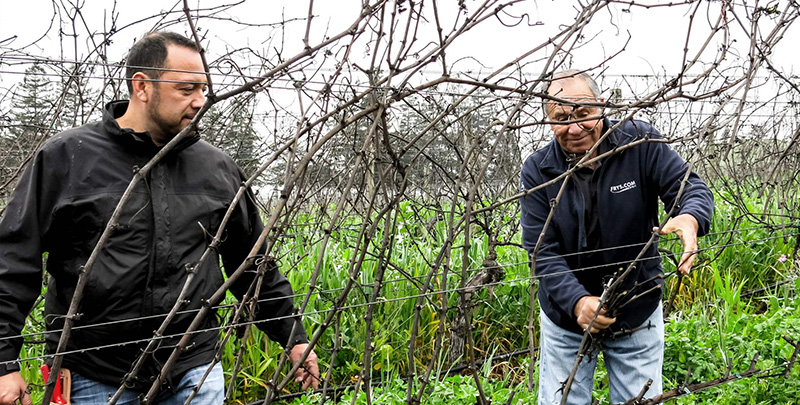
Yet another white-collar professional turned winery owner, Randy Wulff was an attorney for 20 years. After graduating from the Honors College at the University of Oregon and Hastings College of the Law, he worked as a successful trial lawyer and mediator at a law firm in San Francisco. “Even when I was one of the chief mediators during the World Trade Center property damage claims hearings arising from the tragedy of 9/11 that lasted for more than two and a half years, my wife Krys and I had always dreamed of being in the wine business,” Wulff reminisced.
Krys Wulff got her undergraduate degree at the University of San Francisco, and a Masters at Mills College in Oakland, California. She worked as an optical industry consultant for over 25 years while also raising two sons. She has devoted her energies to several philanthropic, educational, and advocacy organizations, including the Piedmont League of Women Voters, the East Bay Junior League, and EdSource, an independent, non-partisan organization that works to engage Californians on key education challenges with the goal of enhancing learning success.
Randy grew up with Krys in California’s Central Valley. “We were high school sweethearts and have been married for over 48 years,” shared Randy. “She is the heart and soul of Lobo Wines, and our success is directly related to her efforts. I can’t think of anything better than sharing our success with the person I love the most.”
As is not unusual for well-heeled San Francisco residents, the Wulffs eventually purchased a second home, in Napa Valley. “We were living in the East Bay and Napa Valley was only an hour’s drive away. Whenever we arrived there, it was like living in another world,” Randy recalled. They soon planted Chardonnay on the property, which is located in the Oak Knoll district. “When the first usable fruit came in, we sold the grapes to Randy Lewis, and he produced a wine that notched incredibly high scores. I thought to myself, this is easy, and we decided to really delve into the wine industry.”
Continuing to expand their efforts as grape growers, a few years later the Wulffs acquired a much larger vineyard about a mile from the first one, where they made substantial improvements to drainage and vine care. In 2007, they acquired a 42-acre property on Atlas Peak, on the eastern ridge of the Napa Valley. With that commitment, the couple established a winery of their own that same year, naming it Lobo Wines. Lobo is Spanish for ‘wolf,’ a play on their last name, of course. The first vintage yielded just 25 cases, but production has gradually increased to around 1,500 cases.
“We want to grow Lobo Wines carefully,” Randy explained. “Our goal is probably around 5,000 cases, and we want everything to be home grown. At this point, we crush some 100 tons of fruit, but we sell around 70 percent to other wineries. Over time, we will sell less and produce more.”
Sadly, the horrendous Atlas Peak fire of 2017 devastated the Lobo winery and the Wulffs’ home site. Undeterred, they immediately set about to rebuild the winery and residence, a project that is ongoing.
The Winemakers
Victoria Coleman Coleman, a Seattle native, began her winemaking apprenticeship at Stag’s Leap Wine Cellars as a production assistant in 1998. While there, she enrolled in a winemaking class at Napa Valley College. As part of that course, she crushed a small amount of Cabernet Sauvignon in a drum with her feet in the time-honored manner. The experience of hands-on winemaking fueled her desire to learn everything she could about it.
She began working with Mario Bazán at Bazán Cellars in 2004 as the winery’s founding winemaker. To further her formal education, she enrolled at the University of California, Davis, (incubator for thousands of winemakers) in the fall of 2006 and graduated in June 2008. She was exposed to classic, Old World winemaking immediately thereafter while working alongside Erick Tourbier at Chateau Mouton Rothschild in Bordeaux. Starting in January 2010, she gained further international experience as winemaker at Jade Valley Winery near Xian, China. She returned to Napa Valley in 2015 and began work at Lobo Wines, where her products include both the Napa Valley and Atlas Peak Cabernet Sauvignon, Pinot Noir, and a proprietary blend of Cabernet Sauvignon and Syrah named “Howl.”
Randy Lewis Lewis came to winemaking via a circuitous route. A native of Atlanta, Georgia, he was a race car driver for more than two decades, first as a Formula Three driver in Europe, where he discovered the wines there and what life as a winemaker could be like. He then raced in America in Formula 5000, Can Am, and finally Indy Cars from 1983 to 1991, competing in five Indy 500s. After retiring as a driver, he helped a friend set up a winery in Napa Valley, and then, with his wife Debbie, he established his own winery in Napa in 1992.
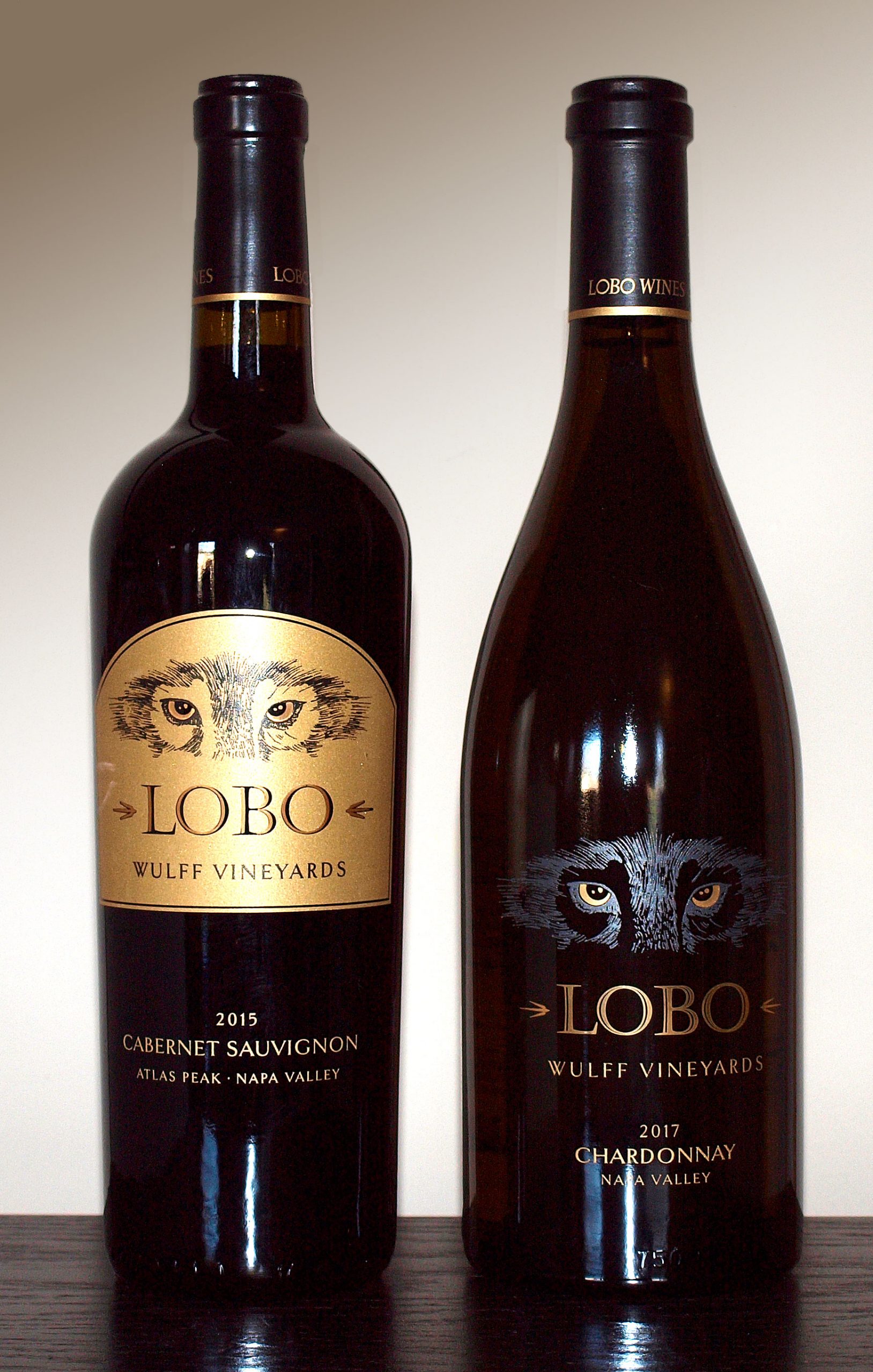
Lobo Chardonnay 2017
Made by Randy Lewis at Lewis Cellars, this 100% Chardonnay is sourced from fruit grown at the Lobo Wulff estate vineyard in Oak Knoll. It is lemon yellow in the glass, and features aromas of lemon, honeysuckle, and melon. The mouthfeel is rich and smooth, and offers flavors of lemon, grapefruit, and more melon. There is good acidity, restrained oak, and a bit of vanilla on the medium finish. ABV is 14.7% and 150 cases were produced.
Lobo Atlas Peak Cabernet Sauvignon 2015
This wine, made by Victoria Coleman, was chosen by Great Britain’s Decanter magazine in 2019 as the Top Cabernet Sauvignon in California over 197 other competitors. It was made from 100% estate grown fruit in the Atlas Peak appellation of Napa Valley, on a rocky, volcanic hillside at 1,350 feet elevation. This is a blend of 98% Cabernet Sauvignon, 1% Merlot, and 1% Petit Verdot (allegedly for “balance and complexity,” although I can’t imagine how much of that such a small percentage could contribute.) On the nose, this Cabernet Sauvignon offers aromas of dark fruit and hints of vanilla. There are ripe plum, black currant, and blackberry on the palate. These harmonize with medium, satiny tannins, nicely integrated acidity, and hint of black tea at the end. ABV is 14.4%.
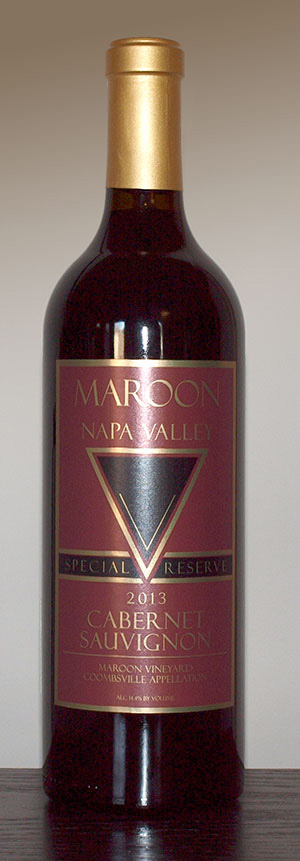
Maroon Wines Napa Valley Special Reserve Cabernet Sauvignon 2013
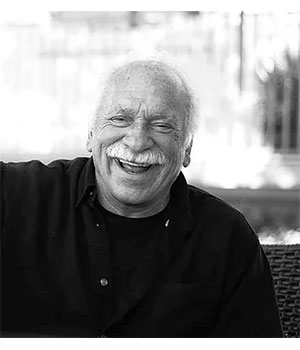
Like not a few winery owners of his generation, Paul Maroon came to the industry after a long successful career elsewhere. Of Lebanese descent, he was born in 1947 in Pennsylvania, where his father owned a produce business. His first exposure to wine came when he started as a teenager helping his uncle make wine. “It was terrible,” Maroon laughed years later.
Maroon graduated from college back east, and then migrated to California to pursue his MBA. After that, he started selling medical supplies, including pacemakers. He worked closely with hospitals and doctors, and ultimately started his own company, specializing in new types of medical devices.
In the late 1990s, he felt wine and his ancestral agricultural roots pulling him more strongly than ever, and he moved up from the San Jose Bay area to the Napa Valley. There he purchased the 37 acres that would become Maroon’s permanent home, in what is now part of the prestigious Coombsville Appellation in the Napa Valley AVA. Today, about 17 acres of this land is planted with Cabernet Sauvignon, which produce Maroon’s estate wines.
For the first ten years, Maroon was a grower only. He sold his Cabernet Sauvignon grapes to Joseph Phelps, among others, for their famous (and now quite expensive) Insignia blend. During that time, he became friends with Chris Corley, who is the second-generation winemaker for Monticello Winery. With assistance from Corley, Maroon made about two barrels of wine for himself, and eventually realized the quality that the fruit of his vineyard could achieve as a single-varietal, single-vineyard wine. He ended the Phelps contract, and the first commercial vintage of 500 cases of Maroon wines was produced in 2009 with Corley as winemaker. His philosophy is to introduce as little winemaking manipulation or intervention as possible from the vineyard to the bottle, and to focus on 100% varietal wines (no blending).
A staunch advocate of the wine industry, Maroon helped form the Save the Family Farms initiative, which aims to preserve Napa Valley’s small family vineyards so they can continue to thrive and be passed on to future generations. He was also active in the San Francisco Bay Area Chapter of the Knights of the Vine. Paul Maroon died in late 2019, but his widow Renée is committed to continuing the operation of the winery.
Maroon was a firm believer in terroir-driven wines. “Everyone in the business knows that it is the earth and the combination of drainage and minerals that make the difference,” he was once quoted as saying. “We at Maroon Vineyard are blessed to have everything we need in one particular place.”
x
Planted at an altitude of between 200 and 600 feet, Maroon’s estate vineyard in Coombsville is located in a bowl-shaped depression topped by Mt George, an extinct volcano. The grapes benefit from slower and more even ripening due to the location in the southern end of Napa Valley. Here, the fog burns off later in the day and frosts are less likely to occur. The land is composed of rocky volcanic soil and rich gravely loams, which provide both easy drainage and water access for the vines. A next-door neighbor was Robert Craig of Robert Craig Winery. Craig was Maroon’s friend and mentor, and he always insisted that Craig be given a great deal of credit for the successes of Maroon Wines.
Maroon’s total current production hovers around 10,000 cases of primarily Cabernet Sauvignon, with small lots of Chardonnay, Zinfandel, Merlot, Malbec, and Sauvignon Blanc. “This level is perfect for us, for here we can control all aspects of the wine from the beginning to the end,” Maroon often said. “If we were much bigger, this probably wouldn’t be the case.”
Maroon Napa Valley Special Reserve Cabernet Sauvignon 2013
Fruit for this Special Reserve 100% Cabernet Sauvignon originated in Maroon’s estate vineyard in the Coombsville Appellation of the Napa Valley AVA. It was aged for 24 months in all new French oak.
This wine is violet/black in color. Aromas of leather and blackberry join with dark chocolate, vanilla and a hint of espresso on the palate. The lingering finish features creamy oak tones and bracing tannins. ABV is 14.4% and 476 cases were produced.
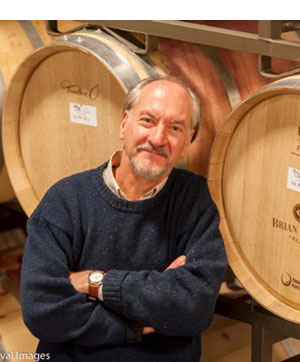
“I came into the field of wine [at a young age], not because my parents were wine drinkers, but because I was given a microscope when I was 12 years old. I heard about these things called yeast, and I wanted to see what they looked like under a microscope. I was told if you want to look at yeast you have to start a fermentation. So I picked some blackberries, fermented the wine, took a sample, and brought out my microscope — and there they were — the little yeast. I’ve been having those yeast work for me ever since.” — Brian Carter
A charming tale of a precocious young scientist, no? There was just one small problem: before he got to actually inspect the yeast, during a robust fermentation that first blackberry wine exploded in his mother’s kitchen. “There was a big stain on the ceiling for a couple of years, until it finally got painted,” Carter admitted. History hasn’t recorded whether that chore fell to Carter or someone else. Continue reading “Brian Carter Cellars”
If you don’t like fish, this is the fish recipe for you. If you do like fish, especially tuna, this is definitely the recipe for you. It was published by the great Pierre Franey (1921 – 1996) in the New York Times and Chicago Tribune in August of 1992. It may well be the greatest tuna recipe ever written. I have made it many times over the years, something I rarely do. Hell, I almost never make anything more than once.
Spicy Grilled Tuna Steaks
Serves 4
1/4 cup sesame seeds (toasted is better, but not necessary)
1 Tbls curry powder
2 tsp freshly ground black pepper
1/4 tsp anise seeds
Salt to taste
4 tuna steaks, about 1″ thick, 1-1/2 lbs. total, the fresher the better olive oil
Preheat a grill, or oven broiler. Mix sesame seeds, curry powder, black pepper, anise seeds, and salt in a small bowl.
Lightly oil tuna with olive oil. Sprinkle steaks evenly on both sides with sesame mixture, and press down so mixture adheres well to steaks. Cover and let stand for 15 to 30 minutes at room temperature.
Meanwhile, prepare Mixed Salad, below.
Place steaks on hot grill or under broiler for two minutes per side for rare. (For greater doneness, you can cook a little longer, particularly if you are grilling outside in the winter, but otherwise I don’t recommend it. Trust me on this.)
Mixed Salad with Vinaigrette
6 cups mixed salad greens (readily available preboxed, for convenience)
2 Tbls each: Dijon mustard and red wine vinegar
2 tsp minced garlic
Salt and freshly ground pepper to taste
8 Tbls olive oil
Wash and dry greens thoroughly in a salad spinner. If large, tear leaves with your hands; if you buy them in a bag or box they will probably be small enough that you can leave them whole.
Put mustard, vinegar, garlic, salt, and pepper in a large bowl. Stir well. Add oil in a steady stream, whisking constantly until well blended. Adjust vinegar to taste (I like my dressing with a little more zip).
Add greens and toss well with vinaigrette.
To serve, place dressed mixed green salad in center of plate. Cut tuna into slices on the bias and place slices on top of greens.
Since the grill is already on, if you’d like more food, this goes really well with mixed vegetable kabobs (zucchini, onion, red bell pepper, mushroom, etc). Double the vinaigrette, and use half to marinate the veggies. They will need about five minutes per side to cook, so start them before the tuna. Alternatively, a side of plain white rice would work, also.
Serve with one of these Pinot Noirs. Yes, a red, not a white. Unless it is a sparkler.
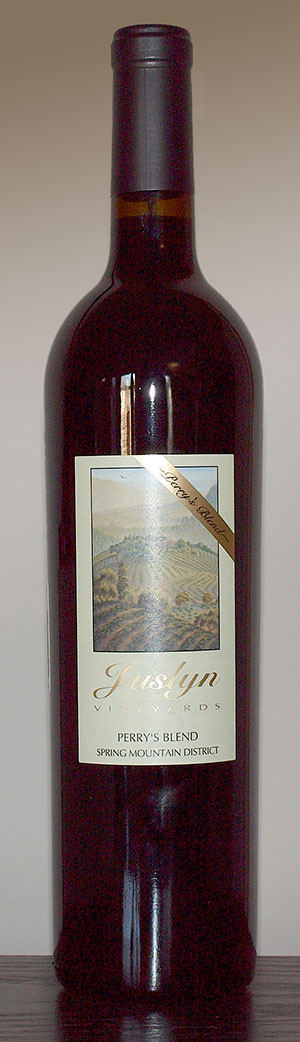
Juslyn Vineyards Perry’s Blend Click here for tasting notes.
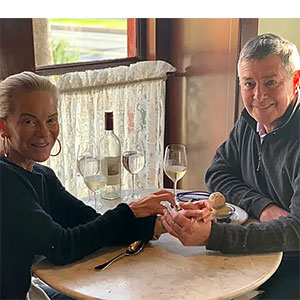
Perry and Carolyn Butler emigrated from England to California sometime during the mid-1980s. Butler was a trained chef in England, and dabbled with his wife in the emerging high-tech business there as well. It was their growing interest in technology that drew them to Silicon Valley. Once there, they purchased Global Dynamics, a struggling IT company that provided IT staffing for American Airlines in San Francisco’s Bay Area.
Once their company was well-established, the Butler’s were able to indulge in weekend trips to nearby Napa Valley. It was there that they soon developed a passion for wine and the wine country lifestyle that Napa Valley offered.
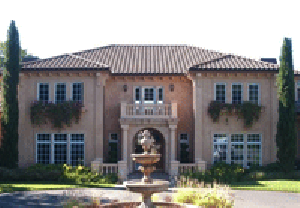
In 1997, the couple sold their quite profitable IT business and relocated to Spring Mountain. They bought a picturesque 42-acre property that was once a small parcel of the 540 acres that California wine pioneer Charles Krug originally acquired as the dowry of Caroline Bale, who he married in 1860. The Butlers set about having a villa and gardens built, along with a winery facility, which Butler named Juslyn, for daughter Justine and wife Carolyn.
The vineyard on the property was replanted to a field blend of 90% Cabernet Sauvignon plus small amounts of Merlot, Cabernet Franc and Petit Verdot, reflecting the English preference for those Bordeaux blends they call Claret.
Early on, the Butlers became friends with legendary wine critic Robert Parker, who utilized their villa for many of his Napa Valley wine tasting and rating sessions. Parker was a big fan of Juslyn Vineyards’ early wines, and awarded them high ratings on several occasions. I’m sure having access to the villa didn’t influence his assessments in any way.
Without any real experience in the wine industry, the Butlers have relied on the work of their grape and wine specialists.
For the vines, Juslyn takes advice from the Renteria Vineyard management team, led by Salvador and Oscar Renteria. This father-son duo has produced grapes for many prestigious Napa Valley wineries.
x
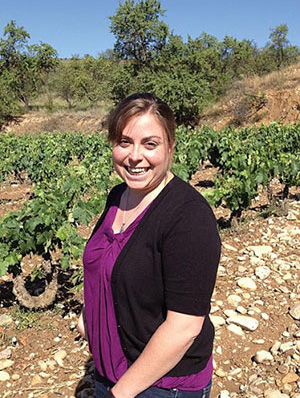
The winemaker is Angelina Mondavi. She began her career at the age of 10 by assisting the lab manager at Charles Krug. (She had an in. Her grandfather Peter Mondavi (who was Robert Mondavi’s brother) owned the place.) After graduating from Villanova University, majoring in chemistry, she worked lab and harvest positions in Napa Valley and Barossa Valley. While in Australia, she earned a Master’s Degree in Oenology from the University of Adelaide. Following graduation, she gained experience with stints at Pine Ridge Vineyards and One True Vine where she was responsible for Hundred Acre, Cherry Pie, and Layer Cake to name a few.
Juslyn’s estate vineyard consists of some eight acres on rocky hillside soils with excellent drainage, where the vines are now over 20 years old. The winery is able to annually extract some three tons of fruit per acre.
Juslyn Vineyards Perry’s Blend 2016
The name “Perry’s Blend” (the wine was originally called Proprietary Red) was conferred by Robert Parker during one of his tasting sessions, and the Butlers took to the designation.
Perry’s is a blend of 66% Cabernet Sauvignon, 22% Cabernet Franc, 7% Merlot, and 5% Petit Verdot, entirely from the Juslyn Spring Mountain Estate. The wine was aged for 24 months in French oak, 85% of which was new.
It is a fairly transparent but nonetheless dark purple The nose offers plenty of dark fruit aromas with a bit of cedar. These continue on the palate, especially black cherry, black currant, and black raspberry, with the addition of cocoa. There is medium acidity, paired with zoomin’ and boomin’ tannins. To be clear, I like my reds young, and I’m not afraid of tannins. But to temper those here, the wine should be decanted for a couple of hours. And really, another three to five years of bottle aging would be worthwhile. If you have the patience, the wine should drink well at least through 2030. As another reviewer noted, “An odd but awesome juxtaposition of a young California Cab mated with a first production old-world Bordeaux.” ABV is 14.5% and 480 cases were produced.

 Back to
 both attended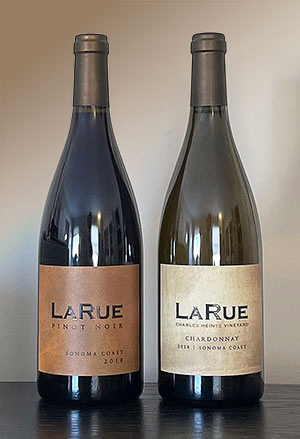
 learned to drive a tractor before she could drive a car. Following high school, she pursued her higher education in the Agricultural Business program at
  Wilson launched her own winery, LaRue Wines, as well. It is named in honor of her great-grandmother, Veona LaRue Newell, who Wilson has described as inspirational and unique; others have used the adjectives bold, independent, and feisty. Regardless, there was a strong bond between the two. The winery is very much a boutique operation, focusing on small lots of Pinot Noir and Chardonnay, with total production limited to just 500 cases. Drawing on the cool conditions and remote coastal vineyards of the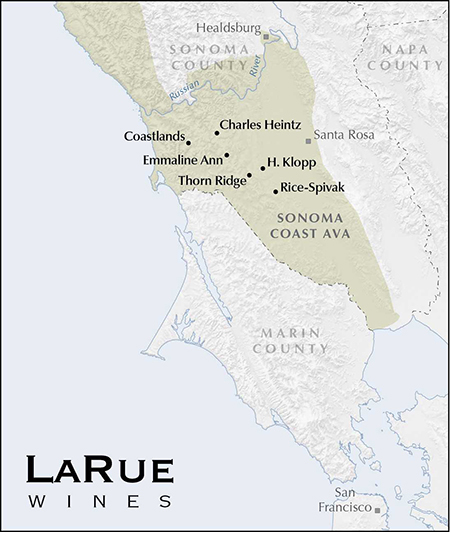
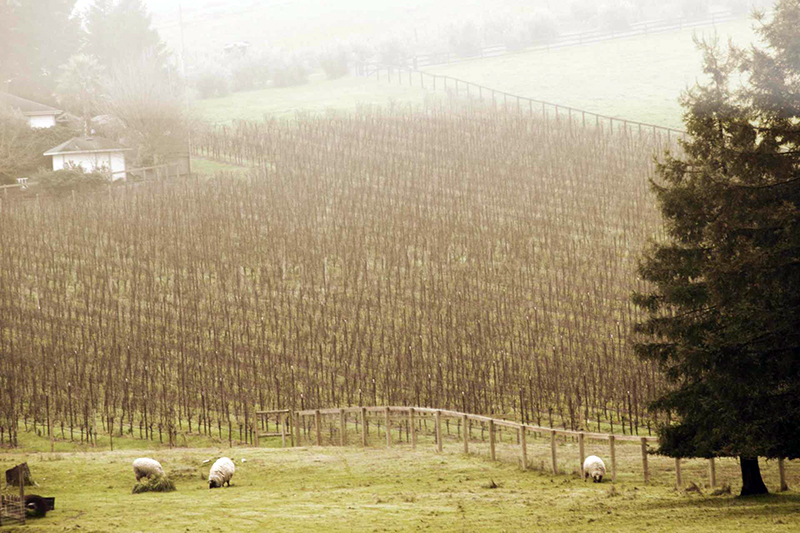
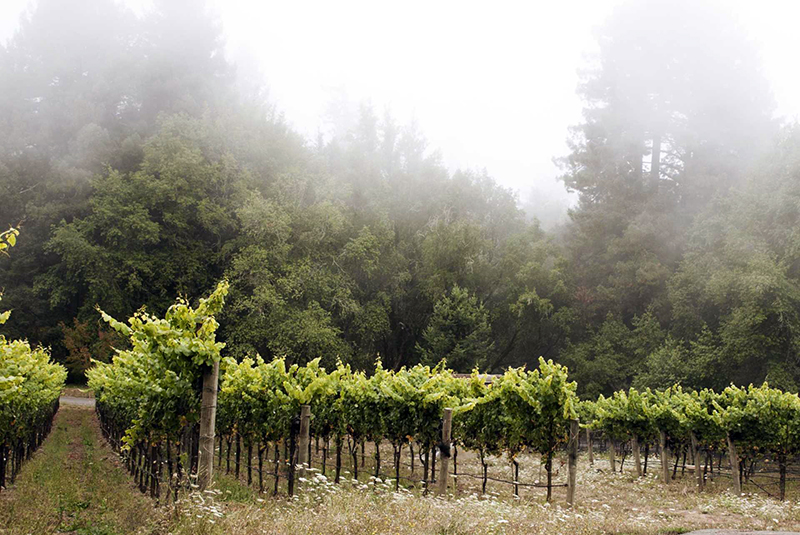 Emmaline Ann is a three-acre vineyard planted in 2001 by owners Wayne and Nancy Hunnicutt, and is named after Nancy’s grandmother. Like the Spivaks, Wilson first met the Hunnicutts in 2007 during her time at Flowers Winery. All of LaRue’s tastings are staged here, as well as the annual LaRue Wines Summer BBQ. This small vineyard faces southwest toward the Pacific Ocean and is frequently enveloped in fog.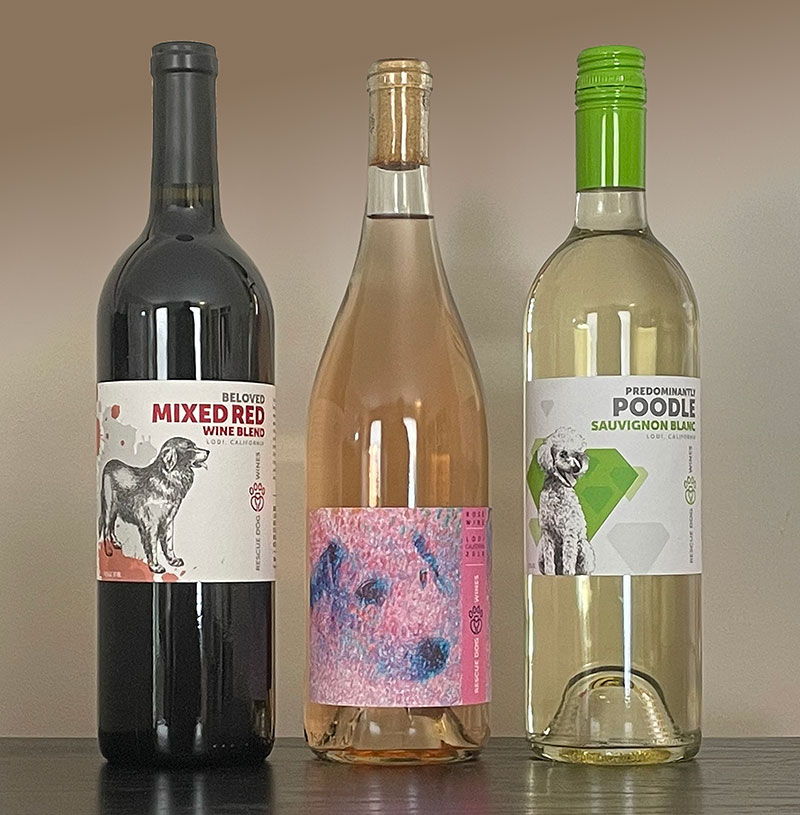
 was Steve Reynolds, who Martin met by chance at a wine dinner in McAllen, Texas. Martin was particularly interested in one of Reynold’s many ongoing projects, Thirteen Appellations, which began in 2002 when 100 cases were made. The idea behind the label was to create a wine with fruit from all of Napa’s then extant sub-appellations. The thinking was that, “each wine taken individually has its own unique colors, aromas, and flavors, and blending them results in an arguably richer, perhaps more complex wine.” The wines from each sub-appellation are fermented and aged separately – all coming together when the final blend is made. Ultimately Martin acquired Thirteen Appellations, a brand that evolved into Sixteen Appellations. As additional sub-appellations were approved in Napa, further vintages were called Fourteen and then Fifteen Appellations. With the Coombsville sub-appellation finally being added in 2011, the wine is now Sixteen Appellations
 became Italics’ winemaker. He was born in Sierra Leone, West Africa, and originally studied to become a doctor, enrolling in UC Davis’ Pre-Med program at just 15 years old. However, he soon realized that he tended to get woozy at the sight of blood, a definite problem for a doctor. Abandoning that career path, he transferred to the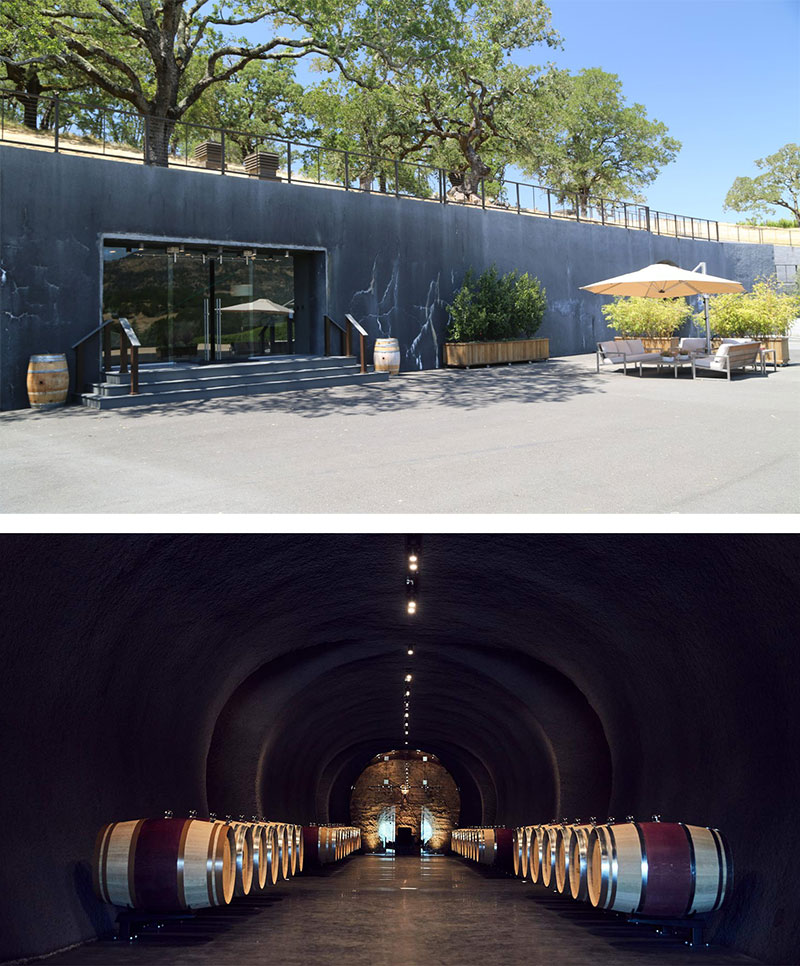
 and I had always dreamed of being in the wine business,” Wulff reminisced.

 There he purchased the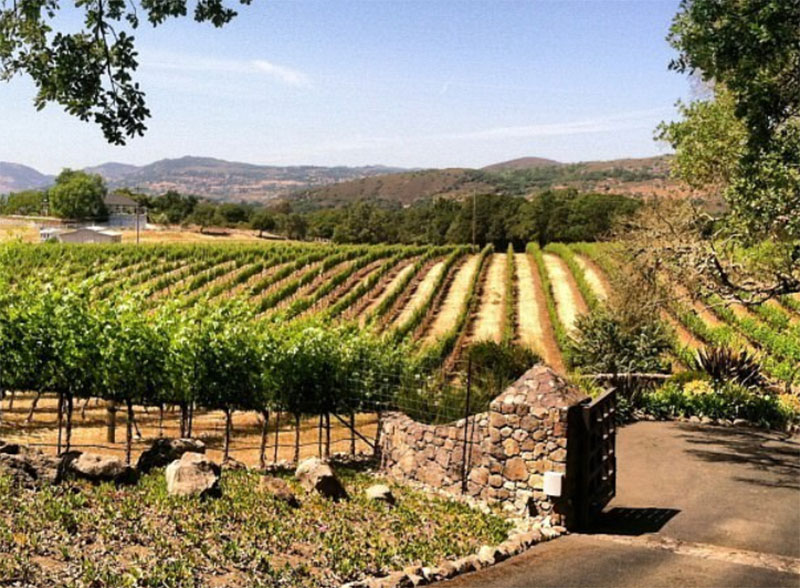

 of wine [at a young age], not because my parents were wine drinkers, but because I was given a microscope when I was 12 years old. I heard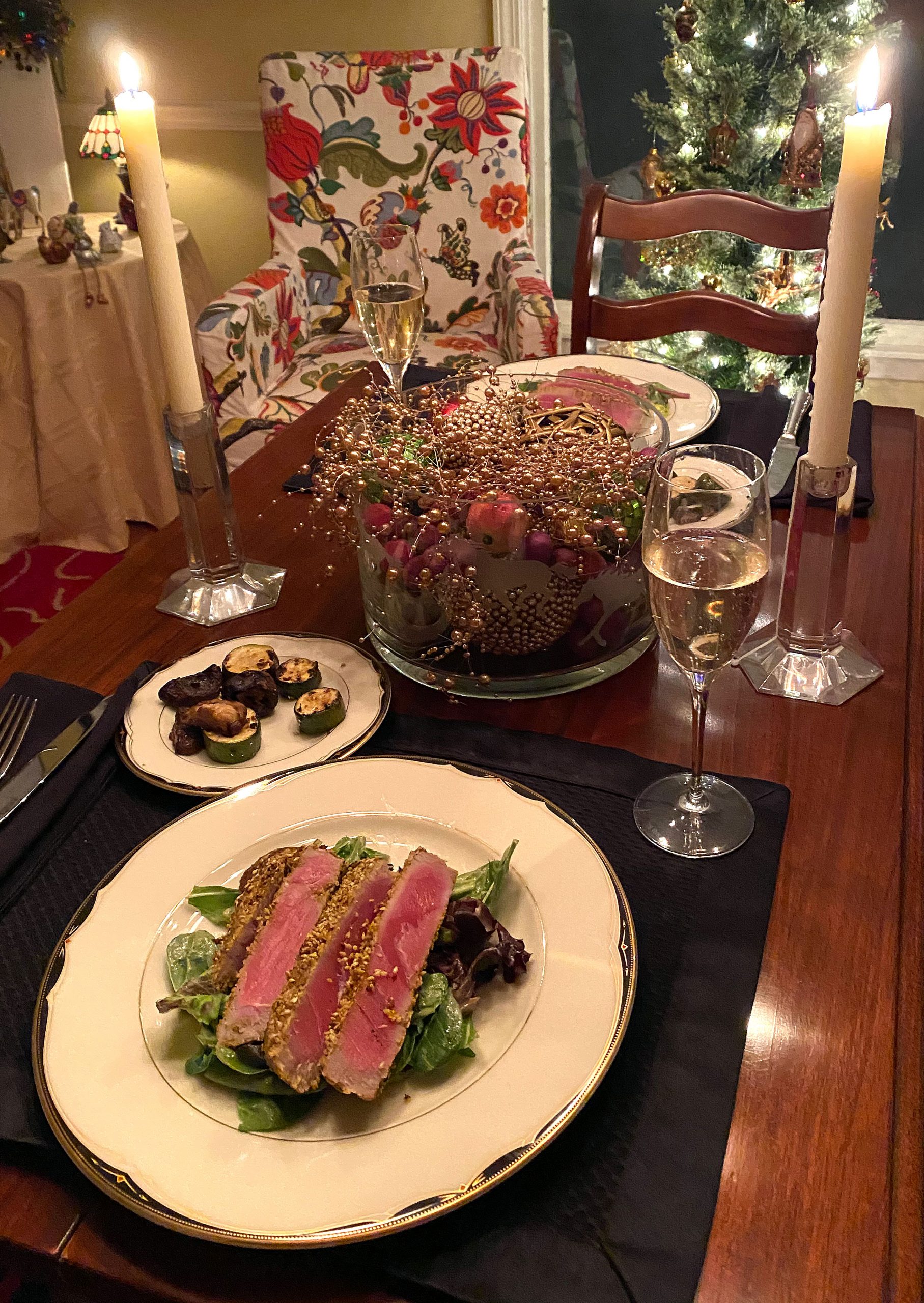
 Mondavi. She began her career at the age of 10 by assisting the lab manager at