The Story of Saké

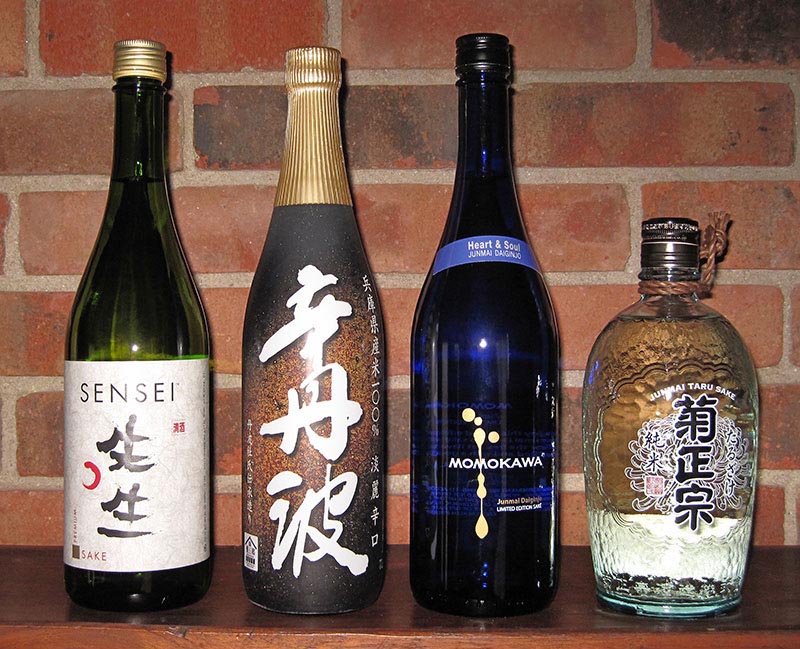
L to R: Sensei, Karatamba, Momokawa Heart and Soul, Kiku-Masamune Taru.

What is Saké?

Let’s be clear about this right away: Saké, the national alcoholic beverage of Japan, is often called rice wine, but this is a misnomer.  While it is a beverage made by fermentation, the production process more closely resembles that of beer, and it is made from grain (rice, of course), not fruit.  To make saké, the starch of freshly steamed glutinous rice is converted to sugar and then fermented to alcohol.  Once fermented, the liquid is filtered and usually pasteurized.  Sakés can range from dry to sweet, but even the driest retain a hint of sweetness.

History
Saké is an ancient drink, so much so that its origin has been lost in the mists of time. Ironically, the earliest reference to the use of alcohol in Japan is recorded in a third-century Chinese text, the Book of Wei in the Records of the Three Kingdoms which wrote of Japanese party habits.  The Kojiki, Japan’s first written history, compiled in 712, is the earliest to mention alcoholic beverages in Japanese itself. Historians place the probable origin of true saké (which is made from rice, water, yeast, and kōji mold (aspergillus oryzae) in the Nara period (710–794).

Saké  production was a government monopoly until the 10th century, when temples and shrines began to brew saké  as an essential part of religious ceremonies, evolving into the main centers of production for the next 500 years. That being said, the saké of antiquity was not the same as the clear beverage we know today.  It was reserved for nobles and priests, and was thick and milky or yellow in color, with a low alcohol content.

In the 16th century, the technique of distillation was introduced into the Kyushu district from Ryukyu. This led to shōchū (literally, fiery spirits), a beverage typically distilled from rice (kome), barley (mugi), sweet potatoes (satsuma-imo), buckwheat (soba), or brown sugar (kokutō), though it is sometimes produced from other ingredients such as chestnut, sesame seeds, potatoes, or even carrots.  It usually contains 25% alcohol by volume, and is most often used as a beverage outside of meals.

During the Meiji Restoration, laws were written that allowed anybody with the money and know-how to construct and operate their own sake breweries. Around 30,000 breweries sprang up around the country. As time passed, the government levied increasing taxes on the saké industry and the number of breweries eventually dwindled to 8,000.

Once  the 20th century arrived, saké-brewing technology advanced beyond the centuries-old traditions. The government opened a saké-brewing research institute in 1904, and in 1907 the first government-run saké-tasting competition was held. Yeast strains specifically selected for use in brewing were isolated, and enamel-coated steel tanks came into use, which were easier to clean than the traditional wooden barrels, lasted forever, and were devoid of bacterial problems.

During the Russo-Japanese War in 1904–1905, the government banned the home brewing of saké. At the time, saké comprised 30% of Japan’s tax revenue. Home-brewed saké was not taxed, so the thinking was that by banning it sales and tax revenue would increase. This ban ended home-brewed saké, and the law remains in effect even today.

World War II brought rice shortages, and the saké-brewing industry was hampered as the government discouraged the use of this essential food for brewing.  Postwar, breweries slowly recovered, and the quality of saké gradually increased. Even so, beer, wine, and spirits became increasingly popular in Japan, and in the 1960s beer consumption surpassed saké for the first time.

While the rest of the world may be drinking more saké and the quality of saké has been increasing, production in Japan has been declining since the mid-1970s. Predictably, the number of saké breweries is also declining; there were 3,229 Japanese breweries nationwide in 1975, but the number had fallen to 1,845 by 2007.
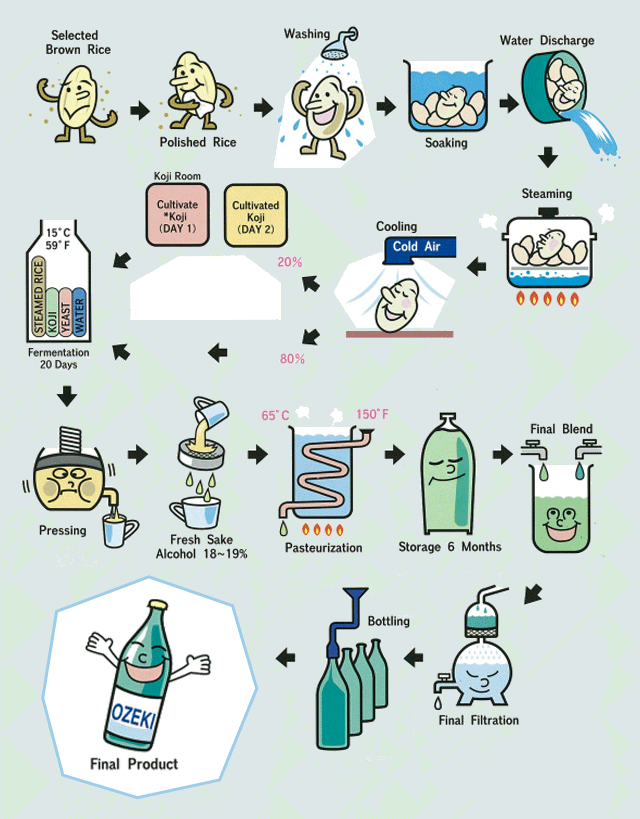
Courtesy of Ozeke Saké

Ingredients
As noted earlier, saké is made from just four ingredients: rice, water, koji, and yeast.  With so few components, the quality of each is crucial.  Akita is known for its high-quality rice.  Some of the best water is found In Nada near Kobe, where rivers course through granite canyons, or Fushimi with its pure spring water.

Although saké breweries often pride themselves on the quality of the rice and local spring water that they use, unlike wine this does not translate into terroir, as the brewing process effectively cooks out any such nuances.

Rice Polishing, Washing, and Soaking
The rice used in saké is called “saka mai” in Japanese, and it is not the same type of rice as food rice.  The grains are larger, contain more starch, and have less protein and fat.  The rice is first milled, aka “polished,” to remove the outer layer that could cause off-flavors in the finished product.  Typically, this milling will be 25 to 70%, but I have heard of exotic sakés with 99% starch removal!  Not surprisingly, the more the rice is milled, the more expensive the saké becomes.  As an example, it takes 800 grams (28 ounces) of polished rice to make 720 mL (the size most like a wine bottle) of Ginjo saké.  (Ginjo designates that at least 40% of the rice has been polished away.)

After polishing, the rice is soaked, either by machine for simple sakés, or by hand for higher-quality ones.  Next the rice is steamed.  Unlike rice for the dinner table, which is typically simmered in hot water either in a pot or automatic rice cooker, saké rice is prepared by steaming, which allows the rice to maintain a firm outer texture and soft center, thereby helping the brewing process.  It is this heating step that more closely aligns saké with beer, which also requires heating, rather than wine, which must not be heated.

Rice Cooling
The rice must be cooled after it has been steamed to the desired degree.  Large breweries use a refrigerated conveyor system to lower the temperature, while craft brewers rely on traditional methods of tossing and kneading to adjust the temperature, giving the brewmaster more precise control.

Koji Making
The heart of a saké brewery is its “koji muro”, the cedar-lined room in which koji is made.  It is kept at 86 to 90 degrees F. (30 to 32 degrees C.), making it much like a sauna, so you have to enjoy warm weather to work there!  Cedar has natural anti-bacterial resins which help to create a clean environment conducive to efficient koji production.

Koji requires 48 hours to prepare, during which the rice is  inoculated with koji mold spores, and carefully kneaded in controlled temperature and humidity.  The mold converts the starch in the steamed rice to glucose, and microorganisms multiply to create a snow-white fuzz with a strong, sweet fragrance. The finished koji will be about 20 to 35% of the rice used in the production of the saké, depending on the recipe.

Fermentation
Once the koji is ready, it is mixed into chilled spring water and yeast in a fermentation tank, and then the steamed rice is added.  The tank is filled gradually, in three stages over a four-day period.  This allows the yeast to retain its strength to keep consuming sugar and producing alcohol throughout the fermentation period, which typically continues for 21 days.  The temperature is maintained at 46 to 64 degrees F. (8 to 18 degrees C.).  The brew, called “moromi,” is stirred on a daily basis to ensure consistent fermentation.  Each day, tests are performed to check specific gravity, acidity, and alcohol content.

Pressing And Racking
Once the moromi reaches maturity as determined by the brewmaster, in a craft brewery it is drained into cloth bags which are placed in the traditional “fune” press which works with gravity and hand-applied mechanical pressure. The first run of saké starts emerging from a spout at one end of the press under the natural weight of the filled bags, resulting in a light-and-fruity first-pressed sake known “arabashiri.”

In a large commercial brewery the moromi is machine-pumped into a large accordion like hydraulic press called a “yabuta.”  Activated charcoal is usually added to the pressed saké  and then filtered out.

Bottling
Once pressed and racked the saké may either be bottled immediately or temporarily tank-stored at close to 32 degrees F. (0 degrees C,). “Go” is the measurement unit traditionally for saké. One go is about 180 mL. Saké bottle sizes are also based on these units, with the most common sizes being: 180 mL (1 go; about 6 ounces); 360 ml (2 go); 720 mL (4 go); and 1800 mL (10 go, the magnum-like bottle you often see in izakayas, informal Japanese bars that serve alcoholic drinks and snacks. The glass may be either green, brown, or clear.   After bottling, most sakés are pasteurized.

Storage and Consumption
The entire saké production process takes about 45 to 60 days from start to finish.  There are no vintage years, and the product is best consumed within the year it is bottled, as aging does not enhance its flavor in any way, and indeed may degrade it.   Once a bottle is opened, it should be refrigerated and drunk fairly quickly.

Grades of Saké
Saké is divided into two main categories.  Jozo-shu is made with added alcohol, and junmai-shu is not.

Jozo-shu
Futsu-shu is ordinary table saké and the most widely consumed grade.  It is best served warm, and is suitable for use in cooking.
Honjozo-shu is made with better-quality rice, and a higher proportion of the alcohol is produced during fermentation rather than being added.
Honjozo-ginjoshu and honjozo-dai-ginjoshu are the highest grades of alcohol-added saké.  They are made with more care from top-quality rice.  They should be served cold.

Junmai-shu
Junmai-shu is similar to honjozo-shu, but relies on all of its alcohol from the fermentation.  It is more likely than jozo-shu to be found in the U.S., and can be served warm (not hot) or cold.
Junmai-ginjoshu and Junmai-daiginjoshu are the highest grades of junmai-shu.  Like the highest grades of jozo-shu, they are made with more care from top-quality rice.  50 to 70% of the rice is polished away, respectively.  They should be served cold.

Serving Saké
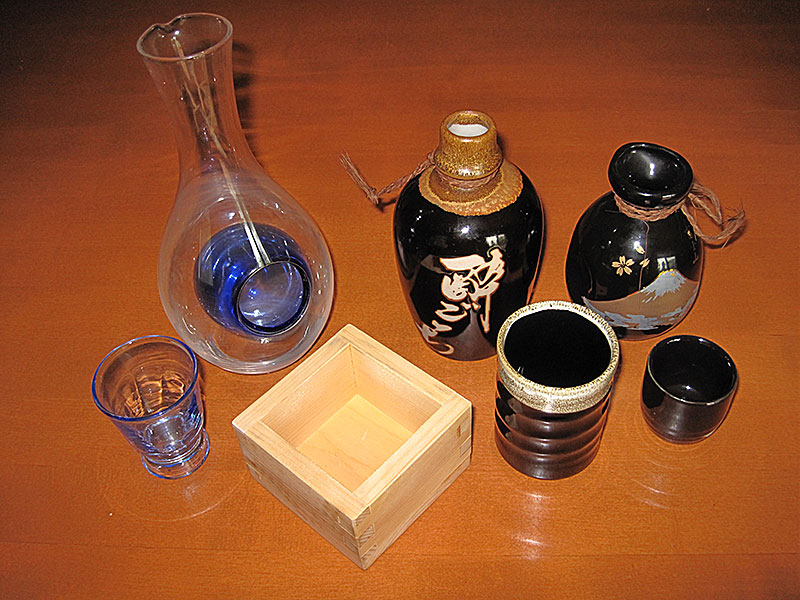
L to R: glass carafe and cup, masu, and two tokkuri with matching ochoko.

The glass carafe above is used for serving cold saké.  The blue cavity is filled with ice to keep the saké cool.  The wooden box is a “masu.”  In addition to being a drinking vessel, it was also traditionally used for measuring  rice, appropriately.  In traditional restaurant service, the masu is placed on a small saucer and filled until the saké overflows, thus ensuring an honest pour.  Some people, particularly native Japanese, will add a small pinch of salt to the corner of the masu before drinking, but I don’t recommend doing so.

In Japan, the process of heating saké is called “okan suru” and the resulting warm saké is called “kanzake.”  The ceramic pots used for the heating are “tokkuri,” and the accompanying cups are “ochoko.”  These are usually sold as sets, and are available in a very wide variety of styles.  And, “warm” is the operative word here.  Most heated sakés, both at home and in restaurants here in the U.S., are made too hot.  Warm saké  should be about 108 degrees F. (42 degrees C.).  If you like it a bit hotter, the limit is around 122 degrees F. (50 degrees C.).  Heating releases saké’s bright rice aroma, and causes the alcohol to be quickly absorbed into the blood.

In addition to it being a beverage, saké is also used as one of the principal seasonings in Japanese cooking, the other three being dashi stock, fermented bean paste (miso), and soy sauce.  Saké acts as a food tenderizer due to the amino acids it contains.  It also can suppress saltiness, eliminate fishy tastes, and take away strong odors.  It is used sparingly in cooking, and as with wine, only use saké that you would drink on its own.

An important gauge of saké  is the SMV (Saké Meter Value).  This measures the density of saké relative to water, and is the method for determining the dryness or sweetness of saké. The higher the SMV, the drier the saké. The range is -15 to +15.

Back to blog posts: winervana.com/blog/
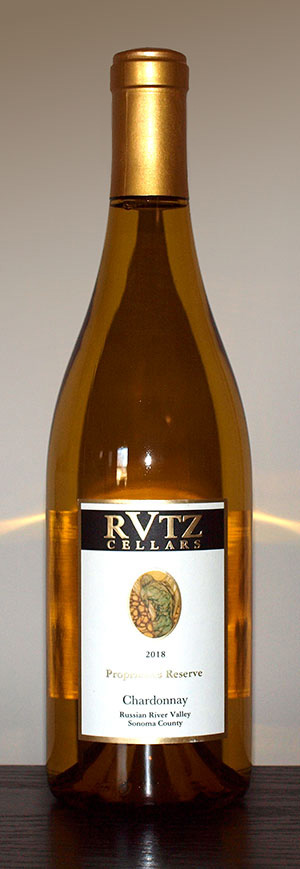
Rütz Chardonnay

Rütz Proprietor's Reserve Chardonnay 2018
Rütz Proprietor’s Reserve Chardonnay 2018. Click here for tasting notes.

Rütz Proprietor’s Reserve Chardonnay 2018

Keith Rütz’s first career track was  in the fashion industry.  He was the proprietor of two trendy clothing boutiques located near the UC Berkeley campus.  To search out the latest styles, he frequently travelled  to both London and Paris. It was in France where he began to develop his love of Burgundy and interest in wine generally.

This growing interest was also informed by Rütz’s ancestral roots, which go back six generations to his great great grandfather, Fernand Lebegue, who grew up in Aigne, in France’s Languedoc region.  There he worked as a cooper, fashioning barrels from the Vosges, Nevers, Allier, and Troncais forests, all famous sources for top-quality barrels used in wine production.

After graduating from UC Berkely, Rütz spent several years working in the fashion industry, eventually starting his own business in 1982 that produced belts for such icons as Kenneth Cole and Anne Klein.

Due to the demands of ever-changing fashion, Rütz traveled frequently, visiting Asia and South America five times each year, Europe (and France in particular) another three times a year, and an annual pilgrimage to New York for the beginning of the fashion season.

“It finally became very exhausting,” Rütz recalled. “I led what you would call a completely hectic existence. The fashion industry is one of getting to the top and staying there. There is little respite.”

Although during this period Rütz’s life was quite frantic, in 1992 he carved  out enough free time to start Rütz Cellars in the Russian River Valley, where, in addition to being the owner, he was also the winemaker, focusing on California Pinot Noir and Chardonnay in the tradition of his favorite Burgundian wines. From the beginning, his stated goal was “to make the finest small-batch wines possible that would stand up to those made by the top French producers.”

“I had been able to combine the fashion and winery aspects of my businesses quite easily,” Rütz noted, “whenever I traveled to Europe for a fashion event I was able to tote some wines and get people interested in my products. They found my approach quite novel and that was all right by me. When I finally realized that we were represented in twelve countries and just about every major market in the United States, I knew I had to do something about it.”

That “something” was to leave the world of fashion behind and focus solely on Rütz Cellars.  “I have always believed that quality will dictate the size of any winery,” he shared. “What I want to do at this point is produce the very finest wine I am capable of producing. I am also a firm believer in not rushing the process, so I imagine what I envision could take quite some time.”

In 2020, Rütz Cellars expanded into the Chalk Hill appellation for Cabernet Sauvignon production, as well as Napa Valley in the Rutherford AVA working with the Morisoli Vineyard.  Rütz brought on winemaker Mike Trujillo to oversee the production of that varietal under the Domaine Rütz label.

The Russian River Valley AVA

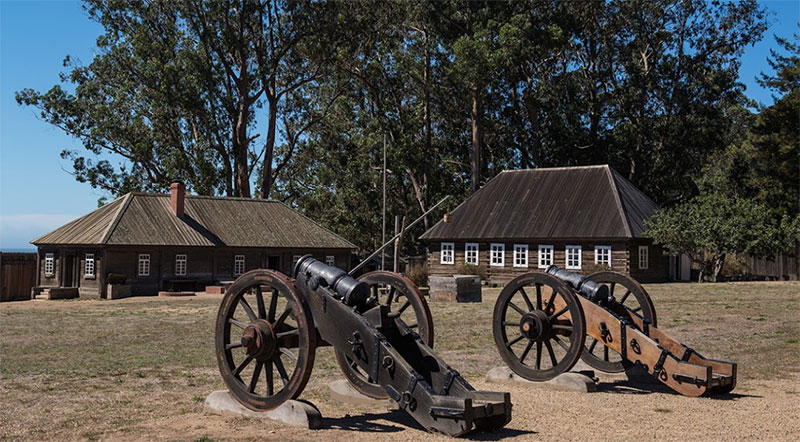
The Russian River Valley got its name when Russian settlers arrived along the Sonoma Coast at historic Fort Ross. There, they found that the fertile soils of the area were excellent for farming in general and grape-growing in particular.

Fort Ross.  Photo: Harald Padeborn

This AVA is best-known for Pinot Noir and Chardonnay, The region earned AVA status in 1983, and comprises 15,000 vineyard acres and 70 wineries.  Rütz Cellars sources fruit from such respected vineyards as Dutton Ranch, Martinelli , and Bacigalupi.

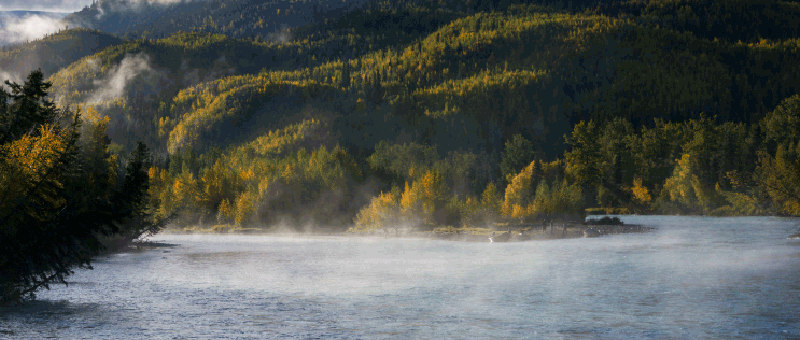
In the growing season, warm daytime temperatures plummet when fog regularly intrudes from the Petaluma Gap to the south, and the Russian River to the west.  In the late afternoon, a fog bank can often be seen hovering above the appellation’s border in the hills west of Sebastopol.

Rütz Proprietor’s Reserve Chardonnay 2018

This is 100% Chardonnay, all sourced from the Russian River Valley. While it was  aged in French Allier and Troncais oak, all of it must have been previously used, as the wood is barely noticeable.  It is the typical pale gold, with moderate aromatics of citrus and a hint of stone fruit like golden apple and pears.  Grapefruit and limestone dominate on the refreshing palate.  There is plenty of supporting acidity, and just a bit of bitterness at the end. 950 cases were produced, and the alcohol is 13.9%.

Back to blog posts: winervana.com/blog/
 

How To Learn About Wine

How To Learn About Wine

OK,  if you’re reading this I have to assume you enjoy wine, but don’t know much about it, and would like to become more knowledgeable.   In that case, you are the very person that Winervana is intended for.  So, how can you learn more about wine?

First, drink more wine!  Now, this isn’t a call for overconsumption, but rather for broadening your wine horizons.  If you gravitate towards Cabernet Sauvignon, try some Merlots.  If you like Chardonnay, try Pinot Grigio.  If you mostly drink wines from the U.S., sample some from Europe.   At a more basic level, if you usually drinks reds, include some whites, or the other way around.  And definitely dive into some Rosés!  You get the idea.

Rely on wine professionals.  These can include salespersons at your local wine shop as well as sommeliers at high-end restaurants.  Don’t be intimidated that these people know more about wine than you do.  Of course they do, that’s their job.  Their job is also to sell you something you might like rather than make you feel ignorant.  (If any of these people does that, immediately take your business elsewhere.)  Feel free to provide as much information as possible, like “I don’t like sweet wine.” “I only drink sweet wine.” “I prefer wines from Hungary.” (Hey, it could happen.) “I like the idea of organic wines, but can’t seem to find any.”
I myself am not a particular fan of Rieslings.  Before I pretty much gave up on them, I told the seller at a local wine shop that I kept hearing about how versatile and food-friendly Rieslings were, and I really wanted to find one I could embrace.  It would need to have only a little spiciness or floweriness.  It would need to be bone dry. It would need to cost about 20 bucks.  He suggested a wine from Sonoma, which I sort of enjoyed, but didn’t make me a convert.  (Although this one just about did.)  So, guidance from a pro won’t always ensure success, but it will certainly increase the odds in your favor.

And, never, never feel embarrassed about price.  Any time you are dealing with a wine seller, don’t hesitate to tell them, “I don’t want to go above X dollars for this purchase.”  Again, if the seller can’t respect that, go elsewhere.

Host a wine tasting party.   Invite six to eight friends for the party.  Each person should bring a bottle of wine made from the same variety, such as Syrah, and all the bottles should be roughly in the same price range, which you can specify in the invitation, like $20 to $25. (If you have a wealthy friend, it can be amusing to have that person bring a “ringer,” a bottle that costs four or five times what was called for in the invitation.  This is a good way to reveal that price and quality are not necessarily in lock step.)  When people arrive, you should wrap the bottles in individual brown paper sacks or in aluminum foil with just the neck exposed, write a number on each one with permanent marker, and pull the cork. Sit down at a comfortable location, give everyone a piece of paper, a pen, a wine glass, a glass of water, perhaps some bread sticks, and start tasting the wines one at a time.  I suggest going with pours of no more than one or two ounces for the tasting session, much like you would get at a winery’s tasting room.  Wine left over can be consumed as people socialize afterwards.

Follow the six esses: see the color of the wine, swirl it in your glass, smell it, sip a little, swish it around in your mouth, and then swallow or spit. (Spitting is how professionals can taste dozens of wines at a time and remain lucid.  All well and good, but it is unlikely to happen at a home party, where the point is to have fun as well as learn about wine.)  Write down your impressions.  Taste through all the wines, then talk about them as a group and hear what people liked and didn’t like. Once you’ve tasted all the wines, take them out of their wrapping one at a time, and next to the notes you made about that wine, write down the vintage year, the winery, where it was made, and how much the bottle cost. If you hold on to these notes, they can be the foundation of your wine education, a growing ability to remember what style of wine you like, along with what wineries you think make good wine. With any luck, your guests will all host parties of their own.  That would give everyone a chance to try 36 to 64 different wines!

Consider a wine club.  Here are some examples:

https://www.firstleaf.club/

https://wineinsiders.com/

https://www.winc.com/

https://www.wsjwine.com/

https://www.goldmedalwineclub.com/

Nearly all of these clubs offer a first case at a loss-leader price, with the wines often costing about $10 per bottle.  After that, they want to ship you a case of wine on a regular basis, usually quarterly.  I have tried a number of these clubs., but, I am no longer active with any of them.  I still recommend that you give a few a try, though.  You will be exposed to wines and producers you never heard of, from all around the world.  I think the best plan is to buy that first case, try the wines, and then cancel and move on to another club.  If you do this, say, once every three months for a year, you will have tried 48 new wines and expanded your palate for the better.  You will like some wines more than others, which is the whole point, and you might even get lucky and discover one you love.

Almost every winery has a club of their own, as well.  These usually ship two or three bottles on a monthly or quarterly basis.  But, I suggest you hold off on these until you have focused your tastes on what you really like.  I myself have been a member of Cline, Clos Pegase, Keenan, and Truchard for years.

I was also a long-time member of V. Sattui, until the owner, Daryl, aka “Dario,” drove me away by his arrogant attitude.  I won’t bore you with the details, but it was unfortunate because the wines are quite good and only available directly from the winery.  However, I have no interest in supporting a producer who doesn’t care about his customers, or one who won’t respect your intelligence or your budget, and neither should you.

There are plenty of wine courses, catering to every level.  As a way to increase your wine knowledge, these can range from easy and nearly effortless, to a real commitment of both time and money.  It all depends on what suits you.  Here are just a few:
Wine Folly

World of Wine: From Grape to Glass

Introduction to Wine and Winemaking from U. C. Davis

The Great Courses

And, there are thousands of wine-related videos on YouTube.

Finally, there is self-education through reading.  There is a wealth of resources both in print and online, such as right here at winervana.com.  One of the books I rely on is The New Wine Lover’s Companion by Ron Herbst.  Jon Bonné’s The New Wine Rules is great for demystification.  Hugh Johnson and Jancis Robinson’s The World Atlas of Wine is just that, a comprehensive overview of wine places, terroir if you will.  Kevin Zraly’s Windows on the World Complete Wine Course is highly regarded.  And Robert Parker’s Wine Buyer’s Guide, although definitive, is like drinking from a fire hose.  (Parker retired in 2019, so his seventh edition from 2008 is likely to be the last.)

There are magazine’s too, of course, such as Wine Spectator, Wine Enthusiast, Decanter, and Imbibe.  But frankly, these can be overwhelming for the casual wine drinker, especially the first two.  I read them occasionally, but don’t subscribe, and, predictably, find their numerical rating systems capricious and rather unhelpful.

Drink more wine!

Back to blog posts: winervana.com/blog/


Sustainable, Organic, and Biodynamic Wine

These days, wine drinkers are increasingly seeing the words sustainable, organic, and biodynamic on wine bottles and in wine producers promotional materials.  Stewardship of the land and the lack of chemicals sound appealing, and who doesn’t like something that is dynamic?  But what, really, do these terms mean?  In fact, they are not just amorphous “feel good” terms, but do have specific definitions as well as institutional certifications to go along with them.
Note: These criteria and certifications only specifically apply to wines made in the United States.  Other nations may or may not have similar programs.

Sustainable

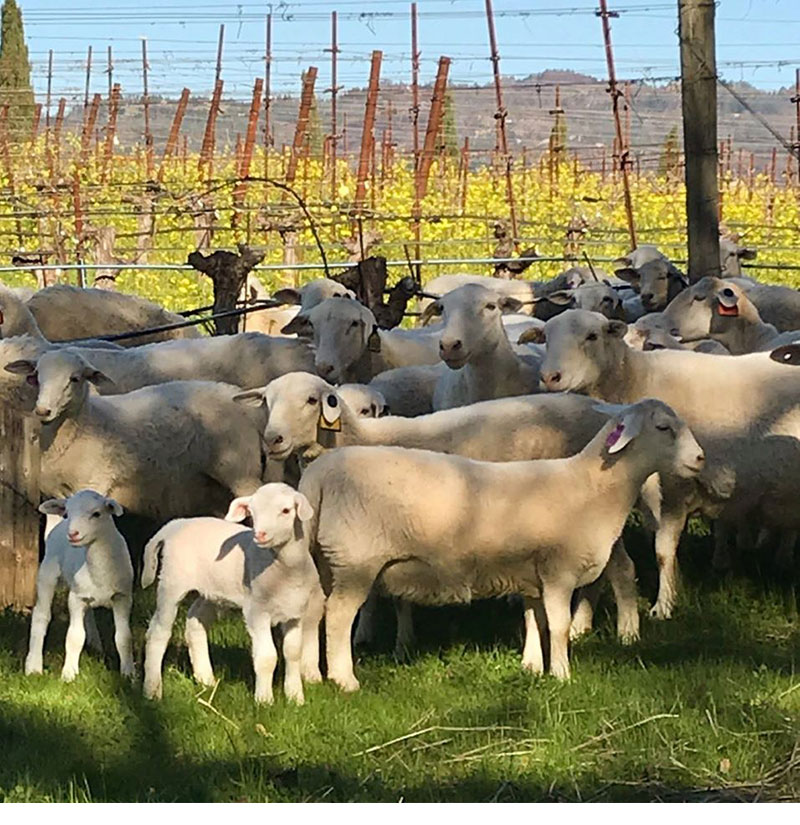
When a wine is termed sustainable, it means the winery engages in eco-friendly practices such as using drip irrigation or dry farming; limiting or eliminating chemical waste and the use of pesticides; replanting crops or trees to replace those harvested for production; reducing the winery’s carbon footprint; using cover crops between vineyard rows  to improve soil health; prevent erosion, control vine vigor, discourage weeds, and promote the sustainable health of the vineyard; deploying beneficial insects to control pests whenever possible; recycling packaging; taking part in energy efficiency initiatives; wildlife conservation; and other ‘green’ initiatives. Sustainability basically implies that the business is leaving as little negative impact on the land as possible.

CERTIFICATIONS

Certified California Sustainable Winegrowing (CCSW) is a statewide certification program that provides third-party verification of a winery’s commitment to continuous improvement in the adoption and implementation of sustainable winegrowing practices.

Sustainability in Practice (SIP) Certified helps farmers and winemakers demonstrate their dedication to preserving and protecting natural and human resources.

Global Good Agricultural Practice (GAP) Certification is an internationally recognized system that sets standards to ensure safe and sustainable agriculture and ensure product safety, environmental responsibility and the health, safety, and welfare of workers.

The Napa Green organization supervises two programs.  Land is an umbrella program that recognizes growers with validated environmental compliance and verified farm plans as meeting standards for watershed stewardship. Winery is one of only four sustainable winegrowing programs nationwide, offering the opportunity for comprehensive soil-to-bottle certification in both the vineyard and winery.

The California Sustainable Winegrowing Alliance is a certification program that provides verification that a winery or vineyard implements sustainable practices and continuous improvement.

Organic

Organic wines are about the protection of natural resources, to promote biodiversity, and limit the use of synthetic products, especially in the vineyards.  Organic wines are made with organic grapes, of course.  That starts with the use of no synthetic pesticides in the vineyard.  Once the vinification process begins, substances like commercial yeast must also be certified as organic. Further, for the wine itself to be organic, there can be no sulfites added during production, although some sulfites do occur naturally in all wines.  Sulfites are chemicals used as preservatives to slow browning and discoloration in foods and beverages, including wine, during preparation, storage, and distribution. Sulfites have been used in wine making for centuries, but some people are sensitive to them.  If you’re not asthmatic, sulfite sensitivity would be very unusual. If you do have asthma, your chances of being sensitive to sulfites is in the range of between 1 in 40, and 1 in 100.   (I myself am asthmatic, and have no sulfite sensitivity.)

Certification

Certification is an arduous, three-year process during which producers have to transition vineyards by discontinuing any use of prohibited substances.  To be “Certified Organic,” wines must meet the United States Department of Agriculture (USDA) National Organic Program’s criteria in both farming and production, as well as requirements set by the Alcohol and Tobacco Tax and Trade Bureau.

Biodynamic

Biodynamic is the most rigorous of these three protocols.   Although based on both sustainable and organic, it goes much further.  It is a spiritual-ethical-ecological approach to agriculture, gardening, food, and nutrition. Biodynamic wine is made with a set of farming practices that views the vineyard as a complete organism. The idea is to create a self-sustaining system with natural plants, materials, soils, and composts. Chemical fertilizers and pesticides are forbidden.  Instead, a variety of animals and insects will typically live in the vineyard to fertilize it and control pests. Biodynamic farming also has an association with ancient agricultural concepts such as following lunar growing cycles and astrological charts, connecting the earth, the vines, and the solar system.  (This last part gets a little squishy, imho.)

And more than just  concept, Biodynamic is a registered trademark of Demeter Association, Inc., the United States’ branch of Demeter International, a not-for-profit incorporated in 1985 with the mission to enable people to farm successfully in accordance with Biodynamic® practices and principles. Demeter’s vision is “to heal the planet through agriculture.”

Certification

The Demeter Biodynamic Farm Standard applies to the certification of farms and ranches for the purpose of allowing them and their resulting agricultural products to carry the Demeter certification marks Biodynamic®, Demeter® and Demeter Certified Biodynamic®.  The Demeter Biodynamic Farm  Standard meets the minimum requirements set by Demeter International.  These base standards form a common legal foundation and agricultural framework for Biodynamic practice worldwide.

Top of page: https://winervana.com/blog/


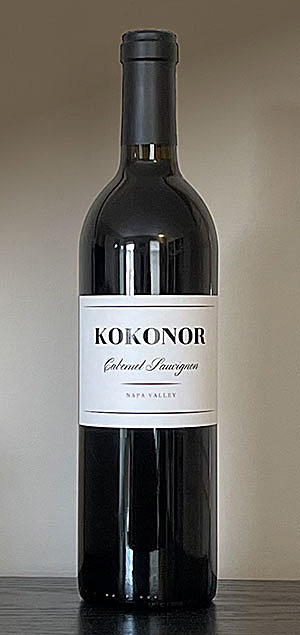
Kokonor Cabernet Sauvignon

Kokonor Cabernet Sauvignon 2018

Kokonor Cabernet Sauvignon 

There are many ways to buy wine: at a wine shop or liquor store, at a grocery store, or through a winery’s wine club, among others.  There is another option that I use on occasion.  These are online “flash sites” that offer one or even a few different bottles for sale per day, at discounts of around 15 to 70%, often with free shipping if you place a minimum order, which tends to be three to six bottles and varies with the price.  How do they do this?

  1. The winery approaches the site (or vice versa), looking to sell some wine that the winery has not been able to sell as quickly as they would like.  The winery may be stressed by lack of cash flow, not enough storage space, or some other unknown.
  2. They agree on a price that enables the site to sell the wine at well below retail.
  3. The site buys all (or most) of the available stock.
  4. The site then offers the wine at a discounted price, often substantially so.

Here are a three such sites you might want to try:
www.invino.com
www.lastbottlewines.com
www.wtso.com

This Kokonor came from wtso.com.  It had a listed retail price of $135 (true retail prices are sometimes difficult to verify, but on Kokonor’s web site the 2016 was selling for $125 before the allocation window closed.  The 2017 and 2018 were not available there.)  WTSO sold this bottle for $33, with free shipping on three bottles.  Quite a deal, almost too good to be true, so I contacted the winery for clarification.   This is what their representative had to say, “Due to Covid-19 and wildfires in 2020 all but shutting all of our sales channels down (tasting room, on-premise sales) we released our 2017 and 2018 vintages on Wines Til Sold Out [at] well below our cost.”  So, sometimes when it’s gotta go, it’s gotta go.

Kokonor is owned by a Chinese company, Qinghua Huzhu Barley Wine,* under the subsidiary Koko Nor Corp., which purchased Sundown Ranch LLC in late  2013 for $15 million. Sundown’s main asset was a 1000-acre property in St. Helena at the north end of Napa Valley, of which 100 acres were under vine. Kokonor makes the wine from fruit sourced from this vineyard at the  Maxville Winery in the Chiles Valley AVA east of Napa Valley.  (The CEO of Maxville, Anthony Hsu, was born in Taiwan and spent time there off and on before adulthood.  Coincidental that a Chinese company should make wine at Maxville?  I leave that up to you to decide.)

The Winemaker

George Bursick grew up in Sonoma County, where many of his friends’ families were grape growers and he was exposed to vineyards and winemaking early on. After attending UC Santa Barbara for a while, he was hired part-time at Beringer Winery in St. Helena. His first duty was assembling Christmas gift packs for the tasting room. Soon after however, he graduated to the cellar where in 1970 he was, “…dragging hoses for $5.26 an hour. I was glad to be making such good money.”

“Myron Nightingale [Beringer’s winemaker at the time] was my first mentor, my first serious inspiration to become a winemaker,” said Bursick. “He encouraged me to return to college and finish my undergrad work in plant physiology and to get a Master’s Degree in enology from UC Davis. In the meantime I was learning the winery business from the ground up working in the cellars at Beringer.”

Upon graduation from UC Davis, Bursick began his first solo winemaking job at the now-closed McDowell Valley Vineyards in Mendocino County on the recommendation of John Parducci. One of his most significant accomplishments there was the first varietal release of Syrah in California. This was in 1980 from the 1978 vintage of 100-year-old vines, which had long been misidentified as Petit Sirah, at least in this vineyard. Bursick suspected the mistake and brought in ampelographists to verify his opinion that the vines were in fact Syrah and more than worthy of a special bottling.

After nine years at McDowell, old friend Justin Meyer recommended him to Rhonda and Don Carano. They were in the early stages of their plans for a new winery in Sonoma County called Ferrari-Carano and Bursick joined the team as Director of Winemaking.

“From the beginning, I think we were all what you might call progressive; maybe aggressive,” he said of the early days at Ferrari-Carano. “We wanted to make really great wine and we explored all possibilities. We were among the first to bring in ENTAV clones from the France’s viticultural authority. We experimented with barrels, fermentation, yeasts, we researched everything and we’d try anything, in the winery and in the vineyard. And for the most part, the results were worth it.”

Bursick left Ferrari-Carano in 2006 in order to focus on his expanding consulting business, and later through that work become Vice President of Winemaking at J Winery. He agreed to the take the position with the stipulation that his existing consulting clients would not be affected. Bursick ushered J Vineyards into a new era of wine production focused on cool-climate, site-specific Russian River Valley Pinot Noir and Chardonnay.

He produced the Kokonor as a consultant at Maxville.

Kokonor Cabernet Sauvignon 2018

The fruit for this 100% Cabernet Sauvignon was hand-picked from select blocks, hand-sorted, and then whole-berry fermented in micro-fermentation batches.  It was aged for 22 months in 100% French oak.

A predicable dark opaque purple, Kokonor serves up classic aromas of blackberry and cassis, which continue on the palate.  However, the wine is fruit-recessive, in the Old World style.  It is supported by notes of tobacco and cedar, as well as zippy acidity and grippy tannins.  336 cases were produced, and the ABV is 14.5%.

Would I pay $135 for this wine?  Well, no.   Would I pay $33?  Hell yes.  As indeed I did.

* Barley wine isn’t wine at all, but rather a strong ale with between 6 to 12% alcohol by volume.  The beer writer Michael Jackson referred to a barley wine by Smithwick’s as, “This is very distinctive, with an earthy hoppiness, a wineyness, lots of fruit and toffee flavours.” 

Back to blog posts: .com/blog/

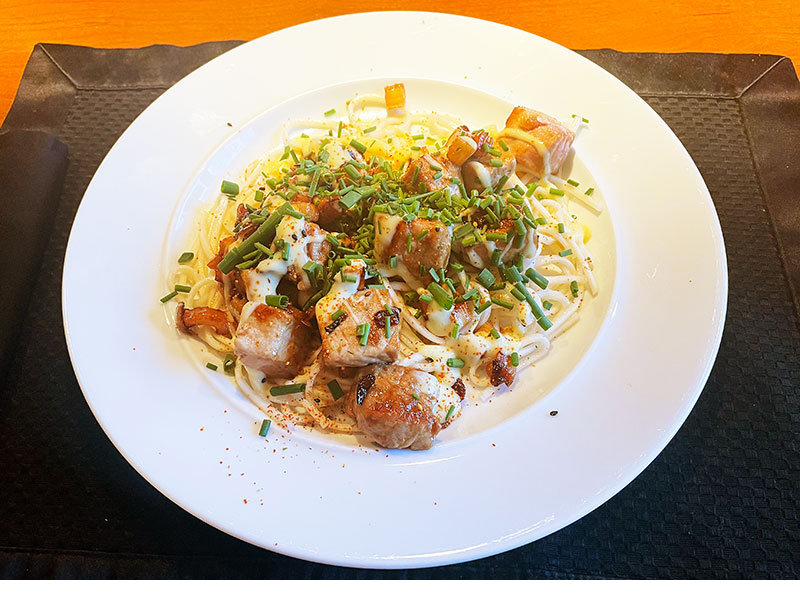
Tuna pasta, Japanese-style

Tuna pasta, Japanese-style

Tuna Pasta

My wife recently came home with a lovely 7 ounce tuna steak.  Well, I love tuna, and because of this I thought, “this isn’t going to feed the two of us.”  So I began to consider how to stretch it out.  The answer?  Tuna pasta, Japanese-style!

Serves 2

6 to 8 oz. tuna steak (mine was sushi grade, but that isn’t necessary since it will be cooked)
4 oz. of udon noodles
3 or 4 green onions (scallions)
Lotus root, about 3″ long
2T soy sauce
2T mirin
2T peanut oil (I used ginger-infused oil for a bit of flavor boost)
Chives, chopped fine
Shichimi Togarashi (Japanese hot pepper mix, available in Asian markets, the Asian section of some supermarkets, and online, of course.)

    1. Heat lightly-salted water to boiling in a saucepan large enough to fit the udon noodles easily.
    2. Peel the lotus root, then rinse under cold water. Slice the lotus root into 1/4″ rounds. then cut the lotus root into 1/4″ dice. Rinse again, then set in a bowl with cold water and splash of vinegar to prevent discoloration.
    3. Meanwhile, chop the scallions, green parts and all.
    4. Heat the oil in a 10″ skillet on low, and add the scallions and drained lotus root until slightly softened.  Browning is not necessary.
    5. Cut the tuna into 1/2″ cubes.
    6. Add the tuna, soy sauce, and mirin to the skillet until the tuna is cooked to medium rare (140 degrees F) and a sauce forms.  This will only take two or three minutes.  Turn off the heat, but keep the skillet on the burner.
    7. Cook the udon in the boiling water until not quite al dente.  This will vary with the brand of udon, but plan on 2 to 8 minutes.  Mine took about 4 minutes.
    8. Remove the udon with tongs, keeping the water in the saucepan at a low boil, and rinse in a colander under cold water to remove excess starch.  Return the udon to the saucepan, bring to a boil, and heat for one minute.
    9. Drain the udon, place half on each plate, top each plate with half of the tuna mixture from the skillet, garnish with chopped chives, and finish with the shichimi togarashi

Back to blog posts: winervana.com/blog/

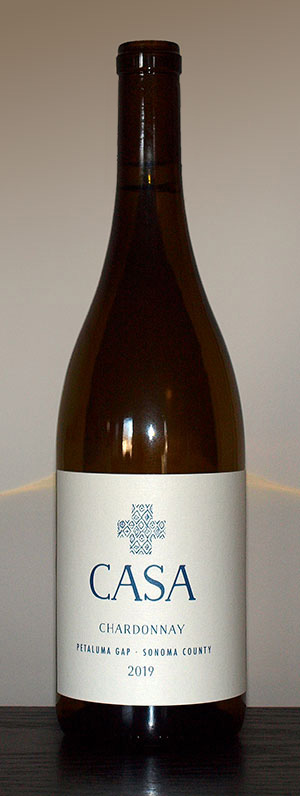
Keller Estate Casa Chardonnay

Keller Estate Casa Chardonnay 2019
Keller Estate Casa Chardonnay 2019 Click here for tasting notes.

Many years ago, while driving through Sonoma County, Arturo Keller and his wife Deborah came upon a piece of property overlooking the Petaluma River with a tremendous view and expansive terrain.  Keller, a passionate antique car collector and native of Mexico, purchased the 50-acre parcel in 1982.   He soon had a paved road built that wove about the property to serve as his own miniature racecourse. Keller also recognized the potential of the property as a grape-growing site, and in 1989 the La Cruz Vineyard was began.

Over time, Keller added more acreage, and planted Pinot Noir, Syrah, Viognier, and Pinot Gris, and began making wine for family and friends.  Keller soon called on his youngest daughter, Ana, who had studied chemistry at the University of Mexico, to become the nascent winery’s winemaker.

Keller Estate released their first wines in 2001, an estate Chardonnay and Pinot Noir.  The name ‘Keller Estate’ pays homage to the Keller family’s Swiss heritage, since the word ‘keller’ is cellar in German.

Ana also started a sister brand, Casa Wines, which are sourced exclusively from the family’s La Cruz Vineyard. Casa Wines produces Chardonnay, Pinot Noir and a red blend.

Keller Estate has completed the California Sustainable Winegrowing Program. The winery utilizes a natural water source, promotes local wildlife to live on the property, and is home to thousands of newly planted trees. The vines are all grown sustainably and organically.

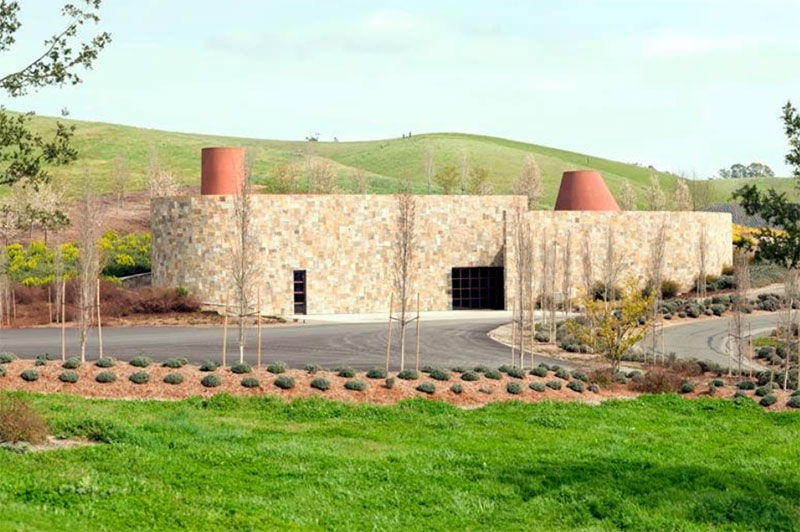
The Keller Estate Winery

The Winemakers

Ana Keller – Estate Director and Winemaker

Raised in Mexico, Ana’s first exposure to wine came early in life when she spent her holidays in France’s Loire Valley harvesting grapes.  “When my father asked me to join him in establishing Keller Estate, I was overjoyed,” she related. “We have accomplished much of what we initially set out to do, and it’s up to me to continue to make sure our quality never fluctuates.”

She holds degrees from both the University of Mexico (biopharmaceutical chemistry) and a Masters in Pharmaceutical Development from the prestigious King’s College in London.  While there, she took her first formal wine tasting lessons.

Keller was heavily involved in the effort to make her property part of the AVA (American Viticultural Area) called the Petaluma Gap AVA.

“When you consider what the winds of the gap do to the area and to the grapes themselves, it seems to be a no-brainer. The winds force our (Pinot Noir) grapes to develop thicker skins and that in itself changes the equation.”


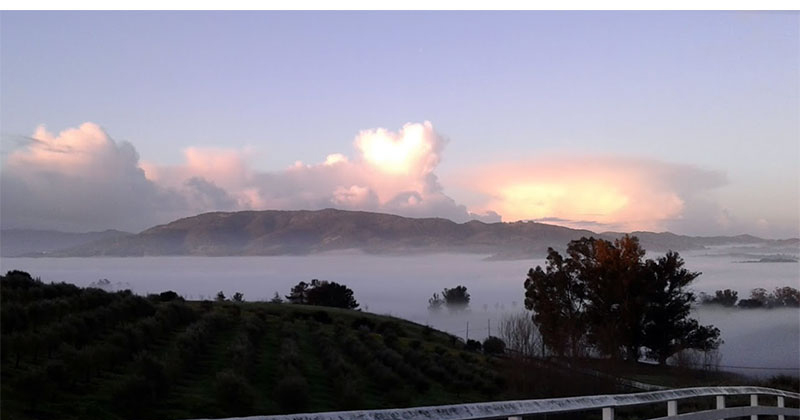
The fog-shrouded Petaluma Gap

Keller devotes 100 percent of her time to Keller Estate, and confided that her parents are still active in the business as well. “Whenever my father is available, he sits in on our meetings and tastings. He is still quite active and his passion for cars takes up a great deal of his time. He cares a great deal about the winery since it is still a relatively small family operation.”

Julien Teichmann – Winemaker

Born in Goettingen, Germany, Julien Teichman joined Keller Estate in 2018. His passion for fermentation began with an internship at a brewery.  He next spent some time in Florence, Italy where he had his first contact with winemaking and vineyards.  Julien then earned a degree in winemaking from the Weincampus Neustadt in Germany.
Julien traveled the world working harvests and finally came to the United States in 2013, where he spent time at Kosta Brown and Merry Edwards before joining Keller Estate. He espouses a profound respect for the vineyard, and a holistic approach to farming and winemaking.

About the Vineyard

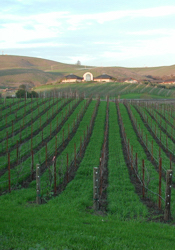
The Keller Estate La Cruz Vineyard features an intricate stone cross sculpture that boldly stands over the vines, and was named to represent the family’s Mexican heritage.
The majority of the La Cruz Vineyard, where Keller Estate grows all of their Chardonnay, Syrah, Pinot Gris, and slightly over half of their Pinot Noir, resides on the lower hills of the property. The soils here are multi-layered, mineral-laden clays there were once San Pablo Bay seabeds. This mineral character comes through in the wines and is very much a part of the Keller Estate’s unique terroir.

Keller Estate Casa Chardonnay 2019

To start with, this bottle was sealed with a synthetic plastic cork.  Not the worst one I’ve ever encountered (although the one in the second bottle was harder to get out than the first), but I’m just not a fan.  I’m fine with manufactured corks, where cork is ground up, treated to prevent cork taint, and then reconstituted as closely as possible to the bark itself.  But failing that, I’ll take a screw cap over a plastic stopper any day.

Moving on to the wine.  The fruit was sourced from the Keller Estate’s La Cruz Vineyard, in the Petaluma Gap region of the Sonoma Coast. The wine was fermented in both barrels and stainless steel.  This 100% Chardonnay is very pale yellow in the glass.  The moderately aromatic nose features grapefruit and honeydew.  These are on the palate as well, with moderate but bright acidity and mineral notes.  Although it saw some oak aging, the result is subtle at best. 1,600 cases were produced, and the ABV is 14.2%.

Back to blog posts: winervana.com/blog/

Garlic Olive Oil

Garlic Olive Oil

Garlic Olive Oil is a wonderful and versatile condiment.  Sure, you can buy it, but it’s going to cost about $1.50 to $2.50 an ounce.  For around 75 cents an ounce, you can easily make it yourself, and know exactly what goes into it as well.  Most recipes for garlic olive oil roast the garlic in the oven.  My method uses just the stovetop, which is more streamlined but delivers the same amount of flavor.  Here’s how to do it:

  • Pour 3 cups of extra virgin olive oil into a medium saucepan.
  • Cut the tops off of 9 whole heads of garlic (Trust me on this.  When I first started making this recipe, I began with 3 large heads.  9 are not too many.)  Break the heads into individual cloves, and add all of the garlic to the oil.
  • Add two stems of rosemary, as much fresh thyme as you want, and 2 tsp of toasted whole  black peppercorns to the oil.
  • Cover the saucepan, turn the heat on low, and simmer for 45 minutes.
  • Remove from heat, uncover, and let sit for 1 hour to cool.
  • Strain the oil into a bottle.  A clean green wine bottle works great for this, but you’ll need the cork or some other closure.  The oil will keep for at least a month, unrefrigerated.
  • Discard the herbs and pepper.  Squeeze the cooked garlic out of the skins and into a convenient container.  Refrigerate until ready to use, like for spreading on home-made bread still warm from the oven.  It can last about a month, but mine is usually gone in less than a week.

Based on a recipe from epicurious.com.

Back to blog posts: winervana.com/blog/

Vale do Bomfim

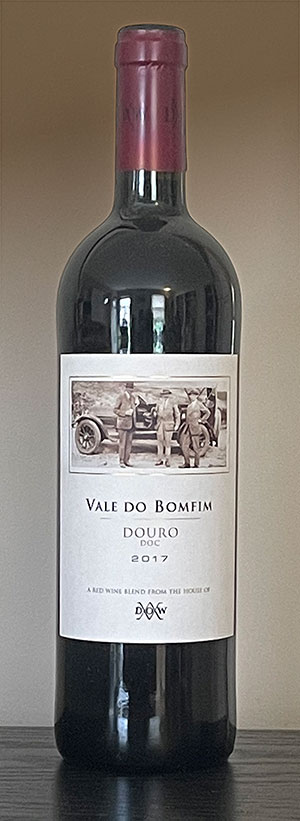
Vale do Bomfim Red Blend 2017Vale do Bomfim Red Blend 2017

In the 1970s, Portugese rosés such as Lancers and Mateus were the height of sophistication to many young wine drinkers: “It’s imported, and comes in a fun bottle!” With age comes wisdom however, and these wines were largely abandoned for the justifiably famous fortified wines of Portugal, Port and Madeira, produced by many ancient and famous houses.

Much less well-known is Portugal’s status as a producer of both red and white table wine, ranking in the world’s top ten in production.  With a population of just 10 million, but #2 in per capita consumption as of 2019 , much of that wine is sipped by the thirsty Portuguese.  (The U.S. is 44th out of a total of 167 countries.)

Winemaking in Portugal has a long and storied history. It was the first country to implement an appellation system, the Denominação de Origem Controlada, in 1756, almost 180 years before the French established their own similar system. The DOC established early quality-control standards, but because it has been in place for over 350 years much Portuguese winemaking is tightly bound by tradition; even calcified, some would say. However, this has been steadily changing, and many producers are updating their winemaking equipment and methods and are producing good high-quality wines.

The Vineyard

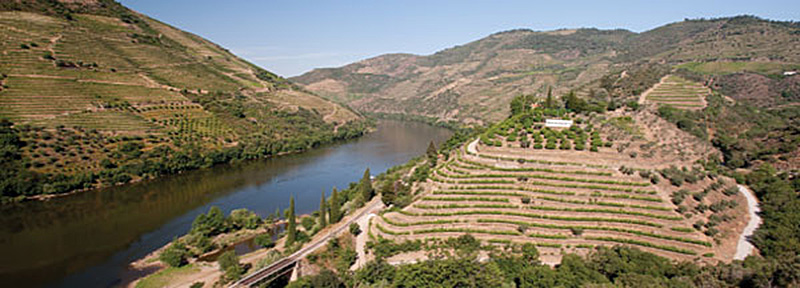
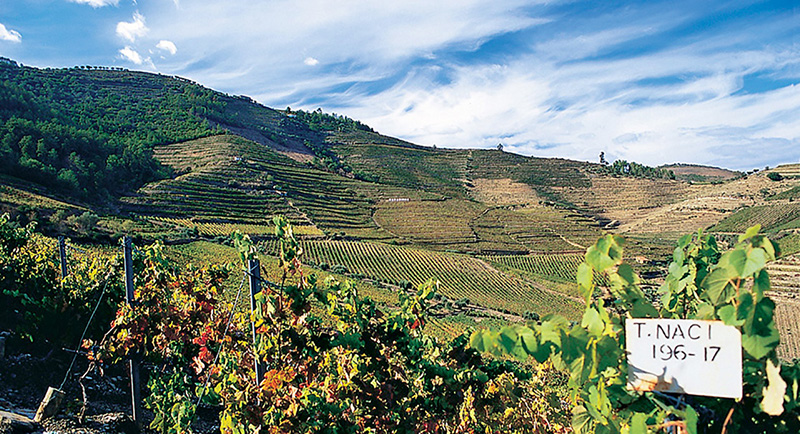
This wine comes from the Douro [DOO-roh], a wild mountainous region located along the Douro river starting at the Spanish border and extending west into northern Portugal. The grapes for many Ports originate here also, but the vineyards for the table wines are at higher altitudes, where the grapes don’t ripen as fully or produce the higher sugar levels desirable for fortified wines.

The Douro

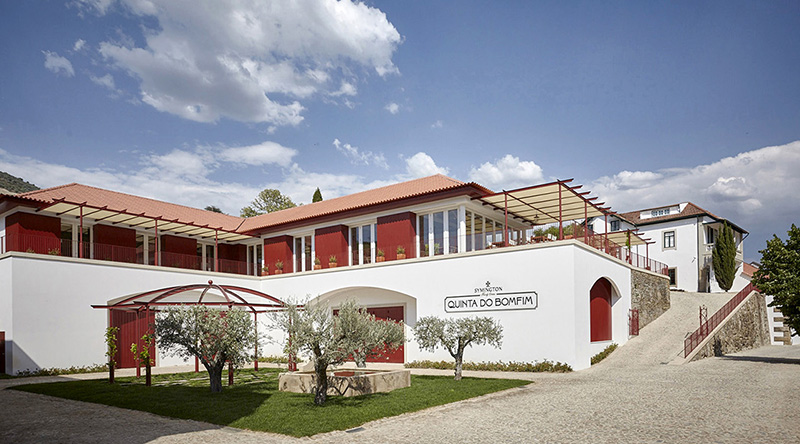
In the 19th century, the area around the village of Pinhão was known as Vale do Bomfim, which translates as ‘the well-placed valley.’  The specific vineyard from which this wine comes was acquired by George Warre for Dow’s in 1896 (his family had been involved in the Port trade since its earliest years).  In 1912, Andrew James Symington became a partner in Dow’s and made Quinta do Bomfim his family home in Douro.  (Quinta is Portuguese for farm, estate, or villa.)

The Vale do Bomfim vineyard.

Quinta do Bomfim sits in the upper Douro Valley, located in an area of transition between temperate and Mediterranean climates. Predominantly south-facing with ample solar exposure, the terraced vineyards sit on schist, a medium-grade metamorphic rock formed from mudstone or shale.  The total property is 247 acres (100 hectares) with 185 acres (75 hectares) planted to vine.  The elevation varies from 262 to 1,260 feet (80 to 384 meters).

The Lagare Method

Historically, Portuguese wine was pressed by foot in granite treading tanks called lagares on the upper level of a winery, and then gravity sent the juice from the lagar to oak or chestnut vats for fermentation on another floor below.  The original winery at Quinta do Bomfim was modernized beginning in 1964 with the introduction of automated lagars to increase winemaking capacity, as increasing labor shortages made treading in stone lagares impractical and too expensive.   The automated lagar is an open stainless steel vinification tank in which mechanical treaders, powered by compressed air, replace the human foot in treading the grapes. It was designed to replicate the gentle treading action of feet and the configuration of the tank itself recreates the shape and the capacity of the traditional stone lagar.

The Quinta do Bomfim winery.

Vale do Bomfim Red Blend 2017

This wine is made by Dow, one of the premier Port producers in the Douro Valley for over two centuries.   For many years it was only available to the family and their guests.  It is made from a blend of 50% Touriga Franca, 20% Touriga Nacional, and the remaining 30% is a field blend of indigenous varietals.  It was aged in an equal mixture of stainless steel and French oak (30% new for the half of the wine in wood) for six months.

The wine is a medium dark purple in the glass.  It is quite aromatic, wafting of dark fruits.  These continue on the palate, particularly black cherry.  But, it is perhaps predictably lean in the European style, so the fruit is complemented by slate, sage, and a bit of earth.  It is all bound together with racy acidity and moderate tanninsABV is 14%.

Spaghetti Aglio e Olio

Spaghetti Aglio e Olio
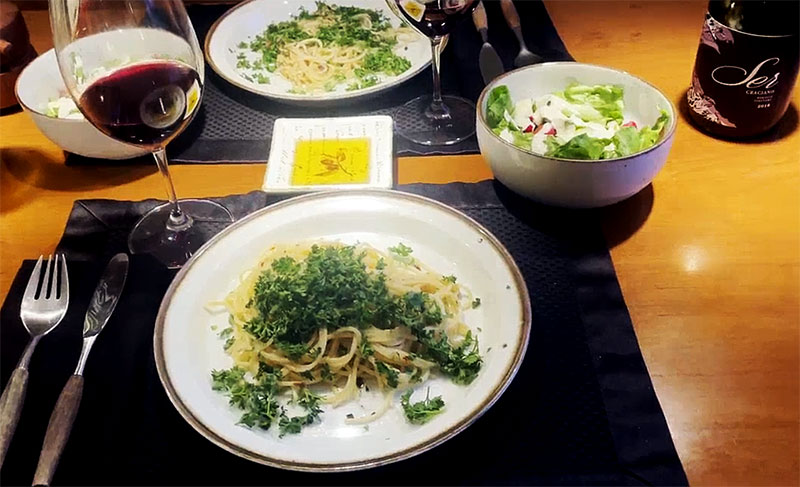
If you are looking for an easy and delicious week-night meal, you can’t go wrong with Spaghetti Aglio e Olio, or literally Spaghetti Garlic and Oil.

Here’s how to make it:

Serves 4 to 6

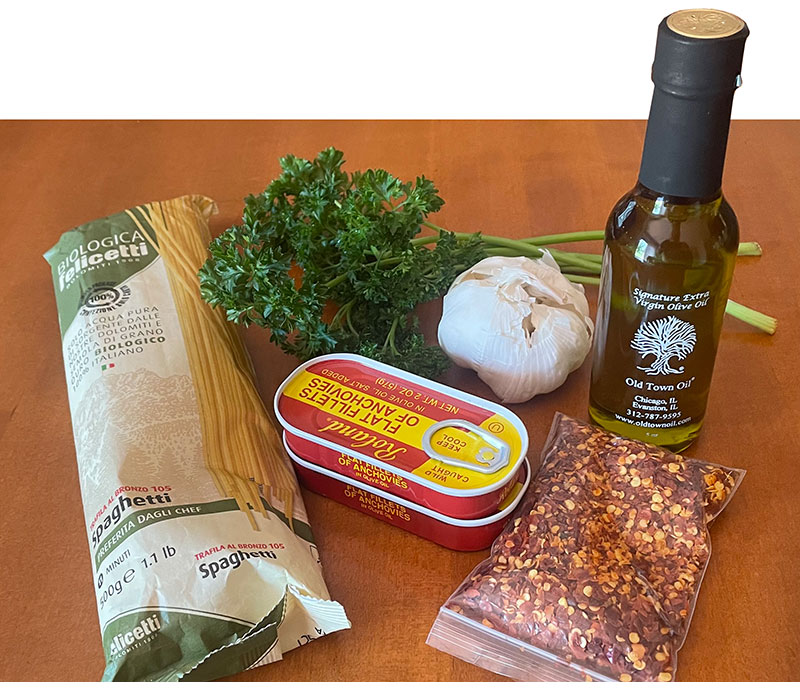
1 lb. of spaghetti
3 tsp. salt
1/2 cup extra virgin olive oil
1/2 cup garlic (about one whole large head), sliced, chopped very fine, or run through a garlic press, depending on how you like it
2 2-oz. cans of anchovies*
2 tsp. red pepper flakes
1 cup chopped parsley. (The stems are slightly bitter. Remove them if you don’t like that, include them if you do.)  Flat-leaf Italian parsley is traditional, but curly parsley will work about as well.

Because this is a “peasant” dish, it is susceptible to many variations.  With Italian sausage?  Tuna?  Shrimp?  Broccoli?  Except one: no cheese.  Never any cheese.

1. Add salt to 4 to 6 quarts of water and bring to boiling. Add pasta, stirring occasionally during the first couple of minutes to prevent sticking. Total cooking time will be about 10 minutes, or according to package directions.

2. While the pasta is cooking, put the anchovies, olive oil, garlic, and pepper flakes in a large skillet (12″ is best) and turn on heat to medium low. Cook and stir the garlic until it becomes colored a pale gold. Do not let it become brown. Depending on your stove, this may take a very short time; monitor it constantly. Once done, remove from heat and add 1/3 cup of the pasta cooking water to the skillet to stop the cooking.

*Note: Don’t fear the anchovies!  Personally, I love anchovies.  They lend no fishiness to this pasta, but they do bring a big umami punch.  To maximize this, I don’t drain the anchovies, adding the entire contents of the cans including the little fishes and the oil they are packed in. However, this may be too intense for younger or more sensitive eaters. If you like, drain before adding to the skillet, or if you are really nervous, drain, rinse, and pat dry before adding.  You can omit them entirely, but you will miss out on a lot of flavor.

3. Using tongs, remove the pasta from the water and add to the skillet. (Or, if the pasta water has already been added to the aglio e olio in the skillet, drain in a colander if you prefer.) Turn the strands over and over in the skillet to coat them evenly until a slightly creamy texture forms. Add the chopped parsley, toss once again, and serve immediately.

Based on a recipe by Marcella Hazan in Essentials of Classic Italian Cooking.

Based on a recipe by Marcella Hazan in Essentials of Classic Italian Cooking.

This pasta would go nicely with some of these wines:

winervana.com/ser-winery/

winervana.com/lightning-ridge-cellars/

winervana.com/lachini-vineyards/

winervana.com/brutocao-cellars/

winervana.com/cecchi-wines/

Blind Horse Winery

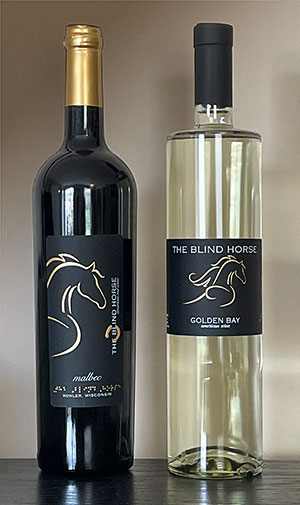
The Blind Horse Malbec NV and The Blind Horse Golden Bay White Blend NV
The Blind Horse Malbec NV and The Blind Horse Golden Bay White Blend NV. Click here for tasting notes.

Blind Horse Winery

Bob Moeller retired at age 56 after a lucrative career as a roofing contractor in Sheboygan, Wisconsin.  As he was relaxing and ruminating on a beach in Clearwater, Florida, one afternoon, this thought came to mind, “If I continue to do this, I’m going to die.”

So, he returned to Wisconsin and started making plans to open a restaurant, and if that proved successful, a winery as well.  In 2011 Moeller and his family purchased a seven-acre property that had been a small part of an 80-acre family farm in Kohler, started in September of 1862 by Anton and Josephine Dreps.  The Dreps family continued to farm this land for over 130 years, until 1996.  Like most farmers of that era, they used teams of horses to work the land. But, there was one, a Percheron draft horse in particular, that was the family favorite.  That horse’s name was Birdy, and Birdy was blind.   Many years later, Birdy was the naming inspiration for The Blind Horse restaurant, which opened in 2012.  A statue of Birdy stands in front of the restaurant.  Crafted by artist Carl Vanderheyden, it is made from old fuel oil tanks and stands seven feet tall and 10 feet long.

Birdy the blind horse.


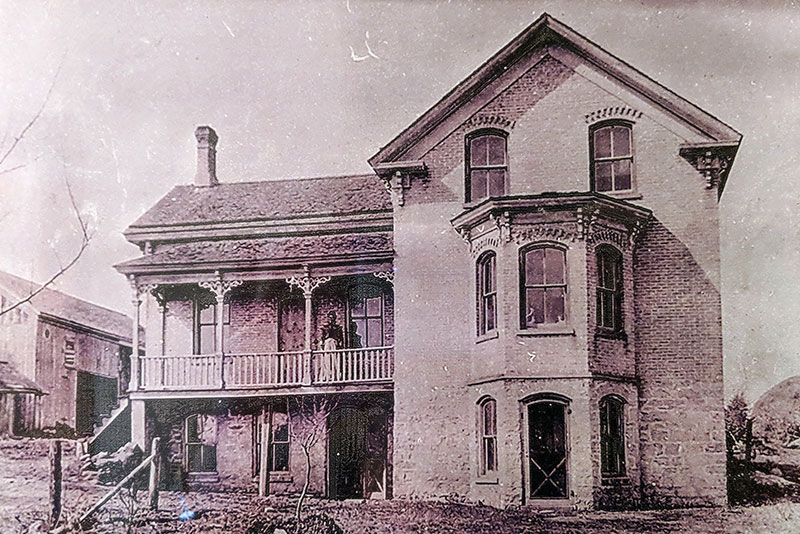
The Dreps farmhouse, probably in the 19th century. 
The Dreps farmhouse, probably in the 19th century.
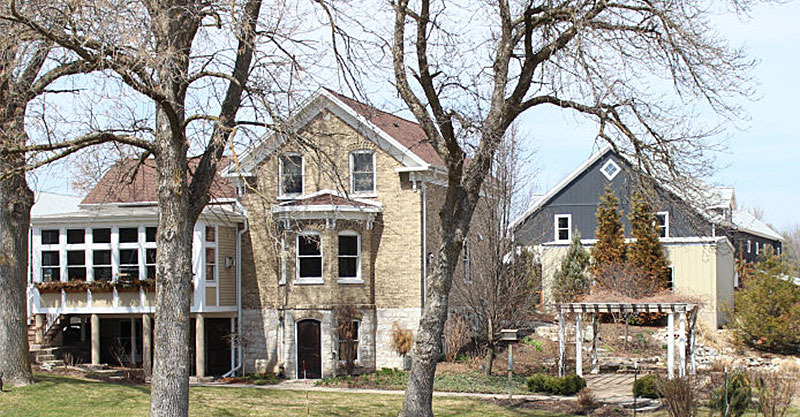
The Blind Horse Restaurant is in the original farmhouse on the left. The winery is the new gray building on the right, which was built on the foundation of the old barn.Photo courtesy of OnMilwaukee.com.
The Blind Horse Restaurant is in the original farmhouse on the left. The winery is the new gray building on the right, which was built on the foundation of the old barn. Photo courtesy of OnMilwaukee.com.

The Blind Horse Winery followed in 2014, becoming the Sheboygan area’s first commercial winery.   Like many ambitious producers in the midwest, the fruit is sourced from third-party growers in California and Washington.  (Shipping in grapes rather than juice is more expensive, but allows for greater control over the final wine.)  Once the grapes arrive, all other winemaking, including crushing, fermenting, barrel aging. and bottling happens on site.   There are plans to make wine from grapes grown by local Wisconsin farmers and to possibly start a vineyard to grow some of their own grapes.  To that end, a two-acre test parcel was recently planted with cold-climate varietals, including Marquette and St. Pepin.  At any one time, fifteen to twenty red and white selections are offered that cover the entire sweet to dry spectrum.  The property also includes the Granary that opened in 2018, a whiskey and bourbon bar housed in a renovated barn.

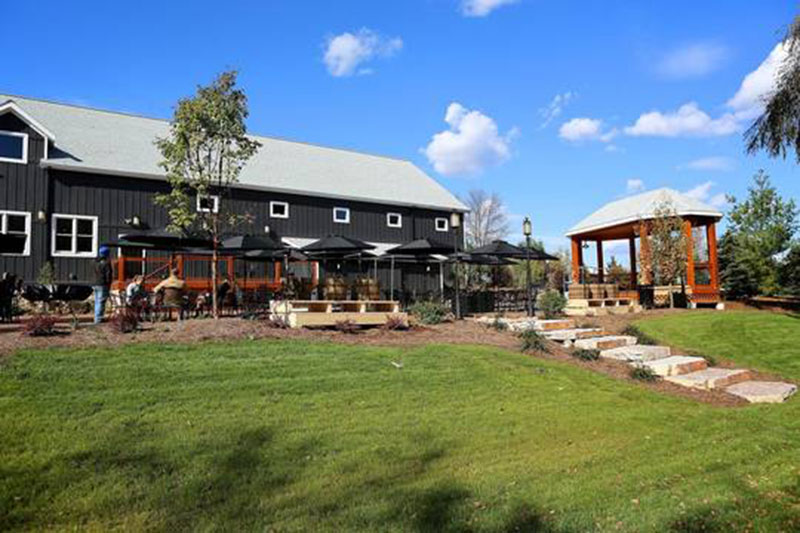
The Blind Horse Winery and Events Patio.


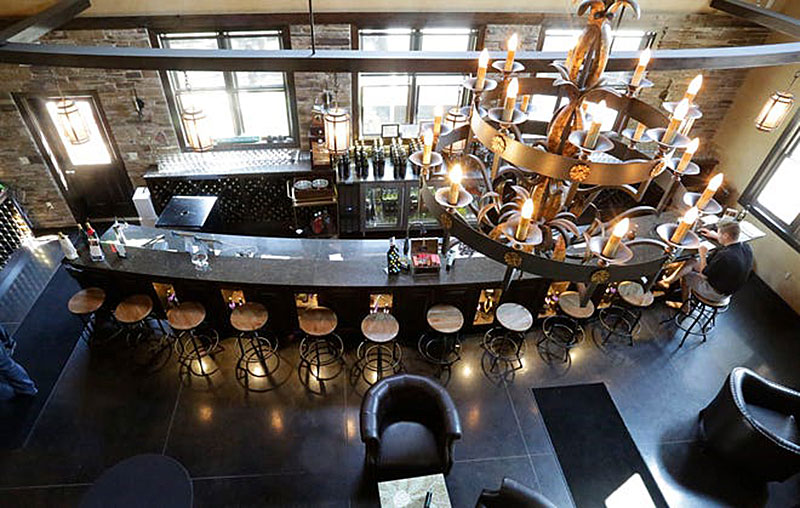
The tasting room.
The tasting room.
The Winemaker

After working in the IT field in New Jersey, Thomas Nye started The Grape Escape winery there with his wife, Nancy, a Sheboygan native.  They sold The Grape Escape when Nye was presented with the opportunity to move to Wisconsin and become winemaker and general manager at the Blind Horse Winery.  A 12-year winemaking veteran. Nye follows a minimalist style of winemaking, believing that this enables the natural qualities of the fruit to dominate in the finished wine.  He strives to “make wine in the field,” a terroir-driven approach.  Nye’s winemaking team includes Winemaking Assistant Patrick Regenwether who has been at Blind Horse for four years.

“We wanted to start a winery making the types of wines we liked, which are drier wines,” Nye said. “When I came aboard, the idea was, ‘let’s create Napa Valley, right here in Kohler.’ That was the dream.”  Making dry wines in a state with wine drinkers who largely have a taste for sweet wines (not to mention beer!) was a bit of a risk. But it paid off. “That was really unusual in the state when we did that. There were 110 wineries in Wisconsin five years ago, and most of them were making all sweeter wines,” Nye continued.  Today, the Blind Horse’s top-selling wines are mostly red (four of the top six) and/or dry (seven of the top 10), Nye confirmed.

Nye uses a combination of French and American oak barrels that range from new to neutral (aka used).   Neutral barrels are typically four or more years old and no longer impart oak flavors but help with micro-oxygenation — the process that creates smoother wines.  “I don’t want to overwhelm [my wines] with oak,” Nye said. “That, to me, is hiding a lot of the fruit characteristics of the wine.”  Many of his wines age for at least a year, some longer.

The Blind Horse barrel room.

“Perfect food and wine pairings are what made me fall in love with wine,” he shared. “We want people to experience those on a daily basis.”

Nye’s long-term goal is to increase the operation’s current 4.200 annual case production up to as much as 10,000 cases

The Blind Horse offers a wine club with three shipments per year of their various selections, which currently include nine dry reds, five dry whites, one sweet red, three sweet whites, and one sweet rosé.

The Blind Horse Golden Bay White Blend NV

Packaged in an unusual high-shouldered bottle, this selection is a blend of Chardonnay, Sauvignon Blanc, Pinot Grigio, and Viognier.  The first three varietals are sourced from a specific vineyard in Suisun Valley just east of Napa that Nye has relied on for ten years.  The Viognier comes from Lodi, California. The wine was barrel aged in two-year-old American oak. It was originally made as a separate 2018 and 2019, but after conducting extensive taste tests, Nye decided that the wine was even better when blended.

This wine pours a very pale yellow.  It is lightly aromatic, with subtle citrus and a suggestion of green apple on the nose.  That citrus blooms into lemon and grapefruit on the palate.  Since the barrels were essentially neutral, there is little or no detectable wood, “butteryness,” or vanilla.  (Nye claims to taste some vanilla; I didn’t.)  It offers just enough acidity, and ends in a short but crisp finish.  Nye made 134 cases.  ABV is 14.4%.

The Blind Horse Malbec NV

The fruit for this wine is sourced from the same Suisun Valley vineyard as the Golden Bay. It was aged in a combination of American and French barrels, some new and some three-years old for two to three years. This wine is also a blend of vintages.

It pours a transparent red, with a delicate nose.  It features flavors of cherry and blackberry, with a smooth mouthfeel.  There is moderate acidity, and subtle tannins, to be expected because of Nye’s penchant for used oak in his aging.  There were 394 cases produced.  ABV is 13.9%.

Here’s some nitpicking about the bottle labels: my wife is a horse person, and when she saw them exclaimed, “That’s not a drawing of a Percheron!  That’s more like a Thoroughbred!”  There is also a bit of Braille on the labels that spells out “The Blind Horse.”  However, it seems gratuitous to me, as the dots are so shallow I seriously doubt any blind person could read it.

Maison M. Chapoutier has included Braille on their wine labels since 1996, and it more usefully includes information on the producer, the vintage, the vineyard, the region, and the color of the wine.  But even there the embossing is quite shallow, so I am suspicious of how useful it really is.

Back to blog posts: winervana.com/blog/

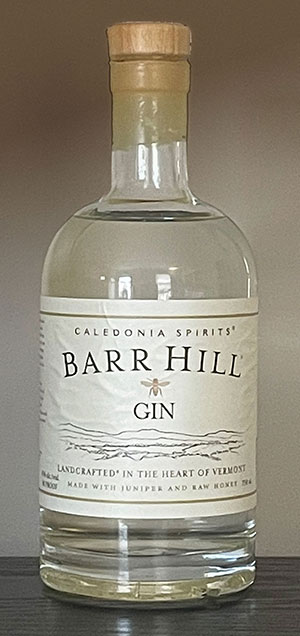
Barr Hill Gin

Barr Hill GinBarr Hill Gin

When it comes to a martini, I roll hard-core old style.  Pimento stuffed olive.  Just a few drops of vermouth.  Shaken, not stirred.  Gin and glass straight out of the freezer.  And, that gin is almost always Bombay Sapphire.

But I will sometimes wander, on the gin itself at least.  I recently got an email from liquor.com touting “The 14 Best Gins to Drink in 2021.”  Who doesn’t like The Best?  One of their recommendations was Barr Hill Gin, and they had this to say about it:

And on the bottle, Caledonia proclaims, “Ryan and Todd perfected the use of raw honey in their distillery, capturing the countless botanicals a honey bee forages into their spirits.”

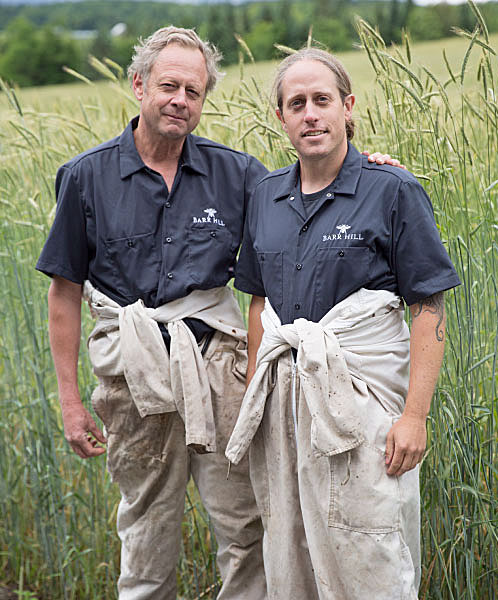
Todd Hardie, left, and Ryan Christiansen, right

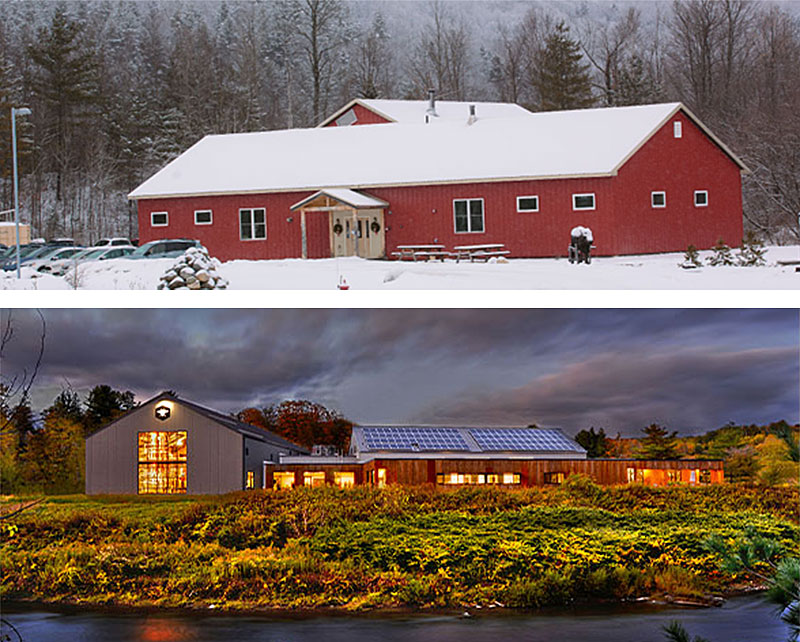
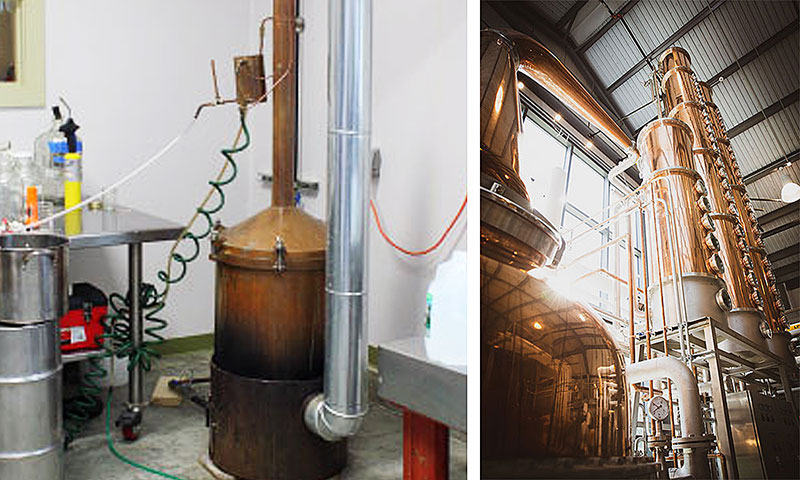
Barr Hill  was founded in 2011 by a beekeeper, Todd Hardie, and a distiller, Ryan Christiansen, in Vermont.  Hardie is a lifelong beekeeper who had been caring for bee hives across the state.  Christiansen had previously operated a home-brewing supply store in his hometown of Plainfield, Vermont.  Their partnership began with a single 15-gallon direct-fire copper still inside of a 6,000 square foot distillery located in Hardwick, near the town of Greensboro and the Barr Hill Nature Preserve.

The original distillery, top and the current one, bottom.

Quickly finding success, by the end of 2012 production increased from one to three distillations per day.  In June 2019 a new, larger distillery was opened in Montpelier.  In addition to Barr Hill Gin, Caledonia also produces Barr Hill Vodka and Tom Cat Gin.

The original still, left, and the current one, right.

Barr Hill Gin

This gin technically falls under the Old Tom category, and with apologies (barely) to Hardie and Christiansen, it is ghastly.  There are plenty of rave reviews on the interwebs about this horrible potion, and all of those, including the one on  liquor.com, baffle me.  The very last thing to do with this gin is to drink it neat.  From the producers, “It is distilled with juniper in a custom-built botanical extraction still and is finished with raw honey – the delivery vessel for countless other botanicals and a hint of sweetness – to perfectly balance the juniper.”  O … M … G.  There is more than a “hint” of sweetness, and I don’t want any sweetness in my martini.  Plus, the juniper is way out of balance.  I like a strong juniper presence in my gin, but with nothing but the honey to offset it, this is JUNIPER, with a taste much more like needles than berries.  (And to be clear, I’m not afraid of pine notes.  I’m the only person I know that enjoys Retsina.)  My wife and I got through two sips, and down the drain our martinis went.  The following day, it did make a barely serviceable Negroni, but hell, Campari will mask just about anything.  Unfortunately, that weird pine flavor still came through.  Finally, this gin ain’t cheap, coming in at about $40 per bottle.  Buy one at your own risk.

Back to blog posts: winervana.com/blog/

Scheid Family Wines

Scheid Family Wines

Today is Earth Day, first held on April 22, 1970.  An ideal moment to examine Scheid Family Wines, a producer deeply committed to earth-friendly practices (an enthusiasm shared by more and more winemakers every year, fortunately).

Scheid Family Wines got their start in 1972 when Al Scheid first purchased property in Monterey County and wine grape growing there was in its infancy. Scheid was drawn to the region for what he considered its untapped potential, for making money as well as farming.  Scheid was running his own investment company at the time.  A graduate of Harvard Business School and an investment banker, he realized that vineyards could make an excellent tax shelter, with their usual heavy investment on the front end and no income until at least five years later.  Originally named Monterey Farming Corporation, the enterprise he founded was a limited partnership; the tax laws at that time allowed investors to offset losses in one business against regular income from another one elsewhere.  And even before one acre was planted, Scheid, shrewd operator that he was, had found a customer for 100% of the grape production he anticipated (although, I’m guessing, not allowing revenue to outpace expenses, for a few years at least).

A hard-nosed origin story, for sure.  But Scheid was a firm believer in Mark Twain’s quote: “If you tell the truth, you don’t have to remember anything.” So the truth is what it is.

Scheid brought his eldest son, Scott, who had been working on Wall Street as an options trader, into the expanding business in 1986.  (He is now CEO.)  In 1988, Kurt Gollnick, an admired viticulturist who had previously farmed for Bien Nacido Vineyards, was brought on as General Manager of Vineyard Operations.  A few years later, Scheid’s daughter Heidi, who had been working as a business valuation consultant after earning her MBA, also joined the operation.

Initial plantings were heavy on Colombard, Chenin Blanc, and Ruby Cabernet, but by the early ’90s the market was calling for Chardonnay, Cabernet Sauvignon, and, due to the 60 Minutes broadcast of The French Paradox, Merlot.  In addition, during these first 20 years or so, quite a bit of knowledge about farming wine grapes in Monterey County had been accumulated. Countering these positive developments, the vineyard scourge called phylloxera was killing vines in a large portion of the Scheid vineyards.  Other challenges, such as improvements to the irrigation system, were also involved.

A businessman first and foremost, Scheid bought out all of the initial outside investors so that operations could be streamlined and decisions made more expeditiously.  In short order, almost every single vineyard acre was redeveloped;  a new vineyard was acquired and planted to Pinot Noir; the number of customers was expanded from two to 20; and the company was rechristened Scheid Family Wines.

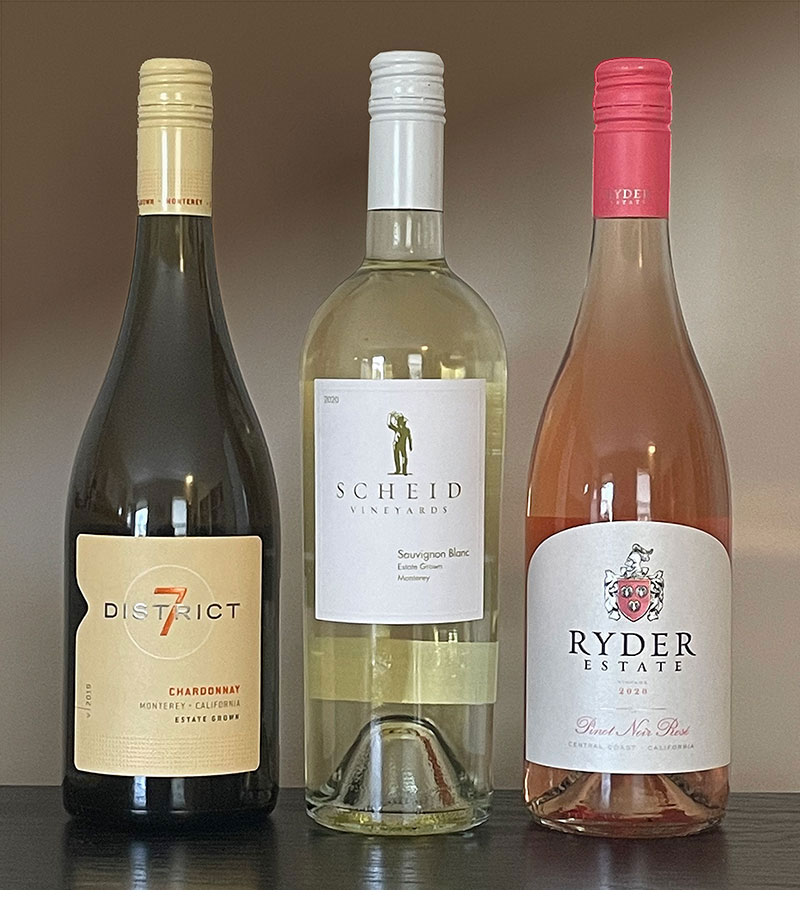
The operation now includes eight brands: Scheid Vineyards, Sunny with a Chance of Flowers, Ryder Estate, District 7, Ranch 32, Metz Road, VDR, and Stokes’ Ghost. Scheid Family Wines also produces many regionally distributed brands for individual clients and distributors.

Sustainability

100% drip irrigation is used in the vineyards, with technology that senses soil moisture and monitors plant stress to minimize water usage. A variety of cover crops between vineyard rows improves soil health , prevents erosion, controls vine vigor, discourages weeds, and promotes the sustainable health of the vineyard.  Beneficial insects control pests whenever possible.   Herbal-based preparations are applied to the soil to promote soil vitality through increased microbiologic activity and diversity. Over 250 owl boxes among the vineyards host barn owls to control rodents that prey on grapevines, such as gophers and field mice.  1500 acres of the estate vineyards are currently being farmed organically, with a goal of 100% organic practices in all of the vineyards by 2025.

Certifications

Certified California Sustainable Winegrowing (CCSW) is a statewide certification program that provides third-party verification of a winery’s commitment to continuous improvement in the adoption and implementation of sustainable winegrowing practices. Scheid achieved certification of their estate vineyards in 2014.

Sustainability in Practice (SIP) Certified helps farmers and winemakers demonstrate their dedication to preserving and protecting natural and human resources.  Scheid Family Wines began working with SIP in 2017 and now has five certified vineyards.

Global Good Agricultural Practice (GAP) Certification is an internationally recognized system that sets standards to ensure safe and sustainable agriculture and ensure product safety, environmental responsibility and the health, safety, and welfare of workers. Scheid became the first Global G.A.P. certified vineyards in the USA in 2015.

The Vineyards

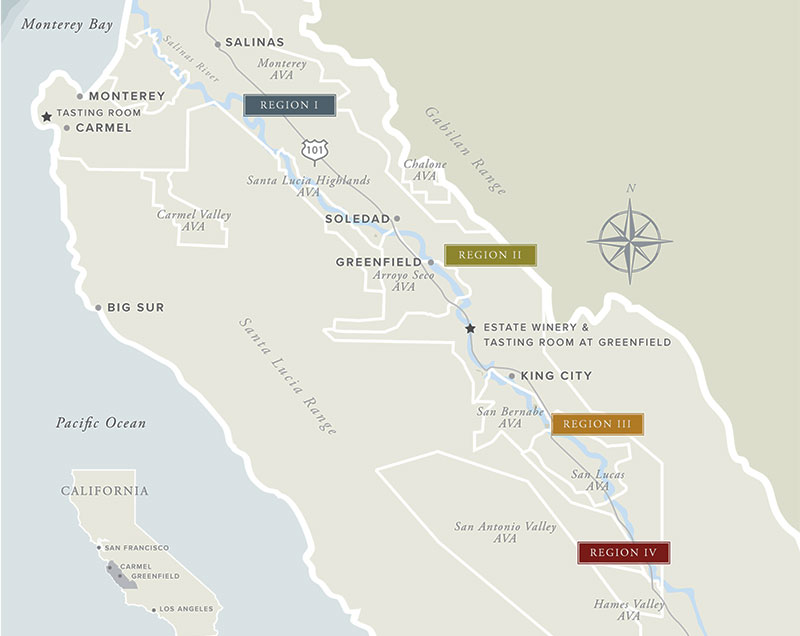
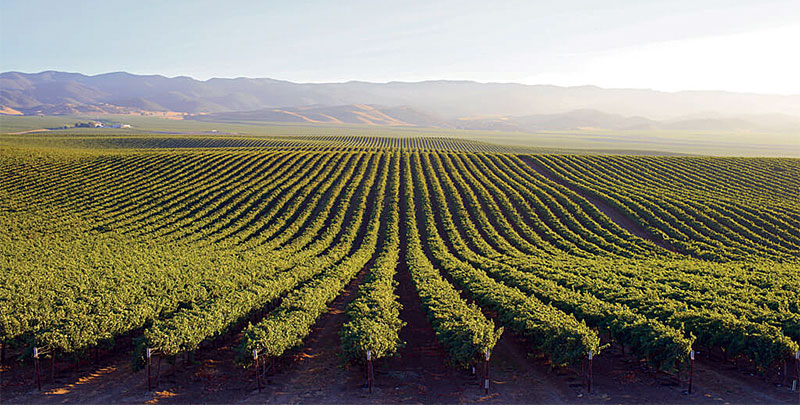
Nestled between the Gabilan mountain range to the east and the Santa Lucia Mountains to the west, the Salinas Valley enjoys a cool coastal climate due to the influence of Monterey Bay.  Here, grapes can ripen more slowly and evenly, resulting in a growing season which can be up to two months longer than other wine growing regions in California.  Scheid currently farms about 4,000 acres spread over 12 estate vineyards located along a 70-mile stretch of the Salinas Valley.

The first property Scheid acquired was a 10-acre parcel located on the edge of the town of Greenfield.  He was guided by Professor A.J. Winkler, a viticultural authority at the University of California at Davis, who had published a report in 1960 classifying grape growing regions by climate. He equated Monterey County to Napa, Sonoma, Burgundy, and Bordeaux, with the potential to be one of the most climatically suitable regions in the state for growing high-quality wine grapes.

He soon bought other unplanted parcels in the area – land that turned into the present-day Elm, Hacienda, Viento, and Baja Viento Vineyards.  These were followed by other estate properties, all in the Monterey AVA, culminating in the current 12.

The Winery

Looming over the Scheid estate vineyard is a wind turbine, installed in July 2017.  It generates 4.65 million kilowatt-hours of clean energy every year, enough to provide 100% of the power needed to run the winery and bottling operations, plus power for an additional 125 local homes.  Just this one turbine offsets over 3,600 metric tons of CO2 emissions annually.
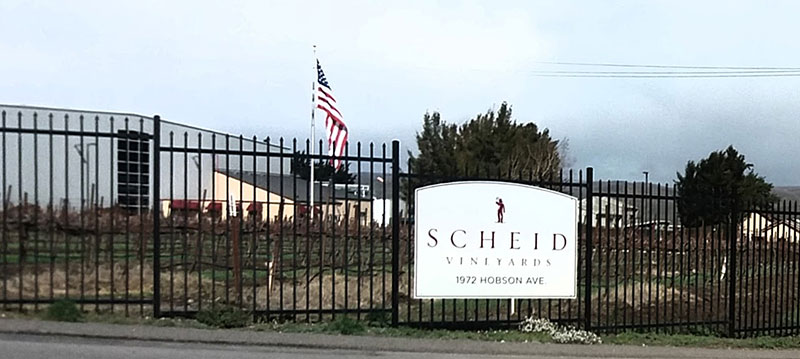
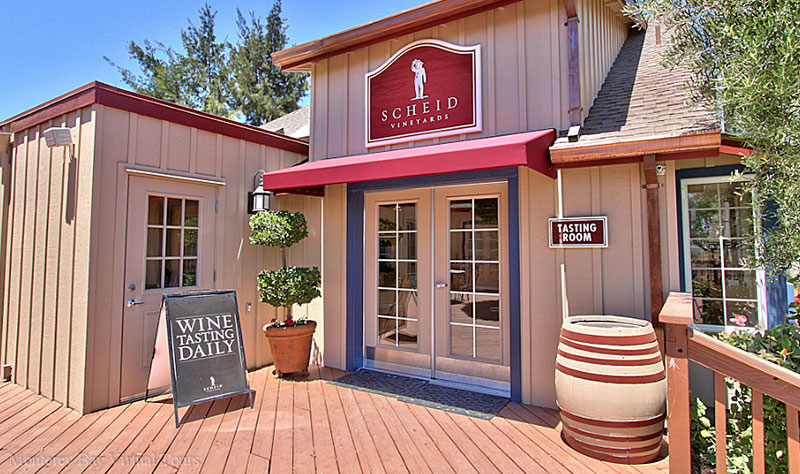
The winery itself was designed to reduce energy usage and cut waste. for instance by the extensive use of skylights.  Artificial lighting is controlled by automatic sensors that turn on and off as needed.  Fermentation tanks feature insulating jackets that reduce heating and cooling energy needs.  100% of the grape pomace, stems, and seeds are composted and spread back into the vineyards.  100% of the wastewater the winery generates is cycled through irrigation ponds and eventually finds its way back to the vineyards.


The rather daunting winery in Greenfield.

The more welcoming tasting room in Carmel.

A Few of the Wines

District 7 Chardonnay 2017

The name refers to Scheid’s official regional designation within California.  The fruit was sourced from their cooler estate vineyards in Monterey.  The juice was fermented for 14 months in 75% stainless steel and 25% new French oak.
The wine is a medium-gold color.  There are moderate aromas of grapefruit, apple, and melon on the nose.  That grapefruit explodes on the palate, with plenty of bracing acidity and a medium body.   The vanilla and oak notes are subtle, at best, which is predictable with so much of the wine having been made in stainless steel.  ABV is 13.5%.

district7wines.com/

Scheid Vineyards Sauvignon Blanc 2020

After harvest, the juice was fermented in 100% stainless steel, followed by four more months in cold stainless for aging.  This wine is nearly colorless in the glass, a very pale yellow.  It is moderately aromatic, smelling of honeydew and a hint of grass, so typical of Sauvignon Blanc but nicely restrained here.  The honeydew continues on the palate, with cascading flavors of just a bit o’ honey sweetness, followed by zippy acidity, and it all wraps up with some pleasant lime bitterness.  ABV is 13.5%.

www.scheidfamilywines.com/

Ryder Estate Pinot Noir Rosé 2020

The fruit for this wine is grown in Scheid’s Ryder Estate vineyard in California’s Central Coast.  It saw eight hours of skin contact to extract the very pale salmon color, followed by cool fermentation in stainless steel.  This easy-drinking Rosé is quite aromatic, predominately of strawberries with a bit of melon.  That flavor continues on the palate, abetted by tart cherry and a hint of grapefruit.  The acidity is just right for a refreshing quaff.  ABV is 13%.

www.ryderestatewines.com/

Back to blog posts: winervana.com/blog/

Grieve Family Winery Double Eagle

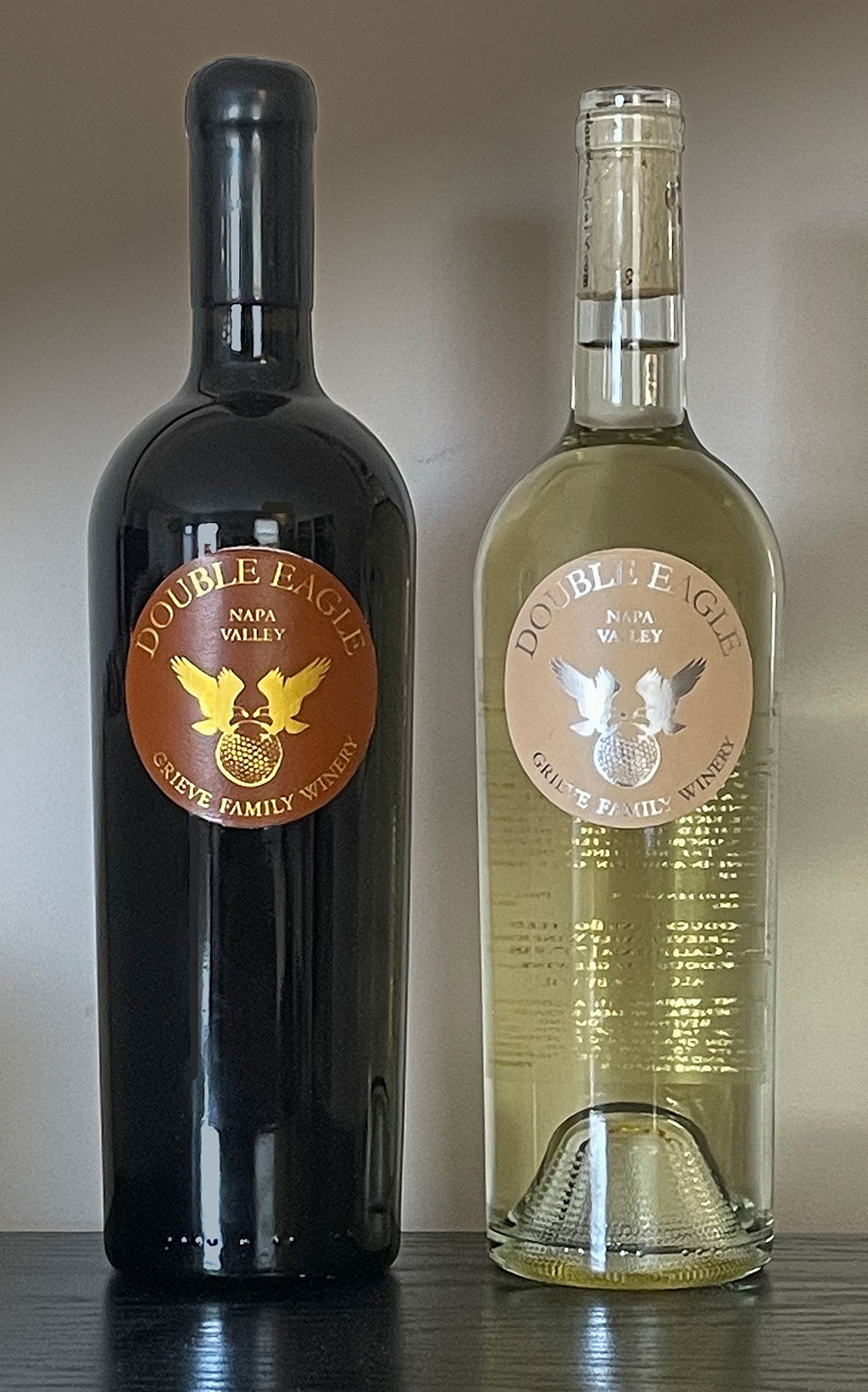
Grieve Family Winery Double Eagle Red Wine 2018 and Grieve Family Winery Double Eagle Sauvignon Blanc 2018
Grieve Family Winery Double Eagle Red Wine 2018 and Grieve Family Winery Double Eagle Sauvignon Blanc 2018. Click here for tasting notes.

Grieve Family Winery Double Eagle

The Grieve Family Winery is located in a secure and undisclosed location in Napa Valley.  It is not open to the public, and tastings are offered exclusively to wine club members by appointment only. Remarkably, there is no access from Napa Valley itself; the rare visitor must navigate a long, winding dead-end road that begins in Sonoma Valley. The following dossier is the information that agents Mulder and Scully have been able to assemble so far about the operation.

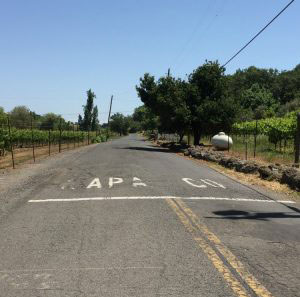
Sonoma /Napa County line in Lovall ValleyPhoto: Kelly Mitchell
Sonoma /Napa County line in Lovall Valley Photo: Kelly Mitchell

“Although the exact location of Grieve Family Winery remains a mystery, we have determined that it is located north of Carneros in the Mayacama Mountains in a unique hilltop bowl-like depression called Lovall Valley. An area rich in history and steeped in myth, local lore has it that the name “Lovall” (pronounced “love-all”) originates from a high-class brothel that once existed in this secluded part of the wine country. And during Prohibition, valley bootleggers are said to have run their contraband from here to San Francisco.

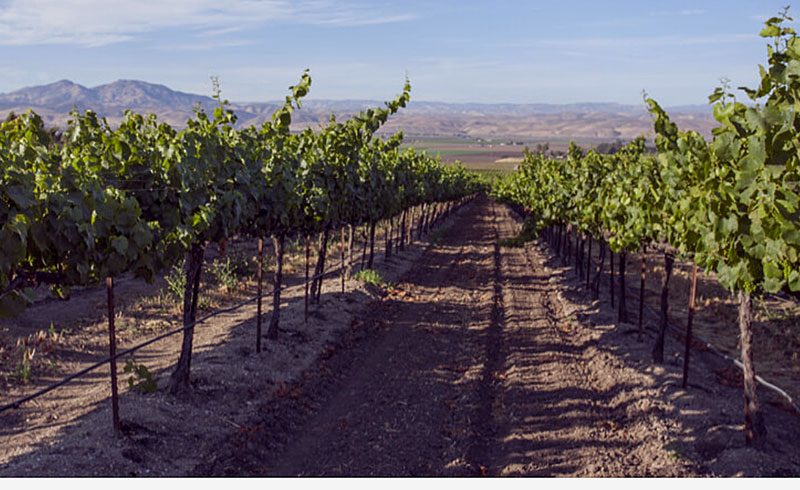
“Lovall hosts one of the coldest growing areas in Napa, much like the Sonoma Coast. The cold air and fog from nearby San Pablo Bay settle in from early evening through midday, remaining longer than in any other area in Napa. The soils are a mix of volcanic and sedentary.  A shallow but nutrient-rich top layer is predominately Perkins gravelly loam, with compacted volcanic discharge beneath which causes the vines to struggle.

The Owners

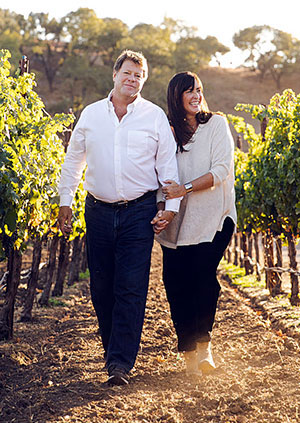
David and Kathleen Grieve

“As is often the case with the current generation of Northern California winery owners and winemakers, David Grieve first had a different, successful career; in this instance, he was a commercial real estate developer in San Francisco (and still maintains a similar business in Sonoma). But, in 2002 Grieve and his wife Kathleen decided to leave city life behind to settle in the bucolic Wine Country of Napa, and purchased a home on 10 acres in Lovall Valley, next door to a small Sauvignon Blanc vineyard.  In 2004, they purchased the adjacent vineyard property as well.

“Both David and Kathleen were long-time avid wine enthusiasts, but neither had much experience with Sauvignon Blanc.  Once they owned property plated to the grape however, they studied up on the varietal and sampled Sauvignon Blancs from different producers to determine the kinds they liked best. Grieve began touring the surrounding countryside to explore the vines growing nearby, and soon discovered that the Lovall Valley offered unique circumstances for growing these grapes.

“Soon, the Grieves took an even deeper dive and started producing a small quantity of wine from each year’s harvest.  They sold the remainder of the crop to select, high-quality wine producers in the area.  But all of this changed in 2008, when Grieve was introduced to wine-industry veteran and chef Vance Rose at a pop-up 12-course “underground” dinner that Rose would occasionally host. Not long after meeting, the two began making wine under the Grieve Family label, completing a total of eight vintages together, and in the process turning what had been a hobby into a genuine boutique winery.

Photo: Sofia Englund / Sonoma Magazine

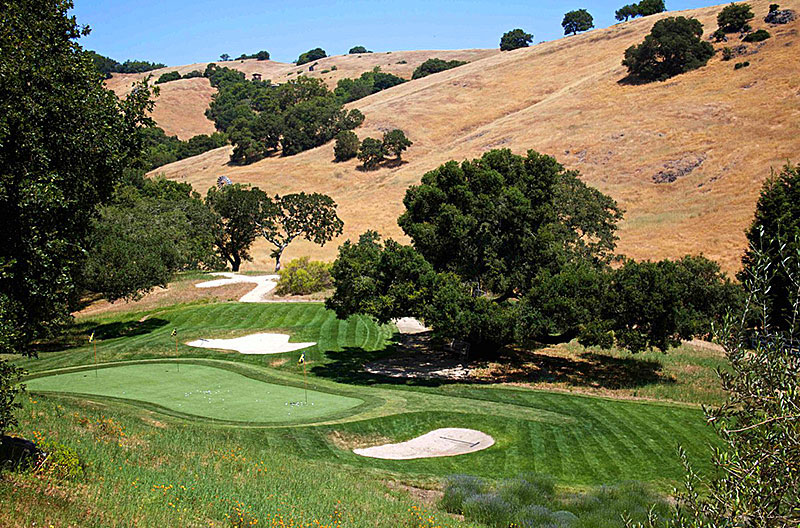
““In addition to producing wine, David is also an avid golfer.  In fact, the Grieves had a fairway and putting green installed right next to the vineyard.    They christened their inaugural releases as “Double Eagle.”  In golf, the double eagle shot, also known as an albatross, is as rare as a hole-in-one, and the idea was to imply that the wine was just as exclusive.

Philippe Melka
Philippe Melka

The Winemaker

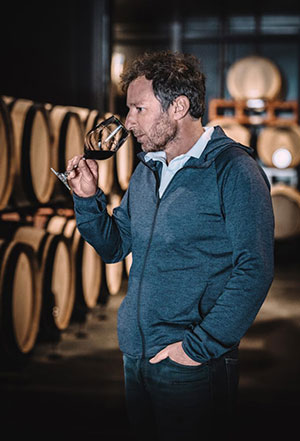
“The current winemaker at Grieve is  Bordeaux native Philippe Melka.  He is a self-described “soil nerd,” who has always been intrigued by the intricacies and demands of the land. He originally pursued a degree in geology at the University of Bordeaux. However, a winemaking class during his final year pivoted him into a life in the wine world. He learned the craft of winemaking at such prestigious estates as Château Haut Brion, Petrus, Dominus, Silver Oak, and his own Melka Wines. The Grieves were interested in pursuing the potential of their remote vineyard and Melka was interested in working for the first time with Lovall Valley fruit. In 2018,  Melka, along with his Atelier Melka partner, Maayan Koschitzky, took over winemaking for Grieve Family Winery

Grieve Family Estate Vineyard

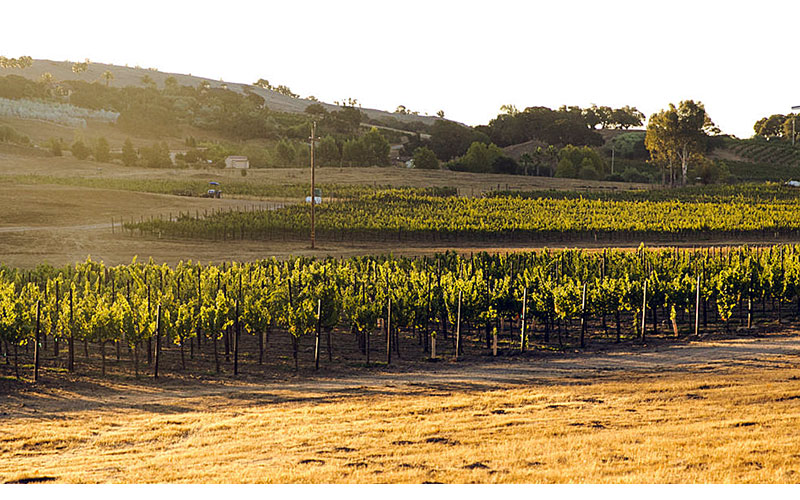
“The Grieve’s Lovall Valley estate vineyard is organically and sustainably farmed. Due to the site’s unusually cool climate, harvests run at least two weeks behind other Napa Valley Sauvignon Blanc vineyards, intensifying flavors by virtue of the prolonged hang-time. Harvest is done block by block, with the goal of  ensuring recognizable sense-of-place flavors in the final wine.”

Grieve Family Winery Double Eagle Sauvignon Blanc 2018

When it’s time to select a white wine for dinner, I usually first search for a Chardonnay in the basement refrigerator.  If none is available, I’ll go for a Savignon Blanc, and failing that, a Pinot Grigio/Gris.   Both of the latter are often reliable but unassuming options.

Photo: Wilson Daniels

The Grieve Double Eagle Sauvignon Blanc demands attention though.   The bottle features a front label made from rather extravagant foil-stamped genuine leather, I assume to invoke an association with old-school leather golf bags. The fruit was sourced from the Grieve estate vineyard, and saw fermentation in a concrete egg* and sur lie aging.  It pours a pale yellow, opening with mild aromas of tropical fruit.  There is also an expected vegetal undernote, in this case green bell peppers rather than grass, which I’m not a fan of in any Sauvignon Blanc.  The tropical fruit and a bit of lemon zest continue on the palate, which also features a soft, round mouthfeel.  There is snappy acidity at the lingering end.  Grieve produced 442 cases.   ABV is 14.2%.

Grieve Family Winery Double Eagle Red Wine 2018**

This blend of 91% Cabernet Sauvignon and 9% Merlot was sourced from vineyards in Oakville and St. Helena. Like the Sauvingon Blanc, the front label is leather. The bottle is sealed with black wax. Although this makes for a nice presentation, the wax was quite hard. So much so that trying to get it off broke the foil cutter on my admittedly cheap waiter’s corkscrew. I had to use my kitchen torch to melt off enough of the wax to get at the cork so I could pull it. Ahem.

Once open, it pours an opaque dark purple in the glass. The nose is mostly dark stone fruit, with vanilla and spice from the 18 months it saw in French oak, of which 67% was new. This carries on to the palate, especially plum, plus a lush mouthfeel and a hint of earth. It’s all supported by nicely balanced acidity and grippy tannins.  The whole show wraps up with a long finish.  661 cases were made.  ABV is 14.6%.

grievewinery.com/

*  Concrete is very good for controlling the amount of oxygen a fermenting wine sees, without adding vanilla oak flavors like a barrel would.  It can also give the acidity in the wine a polished feel, from the minerals present in the concrete.  Finally, some believe that stirring the lees in a vortex during fermentation results in richness and a full mouthfeel.  It certainly did in this selection.

The Grieve Sauvignon Blanc derives from two vine varieties: a French clone vine and a California “clone 3” vine, sometimes known as “the lost clone.”  (97% of California Sauvignon Blancs derive from clone 2; clone 3 vines are rare.)

**A note about wine marketing:  These Grieves are high-end wines, especially the Double Eagle Red.  In keeping with that, it features that hard-to-open wax seal and leather label.  And, this selection is guilty of Bloated Bottle Syndrome, which I’m calling out for bottles that weigh more than the wine they contain. The web site of nearly every winery will usually include a mention of the operation’s dedication to “sustainability” and “stewardship.”  Unfortunately, this often seems only to extend to the property itself.  Many “premium” wines like this one come in heavier bottles to allegedly denote quality.  This one weighs in at a hefty 1007 grams. (As an example of a more typical bottle, Estancia Cabernet’s comes in at 494 grams.) That’s a lot of extra weight to be shipping around the country.  By comparison, the wine inside, as always, only weighs 750 grams.   Even sparkling wine bottles often weigh less than this one, and those are made to withstand high internal pressure.  Unfortunately, this sort of “bottle-weight marketing” is becoming more common, especially at higher price points. But there are other ways to denote quality without weight: unusual label designs, foils, wax dipping, etc.

Plastic bottles have a lower environmental impact than glass, 20% to 40% less, in fact. And, bag-in-box packages are even less than plastic bottles. (Unfortunately, current bag technology will only keep unopened wine fresh for about a year, so they are only suitable for wines to be consumed upon release from the winery; that’s about 90% of all wine sold though.)

The carbon footprint of global winemaking and global wine consumption is nothing to scoff at. The latter, which requires cases of wine be shipped around the world, imprints a deep carbon footprint. Because wine is so region-specific, and only so many regions can create drinkable bottles, ground and air transportation is responsible for nearly all of the wine industry’s CO2 emissions.

Back to blog posts: inervana.com/blog/


Lightning Ridge Cellars

Lightning Ridge Cellars Montepulciano 2018 andLightning Ridge Cellars Graciano 2018
Lightning Ridge Cellars Montepulciano 2018 and Lightning Ridge Cellars Graciano 2018 Click here for tasting notes.

Can you make wine in Arizona, of all places?  You sure can.  In fact, wine is made in every single one of these United States, but that’s a story for another day.

In the 1600s, missionaries brought grapevines to the deserts south of Tucson to make communion wine (surprise!). Henry Schuerman established the state’s first known commercial winery near Sedona in the late 1880s.

A draft dodger avoiding the Kaiser’s army, Schuerman had made his way to Arizona during its earliest days, where he opened the first hotel in the newly created territorial capital of Prescott.

Although he had never been a farmer, he eventually planted an orchard on 160 acres that he had acquired. In addition to apples, peaches, apricots, pears, and quinces, in recognition of his Germanic roots he planted a vineyard.  76 acres of Zinfandel to be exact.

The Schuerman Winery was located near to what is now Red Rock State Park in Sedona. Photo courtesy of Sedona Historical Society.

For 25 years, the Schuerman Winery sold Zinfandel throughout Arizona.  Then came New Year’s Day 1915, when, by popular vote, the good citizens of the infant state of Arizona instituted a total ban on alcohol (predating national Prohibition by five years).  And that was the end of that.

At least for a while.  In the 1970s, as Americans’ interest in wine was beginning to grow, a soil scientist named Gordon Dutt got a grant to study water retention in southern Arizona, and happened to learn that grapes might grow well in the Sonoita area. Dutt founded Vina Sonoita Vineyards, then advocated to change state laws to allow vintners to sell on a large scale once again.  Today, Arizona’s 110 licensed wineries gross over $56 million per year.

One of those wineries is Lightning Ridge Cellars, founded by husband-and-wife team Ann and Ron Roncone in 2004.  Both began with engineering careers in San Francisco in the early 1980s; optical for Ron, and mechanical for Ann.  At the time, it was quite unusual for a woman to be in such a male-dominated field.  It’s not all that common even today.

They also both shared an Italian heritage, and growing up in Italian families there was always wine on the table as a matter of course.   Even during her work as an engineer, Ann was drawn to winemaking as a hobby.  “Wine was just a drive, and I wanted to try my hand at making some,” she said. “So, I got a kit. A five-gallon bucket, a can of concentrate, and parts.”

Rather than relying on that concentrate, an easy intro for novices, she bought 200 pounds of Zinfandel grapes and handcrafted her first wine from that fruit. She soon planted vines on the property that she owned with Ron, and continued to make wine while working as an engineer. Her growing thirst for knowledge led her to the  University of California – Davis, the renowned college for viticulture. “I took every single course that I could,” said Ann.

For two weeks every September for the next four years, Ann took a “vacation” and worked as a cellar rat at various wineries in the Bay area. “I would show up for work and semi flatbeds filled with grapes that needed processing would show up,” she recalled. “It was a rag-tag little group but it was really fun, and it was amazing to get that hands-on experience.”

By 2002, Ann told her husband that that she wanted to be a winemaker full time.  He was cautious about the decision, but agreeable.  The idea of doing so in northern California was quickly squashed, due to the high prices they encountered for land .  But, at the beginning of his career Ron had completed his graduate work at the University of Arizona in Tucson, and knew the area well. They learned that the Sonoita-Elgin region was designated as an American Viticultural Area (AVA) which gave it credibility, although at the time there were just three wineries in the area.

In 2004, Ron was able to secure a job at Raytheon in Tucson.  Once relocated, Ann and Ron purchased a 20-acre property at 5,100 ft. elevation in Sonoita. They spent a year drilling wells (six tries until getting one right), installing electricity, building a fence, creating irrigation infrastructure, and building trellises.  They then planted their first grapes: Montepulciano, Primitivo (aka Zinfandel), Malvasia Bianca, Muscat Cannelli, and Aglianico. “It was a little unnerving because no one in Sonoita-Elgin had these grapes growing at the time,” said Ann.

The Lightning Ridge winery and estate vineyard.

Rather than beginning production immediately, Ann wanted to open Lightning Ridge Cellars with estate wines (not a particularly cost-effective plan). So, they patiently waited. On Halloween 2009, they finally opened their tasting room. “And, it just was so fun!,” said Ann. “It took time to find us, but once people did, they really enjoyed our wines.”

The very-Italian bocce ball court.

One of the first varietals Ann had planted in her vineyard was Primitivo, but it didn’t thrive.  After seven years, just half of the original vines remained.  In 2012 they were removed entirely.  The 9-1/2 acre estate vineyard is now composed of:
2-1/2 acres of Montepulciano
1 acre of Sagrantino
2 acres of Aglianico
1/2 acre of Muscat Cannelli
1 acre of Malvasia Bianca
1 acre of Cabernet Sauvignon (specifically for blending with Sangiovese to make a Super Tuscan)
1/2 acre of Nebbiolo
1 acre of Sangiovese

The vineyard only sees about 18 inches of rain each year, most of which falls from July to August during Arizona’s monsoon season, so the need to draw water from a well is imperative.

The banquet hall and barrel room.

Ann’s preference is for single varietal wines, such as the following two. “Because you can then taste and experience specifically what the varietal can do,” said Ann. “It’s fun to have people try a varietal they wouldn’t otherwise try or know.”

Lightning Ridge Cellars Montepulciano 2018

Montepulciano is widely planted throughout Italy, especially in the southeastern regions. This 100% Montpulciano was sourced from the Lightning Ridge estate vineyard in Sonoita, and is Lightning Ridge’s flagship varietal.  “A lot of Italian [grapes] are warm-weather varietals, and man, they love it here,” Ann shared.  She added that Sonoita’s 5,000-foot elevation can bring April frosts, so late-budding Montepulciano fares well in  the area.

This wine was aged for 30 months in 50% new European and American oak barrels.  A dark opaque brick red, it is moderately aromatic, featuring bright red fruit and cola notes. The smooth palate offers raspberry, red plum, cranberry, and spice, especially white pepper.  There is a little bit of Madiera-like raisin flavor as well.  There is good supporting acidity.  Because the tannins are quite moderate, drink this young, as its aging potential is limited.  Production was 190 cases.  ABV is 14.4%.

Lightning Ridge Cellars Graciano 2018

Graciano [grah-see-YAH-no  Sp. grah-THYAH-no] hails from the Rioja and Navarra regions of Spain.  This selection is an outlier in the Lightning Ridge portfolio, as the varietal is not Italian, and, although sourced from Sonoita, the fruit comes from a third-party grower.  (Ann did do some research to see if Graciano is produced in Italy.  As it turns out, it is, where it is pronounced grah-CHI-ah-no.  That’s how she decided to go for a non-Italian varietal.)

It follows Ann’s 100% varietal credo, however.  The wine spent two years in 30% new European and 60% neutral oak barrels.  It is a semi-transparent garnet, and is lightly aromatic.  Those aromas include boysenberries and leather.  The palate features rather recessive fruit, some cocoa, zippy acidity, and well-balanced tannins.  Ann made 90 cases.  ABV is 14.9%.

(In keeping with the Italian theme, Ann thought the vines would like to be joined by some olive trees, from which Lightning Ridge now produces a line of olive oils.)

http://lightningridgecellars.com/

Back to blog posts: winervana.com/blog/