In 1976, an Englishman who owned a wine shop in Paris hit upon the idea of holding a blind tasting pitting ten of France’s and California’s best producers against one another. He enlisted nine French wine experts as judges; the French wines included the 1970 Haut-Brion, the 1970 Mouton Rothschild, and the 1973 Domaine Leflaive Puligny-Montrachet Les Pucelles.
The famous tasting has come to be known as The Judgement of Paris. No one expected the upstart Yanks to really put up a fight against the French heavyweights. However, when the votes were tallied, the judges were shocked to discover they had awarded the top prize for the red to the 1973 Stag’s Leap Wine Cellars Cabernet Sauvignon, and top prize for the white to Chateau Montelena Chardonnay, both from Napa Valley. It was the shock heard ‘round the world, and legitimized California as a world-class wine-making region.
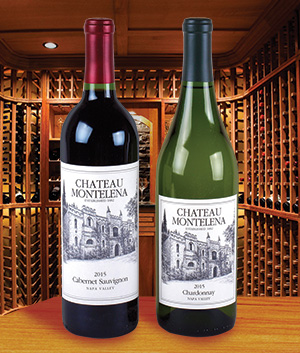
Chateau Montelena has seen three cycles of family stewardship. The winery was founded in 1882 by Alfred L. Tubbs, a European immigrant and entrepreneur. The original property was 254 acres of rugged, stony, and loose land just two miles north of Calistoga at the base of Mount Saint Helena. (Montelena is a contracted form of Mount Saint Helena.) By 1896 Tubbs’ winery was the seventh largest in the Napa Valley.
The Tubbs family sold the winery in 1958 to Yort and Jeanie Frank, who were looking for a peaceful spot to retire. The setting inspired Frank to excavate a lake and add landscaping to reflect the Chinese gardens of his homeland.
The modern renaissance of Chateau Montelena started under the leadership of Jim Barrett, who purchased the winery in 1972. The vineyard was cleared and replanted, and the chateau was renovated and outfitted with modern winemaking equipment, complemented by the highest-quality grapes from the Napa Valley. Shortly thereafter, Chateau Montelena stunned the wine world with its win at the 1976 Paris Tasting.
Chateau Montelena Chardonnay 2015
This wine is brilliantly clear with a golden-straw color. The nose suggests pineapple and stone fruit. On the palate, there are flavors of fresh orange zest and ginger which segues into a long and spicy finish. The wine was aged for 10 months in 100% French oak.
Serve this legendary wine with whitefish with filbert and lemon sauce, chicken Marsala, or duck with mustard and leeks.
Chateau Montelena Cabernet Sauvignon 2015
Dark ruby in color, this wine offers rich, complex aromas of fresh raspberries, strawberry jam, vanilla and black pepper. In the mouth, this wine makes a full soft round entry, after which the acid builds nicely, supporting the dominant flavor of dark stone fruit. Plenty of fine-grain tannin completes the mouthfeel, followed by a tremendous long finish.
Pair this Cabernet with beef in wine on skewers, grilled pork New Orleans, or leg of lamb in balsamic vinegar.
For a review of two earlier vintages of these wines, see:
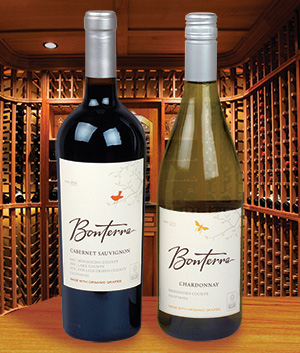
Bonterra Vineyards has been a pioneer in organic farming in California. The vines were planted in 1987, and the first wines were released in 1992, long before organic products were widely available in America. Bonterra believes that organic grapes produce the purest expressions of the varietals and land on which they are farmed.
Bonterra’s three estates (Blue Heron, McNab, and Butler) are certified Biodynamic® by Demeter, a not-for-profit with the mission of enabling successful farming in accordance with Biodynamic practices and principles. These are simply to create and oversee a living organism which is self-contained, self-sustaining, and follows the cycles of nature. Biodynamic farming harkens back to how farms functioned centuries ago. It is a holistic view of agriculture with a high awareness of the interconnectivity among earth, plants, animals, humans, and even the moon.
There are nine Demeter-certified preparations made from herbs, minerals, and manures. These are applied to the soil and vineyards in very small doses to enhance soil fertility with increased micro-organism development and photosynthetic activity.
Yarrow, chamomile, stinging nettle, oak bark, dandelion, and valerian each play a role in strengthening, and in some cases remedying, weaknesses in the vineyards. Teas and tinctures are made from fresh or dried plants, and are sprayed to increase active regeneration on the farm.
In addition, animal “partners” play an essential role in the ecosystem. The vineyards provide chemical-free sanctuaries for bees, supported by native plants which bloom throughout the seasons. Chickens roam the rows, eating weeds and insects that can harm the vines. Their scratching and pecking aerate the soil and provide additional nutrients to the vines. December through March, around 2,000 sheep snack on the cover crops and weeds as they “landscape” the vineyards, adding beneficial fertilizer to the soil as they graze.
Bonterra Mendocino Chardonnay 2014
This wine opens with a hint of crème brulee, followed by aromas of pineapple and citrusy lemon. The palate features flavors of green apples, pears, and citrus, supported by a clean minerality. The wine underwent malolactic fermentation in previously-used or neutral oak in order for its fresh fruit characteristics to shine through. New oak was used for just 16% of the wine to provide a vanilla note.
Enjoy this best-buy wine with seared swordfish with avocado relish and roasted broccoli, or crunchy pecan chicken with lemon ginger sauce.
Bonterra Cabernet Sauvignon 2014
This red is very much in the European style, with relatively subtle flavors of cherries and currants. Those are present on the nose as, well, with the addition of a bit of toasted oak. The wine finishes with astringent tannins and a lingering finish.
Serve this up with grilled chicken on rosemary skewers, lamb chops with juniper berry marinade, or sirloin tips Quasimodo.
Protea [PROH-tee-uh] (sometimes also called sugarbush) is the national flower of South Africa. It was named after the Greek god Proteus, who could change his form at will, because the flowers have such a wide variety of forms.
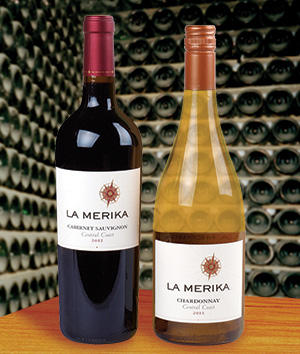
There is a theory among some historians that America was discovered by Europeans decades, or even centuries, before Christopher Columbus by a little-known explorer named Henry Sinclair, who may have been a member of the Knights Templar. In Templar symbology ‘Merika’ is a western star toward which their ships would sail, or mounted knights would ride. It is suggested that the name La Merika (The Star) is what led to the naming of the continent America, rather than after Amerigo Vespucci, an Italian explorer who is credited with describing the New World.
The theory is based on old graveyards in Nova Scotia containing grave stones which incorporate Templar devices such as Crusader Crosses and other Masonic symbols. Although there is no surviving evidence, Sinclair may have traveled to Greenland, and perhaps as far south as present-day Massachusetts and Rhode Island.
Coincidentally, the sails of Columbus’ ships were emblazoned with the Templar Cross, which was then an emblem of Spain.
La Merika the wine is part of the extensive Delicato Family Vineyards portfolio. Family-owned and operated since the company’s founding in 1924, the third generation of the Indelicato family now control properties throughout California, but they are especially interested in the Central Coast.
I am a big fan of the Central Coast AVA, a huge viticultural area encompassing vineyards from Los Angeles to San Francisco. A wide variety of wines are produced there, and many of them are high quality and of exceptional value.
The Central Coast has one of the longest growing seasons in the world, and is influenced by proximity to the Pacific. Warm sunny days are tempered by cool, afternoon ocean breezes. The extended growing season allows for full fruit development, and, because ripening occurs at an easy pace, rich, full flavors balanced with bright acidity can emerge.
La Merika Chardonnay 2013
This wine pours nearly colorless, and then follows with aromas of citrus, honey, and green apple on the nose. Although it saw some oak, that’s barely in evidence. There are plenty of flavors of lemon/lime and grapefruit. The wine features a medium body, augmented by zippy acidity, recessive tannins, and a crisp finish. Nothing buttery or over-oaked here.
Consider matching this up with Grilled Bacon-Wrapped Trout with Green Onion Sauce, Southern Pan-Fried Chicken, or Salmon Croquettes.
La Merika Cabernet Sauvignon 2012
This Cab shows a classic inky purple in the glass. The nose features ripe plum and brown spices. On the palate, there are flavors of blackberry and black cherry plus some dark chocolate or cocoa. The tannins rather than fruit are forward here. It ends with a medium-long finish. To get the full effect, plan on letting this breathe for an hour or so. This wine spent five months in French and American oak.
This big wine can stand up to robust foods like Country Captain with Crispy Thin Onion Rings, Baked Pork Chops with Cranberries, or Garlic Braised Shoulder Lamb Chops with Butter Beans and Tomatoes.
Sports fan or not, you perhaps have heard of Mike Ditka, immortalized as Da Coach in the “Bill Swerski’s Chicago Superfans” sketches that were a staple of the 1991 – ‘92 season of Saturday Night Live. After a career as a Hall-of-Fame NFL player, and a Super Bowl Champion coach, Ditka went on to become a restaurateur (four locations), ESPN commentator, cigar purveyor, and celebrity spokesman.
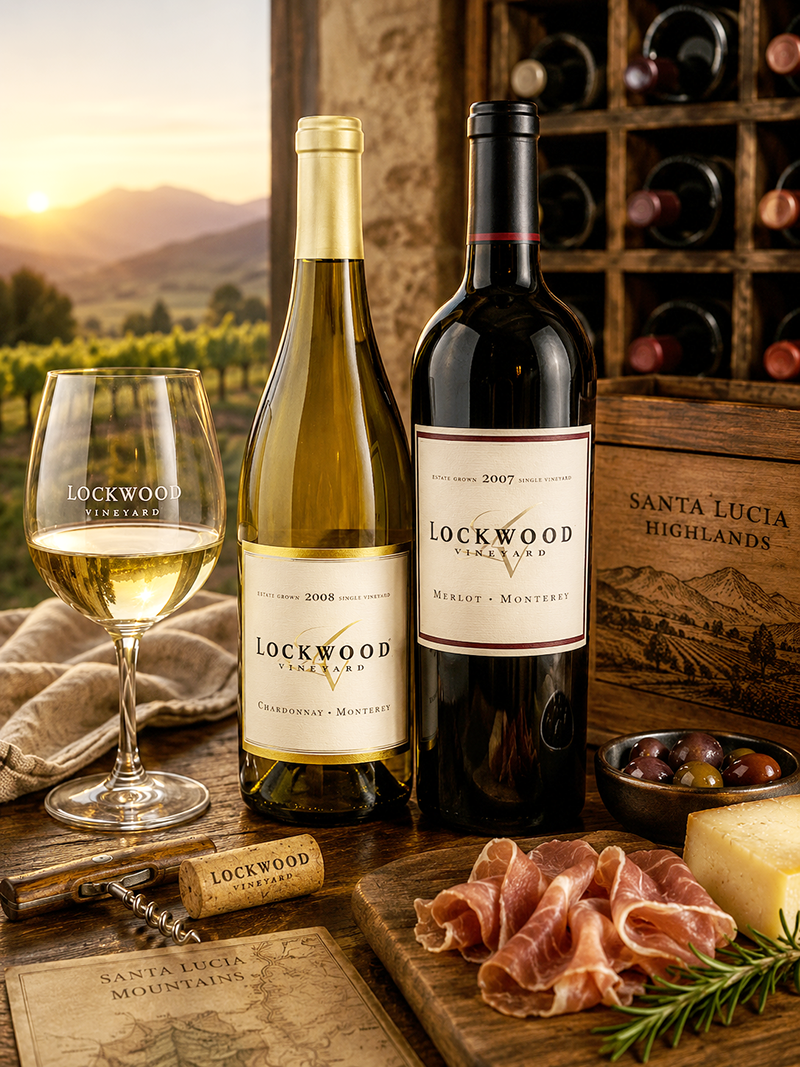
Lockwood was founded in 1989 by Paul Toeppen, Phil Johnson, and Butch Lindley as a single, contiguous, 1,850-acre vineyard (one of the largest premium estate vineyards in the world) located in southern Monterey County, not far from Monterey Bay. Lockwood exclusively produces “estate” wines. This means that all of their wines come from grapes grown in their own vineyards, and are then fermented, matured, and bottled at the winery on-site.
Nestled at the base of the Santa Lucia mountains, the vineyard soil consists of “shaly loam,” a well-drained, calcareous “chalk-rock” found in only two small areas of Central California. Because the soil has a low nutrient and mineral content, the vines must work hard for survival. In the hands of a skilled winemaker, this struggle of the vines can result in some of the best and most interesting wines.
Such a winemaker is Thane Knutson, who was born and raised on the plains of Oklahoma. He took a degree in International Business from the University of Oklahoma, while he made wine in his dorm room closet and worked in the cellar of a local winery in Slaughterville, Oklahoma.
Thane Knutson
After college, Knutson moved out to Napa Valley and interned at Cakebread Cellars. He then spent two years at Hess Collection Winery as the laboratory technician before joining Raymond Vineyards just two weeks before current Lockwood Vineyard owner Jean-Charles Boisset made his entrance. At Boisset Collection, Knutson was promoted from Laboratory Technician, to Enologist, and finally to Lockwood Winemaker.
Knutson’s experience with Hess and Raymond inspired his passion for cool weather varietals and innovative winemaking.
Lockwood Monterey Merlot 2002
Sideways notwithstanding, this wine shows that a well-made Merlot can be flavorful and satisfying. This one opens with aromas of strawberry, raspberry and cherry. It features plenty of concentrated fruit supported by touches of mint, spice, pepper, and soft tannins. It is deep purple in color and has a moderately long finish.
Pair with not-too-spicy pork or poultry dishes.
Lockwood Monterey Chardonnay 2004
Looks can be deceiving; although very pale in the glass, this wine greets you with aromas of green apple, citrus, and mineral notes. It is extremely well balanced on the palate, with flavors of honeysuckle and passion fruit. That hint of initial sweetness quickly yields to a firm acidity and a restrained French oak backbone.
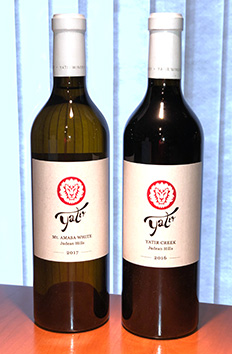
Yatir Creek Red 2016 and Yatir Mt. Amasa White 2017. Click here for tasting notes.
Yatir Creek 2016 Red Blend and Yatir Mt. Amasa White Blend 2017
The Yatir region in the Judean Hills has produced grapes for winemaking since the ancient days of the Judean kingdom. A large Jewish settlement existed in this region between the periods of the destruction of the Second Temple to the inception of the Islamic period.
Although the Israeli wine industry is 2,500-years-old, winemakers from this area of the Negev have only relatively recently been drawing critical and commercial acclaim.
David Ben-Gurion was the primary national founder and the first Prime Minister of Israel, which he led from 1948 until 1963 (with a short break in 1954-55). He had a quixotic dream of making the Negev region in the south bloom and blossom. When he decided to plant a forest in the area, he consulted with experts to guide him through the process. After numerous discussions and assessments, the agronomists determined that the region, which was predictably dry and warm, was unsuitable for planting trees. Ben-Gurion had other plans in mind however. “Replace the experts!” he demanded. A forest was in fact established, and it has gone on to become one of Israel’s largest . It was named after the Levite biblical city of Yatir, whose ruins remain within. The site serves as a “green lung” and a hiking site, as well as an experimental model for innovative methods for combating desertification. The Yatir Winery vineyards were planted as part of that effort.
Yatir Winery was established in 2000 as a joint venture between local growers and the Carmel Winery, who recognized the potential of the Yatir region. The Yatir Winery was built at the foot of the Israelite Tel Arad Fort (an archeological site), 10 minutes away from the vineyards.
Yatir Winery’s first wine was released in 2004, and today the winery produces 150,000 bottles. Over the years, this desert winery has become a symbol of the region.
Yatir’s growers and winemakers are committed to excellence every step of the way – from growth and cultivation to harvest, fermentation, aging, and bottling – employing the most cutting-edge technology and equipment available to the industry today.
The vineyards of Yatir Winery are planted at an altitude of up to 900 meters [3000 feet] above sea level, and are scattered across various locations in the forest. The plots in these vineyards have varying soil compositions, with different slants and angles. The climate is characterized by cool, breezy mornings, dry days, cold nights (even at the peak of summer) and snowy winters. The soil is well-drained limestone, chalk, and clay that ensures low yields.
“We are proud to be planting in vineyards from an ancient region, where wine presses existed more than 3,000 years ago,” said Yaakov Ben Dor, Yatir Winery’s general manager.
“Although Israel’s winemaking tradition is ancient, the current industry is still young. Israel has been widely recognized as capable of producing world-class wines, and growth is happening fast. We are pleased by the exciting potential of the region,” reported Etti Edri, Yatir’s export manager.
According to Eran Goldwasser, who oversees Yatir’s vineyards and production, “At Yatir Winery we are integrating state-of-the-art winemaking and technology within a man-made forest in the heart of the desert, to produce award-winning wines. Though it seems unlikely, this area in Israel provides an excellent environment for wine making. Due to Israel’s warm Mediterranean climate, the grapes have no trouble ripening. As the vines age, yields will decrease, and our wines will become more nuanced.”
Yatir Creek Red Blend 2016
This blend of 76% Syrah, 12% Tannat, and 12% Malbec is plum red in the glass. The nose offers aromas of rhubarb, cherries, cassis, and a hint of green olives. The palate presents flavors of recessive fruit, coca, and cigar box. The tannins feature a slightly salty and pleasantly bitter finish. The wine was aged for 12 months in large oak barrels, and aged in the bottle for two years.
I suggest serving this wine with Moroccan chicken with preserved lemons and olives; souvlakia (skewered lamb) with grilled vegetables; or sghenna (a one pot meal for the Sabbath).
Yatir Mt. Amasa White 2017
With an unusual blend of 52% Chenin Blanc, 39% Viognier, and 9% Roussanne, this white displays a pale golden-greenish hue. The aromas hint at grapefruit and actetone (which disappears after chilling). That grapefruit is joined by peach, and pear on the palate. There is a soft mouthfeel and balanced acidity. The wine was fermented and aged for five months in a combination of concrete amphorae (a growing trend internationally), oak barrels, and stainless steel vats.
Yatir Mt. Amasa White would go well with Libyan fish tangine; sea bass with olives and roast tomatoes; or saffron chicken and mussels.
Or, if you’re not an observant Jew, you could do as I did and make a lobster and champagne risotto.
These wines join other Yatir products, including Yatir Mount Masa Red (which is a best seller), Yatir Rose, Yatir Peti Verdo, and the flagship wine, Yatir Forest.
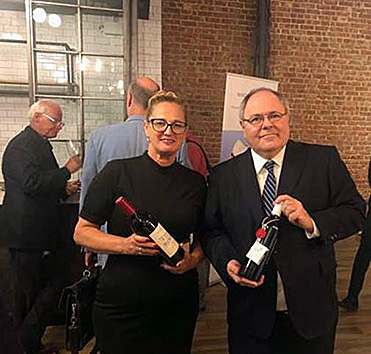
Etti Edri [left], Yatir Winery’s export manager and Israel’s Ambassador Dani Dayan [right] with bottles of Yatir wines.These wines are “kosher for Passover.” This certification requires handling and processes unique to these types of wine.Kosher wine is grape wine produced according to Jewish dietary law (kashrut). To be considered kosher, Sabbath-observant Jews must supervise and sometimes handle the entire winemaking process, from the time the grapes are crushed until the wine is bottled. Any ingredients used, including finings, must be kosher as well. Wine that is described as “kosher for Passover” must have been kept free from contact with chametz, such as grain, bread, and dough.
To ensure the kosher status of the wine it must be overseen by a Jewish authority who supervises the kashrut status of the producer. Generally, this supervisor will physically tip the fruit into the crush and operate the equipment. Once the wine emerges from the process, it can be handled in the normal fashion.
With the lifting of apartheid-era sanctions in the mid-1990s, and especially so in the last decade or so, wines from South Africa have become more evident in the nation’s wine shops.
But, the South Africans are certainly not wine-making neophytes. The first vines were planted in the western Cape by early Dutch settlers in 1655, and Robertson Winery was established in 1941.
Robertson sources fruit from 43 growers cultivating 4700 acres which stretch from the banks of the Breede River to the lower slopes of the Langeberg Mountains. The diverse soils allow Robertson to site their many varietals in optimum growing conditions. After harvest, the winery adheres to a philosophy of minimal handling and gentle processing, in a state-of-the-art cellar that was completed in 2000 to accommodate the growing demand for their wines.
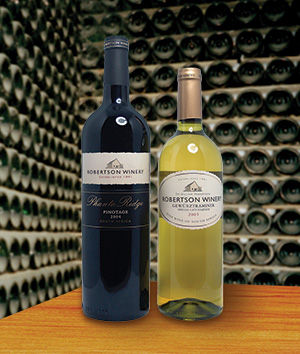
Robertson Winery Phanto Ridge Pinotage 2004
Unlike Meritage, Pinotage is a grape, a cross between Pinot Noir and Hermitage. The Phanto Ridge is easy-drinking, garnet-colored, and relatively light on the palette with just a hint of sweetness.
Pair this pleasant wine with grilled (but not too spicy) chicken, fish, or vegetables.
Robertson Winery Gewürztraminer 2005
This Gewürz nicely balances its sweetness and acidity. Too sweet to accompany dinner for all but the white zinfandel crowd, this wine would be best after dinner; serve it with mild hard cheeses and just about any fruit.
After a legendary career of over 45 years toiling in the vineyards of Sonoma County, Richard Arrowood opened his final winery, Amapola Creek, in 2005. Amapola is Spanish for “poppy,” and the creek that bears the name runs through the estate. When in bloom, the golden poppies line the creek and offer a lovely sight with the vineyards and mountains in the background.
Jeff Gordon (no, not that Jeff Gordon) is a fourth-generation farmer, born and raised in Washington state. Although tied to the land, Gordon realized early on that affection wasn’t enough, and was shrewd enough to take a Bachelor’s degree in Agriculture in 1971.
By 1977, Jeff and his brother Bill were growing potatoes on 130 acres of rented farmland. Several years later, Jeff’s attention to the local microclimate and rich volcanic soil of southeastern Washington’s Columbia Valley led the Gordon family to take the then-audacious step of planting wine grapes on a sagebrush-covered slope overlooking the Snake River. Much to the amusement of local fellow farmers, Jeff made a bold decision to plant red grape varietals. “As far as everyone was concerned, the Columbia Valley was Riesling country. That was all there was to it. We thought red grapes would work. We took a chance. It was the right thing to do.”
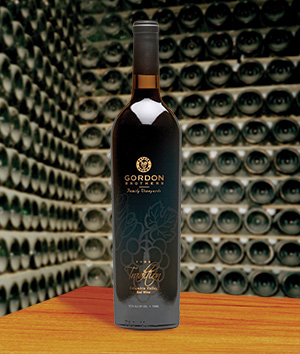
Gordon Brothers Tradition 2003
This wine is a blend of 47.6% Cabernet Sauvignon, 47.6% Merlot, and 4.8% Syrah (all from estate-grown grapes). After pressing and fermentation, the wine aged in oak for a total of 40 months.
Tradition is a jewel-like ruby in the glass. The nose features hints of cinnamon and clove. The velvety mouth-feel is complimented by restrained flavors of dark cherry and chocolate, and moderate tannins.
This very food-friendly wine will pair well with autumnal meats such as roast duckling with soy sauce and cloves, or braised lamb shanks.
River’s Edge Winery is located in the northern-most part of the Umpqua Valley. River’s Edge, founded in 1998, specializes in the production of cool weather varieties such as pinot noir and gewürztraminer. The ocean is only 36 miles away from the winery, and morning fog frequently shrouds the vineyards even in the summer, reflecting the strong marine influence on the climate.
Their two estate vineyards, Black Oak and Elkton, are the primary sources for the wines. These two vineyards were planted in 1972 and are among the oldest in the state.
The River’s Edge wine making style emphasizes a low-tech, hands-on approach utilizing small batch fermentation, exclusively barrel aging, and bottling without fining.
River’s Edge Pinot Gris 2007
Let me announce my bias up front: I’m not that big a fan of Pinot Gris (pee-no gree) and Pinot Grigio (pee-no gree-joe). They are often watery and lacking a distinct character. Not so this one from River’s Edge.
This pinot gris was vinified in the traditional Alsatian manner in older oak barrels, with seven months of aging. The resulting wine has the pale yellow color, citrus/lemon flavor, and ripe pear bouquet typical of this varietal. The boldness of the flavors make it unique, with plenty of structure.
Enjoy this wine with grilled whole red snapper, broiled halibut steaks with tarragon butter, or raw oysters.
Doyle Hinman and David Smith opened Hinman Vineyards in 1979. By 1988, the winery had become Oregon’s top selling winery. In 1993, Hinman started releasing their premium line of reserve wines under the Silvan Ridge label, relegating Hinman to second-tier status.
Silvan Ridge | Hinman Vineyards produces approximately 25,000 cases of wine annually, including Pinot Noir, Pinot Gris, Muscat, Syrah, Grenache Rosé, Chardonnay, Cabernet, Merlot, and Riesling.
The Hinman winemaking style strives to express classic European technique, while applying new-world innovation.
The fruit for this pinot noir was sourced from the Willamette Valley, which begins just south of Eugene and runs north to Portland. It is Oregon’s coolest growing region and the source for most of the state’s wine grapes. Vineyards are typically located on bench-land hillsides at the western edge of the valley.
Hinman Vineyards Pinot Noir 2007
The color of this pinot noir is like that of cherry juice, and while color is not necessarily a predictor of taste or complexity, this time it’s fairly accurate. This is a simple, fruity wine, with plenty of cherry and berry on the palate. A tad on the sweet side, but with enough acidity to keep things in balance.
Pair this wine with salmon gravlax, risotto with artichokes, or pan-fried soft shell crabs.
“This weekend is not about me. It is about you. I’m gonna show you a good time. We’re gonna drink a lot of good wine. We’re gonna play some golf. We’re gonna eat some great food and enjoy the scenery and we are going to send you off in style, mon frere.” And so Miles and Jack set off on their most excellent adventure in Sideways, the 2004 film that by some accounts was single-handedly responsible for a 10% increase in sales of pinot noir.
Leaping Lizard Pinot Noir 2005
This pinot noir hails from the cool and foggy Russian River Valley in Sonoma County, California. The Russian River has long been home to winemakers serious about pinot noir, and Leaping Lizard joined their ranks in 1996.
The winemaker is Harry Parducci Jr. He is yet another quality winemaker to come from a family better known for its jug wines, as some Gallos and Martinis are as well.
This wine is a lovely garnet color. There’s plenty of fruit, dominated by bright cherry and rich strawberry. It’s quite well balanced, though, and definitely dry with good supporting tannins and just a hint of oak.
Planked salmon is a classic pairing with pinot noir. (Yes, reds can be quite delicious with fish, especially richer species such as salmon, tuna, and swordfish.) Roast turkey or duck, fruit-glazed pork chops, and grilled barbeque ribs would work well also.
And now for something completely different: we head north to Washington state, and Willow Crest winery’s Yakima-grown viognier (vee-ohn-yay).
This varietal originated in the Rhone area of France, and continues to be extensively cultivated there. In the ‘90s, California’s so-called Rhone Rangers helped to bring it to attention here in the States.
Like Leaping Lizard, Willow Crest is a relative new-comer. After growing grapes for other winemakers in the Yakima Valley for more than a decade, David Minick realized a long-time dream of producing his own wine when he opened Willow Crest in 1995. Most of Minick’s 185 acres of grapes are sold to other winemakers, but he now also retains a small amount of his annual harvest to craft about 3,000 cases of premium wines in his own style, primarily pinot gris and syrah.
Willow Crest Viognier 2005
Viogniers can range from the highly floral and fragrant to a lighter, more balanced aperitif-style, such as this one. It offers delicate aromas of citrus and pear, with a palate that adds melon and apple to the flavor mix. The wine should be only slightly chilled; otherwise its nuances will be masked. Like most viogniers, this is a limited-production wine.
Excellent with white seafood of all kinds. Try it with scallops, whitefish, or sole in a light butter sauce, or pair it with appetizers.
If you’re looking for good value in wine, head for the Chilean section of your local wine shop.
Winemaking was established in Chile in the mid-sixteenth century by Spanish missionaries, and for 300 years wine production was based on the Pais grape they carried. In 1851, French wine experts arrived, and with them the more familiar European grape varieties. And now, even with over 400 years of experience, and free of the twin scourges of Prohibition and phylloxera, Chile has yet to attain its full potential.
This promise continues to attract winemakers from around the world. One of the French concerns is the Marnier Lapostolle family, founders and owners of the famous orange liqueur Grand Marnier, as well as other spirits. Lapostolle was established in 1994, with the goal of creating top-quality wines using French expertise and the unique terroirs of Chile.
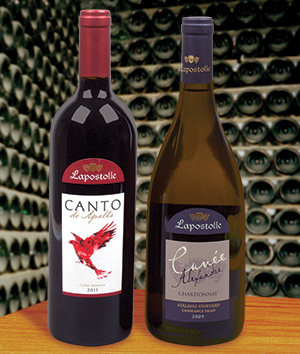
Casa Lapostolle Cuvee Alexandre Chardonnay 2009
The home of this wine is the Atalayas vineyard in the Casablanca Valley, in the Coastal Cordillera, 47 miles west of Santiago. Atalayas was originally planted in 1997, and enjoys cool coastal winds and a low annual rainfall. 100% of Atalayas vineyard is under organic and biodynamic agriculture management.
This is the rare white that will benefit from thirty minutes or so of ‘breathing’ before pouring. While you’re waiting, admire its bright lemon-yellow color and nose of citrus and melon. This wine suggests grapefruit on the palate, which is supported by its zippy acidity. There is oak, but it is well integrated and in a secondary role. Look for a hint of crème brûlée on the finish. Fermentation was on 68% new and used French oak, as well as 32% stainless steel. 20% of the total underwent a further malolactic fermentation.
This wine would go nicely with Braised Snapper and Mussels, Shrimp in a Picante Sauce, or Chicken à la Chinita.
Casa Lapostolle Canto de Apalta 2011
The horseshoe-shaped Apalta vineyard is located 124 miles southwest of Santiago, 42 miles away from the Pacific Ocean, between the Andes mountain range and the Coastal Cordillera. The first vines in Apalta were planted in 1920, and some of these were transplants that had originally been brought from France at the end of the 19th century. Apalta is also 100% under organic and biodynamic management.
“Song of Apalta” is a Bordeaux-style red blend that was born from the relationship between Carmenère, Merlot, Cabernet Sauvignon, and Syrah. All fermentations were made with wild yeasts and minimal intervention on the part of the winemaking team.
Here’s a food-friendly wine that is also good for quaffing. It is rich garnet in the glass, with delicate legs. The nose shows spice and eucalyptus, as well as black and red fruits. The body is light in the mouth, with flavors of ripe red berries and figs. These are backed up by medium tannins and a surprising amount of acidity. The wine has a medium-length finish.
Serve with Roast Beef in a Black Pepper Crust, Leg of Lamb with Pistachios, or Lemon Veal Chops.
The Luke Donald Wine Collection is the result of a collaboration between professional golfer Donald and Bill Terlato, head of the behemoth wine distribution operation, Terlato Wines International.

 Chateau Montelena
 Bonterra Vineyards has been a pioneer in organic farming in California. The vines were planted in 1987, and the first wines were released in 1992, long before organic products were widely available in America. Bonterra believes that organic grapes produce the purest expressions of the varietals and land on which they are farmed.
 I Took a Trip Down to



 Gordon Brothers Tradition
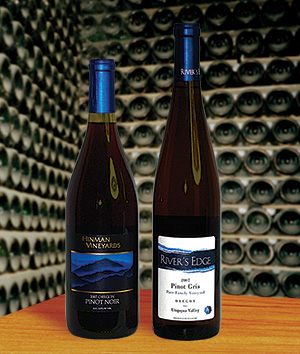 River’s Edge Winery is located in the northern-most part of the Umpqua Valley. River’s Edge, founded in 1998, specializes in the production of cool weather varieties such as pinot noir and gewürztraminer. The ocean is only 36 miles away from the winery, and morning fog frequently shrouds the vineyards even in the summer, reflecting the strong marine influence on the climate.
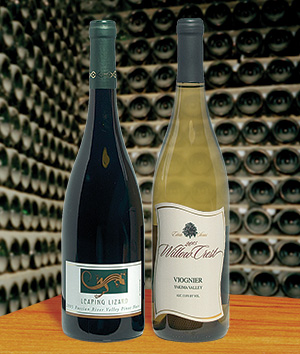 “This weekend is not about me. It is about you. I’m gonna show you a good time. We’re gonna drink a lot of good wine. We’re gonna play some golf. We’re gonna eat some great food and enjoy the scenery and we are going to send you off in style, mon frere.” And so Miles and Jack set off on their most excellent adventure in Sideways, the 2004 film that by some accounts was single-handedly responsible for a 10% increase in sales of pinot noir.
 Between the Mountains